Waltey
Zlata ptica
026 The Golden Bird
Mother's Nursery Tales · Katharine PyleO besedilu
Zlata ptica
- Vir
- Mother's Nursery Tales
- Avtor
- Katharine Pyle
- Jezik branja
- Slovenščina
- Jezik izvirnika
- English
- Čas branja
- 21 min branja
- Obseg
- 17 strani
- Naslov izvirnika
- 026 The Golden Bird
O izvirniku
Mother's Nursery Tales
Štiriintrideset zgodovinskih literarnih priredb starejših pravljic, ki jih je Pyle tudi ilustrirala. Bralni jezik je Slovenščina, izvirnik pa prihaja iz vira Mother's Nursery Tales v jeziku English.
Besedilo
Zlata ptica
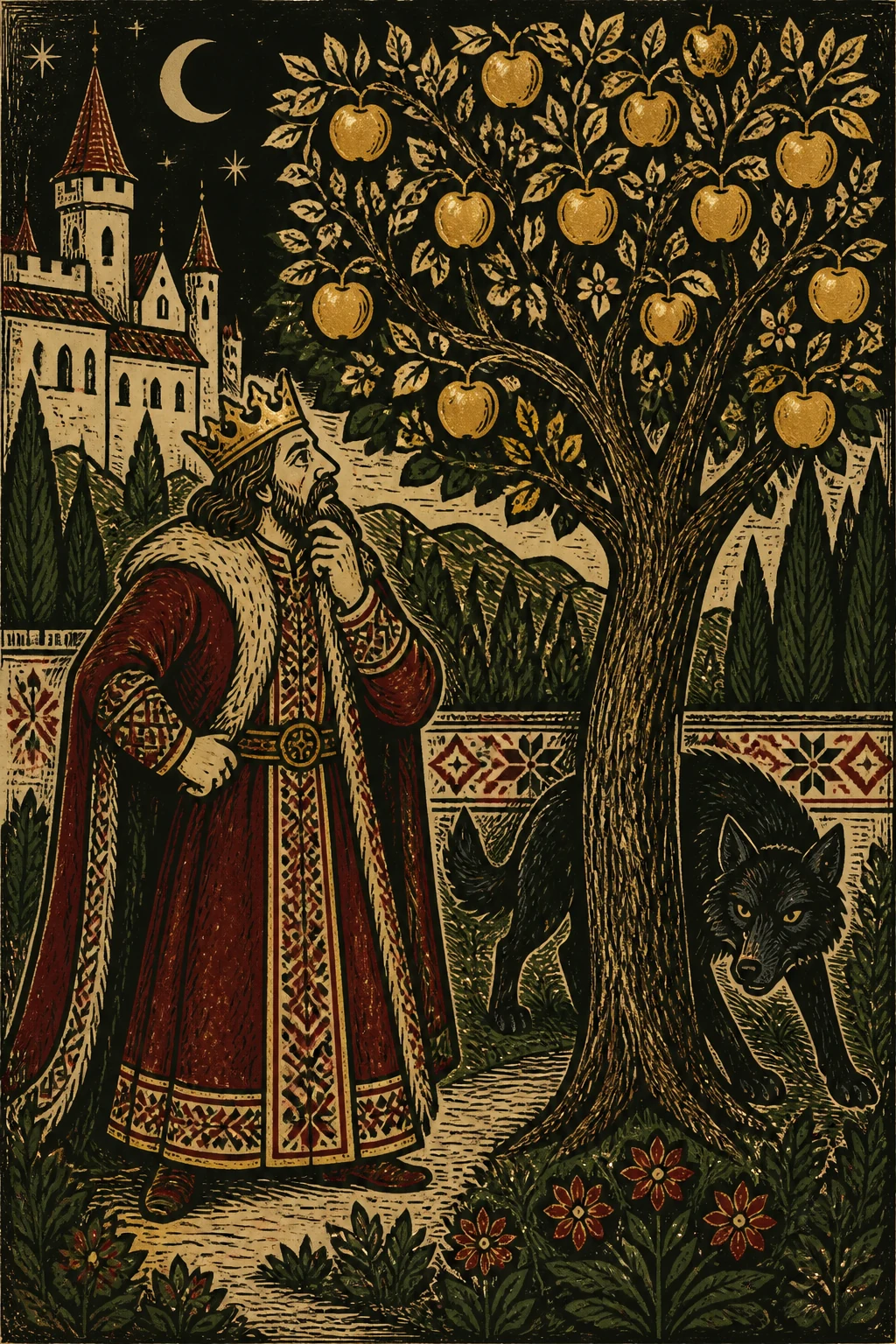
Nekoč je živel kralj, ki je imel na svojih vrtovih jablano z zlatimi jabolki. Vsak dan je šel preštet jabolka in nihče razen njega se jih ni smel dotakniti.
Nekega jutra, ko je šel kakor navadno preštet jabolka, je opazil, da eno manjka. To ga je silno razjezilo in ukazal je, naj ponoči okoli vrta postavijo stražo, da nihče ne bi mogel krasti jabolk. Toda že naslednje jutro je manjkalo še eno. Tako se je dogajalo dan za dnem. Vsa vrata na vrt so skrbno stražili, a vsako jutro je z drevesa izginilo še eno jabolko in nihče ni vedel, kdo ga je vzel.
Kralj je imel tri sinove in nekega dne je najstarejši prišel k očetu ter dejal: »Oče, nocoj bom stražil pod jablano in lahko ste prepričani, da se ji nihče ne bo mogel približati, ne da bi ga opazil.«
Kralj je rad dovolil sinu, da straži, in tisto noč se je kraljevič namestil pod drevesom. Nekaj ur je sedel tam in bedel ter komaj kdaj pomežiknil; sredi noči pa ga je obsijala svetloba in zaslišal je glasbo. Tedaj je proti svoji volji trdno zaspal in ko se je zjutraj prebudil, je bilo ukradeno še eno jabolko.
Tistega dne je drugi sin prišel h kralju in ga prosil, naj mu dovoli, da tisto noč straži jablano. Kralj je spet privolil in takoj ko se je znočilo, je drugi sin odšel na vrt in sedel pod jablano, prav kakor je prej storil njegov brat. Nato se je zgodilo natanko isto kakor prejšnjo noč. Okoli polnoči je drevo obsijala svetloba, zaslišala se je glasba in naj se je kraljevič še tako trudil, ni mogel ostati buden. Zaspal je in medtem ko je spal, je izginilo še eno jabolko.
Tretji dan je bil na vrsti tretji sin, da prosi za dovoljenje, da bi stražil pod jablano. Toda kralj ga je zavrnil. »Mar misliš, da si pametnejši od svojih bratov?« ga je vprašal. »Zakaj bi tebi uspelo, če je njima spodletelo?« Kraljevič pa je prosil in rotil, dokler mu kralj nazadnje ni dovolil stražiti pod drevesom.
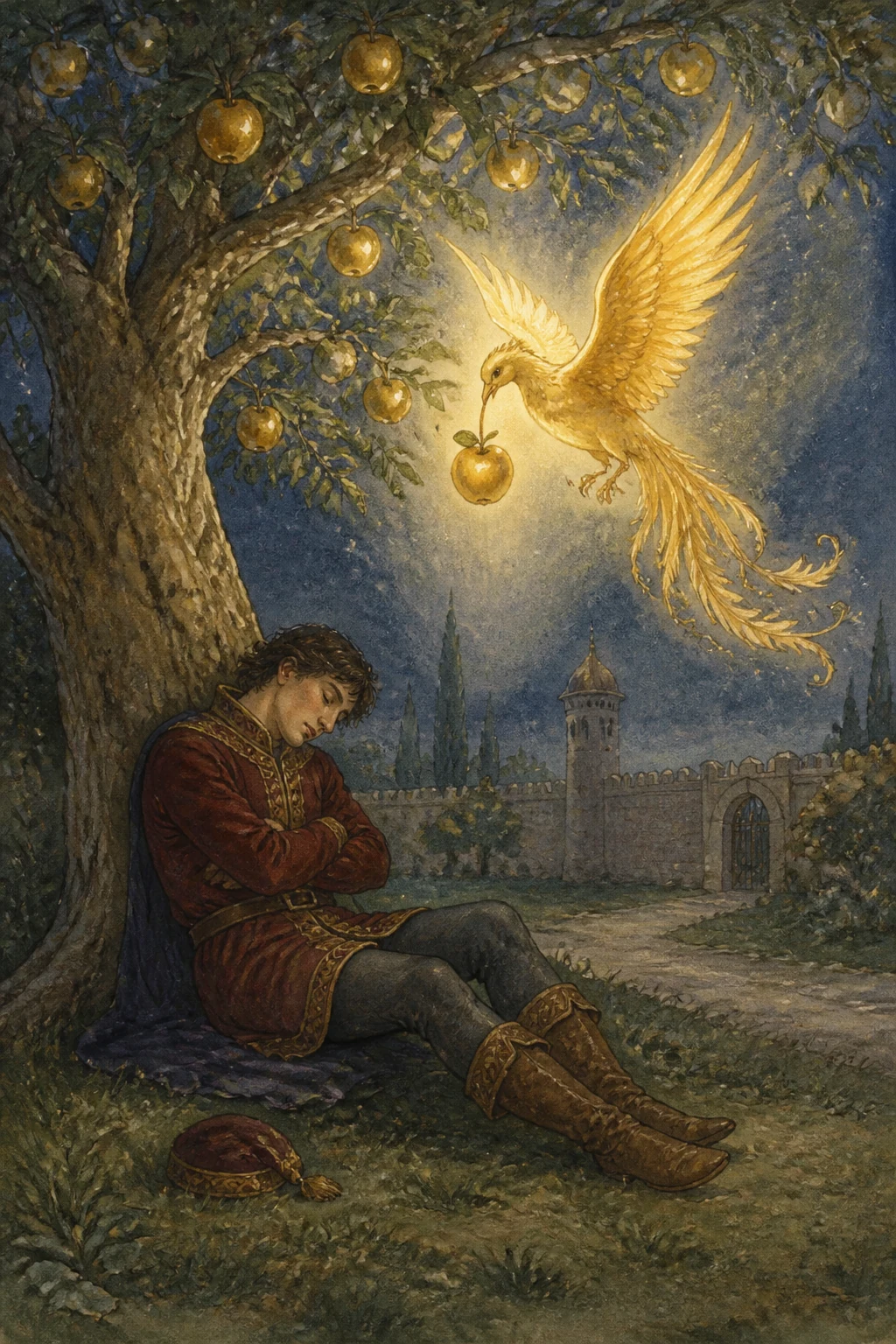
Tretji kraljevič je bil bister mladenič. Slišal je, kaj se je prejšnji dve noči zgodilo bratoma, zato si je zvečer zamašil ušesa z vato, nato pa odšel na vrt in se namestil pod jablano. Sedel je tam in tik pred polnočjo je skozi veje posijala svetloba ter se je zaslišala glasba. Toda mladi kraljevič je imel ušesa zamašena z vato, zato glasbe ni slišal in ni zaspal.
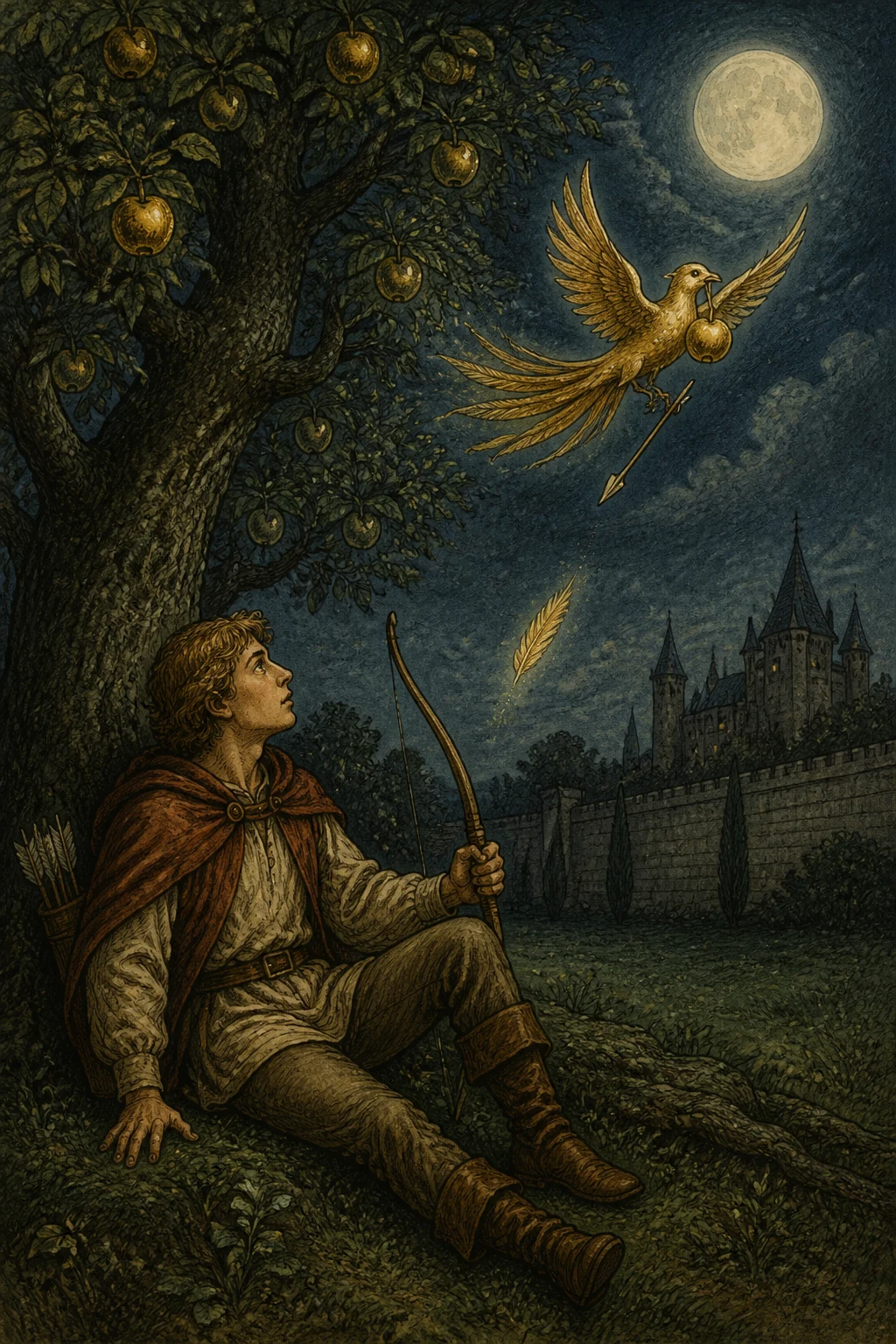
Za glasbo se je zaslišalo šumenje peruti, a tudi tega kraljevič ni slišal, in na jablano je priletela zlata ptica. Ravno je hotela utrgati eno od jabolk, ko je kraljevič dvignil samostrel in izstrelil puščico vanjo.
Ptica je ušla, toda eno njenih zlatih peres je priplesalo na tla h kraljevičevim nogam. Pobral ga je in ga naslednje jutro odnesel očetu ter mu povedal, kaj je ponoči videl.
Brž ko je kralj zagledal pero, ga je prevzela neizmerna želja, da bi imel ptico. »Brez te ptice mi življenje nič ne pomeni,« je dejal. »Svoje kraljestvo bi dal, da bi jo dobil.«
Ko je najstarejši brat to slišal, se je pri priči odločil, da se odpravi iskat ptico, saj se mu je zdelo imenitno, da bi si pridobil kraljestvo. Odšel je sam in ni nikogar vzel s seboj, ker ni hotel, da bi mu pri iskanju pomagal še kdo drug.
Prepotoval je že precej poti, ko je prišel do razpotja in tam zagledal majhno rdečo lisico. Napel je lok, da bi jo ustrelil, toda žival mu je zaklicala: »Ne ustreli me, kraljevič, pa ti bom dala dober nasvet, ki je vreden več kakor moj kožuh.«
»Kaj mi lahko zver pove takega, da bi jo bilo vredno poslušati?« je vprašal kraljevič. »Poslušaj!« je dejala lisica. »Vem, kam greš: iskat Zlato ptico. Toda če ne boš storil, kakor ti rečem, je nikoli ne boš našel. Nocoj boš prispel v vas. V njej stojita dve krčmi druga nasproti druge. Ena je prav imenitna. Vsa bo razsvetljena in v njej bodo igrali in plesali. Vendar ne vstopi vanjo. Druga je revna in bednega videza, toda v njej moraš prenočiti, če upaš, da boš našel Zlato ptico.«
»To so neumne besede in še večji neumnež bi bil, če bi jih poslušal,« je vzkliknil kraljevič. Spet je napel lok in izstrelil puščico v lisico. Puščica je zgrešila in lisica je nepoškodovana zbežala.
Kraljevi sin je jezdil naprej in ob mraku prispel v vas. Na vsaki strani ulice je stala krčma in bili sta natanko taki, kakršni mu je opisala lisica. Ena je bila imenitna, svetlo razsvetljena, v njej pa so plesali in igrali. Druga je bila temna, revna in bednega videza.
Kraljevič se ni več spomnil lisičinega nasveta. Zavil je v imenitno krčmo in tam jedel, pil ter se smejal z gosti, ki so bili že v njej. Povsem je pozabil na Zlato ptico, pa tudi na očeta in kraljestvo.
Čas je mineval, najstarejši sin pa se še vedno ni vrnil domov in nihče ni vedel, kaj se je zgodilo z njim. Tedaj je drugi sin želel poskusiti srečo pri iskanju Zlate ptice. Kralj ni hotel, da bi odšel, toda kraljevič si je tega tako zelo želel, da je oče nazadnje privolil.
Kraljevič je potoval, dokler ni prišel do razpotja, in tam je kakor poprej sedela lisica. Drugi sin jo je že hotel ustreliti, toda živalca mu je zaklicala, naj ji prizanese, pa mu bo dala dober nasvet.
Kraljeviča je zanimalo, kaj mu ima lisica povedati, toda ko je slišal za obe krčmi in da mora izbrati tisto revno in borno, se je glasno zasmejal.
»Prav lep nasvet!« je vzkliknil. »Velik tepec bi bil, če bi ga upošteval.« Nato je izstrelil puščico v lisico, vendar je zgrešil in živalca je nepoškodovana zbežala.
Drugemu kraljeviču se je potem zgodilo prav isto kakor starejšemu bratu. Do obeh krčem je prispel ravno ob mraku in ustavil se je v imenitni, svetlo razsvetljeni krčmi. Tam je vso noč gostoval in se veselil, do naslednjega dne pa je že povsem pozabil na Zlato ptico, na očeta in na kraljestvo, ki si ga je upal pridobiti.
Ko je čas mineval in se tudi drugi sin ni vrnil, se je hotel na iskanje odpraviti tretji kraljevič. Toda oče je dejal: »Ne, ne, tega ne morem dovoliti. Dva sinova sem že izgubil. Naj izgubim še tretjega?«
Kraljevič pa je bil trdno odločen, da pojde. Prosil je in rotil, dokler mu kralj ni mogel več odreči. Kraljevič se je odpravil na pot in kmalu prispel do razpotja, kjer je našel lisico, prav kakor njegova brata pred njim. Lok je imel obešen čez hrbet, a ga ni snel.
»Ne ustreli me, kraljevič,« je zaklicala lisica, »pa ti bom dala dober nasvet.« »Zakaj bi te ustrelil?« je odgovoril kraljevič. »Ničesar nimam proti tebi. Kar pa zadeva tvoj nasvet, kdo ve, morda mi bo prišel še kako prav.«
»Potem poslušaj,« je dejala lisica in mu povedala za obe krčmi, kakor je prej povedala njegovima bratoma. »Morda je nasvet dober, morda ni,« je dejal kraljevič, »a vsaj škodilo mi ne bo, če ga upoštevam.«
Ko je torej prispel v vas, ni odšel v imenitno krčmo kakor njegova brata. Namesto tega je zavil v revno, borno krčmo in tam mirno prebil noč. Naslednji dan je vstal in nadaljeval pot.
Tik za vasjo je naletel na lisico, ki je sedela na polju in ga čakala. »Kraljevič,« je dejala, »prav dobro si storil, da si upošteval moj nasvet. Zdaj pa sedi na moj rep in ponesla te bom po poti veliko hitreje, kakor lahko hodiš.«
Kraljevič je storil, kakor mu je naročila lisica. Sedel je na njen rep in že sta drvela tako hitro, da mu je veter žvižgal mimo ušes. Kmalu sta zagledala velik grad in tam se je lisica ustavila. »V tem gradu je Zlata ptica,« je dejala, »toda od tod moraš naprej sam. Pojdi po tej cesti in pripeljala te bo do grajskih vrat. Povsod naokrog boš videl vojake, ki spijo na tleh, a ne boj se jih. Ne bodo se prebudili, razen če ne boš ubogal tega, kar ti bom zdaj povedala.«
Lisica je nato kraljeviču povedala, v kateri grajski sobi bo našel Zlato ptico. »V grdi, borni kletki je,« je dejala, »čisto blizu pa visi lepa zlata kletka, ki je prazna. Toda nikar ne prestavljaj ptice v zlato kletko. Odnesi jo v tisti borni, sicer te bo doletela velika nesreča.«
Kraljevič je bil tako srečen ob misli, da bo kmalu našel Zlato ptico, da je komaj še poslušal, kaj mu lisica govori. Skočil je z njenega repa in pohitel po cesti h gradu. Kmalu je prišel do vojakov, ki so spali na tleh. Varno je šel mimo njih in niso se prebudili. Vstopil je v grad in kmalu našel Zlato ptico. Bila je prav v tisti sobi, o kateri mu je povedala lisica. Tiščala je v borni, čisto navadni kletki, poleg nje pa je visela lepa zlata kletka, ki je bila prazna.
»Neumno je,« je pomislil kraljevič, »imeti zlato ptico v takšni kletki. Veliko bolje bi bilo, če bi jo dal v kletko, ki ji pristaja.« S to mislijo je vzel ptico iz grde kletke in jo prestavil v lepo. Brž ko je to storil, je ptica začela vreščati. Njeno vreščanje je prebudilo vojake. Pritekli so, zgrabili kraljeviča in ga odpeljali pred kralja tiste dežele.
Ko je kralj slišal, kako je kraljevič poskušal ukrasti Zlato ptico, se je silno razjezil. »Zaslužiš si smrt,« je dejal, »vendar ti bom pod enim pogojem prizanesel. Če mi pripelješ Zlatega konja, ki je hitrejši od vetra, ti bom odpustil, povrhu pa ti dal še Zlato ptico.«
Nič ni pomagalo; kraljevič se je moral odpraviti iskat Zlatega konja. Bil pa je zelo žalosten, saj ni vedel, kje naj ga išče, in če ga ne bo našel, se bo moral vrniti ter izgubiti življenje.
Šel je po cesti in ni prišel daleč, ko je zagledal lisico, ki je sedela na polju in ga čakala. »Zakaj nisi upošteval mojega nasveta?« je dejala lisica. »Zdaj si se pa lepo zapletel. Toda sedi na moj rep, pa bom videla, kaj lahko storim, da ti pomagam.«
Kraljevič je sedel na lisičin rep in že sta drvela čez grmovje in goščavo, čez skale in robidovje, tako hitro, da mu je veter žvižgal mimo ušes.
Kmalu sta zagledala drug grad in tam se je lisica ustavila. »Stopi dol,« je dejala, »saj te dlje ne morem nesti. V hlevu tega gradu je Zlati konj, ki ga iščeš. Pogumno pojdi naprej in odpri hlevska vrata. Nihče te ne bo ustavil, ker hlevar spi. Toda ko najdeš Zlatega konja, nikar ne vzemi zlatega sedla, ki visi ob njegovem stojišču. Vzemi staro obrabljeno sedlo, ki leži v kotu. Če ne boš storil, kakor ti naročam, te bo zagotovo doletela nesreča.«
Kraljevič je komaj poslušal lisico, tako se mu je mudilo najti Zlatega konja. Pohitel je po cesti do hleva in odprl vrata. Nihče ga ni ustavil ali zadržal. Na stojišču je stal Zlati konj in tako se je bleščal, da je njegova svetloba napolnjevala ves hlev. Ob stojišču je viselo zlato sedlo, okrašeno z dragimi kamni, v kotu pa je ležalo staro, obrabljeno usnjeno sedlo. »To zlato sedlo sodi na Zlatega konja,« je pomislil kraljevič. »Sramota bi bila, če bi mu na hrbet položil tisto drugo.«
Zato je snel zlato sedlo in ga položil na konja. Brž ko je to storil, je konj začel rezgetati in topotati. Hrup je prebudil hlevarja in ta je poklical stražo. Vojaki so naglo pritekli, zgrabili kraljeviča in ga odpeljali pred kralja ter mu povedali, da je mladenič poskušal ukrasti Zlatega konja.
»Za to si zaslužiš smrt,« je dejal kralj, »vendar ti bom pod enim pogojem odpustil. Če mi za ženo pripelješ kraljično z Zlatega gradu, ti ne bom le prizanesel, ampak ti bom povrhu dal še Zlatega konja.«
Kraljevič ni vedel, kako naj najde kraljično z Zlatega gradu, vendar je obljubil, da se bo potrudil po svojih najboljših močeh. Odpravil se je na pot in ni prišel daleč, ko je našel lisico, ki ga je čakala.
»Ne zaslužiš si moje pomoči,« je dejala lisica. »Zakaj me nisi ubogal in si položil zlato sedlo na konja? Toda sedi na moj rep. Očitno se bom morala po najboljših močeh potruditi, da te rešim tudi iz te zagate.«
Kraljevič je sedel na lisičin rep in spet sta oddrvela tako hitro, da mu je veter žvižgal skozi lase. Drvela sta naprej in naprej in čez čas prispela do novega gradu, ki je bil ves iz bleščečega zlata. »Zdaj pa poslušaj,« je dejala lisica. »V tem gradu živi lepa kraljična, ki jo iščeva. Pojdi in se skrij ob kopalni hišici spodaj pri jezeru. Vsako noč, ko vsi na gradu spijo, pride kraljična k jezeru, da se okopa. Ko se približa kopalni hišici, jo moraš zgrabiti in poljubiti. Potem ti bo rada sledila, kamorkoli jo boš peljal. Toda nikakor ji ne dovoli, da bi se vrnila poslovit od staršev. Če ji boš, te to utegne stati življenja.«
Kraljevič je obljubil, da bo storil, kakor mu je naročila lisica, nato pa odšel in se skril za kopalno hišico. Tisto noč, ko so vsi na gradu zaspali, je kraljična kakor navadno prišla k jezeru, da se okopa. Brž ko se je približala kopalni hišici, je kraljevič skočil izza nje, jo ujel v objem in poljubil. Kraljična ga je tedaj vzljubila in bila pripravljena zapustiti svoj dom, očeta in mater ter mu slediti.
»Toda preden grem s teboj, mi dovoli, da se poslovim od staršev,« je dejala, »saj me imata zelo rada in zagotovo bi jima počilo srce, če bi odšla brez besede.«
Kraljeviču se je zdelo kruto, da bi ji odrekel to prošnjo. Pa tudi, kaj bi lahko bilo narobe, če še enkrat vidi starše? »Prav,« je dejal. »Pojdi, a hitro se vrni, saj morava oditi še pred zoro.«
Kraljična je pohitela v sobo, kjer je spal kralj, njen oče, se sklonila k njemu in ga poljubila na čelo. Kralj se je pri priči prebudil in jo vprašal, kam gre.
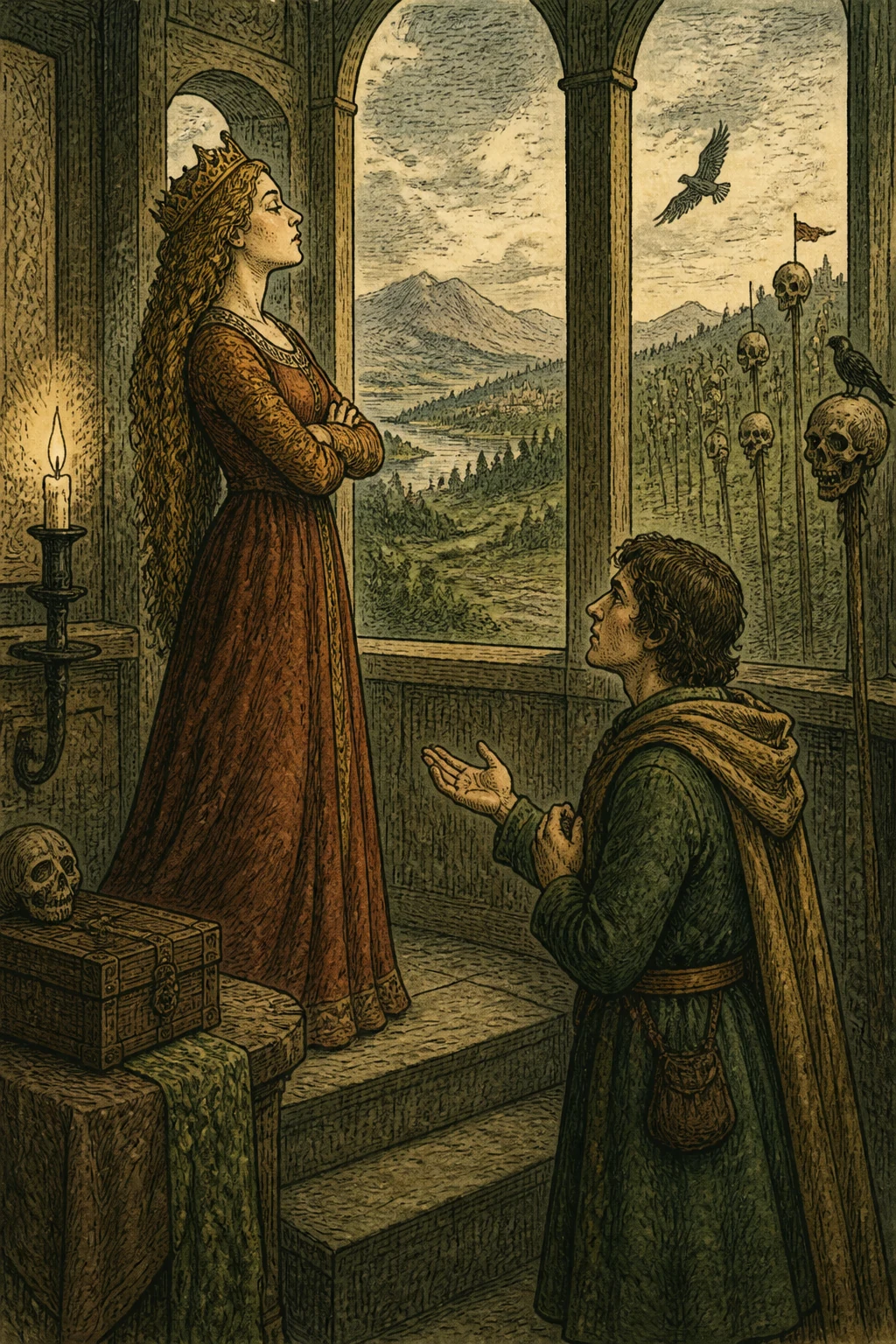
Ko je slišal, da namerava oditi v svet za neznanim mladeničem, je poslal ponj in ukazal, naj ga pripeljejo v palačo. Tam mu je kralj dejal: »Prišel si, da bi mi ukradel kraljično, in za to si zaslužiš smrt. Toda dal ti bom eno priložnost, da si rešiš življenje. Pred mojimi okni je gora, tako visoka in temna, da v grad nikoli ne posije niti en sončni žarek. Če v treh dneh zravnaš to goro, ti bom prizanesel in ti dal svojo hčer za ženo.«
Ko je kraljevič to slišal, je obupal, saj ni vedel, kako bi lahko zravnal goro v treh letih, kaj šele v treh dneh. Kljub temu je vzel kramp in lopato ter se lotil dela. Dva dni je kopal in premetaval zemljo, a po vsem tem času je odkopal komaj toliko, da bi z njo napolnil jarek.
Tedaj je prišla k njemu lisica. »Zdaj vidiš, kako malo zmoreš,« je dejala. »Ne zaslužiš si, da bi ti spet pomagala, toda mehkega srca sem. Lezi in si malo odpočij, jaz pa bom opravila delo namesto tebe.«
Kraljevič je lisici zaupal in bil je zelo utrujen. Vrgel se je na tla in trdno zaspal. Ko se je naslednje jutro prebudil, je gora izginila. Kraj, kjer je prej stala, je bil raven kakor dlan.
Ko je kralj pogledal skozi okno in videl, da gore ni več, sta ga prevzela veselje in začudenje. »Res si pošteno pridobil kraljično,« je dejal kraljeviču, »in ne bom ti je odrekel.«
Tako je dal svojo hčer tujemu mladeniču in mu povrhu podaril še veliko zakladov. Vsakemu od njiju je dal tudi konja z opravo iz zlata in dragih kamnov, nato pa sta skupaj odjezdila, drug ob drugem.
Nista prišla daleč, ko sta srečala majhno rdečo lisico, ki ju je že pričakovala. »Zdaj si res pridobil najdragocenejše od vsega,« je dejala. »Toda ti in samo ti bi moral imeti kraljično za ženo. Da pa jo boš obdržal, moraš storiti natanko tako, kakor ti naročim. Najprej moraš h kralju, ki te je poslal na Zlati grad. Ko bo videl, da si mu pripeljal kraljično, ti bo z veseljem dal Zlatega konja. Zajahaš ga, in ko se poslavljaš od kralja in njegovega dvora, vsakemu po vrsti sežeš v roko. Čisto nazadnje moraš prijeti za roko kraljično. Trdno jo primi in jo potegni k sebi na sedlo, nato pa odjezdi, kolikor te konj nese. Morda te bodo zasledovali, toda nihče te ne more dohiteti, saj je Zlati konj hitrejši od vetra.«
Kraljevič je storil natanko tako, kakor mu je naročila lisica. Kraljično je odpeljal v palačo kralja, ki ga je poslal ponjo. Ko jo je kralj zagledal, mu je z veseljem dal Zlatega konja. Kraljevič se je poslovil od vseh, čisto nazadnje pa je prijel kraljično za roko in jo potegnil na konja predse. Oddrvela sta hitreje od vetra in nihče ju ni zasledoval, saj so vedeli, da ju nikoli ne bi mogli ujeti.
Čez nekaj časa sta kraljevič in kraljična prišla do lisice, ki je sedela ob cesti in ju čakala. »Dobro,« je dejala lisica. »Zdaj imaš lepo kraljično in Zlatega konja, dobiti pa moraš še Zlato ptico.«
Lisica je nato kraljeviču povedala, kaj mora storiti. Kraljično mora pustiti tam, da ga počaka, sam pa odjezditi do palače. »Ko prideš v kraljevo palačo,« je dejala lisica, »ti bo kralj z veseljem dal Zlato ptico v zameno za konja. Vzemi kletko v roko, nato pa skoči na konja in odjezdi s ptico nazaj h kraljični. Ne bodo te skušali dohiteti, saj vedo, kako hiter je konj. Potem boš imel vse troje: kraljično, konja in ptico.«
Kraljevič je storil natanko tako, kakor mu je naročila živalca. Kraljično je pustil pri lisici in odjezdil do palače. Kmalu se je vrnil z Zlato ptico v roki.
»Zdaj imaš vse, kar si ti srce želi,« je dejala lisica, »in čas je, da dobim plačilo za svojo pomoč.« »Res je,« je dejal kraljevič. »Povej mi, kako naj te nagradim, in če bo v moji moči, bom to storil.«
»Potem vzemi lok,« je dejala lisica, »in me ustreli, da bom mrtva, nato pa mi odreži glavo in šape.« Kraljeviča je navdala groza. »Ne, ne,« je vzkliknil, »tega nikoli ne bi mogel storiti.«
»Prav,« je dejala lisica. »Če tega nočeš storiti, ne moreš ničesar narediti zame. Zapustiti te moram, toda preden grem, ti bom dala še en nasvet. Dveh stvari se varuj. Ne kupuj človeškega mesa in kosti in ne sedi na rob vodnjaka.« Nato ga je lisica zapustila in zbežala v bližnji gozd.
Kraljevič in kraljična pa sta skupaj jezdila naprej. »To je bil čuden nasvet,« je dejal kraljevič. »Zakaj bi hotel kupovati človeško meso in kosti in zakaj ne bi smel sesti na rob vodnjaka, če bi se mi zahotelo?«
»Res, zakaj?« je dejala kraljična. Potovala sta naprej, dokler nista prispela v vas, kjer sta stali obe krčmi. Kraljevič se je ustavil pri večji, da bi napojil konja, in kdo drug je prišel po vodo zanj kakor njegov drugi brat, ves v cunjah.
»O, dragi brat,« je vzkliknil kraljevič, »kaj se ti je zgodilo? Zakaj si ves v cunjah?« »Zato, ker sem dolžan krčmarju,« je odgovoril drugi kraljevič. »Ves svoj denar in še več sem zapravil za gostije in pijačo, zdaj pa me ima za hlapca in me noče izpustiti.«
»Kaj pa najin najstarejši brat, je tudi on tukaj?« Da, tudi on je bil tam. Tudi on je bil dolžan krčmarju in je moral delati v kuhinji.
Ko je najmlajši brat to slišal, so mu po licih stekle solze. Poklical je krčmarja, mu plačal vse, kar sta brata dolgovala, in ju odkupil na prostost. Vsakemu je kupil tudi spodobno obleko in lepega konja za ježo.
Nato so se vsi skupaj odpravili proti domu. Toda starejša brata mu nista bila hvaležna. Zavidala sta mu in ga sovražila, ker je pridobil kraljično, Zlatega konja in ptico ter ker bo dobil tudi očetovo kraljestvo. Zato sta se skrivaj dogovarjala, kako bi se ga znebila.
Potovali so že nekaj ur, ko je napočilo poldne in je sonce vroče pripekalo. Tedaj so prišli do kraja, kjer je stal vodnjak, obdan z drevesi.
»Sedimo tukaj in si malo odpočijmo,« sta dejala starejša brata in najmlajši je privolil. Vsi so razjahali, nato pa sta starejša brata zgrabila mlajšega in ga vrgla v vodnjak.
Potem sta vzela kraljično, konja in ptico ter odjezdila z njimi. Ko sta nazadnje prispela v očetovo palačo, je zavladalo neizmerno veselje. Kraljeviča nista pripeljala domov le Zlate ptice, temveč tudi Zlatega konja in lepo kraljično, zdaj pa naj bi se kraljestvo razdelilo mednju. Kaj se je zgodilo z najmlajšim kraljevičem, ni vedel nihče razen njegovih bratov in kraljične.
Toda kraljična ni sodelovala pri nobenem slavju. Sedela je in neutolažljivo žalovala. Konj ni hotel jesti in ptica ni hotela peti. Kralj je bil zaradi vsega tega močno zaskrbljen. Nikakor ni mogel uganiti, kaj jim je.
Čeprav sta brata najmlajšega vrgla v vodnjak, pa s tem njegove zgodbe še zdaleč ni bilo konec. Vodnjak je bil suh in kraljevič je mehko padel na mah na njegovem dnu. Razen nekaj modric ni utrpel nobene poškodbe. Toda stene vodnjaka so bile tako strme, da ni mogel splezati ven, in morda bi ostal v njem, če ne bi bilo zveste lisice. Ni bil dolgo v vodnjaku, ko je lisica pogledala čez rob in ga ogovorila.
»Komaj si zaslužiš, da ti spet pomagam,« je dejala lisica. »Če bi upošteval moja opozorila, te vse te težave ne bi doletele. Kljub temu te ne morem pustiti tukaj, da pogineš. Primi se za moj rep in potegnila te bom ven.«
Lisica je nato spustila rep v vodnjak, kraljevič se ga je oprijel in lisici ga je uspelo izvleči iz vodnjaka na sončno svetlobo.
Kraljevič se je s solzami v očeh zahvalil lisici, nato pa nadaljeval pot proti očetovi palači. Na poti je srečal starega berača in z njim zamenjal obleko. Oblekel si je beračeve cunje ter si umazal roke in obraz, da je bil temen kakor cigan, in ko je nazadnje prišel v palačo, ga ni prepoznal niti oče. Toda brž ko je stopil skozi palačna vrata, je ptica začela peti, konj jesti, kraljična pa si je obrisala solze in se glasno zasmejala od veselja.
Kralj je bil osupel. »Kaj je to?« je vprašal kraljično. »Kako to, da si tako nenadoma nehala žalovati in se razvedrila?« »Ne vem,« je odgovorila kraljična. »Še danes zjutraj sem bila tako žalostna, da mi je srce težilo kakor svinec, zdaj pa sem nenadoma čisto srečna, kakor da bi se moj ljubi ženin spet vrnil domov.«
Kraljična je nato kralju povedala vso zgodbo: kako je najmlajši kraljevič pridobil ptico in konja, pa tudi njo za nevesto; kako je pri krčmarju odkupil svoja brata in kako sta ga potem vrgla v suh vodnjak ter ga pustila tam.
»Morda,« je rekel kralj, »se je moj sin res vrnil domov in je tu v palači, zato pa si tako srečna.« Nato je ukazal, naj vsi v palači pridejo predenj. Tako se je tudi zgodilo in med vsemi drugimi je prišel mladi kraljevič, preoblečen v starega berača.
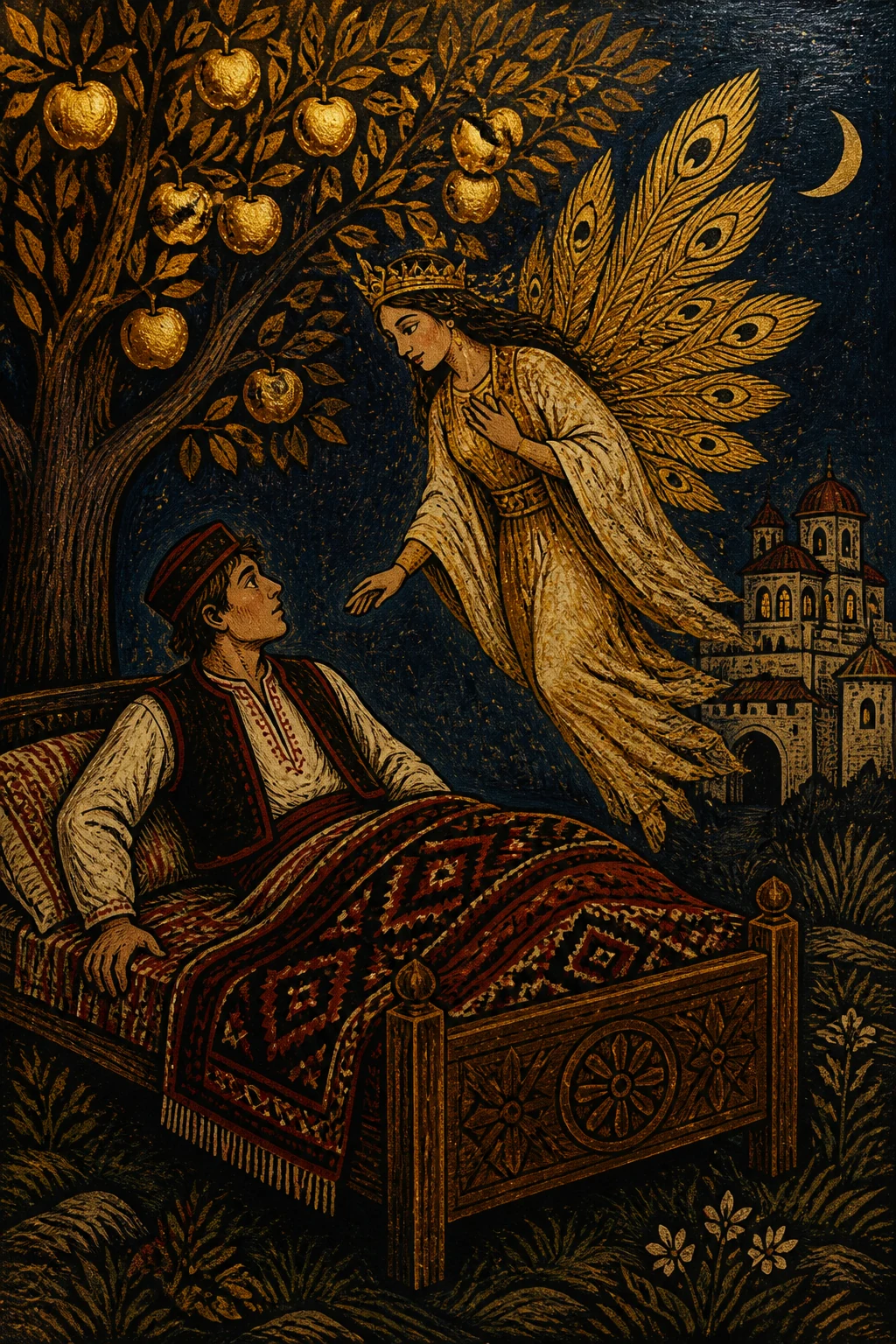
A čeprav je bil preoblečen, ga je kraljična takoj prepoznala. Stekla je k njemu, mu ovila roke okoli vratu in ga poljubila. »Ti si moj dragi,« je vzkliknila, »in tebi, samo tebi pripadam.«
Po vsej palači je zavladalo veliko veselje, ker se je kraljevič vrnil domov. Starejša brata pa so odgnali izpred kralja in ju kaznovali, kakor sta si zaslužila.
Nekaj časa zatem je mladi kraljevič med lovom v gozdu srečal malega rdečega lisjaka, ki je bil videti zelo žalosten, suh in izmučen. »Gorje meni!« je rekel kraljeviču. »Zdaj si srečen in imaš vse, kar si tvoje srce lahko poželi, mene pa preganjajo po svetu, nesrečnega in zapuščenega.«
Kraljeviča je tedaj prevzelo sočutje. »Zate bom storil vse, kar je v moji moči,« je rekel, »saj vse, kar imam, dolgujem tebi.« Lisjak ga je nato spet rotil in prosil, naj ga ustreli ter mu odreže glavo in tace. Nazadnje je kraljevič privolil.
Komaj je storil, kar ga je lisjak prosil, je namesto male živali pred njim stal čeden mladenič. Ta mladenič je bil brat kraljične Lepotice. Bil je začaran in je moral v lisičji podobi tavati po svetu, zdaj pa je mladi kraljevič prelomil čarovnijo.
Kraljeviča sta se prisrčno objela in se skupaj vrnila v palačo, odtlej pa so vsi skupaj živeli v največji sreči.
Izvirnik
026 The Golden Bird
Naslednje strani prikazujejo izvirno besedilo za primerjavo.
There was once a King who had in his gardens an apple-tree that bore golden apples. Every day the King went out to count the apples, and no one was allowed to touch them but himself.
One morning, when the King went out to count them as usual he found that one of them was gone. He was very much vexed, and ordered that at night a guard should be set around the garden, that no one might steal the apples, but the very next morning still another one was missing. So it happened day after day. Every gate to the garden was carefully guarded, and yet every morning another apple was gone from the tree, and they could not tell who had taken it.
Now the King had three sons, and one day the eldest came to his father and said, “Father, to-night I will watch under the apple-tree, and you may be sure that no one will be able to come near it without my seeing him.”
The King was quite willing for his son to keep watch, so that night the Prince took his place under the tree.
For some hours he sat there and watched, and scarcely winked an eyelid; but in the middle of the night a light shone around him and he heard a sound of music. Then, in spite of himself, he fell into a deep sleep, and when he awoke in the morning another apple had been stolen.
That day the second son came to the King and asked that he might be allowed to watch the apple-tree that night.
Again the King consented, and as soon as night came the second son went out and sat under the apple-tree just as his brother had done. Then just the same thing happened as had happened before. Toward midnight a light shone around the tree, and there was a sound of music, and then, do what he would, he could not stay awake. He slept, and while he slept another apple was taken.
The third day it was the turn of the third son to ask to be allowed to watch under the apple-tree. But the King refused. “Do you think that you are cleverer than your brothers?” he asked. “Why should you succeed when they have failed?” But the Prince begged and entreated until at last the King gave him permission to watch under the tree.
Now the third Prince was a wise youth; he had heard what happened to his brothers on the other two nights, so when evening came he stuffed his ears with cotton, and then he went out and took his place under the apple-tree. There he sat, and just before midnight a light shone through the branches, and there was a sound of music. But the young Prince had stuffed his ears with cotton so he could not hear the music, and he did not go to sleep.
After the music came a sound of wings, though this, too, the Prince could not hear, and a golden bird alighted on the apple-tree. The bird was about to pick one of the apples when the Prince raised his crossbow and shot a bolt at it.
The bird escaped, but one of its golden feathers fluttered down and fell at the Prince’s feet. He picked it up, and the next morning he took it to his father and told him what he had seen in the night.
As soon as the King saw the feather he was filled with the greatest desire to have the bird. “Life is worth nothing to me without that bird,” said he. “I would give my kingdom to possess it.”
When the eldest brother heard that, he at once made up his mind to set out in search of the bird, for he thought it would be a fine thing to gain the kingdom for himself. He went by himself, taking no one with him, for he did not wish anyone else to have a hand in the search.
He journeyed on for some distance and then he came to a cross-road, and there at the cross-roads he saw a little red fox sitting. The Prince drew his bow to shoot, but the animal called to him, “Do not shoot me, Prince, and I will give you a piece of good advice that is worth more than my skin.”
“What can a beast tell me that is worth hearing?” asked the Prince.
“Listen!” said the fox. “I know where you are going, that it is in search of the Golden Bird, but unless you do as I say you will never find it. To-night you will reach a village. In this village there are two inns that stand opposite to each other. One is a fine place. It will be lighted up, and there will be music and dancing inside. But do not enter there. The other inn is poor and miserable looking, but that is where you must stay if you hope to find the Golden Bird.”
“That is foolish talk, and I would be even more foolish to heed it,” cried the Prince, and again drawing his bow he shot a bolt at the fox. The bolt missed the mark, and the fox ran away unharmed.
The King’s son rode on, and at nightfall he entered a village. There on each side of the street stood an inn, and they were just such inns as the fox had told him of. One was a fine place, well-lighted, and with dancing and music going on inside. The other was dark and poor and miserable-looking.
The Prince never gave another thought to the fox’s advice. He turned in to the fine inn, and there he ate and drank and laughed with those who were there before him, and forgot all about the Golden Bird, and his father and the kingdom, too.
Time passed on, and still the eldest son did not return home, and no one knew what had become of him. Then the second son wished to try his luck at finding the Golden Bird. The King did not wish him to go, but the Prince was so eager that at last the father gave his consent.
The Prince journeyed on until he came to the cross-roads, and there sat the fox, just as it had before. The second son was about to shoot it, but the little animal called to him to spare its life and it would give him a piece of good advice.
The Prince was curious to hear what the fox had to say, but after he had heard of the two inns, and that it was the poor mean-looking one he must choose, he laughed aloud.
“A pretty piece of advice,” he cried, “and I would be a great simpleton to follow it.” Then he shot a bolt at the fox, but he missed his aim, and the little animal ran away unharmed.
Then it happened with the second Prince just as it had with his elder brother. He came to the two inns just at nightfall, and it was at the fine well-lighted inn that he stopped. There he spent the night in feasting and merry-making, and by the next day he had forgotten all about the Golden Bird, and his father, and the kingdom he had hoped to gain.
Now when time passed and the second son did not return either, it was the third Prince who wished to set out upon the search. But, “No, no,” said his father, “that I cannot allow. I have lost two sons already, and am I to lose my third son also?”
But the Prince had set his heart on going.
He begged and entreated until the King could no longer refuse him.
The Prince set out upon his journey, and it was not long before he reached the cross-roads, and found the fox sitting there, just as his brothers had before him. The Prince had his bow slung at his back, but he did not draw it.
“Do not shoot me, Prince,” cried the fox, “and I will give you a piece of good advice.”
“Why should I shoot you?” answered the Prince. “I have no quarrel with you. And as for your advice, who knows but what it may be well worth having?”
“Then listen,” said the fox; and he told the Prince about the two inns, just as he had told the other brothers.
“That may or may not be good advice,” said the Prince, “but at least it will do me no harm to follow it.”
So when he entered the village he did not go to the fine inn as his brothers had done. Instead he turned in at the poor, mean-looking inn, and there he spent the night quietly, and the next day he arose, and went on his way.
Just outside the village he came across the fox sitting in a field and waiting for him.
“Prince,” said the fox, “you did well indeed to follow my advice. Now seat yourself upon my tail and I will carry you on your journey far faster than you can walk.”
The Prince did as the fox bade him. He seated himself upon its tail and then away they went, so fast that the wind whistled past the Prince’s ears. Presently they came within sight of a great castle, and there the fox stopped. “In that castle is the Golden Bird,” said the fox, “but now you must go on alone. Follow this road, and it will lead you to the gate of the castle. All around you will see soldiers lying asleep on the ground, but do not fear them. They will not awake unless you disobey what I am about to tell you.”
The fox then told the Prince in which room of the castle he would find the Golden Bird. “It is in an ugly, mean-looking cage,” said he, “and close by hangs a handsome golden cage that is empty. But do not by any means put the bird in the golden cage. Bring it away in the mean-looking cage, for unless you do this some great misfortune will come upon you.”
The Prince was so happy to think he was soon to find the Golden Bird that he scarcely listened to anything else the fox told him.
He sprang from the fox’s tail and hastened along the road to the castle, and soon he came to the soldiers lying asleep upon the ground. He went past them safely and they did not wake. He entered the castle and it did not take him long to find the Golden Bird. There it was in the very room the fox had told him of. It was in a mean, common-looking cage, and beside it hung a handsome golden cage that was empty.
“It is a foolish thing,” thought the Prince, “to put a golden bird in a cage like that. It would be much better to put it in the cage that suits it.” So thinking, he took the bird from the ugly cage and put it in the handsome one. As soon as he did this the bird began to shriek. This sound awakened the soldiers. They ran in and seized the Prince, and carried him before the King of the country.
When the King heard how the Prince had tried to steal the Golden Bird he was very angry. “You deserve to be put to death,” said he, “but I will spare your life on one condition. If you will bring me the Golden Horse that goes swifter than the wind, you shall be pardoned, and I will give you the Golden Bird into the bargain.”
Well, there was no help for it; the Prince had to set out to find the Golden Horse, but he was very sad, for he did not know where to look for it, and unless he found it he would have to return and lose his life.
He went along the road and he had not gone far when he saw the fox sitting in a field and waiting for him.
“Why did you not follow my advice?” said the fox. “Now you are in a pretty scrape. But mount upon my tail and I will see what I can do to help you.”
The Prince seated himself upon the fox’s tail and away they went, over bush and brake, over rock and brier, so fast the wind whistled by the Prince’s ears.
Presently they came within sight of another castle, and there the fox stopped. “Light down,” said he, “for I can carry you no farther. In the stable of that castle is the Golden Horse you are in search of. Go on boldly and open the stable door. No one will stop you, for the stableman is asleep. Only when you find the Golden Horse do not take the golden saddle that hangs beside the stall. Take the worn old saddle that lies in the corner. Unless you do as I tell you misfortune will surely come upon you.”
The Prince scarcely listened to the fox, he was in such a hurry to find the Golden Horse. He hurried up the road to the stable and opened the stable door, and no one stopped nor stayed him. There in the stall stood the Golden Horse, and it shone so that the light from it filled the whole place. Hanging beside the stall was a golden saddle set with precious stones, and in the corner lay an old worn-out saddle of leather. “This golden saddle is the saddle that belongs with the Golden Horse,” thought the Prince. “It would be a shame to put the other upon its back.”
So he took down the golden saddle and laid it on the horse. As soon as he did so, the horse began to neigh and stamp. The sound awoke the stableman, and he called the guard. The soldiers came running in haste and seized the Prince and carried him before the King and told him the youth had been trying to steal the Golden Horse.
“You deserve to die for this,” said the King, “but I will forgive you on one condition. If you will bring me the Princess of the Golden Castle for a wife then you shall not only receive my pardon, but the Golden Horse into the bargain.”
Well, the Prince did not see how he was to find the Princess of the Golden Castle, but he promised to do his best. He set out and he had not gone far when he found the fox waiting for him.
“You do not deserve my help,” said the fox. “Why did you disobey me and put the golden saddle upon the horse? But mount upon my tail. I suppose I must do the best I can to pull you out of this scrape also.”
The Prince set himself upon the fox’s tail, and away they went again so fast that the wind whistled through his hair.
On and on they went, and after a time they came to another castle, and this castle was all of shining gold. “Now listen,” said the fox. “In this castle lives the beautiful Princess we are in search of. Do you go and hide yourself by the bathhouse down by the lake. Every night, when all in the castle are asleep, the Princess comes down to the lake to bathe. When she comes near the bathhouse you must seize her and kiss her. Then she will willingly follow you wherever you lead. But whatever you do do not allow her to go back to bid farewell to her parents. If you do you may answer for it with your life.”
The Prince promised to do as the fox told him, and then he went away and hid himself behind the bathhouse.
That night, as soon as all in the castle were asleep, the Princess came down to the lake to bathe as usual. As soon as she came near the bathhouse the Prince sprang out from behind it and caught her in his arms and kissed her. Then the Princess loved him, and was quite willing to leave her home and her father and mother and follow him.
“But before I follow you, let me go and say good-by to my parents,” she said, “for they love me dearly, and their hearts will surely break if I leave them without one word.”
It seemed to the Prince that it would be cruel to refuse what she asked. Beside, what harm could it do for her to see her parents once more?
“Very well,” said he. “Go, but return quickly, for we must be off before the day breaks.”
The Princess hurried away to the room where the King, her father, lay asleep, and she stooped and kissed him on the forehead. At once the King awoke and asked her where she was going.
When he heard she was going out into the world to follow an unknown youth, he sent out and had the Prince brought into the palace. There the King said to him, “You have come here to steal the Princess from me, and for this you deserve to die. But I will give you one chance for your life. Outside my windows is a mountain so high and dark that not a ray of sunlight ever comes into the castle. If in three days you can level down this mountain, then I will grant you your life, and give you my daughter for a bride.”
When the Prince heard this he was in despair, for he did not see how he could possibly level down a mountain in three years, let alone three days. However, he took a pick and shovel and set to work. For two days he dug and shoveled, and at the end of that time he had scarcely dug away enough to fill a ditch.
At the end of that time the fox came to him. “Now you see how little you can do,” said he. “You do not deserve that I should help you again, but I have a soft heart. Do you lie down and rest awhile, and I will do the work for you.”
The Prince trusted the fox, and he was very tired. He flung himself down upon the ground, and fell into a deep sleep.
When he awoke the next morning the mountain had disappeared. The place where it had stood was as flat as the palm of the hand.
When the King looked from his windows and found the mountain gone he was filled with joy and wonder. “You have indeed fairly won the Princess,” said he to the Prince, “and I will not say you nay.”
So he gave his daughter to the stranger youth, and much treasure as well. He also gave them each a horse trapped out in gold and precious stones, and then the two set out together, riding side by side.
They had not gone far when they met the little red fox, and he was on the watch for them.
“Now you have indeed won the best of all,” said he. “But it is you and you alone who should have the Princess for a wife. But in order to keep her for yourself you must do exactly as I say. First of all you must go to the King who sent you to the golden castle. When he sees you have brought the Princess to him, he will gladly give you the Golden Horse. Mount upon the horse, and when you say farewell to the King and his court, take the hand of each one in turn. Last of all you must take the hand of the Princess. Grasp it firmly, and draw her up into the saddle in front of you, and then ride away for your life. They may pursue you, but none can overtake you, for the Golden Horse goes faster than the wind.”
The Prince did exactly as the fox bade him. He took the Princess to the palace of the King who had sent him to find her. When the King saw her he gladly gave the Golden Horse to the Prince. The Prince said farewell to all and then at the last he caught the Princess by the hand and drew her up in front of him, and away they went faster than the wind, and none pursed them, for they knew they could never catch them.
After awhile the Prince and Princess came to the fox seated by the road waiting for them.
“That is well,” said the fox. “You have now the beautiful Princess and the Golden Horse, but you must have the Golden Bird also.”
The fox then told the Prince what he must do. He must leave the Princess there to wait for him, and ride on to the palace alone. “When you reach the palace of the King,” said the fox, “he will gladly give you the Golden Bird in exchange for the horse. Take the cage in your hand and then spring upon the horse and ride away with it till you come to where the Princess is. They will not try to overtake you, for they know how fast the horse goes. Then you will have all three, the Princess, the horse, and the bird.”
The Prince did exactly as the little animal bade him. He left the Princess there with the fox, and rode on to the palace, and it was not long before he was back again with the Golden Bird in his hand.
“Now you have all your heart desires,” said the fox, “and it is time I had my reward for serving you.”
“That is true,” said the Prince. “Tell me how to reward you, and if I can do it, I will.”
“Then take your bow,” said the fox, “and shoot me dead, and after that cut off my head and paws.”
The Prince was filled with horror. “No, no,” he cried, “that I can never do.”
“Very well,” said the fox. “If you will not do that, then you can do nothing for me. I must leave you, but before I go there is one more piece of advice that I will give you. Beware of two things. Buy no human flesh and bones, and do not sit on the edge of a well.” Then the fox left him and ran away into the forest near by.
But the Prince and Princess rode on together. “That was a curious piece of advice,” said the Prince. “Why should I want to buy human flesh and bones, and why should I not sit on the edge of a well if it pleases me?”
“Why indeed?” said the Princess.
The two journeyed on until they came to the village where the two inns stood, and there the Prince stopped at the larger inn to water his horse, and who should come out to fetch water for the horse but the Prince’s second brother, and he was all in rags.
“Oh, my dear brother,” cried the Prince, “what has happened to you? Why are you all in rags?”
“It is because I am in debt to the landlord,” answered the second Prince. “I spent all my own money and more beside in feasting and drinking, and now he keeps me as a servant and will not let me go.”
“And our eldest brother—is he here also?”
Yes, he was there also. He too was in debt to the landlord, and was obliged to work about in the kitchen.
When the youngest brother heard this the tears ran down his cheeks. He called the landlord to him and paid him all that the two brothers owed, and bought them free. He also bought for each of them proper clothes and fine horses to ride upon.
Then they all started home together. But the elder brothers were not grateful to him. They envied and hated him because he had won the Princess and the Golden Horse and the bird, and because he would have their father’s kingdom, too. So they plotted together as to how they could get rid of him.
They journeyed on for some hours until it was midday and the sun was hot. Then they came to a place where there was a well with trees around it.
“Let us sit here and rest awhile,” said the elder brothers, and the youngest was willing.
They all lighted down from their horses, and then the two elder brothers seized the younger one and threw him into the well.
After that they took the Princess, the horse, and the bird, and rode on with them.
When at last they reached the palace of their father there was the greatest rejoicing. Not only had the princes brought home with them the Golden Bird, but they had brought the Golden Horse, and the beautiful Princess as well, and now the kingdom was to be divided between them. As for the youngest Prince no one knew what had become of him except his brothers and the Princess.
But the Princess took no part in any of the rejoicings. She sat and grieved and grieved. The horse would not eat and the bird would not sing. The King was greatly distressed over all this. He could not guess what ailed them all.
But though the brothers had thrown the youngest brother into a well, that was not the last of him by any means. The well was a dry one, and the Prince fell softly on the moss at the bottom of it, and was not hurt at all except for a few bruises. But the sides of the well were so steep that he could not climb out of it, and there in the well he might have stayed had it not been for the faithful fox. The Prince had not been long in the well when the fox looked down over the edge of it and spoke to him.
“You little deserve that I should help you again,” said the fox. “If you had heeded my warnings all this trouble would not have come upon you. Nevertheless, I cannot leave you here to perish. Catch hold of my tail, and I will pull you out.”
The fox then let its tail hang down in the well, the Prince caught hold of it, and the fox managed to drag him out of the well and up into the sunlight.
The Prince thanked the fox with tears in his eyes, and then he journeyed on toward his father’s palace. On the way he met an old beggar-man, and exchanged clothes with him. He put on the beggar’s rags, and stained his hands and face so that he was as dark as a gypsy, and when he came at last into the palace not even his father knew him. No sooner did he enter the gate of the palace, however, than the bird began to sing, the horse began to eat, and the Princess wiped away her tears, and laughed aloud with joy.
The King was amazed. “How is this?” he asked the Princess. “How is it that you have so suddenly ceased grieving and become cheerful?”
“I know not,” answered the Princess. “Only this morning I was so sad that my heart was like lead, and now suddenly I feel quite happy, just as though my own dear promised husband had come home again.”
The Princess then told the King the whole story, how it was the youngest Prince who had won the bird and the horse, and her also for his bride; how he had bought his brothers’ lives from the landlord at the inn, and how they had afterward thrown him into a dry well and left him there.
“It may be,” said the King, “that my son has in truth come home, and is here in the palace, and that that is why you feel so happy.”
He then gave orders that everyone in the palace was to come before him. This was done, and among all the rest came the young Prince disguised as an old beggar-man.
But though he was disguised the Princess knew him at once. She ran to him and threw her arms about his neck and kissed him. “You are my own dear one,” she cried, “and to you and you only do I belong.”
Then there was great rejoicing all through the palace because the Prince had come home again. But as for the elder brothers they were sent out from before the King’s presence and punished as they deserved.
Now some time after this as the young Prince was hunting in the forest he met the little red fox, and it looked very sad and thin and worn.
“Alas!” said he to the Prince, “now you are happy and have everything your heart can wish, but I am hunted about the world, miserable and forlorn.”
Then the Prince was filled with pity. “Whatever I can do for you I will,” he said, “for everything I have I owe to you.”
Then again the fox begged and implored the Prince to shoot it and cut off its head and its paws. At last the Prince consented.
No sooner had he done as the fox asked him, than instead of the little animal a handsome young man stood before him. This young man was the brother of the Princess Beautiful. He had been enchanted, and obliged to wander about the world in the shape of a fox, but now the young Prince had broken the enchantment.
The two princes embraced each other tenderly, and returned to the palace together, and after that they all lived together in the greatest happiness.
Nadaljuj z branjem