Waltey
Zgodba o zaljubljencih iz Basre
Tisoč in ena noč · arabska pripovedna tradicijaO besedilu
Zgodba o zaljubljencih iz Basre
- Vir
- Tisoč in ena noč
- Avtor
- arabska pripovedna tradicija
- Jezik branja
- English
- Jezik izvirnika
- Arabic
- Čas branja
- 10 min branja
- Obseg
- 8 strani
- Naslov izvirnika
- حكاية عاشقين من البصرة - الليالي ٦٩٣ إلى ٦٩٥
O izvirniku
Tisoč in ena noč
Zgodbe v zgodbah, polne trgovcev, dvorov, preoblek in nočnih zapletov. Bralni jezik je English, izvirnik pa prihaja iz vira Tisoč in ena noč v jeziku Arabic.
Besedilo
Zgodba o zaljubljencih iz Basre
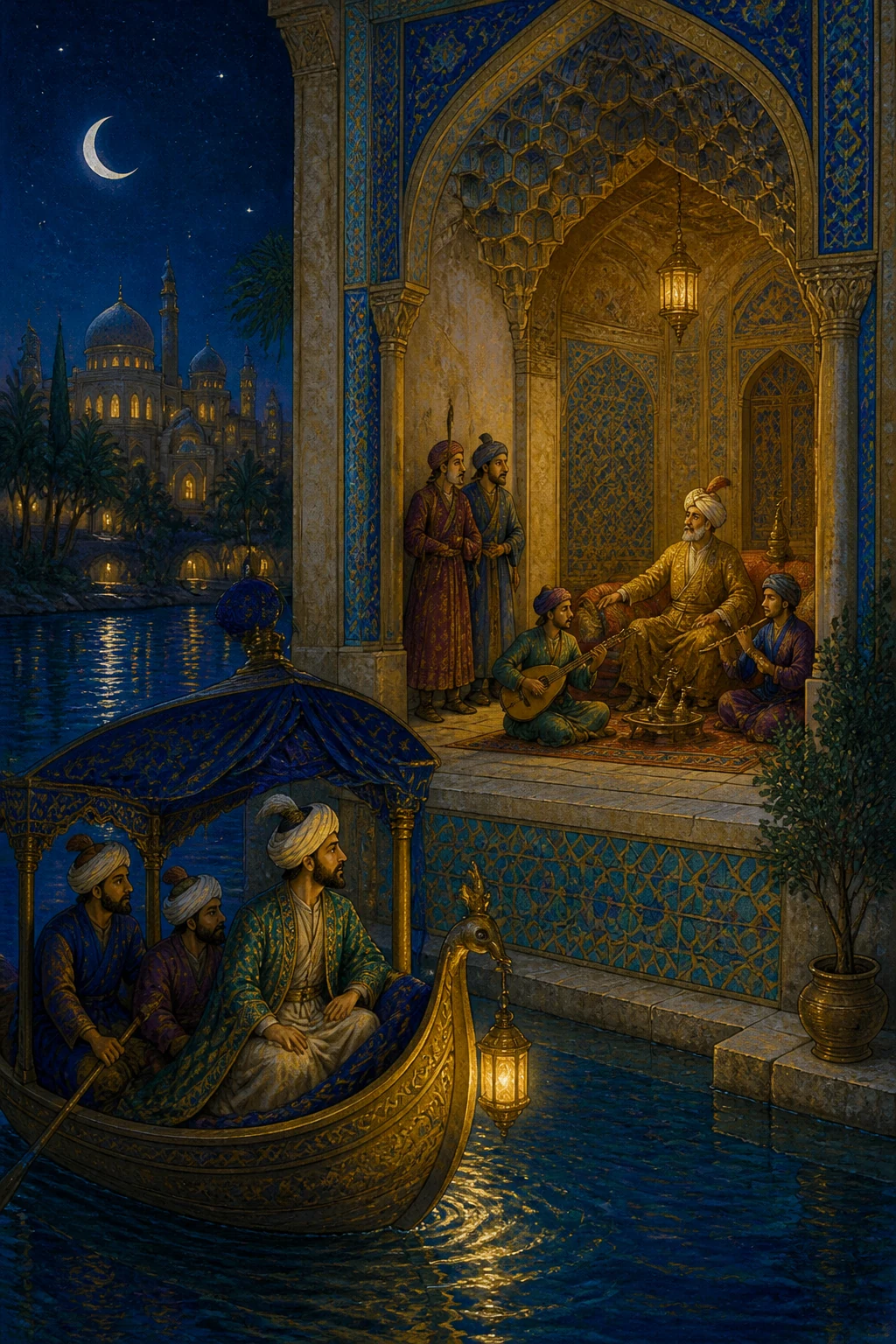
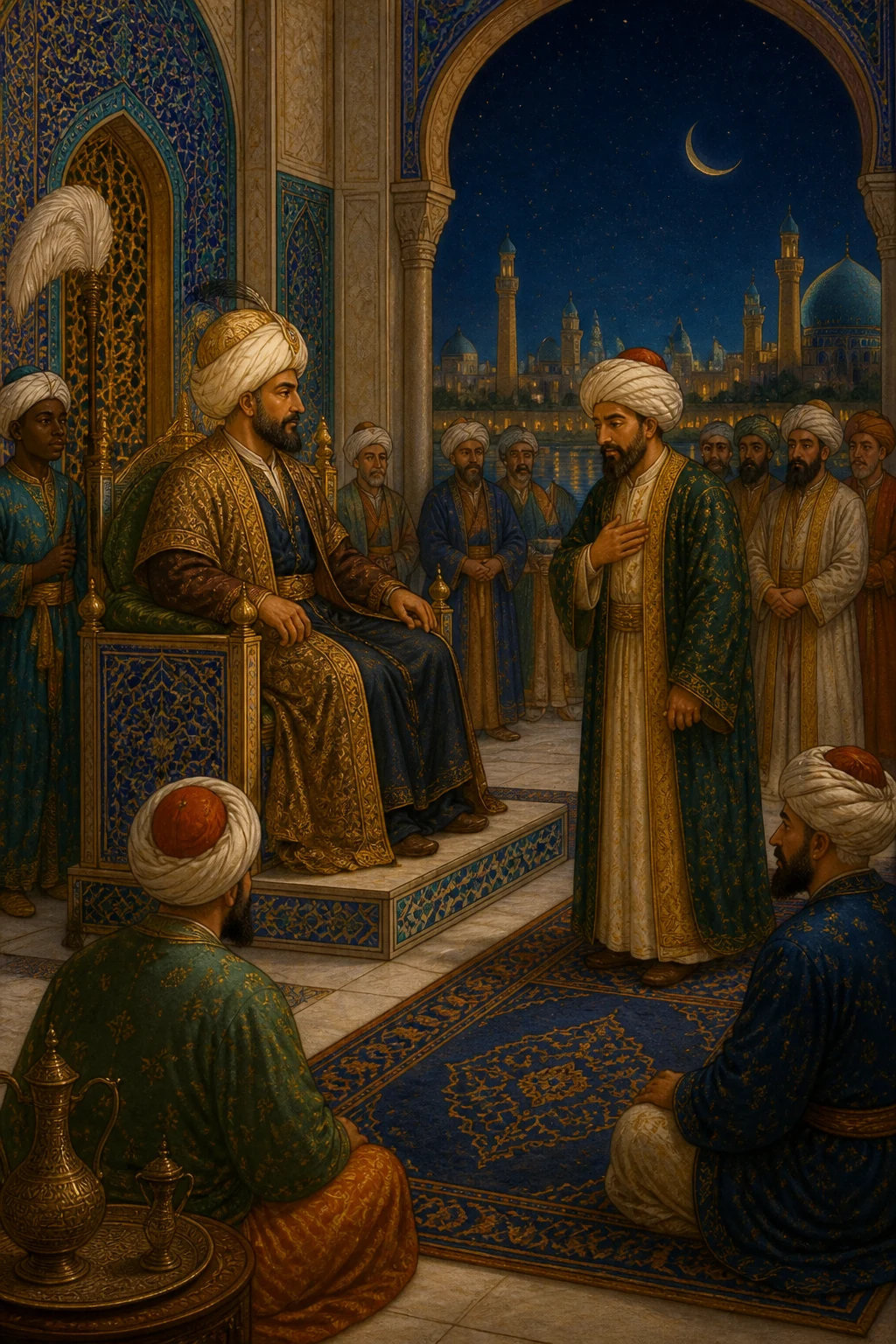
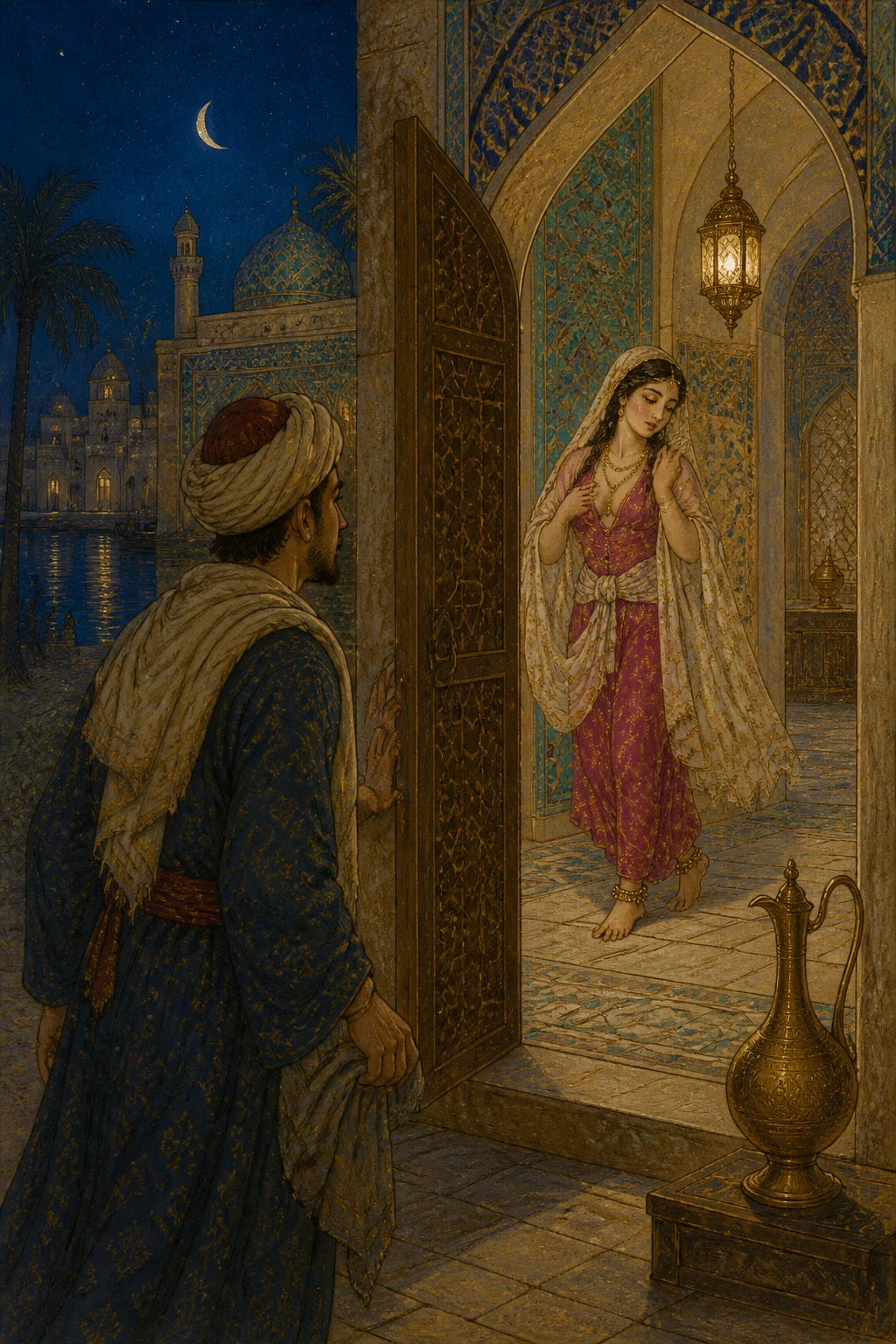
It is also related, O happy King, that Harun al-Rashid lay sleepless one night and sent for al-Asma‘i and Husayn al-Khali‘. When they were brought before him, he said, “Tell me a story, and you begin, Husayn.” He replied, “Yes, Commander of the Faithful. One year I journeyed down to Basra, bearing a poem in praise of Muhammad ibn Sulayman al-Rabi‘i. He received it graciously and bade me remain with him. One day I went out toward al-Murid, taking my way through al-Mahaliyya. The heat was fierce, and I approached a great doorway to ask for water. There I beheld a girl as supple as a swaying bough, with languorous eyes, finely arched brows, and smooth cheeks. She wore a pomegranate-red shift and a mantle from Sana‘a, and the dazzling whiteness of her hands outshone the red of her shift. Beneath it gleamed two breasts like pomegranates, and a belly like folded Coptic linen, its curves like rolls of shining white parchment stuffed with musk. About her neck, Commander of the Faithful, she wore beads of red gold that hung between her breasts, and across her broad forehead lay a fringe as black as jet. Her brows met above great dark eyes; her cheeks were smooth, her nose finely aquiline, and beneath it was a mouth like a pearl, with teeth like precious gems. Fragrance enveloped her. Distraught and bewildered, she paced to and fro in the entrance passage, treading, as she swayed, upon the very hearts of those who loved her. Her full ankles stifled the jingling of her anklets. She was as the poet described her:
‘Each lovely part of her proclaims Its own example of perfection.’ I stood in awe of her, Commander of the Faithful, then drew near to greet her. The house, the passage, and the street were all fragrant with musk. I saluted her, and she answered in a subdued voice, from a sorrowing heart consumed by the flames of longing. I said, ‘My lady, I am an old man and a stranger, and thirst has overcome me. Will you order me a drink of water and earn your reward for it?’ She replied, ‘Leave me, old man. I am too troubled to think of food or water.’” And morning overtook Shahrazad, and she fell silent, leaving her tale untold.
When it was the six hundred and ninety-fourth night
She said, “It has reached me, O happy King, that the girl said, ‘I am too troubled to think of food or water.’ I asked, ‘Why is that, my lady?’ She replied, ‘I love one who treats me unjustly, and desire one who does not desire me. Besides all this, I am tormented by the watchfulness of spies.’ I said, ‘Can there be anyone upon the face of the earth, my lady, whom you desire and who does not desire you?’ ‘Yes,’ she answered, ‘for he has been endowed with surpassing beauty, perfection, and grace.’ I asked, ‘And why do you stand here in this passage?’ She said, ‘His way lies here, and this is the hour when he passes.’ I said, ‘My lady, have you ever met and spoken together in a way that gave rise to this longing?’ She heaved a deep sigh, and tears ran down her cheeks like dew falling upon roses. Then she recited these two verses:
‘We were two branches of a willow above a garden, Breathing the fruits of pleasure in a life of ease. Then came one who severed this branch from its fellow: Who has seen one lonely thing yearn so for another?’ I said, ‘Tell me, how far has your love for this youth carried you?’ She answered, ‘When I see sunlight upon the walls of his family’s house, I imagine it is he. Sometimes I catch sight of him unexpectedly and am struck senseless: blood and spirit flee my body, and I remain out of my wits for a week or two.’ I said, ‘Forgive me, for I suffer from the same yearning as you: love engrosses my thoughts, wastes my body, and saps my strength. I see in your pallor and the delicacy of your skin the signs of love’s torments. And how could love fail to touch you, dwelling as you do in Basra?’ She replied, ‘By Allah, before I loved this youth I was all charm, radiant in beauty and perfection. I had bewitched all the lords of Basra, until this youth himself became enamored of me.’ I asked, ‘What parted you?’ She replied, ‘The calamities of fate. His story and mine is a strange one. On the day of Nawruz I held a gathering and invited several of the slave girls of Basra. Among them was Sayran’s slave girl, whom he had bought from Oman for eighty thousand dirhams. She loved me and was passionately devoted to me. When I entered, she threw herself upon me and nearly tore me to pieces with her pinches and bites. Then we withdrew to enjoy our wine while our meal was being prepared and our pleasure made complete. She sported with me and I with her, now I above her and now she above me. In her drunkenness she reached for my waistband and untied it, though there was nothing improper between us, and in our play my trousers slipped down. While we were thus engaged, he suddenly came in and saw us. Enraged at the sight, he turned away from me like an Arab filly that hears the clatter of its bridle, and rushed out.’” And morning overtook Shahrazad, and she fell silent, leaving her tale untold.
When it was the six hundred and ninety-fifth night
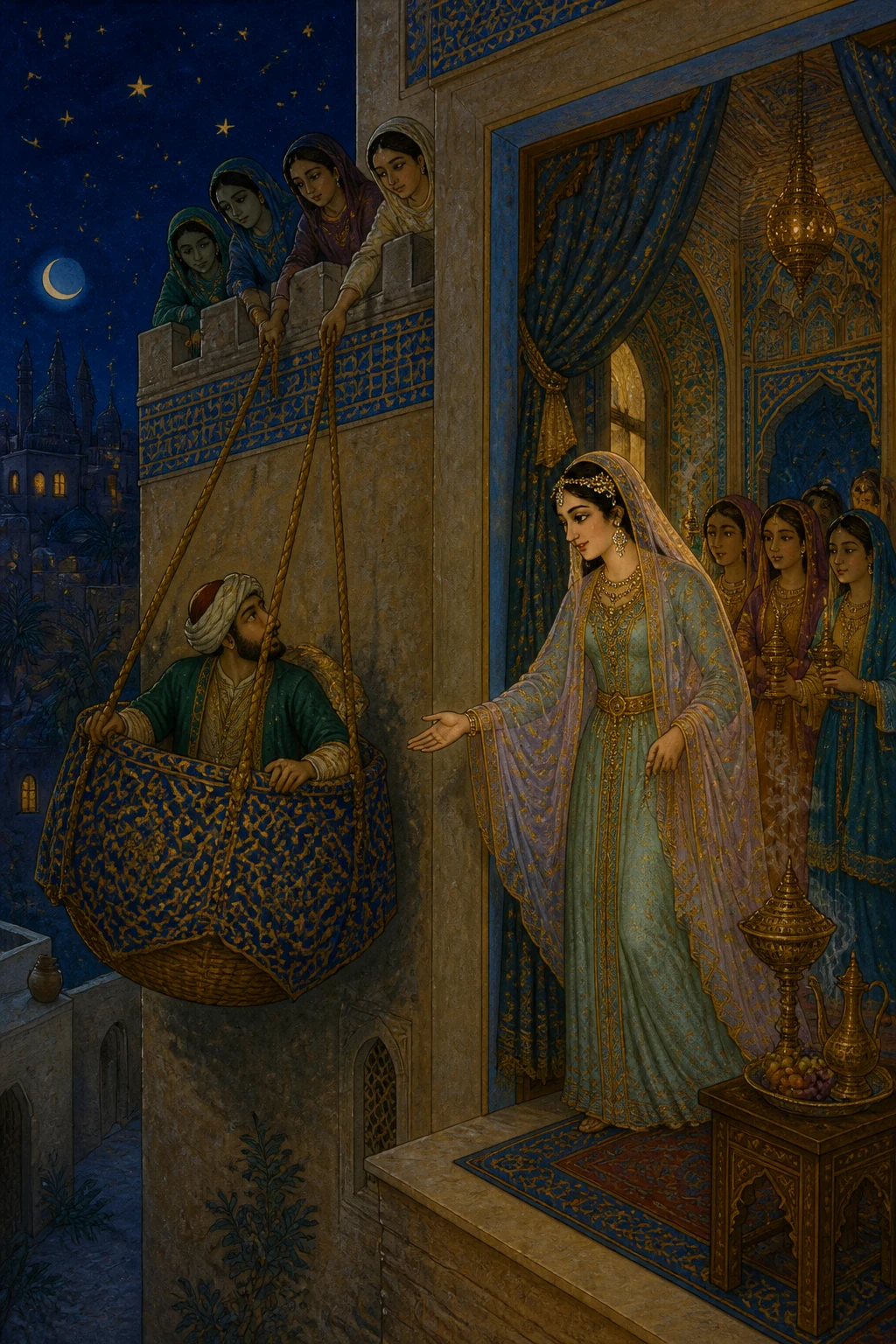
She said, “It has reached me, O happy King, that the girl said to Husayn al-Khali‘, ‘When my beloved saw what I have told you of my sport with Sayran’s slave girl, he went away in anger. For three years now, old man, I have done nothing but offer him excuses, coax him, and appeal to his compassion. Yet he will not grant me a glance, write me a single word, speak to a messenger of mine, or hear the least thing from me.’ I asked her, ‘Is he an Arab or a Persian?’ She replied, ‘Woe to you! He is one of the lords of Basra.’ I asked, ‘Is he old or young?’ She gave me a scornful look and said, ‘You are a fool! He is like the moon on the night of its fullness, smooth of body and beardless, with no fault save his aversion to me.’ I said, ‘What is his name?’ ‘What would you do with it?’ she asked. I replied, ‘I would endeavor to meet him and bring about a reunion between you.’ She said, ‘On condition that you carry a letter to him.’ I answered, ‘I have no objection.’ She said, ‘His name is Damra ibn al-Mughira, and he is called Abu al-Sakha. His mansion is in al-Murid.’ Then she called to those within the house, ‘Bring ink and paper!’ She bared two forearms like bands of silver, and, after invoking the name of Allah, wrote: ‘My lord, the absence of a prayer at the head of my letter reveals my failure. Know that, were my prayers answered, you would never have left me, for I often prayed that you would not leave me, yet you have left. Had my anguish not passed all bounds, your servant’s effort in writing this letter would have sufficed her, despite her despair of you, knowing as she does that you will leave it unanswered. Her utmost wish, my lord, is a glimpse of you as you pass along the street by this entrance, that you may restore a dead soul to life. Dearer still would it be if you wrote her a letter with your own hand—may Allah extend it in every virtuous deed—to take the place of those hours we spent alone together in nights gone by, which you remember, my lord. Am I not your loving, languishing woman? If you grant my request, I shall give thanks to you and praise to Allah. Peace be upon you.’
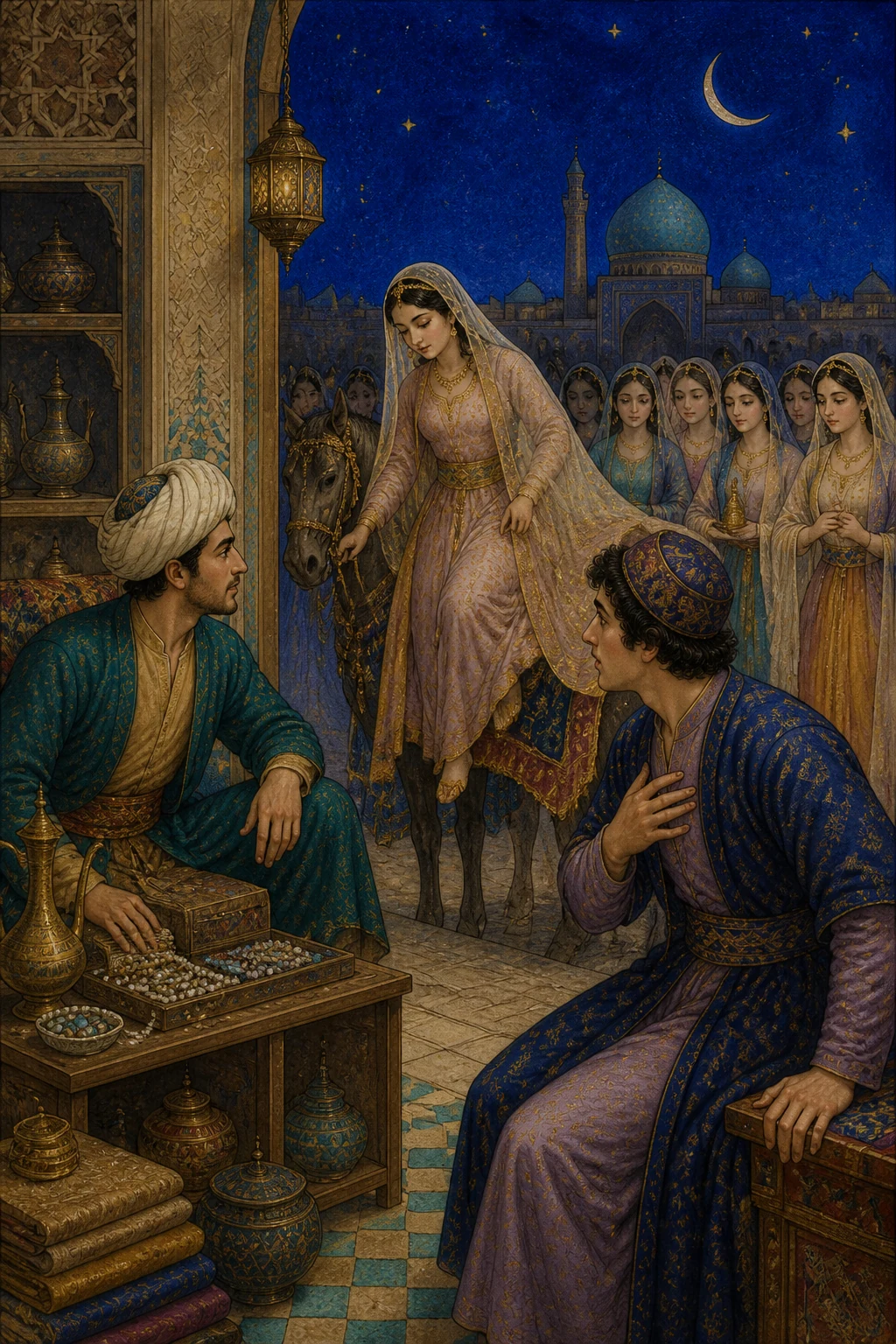
“I took the letter and departed. The next morning I went to the gate of Muhammad ibn Sulayman and found his assembly crowded with great lords. There I saw a youth who adorned the gathering, surpassing all present in beauty and radiance, and whom the emir had seated above himself. I asked who he was and learned that he was Damra ibn al-Mughira. I said to myself, ‘Truly, it is no wonder the poor girl has come to such a pass.’ Then I rose and made my way to al-Murid, where I stood at the gate of his house. Presently he arrived with his retinue. I sprang forward, greeted him with abundant blessings, and handed him the letter. When he had read it and understood its meaning, he said to me, ‘Old man, we have found another in her place. Would you like to see her replacement?’ ‘Yes,’ I replied. He called for a young woman, and there appeared a girl whose beauty put sun and moon to shame, with high, firm breasts, walking with the quick step of one in haste, yet without fear. He handed her the letter and said, ‘Answer it.’ When she had read it and understood its contents, her face turned pale, and she said, ‘Old man, ask Allah’s forgiveness for the errand you have undertaken.’ I went away, Commander of the Faithful, dragging my feet until I reached the first girl’s house. I asked leave to enter and went in. ‘What news?’ she asked. ‘Misery and despair,’ I replied. ‘Never mind him,’ she said. ‘Is Allah not there, and His power?’ Then she ordered five hundred dinars to be given to me, and I departed. Some days later I passed that place again and found servants and horsemen there. I entered, and behold, they were Damra’s companions, begging her to return to him, while she said, ‘No, by Allah, I will never look him in the face!’ I prostrated myself in thanks to Allah, Commander of the Faithful, rejoicing in Damra’s discomfiture. Then I drew near the girl, and she showed me a letter in which, after the invocation of Allah’s name, was written: ‘My lady, were it not for my wish to spare you—may Allah prolong your life—I would set down some part of what you have done, and state fully my defense against your accusation that I wronged you. For it was you who wronged both yourself and me, showing how little you valued your pledge and how scant your faithfulness was, preferring another to me and acting against my wishes. Allah’s help is sought against the choice you made. Peace be upon you.’ She also showed me the gifts and rarities he had sent her, worth thirty thousand dinars. Later I saw her again, and Damra had married her.” Then al-Rashid said, “Had Damra not forestalled me, I should have had a tale of my own with her.”
Izvirnik
حكاية عاشقين من البصرة - الليالي ٦٩٣ إلى ٦٩٥
Naslednje strani prikazujejo izvirno besedilo za primerjavo.
فلما كانت الليلة ٦٩٣
وحُكِي أيضًا أيها الملك السعيد، أن هارون الرشيد أرق ليلةً، فوجَّهَ إلى الأصمعي، وإلى حسين الخليع، فأحضرهما وقال: حدِّثاني، وابدأ أنت يا حسين. فقال: نعم يا أمير المؤمنين، خرجت في بعض السنين منحدرًا إلى البصرة، ممتدحًا محمد بن سليمان الربيعي بقصيدة، فقبِلَها وأمرني بالمقام، فخرجت ذات يوم إلى المريد، وجعلت المهالية طريقي، فأصابني حر شديد، فدنوت من باب كبير لأستسقي، وإذا أنا بجاريةٍ كأنها قضيب ينثني، وَسْناءِ العينين، زجاءِ الحاجبين، أسيلةِ الخدين، عليها قميص جلناري ورداء صنعاني، قد غلبت شدة بياض يديها حمرة قميصها، يتلألأ من تحت القميص ثديان كرمانتين، وبطن كطي القباطي بعكن كالقراطيس الناصعة المعقودة بالمسك محشوَّة، وهي يا أمير المؤمنين متقلِّدة بخرزٍ من الذهب الأحمر، وهو بين نهديها وعلى صحن جبينها طرة كالسبج، ولها حاجبان مقرونان، وعينان نجلاوان، وخدان أسيلان، وأنف أقنى، تحته ثغر كاللؤلؤ وأسنان كالدر، وقد غلب عليها الطيب، وهي والهة حيرانة ذاهبة في الدهليز تروح وتجيء، تخطر على أكباد مُحِبيها في مشيتها، وقد أخرست سيقانها أصوات خلاخيلها، فهي كما قال فيها الشاعر:
كُلُّ جُزْءٍ فِي مَحَاسِنِهَا مُرْسِلٌ مِنْ حُسْنِهَا مَثَلَا
فهبتها يا أمير المؤمنين، ثم دنوتُ منها لأسلم عليها، فإذا الدار والدهليز والشارع قد عبق بالمسك، فسلَّمْتُ عليها فردَّتْ عليَّ بلسان خاشع وقلب حزين بلهيب الوَجْد محترق، فقلت لها: يا سيدتي، إني شيخ غريب وأصابني عطش، أفتأمرين لي بشربة ماء تُؤجَرين عليها؟ قالت: إليك عني يا شيخ، فإني مشغولة عن الماء والزاد. وأدرك شهرزاد الصباح فسكتَتْ عن الكلام المباح.
فلما كانت الليلة ٦٩٤
قالت: بلغني أيها الملك السعيد، أن الجارية قالت: إني مشغولة عن الماء والزاد. فقلتُ: لأي عِلَّة يا سيدتي؟ قالت: إني أعشق مَن لا ينصفني، وأريد مَن لا يريدني، ومع ذلك فإني ممتحَنة بمراقبة الرقباء. قلت: وهل يا سيدتي على بسيطة الأرض مَن تريدينه ولا يريدك؟ قالت: نعم، وذلك لفضل ما رُكِّب فيه من الجمال والكمال والدلال. قلت: وما وقوفك في هذا الدهليز؟ قالت: ها هنا طريقه، وهذا وقت اجتيازه. قلت لها: يا سيدتي، فهل اجتمعتما في وقت من الأوقات، وتحدَّثْتُما حديثًا أوجب هذا الوَجْد؟ فتنفَّسَتِ الصعداء، وأرخت دموعها على خدها كطل سقط على ورد، ثم أنشدت هذين البيتين:
وَكُنَّا كَغُصْنَيْ بَانَةٍ فَوْقَ رَوْضَةٍ نَشُمُّ جَنَى اللَّذَّاتِ فِي عِيشَةٍ رَغْدِ
فَأَفْرَدَ هَذَا الْغُصْنُ مِنْ ذَاكَ قَاطِعٌ فَيَا مَنْ رَأَى فَرْدًا يَحِنُّ إِلَى فَرْدِ
قلت: يا هذه، فما بلغ من عشقك لهذا الفتى؟ قالت: أرى الشمس على حيطان أهله، فأحسب أنها هو، وربما أراه بغتةً فأبهت ويهرب الدم والروح من جسدي، وأبقى الأسبوعَ والأسبوعين بغير عقلٍ. فقلت لها: اعذريني، فإني على مثل ما بكِ من الصبابة، مشتغل البال بالهوى وانتحال الجسم وضعف القوى، أرى بك من شحوب اللون ورِقَّة البشرة ما يشهد بتباريح الهوى، وكيف لم يَمْسَسْكِ الهوى وأنتِ مقيمة في أرض البصرة؟ قالت: والله كنتُ قبل محبتي هذا الغلام في غاية الدلال، بهية الجمال والكمال، ولقد فتنتُ جميعَ ملوك البصرة حتى افتتن بي هذا الغلام. قلت: يا هذه، ما الذي فرَّقَ بينكما؟ قالت: نوائب الدهر، ولحديثي وحديثه شأن عجيب؛ وذلك أني قعدتُ في يوم نيروز، ودعوت عدَّة من جواري البصرة، وفي تلك الجواري جارية سيران، وكان ثمنها عليه من عمان ثمانين ألف درهم، وكانت لي مُحِبَّة وبي مولعة، فلما دخلتُ رمت نفسها عليَّ وكادت تقطعني قرصًا وعضًّا، ثم خلونا ننعم بالشراب إلى أن يتهيَّأ طعامنا ويتكامل سرورنا، وكانت تلاعبني وألاعبها، فتارةً أنا فوقها وتارةً هي فوقي، فحملها السكر على أن ضربتْ يدها إلى دكتي، فحَلَّتْها من غير ريبة كانت بيننا، ونزل سروالي بالملاعبة، فبينما نحن كذلك إذ دخل هو على حين غفلة، فرأى ذلك، فاغتاظ لذلك وانصرف عني انصراف المهرة العربية إذا سمعت صلاصل لجامها، فولَّى خارجًا. وأدرك شهرزاد الصباح فسكتَتْ عن الكلام المباح.
فلما كانت الليلة ٦٩٥
قالت: بلغني أيها الملك السعيد، أن الجارية قالت لحسين الخليع: إن محبوبي لما رأى ما ذكرتُ لك من ملاعبتي مع جارية سيران، خرج مغضبًا مني، فأنا يا شيخ منذ ثلاث سنين لم أزل أعتذر إليه وأتلطف به وأستعطفه، فلا ينظر إليَّ بطرف، ولا يكتب إليَّ بحرف، ولا يكلِّم لي رسولًا، ولا يسمع مني قليلًا. قلت لها: يا هذه، أمِنَ العرب هو أم مِنَ العجم؟ قالت: ويحك، هو من جملة ملوك البصرة. فقلت لها: أشيخ هو أم شاب؟ فنظرتْ إليَّ شزرًا وقالت: إنك أحمق، هو مثل القمر ليلة البدر، أجرد أمرد، لا يعيبه شيء غير انحرافه عني. فقلت لها: ما اسمه؟ قالت: ما تصنع به؟ قلت: أجتهد في لقائه لتحصيل الوصال بينكما. قالت: على شرط أن تحمل إليه رقعة. قلت: لا أكره ذلك. فقالت: اسمه ضمرة بن المغيرة، ويكنَّى بأبي السخاء، وقصره بالمريد. ثم صاحت على مَن في الدار: هاتوا الدواة والقرطاس. وشمرت عن ساعدين كأنهما طوقان من فضة، وكتبت بعد التسمية: «سيدي، ترك الدعاء في صدر رقعتي يُنبِئ عن تقصيري، واعلم أن دعائي لو كان مستجابًا ما فارقتَني؛ لأني كثيرًا ما دعوتُ ألَّا تفارقني وقد فارقتَني، ولولا أن الجهد تجاوز بي جد التقصير لَكان ما تكلَّفَتْه خادمتك من كتابة هذه الرقعة معينًا لها مع يأسها منك؛ لعلمها أنك تترك الجواب، وأقصى مرادها سيدي نظرةٌ إليك وقتَ اجتيازك في الشارع إلى الدهليز تُحْيِي بها نفسًا ميتة، وأجلُّ من ذلك عندها أن تخطَّ بخط يدك — بسطها الله بكل فضيلة — رقعةً، وتجعلها عوضًا عن تلك الخلوات التي كانت بيننا في الليالي الخاليات، التي أنت ذاكر لها سيدي، ألستُ لك محبة مدنفة؟ فإنْ أجبتَ إلى المسألة كنتُ لك شاكرةً، ولله حامدة والسلام.»
فتناولتُ الكتاب وخرجت، وأصبحت غدوت إلى باب محمد بن سليمان، فوجدت مجلسًا محتفلًا بالملوك، ورأيت غلامًا قد زان المجلس، وفاق على مَن فيه جمالًا وبهجةً قد رفعه الأمير فوقه، فسألت عنه فإذا هو ضمرة بن المغيرة، فقلت في نفسي: بالحقيقة حلَّ بالمسكينة ما حلَّ بها. ثم قمت وقصدت المريد، ووقفت على باب داره، فإذا هو قد ورد في موكب، فوثبتُ إليه وبالغت في الدعاء وناولتُه الرقعة، فلما قرأها وفهم معناها قال لي: يا شيخ، قد استبدلنا بها، فهل لك أن تنظر إلى البديل؟ قلت: نعم. فصاح على فتاة، وإذا هي جارية تُخجِل القمرين، ناهدة الثديين، تمشي مشية مستعجل من غير وجل، فناوَلَها الرقعة وقال: أجيبي عنها. فلما قرأتها اصفرَّ لونها حيث عرفَتْ ما فيها وقالت: يا شيخ، استغفر الله ممَّا جئتَ فيه. فخرجت يا أمير المؤمنين، وأنا أجر رجلي حتى أتيتُها واستأذنت عليها ودخلت، فقالت: ما وراءك؟ قلت: البأس واليأس. قالت: ما عليك منه، فأين الله والقدرة. ثم أمرت لي بخمسمائة دينار وخرجتُ، ثم جزتُ على ذلك المكان بعد أيام، فوجدتُ غلمانًا وفرسانًا فدخلتُ، وإذا هم أصحاب ضمرة يسألونها الرجوعَ إليه، وهي تقول: لا والله لا نظرت له في وجه. فسجدتُ شكرًا لله يا أمير المؤمنين شماتةً بضمرة، وتقرَّبْتُ من الجارية فأبرزتْ لي رقعة، فإذا فيها بعد التسمية: «سيدتي، لولا إبقائي عليكِ — أدام الله حياتك — لَوضعتُ شطرًا مما حصل منك، وبسطت عذري في ظلامتك إياي؛ إذ كنتِ الجانيةَ على نفسك ونفسي المظهرة لسوء العهد وقلة الوفاء والمؤثرة علينا غيرنا، فخالفتِ هواي والله المستعان على ما كان من اختيارك والسلام.» وأوقفتني على ما حمله إليها من الهدايا والتحف، وإذا هو بمقدار ثلاثين ألف دينار، ثم رأيتها بعد ذلك وقد تزوَّجَ بها ضمرة، فقال الرشيد: لولا أن ضمرة سبقني إليها لَكان لي معها شأن من الشئون.
Nadaljuj z branjem