Waltey
Zgodba o otoku lokvanjevih listov
038 THE STORY OF LILY-PAD ISLAND
Živalske zgodbe Clare Dillingham Pierson · Clara Dillingham PiersonO besedilu
Zgodba o otoku lokvanjevih listov
- Vir
- Živalske zgodbe Clare Dillingham Pierson
- Avtor
- Clara Dillingham Pierson
- Jezik branja
- Slovenščina
- Jezik izvirnika
- English
- Čas branja
- 6 min branja
- Obseg
- 5 strani
- Naslov izvirnika
- 038 THE STORY OF LILY-PAD ISLAND
O izvirniku
Živalske zgodbe Clare Dillingham Pierson
Devetindevetdeset avtorskih zgodb o živalih na kmetiji, travniku, v gozdu, ob ribniku in ponoči. Bralni jezik je Slovenščina, izvirnik pa prihaja iz vira Živalske zgodbe Clare Dillingham Pierson v jeziku English.
Besedilo
Zgodba o otoku lokvanjevih listov
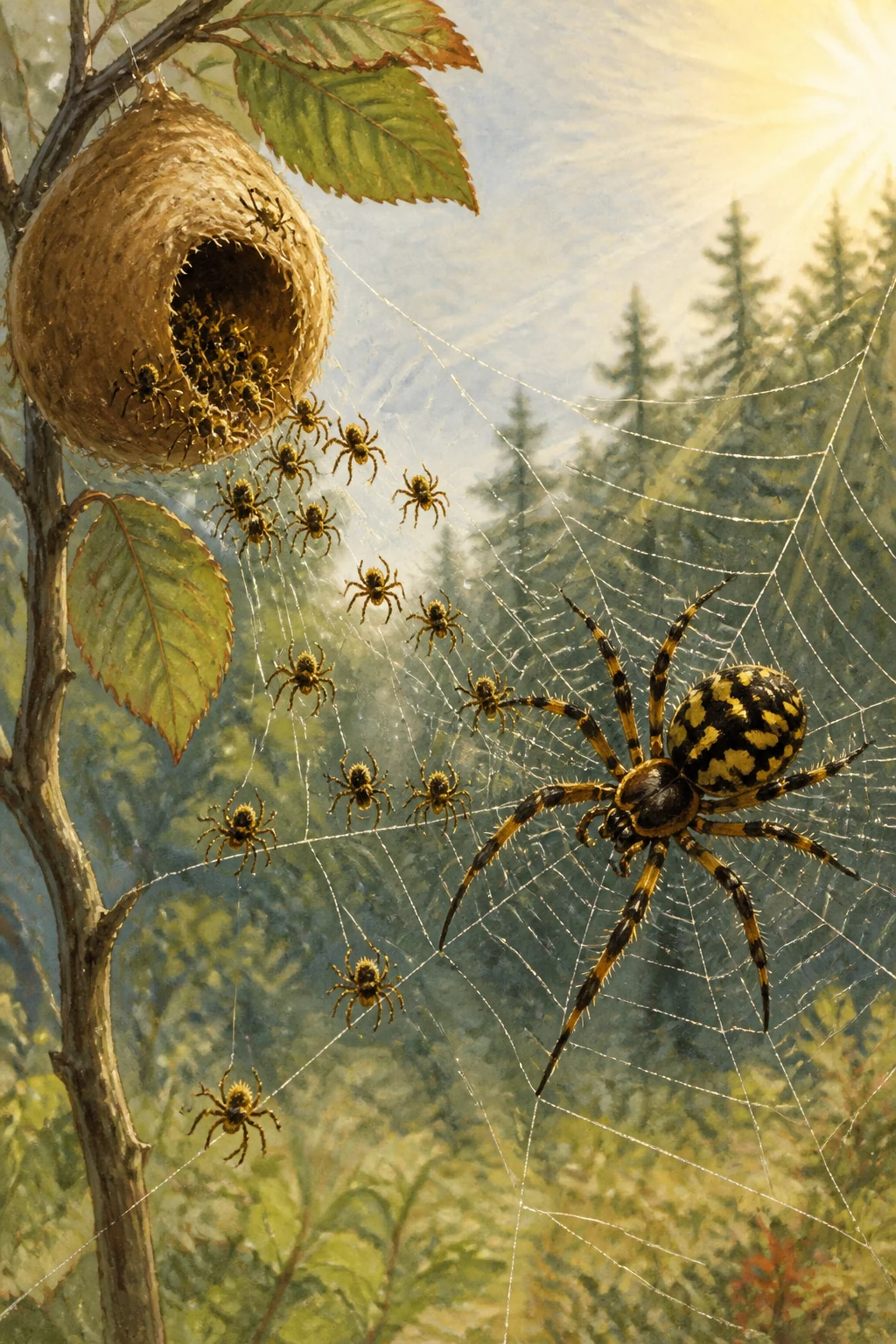
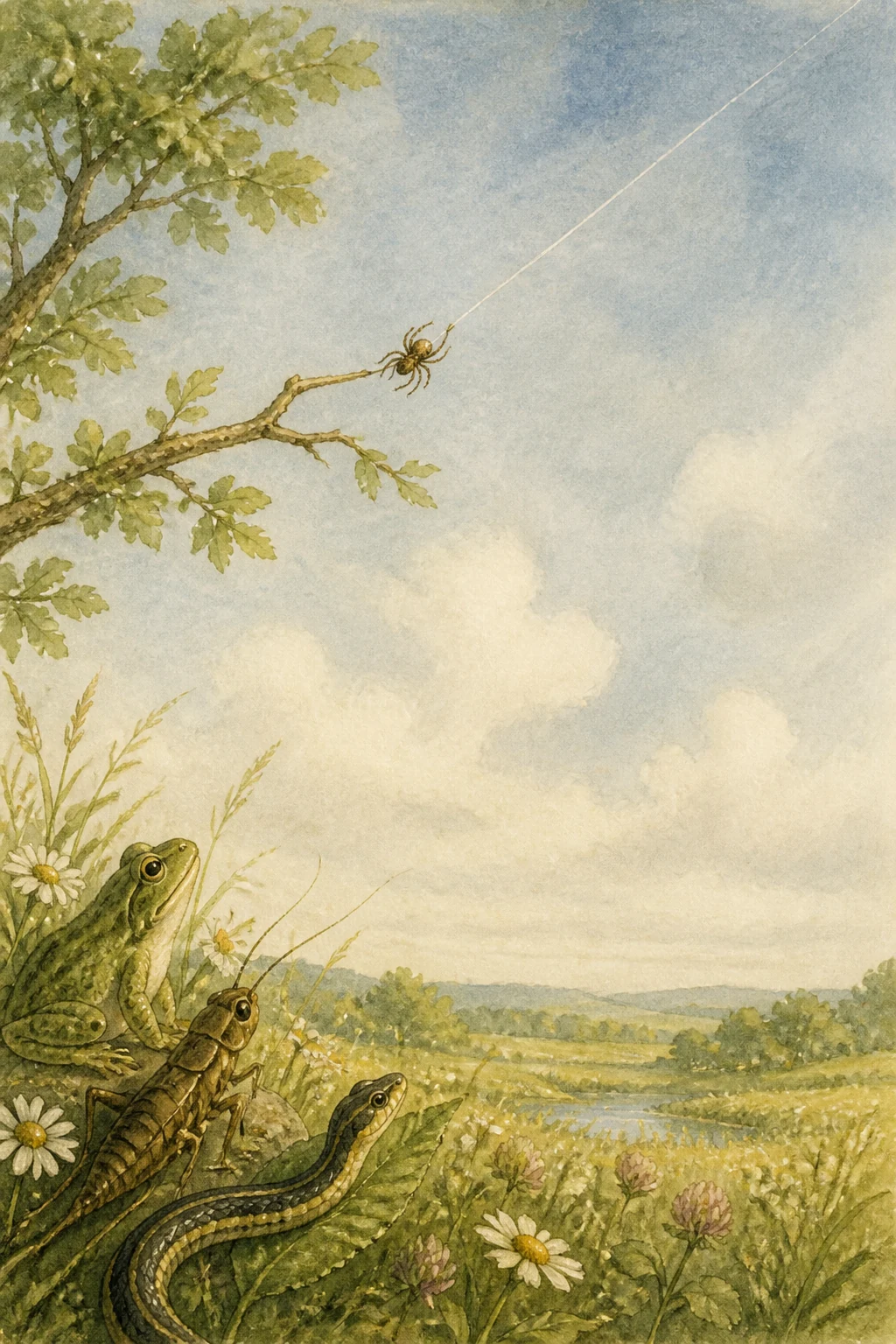
To je zgodba o podjetnem mladem Pajku, ki je zapustil svoj dom na travniku, da bi si v širnem svetu poiskal srečo. Bil je lep Pajek in je pripadal eni najuglednejših družin v vsej okolici. Bil je tudi marljiv, kajti, kakor je sam pogosto govoril, na njegovem telesu ni bilo niti ene lene noge, in znal je splesti največjo, najtrdnejšo in najbolj sijočo mrežo na travniku. Vsi mladi prebivalci travnika so ga imeli radi in povabili so ga na vsako zabavo, ples ali piknik, ki so ga priredili. Če bi se zadovoljil s tem, da bi ostal doma, kakor njegovi bratje in sestre, bi sčasoma postal tako pomemben in znan kakor Rega ali debeli stari Čriček ali celo Podvezničasta kača.
Toda to mu nikakor ni bilo dovolj in nekega jutra se je poslovil od vseh prijateljev in sorodnikov ter odplul neznanim deželam naproti. Odplul je, vendar ne po vodi. Splezal je na drevo in se pomaknil do konca ene izmed vej. Tam je začel presti dolgo svileno nit in pustil, da jo je veter odnašal proč od drevesa. En konec je trdno držal in ko je veter dovolj močno zapihal, je izpustil vejo ter odjadral po zraku; njegova nit ga je nosila kakor balon, veter pa ga je gnal naprej.
Prebivalci travnika so ga s tal opazovali, dokler se ni tako oddaljil, da je bil videti komaj še tako velik kakor Muha, nato nič večji od Mravlje, nato nič večji od deteljnega semena, nato nič večji od najmanjšega jajčeca, kar jih je bilo kdaj izleženih, in potem — no, potem ni bilo videti ničesar več razen neba in Pajek je zares odšel. Vsi drugi mladi Pajki so si želeli, da bi bili šli z njim, stari Pajki pa so govorili: »Veliko bolje bi bilo, ko bi ostali doma, kakor so njihovi očetje in matere.« Ker so bili tako različnih mnenj, o tem ni imelo smisla razpravljati, in kaj dosti več ni bilo rečeno.
Medtem se je mladi popotnik prav imenitno zabaval. Veter ga je nosil mimo dreves in čez ograje, dol proti reki. Pod njim so bile vse pisane travniške cvetlice in grmi, ki so se mu nekoč dvigali visoko nad glavo. Čez nekaj časa je pod seboj zagledal močvirsko ločje in se vprašal, ali ga bodo tamkajšnje Žabe opazile, ko bo letel nad njimi.
Nato je zagledal čudovito, lesketajočo se reko. V mirni vodi ob bregu so rasli veliki beli lokvanji, ob njih pa so plavali njihovi zeleni listi. »Ah,« si je mislil, »preletel bom reko in pristal na drugem bregu.« Že je začel razmišljati, da bi pojedel nit svojega balona in se tako počasi spustil na tla, ko je — veter nenadoma ponehal in začel je počasi padati, niže, niže, niže, niže.
Kako si je želel veje, ki bi se je lahko oprijel! Kako je trepetal ob misli, da bo padel v mrzlo vodo! Kako si je želel, da bi bil ves čas ostal doma! Kako se je spominjal vseh porednosti, ki jih je kdaj ušpičil, in kako mu je bilo žal zanje! Toda nič ni pomagalo, saj se je še vedno spuščal niže, niže, niže. Opustil je vsakršno upanje in se skušal opogumiti, prav tisti hip pa je začutil, da je pristal na velikem zelenem lokvanjevem listu.
To je bila res prava pustolovščina in nekaj časa je bil silno vesel. Toda postal je lačen, hrane pa ni bilo nikjer v bližini. Prehodil je ves list, ki ga je poimenoval Otok lokvanjevega lista, in kar štiridesetkrat obtekel njegove robove. Bil je le ploščat zelen otok, ob eni njegovi strani pa je stal brezhiben bel lokvanjev cvet, ki je tako čist in lep zrasel iz teme in mulja na rečnem dnu. Cvet je bil tako blizu, da je skočil vanj. Tam se je ugnezdil v njegovi dišeči rumeni sredici in zaspal.
Ko je zaspal, je bilo že pozno popoldne, in ko se je sonce na zahodu spuščalo vse niže, je lokvanj začel zapirati svoje cvetne liste in se pripravljati na noč. Ravno se je začel umikati pod vodo, ko se je Pajek prebudil. Bilo je temno in tesno, Pajek pa je čutil, da je zaprt in da se pogreza. Kobacal se je in odrival cvetne liste ter se ravno še pravočasno prebil ven, da je z velikim skokom spet pristal na Otoku lokvanjevega lista. Zdaj pa se je znašel v hudi stiski. Bil je lačen in premražen, bližala se je noč, in kar je bilo najhuje, v silnem boju, da bi se osvobodil iz lokvanja, si je odtrgal dve nogi, tako da mu jih je ostalo le še šest.
Pozneje se ni nikoli rad spominjal tiste noči, tako strašna je bila. Zjutraj je zagledal list, ki je priplaval po toku navzdol. Opazoval ga je; list se je za en sam hip dotaknil Otoka lokvanjevega lista in Pajek je skočil nanj. Ni vedel, kam ga bo odnesel, toda vse je bilo boljše, kot da bi ostal, kjer je bil, in umrl od lakote. Morda bo list priplaval do brega ali do katerega od stebel ločja, ki je raslo v plitvejših delih reke. Če bi se to zgodilo, bi skočil z njega, stekel do vrha in spet odjadral, otok, na katerem je bil prej, pa je bil prenizek, da bi lahko z njega vzletel.
Nekaj časa je plul naravnost po toku navzdol, nato pa je list zaneslo v majhen vrtinec, kjer se je vrtel in vrtel, dokler se Pajku ni tako zvrtelo, da je komaj še stal na njem. Zatem je počasi, zelo počasi plaval proti bregu in naposled je prišel veseli trenutek, ko je Pajek lahko skočil na rastline, ki so rasle v plitvi vodi, ter si s spletanjem mostičkov iz niti od ene do druge utrl pot na trdna tla.
Po nekaj dneh počitka se je odpravil nazaj na travnik in vsako žuželko, ki jo je srečal, povprašal za pot. Ko je prišel domov, ga niso prepoznali, tako zelo se je spremenil, temveč so mislili, da je le potepuški Pajek, ne pa eden izmed njih. Njegova mati je prva ugotovila, kdo je, in ko so njeni prijatelji rekli: »Prav to sem pričakoval! Lahko bi bil pametnejši,« jih je utišala in odgovorila: »Ubogemu otroku je bilo hudo in ne bom ga grajala, ker je odšel. Naučil se je, da je doma najlepše in da so domači prijatelji najdražji. Poskrbela bom, da bo počival, dokler mu ne zrasteta novi nogi, potem pa bo, mislim, pletel svoje mreže blizu starega doma.«
In tako je tudi storil. Zdaj je eden najbolj ustaljenih prebivalcev travnika. Kadar ga kdo vpraša, koliko je star, tega noče povedati. »Kajti,« pravi, »večji del mene je v srednjih letih, ti dve moji novi nogi pa sta še zelo mladi.«
Izvirnik
038 THE STORY OF LILY-PAD ISLAND
Naslednje strani prikazujejo izvirno besedilo za primerjavo.
This is the story of a venturesome young Spider, who left his home in the meadow to seek his fortune in the great world.
He was a beautiful Spider, and belonged to one of the best families in the country around. He was a worker, too, for, as he had often said, there wasn't a lazy leg on his body, and he could spin the biggest, strongest, and shiniest web in the meadow. All the young people in the meadow liked him, and he was invited to every party, or dance, or picnic that they planned. If he had been content to stay at home, as his brothers and sisters were, he would in time have become as important and well known as the Tree Frog, or the fat, old Cricket, or even as the Garter Snake.
But that would not satisfy him at all, and one morning he said "Good-by" to all his friends and relatives, and set sail for unknown lands. He set sail, but not on water. He crawled up a tree, and out to the end of one of its branches. There he began spinning a long silken rope, and letting the wind blow it away from the tree. He held fast to one end, and when the wind was quite strong, he let go of the branch and sailed off through the air, carried by his rope balloon, and blown along by the wind.
The meadow people, on the ground below, watched him until he got so far away that he looked about as large as a Fly, and then he looked no bigger than an Ant, and then no bigger than a clover seed, and then no bigger than the tiniest egg that was ever laid, and then--well, then you could see nothing but sky, and the Spider was truly gone. The other young Spiders all wished that they had gone, and the old Spiders said, "They might much better stay at home, as their fathers and mothers had done." There was no use talking about it when they disagreed so, and very little more was said.
Meanwhile, the young traveller was having a very fine time. He was carried past trees and over fences, down toward the river. Under him were all the bright flowers of the meadow, and the bushes which used to tower above his head. After a while, he saw the rushes of the marsh below him, and wondered if the Frogs there would see him as he passed over them.
Next, he saw a beautiful, shining river, and in the quiet water by the shore were great white water-lilies growing, with their green leaves, or pads, floating beside them. "Ah," thought he, "I shall pass over the river, and land on the farther side," and he began to think of eating his rope balloon, so that he might sink slowly to the ground, when--the wind suddenly stopped blowing, and he began falling slowly down, down, down, down.
How he longed for a branch to cling to! How he shivered at the thought of plunging into the cold water! How he wished that he had always stayed at home! How he thought of all the naughty things that he had ever done, and was sorry that he had done them! But it was of no use, for still he went down, down, down. He gave up all hope and tried to be brave, and at that very minute he felt himself alight on a great green lily-pad.
This was indeed an adventure, and he was very joyful for a little while. But he got hungry, and there was no food near. He walked all over the leaf, Lily-Pad Island he named it, and ran around its edges as many as forty times. It was just a flat, green island, and at one side was a perfect white lily, which had grown, so pure and beautiful, out of the darkness and slime of the river bottom. The lily was so near that he jumped over to it. There he nestled in its sweet, yellow centre, and went to sleep.
When he fell asleep it was late in the afternoon, and, as the sun sank lower and lower in the west, the lily began to close her petals and get ready for the night. She was just drawing under the water when the Spider awakened. It was dark and close, and he felt himself shut in and going down. He scrambled and pushed, and got out just in time to give a great leap and alight on Lily Pad-Island once more. And then he was in a sad plight. He was hungry and cold, and night was coming on, and, what was worst of all, in his great struggle to free himself from the lily he had pulled off two of his legs, so he had only six left.
He never liked to think of that night afterward, it was so dreadful. In the morning he saw a leaf come floating down the stream; he watched it; it touched Lily-Pad Island for just an instant and he jumped on. He did not know where it would take him, but anything was better than staying where he was and starving. It might float to the shore, or against one of the rushes that grew in the shallower parts of the river. If it did that, he would jump off and run up to the top and set sail again, but the island, where he had been, was too low to give him a start.
He went straight down-stream for a while, then the leaf drifted into a little eddy, and whirled around and around, until the Spider was almost too dizzy to stand on it. After that, it floated slowly, very slowly, toward the shore, and at last came the joyful minute when the Spider could jump to some of the plants that grew in the shallow water, and, by making rope bridges from one to another, get on solid ground.
After a few days' rest he started back to the meadow, asking his way of every insect that he met. When he got home they did not know him, he was so changed, but thought him only a tramp Spider, and not one of their own people. His mother was the first one to find out who he was, and when her friends said, "Just what I expected! He might have known better," she hushed them, and answered: "The poor child has had a hard time, and I won't scold him for going. He has learned that home is the best place, and that home friends are the dearest. I shall keep him quiet while his new legs are growing, and then, I think, he will spin his webs near the old place."
And so he did, and is now one of the steadiest of all the meadow people. When anybody asks him his age, he refuses to tell, "For," he says, "most of me is middle-aged, but these two new legs of mine are still very young."
Nadaljuj z branjem