Waltey
Zmedeni škržat
031 A PUZZLED CICADA
Živalske zgodbe Clare Dillingham Pierson · Clara Dillingham PiersonO besedilu
Zmedeni škržat
- Vir
- Živalske zgodbe Clare Dillingham Pierson
- Avtor
- Clara Dillingham Pierson
- Jezik branja
- Slovenščina
- Jezik izvirnika
- English
- Čas branja
- 4 min branja
- Obseg
- 4 strani
- Naslov izvirnika
- 031 A PUZZLED CICADA
O izvirniku
Živalske zgodbe Clare Dillingham Pierson
Devetindevetdeset avtorskih zgodb o živalih na kmetiji, travniku, v gozdu, ob ribniku in ponoči. Bralni jezik je Slovenščina, izvirnik pa prihaja iz vira Živalske zgodbe Clare Dillingham Pierson v jeziku English.
Besedilo
Zmedeni škržat
Sedemnajst let je dolga, dolga doba za priprave na letenje; pa vendar prav toliko časa čaka sedemnajstletne škržate ali cikade. Najprej dolgo ležijo v jajčecih globoko v zemlji. Ko se prebudijo in prilezejo iz jajčnih lupinic, pa se morajo še dovolj okrepiti za kopanje, preden si lahko utrejo pot na površje, kjer raste prelepa zelena trava in valovi v vetru.
Škržat, ki se je tako zelo zmedel, je šele pred kratkim zapustil svoj dom v topli, rjavi zemlji. Daleč naokrog ni bilo nobenega drugega škržata, zato je bil zelo osamljen. A kadar je jedel, pel ali počival na soncu, ga to ni preveč motilo, in ker je večino časa bodisi jedel bodisi pel bodisi počival na soncu, mu je bilo kar lepo.
Ker je bil mlad in zdrav, je hitro rasel. Rasel je tako zelo hitro, da se je čez čas začel počutiti težkega in okornega ter je raje sedel pri miru, kakor da bi se plazil naokrog. Povrhu mu je koža postala pretesna in lahko si predstavljate, kako neprijetno mora biti, če ti je lastna koža pretesna. Nekega dne je sedel na veji grma in razmišljal o čudovitem širnem svetu, ko je nenadoma — pok! — njegova koža počila naravnost po sredini hrbta! Ubogi škržat se je sprva hudo prestrašil, potem pa je začutil tolikšno olajšanje in dobil toliko prostora, da je globoko vdihnil in — pok! — razpoka je postala še daljša!
Škržat je ugotovil, da ima pod zunanjo kožo, ki je počila, še eno, povsem celo kožo, zato je pomislil: »Koliko manj vroče mi bo in koliko udobneje, če zlezem iz tega počenega ovoja!« In zlezel je ven.
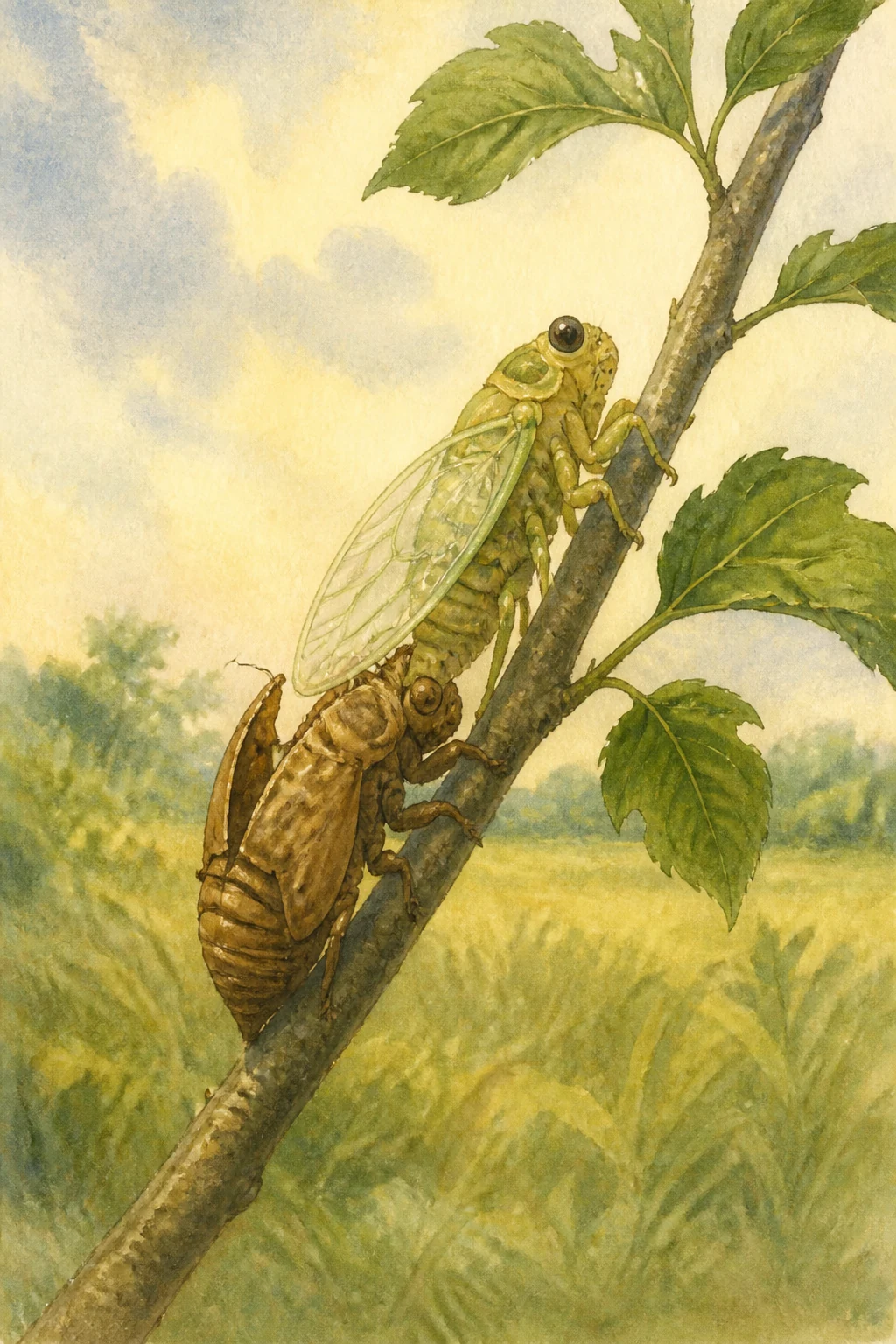
To ni bilo prav lahko delo, saj ni imel nikogar, ki bi mu pomagal. Krempeljce zunanje kože je moral zatakniti v lubje na veji, in to tako trdno, da se niso mogli iztakniti, potem pa se je začel zvijati in izvijati skozi odprtino na hrbtu lastne kože. Delo je bilo silno naporno, najtežje od vsega pa je bilo izvleči noge iz njihovih ovojev. Ko se je osvobodil, je bil tako utrujen, da je komaj še lahko razmišljal, njegova nova koža pa je bila tako mehka in nežna, da se je počutil mlahavega in čudnega. Opazil je, da ima krila lepe zelene barve, prav takšne kot noge. Vedel je, da so mu morala ta krila rasti pod staro kožo, in počasi jih je razprl, da bi videl, kako velika so. Bilo je jutro, in ko je razprl krila, je za dolgo časa zaspal.
Ko se je prebudil, je bilo sonce na zahodnem nebu in skušal se je spomniti, kdo je. Pogledal se je in videl, da ni več zelen, temveč zamolklo rjav in črn. Potem je zagledal svojo staro kožo, ki se je oklepala veje in mu strmela naravnost v obraz. Imela je natanko takšno obliko kot takrat, ko je bil še v njej, in za trenutek je pomislil, da sanja. S sprednjimi nogami si je močno podrgnil glavo, da bi se prepričal, ali je buden, nato pa se je začel spraševati, kateri od obeh je on. Včasih se mu je zdelo, da je škržat, ki je tako dolgo ležal v zemlji, stara koža, oprijeta grma, včasih pa je mislil, da je škržat tisti mehki, debelušni, na videz novi. Ali sta bila morda oba škržat? Če je bil on samo eden od njiju, kaj naj stori z drugim?
Medtem ko je tako zaspano premišljeval, je k njemu priletela stara škržatka z druge strani reke. Sklenil je, da jo bo vprašal, zato je kar se da vljudno pomahal s tipalkami in rekel: »Oprostite, gospa škržatka, zelo sem zmeden. Sedemnajst let sem potreboval, da sem zrasel v močnega škržata, ki se je znal plaziti, potem pa sem se v enem samem dnevu razdelil. Del mene, ki misli in se premika, je tukaj, moj zunanji oklep pa je tam na veji. Kateri del je torej pravi škržat?«
»Oh, to je vendar čisto preprosto,« je rekla gospa škržatka. »Ti si ti, seveda. Del, ki si ga odvrgel in pustil oprijetega veje, je bil nekoč zelo koristen. V mrzlih dneh te je grel in v toplih hladil in potreboval si ga, dokler si bil le bitje, ki se plazi. Ko pa so bila tvoja krila pripravljena, da te ponesejo v višje in srečnejše življenje, ti je koža, ki ti je prej pomagala, postala v napoto, in prav si storil, da si se izvlekel iz nje. Nič več ti ne koristi. Pusti jo, kjer je, in odleti uživat svoje novo življenje. Nikoli ne boš v zadregi, če si boš zapomnil, da si pravi ti tisti del, ki misli.«
Potem sta gospa škržatka in njen novi prijatelj odletela k njenemu domu na drugi strani reke in še preden se je vrnil na travnik, je videl veliko nenavadnih reči.
Izvirnik
031 A PUZZLED CICADA
Naslednje strani prikazujejo izvirno besedilo za primerjavo.
Seventeen years is a long, long time to be getting ready to fly; yet that is what the Seventeen-year Locusts, or Cicadas, have to expect. First, they lie for a long time in eggs, down in the earth. Then, when they awaken, and crawl out of their shells, they must grow strong enough to dig before they can make their way out to where the beautiful green grass is growing and waving in the wind.
The Cicada who got so very much puzzled had not been long out of his home in the warm, brown earth. He was the only Cicada anywhere around, and it was very lonely for him. However, he did not mind that so much when he was eating, or singing, or resting in the sunshine, and as he was either eating, or singing, or resting in the sunshine most of the time, he got along fairly well.
Because he was young and healthy he grew fast. He grew so very fast that after a while he began to feel heavy and stiff, and more like sitting still than like crawling around. Beside all this, his skin got tight, and you can imagine how uncomfortable it must be to have one's skin too tight. He was sitting on the branch of a bush one day, thinking about the wonderful great world, when--pop!--his skin had cracked open right down the middle of his back! The poor Cicada was badly frightened at first, but then it seemed so good and roomy that he took a deep breath, and--pop!--the crack was longer still!
The Cicada found that he had another whole skin under the outside one which had cracked, so he thought, "How much cooler and more comfortable I shall be if I crawl out of this broken covering," and out he crawled.
It wasn't very easy work, because he didn't have anybody to help him. He had to hook the claws of his outer skin into the bark of the branch, hook them in so hard that they couldn't pull out, and then he began to wriggle out of the back of his own skin. It was exceedingly hard work, and the hardest of all was the pulling his legs out of their cases. He was so tired when he got free that he could hardly think, and his new skin was so soft and tender that he felt limp and queer. He found that he had wings of a pretty green, the same color as his legs. He knew these wings must have been growing under his old skin, and he stretched them slowly out to see how big they were. This was in the morning, and after he had stretched his wings he went to sleep for a long time.
When he awakened, the sun was in the western sky, and he tried to think who he was. He looked at himself, and instead of being green he was a dull brown and black. Then he saw his old skin clinging to the branch and staring him in the face. It was just the same shape as when he was in it, and he thought for a minute that he was dreaming. He rubbed his head hard with his front legs to make sure he was awake, and then he began to wonder which one he was. Sometimes he thought that the old skin which clung to the bush was the Cicada that had lain so long in the ground, and sometimes he thought that the soft, fat, new-looking one was the Cicada. Or were both of them the Cicada? If he were only one of the two, what would he do with the other?
While he was wondering about this in a sleepy way, an old Cicada from across the river flew down beside him. He thought he would ask her, so he waved his feelers as politely as he knew how, and said, "Excuse me, Madam Cicada, for I am much puzzled. It took me seventeen years to grow into a strong, crawling Cicada, and then in one day I separated. The thinking, moving part of me is here, but the outside shell of me is there on that branch. Now, which part is the real Cicada?"
"Why, that is easy enough," said the Madam Cicada; "You are you, of course. The part that you cast off and left clinging to the branch was very useful once. It kept you warm on cold days and cool on warm days, and you needed it while you were only a crawling creature. But when your wings were ready to carry you off to a higher and happier life, then the skin that had been a help was in your way, and you did right to wriggle out of it. It is no longer useful to you. Leave it where it is and fly off to enjoy your new life. You will never have trouble if you remember that the thinking part is the real you."
And then Madam Cicada and her new friend flew away to her home over the river, and he saw many strange sights before he returned to the meadow.
Nadaljuj z branjem