Waltey
Zgodba o Nuredinu in njegovem bratu Šamsedinu
Tisoč in ena noč · arabska pripovedna tradicijaO besedilu
Zgodba o Nuredinu in njegovem bratu Šamsedinu
- Vir
- Tisoč in ena noč
- Avtor
- arabska pripovedna tradicija
- Jezik branja
- English
- Jezik izvirnika
- Arabic
- Čas branja
- 80 min branja
- Obseg
- 64 strani
- Naslov izvirnika
- حكاية نور الدين مع أخيه شمس الدين - الليالي ١٩ إلى ٢٤
O izvirniku
Tisoč in ena noč
Zgodbe v zgodbah, polne trgovcev, dvorov, preoblek in nočnih zapletov. Bralni jezik je English, izvirnik pa prihaja iz vira Tisoč in ena noč v jeziku Arabic.
Besedilo
Zgodba o Nuredinu in njegovem bratu Šamsedinu
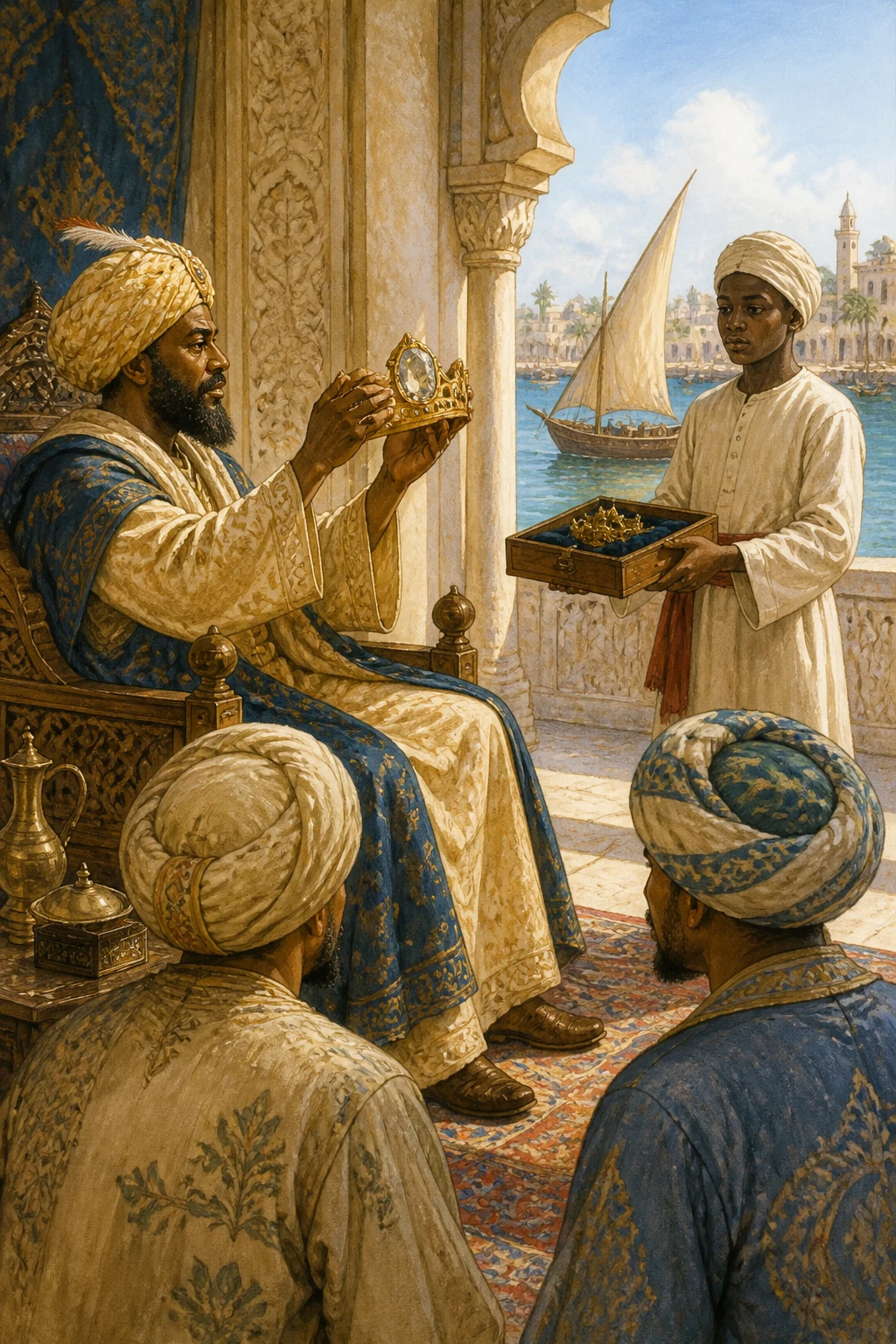
Then Jaafar said, “Know, O Commander of the Faithful, that in Egypt there once ruled a sultan renowned for justice and generosity. He had a wise and experienced vizier, well versed in affairs and their management, who was an old man with two sons as fair as moons. The elder was named Shams al-Din and the younger Nur al-Din. The younger surpassed the elder in beauty and grace; indeed, there was none more handsome in his day. His fame spread through the lands, and people would travel from their own countries to his merely to behold his beauty. In time their father died. The sultan mourned him, then took the two young men into his favor, drew them close, bestowed robes of honor upon them, and said, ‘You shall hold your father’s rank.’ Delighted, they kissed the ground before him. They observed a full month of mourning for their father, then assumed the vizierate, each serving for a week in turn. Whenever the sultan wished to travel, he took one of them with him. Now one night the sultan was preparing to set out the following morning, and it was the elder brother’s turn to accompany him. As the brothers sat talking that evening, the elder said, ‘Brother, I should like us both to marry on the same night.’ The younger replied, ‘Do as you wish, brother. I agree to whatever you propose.’ They settled this between them, and the elder went on, ‘If God ordains that we become betrothed to two girls, consummate our marriages on the same night, and our wives give birth on the same day; and if God wills that your wife bear a boy and mine a girl, we shall marry them to one another, since they will be cousins.’ Nur al-Din said, ‘Brother, what marriage portion would you demand of my son for your daughter?’ He replied, ‘For my daughter’s marriage portion I would demand three thousand dinars, three orchards, and three estates. If the young man were to contract the marriage on any other terms, it would not be valid.’
When Nur al-Din heard this, he said, ‘What is this marriage portion you would impose upon my son? Do you not know that we are brothers, both viziers of equal rank? You ought to offer your daughter to my son as a gift, without any marriage portion! You know that a male is better than a female. My son will be a boy, and through him our name will live on, unlike your daughter.’ ‘What is wrong with her?’ asked his brother. ‘She will not preserve our name among the emirs. But you mean to treat me according to the saying: “If you wish to drive a man away, set the price high.” As the story goes, a man once approached a friend to ask a favor, and the friend set his price too high.’
Shams al-Din said, ‘I see you have overstepped the mark, setting your son above my daughter. You are surely deficient in sense and utterly lacking in manners, to speak of sharing the vizierate. I only brought you into office with me out of pity, so that you might help and support me. But say what you please. Since you have spoken so, by God, I will never give my daughter to your son, even if you offer her weight in gold!’ When Nur al-Din heard his brother’s words, he grew angry and said, ‘Nor will I marry my son to your daughter.’ Shams al-Din replied, ‘I would never accept him as her husband. Were I not about to travel, I would make an example of you. But when I return, God shall do as He wills.’
At these words Nur al-Din was so filled with fury that he lost all awareness of the world around him. Yet he concealed his feelings, and each brother spent the night apart. When morning came, the sultan set out, crossed to the island, and made for the pyramids, accompanied by the vizier Shams al-Din. As for Nur al-Din, he had passed the night in the bitterest anger. At daybreak he rose, performed the dawn prayer, and went to his treasury, where he took a small saddlebag and filled it with gold. Remembering his brother’s words, his contempt and his boasting, he recited:
Travel, and you will find others to replace those you leave; labor, for the sweetness of life lies in toil. For a man of wit and learning there is no shame in staying, yet leave your homeland and journey abroad. I have seen how standing water spoils: when it flows it grows sweet, and without flowing it does not. Were the full moon never to set, no watchful eye would gaze for its return. Did lions never leave their thickets, they would never take their prey; did the arrow never leave the bow, it would never strike its mark. Gold lies like dust in the place where it is found, and aloeswood in its native land is merely firewood. Carried abroad, it becomes a precious thing to seek; left where it is, it never rises in esteem. When he had finished his verses, he ordered one of his servants to saddle a costly, swift-footed, starling-gray mule. The servant fitted it with a gilded saddle, Indian stirrups, and coverings of Isfahan velvet, so that it looked like a bride displayed in all her finery. Nur al-Din ordered a silk carpet and a prayer rug laid upon it, with the saddlebag beneath the rug. Then he told his servant and slaves, ‘I mean to take some air outside the city, toward Qalyubiyya, and spend three nights away. Let none of you follow me, for my heart is troubled.’ He quickly mounted the mule, took a little food, and left Cairo, heading into the open country. By noon he had reached Bilbays. There he dismounted, rested himself and his mule, ate something, and bought what he needed, including fodder for the animal. Then he set out again, and two days later, by noon, he entered Jerusalem. He dismounted, rested himself and his mule, took out some food and ate, then placed the saddlebag beneath his head, spread his carpet, and lay down to sleep, still overcome with anger.
He spent the night there, and in the morning mounted and rode on, urging his mule forward until he reached Aleppo. He lodged at an inn and stayed three days, resting himself and his mule and enjoying the fresh air. Then he resolved to travel on, mounted his mule, and set out without knowing where he was bound. He continued until he reached Basra by night, not realizing where he was until he had taken lodgings at an inn. He lifted the saddlebag from the mule, spread out his prayer rug, and entrusted the animal and its trappings to the gatekeeper, telling him to walk it about. The man took it out and did so. Now the vizier of Basra happened to be sitting at a window of his palace. Seeing the mule and its costly harness, he supposed it must belong to some vizier or king. He studied it, greatly puzzled, then told one of his servants, ‘Bring me that gatekeeper.’ The servant went and brought the man before the vizier. The gatekeeper approached and kissed the ground before him. The vizier, who was an elderly man, asked, ‘Who owns this mule, and what is he like?’ The gatekeeper replied, ‘My lord, its owner is a handsome young man of gracious manners, one of the sons of merchants, with an air of dignity and distinction.’ On hearing this, the vizier rose, mounted his horse, and rode to the inn to visit the young man. When Nur al-Din saw him approaching, he rose to meet and embrace him. The vizier dismounted and greeted him, and Nur al-Din welcomed him and seated him beside him. ‘My son,’ the vizier asked, ‘where have you come from, and what do you seek?’ Nur al-Din answered, ‘My lord, I have come from Cairo, where my father was vizier. He has passed into God’s mercy.’ He told him everything that had happened, from beginning to end, and added, ‘I have resolved never to return until I have seen every city and country.’ When the vizier heard his story, he said, ‘My son, do not let your desires lead you to destruction. The lands are in ruin, and I fear what fortune may have in store for you.’
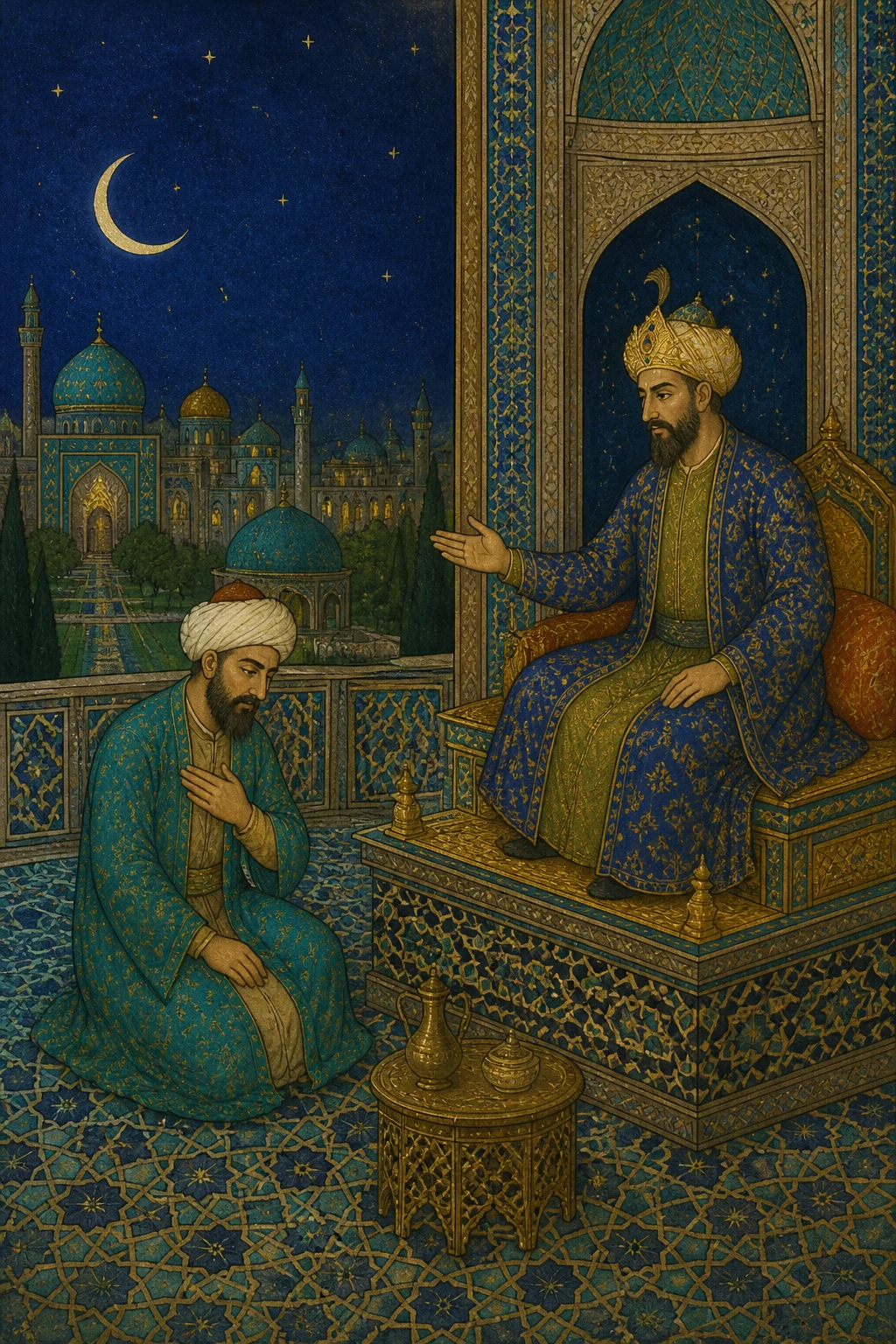
He then ordered the saddlebag, carpet, and prayer rug loaded onto the mule and took Nur al-Din home with him. He lodged him in a delightful apartment, treated him with honor and generosity, and grew deeply fond of him. ‘My son,’ he said, ‘I am now an old man, and I have no male child. But God has blessed me with a daughter nearly as beautiful as you, and I have refused many suitors for her. Affection for you has entered my heart. Will you take my daughter as your handmaid and become her husband? If you agree, I shall go to the sultan of Basra and tell him that you are my brother’s son. I shall present you to him and have you appointed vizier in my place, while I retire to my house, for I have grown old.’ When Nur al-Din heard the vizier of Basra’s proposal, he lowered his head, then said, ‘I hear and obey.’ Delighted, the vizier ordered his servants to prepare a feast and decorate the great reception hall used for gatherings of the highest emirs. He assembled his friends and invited the chief men of state and the merchants of Basra. When they stood before him, he said, ‘I had a brother who was vizier in Egypt, and God blessed him with two sons. As you know, God has blessed me with a daughter. My brother asked me to marry her to one of his sons, and I agreed. When the time came for the young man to marry, he sent him to me. This is the young man who stands before you. Now that he has arrived, I wish to draw up his marriage contract with my daughter and have the marriage consummated in my house.’ They replied, ‘You have done well.’ They drank sweetened sherbet, were sprinkled with rosewater, and departed. The vizier then ordered his servants to take Nur al-Din to the bathhouse. He gave him a suit from his own wardrobe and sent towels, bowls, incense burners, and everything else he needed. When Nur al-Din emerged from the bath and put on the clothes, he was like the moon on the night of its fullness. He mounted his mule and rode to the vizier’s palace, where he dismounted, entered, and kissed the vizier’s hand. The vizier welcomed him. Then dawn overtook Shahrazad, and she fell silent, leaving her tale untold.
When it was the twentieth night
She said, “It has reached me, O fortunate king, that the vizier rose to welcome him and said, ‘Go in to your wife tonight. Tomorrow I shall take you to the sultan, and I pray that God grants you every blessing.’ Nur al-Din rose and went in to his wife, the vizier’s daughter.
Such was the story of Nur al-Din. As for his brother, he remained away with the sultan for some time, then returned to find him gone. He questioned the servants, and they said, ‘On the day you left with the sultan, he mounted his mule in its ceremonial trappings and said, “I am going toward Qalyubiyya and shall be away for a day or two, for my heart is troubled. Let none of you follow me.” From the day he left until now, we have heard nothing of him.’ Shams al-Din was deeply distressed by his brother’s absence and grieved bitterly at his loss. He said to himself, ‘This can only be because I spoke harshly to him on the night before I left with the sultan. Perhaps he took it to heart and went away. I must send after him.’ He went to the sultan and told him what had happened. The sultan wrote dispatches and sent them to his deputies throughout the lands. But Nur al-Din had traveled far during his brother’s absence with the sultan. The messengers took the letters and returned without discovering any news of him. Shams al-Din despaired of finding his brother and said, ‘I angered him with my talk about our children’s marriage. Would that it had never happened! It was all through my lack of sense and judgment.’ A little later he sought the hand of a Cairo merchant’s daughter, drew up the marriage contract, and consummated the marriage. It so happened that the night Shams al-Din went in to his wife was the very night Nur al-Din went in to his own, the daughter of the vizier of Basra. This came about by the will of God Most High, that His decree might be fulfilled among His creatures. Things happened just as the brothers had said: both wives conceived, and the wife of Shams al-Din, vizier of Egypt, bore a daughter whose beauty was unequaled in all Egypt, while Nur al-Din’s wife bore a son whose beauty was unsurpassed in his day. As the poet said:
A slender youth whose lips spare his companion the brimming cup and wine-filled ewer: wine’s power, its hue, its sweetness dwell in his eyes, his cheeks, his mouth. And another said:
If Beauty came to measure itself against him, Beauty would hang its head in shame. And were it asked, ‘O Beauty, have you ever seen his like?’ it would reply, ‘His equal? Never.’ They named him Hasan, and on the seventh day after his birth they held feasts and laid tables fit for the sons of kings. Then the vizier of Basra took Nur al-Din with him to the sultan. On entering his presence, Nur al-Din kissed the ground before him. He was eloquent of speech, steadfast of heart, handsome and gracious, and he recited the poet’s words:
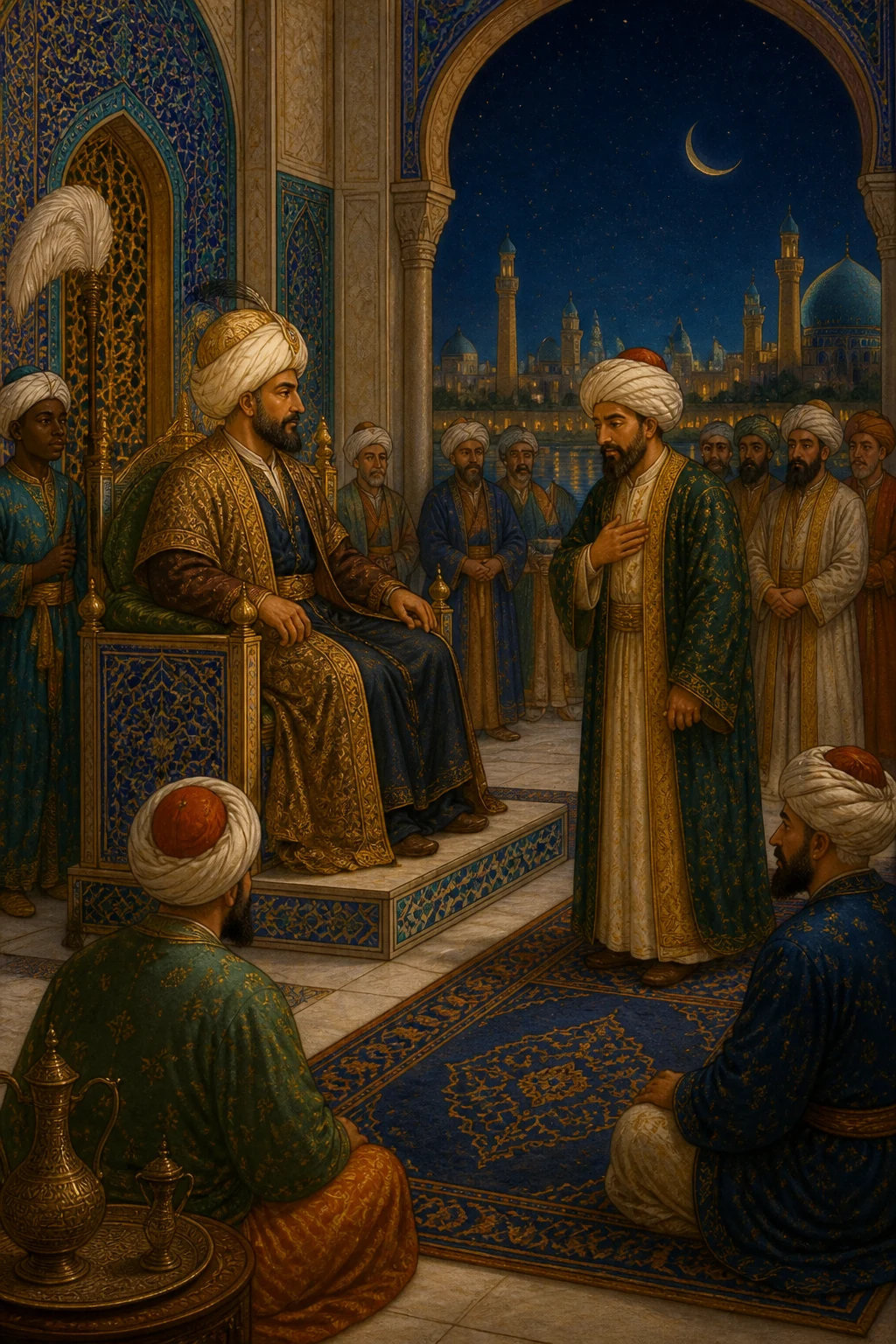
This is he whose justice embraces all mankind, whose might has brought peace to every horizon. Give thanks for his favors: they are not mere favors, but necklaces adorning men’s throats. Kiss his fingers: they are not mere fingers, but the keys to men’s livelihood. The sultan honored them both, thanked Nur al-Din for his verses, and asked his vizier, ‘Who is this young man?’ The vizier told his story from beginning to end and said, ‘He is my brother’s son.’ ‘How can he be your brother’s son,’ asked the sultan, ‘when we have never heard of him?’ The vizier replied, ‘My lord sultan, I had a brother who was vizier in Egypt. He died, leaving two sons. The elder succeeded to his father’s office, while this, his younger son, came to me. I had sworn to marry my daughter to no one but him, and when he arrived I gave her to him. He is young, while I have grown old; my hearing has weakened, and my powers of judgment are failing. I ask our lord the sultan to appoint him in my place, for he is my nephew and my daughter’s husband, and worthy of the vizierate, being a man of sound judgment and good counsel.’ The sultan looked at Nur al-Din and was pleased with him. He approved the vizier’s proposal to raise him to the vizierate, granted him the office, and ordered a magnificent robe of honor and a mule from his own stables to be given to him, assigning him salaries and allowances. Nur al-Din kissed the sultan’s hand, and he and his father-in-law returned home in great delight. ‘This newborn child has brought us good fortune,’ they said. The following day Nur al-Din went to the king, kissed the ground, and recited these two verses:
May blessings be renewed for you each day, and fortune smile, despite the envious. May all your days be white with joy, and all your enemies’ days black. The sultan ordered him to take his seat as vizier. He did so and began his duties, attending to people’s affairs and judging their disputes, as viziers customarily do. The sultan watched him, marveling at his keen intelligence and skillful conduct of affairs. The better he came to know him, the more he loved him and drew him close. When the council dispersed, Nur al-Din went home and told his father-in-law what had happened, to the old man’s delight. The vizier continued to care for the child Hasan as the days passed, while Nur al-Din remained in office, scarcely leaving the sultan’s side by night or day. The sultan increased his salaries and provisions until his circumstances grew prosperous. He came to own ships that sailed under his direction with merchandise and other cargoes, and he developed many properties, waterworks, and orchards. When his son Hasan was four years old, the old vizier, his wife’s father, died. Nur al-Din gave him a splendid funeral and laid him in the earth, then devoted himself to bringing up his son. When the boy was old enough, he engaged a learned tutor to teach him at home, charging him to instruct him well and give him a good upbringing. The tutor taught him to read, and after he had memorized the Quran over several years, instructed him in useful branches of learning. Hasan continued to grow in beauty, grace, and fine proportion, as the poet said:
A moon whose loveliness has reached perfection; the sun rises from the anemones of his cheeks. He possesses beauty entire, as though all loveliness in creation had its source in him. The tutor brought him up in his father’s palace, and from his earliest childhood he never went outside the vizier’s residence. Then one day his father, the vizier Nur al-Din, dressed him in some of his finest clothes, mounted him on one of his best mules, and took him to the sultan. When the king saw Hasan Badr al-Din, the son of the vizier Nur al-Din, he was dazzled by his beauty. As for the people of the kingdom, when the boy passed among them for the first time on his way with his father to the king, they were astounded by his surpassing beauty, his graceful figure, and his perfect proportions. In him they saw the truth of the poet’s words:
The astrologer kept watch by night, and there appeared the handsome youth, swaying in his robes. He studied Gemini, which had scattered shining pearls along the youth’s two sides. Saturn lent him the blackness of his flowing locks, while musk revealed the beauty spots upon his cheeks. From Mars came the redness of his cheeks, and Sagittarius shot arrows from his eyelids. Mercury gave him surpassing wit, while dim Suha denied informers sight of him. The astrologer stood bewildered at what he saw, and the full moon kissed the ground before him. When the sultan saw him, he loved him and bestowed favors upon him. He told his father, ‘Vizier, you must bring him with you every day.’ ‘I hear and obey,’ he replied. The vizier returned home with his son and continued to bring him to the sultan each day until the boy reached the age of fifteen. Then his father, the vizier Nur al-Din, fell ill. He summoned him and said, ‘My son, know that this world is a dwelling that passes away, while the next is everlasting. I wish to leave you some counsel. Understand what I tell you and attend to it with all your heart.’ He began advising him how to live well with others and conduct his affairs wisely. Then Nur al-Din remembered his brother, his homeland, and his native country. He wept at the parting from those he loved, and his tears flowed freely. ‘My son,’ he said, ‘listen to me. I have a brother named Shams al-Din, your uncle, who is vizier in Egypt. I parted from him and left against his wishes. Take a scroll of paper and write what I dictate.’ Hasan brought a sheet and began writing everything his father told him. Nur al-Din dictated all that had happened to him, from beginning to end. He recorded the dates of his marriage and its consummation with the vizier’s daughter, his arrival in Basra, and his meeting with its vizier, and set down a duly attested testament. Then he told his son, ‘Keep this testament safe, for this paper records your origins, your family, and your lineage. If any misfortune befalls you, make your way to Egypt, seek out your uncle, and give him my greetings. Tell him that I died far from home, longing for him.’ Hasan Badr al-Din took the document, folded it, wrapped it in waxed cloth, and sewed it between the lining and the outer fabric of his garment. He wept over his father, grieving that he must lose him while still so young.
Nur al-Din continued giving counsel to his son Hasan Badr al-Din until his soul departed. Mourning filled his house, and the sultan and all the emirs grieved for him. They buried him and remained in mourning for two months. His son neither rode out nor attended the council nor appeared before the sultan, and one of the chamberlains served in his place. The sultan appointed a new vizier and ordered him to place seals upon Nur al-Din’s premises, wealth, buildings, and estates. The new vizier set out with the chamberlains for Nur al-Din’s house, to seal it and arrest his son Hasan Badr al-Din, whom they were to bring before the sultan to be dealt with as he saw fit. Among the soldiers was a mamluk who had belonged to the late vizier Nur al-Din. Unable to bear the thought of what awaited his master’s son, he hurried to Hasan Badr al-Din and found him with bowed head and grieving heart, mourning his father. He told him what had happened. Hasan asked, ‘Is there time for me to go into my house and take something to support me in exile?’ The mamluk replied, ‘Save yourself!’
At these words Hasan drew the hem of his robe over his head and went out on foot until he was beyond the city. He heard people saying, ‘The sultan has sent the new vizier to the house of his dead minister to seal his wealth and premises, arrest his son Hasan Badr al-Din, and bring him before him to be put to death.’ The people lamented the fate of one so handsome and beautiful. Hearing their words, he wandered on without purpose, not knowing where to go, until destiny led him to his father’s tomb. He entered the cemetery and walked among the graves until he sat beside his father’s, uncovering his head. As he sat there, a Jew from Basra approached him and said, ‘My lord, why do you look so troubled?’ He replied, ‘I was asleep just now and dreamed that my father reproached me for failing to visit his grave. I woke in terror and feared the day might end before I had visited him, which would have distressed me greatly.’ The Jew said, ‘My lord, your father sent ships to sea, and some have returned. I wish to buy from you the cargo of each ship that has arrived for a thousand dinars.’ He took out a purse full of gold, counted out a thousand dinars, and handed them to Hasan, the vizier’s son. ‘Write me a document and seal it,’ he said. Hasan took a sheet of paper and wrote: ‘The writer of this document, Hasan Badr al-Din, son of the vizier Nur al-Din, has sold to the Jew named herein the entire cargo of each of his father’s trading ships that has returned, for a thousand dinars, and has received the price in advance.’ The Jew took the document, while Hasan wept, remembering his former honor and good fortune.
Night fell, and sleep overtook him. He lay down beside his father’s grave and slept until the moon rose. His head slipped from the tomb, and he lay on his back, his face shining in the moonlight. Now the cemetery was inhabited by believing jinn. A female jinni came out and looked upon Hasan’s sleeping face. Marveling at his beauty and grace, she said, ‘Glory be to God! This youth is like one of the wide-eyed companions of Paradise.’ Then she flew into the air to make her usual rounds and encountered a flying ifrit. They exchanged greetings, and she asked, ‘Where have you come from?’ ‘From Cairo,’ he replied. ‘Will you come with me,’ she asked, ‘and behold the beauty of this young man sleeping in the cemetery?’ ‘Yes,’ he said. They went together and descended into the cemetery. ‘Have you ever seen his like in all your life?’ she asked. The ifrit looked at him and said, ‘Glory be to Him who has no equal! But, sister, if you wish, I shall tell you what I have seen.’ ‘Tell me,’ she said. He replied, ‘In Egypt I have seen the equal of this youth: the vizier’s daughter. The king heard of her and asked her father, the vizier Shams al-Din, for her hand. But he replied, “My lord sultan, accept my excuse and have mercy on my tears. You know that my brother Nur al-Din left us, and we do not know where he is. He shared the vizierate with me, and the reason for his departure was that we sat talking about marriage, and he grew angry with me and went away in a rage.” He told the king everything that had passed between them, then said, “That was the cause of his anger. From the day her mother bore her, some eighteen years ago, I have sworn to marry my daughter to none but my brother’s son. Only recently I heard that my brother had married the daughter of the vizier of Basra and had a son by her. In honor of my brother, I shall give my daughter to no one else. I recorded the dates of my marriage, my wife’s pregnancy, and this girl’s birth, and she is pledged to her cousin. There are many other girls.”
‘When the sultan heard the vizier’s words, he flew into a terrible rage. “How can a man such as I ask a man such as you for his daughter, only to be refused on so feeble a pretext? By my life, I shall marry her to the lowest of men, in spite of you!” Now the king had a groom with a hump in front and another behind. He ordered the man brought before him and had a marriage contract drawn up between him and the vizier’s daughter by force. He commanded that the marriage be consummated this very night and that a wedding procession be held. When I left him, he was among the sultan’s mamluks outside the bathhouse, with lighted candles in their hands, laughing at him and making fun of him. As for the vizier’s daughter, she sits weeping among the women who paint brides and dress their hair. She bears the closest resemblance to this young man. Her father has been placed under confinement and forbidden to attend her. Sister, I have never seen anyone uglier than that hunchback, while the girl is even more beautiful than this youth.’ Then dawn overtook Shahrazad, and she fell silent, leaving her tale untold.
When it was the twenty-first night
She said, “It has reached me, O fortunate king, that when the jinni told the female jinni the story of the daughter of the vizier of Egypt—how the king had married her to the hunchbacked groom, how bitterly she grieved, and how none could rival her beauty but this young man—she replied, ‘You lie! This youth is the most beautiful person of his age.’ The ifrit answered, ‘By God, sister, the girl is more beautiful than he is. Yet no one but he is fit for her, for they are alike. Perhaps they are brother and sister, or cousins. What a waste to give her to that hunchback!’ She said, ‘Brother, let us lift him up and carry him to this girl you speak of, and see which of them is more beautiful.’ The ifrit replied, ‘I hear and obey. That is well said; there could be no better plan than yours. I shall carry him.’
He lifted the youth and flew into the air with him, while the female ifrit kept pace beside him all the way, until he descended into Cairo. He set him on a stone bench and woke him. Hasan awoke to find that he was no longer at his father’s grave in Basra. Looking right and left, he saw that he was in a different city. He was about to cry out when the ifrit nudged him, lit a candle for him, and said, ‘Know that I have brought you here to do you a kindness for God’s sake. Take this candle and walk to that bathhouse. Mingle with the people and follow them until you reach the bridal hall. Go ahead of them and enter the hall without fear. Once inside, stand to the right of the hunchbacked bridegroom. Whenever the hairdressers, singers, and women who paint the bride come to you, put your hand into your pocket: you will find it full of gold. Take a handful and throw it to them. Never fear that you will reach in and fail to find it full. Give a handful to everyone who comes to you. Be afraid of nothing, and trust in Him who created you. None of this is through your own strength and power, but through the strength and power of God.’
When Hasan Badr al-Din heard these words, he said, ‘What can all this mean, and what kindness is intended?’ Then he went on, lit his candle, and made for the bathhouse, where he found the hunchback mounted on a horse. Hasan Badr al-Din mingled with the crowd, handsome as he was, wearing his fez, turban, and gold-woven outer robe. He walked along in the procession, and whenever the singers stopped for people to give them gifts, he put his hand into his pocket and found it full of gold. He scooped up handfuls and tossed them into the women’s tambourine, filling it with dinars. The singers were astonished, and the people marveled at his beauty and grace. He continued in this fashion until they reached the vizier’s house, where the chamberlains turned the crowd back and barred the entrance. But the singers and hairdressers said, ‘By God, we shall not go in unless this young man enters with us. He has overwhelmed us with his generosity, and the bride shall not be displayed unless he is present.’ So they brought him into the wedding hall and seated him there, much to the hunchbacked bridegroom’s displeasure. The wives of the emirs, viziers, and chamberlains formed two rows, each woman holding a great, brightly burning candle. All were veiled, and they stood to right and left, from the foot of the bridal dais to the far end of the great recess beside the room from which the bride would emerge.
When the women saw Hasan Badr al-Din and his beauty and grace, his face shining like the crescent moon, they all inclined toward him. The singers told the assembled women, ‘Know that this handsome youth has given us nothing but red gold. Do not neglect to serve him, and obey whatever he says.’ The women crowded around him with their candles and gazed upon his beauty, dazzled out of their wits. Each wished she might lie in his arms for a year, a month, or even an hour. They lifted their face veils, bewildering every heart, and said, ‘Fortunate is anyone who has this young man, above or below!’ Then they cursed the hunchbacked groom and whoever had brought about his marriage to this lovely girl. For every blessing they called down upon Hasan Badr al-Din, they called down a curse upon the hunchback. Then the singers beat their tambourines, and the hairdressers approached with the vizier’s daughter in their midst. They had perfumed and scented her, dressed her, and adorned her hair and throat with jewels and robes fit for the kings of Persia. Among her garments was a robe embroidered in red gold with figures of wild beasts and birds, draped over her other clothes. Around her neck was a necklace worth thousands, each gem of a splendor that neither Tubba nor Caesar had ever possessed. The bride was like the moon shining on its fourteenth night. As she approached she seemed a houri of Paradise—glory be to Him who created her so fair! The women surrounded her like stars about the moon when the clouds have cleared away.
Hasan Badr al-Din of Basra sat while all eyes rested upon him. The bride approached with a swaying gait, and the hunchbacked groom rose to kiss her. She turned away from him and moved instead to stand before Hasan, her cousin, making the people laugh. When they saw her incline toward Hasan Badr al-Din, and saw him reach into his pocket, scoop out gold, and throw it into the singers’ tambourine, they rejoiced and said, ‘How we wish this bride were yours!’ He smiled. All this while the hunchbacked groom sat alone like a monkey. Whenever they lit a candle for him, it went out, until he sat bewildered in darkness, consumed by resentment. Around Hasan the people gathered, while the splendor of the burning candles was a wonder to behold, their radiance dazzling every discerning eye.
The bride raised her hands to heaven and said, ‘O God, make this man my husband, and deliver me from this hunchbacked groom!’ The bridal attendants continued displaying her in all seven changes of dress, turning toward Hasan Badr al-Din of Basra and leaving the hunchback alone. When they had finished, they gave the guests leave to depart. All the women and children at the wedding went out, leaving only Hasan Badr al-Din and the hunchbacked groom. Then the attendants took the bride inside to remove her jewels and robes and prepare her for the bridegroom. The hunchback approached Hasan Badr al-Din and said, ‘My lord, you have honored us with your company tonight and overwhelmed us with your generosity. Why not get up and go home, without waiting to be shown the door?’ Hasan replied, ‘In God’s name.’ He rose and went out, but at the door he met the ifrit, who said, ‘Wait, Badr al-Din. When the hunchback goes to the privy, go inside and sit in the bedchamber. When the bride comes, tell her, “I am your husband. The king only devised this trick because he feared the evil eye might fall upon you. The man you saw is one of our grooms.” Then approach her and uncover her face. Fear harm from no one.’
While Badr al-Din was speaking with the ifrit, the groom entered the privy and sat upon the seat. The ifrit rose out of the water basin in the shape of a mouse and squeaked. ‘What brought you here?’ asked the hunchback. The mouse grew until it was the size of a cat, then grew again into a dog and barked, ‘Bow-wow!’ At the sight, the groom took fright and cried, ‘Away with you, accursed creature!’ But the dog swelled and grew until it became a donkey, braying into his face, ‘Hee-haw! Hee-haw!’ The terrified groom cried, ‘Help me, people of the house!’ Then the donkey grew to the size of a buffalo, filling the place and blocking his way. It spoke in a human voice: ‘Woe to you, hunchback, you foulest of grooms!’ The groom’s bowels gave way, and he sank onto the privy with his clothes still on, his teeth chattering together. The ifrit said, ‘Was the whole wide earth too narrow for you, that you had to marry my beloved?’ The groom was silent. ‘Answer me,’ said the ifrit, ‘or I shall put you in your grave!’ He replied, ‘By God, I am not to blame! They forced me. I did not know she had lovers among the buffaloes. But I repent before God, and before you!’ The ifrit said, ‘I swear by God, if you leave this place now, or speak before sunrise, I shall kill you. When the sun rises, go your way, and never return to this house.’ Then the ifrit seized the hunchbacked groom, turned him upside down, and thrust his head into the privy, leaving his feet in the air. ‘Stay here,’ he said. ‘I shall guard you until sunrise.’
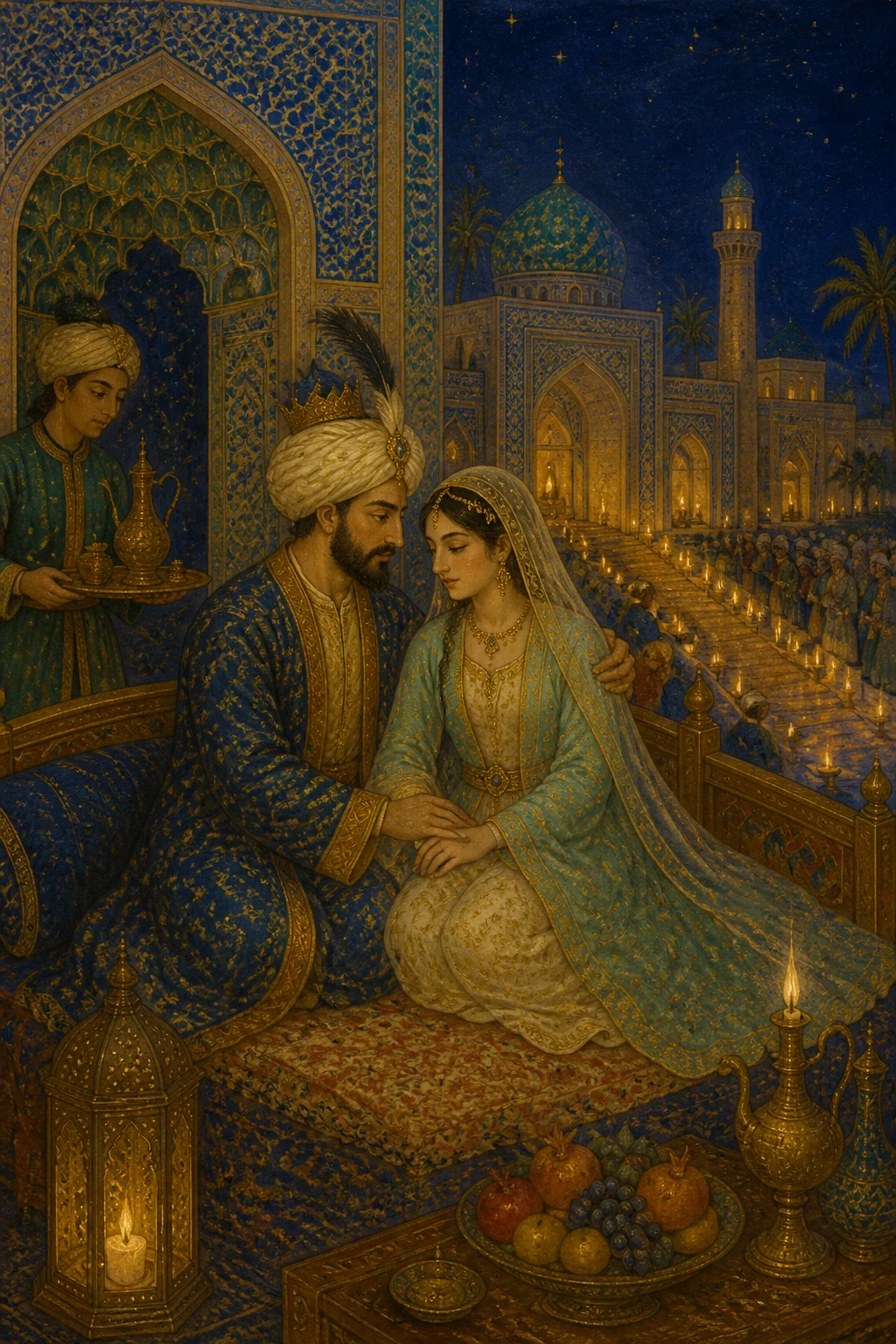
Such was the story of the hunchback. As for Hasan Badr al-Din of Basra, he left the hunchback and the ifrit to their quarrel, entered the house, and sat down in the bridal chamber. Presently the bride approached with an old woman, who stopped at the chamber door and said, “Abu Shihab, rise and take your bride. I commend you to God’s keeping.” Then the old woman went away, and the bride entered the inner chamber. Her name was Sitt al-Husn, and her heart was broken. “By God,” she said to herself, “I will not let him touch me, even if it costs me my life.” But when she entered and saw Badr al-Din, she said, “My beloved, are you still sitting here? I had begun to think that you and the hunchback groom were to share me.” Hasan Badr al-Din replied, “What claim has that groom upon you? How could he possibly share you with me?” “Who is my husband, then?” she asked. “You or he?” Badr al-Din answered, “My lady, we did all this merely to make a laughingstock of him. When the bridal attendants, the singers, and your family saw your wondrous beauty, they feared the evil eye for us, so your father hired him for ten dinars to turn it away. He has gone now.” When Sitt al-Husn heard these words, she rejoiced, smiled, and laughed softly. “By God, you have quenched my fire,” she said. “For God’s sake, take me to you and hold me in your arms.” She wore no underclothes, and she lifted her gown to her throat, revealing herself before and behind. At the sight of her clear, radiant body, desire stirred in Badr al-Din. He rose and loosened his trousers, then untied the purse of gold he had taken from the Jew, containing a thousand dinars, wrapped it in his trousers, and placed it beneath the edge of the mattress. He took off his turban and set it on a chair, remaining in his fine shirt embroidered with gold. Sitt al-Husn rose and drew him to her; Badr al-Din drew her close in turn, embraced her, and took her legs about his waist. Then he mounted the cannon, aimed it at the fortress, and fired, demolishing the tower. He found her a pearl as yet unpierced, a mount no other man had ridden. He took her maidenhead and delighted in her youthful beauty, and he continued to charge and withdraw until he had done so fifteen times, and she conceived by him. When Hasan Badr al-Din had finished, he slipped one hand beneath her head, and she put hers beneath his. Then they embraced and fell asleep in one another’s arms, embodying in their embrace the meaning of these verses:
Visit the one you love, and heed no envious tongue; the envious never lend their aid to love. The Merciful has made no lovelier sight than lovers lying on a single bed, embracing, clothed in robes of sweet content, each pillowed on the other’s wrist and arm. When hearts are joined together in their love, all others merely hammer at cold iron. If in your lifetime one proves true to you, that is enough: live for that faithful one. Such was the affair of Hasan Badr al-Din and Sitt al-Husn, his cousin. As for the ifrit, he said to the female ifrit, “Come, slip beneath the young man, and let us carry him back to his place before dawn overtakes us, for it is near.” The female ifrit came forward, slipped beneath him as he slept, and flew away with him just as he was, in his shirt and without his trousers. She flew on, with the ifrit beside her, until God permitted the angels to strike the ifrit with a fiery meteor, and he was burned to death. The female ifrit escaped unharmed, but set Badr al-Din down where the meteor had burned her companion, not daring to carry him farther for fear of his safety. By the decree of fate, that place was Damascus in Syria. She laid him beside one of its gates and flew away. When day broke and the city gates were opened, people came out and saw a handsome youth in a shirt and skullcap, with neither turban nor trousers, sunk in deep sleep after his long night’s wakefulness. “How fortunate was whoever had him last night!” they said. “If only he had waited long enough to put on his clothes!” Another said, “Poor children of respectable families! Perhaps he came out of a tavern on some errand, and the drink overcame him. He lost his way and wandered as far as the city gate, found it shut, and lay down to sleep here.”
As the people were talking about him, a breeze blew across Badr al-Din and lifted his shirttail above his belly, revealing a finely shaped navel, and thighs and legs like crystal. The people gazed in wonder. Then Badr al-Din awoke and found himself at the gate of a city, surrounded by people. Astonished, he said, “Where am I, good people? Why have you gathered round me? What have I to do with you?” They answered, “At the dawn call to prayer we found you lying asleep beside this gate. That is all we know of you. Where did you sleep last night?” Hasan Badr al-Din replied, “By God, my friends, I slept last night in Cairo.” One man said, “Do you eat hashish?” Another asked, “Are you mad? How could you spend the night in Cairo and wake up asleep in Damascus?” “By God, good people,” he answered, “I have told you no lie. Last night I was in Cairo, and the night before that I was in Basra.” “What an extraordinary thing!” said one. “This young man is mad,” said another. They clapped their hands at him and said among themselves, “What a pity, so young! By God, there is no doubt he has lost his mind.” Then they told him, “Come to your senses.” Hasan Badr al-Din said, “Last night I was a bridegroom in Cairo.” “Perhaps you dreamed it,” they replied, “and saw all this in your sleep.” Hasan was bewildered. “By God, it was no dream,” he told them. “Where is the hunchback groom who was sitting with us? Where is the purse of gold I had with me? And where are my clothes and trousers?” Then he rose and entered the city, walking through its streets and markets while the people crowded round him and followed him in a mocking procession. At last he entered a cook’s shop. This cook had once been a violent, dissolute man, but God had brought him to repent of his unlawful ways, and he had opened a cookshop. All Damascus feared him for his strength and ferocity. When the people saw the young man enter his shop, they scattered in fear of him. The cook looked at Hasan Badr al-Din and, seeing his beauty and grace, felt affection for him enter his heart. “Where are you from, young man?” he asked. “Tell me your story, for you have become dearer to me than my own soul.”
Hasan told him everything from beginning to end. The cook said, “My lord Badr al-Din, this is indeed a wondrous affair and a strange tale. But, my son, keep your story to yourself until God relieves your distress. Stay here with me. I have no child, and I shall take you as my son.” “As you wish, uncle,” Badr al-Din replied. The cook went down to the market, bought him splendid clothes, and dressed him in them. Then he took him to the judge and formally acknowledged him as his son before witnesses. Hasan Badr al-Din became known throughout Damascus as the cook’s son, and he sat in the shop taking the money. Thus he settled into life with the cook.
Such was the affair of Hasan Badr al-Din. As for Sitt al-Husn, his cousin, when dawn came and she awoke, she did not find him beside her. Supposing he had gone to the privy, she sat waiting for him. Presently her father came in, weighed down by what had happened between him and the sultan, who had forced him to marry his daughter to one of his servants, the hunchback groom. “I shall kill this girl,” he said to himself, “if she has yielded herself to that wretch.” He went to the bridal chamber, stood at its door, and called, “Sitt al-Husn!” “Yes, my lord,” she answered. Then she came out, swaying with joy, and kissed the ground before him. Her embrace of that gazelle-like youth had made her face still more radiant and beautiful. Seeing her in this state, her father said, “You shameless girl! Are you pleased with this groom?” At her father’s words Sitt al-Husn smiled. “For God’s sake,” she said, “you have done enough already, with people laughing at me and taunting me about this groom, who is not worth the clipping of my fingernail. As for my husband, by God, never in my life have I spent a night more delightful than last night with him. So do not mock me by mentioning that hunchback.”
When her father heard this, he was filled with rage, and his eyes turned livid. “Woe to you!” he cried. “What are you saying? Did the hunchback groom spend the night with you?” “For God’s sake, do not mention him to me,” she answered. “May God make him and his father hideous! Stop teasing me with his name. The groom was merely hired for ten dinars; he took his wages and left. I came into the chamber and found my husband sitting there, after the singers had displayed me before him and he had scattered red gold until all the poor people present were made rich. I spent the night in the arms of my charming husband, with his black eyes and meeting eyebrows.” At these words the light in her father’s face turned to darkness. “You wanton!” he said. “What is this you are saying? Have you lost your reason?” “Father,” she replied, “why are you tearing my heart to pieces? My husband, who took my maidenhead, has gone into the privy, and I have conceived by him.” Her father rose in astonishment and entered the privy, where he found the hunchback groom with his head thrust down into the hole and his feet sticking up in the air. The vizier stared in amazement. “Is this not the hunchback?” he said. He spoke to him, but the hunchback gave no answer, supposing that it was the ifrit. And dawn overtook Shahrazad, and she fell silent, leaving her tale untold.
When the twenty-second night came
She said: I have heard, O fortunate king, that when the vizier spoke to the hunchback groom, he took him for the ifrit and would not answer, believing that no one but the ifrit would address him. The vizier shouted, “Speak, or I shall cut off your head with this sword!” Then the hunchback said, “By God, chief of the ifrits, I have not lifted my head since you put me here. For God’s sake, have mercy on me!” Hearing this, the vizier said, “What are you talking about? I am the bride’s father, not an ifrit.” The hunchback replied, “My life is not in your hands, and you cannot take my soul. Go your way before the one who did this to me comes upon you. Would you marry me to none but the beloved of buffaloes and ifrits? God curse the man who married me to her, and everyone who had a hand in it!” He went on talking to the vizier, the bride’s father, repeating, “God curse whoever was responsible!” “Get up and come out of there,” the vizier told him. “Am I mad,” he answered, “to go with you without the ifrit’s permission? He told me, ‘When the sun rises, come out and go your way.’ Has the sun risen or not? I cannot leave this place until it has.” The vizier asked, “Who brought you here?” He replied, “I came here last night to relieve myself, and suddenly a cloud of dust rose from the water, cried out, and kept growing until it was the size of a buffalo. It spoke words that rang in my ears. Leave me alone and go! God curse the bride and the man who married me to her!” The vizier stepped forward and pulled him out of the privy. Off he ran, scarcely believing that the sun had risen, and went up to the sultan to tell him what had happened with the ifrit.
As for the vizier, the bride’s father, he went back into the house, bewildered by his daughter’s affair. “My daughter,” he said, “tell me plainly what has happened.” She replied, “The handsome young man before whom I was displayed spent last night with me, took my maidenhead, and made me conceive. If you do not believe me, there is his turban, still wound, on the chair, and his trousers beneath the bedding. There is something wrapped in them, but I do not know what it is.” Her father entered the chamber and found the turban of his nephew Hasan Badr al-Din. He picked it up at once and turned it over in his hands. “This is a vizier’s turban,” he said, “though it is in the Mosul style.” Then he noticed a talisman sewn into the cap, took it, and unstitched it. He picked up the trousers and found the purse containing a thousand dinars. Opening it, he found a paper, which proved to be the Jew’s bill of purchase, bearing the name Hasan Badr al-Din ibn Nur al-Din al-Misri, together with the thousand dinars. When Shams al-Din read the paper, he gave a cry and fell unconscious. When he recovered and understood what had happened, he marvelled and said, “There is no god but God, who has power over all things!” Then he asked, “My daughter, do you know who took your maidenhead?” “No,” she answered. “He is my brother’s son,” he said, “your cousin, and these thousand dinars are your marriage portion. Glory be to God! How could such a thing have come about?” Then he opened the sewn talisman and found a paper written in the hand of his brother Nur al-Din al-Misri, Hasan Badr al-Din’s father. At the sight of his brother’s handwriting, he recited these two verses:
I see the traces they have left and melt with longing, and pour my tears upon the places where they dwelt. I ask the One who cast me into separation to grant me, one day, the mercy of return. When he had finished reciting, he read the paper from the talisman. In it he found the date of his brother’s marriage to the daughter of the vizier of Basra, the date on which he had consummated the marriage, the record of his life until his death, and the date of his son Hasan Badr al-Din’s birth. He marvelled and trembled with joy. Comparing his brother’s history with his own, he found them alike in every detail: their marriages had taken place on the same date, they had gone in to their wives on the same night, and his nephew Hasan Badr al-Din and his own daughter Sitt al-Husn had been born on the same day. He took the two papers up to the sultan and told him everything from beginning to end. The king marvelled and ordered the affair to be recorded at once. The vizier then waited for his nephew, but no news of him came. “By God,” he said, “I shall do something no one has ever done before.” And dawn overtook Shahrazad, and she fell silent, leaving her tale untold.
When the twenty-third night came
She said: I have heard, O fortunate king, that the vizier said, “By God, I shall do something no one has ever done before.” He took an inkwell and pen and made an inventory of the furnishings of the house, recording that such-and-such a cabinet stood in one place and such-and-such a curtain hung in another. He wrote down everything in the house, folded the paper, and ordered all the furnishings to be stored away. He also took the turban and cap, the robe and purse, and kept them safely with him. When the vizier’s daughter had completed her term, she gave birth to a boy like the moon, resembling his father in beauty, grace, splendour, and perfection. They cut his navel cord, darkened his eyes with kohl, entrusted him to wet nurses, and named him Ajib. He grew as much in a day as others did in a month, and in a month as others did in a year. When seven years had passed, his grandfather placed him in the care of a teacher, charging him to bring him up well. He remained at school for four years, and began to fight with his schoolmates and insult them, saying, “Who among you is my equal? I am the son of the vizier of Egypt!” The boys gathered together and complained to the school monitor about what they suffered at Ajib’s hands. The monitor said, “I shall teach you something to say when he comes, which will make him think twice about returning to school. Tomorrow, when he arrives, sit round him and say to one another, ‘By God, no one may play this game with us unless he tells us his mother’s name and his father’s name. Whoever does not know his mother’s and father’s names is a bastard and cannot play with us.’”
The next morning they came to school, and when Ajib arrived, the boys gathered round him and said, “We are going to play a game, but no one may join us unless he tells us his mother’s name and his father’s name.” They all agreed to this. One of them said, “My name is Majid, my mother is Alwa, and my father is Izz al-Din.” Another did the same, and then another, until Ajib’s turn came. He said, “My name is Ajib, my mother is Sitt al-Husn, and my father is Shams al-Din, the vizier of Egypt.” “By God,” they said, “the vizier is not your father.” “The vizier truly is my father,” Ajib insisted. Then the boys laughed and clapped their hands at him. “You do not know who your father is!” they cried. “Get away from us! Only those who know their father’s name may play with us.” At once they scattered from around him, laughing at him. His heart grew heavy, and he choked with tears. The monitor said, “Do you imagine that your father is your grandfather, the vizier, your mother Sitt al-Husn’s father? Neither you nor we know who your father is. The sultan married your mother to the hunchback groom, but jinn came and slept with her. Unless you know who your father is, the boys will count you a child of fornication. Even the street vendor’s son knows his father! The vizier of Egypt is only your grandfather. As for your father, neither you nor we know him. Come to your senses.” At these words Ajib rose at once and went to his mother Sitt al-Husn. He tried to tell her his troubles, but sobs prevented him from speaking. Hearing his broken words and weeping, his mother’s heart burned for him. “My son,” she said, “what has made you cry? Tell me what has happened.” He told her what he had heard from the boys and the monitor, and asked, “Mother, who is my father?” “Your father is the vizier of Egypt,” she replied. “He is not my father,” he said. “Do not lie to me. The vizier is your father, not mine. Who is my father? If you do not tell me the truth, I shall kill myself with this dagger.” When his mother heard him speak of his father, she wept at the thought of her cousin, remembering the beauty of Hasan Badr al-Din of Basra and all that had passed between them. She recited these verses:
They stirred love in my heart and journeyed on, and distant lands have carried them afar. My reason left me when they went away; sleep and endurance both deserted me. They journeyed on and took my joy with them; all peace is lost, and I can find no rest. Their parting set the tears upon my cheeks flowing like seas that rival one another. Whenever I have longed to see them once again, and yearning grows with waiting for their return, love, longing, and remembrance shape their image within the very centre of my heart. O you whose memory has become my outer cloak, whose love alone is all my inner garment, beloved ones, how long must this go on? How long this distance and this turning away? Then she wept aloud, and her son wept with her. Just then the vizier entered, and the sight of their tears burned his heart. “What makes you both weep?” he asked. She told him what had happened to her son with the schoolchildren, and he too began to weep, remembering his brother, what had passed between them, and what had befallen his daughter, though the hidden truth of the affair remained unknown to him. He rose at once, went up to the court, and entered the king’s presence. After telling him the story, he asked permission to travel east to Basra in search of his nephew. He also asked the sultan for decrees addressed to all the countries, authorizing him to take his nephew wherever he might find him. Then he wept before the sultan, whose heart softened towards him, and who wrote decrees for every province and country. The vizier rejoiced, prayed for the sultan, took his leave, and went down at once to prepare for the journey. He took everything he needed, together with his daughter and her son Ajib. They travelled one day, then a second and a third, and continued until they reached Damascus, a city of trees and rivers, of which the poet said:
After my day and night in fair Damascus, Time swore it would not err so sweetly twice. We passed the night beneath its heedless wing, while dawn streaked silver through its darkened hair. The dew upon the branches seemed like pearls that fell when greeted by the passing breeze. The birds recited, and the pool was their page; the wind wrote lines, the clouds supplied the dots. The vizier alighted at the Maydan al-Hasba and pitched his tents. “We shall rest here for two days,” he told his servants. They entered the city to attend to their affairs: one selling, another buying, one going to the bath, another visiting the Umayyad Mosque, whose like is nowhere in the world. Ajib also entered the city to look about, accompanied by his servant, who walked behind him carrying a whip that could have felled a camel with one stroke and left it unable to rise. The people of Damascus saw Ajib’s fine figure and graceful bearing, his splendour and perfection, his exquisite beauty and sweet charm. He was gentler than the north wind, sweeter to the thirsty than clear water, and more delightful than health to an invalid. At the sight of him they followed, crowds running after him or sitting along the road to watch him pass. By the decree of fate, the slave stopped before the shop of Ajib’s father, Hasan Badr al-Din, whom the cook had installed there after acknowledging him as his son before judges and witnesses. When the slave stopped there that day, the attendants stopped with him. Hasan Badr al-Din looked at his son and marvelled at his extraordinary beauty. His heart yearned towards him and became attached to him. He had prepared a sweetened pomegranate-seed dish, and a love inspired by God took such hold of him that he cried out in his longing, “My lord, you who have possessed my heart and soul, for whom my very being yearns, will you not come in, comfort my heart, and eat some of my food?” Tears streamed from his eyes against his will as he remembered his former life and considered his present state.
When Ajib heard his father’s words, his heart warmed towards him. He turned to the servant and said, “My heart is drawn to this cook. He seems like a man who has lost a son. Let us go in, comfort him, and accept his hospitality. Perhaps, by bringing him comfort, we may persuade God to reunite us with my father.” The servant replied, “By God, my lord, that would not be fitting. How can we, who belong to the vizier’s household, eat in a cookshop? I am keeping people away from you with this stick so they cannot stare at you. You certainly cannot go into the shop.” Hasan Badr al-Din marvelled at the servant’s words and turned to him, tears flowing down his cheeks. “My heart loves him,” he said. “Enough of such talk,” the servant replied. “We are not going in.” Then Ajib’s father turned to the servant and said, “My good sir, why will you not comfort my heart and come inside—you who are like a black chestnut with a white heart, you of whom a poet has spoken such praises?” The servant laughed. “What are you saying?” he asked. “For God’s sake, let us hear it, but make it short.” At once he recited these two verses:
Were it not for his courtesy and trustworthiness, he would not rule within the courts of kings, nor guard their women. What a servant he is, whose excellence makes heaven’s angels serve him! The servant marvelled at these words, took Ajib, and entered the cookshop. Hasan Badr al-Din ladled out a bowl of pomegranate seeds prepared with almonds and sugar, and they ate together. “You honour us with your presence,” he said. “Eat, and may it bring you pleasure and health.” Ajib said to his father, “Sit and eat with us. Perhaps God will reunite us with the one we seek.” Hasan Badr al-Din asked, “My son, young as you are, have you already suffered separation from those you love?” “Yes, uncle,” Ajib replied. “My heart burns with the pain of separation. The loved one from whom I am parted is my father. My grandfather and I have set out to search the countries for him. How I long to be reunited with him!” He wept bitterly, and his father wept at the sight, remembering his own separation from those he loved and his distance from his father and mother. The servant felt pity for him, and they all ate until they had had enough. Then Ajib and the servant rose and left Hasan Badr al-Din’s shop. He felt as though his soul had left his body and gone with them. Unable to bear a moment’s separation, he shut his shop and followed, not knowing that the boy was his son. He hurried until he caught up with them before they passed through the great gate. The eunuch turned and asked, “What do you want, cook?” Hasan Badr al-Din replied, “When you left me, it was as though my soul had left my body. I have an errand outside the city gate, and wished to accompany you until I had attended to it and could return.” The eunuch grew angry and said to Ajib, “That was an ill-fated meal! It has become a burden to us. Here he is, following us from place to place.” Ajib turned, saw the cook, and flushed with anger. “Let him walk along the public road,” he told the servant. “If he comes out with us towards our tents and we are certain he is following us, we shall drive him away.” He lowered his head and walked on, the servant behind him. Hasan Badr al-Din followed them to the Maydan al-Hasba. When they were close to the tents, they turned and saw him still behind them. Ajib grew angry and feared that the eunuch would tell his grandfather. Dreading that it would be said he had entered a cookshop and been followed by the cook, he was overcome with rage. He turned until his eyes met his father’s, who stood like a body bereft of its soul. To Ajib, the man’s gaze looked treacherous; perhaps he was a baseborn fellow. His anger increased. He picked up a stone and hurled it at his father. It struck his forehead and knocked him down. Hasan Badr al-Din fell unconscious, blood streaming over his face, while Ajib and the servant went on to the tents. When Hasan Badr al-Din came to himself, he wiped away the blood, tore a strip from his turban, and bound his head. He reproached himself, saying, “I wronged the boy by closing my shop and following him until he thought I had evil intentions.” Then he returned to the shop and busied himself selling his food. He longed for his mother in Basra and wept for her, reciting these two verses:
Do not ask justice of Time, lest you wrong it; do not reproach it: it was not made to be just. Take what comes easily and set your grief aside; life must have its troubles, and its moments of fairness. Badr al-Din continued selling food in his shop. As for his uncle the vizier, he remained in Damascus for three days, then departed for Homs. He entered it and left again, making inquiries wherever he went along his route, until he reached Mardin, Mosul, and Diyar Bakr. He continued travelling until he came to Basra. Once he had settled into his lodging, he went to its sultan, who received him with honour and offered him generous hospitality. The sultan asked the reason for his visit, and he told him his story and said that the vizier Ali Nur al-Din was his brother. The sultan prayed for mercy upon the dead man and said, “My lord, he was my vizier, and I loved him dearly. He died fifteen years ago, leaving a son who disappeared, and of whom we have heard nothing. His mother, however, is still here, for she is the daughter of my former chief vizier.” When Shams al-Din heard from the king that his nephew’s mother was alive and well, he rejoiced. “O king,” he said, “I wish to meet her.” The sultan immediately gave him permission to visit her in his brother’s house. Shams al-Din went down and entered it. He looked about its rooms and kissed its thresholds, remembering his brother Nur al-Din Ali, who had died far from his native land, longing to see him. He wept and recited these verses:
I pass the dwellings, the dwellings of Layla, and kiss this wall, then turn to kiss that wall. It is not love of houses that has seized my heart, but love of her who once dwelt in those houses. Then he passed through the doorway into a great courtyard, where he found a door with an arch of flint, inlaid with marbles of every colour. He walked through the house, looking all about him, and saw his brother Nur al-Din’s name written in gold upon the walls. He went up to the name and kissed it, weeping, burned by the pain of separation. He recited these verses:
I ask the sun about you whenever it rises, and question the lightning whenever it gleams. I pass the night while longing folds and unfolds me between its palms, yet I complain to it of no pain. Beloved ones, though long the time has grown, my heart since your departure has been torn to shreds. If you would grant my eyes the favour of your sight, it would be the sweetest thing to pass between us. Do not imagine I am taken up with others: my heart has room for no one else’s love. He walked on until he reached the apartment of his brother’s wife, the mother of Hasan Badr al-Din of Basra. Throughout her son’s absence she had done nothing but weep and lament, night and day. When the separation grew long, she had a marble tomb made for him in the middle of the hall. Over it she wept by night and day, and she would sleep nowhere but beside it. As Shams al-Din reached her apartment, he heard her voice and stopped behind the door. He heard her reciting these two verses over the tomb:
By God, O tomb, has all his beauty faded? Has that fresh and lovely face been changed? O tomb, you are no garden and no heaven: how can you hold both slender bough and moon? While she was thus lamenting, the vizier Shams al-Din entered, greeted her, and told her that he was her husband’s brother. He related all that had happened and explained how her son Hasan Badr al-Din had spent a whole night with his daughter, then disappeared in the morning. “My daughter conceived by your son,” he told her, “and gave birth to a boy who is here with me. He is your own child, your son’s son by my daughter.” When she heard that her son was alive and saw her husband’s brother before her, she rose, fell at his feet, and kissed them, reciting these two verses:
God bless the bearer of the news that they are coming! He has brought the sweetest tidings ears can hear. Were he content with a cast-off garment, I would give him my heart, torn to pieces at the hour of farewell. The vizier sent for Ajib, and when he arrived, his grandmother rose, embraced him, and wept. Shams al-Din said to her, “This is no time for tears, but for preparing to travel with us to Egypt. Perhaps God will reunite us all with your son, my nephew.” “I hear and obey,” she answered. She rose at once, gathered all her possessions, treasures, and slave girls, and prepared for the journey. The vizier Shams al-Din went up to the sultan of Basra to take his leave, and the sultan sent gifts and rarities with him for the sultan of Egypt. He set out immediately with his brother’s wife and travelled on until he reached Damascus. There he alighted as before and pitched his tents. “We shall stay in Damascus for a week,” he told his companions, “while we buy gifts and rarities for the sultan.” Then Ajib said to the eunuch, “Servant, I long to look about. Come, let us go down to the markets of Damascus and see the sights, and find out what has become of the cook whose food we ate and whose head we wounded. He treated us kindly, and we repaid him with harm.” “I hear and obey,” said the eunuch. Ajib and the eunuch left the tents, and the bond of kinship drew the boy towards his father. They entered Damascus and walked on until they reached the cookshop. They found him standing inside. It was before the afternoon prayer, and, as chance would have it, he had prepared the pomegranate-seed dish. When they approached and Ajib saw him, his heart warmed towards him. Looking at the scar left by the stone upon his forehead, he said, “Peace be upon you, good man. Know that I have been thinking of you.” At the sight of him, Badr al-Din’s whole being clung to him, and his heart beat fast. He lowered his head towards the ground and tried to speak, but his tongue would not obey him. Then he raised his head towards his son, humble and submissive, and recited these verses:
I longed for the one I love, but when I saw him, I stood bewildered, master neither of tongue nor eyes. I bowed my head in reverence and awe, and tried to hide my feelings, but they would not be hidden. I had prepared whole pages of reproaches, yet when we met, I could not find a single word. Then he said to them, “Comfort my heart and eat some of my food. By God, young man, I have never looked at you without my heart yearning towards you. I only followed you because I had lost my reason.” Ajib replied, “By God, you are fond of us! We ate a mouthful at your shop, and afterwards you clung to us and nearly disgraced us. We shall not eat your food unless you swear that you will neither come out after us nor follow us. Otherwise, we shall never return to you from this moment on. We are staying in this city for a week while my grandfather buys gifts for the king.” “You have my promise,” said Badr al-Din. Ajib and the servant entered the shop, and he set before them a bowl filled with pomegranate seeds. Ajib said, “Eat with us. Perhaps God will relieve our sorrow.” Hasan Badr al-Din rejoiced and ate with them, never taking his eyes from the boy’s face. His heart was bound to him, and every part of him was absorbed in his presence. Ajib said, “Did I not tell you that you are an importunate lover? Enough! Do not keep staring at my face.” When Badr al-Din heard these words, he recited these verses:
“Within each heart you hold a secret, hidden and folded away, whose tale is never told. O you whose beauty puts the shining moon to shame, whose face outshines the radiant dawn! In your splendor I find a sign that never fades, and pledges ever growing, ever more abundant. I melt in the fire of my longing, though your face is my paradise; I die of thirst, though your lips flow with Kawthar.” Then Badr al-Din fed Ajib a morsel, then the eunuch another, taking turns between them. He poured water over their hands until they had washed, untied a silk towel from his waist and dried their hands with it, then sprinkled them with rosewater from a flask he kept nearby. He went out of the shop and returned with two jars of sherbet mixed with musk-scented rosewater. Setting them before his guests, he said, “Complete your kindness by drinking.” Ajib took one and drank, then passed it to the servant. They went on drinking until their bellies were full, and they had eaten far more than was their custom. Then they left and hurried back to their tents. Ajib went in to his grandmother, the mother of his father, Hasan Badr al-Din. She kissed him and, remembering her son Badr al-Din, sighed and wept, then recited these two verses:
“Were it not for the hope that we might be reunited, I should have no wish to live on after you. I swear that nothing dwells within my heart but love for you, and God, my Lord, knows every secret.” Then she said to Ajib, “My child, where have you been?” “In the city of Damascus,” he replied. She rose and set before him a bowl of pomegranate-seed stew, which was only lightly sweetened, and said to the servant, “Sit down with your master.” The servant thought to himself, “By God, we have no appetite for food.” Still, he sat down. As for Ajib, his belly was full of all he had eaten and drunk. He took a morsel of bread, dipped it into the pomegranate stew, and ate it, but found it lacking in sweetness, for he was already sated. In disgust he said, “What is this dreadful food?” His grandmother said, “My child, do you find fault with my cooking, when I made it myself? No one can cook as well as I do except your father, Hasan Badr al-Din!” Ajib replied, “By God, my lady, this dish of yours is poorly made. Just now we saw a cook in the city who had prepared pomegranate stew. Its fragrance alone gladdens the heart, and his food would tempt even a man stuffed to bursting to eat again. Compared with his, your cooking is worth nothing at all.” When his grandmother heard this, she grew furious and turned her eyes upon the servant. But morning overtook Shahrazad, and she fell silent, leaving off her permitted tale.
When it was the twenty-fourth night
She said: It has reached me, O fortunate King, that when Ajib’s grandmother heard his words, she grew angry, looked at the servant, and said, “Wretch! Have you spoiled my boy by taking him into cooks’ shops?” The eunuch was frightened and denied it. “We did not enter the shop,” he said. “We merely passed by.” But Ajib said, “By God, we went in and ate, and his food was better than yours.” His grandmother rose and told her husband’s brother, stirring him up against the servant. The servant was brought before the vizier, who said, “Why did you take my boy into the cook’s shop?” In fear, the servant replied, “We did not go in.” Ajib said, “Indeed we did, and we ate pomegranate stew until we were full, and the cook gave us a drink with ice and sugar.” The vizier grew still angrier with the servant and questioned him, but he continued to deny it. “If you are telling the truth,” said the vizier, “sit down and eat before us.” The servant came forward and tried to eat, but could not. He dropped the morsel and said, “My lord, I am still full from yesterday.” The vizier knew then that he had eaten at the cook’s shop. He ordered the slave girls to throw him down, and when they had done so, he rained painful blows upon him. The servant cried for mercy, saying, “My lord, I am still full from yesterday!” At last the vizier stopped beating him and said, “Tell the truth.” The servant replied, “We did enter the cook’s shop, where he was preparing pomegranate stew, and he served us some. By God, I have never eaten its equal in all my life, nor have I ever seen anything worse than this dish before us.”
Hasan Badr al-Din’s mother was furious. “You must go to this cook,” she said, “and bring us a bowl of his pomegranate stew. Show it to your master, and let him judge which is better and more delicious.” “Very well,” said the servant. She immediately gave him a bowl and half a dinar. He went straight to the shop and said to the cook, “We have made a wager about your food in our master’s house, for the household has also cooked pomegranate stew. Give us half a dinar’s worth, and take care to prepare it well and make it excellent, for we have had a painful beating on account of your cooking.” Hasan Badr al-Din laughed and said, “By God, no one can make this dish properly except my mother and myself, and she is now in a distant land.” He filled the bowl and finished it with musk and rosewater. The servant took it and hurried back. Hasan’s mother took the bowl and tasted it. Recognizing the fineness and excellence of its flavor, she knew who had cooked it, gave a cry, and fell unconscious. The vizier was astonished. They sprinkled rosewater over her, and after a while she came to herself and said, “If my son is still alive in this world, no one but he has cooked this pomegranate stew. It is my son Hasan Badr al-Din, beyond all doubt! This is his cooking, and no one but he and I can make it, for I taught him how.”
When the vizier heard her words, he was overjoyed. “How I long to see my brother’s son!” he cried. “Will the days yet bring us together? It is from God Most High alone that we seek reunion.” He rose at once, called to the men who were with him, and said, “Let twenty of you go to the cook’s shop. Tear it down, bind his arms with his turban, and bring him here by force, but do him no harm.” “We shall obey,” they answered. The vizier immediately rode to the Palace of Felicity, where he met the governor of Damascus and showed him the letters he carried from the sultan. The governor kissed them and laid them upon his head, then asked, “Who is your adversary?” “A cook,” replied the vizier. The governor at once ordered his chamberlains to go to the man’s shop. When they arrived, they found it demolished and everything in it broken, for while the vizier was on his way to the palace, his men had carried out his orders. They were now waiting for him to return. Meanwhile, Hasan Badr al-Din was saying to himself, “I wonder what they found in the pomegranate stew to bring all this upon me?” The vizier returned from the governor of Damascus, having received permission to take his adversary away with him. On entering the tents, he called for the cook, and they brought him in with his arms bound in his turban. When Hasan Badr al-Din looked at his uncle, he wept bitterly and said, “My lord, what wrong have I done you?” “Are you the man who cooked the pomegranate stew?” he asked. “Yes,” Hasan replied. “Did you find something in it that deserves beheading?” “That would be the least of what you deserve,” said the vizier. “My lord,” said Hasan, “will you not tell me my offense?” “Yes,” replied the vizier, “this very moment.”
Then the vizier called to his servants, “Bring the camels!” They took Hasan Badr al-Din with them, put him into a chest, locked it, and set out. They traveled until nightfall, when they halted and ate some food. They took Hasan Badr al-Din out, fed him, and put him back in the chest. They continued in this way until they reached a certain place, where they brought him out again. The vizier asked, “Are you the man who cooked the pomegranate stew?” “Yes, my lord,” he answered. “Put him in fetters,” said the vizier. They fettered him, returned him to the chest, and traveled on until they reached Egypt. Having encamped at al-Zabadaniyya, the vizier ordered Hasan Badr al-Din to be taken out of the chest and a carpenter brought before him. “Make a wooden frame for this man,” he said. Hasan Badr al-Din asked, “What will you do with it?” “I shall crucify you on it,” he replied, “nail you to it, and parade you through the whole city.” “Why would you do this to me?” Hasan asked. “Because you failed to make your pomegranate stew properly,” said the vizier. “How could you cook it with too little pepper?” Hasan said, “Will you do all this to me because it lacked pepper? Was it not enough to keep me imprisoned and give me only one meal a day?” The vizier replied, “For leaving out the pepper, you deserve nothing less than death.” Hasan Badr al-Din was astonished and grieved for his life, and he fell to thinking. “What are you thinking about?” the vizier asked. “About foolish minds like yours,” he replied. “If you had any sense, you would not have done all this to me over a little missing pepper.” “We must punish you,” said the vizier, “so that you never do such a thing again.” Hasan Badr al-Din said, “Of all you have done to me, the suffering you have caused me is the least.” “You must be crucified,” the vizier replied. All the while, the carpenter was working on the wood, and Hasan watched him. So things continued until nightfall, when his uncle took him and put him into the chest, saying, “Tomorrow you shall be crucified.”
Then he waited until he knew Hasan was asleep, mounted his horse, and had the chest carried before him. He entered the city and rode on to his house, where he said to his daughter Sitt al-Husn, “Praise be to God, who has reunited you with your cousin! Rise and furnish the room exactly as it was on your wedding night.” She gave the slave girls their orders, and they rose and lit the candles. The vizier brought out the paper on which he had recorded the furnishings of the room, read it, and ordered everything to be put in its former place, so that anyone seeing it would have no doubt that this was the very wedding night itself. He had Hasan Badr al-Din’s turban placed where Hasan had laid it with his own hand, and likewise his trousers and the purse beneath the mattress. Then he told his daughter to adorn herself as she had on her wedding night and enter the bridal chamber. “When your cousin comes in,” he said, “tell him, ‘You have kept me waiting a long time while you were in the privy.’ Let him spend the night with you, and talk with him until morning.” And he wrote down the date.
Then the vizier took Badr al-Din out of the chest, having removed the fetters from his feet, and stripped off his clothes, leaving him in his fine nightshirt, without trousers. All this was done while he slept, unaware. When Badr al-Din awoke, he found himself in a brightly lit passage. “Am I dreaming confused dreams,” he thought, “or am I awake?” He rose, walked a little way to a second door, and looked in. There he was in the room where the bride had been unveiled. He saw the bridal chamber and the bed, and he saw his turban and his belongings. At the sight, he was dumbfounded, advancing a step and then drawing back. “Is this a dream or waking life?” he asked himself. He rubbed his forehead and said in wonder, “By God, this is the place where the bride was unveiled before me! Yet I was in a chest.”
While he was talking to himself, Sitt al-Husn lifted the edge of the mosquito curtain and said, “My lord, will you not come in? You have kept me waiting so long while you were in the privy.” When he heard her voice and saw her face, he laughed and said, “These are surely confused dreams.” He entered, sighed, and thought over all that had happened to him, bewildered by his plight and unable to make sense of it. When he saw his turban, his trousers, and the purse containing the thousand dinars, he said, “God knows, I must be dreaming.” His utter astonishment left him at a loss. Then Sitt al-Husn said, “Why do you look so amazed and bewildered? You were not like this at the beginning of the night.” He laughed and asked, “How many years have I been away from you?” She replied, “May you be well, and may God’s name protect you! You only went out to the privy to relieve yourself and come back. What has happened to your wits?” When Badr al-Din heard this, he laughed and said, “You are right. But when I left you, sleep overcame me in the privy, and I dreamed that I was a cook in Damascus and lived there for ten years. It seemed that a young boy of noble family came to me with a servant, and such and such things happened between us.”
Then Hasan Badr al-Din passed his hand over his forehead and felt the scar from the blow. “By God, my lady,” he said, “it seems to have been real, for he struck me on the forehead and cut it open. It was as though I were awake.” Then he said, “Perhaps this dream came after you and I embraced and fell asleep. I dreamed that I traveled to Damascus without a cap, turban, or trousers, and became a cook.” He remained dazed for a while, then said, “By God, it is as though I dreamed I cooked pomegranate stew with too little pepper. By God, I must have fallen asleep in the privy and seen all this in a dream.” Sitt al-Husn said, “I beg you, tell me what else you saw.” He told her everything he had seen, then said, “By God, if I had not woken, they would have crucified me on a wooden frame!” “For what?” she asked. “For putting too little pepper in the pomegranate stew,” he replied. “I saw them wreck my shop, smash my utensils, put me into a chest, and bring a carpenter to make a wooden frame, because they meant to crucify me on it. Praise be to God, who made all this happen in a dream and not in waking life!” Sitt al-Husn laughed and clasped him to her breast, and he clasped her to his. Then he remembered again and said, “By God, it seemed as real as waking life! I cannot understand what has happened or what the truth of it may be.” He went to sleep, still bewildered, now saying, “I saw it in a dream,” and now, “I saw it while awake.” He remained in this state until morning. Then his uncle, the vizier Shams al-Din, came in and greeted him. Hasan Badr al-Din looked at him and said, “I beg you, were you not the man who ordered my arms bound and my shop boarded up because there was too little pepper in the pomegranate stew?”
Then the vizier said, “Know, my son, that the truth has come to light and what was hidden has been revealed. You are my brother’s son. I did not do this until I was certain that you were the man who came to my daughter that night, and I could not be certain until I saw that you recognized the room, your turban, your trousers, your gold, and the two papers: the one you wrote in your own hand, and the one written by your father, my brother. For I had never seen you before and did not know you. As for your mother, I have brought her with me from Basra.” Then he threw his arms around him and wept. When Hasan Badr al-Din heard his uncle’s words, he was utterly astonished. He embraced him and wept for joy. The vizier said, “My son, all this came about because of what happened between your father and me.” He told him everything that had passed between himself and his brother and explained why his father had gone to Basra. Then the vizier sent for Ajib. When his father saw him, he said, “This is the very boy who struck me with the stone!” “This is your son,” said the vizier. At that, Hasan threw his arms around him and recited these verses:
“Long did I weep over our separation, and tears streamed from my eyes. I vowed that if the Almighty brought us together, I would never speak of parting again. Joy swept over me with such force that its very sweetness made me weep.” When he had finished his verses, his mother turned to him, flung herself into his arms, and recited these two verses:
“Time swore it would forever trouble me; your oath is broken, Time, so make amends! Good fortune has come, and my beloved is beside me: rise eagerly to answer the call of joy!” Then his mother told him all that had befallen her since his departure, and he told her all he had suffered. They thanked God for bringing them together again. The vizier went up to the sultan and told him what had happened. The sultan marveled and ordered the story to be entered in the records, so that it might be told through the ages. Thereafter the vizier lived with his nephew, his daughter, their son, and his brother’s wife in the greatest happiness, until there came to them the Destroyer of Delights and the Divider of Companions.
“And this, O Commander of the Faithful, is what befell the vizier Shams al-Din and his brother Nur al-Din.” The caliph Harun al-Rashid said, “By God, this is a wondrous tale!” He gave the young man a concubine from his own household, granted him an allowance to live on, and made him one of his companions.
Then the girl said, “Yet this is no more wonderful than the tale of the tailor, the hunchback, the Jew, the steward, and the Christian, and what befell them.” The king asked, “What is their tale?”
Izvirnik
حكاية نور الدين مع أخيه شمس الدين - الليالي ١٩ إلى ٢٤
Naslednje strani prikazujejo izvirno besedilo za primerjavo.
فلما كانت الليلة ١٩
فقال جعفر: اعلم يا أمير المؤمنين أنه كان في مصر سلطان صاحب عدل وإحسان، وله وزير عاقل خبير له علم بالأمور والتدبير، وكان شيخًا كبيرًا، وله ولدان كأنهما قمران، وكان اسم الكبير شمس الدين، واسم الصغير نور الدين، وكان الصغير أميز من الكبير في الحسن والجمال، وليس في زمانه أحسن منه، حتى إنه شاع ذكره في البلاد، فكان بعض أهلها يسافر من بلاده إلى بلده لأجل رؤية جماله؛ فاتفق أن والدهما مات، فحزن عليه السلطان وأقبل على الولدين وقرَّبهما، وخلع عليهما، وقال لهما: أنتما في مرتبة أبيكما. ففرحا وقبَّلَا الأرض بين يديه، وعَمِلَا العزاء لأبيهما شهرًا كاملًا، ودخلا في الوزارة، وكل منهما يتولاها جمعة، وإذا أراد السلطان السفر يسافر مع واحد منهما، فاتفق في ليلة من الليالي أن السلطان كان عازمًا على السفر في الصباح، وكانت النوبة للكبير، فبينما الأخوان يتحدثان في تلك الليلة إذ قال الكبير: يا أخي، قصدي أن أتزوج أنا وأنت في ليلة واحدة. فقال الصغير: افعل يا أخي ما تريد، فإني موافقك على ما تقول. واتفقا على ذلك، ثم إن الكبير قال لأخيه: إنْ قدَّرَ الله وخطبنا بنتين، ودخلنا في ليلة واحدة، ووضعتا في يوم واحد، وأراد الله وجاءت زوجتك بغلام وجاءت زوجتي ببنت، نزوِّجهما لبعضهما؛ لأنهما أولاد عم. فقال نور الدين: يا أخي، ما تأخذ من ولدي في مهر بنتك؟ قال: آخذ من ولدك في مهر بنتي ثلاثة آلاف دينار، وثلاثة بساتين، وثلاث ضياع، فإن عقَدَ الشاب عقدةً بغير هذا لا يصح.
فلما سمع نور الدين هذا الكلام، قال: ما هذا المهر الذي شرطتَه على ولدي؟ أَمَا تعلم أننا أخوان، ونحن الاثنان وزيران في مقام واحد، وكان الواجب عليك أن تقدِّمَ ابنتك لولدي هدية من غير مهر! فإنك تعلم أن الذكر أفضل من الأنثى، وولدي ذكر ونُذْكَر به خلاف ابنتك. فقال: وما لها؟ قال: لا نُذْكَر بها بين الأمراء، ولكن أنت تريد أن تفعل معي على رأي الذي قال: إن أردتَ تطرده فاجعل الثمن غاليًا. وقيل: إن بعض الناس قدم على بعض أصحابه فقصده في حاجة، فغلَّى عليه الثمن.
فقال له شمس الدين: أراك قد قصَّرت لأنك تعمل ابنك أفضل من بنتي، ولا شك أنك ناقص عقل، وليس لك أخلاق حيث تذكر شركة الوزراء، وأنا ما أدخلتك معي في الوزارة إلا شفقةً عليك، ولأجل أن تساعدني، وتكون لي معينًا، ولكن قُلْ ما شئتَ، وحيث صدر منك هذا القولُ؛ والله لا أزوِّج بنتي لولدك، ولو وزنْتَ ثقلها ذهبًا. فلما سمع نور الدين كلام أخيه اغتاظ، وقال: وأنا لا أزوِّج ابني ابنتك. فقال شمس الدين: أنا لا أرضاه لها بعلًا، ولولا أنني أريد السفر لَكنتُ عملت معك العِبَر، ولكن لما أرجع من السفر يفعل الله ما يريد.
فلما سمع نور الدين من أخيه ذلك الكلام امتلأ غيظًا، وغاب عن الدنيا، وكتم ما به، وبات كل واحد في ناحية، فلما أصبح الصباح برز السلطان للسفر، وعدى إلى الجزيرة وقصد الأهرام وصُحْبتُه الوزيرُ شمس الدين، وأما أخوه نور الدين فبات في تلك الليلة في أشد ما يكون من الغيظ، فلما أصبح الصباح قام وصلى الصبح، وعمد إلى خزانته، وأخذ منها خرجًا صغيرًا وملأه ذهبًا، وتذكَّرَ قول أخيه واحتقاره إياه وافتخاره عليه، فأنشد:
سَافِرْ تَجِدْ عِوَضًا عَمَّنْ تُفَارِقُهُ وَانْصَبْ فَإِنَّ لَذِيذَ الْعَيْشِ فِي النَّصَبِ
مَا فِي الْمَقَامِ لِذِي لُبٍّ وَذِي أَدَبٍ مَعَرَّةٌ فَاتْرُكِ الْأَوْطَانَ وَاغْتَرِبِ
إِنِّي رَأَيْتُ وُقُوفَ الْمَاءِ يُفْسِدُهُ فَإِنْ جَرَى طَابَ أَوْ لَمْ يَجْرِ لَمْ يَطِبِ
وَالْبَدْرُ لَوْلَا أَفُولٌ مِنْهُ مَا نَظَرَتْ إِلَيْهِ فِي كُلِّ حِينٍ عَيْنُ مُرْتَقِبِ
وَالْأُسْدُ لَوْلَا فِرَاقُ الْغَابِ مَا قَنَصَتْ وَالسَّهْمُ لَوْلَا فِرَاقُ الْقَوْسِ لَمْ يَصِبِ
وَالتِّبْرُ كَالتُّرْبِ مُلْقًى فِي أمَاكِنِهِ وَالْعُودُ فِي أَرْضِهِ نَوْعٌ مِنَ الْحَطَبِ
فَإِنْ تَغَرَّبَ هَذَا عَزَّ مَطْلَبُهُ وَإِنْ أَقَامَ فَلَا يَعْلُو إِلَى رُتَبِ
فلما فرغ من شعره أمر بعض غلمانه أن يشد له بغلة زرزورية غالية سريعة المشي، فشدها ووضع عليها سرجًا مذهبًا بركابات هندية، وعباءات من القطيفة الأصبهانية، فصارت كأنها عروس مجلية، وأمر أن يُجعَل عليها بساط حرير وسجادة، وأن يوضع الخرج من تحت السجادة، ثم قال للغلام والعبيد: قصدي أن أتفرَّج خارج المدينة، وأروح نواحي القليوبية، وأبيت ثلاث ليالٍ، فلا يتبعني منكم أحدٌ؛ فإن عندي ضيق صدر. ثم أسرع وركب البغلة، وأخذ معه شيئًا قليلًا من الزاد، وخرج من مصر، واستقبل البر، فما جاء عليه الظهر حتى دخل مدينة بلبيس، فنزل عن بغلته، واستراح وأراح البغلة وأكل شيئًا، وأخذ من بلبيس ما يحتاج إليه، وما يعلق به على بغلته، ثم استقبل البر، فما جاء عليه الظهر بعد يومين حتى دخل مدينة القدس فنزل عن بغلته واستراح وأراح بغلته، وأخرج شيئًا أكله، ثم حطَّ الخرج تحت رأسه، وفرش البساط، ونام في مكانٍ والغيظ غالب عليه.
ثم إنه بات في ذلك المكان، فلما أصبح الصباح ركب وسار يسوق البغلة إلى أن وصل إلى مدينة حلب، فنزل في بعض الخانات، وأقام ثلاثة أيام حتى استراح وأراح البغلة وشَمَّ الهواء، ثم عزم على السفر، وركب بغلته وخرج مسافرًا ولا يدري أين يذهب، ولم يزل سائرًا إلى أن وصل إلى مدينة البصرة ليلًا، ولم يشعر بذلك حتى نزل في الخان، ونزَّل الخرج عن البغلة، وفرش السجادة، وأودع البغلة بعدتها عند البواب وأمره أن يسيِّرها، فأخذها وسيَّرَها، فاتفق أن وزير البصرة جالس في شباك قصره، فنظر البغلة ونظر ما عليها من العدة المثمنة، فظنها بغلة وزير من الوزراء، أو ملك من الملوك، فتأمَّلَ في ذلك وحار عقله، وقال لبعض غلمانه: ائتني بهذا البواب. فذهب الغلام وأتي به إلى الوزير، فتقدَّمَ البواب وقبَّلَ الأرضَ بين يدَيْه، وكان الوزير شيخًا كبيرًا، فقال للبواب: مَن صاحب هذه البغلة، وما صفاته؟ فقال البواب: يا سيدي، إن صاحب هذه البغلة شاب صغير ظريف الشمائل من أولاد التجار، عليه هيبة ووقار. فلما سمع الوزير كلامَ البواب قام على قدمَيْه، وركب وسار إلى الخان، ودخل على الشاب، فلما رآه نور الدين قادمًا عليه، قام على قدميه ولاقاه واحتضنه، ونزل الوزير من فوق جواده وسلَّم عليه، فرحَّبَ به وأجلسه عنده، وقال له: يا ولدي، من أين أقبلتَ، وماذا تريد؟ فقال نور الدين: يا مولاي، إني قدمت من مدينة مصر، وكان أبي وزيرًا فيها، وقد انتقل إلى رحمة الله. وأخبره بما جرى من المبتدأ إلى المنتهى، ثم قال: وقد عزمت على نفسي أني لا أعود أبدًا حتى أنظر جميع المدن والبلدان. فلما سمع الوزير كلامَه قال له: يا ولدي، لا تطاوِعِ النفسَ فترميك في الهلاك، فإن البلاد خراب، وأنا أخاف عليك من عواقب الزمان.
ثم إنه أمر بوضع الخرج على البغلة والبساط والسجادة، وأخذ نور الدين معه إلى بيته، وأنزله في مكان ظريف وأكرمه وأحسن إليه، وحبَّه حبًّا شديدًا، وقال له: يا ولدي، أنا بقيت رجلًا كبيرًا، ولم يكن لي ولد ذكر، وقد رزقني الله بنتًا تُقارِبُك في الحُسْن، ومنعت عنها خُطَّابًا كثيرين، وقد وقع حبك في قلبي، فهل لك أن تأخذ ابنتي جاريةً لخدمتك، وتكون لها بعلًا؟ فإنْ كنتَ تقبل ذلك أطلع إلى سلطان البصرة، وأقول له إنك ولد أخي، وأوصلك إليه حتى أجعلك وزيرًا مكاني، وألزم أنا بيتي، فإني بقيت رجلًا كبيرًا. فلما سمع نور الدين كلام وزير البصرة أطرق برأسه، ثم قال: سمعًا وطاعةً. ففرح الوزير بذلك، وأمر غلمانه أن يصنعوا له طعامًا، وأن يزيِّنوا قاعةَ الجلوس الكبيرة المُعَدَّة لحضور أكابر الأمراء، ثم جمع أصحابه، ودعا أكابر الدولة وتجار البصرة، فحضروا بين يدَيْه، وقال لهم: إنه كان لي أخ وزير بالديار المصرية، ورزقه الله ولدين، وأنا كما تعلمون رزقني الله بنتًا، وكان أخي أوصاني أن أزوِّج بنتي لأحد أولاده، فأجبتُه إلى ذلك، فلما استحقَّ الزواجَ أرسل إليَّ أحدَ أولاده وهو هذا الشاب الحاضر، فلما جاءني أحببتُ أن أكتب كتابَه على بنتي، ويدخل بها عندي. فقالوا: نِعْمَ ما فعلتَ، ثم شربوا السكر، ورشوا ماء الورد وانصرفوا، وأما الوزير فإنه أمر غلمانه أن يأخذوا نور الدين ويدخلوا به الحمام، وأعطاه الوزير بدلة من خاص ملبوسه، وأرسل إليه الفوط والطاسات ومجامر البخور وما يحتاج إليه، فلما خرج من الحمام لبس البدلة فصار كالبدر ليلة تمامه، ثم ركب بغلته، ولم يزل سائرًا حتى وصل إلى قصر الوزير، فنزل عن البغلة، ودخل على الوزير فقبَّلَ يدَه، ورحَّبَ به الوزير. وأدرك شهرزاد الصباح، فسكتَتْ عن الكلام المباح.
فلما كانت الليلة ٢٠
قالت: بلغني أيها الملك السعيد أن الوزير قام له ورحَّبَ به، وقال له: قُمِ ادخل هذه الليلة على زوجتك، وفي غدٍ أطلع بك إلى السلطان، وأرجو لك من الله كلَّ خير. فقام نور الدين، ودخل على زوجته بنت الوزير.
هذا ما كان من أمر نور الدين، وأما ما كان من أمر أخيه، فإنه غاب مع السلطان مدةً في السفر، ثم رجع فلم يَجِدْ أخاه، فسأل عنه الخدم، فقالوا له: من يوم سافرتَ مع السلطان ركب بغلته بعدة الموكب، وقال: أنا متوجِّه إلى جهة القليوبية، فأغيب يومًا أو يومين؛ فإن صدري ضاق، ولا يتبعني منكم أحد. ومن يوم خروجه إلى هذا اليوم لم نسمع له خبرًا، فتشوَّشَ خاطر شمس الدين على فراق أخيه، واغتمَّ غمًّا شديدًا لفقده، وقال في نفسه: ما سبب ذلك إلا أني أغلظت عليه في الحديث ليلةَ سفري مع السلطان، فلعله تغيَّرَ خاطره وخرج مسافرًا، فلا بد أن أرسل خلفه. ثم طلع وأعلَمَ السلطان بذلك، فكتب بطاقات، وأرسل بها إلى نوَّابه في جميع البلاد، ونور الدين قطع بلادًا بعيدة في مدة غياب أخيه مع السلطان. فذهبت الرسل بالمكاتيب، ثم عادوا ولم يقفوا له على خبر، ويئس شمس الدين من أخيه، وقال: لقد أغظتُ أخي بكلامي من جهة زواج الأولاد، فليت ذلك لم يكن، وما حصل ذلك إلا من قِلَّةِ عقلي وعدم تدبيري. ثم بعد مدة يسيرة خطب بنتَ رجل من تجار مصر، وكتب كتابه عليها ودخل بها، وقد اتفق أن ليلة دخول شمس الدين على زوجته كانت ليلة دخول نور الدين على زوجته بنت وزير البصرة، وذلك بإرادة الله تعالى حتى ينفذ حكمه في خلقه، وكان الأمر كما قالاه، فاتفق أن الزوجتين حملتا منهما، وقد وضعَتْ زوجةُ شمس الدين وزيرُ مصر بنتًا لا يُرَى في مصر أحسن منها، ووضعت زوجةُ نور الدين ولدًا ذكرًا لا يُرَى في زمانه أحسن منه كما قال الشاعر:
وَمُهَفْهَف يُغْنِي النَّدِيمَ بِرِيقِهِ عَنْ كَأْسِهِ الْمَلْأَى وَعَنْ إِبْرِيقِهِ
فَعَلَ الْمُدَامُ وَلَوْنُهَا وَمَذَاقُهَا فِي مُقْلَتَيْهِ وَوَجْنَتَيْهِ وَرِيقِهِ
وقال آخر:
إِنْ جَاءَهُ الْحُسْنُ كَيْ يُقَاسَ بِهِ يُنَكِّسُ الْحُسْنُ رَأْسَهُ خَجَلَا
أَوْ قِيلَ يَا حُسْنُ هَلْ رَأَيْتَ كَذَا يَقُولُ: أَمَّا نَظِيرُ ذَاكَ فَلَا
فسمَّوْه حسنًا، وفي سابع ولادته صنعوا الولائم، وعملوا أسمطة تصلح لأولاد الملوك، ثم إن وزير البصرة أخذ معه نور الدين، وطلع به إلى السلطان، فلما صار قُدَّامَه قبَّلَ الأرض بين يدَيْه، وكان نور الدين فصيحَ اللسان، ثابتَ الجَنان، صاحبَ حُسْن وإحسان، فأنشد قول الشاعر:
هَذَا الَّذِي عَمَّ الْأَنَامَ بِعَدْلِهِ وَسَطَا فَمَهَّدَ سَائِرَ الْآفَاقِ
اشْكُرْ صَنَائِعَهُ فَلَسْنَ صَنَائِعًا لَكِنَّهُنَّ قَلَائِدُ الْأَعْنَاقِ
وَالْثِمْ أَنَامِلَهُ فَلَسْنَ أَنَامِلًا لَكِنَّهُنَّ مَفَاتِحُ الْأَرْزَاقِ
فأكرمهما السلطان، وشكر نور الدين على ما قال، وقال لوزيره: مَن هذا الشاب؟ فحكى له الوزير قصته من أولها إلى آخِرها، وقال له: هذا ابن أخي، فقال: وكيف يكون ابن أخيك ولم نسمع به؟ فقال: يا مولانا السلطان، إنه كان لي أخ وزير بالديار المصرية، وقد مات وخلف ولدين، فالكبير جلس في مرتبة والده وزيرًا، وهذا ولده الصغير جاء عندي، وحلفت أني لا أزوِّج ابنتي إلا له، فلما جاء زوَّجتُه بها، وهو شاب وأنا صرتُ شيخًا، وقلَّ سمعي وعجز تدبيري، والقصد من مولانا السلطان أن يجعله في مرتبتي، فإنه ابن أخي وزوج ابنتي، وهو أهل للوزارة؛ لأنه صاحب رأي وتدبير. فنظر السلطان إليه فأعجبه، واستحسن رأي الوزير بما أشار عليه من تقديمه في رتبة الوزارة، فأنعَمَ عليه بها، وأمر له بخلعة عظيمة، وبغلة من خاص مركوبه، وعيَّنَ له الرواتب والجوامك. فقبَّلَ نور الدين يدَ السلطان ونزل هو وصهره إلى منزلهما وهما في غاية الفرح، وقالا: إنَّ قدَمَ هذا المولود مبارك. ثم إن نور الدين توجَّهَ ثاني يوم إلى الملك وقبَّل الأرض، وأنشد هذين البيتين:
سَعَادَاتٌ تُجَدَّدُ كُلَّ يَوْمٍ وَإِقْبَالٌ وَقَدْ رَغِمَ الْحَسُودُ
فَمَا زَالَتْ لَكَ الْأَيَّامُ بِيضًا وَأَيَّامُ الَّذِي عَادَاكَ سُودُ
فأمره السلطان بالجلوس في مرتبة الوزارة، فجلس وتعاطى أمور خدمته ونظر بين الناس في أمورهم ومحاكماتهم كما جرَتْ به عادة الوزراء، وصار السلطان ينظر إليه ويتعجَّب من أمره وذكاء عقله وحسن تدبيره، وتبصَّرَ في أحواله فحبَّه وقرَّبه إليه، ولما انفضَّ الديوان نزل نور الدين إلى بيته وحكى لصهره ما وقع، ففرح. ولم يزل الوزير يربي المولود المسمَّى حَسَنًا، إلى أن مضَتْ عليه أيام، ولم يزل نور الدين في الوزارة حتى إنه لا يفارق السلطان في ليل ولا في نهار، وزاد له الجوامك والجرايات إلى أن اتسع عليه الحال، وصار له مراكب تسافر من تحت يده بالمتاجر وغيرها، وعمَّرَ أملاكًا كثيرة، ودواليب، وبساتين إلى أن بلغ عمر ولده حسَنٍ أربعَ سنين، فتوفي الوزير الكبير والد زوجة نور الدين، فأخرجه خرجة عظيمة، وواراه في التراب، ثم اشتغل بعد ذلك بتربية ولده، فلما بلغ أشده أحضر له فقيهًا يُقرِئه في بيته، وأوصاه بتعليمه وحُسْن تربيته، فأقرأه وعلَّمه فوائدَ في العلم بعد أن حفظ القرآن في مدة سنوات، وما زال حسنٌ يزداد جمالًا وحُسْنًا واعتدالًا كما قال الشاعر:
قَمَرٌ تَكَامَلَ فِي الْمَحَاسِنِ وَانْتَهَى فَالشَّمْسُ تُشْرِقُ مِنْ شَقَائِقِ خَدِّهِ
مَلَكَ الْجَمَالَ بِأَسْرِهِ فَكَأَنَّمَا حُسْنُ الْبَرِيَّةِ كُلِّهَا مِنْ عِنْدِهِ
وقد ربَّاه الفقيه في قصر أبيه، ومن حين نشأته لم يخرج من قصر الوزارة إلى أن أخذه والده الوزير نور الدين يومًا من الأيام، وألبسه بدلة من أفخر ملبوسه، وأركبه بغلة من خيار بغاله، وطلع به لعند السلطان وأدخله عليه، فنظر الملك حسن بدر الدين ابن الوزير نور الدين فانبهر من حُسْنه، وأما أهل المملكة فإنه لمَّا مرَّ عليهم أوَّل مرة وهو طالع مع أبيه لعند الملك، قد تحيَّروا من فرط حُسْنه وجماله ورشاقة قَدِّه واعتداله، وتحقَّقوا فيه معنى قول الشاعر:
رَصَدَ المُنَجِّمُ لَيْلَه فَبَدَا لَهُ قَدُّ الْمَلِيحِ يَمِيسُ فِي بُرْدَيْهِ
وَتَأَمَّلَ الْجَوْزَاءَ إِذْ نَثَرَتْ بِهِ حَبَّ الْجُمَانِ يَلُوحُ فِي عِطْفَيْهِ
وَأَمَدَّهُ زُحَلٌ سَوَادَ ذَوَائِبٍ وَالْمِسْكُ هَادِي الْخَالِ فِي خَدَّيْهِ
وَغَدَتْ مِنَ الْمَرِّيخِ حُمْرَةُ خَدِّهِ وَالْقَوْسُ يَرْمِي النَّبْلَ مِنْ جَفْنَيْهِ
وَعُطَارِدُ أَعْطَاهُ فَرْطَ ذَكَائِهِ وَأَبَى السُّهَا نَظَرَ الْوُشَاةِ إِلَيْهِ
فَغَدَا الْمُنَجِّمُ حَائِرًا مِمَّا رَأَى وَالْبَدْرُ بَاسَ الْأَرْضَ بَيْنَ يَدَيْهِ
فلما رآه السلطان أحبَّه وأنعم عليه، وقال لأبيه: يا وزير، لا بد أنك تحضره معك في كل يوم. فقال: سمعًا وطاعةً. ثم عاد الوزير بولده إلى منزله، وما زال يطلع به إلى السلطان في كل يوم إلى أن بلغ الولد من العمر خمسة عشر عامًا، ثم ضعف والده الوزير نور الدين، فأحضره وقال: يا ولدي، اعلم أن الدنيا دار فناء، والآخِرة دار بقاء، وأريد أن أوصيك وصايا، فافهم ما أقول لك، وأصغِ قلبك إليه. وصار يوصيه بحُسْن عِشْرة الناس، وحُسْن التدبير، ثم إن نور الدين تذكَّرَ أخاه وأوطانه وبلاده، وبكى على فرقة الأحباب وساحت دموعه، وقال: يا ولدي، اسمع قولي، فإن لي أخًا يُسمَّى شمس الدين وهو عمُّك، ولكنه وزير بمصر قد فارقتُه، وخرجتُ على غير رضاه، والقصد أنك تأخذ درجًا من الورق، وتكتب ما أمليه عليك. فأحضَرَ قرطاسًا وصار يكتب فيه كلَّ ما قاله أبوه، فأملى عليه جميعَ ما جرى له من أوله إلى آخِره، وكتب له تاريخ زواجه ودخوله على بنت الوزير، وتاريخ وصوله إلى البصرة، واجتماعه بوزيرها، وكتب وصيةً موثَّقة، ثم قال لولده: احفظ هذه الوصية، فإن ورقتها فيها أصلك وحسبك ونسبك، فإن أصابك شيء من الأمور فاقصد مصر، واستدلَّ على عمك وسلِّم عليه، وأعلِمْه أني متُّ غريبًا مشتاقًا إليه. فأخذ حسن بدر الدين الرقعةَ وطواها، ولفَّ عليها خرقةً مشمعة، وخيَّطها بين البطانة والظهارة، وصار يبكي على أبيه من أجل فراقه وهو صغير.
وما زال نور الدين يوصي ولده حسن بدر الدين حتى طلعت روحه، فأقام الحزن في بيته، وحزن عليه السلطان وجميع الأمراء ودفنوه، ولم يزالوا في حزن مدةَ شهرين، وولده لم يركب ولم يطلع الديوان، ولم يقابل السلطان، وأقام مكانه بعض الحجَّاب، وولَّى السلطان وزيرًا جديدًا مكانه، وأمره أن يختم على أماكن نور الدين، وعلى ماله، وعلى عماراته، وعلى أملاكه، فنزل الوزير الجديد وأخذ الحجَّاب، وتوجَّهوا إلى بيت الوزير نور يختمون عليه، ويقبضون على ولده حسن بدر الدين، ويطلعون به إلى السلطان ليعمل فيه ما يقتضي رأيه، وكان بين العسكر مملوك من مماليك الوزير نور الدين المتوفى، فلم يَهُن عليه ولدُ سيده، فذهب ذلك المملوك إلى حسن بدر الدين، فوجده منكس الرأس حزين القلب على فراق والده، فأعلمه بما جرى، فقال له: هل في الأمر مهلة حتى أدخل بيتي فآخذ معي شيئًا من الدنيا لأستعين به على الغربة؟ فقال له المملوك: انجُ بنفسك.
فلما سمع كلام المملوك غطَّى رأسه بذيله، وخرج ماشيًا إلى أن صار خارج المدينة، فسمع الناس يقولون: إن السلطان أرسَلَ الوزيرَ الجديد إلى بيت وزيره المتوفى ليختم على ماله وأماكنه، ويقبض على ولده حسن بدر الدين ويطلع به إليه فيقتله، وصارت الناس تتأسَّف على حُسْنه وجماله، فلما سمع كلامَ الناس خرج إلى غير مقصد، ولم يعلم أين يذهب، فلم يزل سائرًا إلى أن ساقَتْه المقادير إلى تربة والده، فدخل المقبرة ومشى بين القبور إلى أن جلس عند قبر أبيه، وأزال ذيله من فوق رأسه، فبينما هو جالس عند تربة أبيه إذ قدم عليه يهودي من البصرة، وقال: يا سيدي، ما لي أراك متغيِّرًا؟ فقال له: إني كنتُ نائمًا في هذه الساعة، فرأيتُ أبي يُعاتِبني على عدم زيارتي قبره، فقمتُ وأنا مرعوب، وخفتُ أن يفوت النهار ولم أَزُرْه فيصعب عليَّ الأمر. فقال له اليهودي: يا سيدي، إن أباك كان أرسل مراكب بحارة، وقدِمَ منها البعض، ومرادي أن أشتري منك وسق كلَّ مركب قدمت بألف دينار. ثم أخرج اليهودي كيسًا ممتلئًا من الذهب، وعدَّ منه ألف دينار، ودفعه إلى حسن ابن الوزير، ثم قال له اليهودي: اكتب لي ورقة واختمها. فأخذ حسن ابن الوزير ورقةً وكتب فيها: كاتب هذه الورقة حسن بدر الدين ابن الوزير نور الدين، قد باع لليهودي فلان جميعَ وسق كل مركب وردت من مراكب أبيه المسافرة بألف دينار، وقبض الثمنَ على سبيل التعجيل، فأخذ اليهودي الورقة، وصار حسن يبكي ويتذكَّر ما كان فيه من العز والإقبال.
ثم دخَلَ عليه الليل وأدركه النوم، فنام عند قبر أبيه، ولم يَزَل نائمًا حتى طلع القمر، فتدحرجت رأسه عن القبر، ونام على ظهره، وصار وجهه يلمع في القمر، وكانت المقابر عامرةً بالجن بالمؤمنين، فخرجت جنية فنظرت وجهَ حسن وهو نائم، فلمَّا رأته تعجَّبَتْ من حُسْنه وجماله وقالت: سبحان الله! ما هذا الشاب إلا كأنه من الحور العين. ثم طارت إلى الجو تطوف على عادتها، فرأت عفريتًا طائرًا، فسلَّمَتْ عليه وسلَّمَ عليها، فقالت له: من أين أقبلت؟ قال: من مصر. فقالت له: هل لك أن تروح معي حتى تنظر إلى حُسْن هذا الشاب النائم في المقبرة؟ فقال لها: نعم. فسارَا حتى نزلَا في المقبرة، فقالت له: هل رأيت في عمرك مثل هذا؟ فنظر العفريت إليه وقال: سبحان مَن لا شبيهَ له! ولكن يا أختي إن أردتِ حدَّثْتُكِ بما رأيتُ. فقالت له: حدثني. فقال لها: إني رأيتُ مثل هذا الشاب في إقليم مصر، وهي بنت الوزير، وقد علم بها الملك فخطبها من أبيها الوزير شمس الدين، فقال له: يا مولانا السلطان، اقبل عذري وارحم عَبرتي؛ فإنك تعرف أن أخي نور الدين خرج من عندنا ولا نعلم أين هو، وكان شريكي في الوزارة، وسبب خروجه أني جلستُ أتحدَّث معه في شأن الزواج، فغضب مني فخرج مغضبًا. وحكى للملك جميعَ ما جرى بينهما، ثم قال للملك: فكان ذلك سببًا لغيظه، وأنا حالف ألَّا أزوِّج بنتي إلا لابن أخي من يومِ ولدَتْها أمُّها، وذلك نحو ثماني عشرة سنة، ومن مدة قريبة سمعت أن أخي تزوَّجَ بنت وزير البصرة وجاء منها بولد، وأنا لا أزوِّج بنتي إلا له كرامةً لأخي، ثم إني أرَّخْتُ وقتَ زواجي، وحمْلِ زوجتي، وولادة هذه البنت وهي باسم ابن عمها، والبنات كثير.
فلما سمع السلطان كلام الوزير غضب غضبًا شديدًا، وقال له: كيف يخطب مثلي من مثلك بنتًا فتمنعها منه، وتحتجُّ بحجةٍ باردة؟! وحياة رأسي لا أزوِّجها إلا لأقل مني برغم أنفك. وكان عند الملك سائس أحدب بحدبة من قدام وحدبة من وراء، فأمر السلطان بإحضاره، وكتب كتابه على بنت الوزير بالقهر، وأمر أن يدخل عليها في هذه الليلة، ويعمل له زفافًا، وقد تركتُه وهو بين مماليك السلطان، وهم حوله في أيديهم الشموع موقدة، يضحكون عليه ويسخرون به على باب الحمام، وأما بنت الوزير فإنها جالسة تبكي بين المنقشات والمواشط، وهي أشبه الناس بهذا الشاب، وقد حجروا على أبيها، ومنعوه أن يحضرها، وما رأيت يا أختي أقبح من هذا الأحدب، وأما الصبية فهي أحسن من هذا الشاب. وأدرك شهرزاد الصباح، فسكتَتْ عن الكلام المباح.
فلما كانت الليلة ٢١
قالت: بلغني أيها الملك السعيد أن الجني لما حكى للجنية حكايةَ بنتِ وزير مصر، وأن الملك كتب كتابها على السايس الأحدب وهي في غاية الحزن، وأنه لا أحدَ يشبهها في الجمال إلا هذا الشاب، قالت له الجنية: تكذب، فإن هذا الشاب أحسن أهل زمانه. فردَّ عليها العفريت وقال: واللهِ يا أختي إن الصبية أحسن من هذا، ولكن لا يصلح لها إلا هو، فإنهما مثل بعضهما، ولعلَّهما أخوان أو ولدَا عم، فيا خسارتها مع هذا الأحدب! فقالت له: يا أخي، دعنا ندخل تحته ونحمله، ونروح به إلى الصبية التي تقول عليها، وننظر أيهما أحسن. فقال العفريت: سمعًا وطاعةً، هذا كلام صواب، وليس هناك أحسن من هذا الرأي الذي اخترتِه، فأنا أحمله.
ثم إنه حمله وطار به إلى الجو، وصارت العفريتة في كل ركابه تحاذيه إلى أن نزل به في مدينة مصر، وحطَّه على مصطبة، ونبَّهَه فاستيقظ من النوم، فلم يجد نفسه على قبر أبيه في أرض البصرة، والتفَتَ يمينًا وشمالًا فلم يجد نفسه إلا في مدينة غير مدينة البصرة، فأراد أن يصيح فغمزه العفريت، وقاد له شمعة، وقال له: اعلم أني جئتُ بك وأنا أريد أن أعمل معك شيئًا لله، فخذ هذه الشمعة وامشِ بها إلى ذلك الحمَّام، واختلِطْ بالناس، ولا تزل ماشيًا معهم حتى تصل إلى قاعة العروس، فاسبق وادخل القاعة، ولا تخشَ أحدًا، وإذا دخلتَ فقف على يمين العريس الأحدب، وكلما جاءك المواشط والمغنيات والمنقشات فحطَّ يدك في جيبك تجده ممتلئًا ذهبًا، فاكبس وارمِ لهم ولا تتوهَّم أنك تُدخِل يدك ولا تجده ممتلئًا بالذهب، فأعطِ كلَّ مَن جاءك بالحفنة، ولا تخشَ من شيء وتوكَّلْ على الذي خلقك، فما هذا بحولك وقوتك، بل بحول الله وقوته.
فلما سمع حسن بدر الدين من العفريت هذا الكلام قال: يا تُرَى أي شيء هذه القضية، وما وجه الإحسان؟ ثم مشى وأوقد الشمعة وتوجَّهَ إلى الحمام، فوجد الأحدب راكب الفرس، فدخل حسن بدر الدين بين الناس وهو على تلك الحالة مع الصورة الحسنة، وكان عليه الطربوش والعمامة والفرجية المنسوجة بالذهب، وما زال ماشيًا في الزينة، وكلما وقفَتِ المغنيات للناس ينقِّطهنَّ، يضع يده في جيبه فيلقاه ممتلئًا بالذهب، فيكبش ويرمي في الطار للمغنيات والمواشط، فيملأ الطار دنانير؛ فاندهشَتْ عقول المغنيات، وتعجَّبَ الناس من حُسْنه وجماله، ولم يزل على هذا الحال حتى وصلوا إلى بيت الوزير، فردَّتِ الحجَّابُ الناسَ ومنعوهم، فقالت المغنيات والمواشط: واللهِ لا ندخل إلا إنْ دخل هذا الشاب معنا؛ لأنه غمرنا بإحسانه، ولا تُجلى العروس إلا وهو حاضر. فعند ذلك دخلوا به إلى قاعة الفرح، وأجلسوه برغم أنف العريس الأحدب، واصطفَّتْ جميع نساء الأمراء والوزراء والحجَّاب صفين، وكل امرأة معها شمعة كبيرة موقدة مضيئة، وكلهن ملثَّمات، وصرن صفوفًا يمينًا وشمالًا من تحت المنصة إلى صدر الليوان الذي عند المجلس الذي تخرج منه العروس.
فلما نظر النساء حسن بدر الدين، وما هو فيه من الحُسْن والجمال، ووجهه يضيء كأنَّه هلال، مالت جميع النساء إليه، فقالت المغنيات للنساء الحاضرات: اعلموا أن هذا المليح ما نقطنا إلا بالذهب الأحمر، فلا تقصِّرن في خدمته، وأَطِعْنَه فيما يقول. فازدحم النساء عليه بالشمع، ونظرن إلى جماله؛ فانبهرت عقولهن من حُسْنه، وصارت كلُّ واحدة منهن تودُّ أن تكون في حضنه سنةً أو شهرًا أو ساعةً، ورفعن ما كان على وجوههن من النقاب، وتحيَّرت منهن الألباب، وقلن: هنيئًا لمَن كان هذا الشاب له أو عليه. ثم دعون على ذلك السايس الأحدب، ومَن كان سببًا في زواجه هذه المليحةَ، وكلما دَعَوْنَ لحسن بدر الدين دَعَوْنَ على ذلك الأحدب، ثم إن المغنيات ضربْنَ بالدفوف، وأقبلت المواشط وبنت الوزير بينهن وقد طيَّبْنَها وعطَّرْنَها وألبسْنَها، وحُسِّنَّ شعرها ونحرها بالحلي والحلل من لباس الملوك الأكاسرة، ومن جملة ما عليها ثوبٌ منقوش بالذهب الأحمر، وفيه صور الوحوش والطيور، وهو مسبول عليها من فوق حوائجها، وفي عنقها عقد يساوي الألوف، قد حوى كلُّ فصٍّ من الجوهر ما حاز مثله تُبَّعٌ ولا قيصر، وصارت العروسة كأنها البدر إذا أقمر في ليلة أربع عشرة، ولما أقبلَتْ كانت كأنها حورية، فسبحان مَن خلقها بهية، وأحدق بها النساء فصارت كالنجوم وهي بينهن كالقمر إذا انجلى عنه الغيم.
وكان حسن بدر الدين البصري جالسًا والناس ينظرون إليه، فحضرت العروسة وأقبلت وتمايلت، فقام إليها السايس الأحدب ليقبِّلَها فأعرضَتْ عنه، وانقلبت حتى صارت قدام حسن ابن عمها، فضحك الناس، فلما رأوها مالَتْ إلى نحو حسن بدر الدين، وحطَّ يده في جيبه وكبش الذهب ورمى في طار المغنيات، فرحوا وقالوا: كنا نشتهي أن تكون هذه العروسة لك. فتبسَّمَ؛ هذا كله والسايس الأحدب وحده كأنه قرد، وكلما قادوا له الشمعة طُفِئت، فبُهِت وصار قاعدًا في الظلام يمقت في نفسه، وهؤلاء الناس محدقون به، وتلك الشموع الموقدة بهجتها من عجب العجاب يتحيَّر من شعاعها أولو الألباب.
وأما العروسة فإنها رفعت كفَّيْها إلى السماء وقالت: اللهم اجعل هذا بعلي، وأَرِحْني من هذا السايس الأحدب. وصارت المواشط تجلي العروسةَ إلى آخِر السبع، خلع على حسن بدر الدين البصري والسايس الأحدب وحده، فلما فرغوا من ذلك أذنوا للناس بالانصراف، فخرج جميع مَن كان في الفرح من النساء والأولاد، ولم يَبْقَ إلا حسن بدر الدين والسايس الأحدب، ثم إن المواشط أدخلن العروسة ليكشفن ما عليها من الحلي والحلل، ويهيِّئنها للعريس؛ فعند ذلك تقدَّمَ السايس الأحدب إلي حسن بدر الدين وقال: يا سيدي، آنَسْتَنا في هذه الليلة، وغمرتنا بإحسانك، فلِمَ لا تقوم تروح بيتك بلا مطرود؟! فقال: باسم الله. ثم قام وخرج من الباب، فلقيه العفريت فقال له: قِفْ يا بدر الدين، فإذا خرج الأحدب إلى بيت الراحة فادخل أنت، واجلس في المخدع، فإذا أقبلَتِ العروسة فقُلْ لها: أنا زوجك، والملك ما عمل تلك الحيلة إلا لأنه يخاف عليك من العين، وهذا الذي رأيتِه سايس من سُيَّاسنا. ثم أقبل عليها واكشف وجهها، ولا تخشَ بأسًا من أحد.
فبينما بدر الدين يتحدَّث مع العفريت، وإذا بالسايس دخل بيت الراحة، وقعد على الكرسي، فطلع له العفريت من الحوض الذي فيه الماء في صورة فأر، وقال: زيق. فقال الأحدب: ما جاء بك هنا؟ فكبر الفأر وصار كالقط، ثم كبر حتى صار كلبًا، وقال: عوه عوه. فلما نظر السايس ذلك فزع وقال: اخسأ يا مشئوم. فكبر الكلب وانتفخ حتى صار جحشًا، ونهق وصرخ في وجهه: هاق هاق؛ فانزعج السايس وقال: الحقوني يا أهل البيت. وإذا بالجحش قد كبر وصار قدر الجاموسة وسدَّ عليه المكان، وتكلَّمَ بكلام ابن آدم وقال: ويلك يا أحدب، يا أنتن السُّيَّاس. فلحق السايس البطن، وقعد على الملاقي بأثوابه، واشتبكت أسنانه ببعضها، فقال له العفريت: هل ضاقت عليك الأرض فلا تتزوج إلا بمعشوقتي؟ فسكت السايس، فقال له: ردَّ الجوابَ، وإلا أسكنك التراب. فقال له: والله ما لي ذنب إلا أنهم غصبوني، وما عرفتُ أنَّ لها عشَّاقًا من الجواميس، ولكن أنا تائب إلى الله ثم إليك. فقال له العفريت: أقسم بالله إنْ خرجتَ في هذا الوقت من هذا الموضع أو تكلَّمْتَ قبل أن تطلع الشمس لَأقتلنَّكَ، فإذا طلعت الشمس فاخرج إلى حال سبيلك، ولا تَعُدْ إلى هذا البيت أبدًا. ثم إن العفريت قبض على السايس الأحدب، وقلب في رأسه الملاقي وجعلها إلى أسفل، وجعل رجلَيْه إلى فوق، وقال له: استمر هنا وأنا أحرسك إلى طلوع الشمس.
هذا ما كان من قصة الأحدب، وأما ما كان من قصة حسن بدر الدين البصري، فإنه خلَّى الأحدب والعفريت يتخاصمان، ودخل البيت وجلس في داخل المخدع، وإذا بالعروسة أقبلت ومعها عجوز، فوقفت العجوز في باب المخدع، وقالت: يا أبا شهاب، قُمْ وخذ عروستك، وقد استودعتك الله. ثم ولَّتِ العجوز ودخلت العروسة في صدر المخدع، وكان اسمها ست الحُسْن، وقلبها مكسور، وقالت في قلبها: واللهِ ما أمكِّنه من نفسي ولو طلعَتْ روحي. فلما دخلت إلى صدر المخدع نظرت بدر الدين، فقالت: حبيبي، وإلى هذا الوقت أنت قاعد؟ لقد قلتُ في نفسي: لعلك أنت والسايس الأحدب مشتركان فيَّ. فقال حسن بدر الدين: وأيُّ شيء أوصَلَ السايسَ إليك، ومن أين له أن يكون شريكي فيك؟ فقالت: ومَن زوجي؟ أأنت أمْ هو؟ قال بدر الدين: يا سيدتي، نحن ما عملنا هذا إلا سخرية به فنضحك عليه؛ فلما نظرت المواشط والمغنيات وأهلك حُسْنَكِ البديع خافوا علينا من العين، فاكتراه أبوك بعشرة دنانير حتى يصرف عنا العين وقد راح. فلما سمعت ست الحسن من بدر الدين ذلك الكلام، فرحت وتبسَّمت وضحكت ضحكًا لطيفًا، وقالت: والله لقد أطفأت ناري، فبالله خذني عندك، وضمَّني إلى حضنك. وكانت بلا لباس، فكشفت ثوبها إلى نحرها، فبان قدامُها ووراؤها، فلما نظر بدر الدين صفاءَ جسمها تحرَّكت فيه الشهوة، فقام وحلَّ لباسه، ثم حلَّ الكيس الذهب الذي كان أخذه من اليهودي، ووضع فيه ألف دينار، ولفَّه في سرواله، وحطه تحت ذيله الطراحة، وقلع عمامته ووضعها على الكرسي، وبقي بالقميص الرفيع، وكان القميص مطرزًا بالذهب، فعند ذلك قامت إليه ست الحسن، وجذبته إليها، وجذبها بدر الدين وعانَقَها، وأخذ رجلَيْها في وسطه، ثم ركب المدفع وحرَّره على القلعة وأطلقه، فهدم البرج فوجدها درَّةً ما ثُقِبت، ومطيَّةً لغيره ما رُكِبت، فأزال بكارتها، وتملى بشبابها، ولم يَزَلْ يركب المدفع، ويردُّ إلى غاية خمس عشرة مرة، فعلقت منه. فلما فرغ حسن بدر الدين وضع يده تحت رأسها، وكذلك الأخرى وضعت يدها تحت رأسه، ثم إنهما تعانَقَا ونامَا متعانقَيْن، وشرحَا بعناقهما مضمونَ هذه الأبيات:
زُرْ مَنْ تُحِبُّ وَدَعْ كَلَامَ الْحَاسِدِ لَيْسَ الْحَسُودُ عَلَى الْهَوَى بِمُسَاعِدِ
لَمْ يَخْلُقِ الرَّحْمَنُ أَحْسَنَ مَنْظَرًا مِنْ عَاشِقَيْنِ عَلَى فِرَاشٍ وَاحِدِ
مُتَعَانِقَيْنِ عَلَيْهِمَا حُلَلُ الرِّضَى مُتَوَسِّدَيْنِ بِمِعْصَمٍ وَبِسَاعِدِ
وَإِذَا تَآلَفَتِ الْقُلُوبُ مَعَ الْهَوَى فَالنَّاسُ تَضْرِبُ فِي حَدِيدٍ بَارِدِ
وَإِذَا صَفَا لَكَ مِنْ زَمَانِكَ وَاحِدٌ فَهُوَ الْمُرَادُ وَعِشْ بِذَاكَ الْوَاحِدِ
هذا ما كان من أمر حسن بدر الدين وستِّ الحسن بنت عمه، وأما ما كان من أمر العفريت، فإنه قال للعفريتة: قومي وادخلي تحت الشاب، ودعينا نوديه مكانه لئلَّا يدركنا الصبح، فإن الوقت قريب. فعند ذلك تقدَّمت العفريتة، ودخلت تحت ذيله وهو نائم، وأخذته وطارت به وهو على حاله بالقميص، وهو بلا لباس، وما زالت العفريتة طائرة به، والعفريت يحاذيها، فأذن الله للملائكة أن ترمي العفريت بشهاب من نار فاحترق، وسلِمت العفريتة، فنزَّلت بدر الدين في موضع ما أحرق الشهاب العفريت، ولم تتجاوزه به خوفًا عليه، وكان بالأمر المقدر ذلك الموضع في دمشق الشام، فوضعَتْه العفريتة على بابٍ من أبوابها وطارت، فلما طلع النهار وفتحت أبواب المدينة خرج الناس، فنظروا شابًّا مليحًا بالقميص والطاقية بلا عمامة ولا لباس، وهو مما قاسى من السهر غرقان في النوم، فلما رآه الناس قالوا: يا بخت مَن كان هذا عنده في هذه الليلة، ويا ليته صبر حتى لبس حوائجه. وقال الآخر: مساكين أولاد الناس، لعل هذا يكون في هذه الساعة خرج من المسكرة لبعض شغله، فقوي عليه السكر فتَاهَ عن المكان الذي كان قصده، حتى وصل إلى باب المدينة فوجده مغلقًا فنام ها هنا.
وقد خاض الناس فيه بالكلام، وإذا بالهواء هبَّ على بدر الدين، فرفع ذيله من فوق بطنه، فبان من تحته بطن وسُرَّة محققة، وسيقان وأفخاذ مثل البلور، فصار الناس يتعجَّبون، فانتبه بدر الدين فوجَدَ روحه على باب مدينة وعليها ناس، فتعجَّبَ وقال: أين أنا يا جماعة الخير؟ وما سبب اجتماعكم عليَّ؟ وما حكايتي معكم؟ فقالوا: نحن رأيناك عند أذان الصبح ملقًى على هذا الباب نائمًا، ولا نعلم من أمرك غير هذا، فأين كنت نائمًا هذه الليلة؟ فقال حسن بدر الدين: والله يا جماعة إني كنتُ نائمًا هذه الليلة في مصر. فقال واحد: هل أنت تأكل حشيشًا؟ وقال بعضهم: أأنت مجنون؟ كيف تكون بائتًا في مصر، وتصبح نائمًا في مدينة دمشق؟ فقال لهم: والله يا جماعة الخير لم أكذب عليكم أبدًا، وأنا كنتُ البارحة بالليل في ديار مصر، وقبل البارحة كنت بالبصرة. فقال واحد: هذا شيء عجيب! وقال الآخر: هذا الشاب مجنون. وصفقوا عليه بالكفوف، وتحدَّث الناس مع بعضهم وقالوا: يا خسارة شبابه، والله ما في جنونه خلاف. ثم إنهم قالوا له: ارجع لعقلك. فقال حسن بدر الدين: كنت البارحة عريسًا في ديار مصر. فقالوا: لعلك حلمت، ورأيت هذا الذي تقول في المنام. فتحيَّرَ حسن في نفسه، وقال لهم: واللهِ ما هذا منام، وأين السايس الأحدب الذي كان قاعدًا عندنا، والكيس الذهب الذي كان معي؟ وأين ثيابي ولباسي؟ ثم قام ودخل المدينة ومشى في شوارعها وأسواقها، فازدحم عليه الناس وزفُّوه، فدخل دكان طباخ، وكان ذلك الطباخ رجلًا مسرفًا فتابَ الله عليه من الحرام وفتح له دكان طباخ، وكان أهل دمشق كلهم يخافون منه بسبب شدَّة بأسه، فلما نظر الناس إلى الشاب وقد دخل دكان الطباخ افترقوا وخافوا منه، فلما نظر الطباخ إلى حسن بدر الدين، وشاهد حُسْنَه وجماله، وقعَتْ في قلبه محبته، فقال: من أين أنت يا فتى؟ احكِ لي حكايتك؛ فإنك صرتَ عندي أعزَّ من روحي.
فحكى له ما جرى من المبتدأ إلى المنتهى، فقال له الطباخ: يا سيدي بدر الدين، اعلم أن هذا أمر عجيب، وحديث غريب، ولكن يا ولدي اكتم ما معك حتى يفرج الله ما بك، واقعد عندي في هذا المكان، وأنا ما لي ولد فأتخذك ولدي. فقال له بدر الدين: الأمر كما تريد يا عم. فعند ذلك نزل الطباخ إلى السوق، واشترى لبدر الدين أقمشة مفتخرة، وألبسه إياها وتوجَّهَ به إلى القاضي، وأشهد على نفسه أنه ولده، وقد اشتهر حسن بدر الدين في مدينة دمشق أنه ولد الطباخ، وقعد عنده في الدكان يقبض الدراهم، وقد استقرَّ أمره عند الطباخ على هذه الحال.
هذا ما كان من أمر حسن بدر الدين، وأما ما كان من أمر ست الحُسْن بنت عمه، فإنها لما طلع الفجر وانتبهت من النوم لم تجد حسن بدر الدين قاعدًا عندها؛ فاعتقدت أنه دخل المرحاض، فجلست تنتظره ساعةً، وإذا بأبيها قد دخل عليها وهو مهموم ممَّا جرى له مع السلطان، وكيف غصبه وزوَّجَ ابنته غصبًا لأحد غلمانه الذي هو السايس الأحدب، وقال في نفسه: أقتل هذه البنت إن كانت مكَّنت هذا الخبيث من نفسها. فمشى إلى أن وصل إلى المخدع، ووقف على بابه وقال: يا ست الحسن. فقالت له: نعم يا سيدي. ثم إنها خرجت وهي تتمايل من الفرح، وقبَّلت الأرض بين يدَيْه، وازداد وجهها نورًا وجمالًا لعناقها لذلك الغزال، فلما نظرها أبوها وهي بتلك الحالة قال لها: يا خبيثة، هل أنت فرحانة بهذا السايس؟ فلما سمعت ست الحُسْن كلام والدها تبسَّمَتْ، وقالت: بالله يكفي ما جرى منك، والناس يضحكون عليَّ ويعايرونني بهذا السايس الذي ما يجيء في إصبعي قلامة ظفر، إن زوجي واللهِ ما بتُّ طول عمري ليلةً أحسن من ليلة البارحة التي بتُّها معه، فلا تهزأ بي وتذكر لي ذلك الأحدب.
فلما سمع والدها كلامها، امتزج بالغضب وازْرَقَّتْ عيناه وقال لها: ويلك! أي شيء هذا الكلام الذي تقولينه؟ إن السايس الأحدب قد بات عندك؟ فقالت: بالله عليك لا تذكره لي، قبَّحَه الله وقبَّحَ أباه، فلا تُكثِر المزاح بذكره، فما كان السايس إلا مُكترًى بعشرة دنانير، وأخذ أجرته وراح، وجئتُ أنا ودخلت المخدع فنظرتُ زوجي قاعدًا بعدما جلتني عليه المغنيات، ونقَّطَ بالذهب الأحمر حتى أغنى الفقراء الحاضرين، وقد بِتُّ في حضن زوجي الخفيف الروح، صاحب العيون السود، والحواجب المقرونة. فلما سمع والدها هذا الكلام صار الضياء في وجهه ظلامًا، وقال لها: يا فاجرة، ما هذا الذي تقولينه؟ أين عقلك؟ فقالت له: يا أبت، لقد فتَّتَّ كبدي لأي شيء، فهذا زوجي الذي أخذ وجهي قد دخل بيت الراحة، وإني قد علقت منه. فقام والدها وهو متعجِّب ودخل بيت الخلاء فوجد السايس الأحدب ورأسه مغروزة الملاقي، ورجلاه مرتفعة إلى فوق؛ فبُهِت فيه الوزير، وقال: أَمَا هذا هو الأحدب؟ فخاطَبَه فلم يردَّ عليه، وظنَّ الأحدبُ أنه العفريت. وأدرك شهرزاد الصباح فسكتَتْ عن الكلام المباح.
فلما كانت الليلة ٢٢
قالت: بلغني أيها الملك السعيد أن السايس الأحدب لما كلَّمه الوزيرُ ظنَّ أنه العفريت، فلم يردَّ عليه؛ لأنه ظنَّ أنه لا يكلمه إلا العفريت. فصرخ عليه الوزير وقال له: تكلَّمْ وإلا أقطع رأسك بهذا السيف. فعند ذلك قال الأحدب: والله يا شيخ العفاريت من حين جعلتني في هذا الموضع ما رفعتُ رأسي، فبالله عليك أن ترفق بي. فلما سمع الوزير كلام الأحدب قال له: ما تقول؟ فإني أبو العروسة، ما أنا عفريت. فقال: ليس عمري في يدك، ولا تقدر أن تأخذ روحي، فرُحْ إلى حال سبيلك قبل أن يأتيك الذي فعل بي هذه الفعال، فأنتم لا تزوِّجونني إلا بمعشوقة الجواميس ومعشوقة العفاريت، فلعن الله مَن زوَّجَني بها، ولعن مَن كان السبب في ذلك. ثم إن السايس الأحدب صار يحدِّث الوزير والد العروسة ويقول: لعن الله مَن كان السبب في ذلك. فقال له الوزير: قُمْ واخرج من هذا المكان. فقال له: هل أنا مجنون حتى أروح معك بغير إذن العفريت؟ فإنه قال لي: إذا طلعَتِ الشمسُ فاخرج ورُحْ إلى حال سبيلك. فهل طلعت الشمس أو لا؟ فإني لا أقدر أن أطلع من موضعي إلا إنْ طلعت الشمس. فعند ذلك قال له الوزير: مَن أتى بك إلى هذا المكان؟ فقال: إني جئتُ البارحة إلى هنا لأقضي حاجتي وأزيل ضرورتي، وإذا بغبار طلع من وسط الماء وصاح وصار يكبر حتى بقي قدر الجاموسة، وقال لي كلامًا دخل في أذني، فخَلِّنِي ورُحْ لعن الله العروسة ومَن زوَّجني بها. فتقدَّمَ إليه الوزير وأخرجه من المرحاض، فخرج وهو يجري، وما صدق أن الشمس طلعت، وطلع إلى السلطان وأخبره بما اتفق له مع العفريت.
وأما الوزير أبو العروسة فإنه دخل البيت وهو حائر العقل في أمر بنته، فقال: يا بنتي، اكشفي لي عن خبرك؟ فقالت: إن الظريف الذي كنتُ أنجلي عليه بات عندي البارحة، وأزال بكارتي، وعلقت منه، وإنْ كنتَ لم تصدِّقني فهذه عمامته بلفَّتها على الكرسي، ولباسه تحت الفرش، وفيه شيء ملفوف لم أعرف ما هو، فلما سمع والدها هذا الكلام دخل المخدع، فوجد عمامة حسن بدر الدين ابن أخيه، ففي الحال أخذها في يده وقلبها، وقال: هذه عمامة وزراء إلا أنها موصلية. ثم نظر إلى حرز مخيط في طربوشه، فأخذه وفتقه، وأخذ اللباس فوجد الكيس الذي فيه ألف دينار، ففتحه فوجد فيه ورقة، فقرأها فوجد مبايعة اليهودي، واسم حسن بدر الدين بن نور الدين المصري، ووجد الألف دينار. فلما قرأ شمس الدين الورقةَ صرخ صرخةً، وخرَّ مغشيًّا عليه، فلما أفاق وعلم مضمون القصة تعجَّبَ، وقال: لا إله إلا الله القادر على كل شيء. وقال: يا بنتي، هل تعرفين مَن الذي أخذ وجهك؟ قالت: لا. قال: إنه ابن أخي، وهو ابن عمك، وهذه الألف دينار مهرك، فسبحان الله! فليت شعري كيف اتفقت هذه القضية؟! ثم فتح الحرز المخيط فوجد فيه ورقة مكتوبًا فيها بخط أخيه نور الدين المصري أبي حسن بدر الدين، فلما نظر خط أخيه أنشد هذين البيتين:
أَرَى آثَارَهُمْ فَأَذُوبُ شَوْقًا وَأَسْكُبُ فِي مَوَاطِنِهِمْ دُمُوعِي
وَأَسْأَلُ مَنْ بِفُرْقَتِهِمْ رَمَانِي يَمُنُّ عَلَيَّ يَوْمًا بِالرُّجُوعِ
فلما فرغ من الشعر قرأ الحرز، فوجد فيه تاريخ زواجه بنت وزير البصرة، وتاريخ دخوله بها، وتاريخ عمره إلى حين وفاته، وتاريخ ولادة ولده حسن بدر الدين، فتعجَّبَ واهتزَّ من الطرب، وقابَلَ ما جرى لأخيه على ما جرى له، فوجده سواء بسواء، وزواجه وزواج الآخَر موافقَيْن تاريخًا، ودخولهما بزوجتَيْهما متوافقًا، وولادة حسن بدر الدين ابن أخيه وولادة بنته ست الحسن متوافقين؛ فأخذ الورقتين وطلع بهما إلى السلطان، وأعلَمَه بما جرى من أول الأمر إلى آخِره، فتعجَّبَ الملك وأمر أن يُؤرَّخ هذا الأمر في الحال، ثم أقام الوزير ينتظر ابن أخيه، فما وقع له على خبر، فقال: والله لَأعملنَّ عملًا ما سبقني إليه أحدٌ. وأدرك شهرزاد الصباح فسكتَتْ عن الكلام المباح.
فلما كانت الليلة ٢٣
قالت: بلغني أيها الملك السعيد أن الوزير قال: والله لَأعملنَّ عملًا ما سبقني إليه أحدٌ. ثم أخذ دواة وقلمًا، وكتب أمتعة البيت، وأن الخشخانة في موضع كذا، والستارة الفلانية في موضع كذا؛ كتب جميع ما في البيت، ثم طوى الكتاب، وأمر بخزن جميع الأمتعة، وأخذ العمامة والطربوش، وأخذ معه الفرجية والكيس وحفظهما عنده، وأما بنت الوزير فإنها لما كملت أشهرها ولدت ولدًا مثل القمر يشبه والِدَه من الحُسْن والكمال والبهاء والجمال، فقطعوا سرَّته، وكحَّلوا مقلته، وسلَّموه إلى المرضعات، وسمَّوْه عجيبًا؛ فصار يومه بشهر، وشهره بسنة، فلمَّا مرَّ عليه سبع سنين أعطاه جده لفقيه، ووصَّاه أن يربِّيه ويُحسِن تربيته، فأقام في المكتب أربع سنوات، فصار يقاتل أهل المكتب ويسبُّهم ويقول لهم: مَن فيكم مثلي، أنا ابن وزير مصر؟ فقامت الأولاد، واجتمعوا يشكون إلى العريف ممَّا قاسَوْه من عجيب، فقال لهم العريف: أنا أعلِّمكم شيئًا تقولون له لما يجيء فيتوب عن المجيء للمكتب، وذلك أنه إذا جاء غدًا فاقعدوا حوله، وقولوا لبعضكم: والله ما يلعب معنا هذه اللعبة إلا مَن يقول لنا ما اسم أمه واسم أبيه، ومَن لم يعرف اسم أمَّه واسم أبيه فهو ابن حرام، فلا يلعب معنا.
فلما أصبح الصباح أتوا إلى المكتب، وحضر عجيب، فاحتاطت به الأولاد وقالوا: نحن نلعب لعبة، ولكن ما يلعب معنا إلا مَن يقول لنا على اسم أمه واسم أبيه. واتفقوا على ذلك، فقال واحد منهم: اسمي ماجد وأمي علوى وأبي عز الدين. وقال الآخَر مثل قوله، وقال الآخَر كذلك، إلى أن جاء الدور إلى عجيب، فقال: أنا اسمي عجيب، وأمي ست الحسن، وأبي شمس الدين الوزير بمصر. فقالوا له: والله إن الوزير ما هو أبوك. فقال عجيب: الوزير أبي حقيقة. فعند ذلك ضحكت عليه الأولاد، وصفقوا عليه وقالوا: أنت ما تعرف لك أبًا، فقُمْ من عندنا فلا يلعب معنا إلا مَن يعرف اسمَ أبيه. وفي الحال تفرَّقَ الأولاد من حوله وتضاحكوا عليه؛ فضاق صدره وانخنق بالبكاء، فقال له العريف: هل تعتقد أن أباك جدك الوزير أبو أمك ست الحسن؟ إن أباك ما تعرفه أنت ولا نحن؛ لأن السلطان كان زوَّجها للسايس الأحدب، وجاءت الجن فناموا عندها، فإن لم تعرف لك أبًا يجعلوك بينهم ولد زنا، أَلَا ترى أن ابن البائع يعرف أباه، فوزير مصر إنما هو جدك، وأما أبوك فلا نعرفه نحن ولا أنت، فارجع لعقلك. فلما سمع ذلك الكلام قام من ساعته ودخل على والدته ست الحسن، وصار يشكي لها وهو يبكي، ومنعه البكاء من الكلام، فلما سمعت أمه كلامه وبكاءه التهَبَ قلبها عليه، وقالت له: يا ولدي، ما الذي أبكاك؟ فاحكِ لي قصتك. فحكى لها ما سمعه من الأولاد ومن العريف، وقال لها: يا والدتي مَن هو أبي؟ قالت له: أبوك وزير مصر. فقال لها: ليس هو أبي، فلا تكذبي عليَّ؛ فإن الوزير أبوكِ أنتِ لا أبي أنا، فمَن هو أبي؟ فإن لم تخبريني بالصحيح قتلتُ روحي بهذا الخنجر. فلما سمعت والدته ذِكْرَ أبيه بكَتْ لذِكْر ولد عمها، وتذكَّرت محاسنَ حسن بدر الدين البصري، وما جرى لها معه، وأنشدت هذه الأبيات:
أَهَاجُوا الْحُبَّ فِي قَلْبِي وَسَارُوا وَقَدْ شَطَّتْ بِهِمْ تِلْكَ الدِّيَارُ
وَبَانَ الْعَقْلُ مِنِّي حَيْثُ بَانُوا وَفَارَقَنِي هُجُوعٌ وَاصْطِبَارُ
وَقَدْ سَارُوا فَفَارَقَنِي سُرُورِي وَقَدْ عُدِمَ الْقَرَارُ فَلَا قَرَارُ
وَأَجْرَوْا بِالْفِرَاقِ دُمُوعَ عَيْنِي فَأَدْمُعُهَا تُجَارِيهَا الْبِحَارُ
إِذَا مَا اشْتَقْتُ يَوْمًا أَنْ أَرَاهُمْ وَزَادَ بِهِمْ حَنِينِي وَانْتِظَارُ
يُمَثِّلُ شَخْصُهُمْ فِي وَسْطِ قَلْبِي غَرَامٌ وَاشْتِيَاقٌ وَادِّكَارُ
أَيَا مَنْ ذِكْرُهُمْ أَضْحَى دِثَارِي وَمَا لِي غَيْرُ حُبِّهِمِ شِعَارُ
أَحِبَّتَنَا إِلَى كَمْ ذَا التَّمَادِي وَكَمْ هَذَا التَّبَاعُدُ وَالنِّفَارُ
ثم بكت وصرخت وكذلك ولدها، وإذا بالوزير دخل، فلما نظر إلى بكائهما احترق قلبه، وقال: ما يبكيكما؟ فأخبرته بما اتفق لولدها مع صغار المكتب، فبكى الآخر، ثم تذكَّرَ أخاه وما اتفق له معه، وما اتفق لابنته، ولم يعلم بما في باطن الأمر. ثم قام الوزير في الحال، ومشى حتى طلع إلى الديوان، ودخل على الملك وأخبره بالقصة، وطلب منه الإذن بالسفر إلى الشرق ليقصد مدينة البصرة، ويسأل عن ابن أخيه، وطلب من السلطان أن يكتب له مراسيم لسائر البلاد إذا وجد ابن أخيه في أي موضع يأخذه، ثم بكى بين يدي السلطان؛ فرَقَّ له قلبُه، وكتب مراسيم لسائر الأقاليم والبلاد، ففرح بذلك ودعا للسلطان، وودَّعه ونزل في الحال وتجهَّز للسفر، وأخذ ما يحتاج إليه، وأخذ ابنته وولدها عجيبًا، وسافر أول يوم وثاني يوم وثالث يوم حتى وصل إلى مدينة دمشق، فوجدها ذات أشجار وأنهار كما قال فيها الشاعر:
مِنْ بَعْدِ يَوْمِي فِي دِمَشْقَ وَلَيْلَتِي حَلَفَ الزَّمَانُ بِمِثْلِهَا لَا يَغْلَطُ
بِتْنَا وَجَنْحُ اللَّيْلِ فِي غَفَلَاتِهِ وَمِنَ الصَّبَاحِ عَلَيْهِ فَرْعٌ أَشْمَطُ
وَالطَّلُّ فِي تِلْكَ الْغُصُونِ كَأَنَّهُ دُرٌّ يُصَافِحُهُ النَّسِيمُ فَيَسْقُطُ
وَالطَّيْرُ يَقْرَأُ وَالْغَدِيرَ صَحِيفَةً وَالرِّيحُ تَكْتُبُ وَالْغَمَامُ يُنَقِّطُ
فنزل الوزير من ميدان الحصبا، ونصب خيامه، وقال لغلمانه: نأخذ الراحة هنا يومين. فدخل الغلمان المدينة لقضاء حوائجهم، هذا يبيع وهذا يشتري، وهذا يدخل الحمام، وهذا يدخل جامع بني أمية الذي ما في الدنيا مثله، ودخل المدينة عجيب هو وخادمه يتفرجان، والخادم يمشي خلف عجيب، وفي يده سوط لو ضرب به جملًا لسقط لم يثر، فلما نظر أهل دمشق إلى عجيب وقده واعتداله، وبهائه وكماله، بديع الجمال، رخيم الدلال، ألطف من نسيم الشمال، وأحلى للظمآن من الماء الزلال، وألذ من العافية لصاحب الاعتلال. فلما رآه أهل دمشق تبعوه، وصارت الخلق تجري وراء وتتبعه، وتقعد في الطريق حتى يجيء عليهم وينظرونه إلى أن وقف العبد بالأمر المقدر على دكان أبيه حسن بدر الدين، الذي أجلسه فيه الطباخ الذي اعترف عند القضاة والشهود أنه ولده. فلما وقف عليه العبد في ذلك اليوم وقف معه الخدام، فنظر حسن بدر الدين إلى ولده فأعجبه حين وجده في غاية الحُسْن، فحنَّ إليه فؤاده وتعلَّق به قلبه، وكان قد طبخ حَبَّ رمان محلًّى، واشتدت به المحبة الإلهية فنادى من الوَجْد وقال: يا سيدي، يا مَن ملك قلبي وفؤادي وحنَّ إليه كبدي، هل لك أن تدخل عندي وتجبر قلبي وتأكل من طعامي؟ ثم فاضت عيناه بالدموع من غير اختياره، وتذكَّر ما كان فيه فيما مضى وما هو في تلك الساعة.
فلما سمع عجيب كلام أبيه، حنَّ إليه قلبه والتفت إلى الخادم وقال له: إن هذا الطباخ حنَّ قلبي إليه وكأنه قد فارَقَ ولدًا له، فادخل بنا عنده لنجبر قلبه ونأكل ضيافته؛ لعل الله يجمع شملنا بأبينا بجبرنا خاطره. فلما سمع الخادم كلام سيده عجيب قال: والله يا سيدي لا ينبغي، كيف نكون أولاد الوزير ونأكل في دكان الطباخ؟ ولكن أنا أحجب الناس عنك بهذه العصا خوفًا من أن ينظروا إليك، وإلا فما يمكنك أن تدخل الدكان أبدًا. فلما سمع حسن بدر الدين كلام الخادم تعجَّبَ والتفَتَ إلى الخادم وقد سالت دموعه على خدوده، وقال له: إن قلبي حبه. فقال له الخادم: دعنا من هذا الكلام ولا تدخل. فعند ذلك التفت أبو عجيب للخادم وقال له: يا كبير، لأي شيء لا تجبر خاطري وتدخل عندي، يا مَن كأنه قصطل أسود وقلبه أبيض، يا مَن قال فيه بعض واصفيه كذا من المدح. حتى ضحك الخادم، وقال: أي شيء تقول؟ فبالله قُلْ وأوجز. فأنشد في الحال هذين البيتين:
لَوْلَا تَأَدُّبُهُ وَحُسْنُ ثِقَاتِهِ مَا كَانَ فِي دَارِ الْمُلُوكِ مُحَكَّمَا
وَعَلَى الْحَرِيمِ فَيَا لَهُ مِنْ خَادِمٍ مِنْ حُسْنِهِ خَدَمَتْهُ أَمْلَاكُ السَّمَا
فتعجَّبَ الخادم من هذا الكلام، وأخذ عجيبًا ودخل دكان الطباخ، فغرف حسن بدر الدين زبدية من حب الرمان، وكانت بلَوْزٍ وسكرٍ، فأكلوا سواء، فقال لهم حسن بدر الدين: آنستونا، كلوا هنيئًا مريًّا. ثم إن عجيب قال لوالده: اقعد كُلْ معنا لعل الله يجمعنا بمَن نريد. فقال حسن بدر الدين: يا ولدي، هل بُلِيتَ على صِغَر سنِّكَ بفرقة الأحباب؟ فقال عجيب: نعم يا عم، أُحرِق قلبي بفراق الأحباب، والحبيب الذي فارقني هو والدي، وقد خرجتُ أنا وجَدِّي نطوف عليه البلاد، فوا حسرتاه على جمع شملي به. وبكى بكاءً شديدًا، وبكى والده لبكائه، وتذكَّرَ فرقة الأحباب، وبُعْده عن والده ووالدته، فحنَّ له الخادم وأكلوا جميعًا إلى أن اكتفوا، ثم بعد ذلك قامَا وخرجَا من دكان حسن بدر الدين، فأحسَّ أن روحه فارقَتْ جسده وراحت معهم، فما قدر أن يصبر عنهم لحظةً واحدة، فقفل الدكان وتبعهم وهو لا يعلم أنه ولده، وأسرع في مشيه حتى لحقهم قبل أن يخرجوا من الباب الكبير، فالتفت الطواشي وقال له: ما لك يا طباخ؟ فقال حسن بدر الدين: لما نزلتم من عندي كأن روحي خرجَتْ من جسمي، ولي حاجة في المدينة خارج الباب، فأردتُ أن أرافقكم حتى أقضي حاجتي وأرجع. فغضب الطواشي وقال لعجيب: إن هذه أكلة مشئومة، وصارت علينا مكرمة، وها هو تابعنا من موضع إلى موضع. فالتفت عجيب فرأى الطباخ، فاغتاظ واحمرَّ وجهه، ثم قال للخادم: دَعْه يمشي في طريق المسلمين، فإذا خرجنا إلى خيامنا وخرج معنا وعرفنا أنه يتبعنا نطرده. فأطرق رأسَه ومشى والخادم وراءه، فتبعهم حسن بدر الدين إلى ميدان الحصبا، وقد قربوا من الخيام، فالتفتوا ورأوه خلفهم، فغضب عجيب، وخاف من الطواشي أن يخبر جده، فامتزج بالغضب مخافة أن يقولوا إنه دخل دكان الطباخ، وأن الطباخ تبعه، فالتفت حتى صارت عيناه في عين أبيه وقد بقي جسدًا بلا روح، ورأى عجيب عينه كأنها عين خائن، وربما كان ولد زنا، فازداد غضبًا، فأخذ حجرًا وضرب به والده، فوقع الحجر على جبينه فبطحه، فوقع حسن بدر الدين مغشيًّا عليه، وسال الدم على وجهه، وسار عجيب هو والخادم إلى الخيام. وأما حسن بدر الدين فإنه لما أفاق مسح دمه، وقطع قطعة من عمامته وعصب بها رأسه، ولامَ نفسه وقال: أنا ظلمت الصبي حيث غلقت دكاني، وتبعته حتى ظنَّ أني خائن. ثم رجع إلى الدكان، واشتغل ببيع طعامه، وصار مشتاقًا إلى والدته التي في البصرة ويبكي عليها، وأنشد هذين البيتين:
لَا تَسْأَلِ الدِّهْرَ إِنْصَافًا فَتَظْلِمَهُ وَلَا تَلُمْهُ فَلَمْ يُخْلَقْ لِإِنْصَافِ
خُذْ مَا تَيَسَّرَ وَازْوِ الْهَمَّ نَاحِيَةً لَا بُدَّ مِنْ كَدَرٍ فِيهِ وَإِنْصَافِ
ثم إن بدر الدين استمر مشتغلًا يبيع في طعامه، وأما الوزير عمه فإنه أقام في دمشق ثلاثة أيام، ثم رحل متوجِّهًا إلى حمص، فدخلها ثم رحل عنها، وصار يفتِّش في طريقه أينما حلَّ وجهه في سيره إلى أن وصل إلى ماردين والموصل وديار بكر، ولم يزل سائرًا إلى مدينة البصرة، فدخلها فلما استقر به المنزل دخل إلى سلطانها، واجتمع به فاحترمه وأكرم منزله، وسأله عن سبب مجيئه، فأخبره بقصته، وأن أخاه الوزير علي نور الدين، فترحَّمَ عليه السلطان وقال له: أيها الصاحب، إنه كان وزيري، وكنت أحبه كثيرًا، وقد مات من مدة خمسة عشر عامًا، وخلف ولدًا وقد فقدناه، ولم نطَّلِعْ له على خبر، غير أن أمه عندنا؛ لأنها بنت وزيري الكبير. فلما سمع الوزير شمس الدين من الملك أن أم ابن أخيه طيبة، فَرِح وقال: يا ملك، إني أريد أن أجتمع بها. فأذِنَ له في الحال أن ينزل عندها في دار أخيه، فنزل شمس الدين ودخل عندها في دار أخيه، وجال بطرفه في نواحيها وقبَّلَ أعتابها، وتذكَّرَ أخاه نور الدين علي وكيف مات غريبًا وهو مشتاق إليه، فبكى وأنشد هذه الأبيات:
أَمُرُّ عَلَى الدِّيَارِ دِيَارِ لَيْلَى أُقَبِّلُ ذَا الْجِدَارَ وَذَا الْجِدَارَا
فَمَا حُبُّ الدِّيَارِ شَغَفْنَ قَلْبِي وَلَكِنْ حُبُّ مَنْ سَكَنَ الدِّيَارَا
ثم دخل من الباب إلى فسحة عظيمة فوجد بابًا مقوصرًا بالحجر الصوان، مجزَّعًا بأنواع الرخام من سائر الألوان، فمشى في نواحي الديار ونظرها وجال بطرفه فيها، فوجد اسم أخيه نور الدين مكتوبًا بالذهب على جدرانها، فأتى إلى الاسم وقبَّله وبكى وأحرقه فراقه، فأنشد هذه الأبيات:
أَسْتَخْبِرُ الشَّمْسَ عَنْكُمْ كُلَّمَا طَلَعَتْ وَأَسْأَلُ الْبَرْقَ عَنْكُمْ كُلَّمَا لَمَعَا
أَبِيتُ وَالشَّوْقُ يَطْوِينِي وَيَنْشُرُنِي فِي رَاحَتَيْهِ، وَلَا أَشْكُو لَهُ وَجَعَا
أَحْبَابَنَا إِنْ يَكُنْ طَالَ الْمَدَى فَلَكُمْ قَدْ قُطِّعَ الْقَلْبُ مِنِّي بَعْدَكُمْ قِطَعَا
فَلَوْ مَنَنْتُمْ عَلَى طَرْفِي بِرُؤْيَتِكُمْ لَكَانَ أَحْسَنُ شَيْءٍ بَيْنَنَا وَقَعَا
لَا تَحْسَبُوا أَنَّنِي بِالْغَيْرِ مُشْتَغِلٌ إِنَّ الْفُؤَادَ لِحُبِّ الْغَيْرِ مَا وَسِعَا
ثم إنه صار يمشي إلى أن وصل إلى قاعة زوجة أخيه أم حسن بدر الدين البصري، وكانت في مدة غيبة ولدها قد لزمت البكاء والنحيب بالليل والنهار، فلما طالت عليها المدة عملت لولدها قبرًا من الرخام في وسط القاعة، وصارت تبكي عليه ليلًا ونهارًا، ولا تنام إلا عند ذلك القبر، فلما وصل إلى مسكنها سمع حسَّها، فوقف خلف الباب فسمعها تنشد على القبر هذين البيتين:
بِاللهِ يَا قَبْرُ هَلْ زَالَتْ مَحَاسِنُهُ وَهَلْ تَغَيَّرَ ذَاكَ الْمَنْظَرُ النَّضِرُ
يَا قَبْرُ لَا أَنْتَ بُسْتَانٌ وَلَا فَلَكٌ فَكَيْفَ يُجْمَعُ فِيكَ الْغُصْنُ وَالْقَمَرُ
فبينما هي كذلك وإذا بالوزير شمس الدين قد دخل عليها، وسلَّم عليها، وأعلمها أنه أخو زوجها، ثم أخبرها بما جرى، وكشف لها عن القصة، وأن ابنها حسن بدر الدين بات عند ابنته ليلةً كاملةً، ثم فُقِد عند الصباح، وقال لها: إن ابنتي حملت من ولدك وولدت ولدًا، وهو معي، وإنه ولدُكِ وولدُ ولدِكِ من ابنتي. فلما سمعت خبر ولدها وأنه حي، ورأت أخا زوجها، قامت إليه ووقعت على قدمَيْه وقبَّلَتْهما، وأنشدته هذين البيتين:
للهِ دَرُّ مُبَشِّرِي بِقُدُومِهِمْ فَلَقَدْ أَتَى بِأَطَايِبِ الْمَسْمُوعِ
لَوْ كَانَ يَقْنَعُ بِالْخَلِيعِ وَهَبْتُهُ قَلْبًا تَقَطَّعَ سَاعَةَ التَّوْدِيعِ
ثم إن الوزير أرسل إلى عجيب ليحضره، فلما حضر قامت له جدته واعتنقته وبكت، فقال لها شمس الدين: ما هذا وقت بكاء، بل هذا وقت تجهيزك للسفر معنا إلى ديار مصر، عسى الله أن يجمع شملنا وشملك بولدك ابن أخي. فقالت: سمعًا وطاعةً. ثم قامت من وقتها، وجمعت جميع أمتعتها وذخائرها وجواريها، وتجهَّزَتْ في الحال، ثم طلع الوزير شمس الدين إلى سلطان البصرة وودَّعه، فبعث معه هدايا وتحفًا إلى سلطان مصر، وسافَرَ من وقته هو وزوجة أخيه، ولم يزل سائرًا حتى وصل إلى مدينة دمشق، فنزل على القانون وضرب الخيام، وقال لمَنْ معه: إننا نقيم بدمشق جمعةً إلى أن نشتري للسلطان هدايا وتحفًا. ثم قال عجيب للطواشي: يا غلام، إني اشتقتُ إلى الفرجة، فقُمْ بنا ننزل إلى سوق دمشق، ونعتبر أحوالها، وننظر ما جرى لذلك الطباخ الذي قد كنَّا أكلنا طعامه وشججنا رأسه، مع أنه قد كان أحسن إلينا، ونحن أسأناه. فقال الطواشي: سمعًا وطاعةً. ثم إن عجيبًا خرج من الخيام هو والطواشي، وحرَّكته القرابة إلى التوجُّه لوالده، ودخلَا مدينة دمشق، وما زالَا سائرين إلى أن وصلَا إلى دكان الطباخ، فوجداه واقفًا في الدكان، وكان ذلك قبل العصر، وقد وافَقَ الأمر أنه طبخ حب رمَّان، فلما قربَا منه ونظره عجيبٌ، حنَّ إليه قلبه، ونظر إلى أثر الضربة بالحجر في جبينه، فقال: السلام عليك يا هذا، اعلم أن خاطري عندك، فلما نظر إليه بدر الدين تعلَّقَتْ أحشاؤه به، وخفق فؤاده إليه، وأطرق برأسه إلى الأرض، وأراد أن يدير لسانه في فمه فما قدر على ذلك، ثم رفع رأسه إلى ولده خاضعًا متذلِّلًا، وأنشد هذه الأبيات:
تَمَنَّيْتُ مَنْ أَهْوَى فَلَمَّا رَأَيْتُهُ ذَهِلْتُ فَلَمْ أَمْلُكْ لِسَانًا وَلَا طَرْفَا
وَأَطْرَقْتُ إِجْلَالًا لَهُ وَمَهَابَةً وَحَاوَلْتُ إِخْفَاءَ الَّذِي بِي فَلَمْ يَخْفَ
وَكُنْتُ مُعِدًّا لِلْعِتَابِ صَحَائِفًا فَلَمَّا اجْتَمَعْنَا مَا وَجَدْتُ وَلَا حَرْفَا
ثم قال لهما: اجبرَا قلبي، وكُلَا من طعامي، فوالله ما نظرتُ إليك أيها الغلام إلا حنَّ قلبي إليك، وما كنتُ اتَّبَعْتُك إلا وأنا بغير عقل. فقال عجيب: والله إنك محبُّ لنا ونحن أكلنا عندك لقمة، فلازمتنا عَقِبَها وأردتَ إن تهتكنا، ونحن لا نأكل لك أكلًا إلا بشرط أن تحلف أنك لا تخرج وراءنا ولا تتبعنا، وإلا لا نعود إليك من وقتنا هذا، فنحن مقيمون في هذه المدينة جمعةً حتى يأخذ جدي هدايا للملك. فقال بدر الدين: لكم عليَّ ذلك. فدخل عجيب هو والخادم في الدكان، فقدَّمَ لهما زبديةً ممتلئةً حب رمان، فقال عجيب: كُلْ معنا لعل الله يفرج عنَّا. ففَرِح حسن بدر الدين، وأكل معهم وهو لم يغضَّ طرْفَه عن النظر في وجهه، وقد تعلَّقَ به قلبه وصارت كل جوارحه معه. فقال له عجيب: أَلَمْ تعلم أني قلتُ لك إنك عاشق ثقيل؟ فحسبك لا تُطِلِ النظرَ إلى وجهي. فلما سمع بدر الدين كلامَه أنشد هذه الأبيات:
لَكَ فِي الْقُلُوبِ سَرِيرَةٌ لَا تَظْهَرُ مَطْوِيَّةٌ وَحَدِيثُهَا لَا يُنْشَرُ
يَا فَاضِحَ الْقَمَرِ الْمُنِيرِ بِحُسْنِهِ وَبِوَجْهِهِ افْتُضِحَ الصَّبَاحُ الْمُسْفِرُ
لِي فِي سَنَاكَ أَمَارَةٌ لَا تَنْقَضِي وَمَعَاهِدُ أَبَدًا تَزِيدُ وَتَكْثُرُ
فَأَذُوبُ مِنْ حُرُقِي وَوَجْهُكَ جَنَّتِي وَأَمُوتُ مِنْ ظَمَئِي وَرِيقُكَ كَوْثَرُ
فصار بدر الدين يلقِّم عجيبًا ساعةً ويلقم الطواشي ساعةً، وكَبَّ على أيديهما الماء حتى غسلَا، وحلَّ فوطة حرير من وسطه فمسح أيديهم بها ورشَّ عليهما ماء الورد من قمقم كان عنده، وخرج من الدكان ثم عاد بقلتين من شربات ممزوجة بماء الورد الممسَّك، وقدَّمَها بين أيديهما وقال: تمِّمَا إحسانكما. فأخذ عجيب وشرب وناوَلَ الخادم، ولم يزالَا يشربان حتى امتلأت بطونهما، وشبعَا شبعًا على خلاف عادتهما، ثم انصرفَا وأسرعَا في مشيهما حتى وصلَا إلى خيامهما، ودخل عجيب على جدته أم والده حسن بدر الدين فقبَّلَتْه، وتذكَّرَتْ ولدَها بدر الدين، فتنهَّدَتْ وبكَتْ، ثم إنها أنشدت هذين البيتين:
لَوْ لَمْ أُرَجَّ بِأَنَّ الشَّمْلَ يَجْتَمِعُ مَا كَانَ لِي فِي حَيَاتِي بَعْدَكُمْ طَمَعُ
أَقْسَمْتُ مَا فِي فُؤَادِي غَيْرُ حُبِّكُمُ وَاللهُ رَبِّي عَلَى الْأَسْرَارِ مُطَّلِعُ
ثم قالت لعجيب: يا ولدي، أين كنتَ؟ قال: في مدينة دمشق. فعند ذلك قامت وقدَّمت له زبدية طعام من حب الرمان، وكان قليل الحلاوة، وقالت للخادم: اقعد مع سيدك. فقال الخادم في نفسه: والله ما لنا شهية في الأكل. ثم جلس الخادم، وأما عجيب فإنه لما جلس كان بطنه ممتلئًا بما أكل وشرب، فأخذ لقمةً وغمسها في حب الرمان وأكلها، فوجده قليل الحلاوة؛ لأنه كان شبعانًا، فتضجَّرَ وقال: أي شيء هذا الطعام الوحش! فقالت جدته: يا ولدي، أتعيب طبيخي وأنا طبخته، ولا أحدَ يُحْسِنُ الطبيخَ مثلي إلا والدك حسن بدر الدين؟! فقال عجيب: والله يا سيدتي، إن طبيخك هذا غير مُتقَن، نحن في هذه الساعة رأينا في المدينة طباخًا طبخ حب رمان، ولكن رائحته ينفتح لها القلب، وأما طعامه فإنه يشهِّي نفسَ المتخوم أن تأكل، وأما طعامك بالنسبة إليه فإنه لا يساوي كثيرًا ولا قليلًا، فلما سمعت جدته كلامه اغتاظت غيظًا شديدًا، ونظرت إلى الخادم. وأدرك شهرزاد الصباح فسكتت عن الكلام المباح.
فلما كانت الليلة ٢٤
قالت: بلغني أيها الملك السعيد أن جدة عجيب لما سمعت كلامه اغتاظت ونظرت إلى الخادم، وقالت له: ويلك! هل أنت أفسدتَ ولدي؟ لأنك دخلتَ به إلى دكاكين الطباخين. خاف الطواشي وأنكر وقال: ما دخلنا الدكان، ولكن جزنا جوازًا. فقال عجيب: واللهِ لقد دخلنا وأكلنا وهو أحسن من طعامك. فقامت جدته وأخبرت أخا زوجها وأغرته على الخادم، فحضر الخادم قدام الوزير، فقال له: لِمَ دخلتَ بولدي دكان الطباخ؟ فخاف الخادم وقال: ما دخلنا. فقال عجيب: بل دخلنا وأكلنا من حب الرمان حتى شبعنا، وأسقانا الطباخ شرابًا بثلج وسكر. فازداد غضب الوزير على الخادم، وسأله فأنكر، فقال له الوزير: إن كان كلامك صحيحًا فاقعد وكُلْ قدَّامنا. فعند ذلك تقدَّمَ الخادم، وأراد أن يأكل فلم يقدر ورمى اللقمة، وقال: يا سيدي، إني شبعان من البارحة. فعرف الوزير أنه أكل عند الطباخ، فأمر الجواري أن يطرحنه، فطرحنه ونزل عليه بالضرب الوجيع، فاستغاث وقال: يا سيدي، إني شبعان من البارحة. ثم منع عنه الضرب، وقال له: انطق بالحق. فقال: اعلم أننا دخلنا دكان الطباخ وهو يطبخ حب الرمان، فغرف لنا منه، والله ما أكلتُ عمري مثله، ولا رأيت أقبح من هذا الذي قدامنا.
فغضبت أم حسن بدر الدين، وقالت: لا بد أن تذهب إلى هذا الطباخ وتجيء لنا بزبدية حب رمان من الذي عنده، وتريه لسيدك حتى يقول أيهما أحسن وأطيب. فقال الخادم: نعم. ففي الحال أعطته زبدية ونصف دينار، فمضى الخادم حتى وصل إلى الدكان، وقال للطباخ: نحن تراهنَّا على طعامك في بيت سيدنا؛ لأن هناك حب رمان طبخه أهل البيت، فهات لنا بهذا النصف دينار، وأَدِرْ بالك في طهيه وأتقنه، فقد أكلنا الضرب الموجع على طبيخك. فضحك حسن بدر الدين وقال: والله إن هذا الطعام لا يُحسِنه أحدٌ إلا أنا ووالدتي، وهي الآن في بلاد بعيدة. ثم إنه غرف الزبدية، وأخذها وختمها بالمسك وماء الورد، فأخذها الخادم وأسرع بها حتى وصل إليهم، فأخذتها والدة حسن وذاقتها، ونظرت حُسْن طعمها وجودته فعرفَتْ طبَّاخها، فصرخَتْ ثم وقعت مغشيًّا عليها؛ فبُهِت الوزير من ذلك، ثم رشُّوا عليها ماء الورد، بعد ساعة أفاقت وقالت: إنْ كان ولدي في الدنيا فما طبخ حب الرمان هذا إلا هو، وهو ولدي حسن بدر الدين لا شكَّ فيه ولا محالة؛ لأن هذا طعامه، وما أحد يطبخه غيره إلا أنا؛ لأني علَّمته طبخه.
فلما سمع الوزير كلامها فرح فرحًا شديدًا، وقال: وا شوقاه إلى رؤية ابن أخي! أَتُرَى تجمع الأيام شملنا؟! وما نطلب الاجتماع به إلا من الله تعالى. ثم إن الوزير قام من وقته وساعته وصاح على الرجال الذين معه، وقال: يمضي منكم عشرون رجلًا إلى دكان الطباخ، ويهدمونها ويكتفونه بعمامته، ويجرونه غصبًا إلى مكاني من غير إيذاء يحصل له. فقالوا له: نعم. ثم إن الوزير ركب من وقته وساعته إلى دار السعادة، واجتمع بنائب دمشق، وأطلعه على الكتب التي معه من السلطان، فوضعها على رأسه بعد تقبيلها، وقال: ومَن هو غريمك؟ قال: رجل طباخ. ففي الحال أمر حجابه أن يذهبوا إلى دكانه، فذهبوا فرأوها مهدومة، وكل شيء فيها مكسور؛ لأنه لما توجَّهَ إلى دار السعادة فعلت جماعته ما أمرهم به، وصاروا منتظرين مجيء الوزير من دار السعادة، وحسن بدر الدين يقول في نفسه: يا تُرَى أي شيء رأوا في حب الرمان حتى صار لي هذا الأمر؟ فلما حضر الوزير من عند نائب دمشق، وقد أذِنَ له في أخذ غريمه وسفره به، فلما دخل الخيام طلب الطباخ فأحضروه مُكتَّفًا بعمامته، فلما نظر حسن بدر الدين إلى عمِّه بكى بكاء شديدًا، وقال: يا مولاي، ما ذنبي عندكم؟ فقال له: أنت الذي طبخت حب الرمان؟ قال: نعم، فهل وجدتم فيه شيئًا يُوجِب ضربَ الرقبة؟ فقال له: هذا أقلُّ جزائك. فقال له: يا سيدي، أَمَا توقفني على ذنبي؟ فقال له الوزير: نعم، في هذه الساعة.
ثم إن الوزير صرخ على الغلمان، وقال: هاتوا الجمال، وأخذوا حسن بدر الدين معهم، وأدخلوه في صندوق، وقفلوا عليه وساروا، ولم يزالوا سائرين إلى أن أقبل الليل، فحطوا وأكلوا شيئًا من الطعام، وأخرجوا حسن بدر الدين فأطعموه، وأعادوه إلى الصندوق، ولم يزالوا كذلك حتى وصلوا إلى مكانٍ فأخرجوا حسن بدر الدين من الصندوق، وقال له: هل أنت الذي طبختَ حب الرمان؟ قال: نعم يا سيدي. فقال الوزير: قيِّدوه. فقيَّدوه وأعادوه إلى الصندوق، وساروا إلى أن وصلوا إلى مصر، وقد نزلوا في الزبدانية، فأمر بإخراج حسن بدر الدين من الصندوق، وأمر بإحضار نجار وقال: اصنع لهذا لعبة خشب. فقال حسن بدر الدين: وما تصنع بها؟ فقال: أصلبك عليها وأسمرك فيها، ثم أدور بك المدينة كلها. فقال: على أي شيء تفعل بي ذلك؟ فقال الوزير: على عدم إتقان طبيخك حب الرمان، كيف طبخته وهو ناقص فلفلًا؟ فقال له: وهل لكونه ناقصًا فلفلًا تصنع معي هذا كله؟ أَمَا كفاك حبسي وكل يوم تطعموني أكلةً واحدة؟ فقال له الوزير: من أجل كونه ناقصًا فلفلًا ما جزاؤك إلا القتل. فتعجَّبَ حسن بدر الدين، وحزن على روحه، وصار يتفكَّر في نفسه، فقال له الوزير: في أي شيء تتفكَّر؟ فقال له: في العقول السخيفة التي مثل عقلك، فإنه لو كان عندك عقل ما كنتَ فعلتَ معي هذه الأفعال لأجل نقص الفلفل. فقال له الوزير: يجب علينا أن نؤذيك حتى لا تعود لمثله. فقال حسن بدر الدين: إن الذي فعلتَه معي أقل شيء فيه أذيتي. فقال: لا بد من صلبك. وكل هذا والنجار يصلح الخشب، وهو ينظر إليه، ولم يزالوا كذلك إلى أن أقبل الليل، فأخذه عمه ووضعه في الصندوق، وقال: في غدٍ يكون صلبك.
ثم صبر عليه حتى عرف أنه نام، فقام وركب وأخذ الصندوق قدامه، ودخل المدينة، وسار إلى أن دخل بيته، ثم قال لابنته ست الحسن: الحمد لله الذي جمع شملك بابن عمك، قومي وافرشي البيت مثل فرشه ليلةَ الجلاء. فأمرَتِ الجواري بذلك، فقمن وأوقدن الشمع، وقد أخرج الوزير الورقة التي كتب فيها أمتعة البيت، ثم قرأها، وأمر أن يضعوا كل شيء في مكانه، حتى إن الرائي إذا رأى ذلك لا يشك في أنها ليلة الجلاء بعينها، ثم إن الوزير أمر أن يحطَّ عمامة حسن بدر الدين في مكانها الذي حطَّها فيه بيده، وكذلك السروال، والكيس الذي تحت الطراحة، ثم إن الوزير أمر ابنته أن تتحف نفسها كما كانت ليلة الجلاء، وتدخل المخدع، وقال لها: إذا دخل عليك ابن عمك فقولي له: قد أبطأتَ عليَّ في دخولك بيت الخلاء، ودَعِيه يبيت عندك، وتحدَّثي معه إلى النهار، وكتب هذا التاريخ.
ثم إن الوزير أخرج بدر الدين من الصندوق، بعد أن فكَّ القيدَ من رجلَيْه، وخلع ما عليه من الثياب، وصار بقميص النوم، وهو رفيع من غير سروال، كل هذا وهو نائم لا يعلم بذلك، ثم انتبه بدر الدين من النوم فوجد نفسه في دهليز نيِّر، فقال في نفسه: هل أنا في أضغاث أحلام أم في اليقظة؟ ثم قام بدر الدين فمشى قليلًا إلى باب ثانٍ ونظر، وإذا هو في البيت الذي انجلت فيه العروسة، ورأى المخدع والسرير، ورأى عمامته وحوائجه، فلما نظر ذلك بُهِتَ، وصار يقدِّم رجلًا ويؤخِّر رجلًا وقال في نفسه: هل هذا في المنام أم في اليقظة؟ وصار يمسح جبينه ويقول وهو متعجب: والله إن هذا مكان العروسة التي انجلَتْ فيه عليَّ، فإني أنا قد كنتُ في صندوق.
فبينما هو يخاطب نفسه، وإذا بستِّ الحُسْن رفعت طرف الناموسية، وقالت له: يا سيدي، أَمَا تدخل؟ فإنك أبطأتَ عني في بيت الخلاء. فلما سمع كلامها ونظر إلى وجهها، ضحك وقال: إن هذا أضغاث أحلام. ثم دخل وتنهَّدَ وتفكَّرَ فيما جرى له، وتحيَّرَ في أمره، وأشكلت عليه قضيته، ولما رأى عمامته وسرواله والكيس الذي فيه الألف دينار، قال: الله أعلم أني في أضغاث أحلام. وصار من فرط التعجُّب متحيرًا، فعند ذلك قالت له ست الحسن: ما لي أراكَ متعجِّبًا متحيِّرًا، ما كنتَ هكذا في أول الليل؟ فضحك وقال: كم عامًا لي غائبًا عنك؟ فقالت له: سلامتك اسم الله حواليك، أنت إنما خرجتَ إلى الكنيف لتقضي حاجةً وترجع، فأي شيء جرى في عقلك؟ فلما سمع بدر الدين ذلك ضحك، وقال لها: صدقتِ، ولكنني لمَّا خرجتُ من عندك غلبني النوم في بيت الراحة، فحلمتُ أني كنتُ طباخًا في دمشق، وأقمتُ بها عشر سنين، وكأنه جاءني صغير من أولاد الأكابر، ومعه خادم وحصل من أمره كذا وكذا.
ثم إن حسن بدر الدين مسح بيده على جبينه، فرأى أثر الضرب عليه، فقال: والله يا سيدتي كأنه حق؛ لأنه ضربني على جبيني فشجَّه، فكأنه في اليقظة. ثم قال: لعل هذا المنام حصل حين تعانقتُ أنا وأنت ونمنا، فرأيتُ في المنام كأني سافرت إلى دمشق بلا طربوش ولا عمامة ولا سروال، وعملت طباخًا. ثم بُهِتَ ساعةً وقال: والله كأني رأيتُ أني طبخت حب رمان وفلفله قليل، والله ما كأني إلا نمتُ في بيت الراحة، فرأيت هذا كله في المنام. فقالت له ست الحسن: بالله عليك، أي شيء رأيتَه زيادةً على ذلك؟ فحكى لها جميع ما رآه، ثم قال: والله لولا أني انتبهتُ لَكانوا صلبوني على لعبة خشب. فقالت له: على أي شيء؟ فقال: على قلة الفلفل في حب الرمان، ورأيتُ كأنهم أخرجوا دكاني، وكسروا مواعيني، وحطوني في صندوق، وجاءوا بالنجار ليصنع لي لعبةً من خشب؛ لأنهم أرادوا صلبي عليها، فالحمد لله الذي جعل لي ذلك كله في المنام ولم يجعله في اليقظة. فضحكَتْ ست الحسن وضمَّتْه إلى صدرها، وضمَّها إلى صدره، ثم تذكَّرَ وقال: والله ما كأنه إلا في اليقظة، فأنا ما عرفتُ أي شيء الخبر، ولا حقيقة الحال. ثم إنه نام وهو متحير في أمره، فتارةً يقول: رأيتُه في المنام. وتارةً يقول: رأيته في اليقظة. ولم يزل كذلك إلى الصباح، ثم دخل عليه عمُّه الوزير شمس الدين فسلَّم عليه، فنظر له حسن بدر الدين وقال: بالله عليك أَمَا أنتَ الذي أمرتَ بتكتيفي وتسمير دكاني من شأن حب الرمان لكونه قليلَ الفلفل؟
فعند ذلك قال الوزير: اعلم يا ولدي أنه ظهر الحق وبان ما كان مختفيًا، أنت ابن أخي، وما فعلتُ ذلك حتى تحقَّقْتُ أنك الذي دخلتَ على ابنتي تلك الليلة، وما تحقَّقْتُ ذلك حتى رأيتُكَ عرفتَ البيتَ، وعرفتَ عمامتَك وسروالَك وذهبَك والورقتين؛ التي كتبتها بخطك، والتي كتبها والدك أخي، فإني ما رأيتُكَ قبل ذلك، وما كنتُ أعرفك. وأما أمك فإني جئتُ بها معي من البصرة. ثم رمى نفسه عليه وبكى. فلما سمع حسن بدر الدين كلامَ عمه، تعجَّبَ غايةَ العجب، وعانَقَ عمه وبكى من شدة الفرح، ثم قال له الوزير: يا ولدي، إن سبب ذلك كله ما جرى بيني وبين والدك. وحكى له جميع ما جرى بينه وبين أخيه، وأخبره بسبب سفر والده إلى البصرة، ثم إن الوزير أرسل إلى عجيب، فلما رآه والده قال: هذا هذا الذي ضربني بالحجر. فقال الوزير: هذا ولدك. فعند ذلك رمى نفسه عليه، وأنشد هذه الأبيات:
وَلَقَدْ بَكَيْتُ عَلَى تَفَرُّقِ شَمْلِنَا زَمَنًا وَفَاضَ الدَّمْعُ مِنْ أَجْفَانِي
وَنَذَرْتُ إِنْ جَمَعَ الْمُهَيْمِنُ شَمْلَنَا مَا عُدْتُ أَذْكُرُ فُرْقَةً بِلِسَانِي
هَجَمَ السُّرُورُ عَلَيَّ حَتَّى إِنَّهُ مِنْ فَرْطِ مَا قَدْ سَرَّنِي أَبْكَانِي
فلما فرغ من شعره التفتَتْ إليه والدتُه، وألقَتْ روحَها عليه، وأنشدَتْ هذين البيتين:
الدَّهْرُ أَقْسَمَ لَا يَزَالُ مُكَدِّرِي حَنَثَتْ يَمِينُكَ يَا زَمَانُ فَكَفِّرِي
السَّعْدُ وَافَى وَالْحَبِيبُ مُسَاعِدِي فَانْهَضْ إِلَى دَاعِي السُّرُورِ وَشَمِّرِي
ثم إن والدته حكت له جميعَ ما وقع لها بعده، وحكى لها جميعَ ما قاساه، فشكروا الله على جمْعِ شملهم ببعضهم، ثم إن الوزير طلع إلى السلطان، وأخبره بما جرى له، فتعجَّبَ وأمر أن يُؤرَّخ ذلك في السجلات ليكون حكايةً على مَمَرِّ الأوقات، ثم إن الوزير أقام مع ابن أخيه وابنته وابنهما وزوجة أخيه في ألذ عيشٍ إلى أن أتاهم هادم اللذات، ومفرِّق الجماعات.
وهذا يا أمير المؤمنين ما جرى للوزير شمس الدين وأخيه نور الدين. فقال الخليفة هارون الرشيد: واللهِ إن هذا لَشيءٌ عجاب. ووهب للشاب سرية من عنده، ورتَّبَ له ما يعيش به، وصار ممَّن ينادمه.
ثم إن البنت قالت: وما هذا بأعجب من حكاية الخياط والأحدب واليهودي والمباشر والنصراني فيما وقع لهم. قال الملك: وما حكايتهم؟
Nadaljuj z branjem