Waltey
Poroka Nuzhat az Zaman s kraljem Šarkanom
Tisoč in ena noč · arabska pripovedna tradicijaO besedilu
Poroka Nuzhat az Zaman s kraljem Šarkanom
- Vir
- Tisoč in ena noč
- Avtor
- arabska pripovedna tradicija
- Jezik branja
- English
- Jezik izvirnika
- Arabic
- Čas branja
- 45 min branja
- Obseg
- 36 strani
- Naslov izvirnika
- زفاف نزهة الزمان إلى الملك شركان - الليالي ٦٧ إلى ٧٨
O izvirniku
Tisoč in ena noč
Zgodbe v zgodbah, polne trgovcev, dvorov, preoblek in nočnih zapletov. Bralni jezik je English, izvirnik pa prihaja iz vira Tisoč in ena noč v jeziku Arabic.
Besedilo
Poroka Nuzhat az Zaman s kraljem Šarkanom
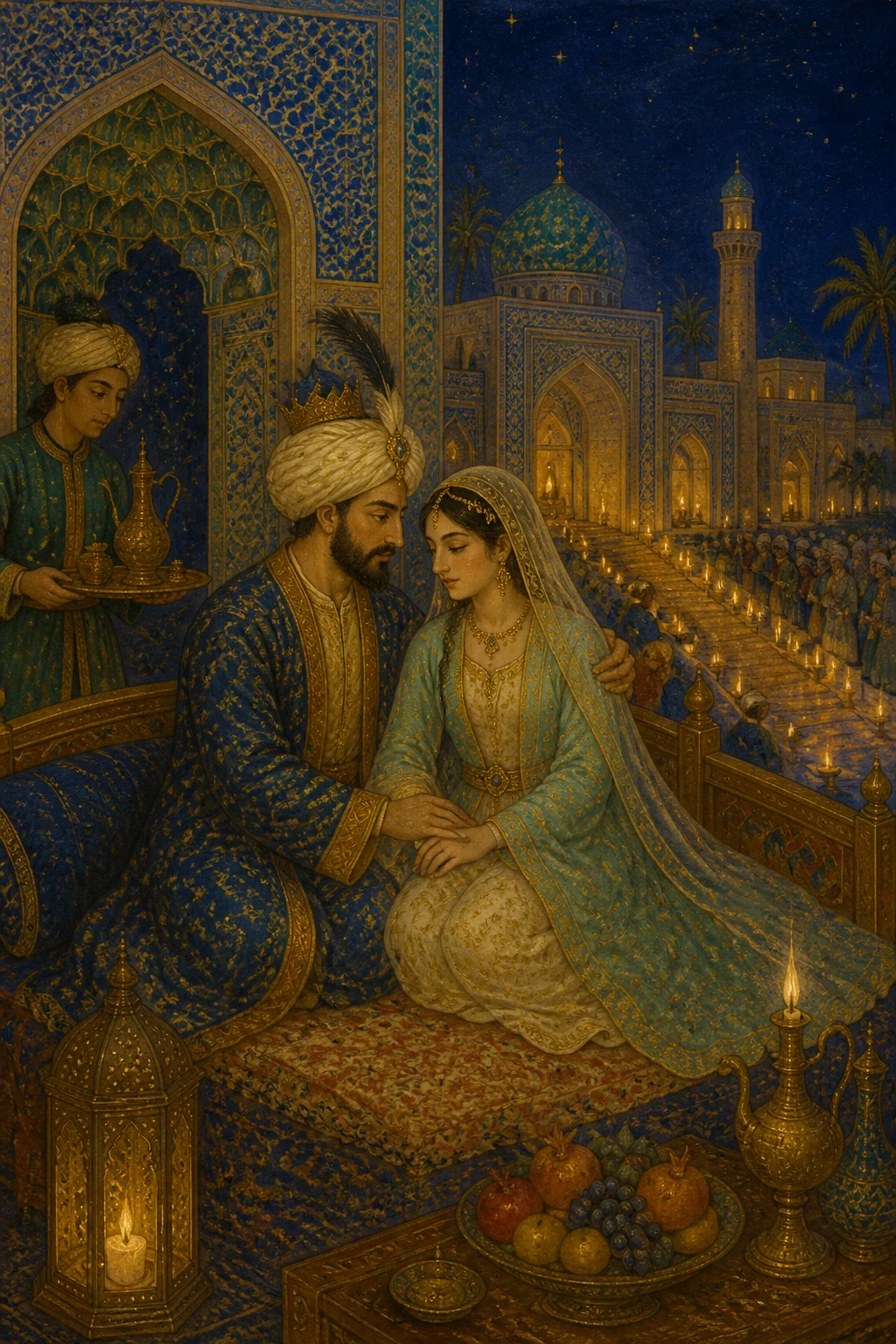
She said: It has reached me, O fortunate king, that Nuzhat al-Zaman said to Sharkan, “How much counsel there is on this subject! I could never recount it all to you in a single sitting. But over the course of days, O king of the age, it will be better.” The judges said, “O king, this maiden is the wonder of the age, the peerless jewel of our time. Never in any age have we seen or heard of her like.” Then they prayed for the king and departed. Sharkan turned to his servants and said, “Begin the wedding preparations, and prepare food of every kind.” They obeyed at once and made ready every sort of dish. He commanded the wives of the emirs, viziers, and officers of state not to leave until they had attended the bridal unveiling and the wedding. Before the afternoon was over, they had spread the tables with everything the soul could desire and the eyes delight in, and everyone ate their fill. The king ordered every singing woman in Damascus to be brought, and they came, along with those of his own slave girls who knew how to sing, and all went up to the palace. When evening came and darkness fell, candles were lit on either side of the way from the citadel gate to the palace gate. The emirs, viziers, and great men walked before King Sharkan, while the bridal attendants took the maiden to adorn and dress her, only to find that she needed no adornment. King Sharkan had gone to the bath, and when he came out he seated himself on the bridal dais, and the bride was displayed before him. Then they removed her outer garments and gave her the counsel a girl is given on her wedding night. Sharkan went in to her and took her maidenhead, and she conceived by him that very night. She told him of it, and he rejoiced exceedingly and ordered the physicians to record the date of her conception.
In the morning he seated himself on his throne, and the officers of his court came up to congratulate him. He summoned his private secretary and ordered him to write a letter to his father, Umar al-Numan, saying that he had bought a slave girl of learning and refinement who had mastered the various branches of wisdom, and that he must send her to Baghdad to visit his brother Daw al-Makan and his sister Nuzhat al-Zaman. He added that he had freed her, contracted marriage with her, and consummated it, and that she was with child by him. Then he sealed the letter and sent it to his father by a courier. The courier was absent for a full month, then returned with an answer and handed it to him. Sharkan took it and read, after the invocation of God’s name: “From the distracted and heartbroken king, Umar al-Numan, who has lost his two children and forsaken his homeland, to his son Sharkan. Know that since your departure my world has grown so narrow that I can no longer endure patiently or conceal my secret. The reason is this: I went out hunting, after Daw al-Makan had asked my leave to travel to the Hijaz. Fearing for him the misfortunes of the age, I forbade him to make the journey until the following year or the year after. When I went out hunting, I was absent for a month.” And morning overtook Shahrazad, and she fell silent, leaving her tale untold.
When it was the sixty-eighth night
She said: It has reached me, O fortunate king, that King Umar al-Numan said in his letter: “When I went out hunting, I was absent for a month. On my return, I found that your brother and sister had taken some money and secretly departed with the pilgrims. When I learned this, the wide world closed in upon me. I waited for the pilgrims to return, hoping the two of them would come back with them, but when the pilgrims arrived and I asked after them, no one could give me any news. For their sake I have put on the garments of mourning. My heart is captive, sleep has forsaken me, and I am drowned in tears.” Then he recited these two verses:
“Their image stays with me and never departs; I have given it the noblest place within my heart. But for the hope of their return, I could not live an hour; but for their phantom visiting my dreams, I could not sleep.” Then he wrote, among other things: “After my greetings to you and all who are with you, I charge you not to slacken in seeking news of them, for this is a disgrace to us.” When Sharkan read the letter, he grieved for his father but rejoiced at the disappearance of his brother and sister. He took the letter and went in to his wife, Nuzhat al-Zaman, not knowing that she was his sister, while she did not know that he was her brother. He continued to visit her night and day until her months were fulfilled and she sat upon the birthing chair. God eased her delivery, and she gave birth to a daughter. She sent for Sharkan, and when she saw him she said, “Here is your daughter. Give her whatever name you wish, for people customarily name their children on the seventh day after birth.” Sharkan bent over his daughter and kissed her, and found hanging about her neck one of the three beads Queen Ibriza had brought from the land of the Greeks. When he saw the bead hanging from his daughter’s neck, his wits deserted him and fury seized him. He stared at it until he was quite certain he recognized it, then looked at Nuzhat al-Zaman and said, “Where did you get this bead, girl?” Hearing these words from Sharkan, she said, “I am your mistress and the mistress of everyone in your palace! Are you not ashamed to call me ‘girl,’ when I am a princess, the daughter of a king? Now secrecy is at an end, and the truth shall be known and made plain. I am Nuzhat al-Zaman, daughter of King Umar al-Numan.” When he heard her words, he began to tremble and bowed his head to the ground. And morning overtook Shahrazad, and she fell silent, leaving her tale untold.
When it was the sixty-ninth night
She said: It has reached me, O fortunate king, that when Sharkan heard these words, his heart quaked, his face turned pale, and he began to tremble. He bowed his head to the ground, realizing that she was his sister on his father’s side, and lost consciousness. When he came to himself, he was filled with astonishment, but did not reveal his identity to her. “My lady,” he said, “are you truly the daughter of King Umar al-Numan?” “Yes,” she replied. He asked, “How did you come to leave your father and be sold?” She told him everything that had happened to her from beginning to end, how she had left her brother ill in Jerusalem, and how the Bedouin had carried her off and sold her to the merchant. Hearing this, Sharkan knew beyond doubt that she was his half-sister, and said to himself, “How can I be married to my own sister? I shall marry her to one of my chamberlains, and if anything comes to light, I shall claim that I divorced her before consummating the marriage and gave her to the chief chamberlain.” Then he raised his head and said sorrowfully, “O Nuzhat al-Zaman, you are indeed my sister. I ask God’s forgiveness for this sin into which we have fallen, for I am Sharkan, son of King Umar al-Numan.” She looked closely at him and recognized him. At this realization she lost her senses, wept, and struck her face, saying, “We have fallen into a terrible sin! What are we to do? What shall I tell my father and mother if they ask me where this daughter came from?” Sharkan said, “The best course is for me to marry you to the chamberlain and leave you to rear my daughter in his house, so that no one knows you are my sister. God has ordained this for some purpose of His own. Nothing will preserve our secret but your marriage to this chamberlain before anyone finds out.” He comforted her and kissed her head, and she asked, “What will you name the girl?” He replied, “I shall call her Qudiya Fakan—‘It Was Decreed, and So It Came to Pass.’” Then he married her to the chief chamberlain and sent her and her daughter to his house. There the child was carried in the arms of slave girls, who tended her faithfully with draughts and powdered remedies.
All this while, her brother Daw al-Makan was in Damascus with the bathhouse stoker. One day a courier arrived from King Umar al-Numan with a letter for King Sharkan. He took it and read, after the invocation of God’s name: “Know, O mighty king, that I am sorely grieved at the loss of my children. Sleep has deserted me, and wakefulness is my constant companion. I have sent you this letter so that, as soon as it reaches your hands, you may send us the tribute, and with it the slave girl you bought and married. I wish to see her and hear her speak, for there has come to us from the land of the Greeks a pious old woman, accompanied by five young, full-breasted virgins, who have acquired all the learning, refinement, and branches of wisdom that a person ought to know. No tongue could describe this old woman and her companions, for they possess every kind of knowledge, virtue, and wisdom. When I saw them I loved them, and longed to have them in my palace and in my possession, for no other king has their like. I asked the old woman their price, and she said, ‘I will sell them for nothing less than the tribute of Damascus.’ By God, I consider the tribute of Damascus a small price for them, for any one of them is worth more than that sum. I agreed to her demand and took them into my palace, where they remain in my keeping. Hasten, then, to send us the tribute, so that the woman may return to her country, and send us the slave girl to debate with them.” And morning overtook Shahrazad, and she fell silent, leaving her tale untold.
When it was the seventieth night
She said: It has reached me, O fortunate king, that King Umar al-Numan said in his letter: “Send us the slave girl to debate with them before the scholars. If she defeats them, I shall send her back to you, together with the tribute of Baghdad.” When Sharkan learned this, he turned to his brother-in-law and said, “Bring me the girl I married to you.” When she came, he showed her the letter and said, “My sister, what answer do you advise?” She replied, “The decision is yours.” Then, longing for her family and homeland, she said, “Send me with my husband the chamberlain, so that I may tell my father my story: what happened to me with the Bedouin who sold me to the merchant, how the merchant sold me to you, and how you freed me and married me to the chamberlain.” Sharkan said, “So it shall be.” Then he took his daughter Qudiya Fakan and entrusted her to the wet nurses and servants. He began to make ready the tribute and ordered the chamberlain to take it and the girl with him to Baghdad. The chamberlain answered with obedience and ordered a litter to be prepared for himself and another for the girl. Sharkan then wrote a letter and handed it to the chamberlain, and bade farewell to Nuzhat al-Zaman. He had taken the bead from her and hung it about his daughter’s neck on a chain of pure gold.
The chamberlain set out that very night. As it happened, Daw al-Makan and the stoker had gone out that night to stroll, and they saw laden camels and mules, blazing torches, and shining lanterns. Daw al-Makan asked about the loads and their owner, and was told, “This is the tribute of Damascus, on its way to King Umar al-Numan, lord of Baghdad.” “And who is in command of this caravan?” he asked. They replied, “The chief chamberlain, who married the learned and wise slave girl.” At this he wept bitterly, remembering his mother, his father, his sister, and his homeland, and said to the stoker, “I can stay here no longer. I shall travel with this caravan and make my way little by little until I reach my country.” The stoker said, “I could scarcely feel easy about you on the journey from Jerusalem to Damascus; how could I leave you to go alone to Baghdad? I shall stay with you until you reach your destination.” Daw al-Makan replied, “With all my heart, and gladly.” The stoker began his preparations, saddled the donkey, laid his saddlebags across it, put in some provisions, and girded his waist. He remained ready until the baggage train passed him, with the chamberlain riding a dromedary and men walking around him. Daw al-Makan mounted the stoker’s donkey and said, “Ride with me.” “I shall not ride,” he answered, “but walk in your service.” Daw al-Makan said, “You must ride for a while.” “When I am tired,” he replied, “I shall ride a little.” Then Daw al-Makan said to him, “My brother, you shall see what I will do for you when I reach my family.” They travelled until sunrise, and when the heat grew fierce the chamberlain ordered them to halt. They dismounted, rested, and watered their camels; then he ordered them to set out again. After five days they reached the city of Hama, where they halted and remained for three days. And morning overtook Shahrazad, and she fell silent, leaving her tale untold.
When it was the seventy-first night
She said: It has reached me, O fortunate king, that they stayed in the city of Hama for three days, then set out and travelled until they reached another city. There they stayed three days, then journeyed on until they reached Diyar Bakr. The breeze of Baghdad blew upon them, and Daw al-Makan remembered his sister Nuzhat al-Zaman, his father and mother, and his homeland, and wondered how he could return to his father without his sister. He wept, moaned, and lamented, and his anguish grew so bitter that he recited these verses:
“My two dear friends, how long must I wait and endure, while no messenger comes from you with news? The days of union are so short—would that the days of parting, too, were brief! Take my hand, draw back my garment, and see how wasted is my body; yet I strive to bear it patiently. If you ask me to forget, I shall tell you: by God, I shall not forget until the day I rise from the grave.” The stoker said, “Leave off this weeping and moaning. We are close to the chamberlain’s tent.” Daw al-Makan replied, “I must recite some poetry; perhaps it will quench the fire in my heart.” The stoker said, “For God’s sake, put aside your grief until you reach your country. Then do as you please, and I shall be with you wherever you are.” Daw al-Makan said, “By God, I cannot cease.” He turned his face toward Baghdad. The moon was shining, and Nuzhat al-Zaman had not slept that night, for she had remembered her brother Daw al-Makan and grown restless and tearful. As she wept, she heard her brother Daw al-Makan weeping and reciting these verses:
“The southern lightning flashed and stirred all my sorrow for a beloved who once poured me the cup of joy. O gleam of lightning, will the days of nearness ever return? O you who blame me, do not reproach me: my Lord has tried me with a beloved lost to sight and a fate that has overwhelmed me. My heart’s delight went far away when my good days departed; time gathered pure sorrow for me and gave me its cup to drink. I see myself, my two dear friends, dead before reunion comes. O days of youthful love, return soon with glad tidings, with joy and security! Who will save me from the arrow that has struck me? Who will aid a poor stranger whose heart passes the night in terror? He has become solitary in grief after the delights of former days, and the hands of the sons of harlots have been given power over us against our will.” When he finished his poem, he cried out and fell unconscious. Such was his case. As for Nuzhat al-Zaman, she had been wakeful that night because she had remembered her brother in that place. When she heard the voice in the darkness, her heart was comforted. She rose, cleared her throat, and called the servant. “What do you require?” he asked. She said, “Go and bring me the man reciting these verses.” And morning overtook Shahrazad, and she fell silent, leaving her tale untold.
When it was the seventy-second night
She said: It has reached me, O fortunate king, that when Nuzhat al-Zaman heard her brother’s verses, she called the chief servant and said, “Go and bring me the man reciting these verses.” He replied, “I did not hear him and do not know him, and everyone is asleep.” She said, “Whoever you find awake is the one reciting the poetry.” He searched but found no one awake except the stoker, for Daw al-Makan was still unconscious. When the stoker saw the servant standing over him, he was afraid. The servant asked, “Were you the one reciting poetry? Our mistress heard you.” The stoker supposed that the lady was angered by the recitation, and in his fear replied, “By God, it was not I.” “Then who was reciting?” asked the servant. “Show him to me. You must know, since you are awake.” The stoker feared for Daw al-Makan, saying to himself, “Perhaps the servant will do him some harm.” So he answered, “I do not know him.” The servant said, “By God, you are lying! No one is sitting here but you, so you must know him.” The stoker said, “I tell you the truth: the man reciting the verses was a passerby. He disturbed me and kept me awake—may God repay him!” The servant replied, “If you know him, point him out, and I shall seize him and bring him to the entrance of our mistress’s litter. Or take hold of him yourself.” The stoker said, “Go, and I will bring him to you.” The servant left him and returned to his mistress, saying, “No one knows him, for he was a passerby.” She fell silent. When Daw al-Makan recovered from his swoon, he saw that the moon had reached the middle of the sky. The breeze before dawn blew upon him and stirred the grief and longing in his heart. He readied his sweet voice to recite, but the stoker asked, “What are you going to do?” He replied, “I want to recite some poetry to quench the fire in my heart.” The stoker said, “You do not know what happened to me. I escaped being killed only by soothing the servant.” Daw al-Makan asked, “What happened? Tell me.” He said, “My lord, while you were unconscious the servant came to me with a long almondwood staff. He went peering into the faces of the sleeping people and asking who had been reciting poetry. Finding no one awake but me, he questioned me, and I told him it was a passerby. Then he went away, and God delivered me from him; otherwise he would have killed me. He told me, ‘If you hear him again, bring him to us.’”
When Daw al-Makan heard this, he wept and said, “Who shall forbid me to recite? I shall recite, and let whatever happens happen. I am close to my country now and care for no one.” The stoker said, “You seem bent only on your own destruction!” Daw al-Makan replied, “Recite I must.” The stoker said, “Then here we part. I had intended not to leave you until you entered your city and were reunited with your father and mother. You have been with me for a year and a half, and I have never done you any harm. Why must you recite poetry when we are worn out with walking and wakefulness, and everyone has lain down to rest from their weariness and needs to sleep?” Daw al-Makan answered, “I will not turn from what I am doing.” Then sorrow moved him, and he gave voice to what he had concealed, reciting these verses:
“Stand by the dwellings, greet their worn remains, and call to them; perhaps—perhaps—they will reply. If the night enfolds you in their desolation, kindle from your longing a flame to light their darkness. If the serpent of the down upon his cheeks should hiss, no wonder that he gathers stings while I gather sweetness from his dusky lips. O paradise from which my soul was forced to part, had the eternal dwelling not consoled me, I would have died of grief.” He also recited these two verses:
“Once we lived with the days as our servants, all of us together in the fairest of homelands. Who will restore to me the dwelling of my loved ones, where Daw al-Makan was, and Nuzhat al-Zaman?” When he finished his poem, he gave three cries and fell unconscious. The stoker rose and covered him. When Nuzhat al-Zaman heard these verses, with their mention of her name and her brother’s and the places they had known, she wept and called to the servant, saying, “Woe to you! The man who recited before has recited again, and I heard him close beside me. By God, if you do not bring him to me, I shall rouse the chamberlain against you, and he will beat you and drive you away. But take these thousand dinars and give them to him, and bring him to me gently. Do him no harm. If he refuses, offer him this purse containing a thousand dinars. If he still refuses, leave him, but find out where he is staying, what his trade is, and what country he comes from. Return quickly, and do not be long.” And morning overtook Shahrazad, and she fell silent, leaving her tale untold.
When it was the seventy-third night
She said: It has reached me, O fortunate king, that Nuzhat al-Zaman sent the servant to search for him, saying, “When you find him, treat him kindly and bring him to me gently. Do not be long.” The servant went out, examining the people and stepping among them as they slept, but found no one awake. He came to the stoker and found him sitting bareheaded, so he approached, seized his hand, and said, “You were the one reciting poetry.” Fearing for himself, the stoker said, “No, by God, O chief of the company, it was not I.” The servant said, “I shall not leave you until you show me the man who was reciting, for I cannot return to my mistress without him.” Hearing this, the stoker feared for Daw al-Makan and wept bitterly, saying, “By God, it was not I. I only heard a passerby reciting. Do not take the sin of harming me upon yourself, for I am a stranger and have come with you from the lands of Jerusalem and Hebron.” The servant said, “Then rise and go to my mistress yourself and tell her with your own mouth, for I have seen no one awake but you.” The stoker replied, “Did you not come and find me sitting in this very place, and learn where I was? No one can leave his place without being seized by the guards. Go back to your station. If you hear anyone reciting poetry again at this hour, far or near, you shall learn who he is from me alone.” Then he kissed the servant’s head and soothed him, until the servant left him and walked about for a while. Fearing to return empty-handed to his mistress, he hid near the stoker. The stoker went to Daw al-Makan, roused him, and said, “Sit up, and I will tell you what has happened.” He told him the whole affair, but Daw al-Makan said, “Leave me alone. I care for no one, for my country is near.” The stoker said, “Why do you obey only your own desires and fear no one, while I fear for both your life and mine? For God’s sake, do not utter another verse until you enter your country. I never thought to find you like this. Do you not know that the chamberlain’s wife wants to rebuke you because you have disturbed her? Perhaps she is weak or weary from the journey. How many times has she sent the servant to look for you!” Daw al-Makan paid no heed to the stoker’s words, but cried out a third time and recited these verses:
“I have forsaken every censurer whose blame disturbed me. He reproaches me, not knowing that he only spurs me on. The talebearers said, ‘He has forgotten.’ I said, ‘Only for love of home.’ They said, ‘How beautiful he is!’ I said, ‘How deeply I love!’ They said, ‘How proud and mighty he is!’ I said, ‘How humble I have become!’ Never shall I forsake him; to forsake him would be my death. Never have I obeyed a censurer who reproached me for my love.” The servant heard him from his hiding place, and scarcely had he finished his poem when the servant stood over him. Seeing him, the stoker rose and stood some distance away to watch what would happen between them. The servant said, “Peace be upon you, my lord.” Daw al-Makan replied, “And upon you be peace, and God’s mercy and blessings.” The servant said, “My lord…” And morning overtook Shahrazad, and she fell silent, leaving her tale untold.
When it was the seventy-fourth night
She said: It has reached me, O fortunate king, that the servant said to Daw al-Makan, “My lord, I have come to you three times tonight, for my mistress asks you to attend her.” He replied, “Who is this bitch, that she should summon me? May God abhor her and her husband with her!” He heaped abuse upon the servant, who could make no answer, for his mistress had instructed him to bring the man only of his own free will, and, if he would not come, to give him the hundred dinars. So the servant spoke gently to him, saying, “My son, I have done you no wrong, nor have we treated you unjustly. We only ask you to grace our mistress with a few steps, then return safe and sound. There will be a reward for you.” Hearing this, Daw al-Makan rose and walked among the people, while the stoker followed, watching him and saying to himself, “Alas for his youth! Tomorrow they will hang him.” The stoker continued after him until he drew near their quarters, saying, “What a scoundrel he would be if he told them, ‘It was he who told me to recite poetry!’”
Such was the stoker’s case. As for Daw al-Makan, he walked on with the servant until they reached the place. The servant went in to Nuzhat al-Zaman and said, “I have brought you the man you wanted. He is a handsome young man and bears the marks of a life of ease.” At these words her heart fluttered, and she said, “Tell him to recite some poetry, so that I may hear him close at hand. Then ask his name and what country he comes from.” The servant went out and said, “Recite some poetry for my mistress to hear, for she is here close beside you. And tell me your name, your country, and your circumstances.” He replied, “Gladly and with all my heart. But as you ask my name, it has been erased; my trace has vanished, and my body has wasted away. Mine is a tale that, were it written with needles upon the corners of the eyes, would be a lesson to all who took heed. Here I am like a drunken man who has drunk too deeply and been beset by afflictions, until he is lost to himself, bewildered in his affairs, and drowned in a sea of thought.” Hearing these words, Nuzhat al-Zaman wept, and her tears and sobs increased. She said to the servant, “Ask him whether he has been parted from someone he loves, such as his mother or father.” The servant put the question as she had instructed, and Daw al-Makan replied, “Yes, I have been parted from them all, and dearest of them to me is my sister, from whom fate has separated me.” When Nuzhat al-Zaman heard this, she said, “May God reunite him with those he loves.” And morning overtook Shahrazad, and she fell silent, leaving her tale untold.
When it was the seventy-fifth night
She said: It has reached me, O fortunate king, that when Nuzhat al-Zaman heard his words, she said, “May God reunite him with those he loves.” Then she told the servant, “Ask him to let us hear some verses lamenting separation.” The servant conveyed his mistress’s request, and Daw al-Makan heaved deep sighs and recited these verses:
“Would that I knew whether they knew what heart they have possessed! Would that my heart knew which mountain pass they took! Are they safe, I wonder, or have they perished? Even the masters of love are bewildered and confounded by love.” He also recited these verses:
“Distance has come to take the place of nearness, and estrangement has replaced the sweetness of our meetings. You departed, and we were parted: longing for you, our hearts have never cooled, nor have our eyes grown dry. Our enemies were angered when we pledged each other cups of love; they prayed that we might choke, and fate said, ‘Amen.’ The time that once made us laugh for joy in your closeness has returned to make us weep. O everlasting paradise, in place of its flowing waters and sweet Kawthar, we have been given the bitter fruit of Zaqqum and the foul drink of Hell.” Then he shed tears and recited these verses:
“I make a vow to God: if I return to my own dwelling, where my sister Nuzhat al-Zaman resides, I shall spend my days in untroubled joy, among graceful, lovely, bashful maidens, to the sound of the lute’s enchanting melodies, sipping the cup of the daughter of the vine and kissing dusky lips beneath languid eyes, beside a river flowing through a garden.” When he finished his poem and Nuzhat al-Zaman had heard him, she lifted the edge of the litter’s curtain and looked out. The moment her eyes fell upon his face, she knew him beyond doubt and cried, “My brother! Daw al-Makan!” He raised his eyes to her, recognized her, and cried, “My sister! Nuzhat al-Zaman!” She threw herself upon him, and he caught her in his embrace, and both fell unconscious. Seeing them in this state, the servant marvelled, laid a covering over them, and waited until they recovered. When they came to themselves, Nuzhat al-Zaman rejoiced beyond measure. Her grief and sorrow departed, and gladness followed gladness in her heart. She recited these verses:
“Time swore it would never cease to trouble me. Your oath is broken, O Time: make amends! Good fortune has arrived, and my beloved is beside me. Rise, then, and hasten to the call of joy! I never thought the cheeks a paradise until I found upon the dusky lips the waters of Kawthar.” When Daw al-Makan heard this, he clasped his sister to his breast, and tears overflowed his eyes in the fullness of his joy. He recited these verses:
“I sorrowed for our parting with a sorrow that poured tears from my eyes, and vowed that, if time brought us together again, my tongue would never speak of separation. Joy swept upon me with such force that its very gladness made me weep. O eyes, tears have become your habit: you weep alike for happiness and grief.” They sat for a while at the entrance to the litter. Then she said, “Come inside and tell me what happened to you, and I will tell you what happened to me.” Daw al-Makan replied, “You must tell me first.” So she told him everything that had happened to her since she had left him at the inn: her encounter with the Bedouin and the merchant, how the merchant had bought her, taken her to their brother Sharkan, and sold her to him; how Sharkan had freed her as soon as he bought her, contracted marriage with her, and consummated it; and how their father the king had heard of her and written to Sharkan asking him to send her. Then she said, “Praise be to God, who has blessed me with finding you! Just as we left our father together, so shall we return to him together.” She went on, “My brother Sharkan married me to this chamberlain so that he might take me to my father. That is all that happened to me from beginning to end. Now tell me what happened to you after I left.” He told her everything from first to last: how God had blessed him with the stoker, how the man had travelled with him and spent his money on him, and how he had served him night and day. She expressed her gratitude for this, and Daw al-Makan said, “My sister, this stoker has shown me such kindness as no man shows even to one he loves, nor a father to his son. He went hungry to feed me and walked so that I might ride. I owe my life to him.” Nuzhat al-Zaman replied, “God willing, we shall reward him as well as we can.” Then she called the servant, who came and kissed Daw al-Makan’s hand. She said to him, “Take your reward, O bringer of good fortune, for it was through you that I was reunited with my brother. The purse you hold, and all that is in it, is yours. Now go and bring me your master at once.” Delighted, the servant went to the chamberlain, entered his presence, and summoned him to his lady. He brought him back, and the chamberlain went in to his wife Nuzhat al-Zaman and found her brother with her. He asked who the young man was, and she told him their story from beginning to end. Then she said, “Know, O chamberlain, that you have not married a slave girl, but the daughter of King Umar al-Numan. I am Nuzhat al-Zaman, and this is my brother Daw al-Makan.”
When the chamberlain heard her story, he knew that what she said was true. The plain truth became clear to him, and he was certain that he had become the son-in-law of King Umar al-Numan. He said to himself, “I shall surely be given the governorship of some province.” Then he turned to Daw al-Makan and congratulated him on his safe return and reunion with his sister. At once he ordered his servants to prepare a tent for him and a mount from among the finest horses. His wife said, “We are close to our own country now. Let me be alone with my brother, so that we may rest together and have our fill of one another’s company before we arrive, for we have been parted a long time.” The chamberlain replied, “It shall be as you both wish.” He sent them candles and all kinds of sweetmeats, withdrew from their company, and sent Daw al-Makan three changes of the finest clothes. He walked back to the litter, knowing now his own place. Nuzhat al-Zaman said to him, “Send for the servant and order him to bring the stoker, prepare a horse for him to ride, and arrange for him to be served a meal morning and evening. Tell him that he is not to leave us.” The chamberlain sent for the servant and commanded him to do this, and he answered, “I hear and obey.” The servant took his lads and went to search for the stoker, until he found him at the rear of the caravan, saddling his donkey and preparing to flee. Tears ran down his cheeks, both from fear for himself and from sorrow at parting with Daw al-Makan. He was saying, “I counselled him for God’s sake, but he would not listen. What can have become of him?” Scarcely had he finished speaking when the servant was standing over him and the lads had surrounded him. The stoker turned, saw the servant above him and the lads all around, and grew pale with fear. And morning overtook Shahrazad, and she fell silent, leaving her tale untold.
When it was the seventy-sixth night
She said: It has reached me, O fortunate king, that when the stoker was about to saddle his donkey and flee, he began talking to himself, saying, “I wonder how he fares?” Scarcely had he finished speaking when the eunuch stood over him, with the servants all around. The stoker turned and saw the eunuch standing at his head, and his limbs trembled with fear. Raising his voice, he said, “He has shown no gratitude for all the kindness I did him! I suppose he has set the eunuch and these servants on me, and made me a partner in his offence.” Then the eunuch shouted at him, “Who was it reciting poetry, you liar? How could you tell me, ‘I recited no poetry, and I do not know who did,’ when the man is your companion? I shall not leave you between here and Baghdad, and whatever befalls your companion shall befall you.” When the stoker heard this, he said to himself, “The very thing I feared has come upon me!” Then he recited this verse:
“What I feared would come has come to pass; indeed, to God we shall return.” Then the eunuch shouted to the servants, “Take him off the donkey!” They helped the stoker down and brought him a horse. He mounted and rode with the company, surrounded on every side by the servants. The eunuch told them, “If so much as a hair of his head is lost, one of you shall answer for it. Honour him, and do not treat him roughly.” When the stoker saw the servants surrounding him, he despaired of his life. Turning to the eunuch, he said, “Captain, I have neither brothers nor kinsfolk. This young man is no relation of mine, nor am I any relation of his. I am merely a stoker in a bathhouse, and I found him lying sick on a rubbish heap.” The stoker began to weep, turning a thousand fears over in his mind. The eunuch rode beside him without explaining anything, merely saying, “You and this lad have troubled our lady with your recitation of poetry. But have no fear for yourself.” All the while, the eunuch was secretly laughing at him. Whenever they halted, food was brought, and he and the stoker ate from the same dish. After they had eaten, the eunuch ordered the servants to bring a jug of sugar sherbet; he drank from it and handed it to the stoker to drink. Yet the stoker’s tears never dried, so great was his fear for his own life, his grief at being parted from Daw al-Makan, and his sorrow over all that had befallen them in their wanderings. As they travelled, the chamberlain would sometimes attend at the door of the litter to serve Daw al-Makan, son of King Umar al-Numan, and Nuzhat al-Zaman, and sometimes turn his attention to the stoker. Nuzhat al-Zaman and her brother Daw al-Makan talked together, pouring out their sorrows, and so they continued on their journey until they drew near the city, with only three days’ travel remaining. They halted in the evening and rested, staying in camp until dawn appeared. Then they awoke and were about to load their baggage when a great cloud of dust rose before them, darkening the air until it was like blackest night. The chamberlain cried, “Wait! Do not load the baggage!” He mounted with his mamluks and rode towards the dust. As they drew near, a mighty army appeared beneath it, like a surging sea, with banners and standards, drums, horsemen, and champions. The chamberlain marvelled at the sight. When the army saw them, a company of some five hundred horsemen broke away and came towards the chamberlain and his men, surrounding them, with five soldiers closing about each of his mamluks. The chamberlain said, “What is the meaning of this? Where has this army come from, that you should treat us so?” They asked him, “Who are you? Where have you come from, and where are you bound?” He replied, “I am chamberlain to the ruler of Damascus, King Sharkan, son of King Umar al-Numan, lord of Baghdad and the land of Khurasan. I have come from him with tribute and gifts, bound for his father in Baghdad.” When they heard his words, they drew their kerchiefs over their faces and wept. “Umar al-Numan is dead,” they told him, “and he died of poison. Go forward without fear until you meet his chief vizier, the Vizier Dandan.”
When the chamberlain heard these words, he wept bitterly and said, “Alas for the misfortune of this journey!” He and his companions went on weeping until they joined the army. Permission was sought for him to enter the presence of the Vizier Dandan, who admitted him and ordered his tents to be pitched. The vizier seated himself on a couch in the middle of the tent and bade the chamberlain sit. When he had done so, the vizier asked his business, and he explained that he was chamberlain to the ruler of Damascus and had come with gifts and the tribute of Damascus. At the mention of King Umar al-Numan, the Vizier Dandan wept, then said, “King Umar al-Numan has died of poison. After his death, the people disputed over whom they should appoint to succeed him, until they began killing one another. But the great men, the nobles, and the four judges restrained them, and everyone agreed that none should oppose whatever the four judges advised. It was therefore decided that we should march to Damascus, seek out his son King Sharkan, bring him back, and make him sultan over his father’s kingdom. Some among them, however, favoured his second son. They said that his name was Daw al-Makan and that he had a sister called Nuzhat al-Zaman. The two had set out for the land of the Hijaz five years ago, and no one had heard any news of them since.” When the chamberlain heard this, he knew that his wife’s story was true. Though he grieved deeply at the sultan’s death, he was also filled with joy, above all at Daw al-Makan’s arrival, for he would become sultan in Baghdad in his father’s place. And dawn overtook Shahrazad, and she fell silent, leaving her tale untold.
When it was the seventy-seventh night
She said: It has reached me, O fortunate king, that when Sharkan’s chamberlain heard what the Vizier Dandan had to tell of King Umar al-Numan, he grieved, yet rejoiced for his wife and her brother Daw al-Makan, since he would become sultan in Baghdad in his father’s place. Then the chamberlain turned to the Vizier Dandan and said, “Your story is among the strangest of wonders. Know, O great vizier, that by bringing you upon me here, God has spared you further toil. What you desire has come to you with the greatest ease, for God has restored Daw al-Makan and his sister Nuzhat al-Zaman to you. All is now set right, and your task is easy.” When the vizier heard these words, he rejoiced exceedingly and said, “Chamberlain, tell me their story: what befell them, and why they were absent.” So he told him the story of Nuzhat al-Zaman and how she had become his wife, then related the tale of Daw al-Makan from beginning to end. When the chamberlain had finished, the Vizier Dandan sent for the emirs, viziers, and great officers of state and acquainted them with the story. They rejoiced greatly and marvelled at this happy chance. Then they all gathered and came to the chamberlain, stood before him in attendance, and kissed the ground at his feet. From that moment, the vizier too waited upon the chamberlain and stood before him. That day the chamberlain held a grand council, sitting with the Vizier Dandan upon a dais, while all the emirs, grandees, and officers stood before them according to their rank. Sugar was dissolved in rosewater, and they drank. Then the emirs sat down to deliberate, giving the rest of the army leave to mount and ride a little way ahead together until they had finished their council and could follow. The soldiers kissed the ground before the chamberlain and mounted, with the banners of war borne before them. When the great men had concluded their deliberations, they too mounted and caught up with the army.
Then the chamberlain turned to the Vizier Dandan and said, “My counsel is that I should go on ahead of you, to prepare a fitting place for the sultan and inform him of your coming, and that you have chosen him rather than his brother Sharkan to rule over you.” The vizier replied, “Excellent counsel!” Then the chamberlain rose, and the Vizier Dandan rose in honour of him, presented him with gifts, and entreated him to accept them. The chief emirs and officers likewise offered him gifts and prayed for him, saying, “Perhaps you will speak to Sultan Daw al-Makan on our behalf, so that he may keep us in our offices.” He agreed to their request, then ordered his servants to set out. The Vizier Dandan sent the tents with the chamberlain, ordering the tent-pitchers to erect them a day’s journey outside the city. They obeyed, and the chamberlain rode away in the greatest joy, saying to himself, “What a blessed journey this has been!” His wife rose greatly in his esteem, as did Daw al-Makan.
He pressed on until he reached a place a day’s journey from the city. There he ordered a halt, so that they might rest and prepare a place where Sultan Daw al-Makan, son of King Umar al-Numan, could hold court. He and his mamluks dismounted some distance away, and he sent the servants to ask Lady Nuzhat al-Zaman’s permission for him to enter. They asked, and she granted it. He went in and met her and her brother, told them of their father’s death, and informed them that the chiefs had made Daw al-Makan king over them in place of his father Umar al-Numan. Then he congratulated them on their accession. They wept for the loss of their father and asked why he had been murdered. “The Vizier Dandan has the full account,” he replied. “Tomorrow he and the whole army will be here. All that remains, O king, is for you to accept their decision, for they have all chosen you as sultan. If you refuse, they will make someone else sultan, and you will not be safe from whoever takes the throne. He may kill you, or discord may arise between you, and the kingdom pass out of both your hands.” Daw al-Makan bowed his head for a while, then said, “I accept this charge, for there is no way to withdraw from it.” He recognized the wisdom of the chamberlain’s words, then asked him, “Uncle, what am I to do about my brother Sharkan?” He answered, “My son, your brother shall be sultan of Damascus, and you sultan of Baghdad. Take courage, then, and make your preparations.” Daw al-Makan accepted his advice. The chamberlain then presented him with the royal garments that had been in the Vizier Dandan’s keeping, handed him the sword, and withdrew. He ordered the tent-pitchers to choose a high place and erect a great, spacious tent for the sultan to sit in when the emirs came before him. Then he ordered the cooks to prepare and serve a splendid meal, and the water-carriers to set up water cisterns. An hour later, dust rose until it obscured the horizon on every side; then the dust cleared, revealing beneath it a mighty army like a surging sea. And dawn overtook Shahrazad, and she fell silent, leaving her tale untold.
When it was the seventy-eighth night
She said: It has reached me, O fortunate king, that when the chamberlain ordered the tent-pitchers to erect a spacious tent where the people might assemble before the king, they raised a great pavilion in the royal fashion. When they had finished their work, a cloud of dust rose; then the wind swept it away, revealing beneath it a mighty army. It proved to be the army of Baghdad and Khurasan, led by the Vizier Dandan, and all rejoiced at Daw al-Makan’s accession. Daw al-Makan was dressed in the robes of kingship, with the sword of state girded at his side. The chamberlain brought him a horse, and he mounted and rode with his mamluks, while everyone in the tents went in attendance upon him, until he entered the great pavilion. He seated himself and laid the sword across his thighs. The chamberlain stood before him in attendance, and his mamluks stood in the entrance to the tent with drawn swords in their hands. Then the troops and armies came forward and requested permission to enter. The chamberlain went in and sought leave for them from Sultan Daw al-Makan, who commanded that they be admitted ten at a time. The chamberlain informed them of this, and they answered, “We hear and obey.” They all waited at the entrance, and ten of them came forward. The chamberlain led them through the vestibule into the presence of Sultan Daw al-Makan. When they saw him, they were filled with awe. He received them most graciously and promised them every favour. They congratulated him on his safe return, prayed for him, and swore solemn oaths that they would never disobey his commands. Then they kissed the ground before him and withdrew. Another ten entered, and he treated them as he had the others. They continued to enter ten by ten until none remained but the Vizier Dandan. He came in and kissed the ground before him, whereupon Daw al-Makan rose to greet him, turned towards him, and said, “Welcome to the vizier, my honoured father! You have acted as a cherished counsellor should, while the ordering of all things rests with the Gentle, the All-Aware.”
At that moment the chamberlain went out, ordered the feast to be spread, and summoned the entire army. They came and ate and drank. Then King Daw al-Makan said to the Vizier Dandan, “Order the army to remain here for ten days, so that I may be alone with you and you may tell me why my father was murdered.” The vizier obeyed the sultan’s command, saying, “That must indeed be done.” He went out among the tents and ordered the army to remain for ten days, and they obeyed. He then gave them leave to take their leisure, directing that none of those in attendance should enter the king’s presence for three days. All the people prayed fervently that Daw al-Makan’s glory might endure. The vizier then returned to him and reported what he had done. Daw al-Makan waited until nightfall, then went to his sister Nuzhat al-Zaman and asked her, “Have you learned why our father was murdered, or do you still not know how it came about?” She replied, “I do not know why he was murdered.” Then she had a silken curtain hung for herself, and Daw al-Makan sat outside it and ordered the Vizier Dandan to be brought. When he appeared before him, the king said, “I wish you to tell me in detail why my father, King Umar al-Numan, was murdered.”
Izvirnik
زفاف نزهة الزمان إلى الملك شركان - الليالي ٦٧ إلى ٧٨
Naslednje strani prikazujejo izvirno besedilo za primerjavo.
فلما كانت الليلة ٦٧
قالت: بلغني أيها الملك السعيد أن نزهة الزمان قالت لشركان: وكم في هذا الباب من النصائح! وإني لَأعجز عن الإتيان لك بجميع ما في هذا الباب في مجلس واحد، ولكن على طول الأيام يا ملك الزمان يكون خيرًا. فقالت القضاة: أيها الملك، إن هذه الجارية أعجوبة الزمان، ويتيمة العصر والأوان، فإننا ما رأينا ولا سمعنا بمثلها في زمن من الأزمان. ثم إنهم دعوا للملك وانصرفوا، فعند ذلك التفت شركان إلى خدامه، وقال لهم: اشرعوا في عمل العرس، وهيِّئوا الطعام من جميع الألوان. فامتثَلوا أمره في الحال، وهيَّئوا جميعَ الأطعمة، وأمَرَ نساءَ الأمراء والوزراء وأرباب الدولة ألَّا ينصرفوا حتى يحضروا الجلاء والعرس، فما جاء وقت العصر حتى مدوا السفرة مما تشتهي الأنفس وتلذ الأعين، وأكل جميع الناس حتى اكتفوا، وأمر الملك أن تحضر كل مغنية في دمشق فحضرن، وكذلك جواري الملك اللائي يعرفن الغناء، وطلع جميعهن إلى القصر، فلما أتى المساء وأظلم الظلام أوقدوا الشموع من باب القلعة إلى باب القصر يمينًا وشمالًا، ومشى الأمراء والوزراء والكبراء بين يدي الملك شركان، وأخذت المواشط الصبية لتزينها وتلبسها، فرأتها لا تحتاج إلى زينة. وكان الملك شركان قد دخل الحمام، فلما خرج جلس على المنصة، وجليت عليه العروس، ثم خففوا عنها ثيابها، وأوصوها بما تُوصَى به البنت ليلة الزفاف، ودخل عليها شركان، وأخذ وجهها، وعلقت منه في تلك الليلة، وأعلمته بذلك، ففرح فرحًا شديدًا، وأمر الحكماء أن يكتبوا تاريخ الحمل.
فلما أصبح جلس على الكرسي، وطلع له أرباب دولته وهنَّئوه، وأحضر كاتب سره وأمره أن يكتب كتابًا لوالده عمر النعمان بأنه اشترى جارية ذات علم وأدب قد حوت فنون الحكمة، وأنه لا بد من إرسالها إلى بغداد لتزور أخاه ضوء المكان وأخته نزهة الزمان، وأنه أعتقها، وكتب كتابه عليها، ودخل بها، وحملت منه. ثم ختم الكتاب وأرسله إلى أبيه صحبة بريد، فغاب ذلك البريد شهرًا كاملًا، ثم رجع إليه بالجواب، وناوله إياه فأخذه وقرأه، فإذا فيه بعد البسملة: هذا من عند الحائر الولهان، الذي فقد الولدان، وهجر الأوطان، الملك عمر النعمان، إلى ولده شركان. اعلم أنه بعد مسيرك من عندي ضاق عليَّ المكان، حتى لا أستطيع صبرًا، ولا أقدر أن أكتم سرًّا، وسبب ذلك أنني ذهبت إلى الصيد والقنص، وكان ضوء المكان قد طلب مني الذهاب إلى الحجاز، فخفت عليه من نوائب الزمان، ومنعته من السفر إلى العام الثاني أو الثالث، فلما ذهبت إلى الصيد والقنص غبت شهرًا. وأدرك شهرزاد الصباح فسكتَتْ عن الكلام المباح.
فلما كانت الليلة ٦٨
قالت: بلغني أيها الملك السعيد أن الملك عمر النعمان قال في مكتوبه: فلما ذهبتُ إلى الصيد والقنص غبتُ شهرًا، فلما أتيتُ وجدتُ أخاك وأختك أخذَا شيئًا من المال، وسافرَا مع الحجاج خفيةً، فلما علمت بذلك ضاق بي الفضاء، وقد انتظرت مجيء الحجاج لعلهما يجيئان معهم، فلما جاء الحجاج سألت عنهما، فلم يخبرني أحد بخبرهما، فلبست لأجلهما ثياب الحزن، وأنا مرهون الفؤاد، عديم الرقاد، غريق دمع العين. ثم أنشد هذين البيتين:
خَيَالُهُمَا عِنْدِي وَلَيْسَ بِغَائِبٍ جَعَلْتُ لَهُ فِي الْقَلْبِ أَشْرَفَ مَوْضِعِ
وَلَوْلَا رَجَاءُ الْعُودِ مَا عِشْتُ سَاعَةً وَلَوْلَا خَيَالُ الطَّيْفِ لَمْ أَتَهَجَّعِ
ثم كتب من جملة المكتوب: وبعد السلام عليك، وعلى مَن عندك، أعرفك أنك لا تتهاون في كشف الأخبار، فإن هذا علينا عار. فلما قرأ الكتاب حزن على أبيه، وفرح لفقد أخته وأخيه، وأخذ الكتاب ودخل به على زوجته نزهة الزمان، ولم يعلم أنها أخته، وهي لا تعلم أنه أخوها، مع أنه يتردد عليها ليلًا ونهارًا، إلى أن كملت أشهرها، وجلست على كرسي الطلق، فسهَّل الله عليها الولادة، فولدت بنتًا، فأرسلت تطلب شركان، فلما رأته قالت له: هذه بنتك فسمِّها ما تريد، فإن عادة الناس أن يسموا أولادَهم في سابع يومِ ولادتهم. ثم انحنى شركان على ابنته وقبَّلها، فوجد في عنقها خرزةً معلقةً من الثلاث خرزات التي جاءت بها الملكة إبريزة من بلاد الروم، فلما عايَنَ الخرزة معلَّقةً في عنق ابنته، غاب عقله واشتد به الغيظ، وحملق عينيه في الخرزة حتى عرفها حق المعرفة، ثم نظر إلى نزهة الزمان، وقال لها: من أين جاءتك هذه الخرزة يا جارية؟ فلما سمعت من شركان ذلك الكلام، قالت له: أنا سيدتك وسيدة كل مَن في قصرك، أَمَا تستحي وأنت تقول يا جارية، وأنا ملكة بنت ملك؟ والآن زال الكتمان، واشتهر الأمر وبان، أنا نزهة الزمان بنت الملك عمر النعمان. فلما سمع منها هذا الكلام لحقه الارتعاش، وأطرق برأسه إلى الأرض. وأدرك شهرزاد الصباح فسكتَتْ عن الكلام المباح.
فلما كانت الليلة ٦٩
قالت: بلغني أيها الملك السعيد أن شركان لما سمع هذا الكلام ارتجف قلبه، واصفرَّ لونه، ولحقه الارتعاش، وأطرق برأسه إلى الأرض، وعرف أنها أخته من أبيه، فغاب عن الدنيا، فلما أفاق صار يتعجَّب، ولكنه لم يعرِّفها بنفسه، وقال لها: يا سيدتي، هل أنتِ بنت الملك عمر النعمان؟ قالت: نعم. فقال لها: وما سبب فراقك لأبيك وبيعك؟ فحكت له جميع ما وقع لها من الأول إلى الآخر، وأخبرته أنها تركت أخاها مريضًا في بيت المقدس، وأخبرته باختطاف البدوي لها، وبيعه إياها للتاجر. فلما سمع شركان ذلك الكلام تحقَّقَ أنها أخته من أبيه، وقال في نفسه: كيف أتزوَّجُ بأختي؟ لكن أنا أزوِّجها لواحدٍ من حجَّابي، وإذا ظهر أمر أدَّعِي أنني طلقتها قبل الدخول، وزوَّجْتُها بالحاجب الكبير. ثم رفع رأسه وتأسَّف، وقال: يا نزهة الزمان، أنت أختي حقيقة، وأستغفر الله من هذا الذنب الذي وقعنا فيه، فإنني أنا شركان ابن الملك عمر النعمان. فنظرتُ إليه وتأمَّلَتْه فعرفته، فلما عرفته غابت عن صوابها وبكت، ولطمت وجهها وقالت: قد وقعنا في ذنب عظيم، ماذا يكون العمل؟ وما أقول لأبي وأمي إذا قالَا لي من أين جاءتك هذه البنت؟ فقال شركان: الرأي أن أزوِّجك بالحاجب، وأدعك تربي بنتي في بيته، بحيث لا يعلم أحد بأنك أختي، وهذا الذي قدَّره الله علينا لأمرٍ أراده، فما يسترنا إلا زواجك بهذا الحاجب قبل أن يدري أحد. ثم صار يأخذ بخاطرها، ويقبِّل رأسها، فقالت له: وما تسمِّي البنت؟ قال أسميها: قضى فكان. ثم زوَّجها للحاجب الكبير، ونقلها إلى بيته هي وبنتها، فربوها على أكتاف الجواري، وواظبوا عليها بالأشربة، وأنواع السفوف.
هذا كله وأخوها ضوء المكان مع الوقاد بدمشق، فاتفق أنه أقبل بريدٌ يومًا من الأيام من عند الملك عمر النعمان إلى الملك شركان، ومعه كتاب، فأخذه وقرأه، فرأى فيه بعد البسملة: اعلم أيها الملك العزيز أني حزين حزنًا شديدًا على فراق الأولاد، وعدمتُ الرقاد، ولازمني السهاد، وقد أرسلتُ هذا الكتابَ إليك، فحالَ حصولِه بين يديك تُرسِلُ إلينا الخراج، وترسل صحبته الجارية التي اشتريتها وتزوَّجتَ بها، فإني أحببتُ أن أراها وأسمع كلامها؛ لأنه جاءنا من بلاد الروم عجوز من الصالحات، وصحبتها خمس جوارٍ نُهد أبكار، وقد حازوا من العلم والأدب وفنون الحكمة ما يجب على الإنسان معرفته، ويعجز عن وصف هذه العجوز ومَن معها اللسانُ، فإنهن حُزْنَ أنواعَ العلم والفضيلة والحكمة، فلما رأيتهن أحببتهن، وقد اشتهيت أن يكنَّ في قصري وفي ملك يدي؛ لأنه لا يوجد لهن نظير عند سائر الملوك، فسألتُ المرأة العجوز عن ثمنهن، فقالت: لا أبيعهن إلا بخراج دمشق. وأنا والله أرى خراج دمشق قليلًا في ثمنهن، فإن الواحدة منهن تساوي أكثر من هذا المبلغ، فأجبتها إلى ذلك، ودخلت بهن قصري، وبقين في حوزتي، فعجِّلْ لنا بالخراج لأجل أن تسافر المرأة إلى بلادها، وأرسل لنا الجارية لأجل أن تناظرهن. وأدرك شهرزاد الصباح فسكتَتْ عن الكلام المباح.
فلما كانت الليلة ٧٠
قالت: بلغني أيها الملك السعيد أن الملك عمر النعمان قال في مكتوبه: وأرسِل إلينا الجارية لأجل أن تناظرهن بين العلماء، فإذا غلبتهن أرسلتها إليك، وصحبتها خراج بغداد. فلما علم ذلك شركان أقبل على صهره، وقال له: هات الجارية التي زوَّجتُكَ إياها. فلما حضرت أوقفها على الكتاب، وقال لها: يا أختي، ما عندك من الرأي في رد الجواب؟ قالت له: الرأي رأيك. ثم قالت له وقد اشتاقت إلى أهلها ووطنها: أرسلني صحبة زوجي الحاجب لأجل أن أحكي لأبي حكايتي، وأخبره بما وقع لي مع البدوي الذي باعني للتاجر، وأخبره بأن التاجر باعني لك، وزوَّجتني للحاجب بعد عتقي. فقال لها شركان: وهو كذلك. ثم أخذ ابنته قضى فكان، وسلَّمَها للمراضع والخدم، وشرع في تجهيز الخراج، وأمر الحاجب أن يأخذ الخراج والجارية صحبته، ويتوجه إلى بغداد، فأجابه الحاجب بالسمع والطاعة، فأمر بمحفَّة يجلس فيها، وللجارية أيضًا، ثم كتب كتابًا وسلَّمه للحاجب، وودَّع نزهة الزمان، وكان قد أخذ منها الخرزة، وجعلها في عنق ابنته في سلسلةٍ من خالص الذهب.
ثم سافَرَ الحاجب في تلك الليلة، فاتفق أنه خرج ضوء المكان هو والوقاد في تلك الليلة يتفرَّجان، فرأيا جمالًا وبغالًا محمَّلة ومشاعل وفوانيس مضيئة، فسأل ضوء المكان عن هذه الأحمال وعن صاحبها، فقال: هذا خراج دمشق مسافر إلى الملك عمر النعمان صاحب مدينة بغداد. فقال: ومَن رئيس هذه المحامل؟ قيل: هو الحاجب الكبير الذي تزوَّجَ الجارية التي تعلَّمت العلم والحكمة. فعند ذلك بكى بكاءً شديدًا، وتذكَّر أمه وأباه وأخته ووطنه، وقال للوقَّاد: ما بقي لي قعود هنا، بل أسافر مع هذه القافلة، وأمشي قليلًا قليلًا حتى أصل إلى بلادي. فقال له الوقاد: أنا أمنت عليك من القدس إلى دمشق، فكيف آمن عليك إلى بغداد؟ فأنا أكون معك حتى تصل إلى مقصدك. فقال ضوء المكان: حبًّا وكرامة. فشرع الوقاد في تجهيز حاله، ثم شد الحمار وجعل خرجه عليه، ووضع فيه شيئًا من الزاد، وشدَّ وسطه، وما زال على أهبة حتى جازت عليه الأحمال، والحاجب راكب على هجين، والمشاة حوله، وركب ضوء المكان حمارَ الوقَّاد، وقال للوقاد: اركب معي. فقال: لا أركب، ولكن أكون في خدمتك. فقال ضوء المكان: لا بدَّ أن تركب ساعة. فقال له: إذا تعبت فأركب ساعة. ثم إن ضوء المكان قال للوقاد: يا أخي، سوف تنظر ما أفعل بك إذا وصلتُ إلى أهلي. وما زالوا مسافرين إلى أن طلعت الشمس، فلما اشتد عليهم الحر أمرهم الحاجب بالنزول، فنزلوا واستراحوا، وسقوا جمالهم، ثم أمرهم بالمسير، وبعد خمسة أيام وصلوا إلى مدينة حماة، ونزلوا وأقاموا بها ثلاثة أيام. وأدرك شهرزاد الصباح فسكتَتْ عن الكلام المباح.
فلما كانت الليلة ٧١
قالت: بلغني أيها الملك السعيد أنهم أقاموا في مدينة حماة ثلاثة أيام، ثم سافروا، وما زالوا مسافرين حتى وصلوا مدينة أخرى، فأقاموا بها ثلاثة أيام، ثم سافروا حتى وصلوا إلى ديار بكر، وهبَّ عليهم نسيم بغداد، فتذكَّرَ ضوء المكان أختَه نزهة الزمان، وأباه وأمه ووطنه، وكيف يرجع إلى أبيه بغير أخته. فبكى وأَنَّ واشتكى، واشتدت به الحسرات، فأنشد هذه الأبيات:
خَلِيلَيَّ كَمْ هَذَا التَّأَنِّي وَأَصْبِرُ وَلَمْ يَأْتِنِي مِنْكُمْ رَسُولٌ يُخَبِّرُ
أَلَا إِنَّ أَيَّامَ الْوِصَالِ قَصِيرَةٌ فَيَا لَيْتَ أَيَّامَ التَّفَرُّقِ تَقْصُرُ
خُذُوا بِيَدِي ثُمَّ اكْشِفُوا الثَّوْبَ وَانْظُرُوا ضَنَى جَسَدِي لَكِنَّنِي أَتَصَبَّرُ
فَإِنْ تَطْلُبُوا مِنِّي سُلُوًّا أَقُلْ لَكُمْ فَوَاللهِ مَا أَسْلُو إِلَى حِينَ أُحْشَرُ
فقال له الوقاد: اترك هذا البكاء والأنين، فإننا قريب من خيمة الحاجب. فقال ضوء المكان: لا بد من إنشادي شيئًا من الشعر؛ لعل نار قلبي تنطفئ. فقال له الوقَّاد: بالله عليك أن تترك الحزن حتى تصل إلى بلادك، وافعل بعد ذلك ما شئت، وأنا معك حيث ما كنتَ. فقال ضوء المكان: والله لا أفتر عن ذلك. ثم التفت بوجهه إلى ناحية بغداد، وكان القمر مضيئًا، وكانت نزهة الزمان لم تَنَمْ تلك الليلة؛ لأنها تذكَّرت أخاها ضوء المكان، فقلقت وصارت تبكي، فبينما هي تبكي إذ سمعت أخاها ضوء المكان يبكي، وينشد هذه الأبيات:
لَمَعَ الْبَرْقُ الْيَمَانِي فَشَجَانِي مَا شَجَانِي
مِنْ حَبِيبٍ كَانَ عِنْدِي سَاقِيًا كَأْسَ التَّهَانِي
يَا وَمِيضَ الْبَرْقِ هَلْ تَرْجِعُ أَيَّامُ التَّدَانِي
يَا عَذُولِي لَا تَلُمْنِي إِنَّ رَبِّي قَدْ بَلَانِي
بِحَبِيبٍ غَابَ عَنِّي وَزَمَانٍ قَدْ دَهَانِي
قَدْ نَأَتْ نُزْهَةُ قَلْبِي عِنْدَمَا وَلَّى زَمَانِي
وَحَوَى لِي الْهَمَّ صِرْفًا وَبِكَأْسٍ قَدْ سَقَانِي
وَأُرَانِي يَا خَلِيلَي مِتُّ مِنْ قَبْلِ التَّدَانِي
يَا زَمَانًا لِلتَّصَابِي عُدْ قَرِيبًا بِالتَّهَانِي
فِي سُرُورٍ مَعْ أَمَانٍ مَنْ لِسَهْمٍ قَدْ رَمَانِي
مَنْ لِمِسْكِينٍ غَرِيبٍ بَاتَ مَرْعُوبَ الْجَنَانِ
صَارَ فِي الْحُزْنِ فَرِيدًا بَعْدَ نُزْهَاتِ الزَّمَانِ
حُكِّمَتْ فِينَا بِرَغْمٍ كَفُّ أَوْلَادِ الزَّوَانِي
فلما فرغ من شعره صاح وخرَّ مغشيًّا عليه. هذا ما كان من أمره، وأما ما كان من أمر نزهة الزمان، فإنها كانت ساهرة في تلك الليلة؛ لأنها تذكرت أخاها في ذلك المكان، فلما سمعت ذلك الصوت بالليل ارتاح فؤادها، وقامت وتنحنحت، ودعت الخادم، فقال لها: ما حاجتك؟ فقالت له: قُمْ وائتني بالذي ينشد هذه الأشعار. وأدرك شهرزاد الصباح فسكتَتْ عن الكلام المباح.
فلما كانت الليلة ٧٢
قالت: بلغني أيها الملك السعيد أن نزهة الزمان لما سمعت من أخيها الشعر، دعَتِ الخادمَ الكبير وقالت له: اذهب وائتني بمَن ينشد هذه الأشعار. فقال لها: إني لم أسمعه، ولم أعرفه، والناس كلهم نائمون. فقالت له: كلُّ مَن رأيته مستيقظًا فهو الذي ينشد الأشعار. ففتَّشَ فلم يرَ مستيقظًا سوى الرجل الوقَّاد، وأما ضوء المكان فإنه كان في غشيته، فلما رأى الوقاد الخادم واقفًا على رأسه خاف منه، فقال له الخادم: هل أنت الذي كنت تنشد الشعر، وقد سمعَتْك سيدتنا؟ فاعتقد الوقَّاد أن السيدة اغتاظت من الإنشاد، فخاف وقال له: والله ما هو أنا. فقال له الخادم: ومَن الذي كان ينشد الشعر؟ فدُلَّني عليه فإنك تعرفه لأنك يقظان. فخاف الوقاد على ضوء المكان، وقال في نفسه: ربما يضره الخادم بشيء. فقال: لم أعرفه. فقال له الخادم: والله إنك تكذب، فإنه ما هنا قاعد إلا أنت، فأنت تعرفه. فقال الوقاد: أنا أقول لك الحق، إن الذي كان ينشد الأشعار رجلٌ عابرُ طريق، وهو الذي أزعجني وأقلقني، فالله يجازيه. فقال له الخادم: إذا كنت تعرفه فدُلَّني عليه، وأنا أمسكه وآخذه إلى باب المحفة التي فيها سيدتنا، أو أمسكه أنت بيدك. فقال له: اذهب أنت حتى آتيك به. فتركه الخادم وانصرف، ودخل وأعلم سيدته بذلك، وقال: ما أحد يعرفه؛ لأنه عابر سبيل. فسكتت، ثم إن ضوء المكان لما أفاق من غشيته رأى القمر وصل إلى وسط السماء، وهبَّ عليه نسيم الأسحار؛ فهيَّجَ في قلبه البلابلَ والأشجانَ، فحسن صوته وأراد أن ينشد، فقال له الوقاد: ماذا تريد أن تصنع؟ فقال له: أريد أن أنشد شيئًا من الشعر لأطفئ به نار قلبي. قال له: أنت ما علمت بما جرى لي، وما سلمت من القتل إلا بأخذ خاطر الخادم. فقال له ضوء المكان: وماذا جرى؟ فأخبرني بما وقع. فقال: يا سيدي، قد أتاني الخادم وأنت مغشي عليك، ومعه عصًا طويلة من اللوز، وجعل يتطلع في وجوه الناس وهم نائمون، ويسأل على مَن كان ينشد الأشعار، فلم يجد مَن هو مستيقظ غيري، فسألني فقلت له: إنه عابر سبيل، فانصرف، وسلمني الله منه، وإلا كان قتلني. فقال لي: إذا سمعته ثانيًا فائتِ به عندنا.
فلما سمع ضوء المكان ذلك بكى وقال: مَن يمنعني من الإنشاد؟! فأنا أنشد ويجري عليَّ ما يجري، فإني قربت من بلادي، وما أبالي بأحد. فقال له الوقَّاد: أنت ما مرادك إلا هلاك نفسك! فقال له ضوء المكان: لا بد من إنشادي. فقال له الوقاد: قد وقع الفراق بيني وبينك من هنا، وكان مرادي ألَّا أفارقك حتى تدخل مدينتك، وتجتمع بأبيك وأمك، وقد مضى لك عندي سنة ونصف ما حصل لك مني ما يضرك، فما سبب إنشادك الشعر ونحن في غاية التعب من المشي والسهر، والناس قد هجعوا ليستريحوا من التعب، ومحتاجون إلى النوم؟ فقال ضوء المكان: لا أرجع عمَّا أنا فيه. ثم هزته الأشجانُ فباح بالكتمان، وجعل ينشد هذه الأبيات:
قِفْ بِالدِّيَارِ وَحَيِّ الْأَرْبُعَ الدُّرُسَا وَنَادِهَا فَعَسَاهَا أَنْ تُجِيبَ عَسَى
فَإِنْ أَجَنَّكَ لَيْلٌ مِنْ تَوَحُّشِهَا أَوْقِدْ مِنَ الشَّوْقِ فِي ظَلْمَائِهَا قَبَسَا
إِنْ صَلَّ صِلُّ عِذَارَيْهِ فَلَا عَجَبٌ أَنْ يَجْنِي لَسْعًا وَإِنِّي أَجْتَنِي لَعَسَا
يَا جَنَّةً فَارَقَتْهَا النَّفْسُ مُكْرَهَةً لَوْلَا التَّأَسِّي بِدَارِ الْخُلْدِ مِتُّ أَسًى
وأنشد أيضًا هذين البيتين:
كُنَّا وَكَانَتْ لِنَا الْأَيَّامُ خَادِمَةً وَالشَّمْلُ مُجْتَمِعٌ فِي أَبْهَجِ الْوَطَنِ
مَنْ لِي بِدَارِ أَحِبَّائِي وَكَانَ بِهَا ضَوْءُ الْمَكَانِ وَفِيهَا نُزْهَةُ الزَّمَنِ
فلما فرغ من شعره صاح ثلاث صيحات، ثم وقع مغشيًّا عليه، فقام الوقاد وغطَّاه، فلما سمعت نزهة الزمان ما أنشده من الأشعار المتضمنة لذكر اسمها واسم أخيها ومعاهدهما، بكت وصاحت على الخادم، وقالت له: ويلك! إن الذي أنشد أولًا أنشد ثانيًا، وسمعته قريبًا مني، والله إن لم تأتِني به لَأنبهنَّ عليك الحاجبَ فيضربك ويطردك، ولكن خذ هذه الألف دينار وأعطِه إياها، وائتني به برفق ولا تضره، فإن أَبَى فادفع له هذا الكيس الذي فيه ألف دينار، فإن أَبَى فاتركه، واعرف مكانه وصنعته، ومن أي البلاد هو، وارجع إليَّ بسرعة ولا تغِب. وأدرك شهرزاد الصباح فسكتَتْ عن الكلام المباح.
فلما كانت الليلة ٧٣
قالت: بلغني أيها الملك السعيد أن نزهة الزمان أرسلت الخادم يفتش عليه، وقالت له: إذا وجدته فلاطفه، وائتِني به برفق ولا تغِب. فخرج الخادم يتأمل في الناس، ويدوس بينهم وهم نائمون، فلم يجد أحدًا مستيقظًا، فجاء إلى الوقَّاد فوجده قاعدًا مكشوف الرأس، فدنا منه وقبض على يده، وقال له: أنت الذي كنتَ تنشد الشعر. فخاف على نفسه، وقال: لا والله يا مقدم القوم، ما هو أنا. فقال الخادم: لا أتركك حتى تدلني على مَن كان ينشد الشعر؛ لأني لا أقدر على الرجوع إلى سيدتي من غيره. فلما سمع الوقاد كلام الخادم خاف على ضوء المكان، وبكى بكاءً شديدًا وقال للخادم: والله ما هو أنا، وإنما سمعت إنسانًا عابر سبيل ينشد، فلا تدخل في خطيئتي؛ فإني غريب، وجئت من بلاد القدس والخليل معكم. فقال الخادم للوقاد: قم أنت إلى سيدتي، وأخبرها بفمك، فإني ما رأيت أحدًا مستيقظًا غيرك. فقال له الوقاد: أَمَا جئتَ ورأيتَني في الموضع الذي أنا قاعد فيه، وعرفت مكاني؟ وما أحد يقدر أن ينفكَّ عن موضعه إلا أمسكَتْه الحرس، فامضِ أنت إلى مكانك، فإن بقيتَ تسمع أحدًا في هذه الساعة ينشد شيئًا من الشعر، سواء كان بعيدًا أو قريبًا لا تعرفه إلا مني. ثم باس رأس الخادم، وأخذ بخاطره، فتركه الخادم، ودار دورة، وخاف أن يرجع إلى سيدته بلا فائدة، فاستتر في مكان قريب من الوقاد، فقام الوقاد إلى ضوء المكان ونبَّهَه، وقال له: قُمِ اقعد حتى أحكي لك ما جرى. وحكى له ما وقع، فقال له: دعني، فإني لا أبالي بأحد، فإن بلادي قريبة. فقال الوقَّاد لضوء المكان: لأي شيء أنت مطاوع نفسك وهواك، ولا تخاف من أحد، وأنا خائف على روحي وروحك؟ فبالله عليك إنك لا تتكلم بشيء من الشعر حتى تدخل بلدك، وأنا ما كنت أظنك على هذه الحالة، أَمَا علمتَ أن زوجة الحاجب تريد زجرك لأنك أقلقتها، وكأنها ضعيفة أو تعبانة من السفر، وكم مرة وهي ترسل الخادم يفتش عليك؟ فلم يلتفت ضوء المكان إلى كلام الوقَّاد، بل صاح ثالثًا، وأنشد هذه الأبيات:
تَرَكْتُ كُلَّ لَائِمٍ مَلَامُهُ أَقْلَقَنِي
يَعْذُلُنِي وَمَا دَرَى بِأَنَّهُ حَرَّضَنِي
قَالَ الْوُشَاةُ: قَدْ سَلَا قُلْتُ: لِحُبِّ الْوَطَنِ
قَالُوا: فَمَا أَحْسَنُهُ قُلْتُ: فَمَا أَعْشَقَنِي
قَالُوا: فَمَا أَعَزَّهُ قُلْتُ: فَمَا أَذَلَّنِي
هَيْهَاتَ أَنْ أَتْرُكَهُ تَرْكِي لَهُ يَقْتُلُنِي
وَمَا أَطَعْتُ لَائِمًا فِي حُبِّيَ يَعْذِلُنِي
وكان الخادم يسمعه وهو مستخفٍ، فما فرغ من شعره إلا والخادم على رأسه، فلما رآه الوقاد قام ووقف بعيدًا ينظر ما يقع بينهما، فقال الخادم: السلام عليكم يا سيدي. فقال ضوء المكان: وعليكم السلام ورحمة الله وبركاته. فقال الخادم: يا سيدي … وأدرك شهرزاد الصباح فسكتَتْ عن الكلام المباح.
فلما كانت الليلة ٧٤
قالت: بلغني أيها الملك السعيد أن الخادم قال لضوء المكان: يا سيدي، إني أتيتُ إليك في هذه الليلة ثلاث مرات؛ لأن سيدتي تطلبك عندها. قال: ومن أين هذه الكلبة حتى تطلبني؟ مقَّتَها الله ومقَّتَ زوجها معها. ونزل في الخادم شتمًا، فما قدر الخادم أن يردَّ عليه جوابًا؛ لأن سيدته أوصته أنه لا يأتي به إلا بمراده هو، فإنْ لم يأتِ معه يعطيه المائة دينار، فجعل الخادم يلين له الكلام، ويقول له: يا ولدي، أنا ما أخطأت معك، ولا جرنا عليك، فالقصد أن تصل بخطواتك الكريمة إلى سيدتنا، وترجع في خير وسلامة، ولك عندنا بشارة. فلما سمع ذلك الكلام قام ومشى بين الناس، والوقاد ماشٍ خلفه وناظر إليه، ويقول في نفسه: يا خسارة شبابه! في غدٍ يشنقونه. وما زال الوقَّاد ماشيًا حتى قرب من مكانهم، وقال: ما أخسَّه إن كان يقول عليَّ: هو الذي قال لي أنشد الأشعار.
هذا ما كان من أمر الوقاد، وأما ما كان من أمر ضوء المكان، فإنه ما زال ماشيًا مع الخادم حتى وصل إلى المكان، ودخل الخادم على نزهة الزمان، وقال لها: قد جئت بما تطلبينه، وهو شاب حسن الصورة، عليه أثر النعمة. فلما سمعت ذلك خفق قلبها، وقالت له: اؤمره أن ينشد شيئًا من الشعر حتى أسمعه من قرب، وبعد ذلك فاسأله عن اسمه، ومن أي البلاد هو. فخرج الخادم إليه وقال له: أنشِد شيئًا من الشعر حتى تسمعه سيدتي؛ فإنها حاضرة بالقرب منك، وأخبرني عن اسمك وبلدك وحالك. فقال: حبًّا وكرامة، ولكن حيث سألتني عن اسمي فإنه مُحِيَ، ورسمي فَنِيَ، وجسمي بَلِيَ، ولي حكايةٌ تُكتَب بالإبر على آماق البصر، وها أنا في منزلة السكران الذي أكثر من الشراب، وحلَّت به الأوصاب، فتاهَ عن نفسه، واحتار في أمره، وغرق في بحر الأفكار. فلما سمعت نزهة الزمان هذا الكلام بكت، وزادت في البكاء والأنين، وقالت للخادم: قُلْ له هل فارقتَ أحدًا ممَّن تحب مثل أمك وأبيك؟ فسأله الخادم كما أمرته نزهة الزمان، فقال ضوء المكان: نعم، فارقتُ الجميع، وأعزهم عندي أختي التي فرَّقَ الدهرُ بيني وبينها. فلما سمعت نزهة الزمان منه هذا الكلام، قالت: الله يجمع شمله بمَن يحبُّ. وأدرك شهرزاد الصباح فسكتَتْ عن الكلام المباح.
فلما كانت الليلة ٧٥
قالت: بلغني أيها الملك السعيد أن نزهة الزمان لما سمعت كلامه قالت: الله يجمع شمله بمَن يحب، ثم قالت للخادم: قُلْ له أسمِعنا شيئًا من الأشعار المتضمنة لشكوى الفراق. فقال له الخادم كما أمرته سيدته، فصعَّد الزفرات، وأنشد هذه الأبيات:
لَيْتَ شِعْرِي لَوْ دَرَوْا أَيَّ قَلْبٍ مَلَكُوا
وَفُؤَادِي لَوْ دَرَى أَيَّ شِعْبٍ سَلَكُوا
أَتُرَاهُمْ سَلِمُوا أَمْ تُرَاهُمْ هَلَكُوا
حَارَ أَرْبَابُ الْهَوَى فِي الْهَوَى وَارْتَبَكُوا
وأنشد أيضًا هذه الأبيات:
أَضْحَى التَّنَائِي بَدِيلًا مِنْ تَدَانِينَا وَنَابَ عَنْ طِيبِ لُقْيَانَا تَجَافِينَا
بِنْتُمْ وَبِنَّا فَمَا ابْتَلَّتْ جَوَانِحُنَا شَوْقًا إِلَيْكُمْ وَلَا جَفَّتْ مَآقِينَا
غِيظَ الْعِدَى مِنْ تَسَاقِينَا الْهَوَى فَدَعَوْا بِأَنْ نَغُصَّ فَقَالَ الدَّهْرُ آمِينَا
إِنَّ الزَّمَانَ الَّذِي مَا زَالَ يُضْحِكُنَا أُنْسًا بِقُرْبِكُمُ قَدْ عَادَ يُبْكِينَا
يَا جَنَّةَ الْخُلْدِ بُدِّلْنَا بِسَلْسَلِهَا وَالْكَوْثَرِ الْعَذْبِ زَقُّوَمًا وَغِسْلِينَا
ثم سكب العَبَرات وأنشد هذه الأبيات:
للهِ نَذْرٌ إِنْ أَزُرْ مَكَانِي وَفِيهِ أُخْتِي نُزْهَةُ الزَّمَانِ
لَأَقْضِيَنَّ بِالصَّفَا زَمَانِي مَا بَيْنَ غِيدٍ خُرَّدٍ حِسَانِ
وَصَوْتِ عُودٍ مُطْرِبِ الْأَلْحَانِ مَعَ ارْتِضَاعِ كَأْسِ بِنْتِ أَلْحَانِ
وَرَشْفِ أَلْمَى فَاتِرِ الْأَجْفَانِ بِشَطِّ نَهْرٍ سَالَ فِي بُسْتَانِ
فلما فرغ من شعره، وسمعته نزهة الزمان، كشفت ذيل الستارة عن المحفة ونظرت إليه، فلما وقع بصرها على وجهه عرفته غايةَ المعرفة، فصاحت قائلة: يا أخي، يا ضوء المكان! فرفع بصره إليها فعرفها، وصاح قائلًا: يا أختي، يا نزهة الزمان! فألقت نفسها عليه، فتلقَّاها في حضنه، ووقع الاثنان مغشيًّا عليهما، فلما رآهما الخادم على تلك الحالة تعجَّب في أمرهما، وألقى عليهما شيئًا سترهما به، وصبر عليهما حتى أفاقا، فلما أفاقا من غشيتهما، فرحت نزهة الزمان غايةَ الفرح، وزال عنها الهم والترح، وتوالت عليها المسرات، وأنشدت هذه الأبيات:
الدَّهْرُ أَقْسَمَ لَا يَزَالُ مُكَدِّرِي حَنَثَتْ يَمِينُكَ يَا زَمَانُ فَكَفِّرِ
السَّعْدُ وَافَى وَالْحَبِيبُ مُسَاعِدِي فَانْهَضْ إِلَى دَاعِي السُّرُورِ وَشَمِّرِ
مَا كُنْتُ أَعْتَقِدُ السَّوَالِفَ جَنَّةً حَتَّى ظَفِرْتُ مِنَ اللَّمَى بِالْكَوْثَرِ
فلما سمع ذلك ضوء المكان، ضمَّ أخته إلى صدره، وفاضت لفرط سروره من أجفانه العَبَرات، وأنشد هذه الأبيات:
وَلَقَدْ نَدِمْتُ عَلَى تَفَرُّقِ شَمْلِنَا نَدَمًا أَفَاضَ الدَّمْعَ مِنْ أَجْفَانِي
وَنَذَرْتُ إِنْ عَادَ الزَّمَانُ يَلُمُّنَا لَا عُدْتُ أَذْكُرُ فُرْقَةً بِلِسَانِي
هَجَمَ السُّرُورُ عَلَيَّ حَتَّى إِنَّهُ مِنْ فَرْطِ مَا قَدْ سَرَّنِي أَبْكَانِي
يَا عَيْنُ صَارَ الدَّمْعُ عِنْدَكِ عَادَةً تَبْكِينَ مِنْ فَرَحٍ وَمِنْ أَحْزَانِي
وجلسا على باب المحفة ساعةً، ثم قالت: قُمِ ادخل المحفة، واحكِ لي ما وقع لك، وأنا أحكي لك ما وقع لي. فقال ضوء المكان: احكي لي أنتِ أولًا. فحَكَتْ له جميعَ ما وقع لها منذ فارقَتْه من الخان، وما وقع لها من البدوي والتاجر، وكيف اشتراها منه، وكيف أخذها التاجر إلى أخيها شركان، وباعها له، وأن شركان أعتقها من حين اشتراها وكتب كتابه عليها، ودخل بها، وأن الملك أباها سمع بخبرها، فأرسل إلى شركان يطلبها منه، ثم قالت له: الحمد لله الذي مَنَّ عليَّ بك، ومثل ما خرجنا من عند والدنا سواء نرجع إليه سواء. ثم قالت له: إن أخي شركان زوَّجَني بهذا الحاجب لأجل أن يوصلني إلى والدي، وهذا ما وقع لي من الأول إلى الآخر، فاحكِ لي أنت ما وقع لك بعد ذهابي من عندك. فحكى لها جميع ما وقع له من الأول إلى الآخر، وكيف مَنَّ الله عليه بالوقَّاد، وكيف سافر معه، وأنفق عليه ماله، وأنه كان يخدمه في الليل والنهار. فشكرته على ذلك، ثم قال لها: يا أختي، إن هذا الوقَّاد فعل معي من الإحسان فعلًا لا يفعله أحد في أحد من أحبابه، ولا الوالد مع ولده، حتى كان يجوع ويطعمني، ويمشي ويُركبني، وكانت حياتي على يديه. فقالت نزهة الزمان: إن شاء الله تعالى نكافئه بما نقدر عليه. ثم إن نزهة الزمان صاحت على الخادم فحضر وقبَّل يد ضوء المكان، فقالت له نزهة الزمان: خُذْ بشارتك يا وجه الخير؛ لأنه كان جُمْعُ شملي بأخي على يديك، فالكيس الذي معك وما فيه لك، فاذهب وائتني بسيدك عاجلًا. ففرح الخادم، وتوجه إلى الحاجب، ودخل عليه، ودعاه إلى سيدته، فأتى به ودخل على زوجته نزهة الزمان، فوجد عندها أخاها، فسأل عنه، فحكت له ما وقع لهما من أوله إلى آخره، ثم قالت: اعلم أيها الحاجب أنك ما أخذت جاريةً، وإنما أخذت بنت الملك عمر النعمان، فأنا نزهة الزمان، وهذا أخي ضوء المكان.
فلما سمع الحاجب القصة منها تحقَّقَ ما قالته، وبان له الحق الصريح، وتيقَّن أنه صار صهر الملك عمر النعمان، فقال في نفسه: مصيري أن آخذ نيابةً على قطر من الأقطار. ثم أقبل على ضوء المكان، وهنَّأه بسلامته، وجَمْع شمله بأخته، ثم أمر خدمه في الحال أن يهيِّئوا لضوء المكان خيمةً ومركوبًا من أحسن الخيل، فقالت له زوجته: إنَّا قد قربنا من بلادنا، فأنا أختلي بأخي، ونستريح مع بعضنا، ونشبع من بعضنا قبل أن نصل إلى بلادنا، فإن لنا زمنًا طويلًا ونحن مفترقان. فقال الحاجب: الأمر كما تريدان. ثم أرسل إليهما الشموع، وأنواع الحلاوة، وخرج من عندهما، وأرسل إلى ضوء المكان ثلاث بدلات من أفخر الثياب، وتمشَّى إلى أن جاء إلى المحفة، وعرف مقدار نفسه. فقالت له نزهة الزمان: أرسِل إلى الخادم وأمره أن يأتي بالوقَّاد، ويهيئ له حصانًا يركبه، ويرتب له سفرة طعام في الغداة والعشى، ويأمره أنه لا يفارقنا. فعند ذلك أرسل الحاجب إلى الخادم، وأمره أن يفعل ذلك، فقال: سمعًا وطاعة. ثم إن الخادم أخذ غلمانه وذهب يفتش على الوقاد إلى أن وجده في آخر الركب، وهو يشد حماره، ويريد أن يهرب، ودموعه تجري على خده من الخوف على نفسه، ومن حزنه على فراق ضوء المكان، وصار يقول: قد نصحتُه في سبيل الله فلم يسمع مني، يا تُرَى كيف حاله؟ فلم يُتِمَّ كلامَه إلا والخادم واقف على رأسه، ودارت حوله الغلمان، فالتفت الوقَّاد فرأى الخادم واقفًا فوق رأسه، ورأى الغلمان حوله، فاصفرَّ لونه وخاف. وأدرك شهرزاد الصباح فسكتَتْ عن الكلام المباح.
فلما كانت الليلة ٧٦
قالت: بلغني أيها الملك السعيد أن الوقَّاد لما أراد أن يشدَّ حماره ويهرب، وصار يكلِّم نفسه، ويقول: يا تُرَى كيف حاله؟ فما تمَّ كلامه إلا والخادم واقف على رأسه، والغلمان حوله، فالتفت الوقاد فرأى الخادم واقفًا على رأسه، فارتعدت فرائصه وخاف، وقال وقد رفع صوته بالكلام: إنه ما عرف مقدار ما عملتُه معه من المعروف، فأظن أنه غمز الخادم وهؤلاء الغلمان عليَّ، وأنه أشركني معه في الذنب. وإذا بالخادم صاح عليه، وقال له: مَن الذي كان ينشد الأشعار يا كذَّاب؟ كيف تقول لي أنا ما أنشدتُ الأشعار ولا أعرف مَن أنشدها وهو رفيقك؟ فأنا لا أفارقك من هنا إلى بغداد، والذي يجري على رفيقك يجري عليك. فلما سمع الوقَّاد كلامه قال في نفسه: ما خفتُ منه وقعتُ فيه! ثم أنشد هذا البيت:
كَانَ الَّذِي خِفْتُ أَنْ يَكُونَ إِنَّا إِلَى اللهِ رَاجِعُونَ
ثم إن الخادم صاح على الغلمان وقال لهم: أنزلوه عن الحمار. فأنزلوا الوقَّاد عن حماره، وأتوا له بحصان فركبه، ومشى صحبة الركب والغلمان حوله محدِّقون به، وقال لهم الخادم: إن عدم منه شعرة كانت بواحد منكم، ولكن أكرموه ولا تهينوه. فلما رأى الوقاد الغلمان حوله يئس من الحياة، والتفت إلى الخادم وقال له: يا مقدم، أنا ما لي إخوة ولا قرائب، وهذا الشاب لا يقرب لي، ولا أنا أقرب له، وإنما أنا رجل وقَّاد في حمام، ووجدته مُلْقًى على المزبلة مريضًا. وصار الوقاد يبكي، ويحسب في نفسه ألف حساب، والخادم ماشٍ بجانبه ولم يعرِّفه بشيء، بل يقول له: قد أقلقت سيدتنا بإنشادك الشعر أنت وهذا الصبي، ولا تَخَف على نفسك. وصار الخادم يضحك عليه سرًّا، وإذا نزلوا أتاهم الطعام فيأكل هو والوقاد في آنية واحدة، فإذا أكلوا أمر الخادم الغلمان أن يأتوا بقُلَّة سكر، فيشرب منها ويعطيها للوقاد فيشرب، لكنه لم تنشف له دمعة من الخوف على نفسه، والحزن على فراق ضوء المكان، وعلى ما وقع لهما في غربتهما وهما سائران، والحاجب تارةً يكون على باب المحفَّة لأجل خدمة ضوء المكان ابن الملك عمر النعمان، ونزهة الزمان، وتارةً يلاحظ الوقَّاد. وصارت نزهة الزمان وأخوها ضوء المكان في حديث وشكوى، ولم يزالَا على تلك الحالة وهم سائرون حتى قربوا من البلاد، ولم يَبْقَ بينهم وبين البلاد إلا ثلاثة أيام، فنزلوا وقت المساء واستراحوا، ولم يزالوا نازلين إلى أن لاح الفجر، فاستيقظوا وأرادوا أن يحملوا، وإذا بغبار عظيم قد لاح لهم، وأظلم الجوُّ منه حتى صار كالليل الداجي، فصاح الحاجب قائلًا: أمهلوا ولا تحملوا. وركب هو ومماليكه، وساروا نحو ذلك الغبار، فلما قربوا منه بان من تحته عسكر جرار كالبحر الزخار، وفيه رايات وأعلام وطبول وفرسان وأبطال، فتعجَّب الحاجب من أمرهم، فلما رآهم العسكر افترقت منه فرقة قدر خمسمائة فارس، وأتوا إلى الحاجب هو ومَن معه وأحاطوا بهم، وأحاطت كل خمسة من العسكر بمملوك من مماليك الحاجب، فقال لهم الحاجب: أي شيء الخبر؟ ومن أين هذه العساكر حتى تفعل معنا هذه الأفعال؟ فقالوا له: مَن أنت؟ ومن أين أتيتَ؟ وإلى أين تتوجَّه؟ فقال لهم: أنا حاجب أمير دمشق الملك شركان ابن الملك عمر النعمان صاحب بغداد وأرض خراسان، أتيت من عنده بالخراج والهدية متوجِّهًا إلى والده ببغداد. فلما سمعوا كلامه أرخوا مناديلهم على وجوههم وبكوا، وقالوا له: إن عمر النعمان قد مات، وما مات إلا مسمومًا، فتوجَّهْ وما عليك بأس حتى تجتمع بوزيره الأكبر الوزير دندان.
فلما سمع الحاجب ذلك الكلام بكى بكاء شديدًا، وقال: يا خيبتنا في هذه السفرة! وصار يبكي هو ومَن معه إلى أن اختلطوا بالعسكر، فاستأذنوا له الوزير دندان، فأذن له، وأمر الوزير بضرب خيامه، وجلس على سرير في وسط الخيمة، وأمر الحاجب بالجلوس، فلما جلس سأله عن خبره، فأعلمه أنه حاجب أمير دمشق، وقد جاء بالهدايا وخراج دمشق. فلما سمع الوزير دندان ذلك بكى عند ذكر الملك عمر النعمان، ثم قال له الوزير دندان: إن الملك عمر النعمان قد مات مسمومًا، وبسبب موته اختلف الناس فيمَن يولُّونه بعده حتى أوقعوا القتل في بعضهم، ولكن منعهم عن بعضهم الأكابر والأشراف والقضاة الأربعة، واتفق جميع الناس على أن ما أشار به القضاة الأربعة لا يخالفهم فيه أحد، فوقع الاتفاق على أننا نسير إلى دمشق، ونقصد ولده الملك شركان، ونأتي به ونسلطنه على مملكة أبيه، وفيهم جماعة يريدون ولده الثاني، وقالوا: إنه يُسمَّى ضوء المكان، وله أخت تُسمَّى نزهة الزمان، وكانا قد توجَّهَا إلى أرض الحجاز، ومضى لهما خمس سنين، ولم يقع لهما أحد على خبر. فلما سمع الحاجب ذلك علم أن القضية التي وقعت لزوجته صحيحة، فاغتمَّ لموت السلطان غمًّا عظيمًا، ولكنه فرح فرحًا شديدًا، وخصوصًا بمجيء ضوء المكان؛ لأنه يصير سلطانًا ببغداد في مكان أبيه. وأدرك شهرزاد الصباح فسكتَتْ عن الكلام المباح.
فلما كانت الليلة ٧٧
قالت: بلغني أيها الملك السعيد أن حاجب شركان لما سمع الوزير دندان ما ذكره من خبر الملك عمر النعمان، تأسَّفَ ولكنه فرح لزوجته وأخيها ضوء المكان؛ لأنه يصير سلطانًا ببغداد مكان أبيه، ثم التفت الحاجب إلى الوزير دندان وقال: إن قصتكم من أعجب العجائب، اعلم أيها الوزير الكبير أنكم حيث صادفتموني الآن أراحكم الله من التعب، وقد جاءكم الأمر كما تشتهون على أهون سبب؛ لأن الله ردَّ إليكم ضوء المكان هو وأخته نزهة الزمان، وانصلح الأمر وهان. فلما سمع الوزير هذا الكلام فرح فرحًا شديدًا، ثم قال له: أيها الحاجب، أخبرني بقصتهما، وبما جرى لهما، وبسبب غيابهما. فحدثه بحديث نزهة الزمان، وأنها صارت زوجته، وأخبره بحديث ضوء المكان من أوله إلى آخره، فلما فرغ الحاجب من حديثه، أرسل الوزير دندان إلى الأمراء والوزراء وأكابر الدولة، وأطلعهم على القصة؛ ففرحوا بذلك فرحًا شديدًا، وتعجبوا من هذا الاتفاق، ثم اجتمعوا كلهم وجاءوا عند الحاجب، ووقفوا على خدمته، وقبَّلوا الأرضَ بين يديه، وأقبل الوزير من ذلك الوقت على الحاجب، ووقف بين يديه، ثم إن الحاجب عمل في ذلك اليوم ديوانًا عظيمًا، وجلس هو والوزير دندان على تخت، وبين أيديهما جميع الأمراء والكبراء وأرباب المناصب على حسب مراتبهم، ثم بَلُّوا السكر في ماء الورد وشربوا، ثم قعد الأمراء للمشورة، وأعطوا بقية الجيش إذنًا في أن يركبوا مع بعضهم، ويتقدموا قليلًا حتى يتموا المشورة ويلحقوهم، فقبَّلوا الأرض بين يَدَي الحاجب، وركبوا وقدَّامهم رايات الحرب، فلما فرغ الكبراء من مشورتهم ركبوا ولحقوا العساكر.
ثم أقبل الحاجب على الوزير دندان، وقال له: الرأي عندي أن أتقدَّم وأسبقكم لأجل أن أهيِّئ للسلطان مكانًا يناسبه، وأُعلِمه بقدومكم، وأنكم اخترتموه على أخيه شركان سلطانًا عليكم. فقال الوزير: نِعم الرأي الذي رأيته. ثم نهض ونهض الوزير دندان تعظُّمًا له، وقدَّم له التقادم، وأقسم عليه أن يقبلها، وكذلك الأمراء الكبار وأرباب المناصب قدَّموا له التقادم ودعوا له، وقالوا: لعلك تحدِّث السلطان ضوء المكان في أمرنا ليبقينا مستمرين في مناصبنا. فأجابهم لِمَا سألوه، ثم أمر غلمانه بالسير، فأرسل الوزير دندان الخيام مع الحاجب، وأمر الفراشين أن ينصبوها خارج المدينة بمسافة يوم، فامتثلوا أمره وركب الحاجب وهو في غاية الفرح، وقال في نفسه: ما أبرك هذه السفرة! وعظمت زوجته في عينه، وكذلك ضوء المكان.
ثم جَدَّ في السفر إلى أن وصل إلى مكانٍ بينه وبين المدينة مسافة يوم، ثم أمر بالنزول فيه لأجل الراحة، وتهيئة مكانٍ لجلوس السلطان ضوء المكان ابن الملك عمر النعمان، ثم نزل من بعيد هو ومماليكه، وأمر الخدام أن يستأذنوا السيدة نزهة الزمان في أن يدخل عليها، فاستأذنوها في شأن ذلك فأذنت له، فدخل عليها واجتمع بها وبأخيها، وأخبرهما بموت أبيهما، وأن ضوء المكان جعله الرؤساء ملكًا عليهم عوضًا عن أبيه عمر النعمان، وهنأهما بالملك. فبكيَا على فقْدِ أبيهما، وسألَا عن سبب قتله، فقال لهما: الخبر مع الوزير دندان، وفي غدٍ يكون هو والجيش كله في هذا المكان، وما بقي في الأمر أيها الملك إلا أن تفعل ما أشاروا به؛ لأنهم كلهم اختاروك سلطانًا، وإن لم تفعل سلطنوا غيرك، وأنت لا تأمن على نفسك من الذي يتسلطن غيرك، فربما يقتلك، أو يقع الفشل بينكما، ويخرج المُلك من أيديكما. فأطرق برأسه ساعةً من الزمان، ثم قال: قبلت هذا الأمر؛ لأنه لا يمكن التخلي عنه. وتحقَّق أن الحاجب تكلَّم بما فيه الرشاد، ثم قال للحاجب: يا عم، وكيف أعمل مع أخي شركان؟ فقال: يا ولدي، أخوك يكون سلطان دمشق، وأنت سلطان بغداد، فشُدَّ عزمك، وجهِّز أمرك. فقبل منه ضوء المكان ذلك، ثم إن الحاجب قدَّمَ إليه البدلة التي كانت مع الوزير دندان من ملابس الملوك، وناوَلَه النمشة وخرج من عنده، وأمر الفراشين أن يختاروا موضعًا عاليًا وينصبوا فيه خيمة واسعة عظيمة للسلطان ليجلس فيها إذا قدم عليه الأمراء، ثم أمر الطباخين أن يطبخوا طعامًا فاخرًا ويحضروه، وأمر السقَّايين أن ينصبوا حياض الماء، وبعد ساعة طار الغبار حتى سدَّ الأقطار، ثم انكشف ذلك الغبار، وبان من تحته عسكر جرَّار مثل البحر الزخار. وأدرك شهرزاد الصباح فسكتَتْ عن الكلام المباح.
فلما كانت الليلة ٧٨
قالت: بلغني أيها الملك السعيد أن الحاجب لما أمر الفرَّاشين أن ينصبوا خيمة واسعة لاجتماع الناس عند الملك، نصبوا خيمة عظيمة على عادة الملوك، فلما فرغوا من أشغالهم، وإذا بغبار قد طار، ثم محق الهواء ذلك الغبار، وبان من تحته عسكر جرار، وتبيَّنَ أن ذلك العسكر عسكر بغداد وخراسان، ومقدِّمه الوزير دندان، وكلهم فرحوا بسلطنة ضوء المكان، وكان ضوء المكان لابسًا خلعة الملك، متقلدًا بسيف الموكب، فقدَّم له الحاجب الفرس، فركب وسار هو ومماليكه، وجميع مَن في الخيام مشى في خدمته حتى دخل القبة الكبيرة، وجلس ووضع النمشة على فخذيه، ووقف الحاجب في خدمته بين يديه، ووقفت مماليكه في دهليز الخيمة، وشهروا في أيديهم السيوف، ثم أقبلت العساكر والجيوش، وطلبوا الإذن، فدخل الحاجب واستأذن لهم السلطان ضوء المكان، فأمر أن يدخلوا عليه عشرة عشرة، فأعلمهم الحاجب بذلك، فأجابوا بالسمع والطاعة، ووقف الجميع على باب الدهليز، فدخلت عشرة منهم، فشقَّ بهم الحاجب في الدهليز، ودخل بهم على السلطان ضوء المكان، فلما رأوه هابوه، فتلقَّاهم أحسن ملتقًى، ووعدهم بكل خير، فهنَّئوه بالسلامة، ودعوا له، وحلفوا له الأيمان الصادقة إنهم لا يخالفون له أمرًا، ثم قبَّلوا الأرضَ بين يديه وانصرفوا، ودخلت عشرة أخرى، ففعل بهم مثل ما فعل بغيرهم، ولم يزالوا يدخلون عشرة بعد عشرة حتى لم يَبْقَ غير الوزير دندان، فدخل عليه وقبَّلَ الأرض بين يديه، فقام إليه ضوء المكان، وأقبل عليه وقال له: مرحبًا بالوزير والوالد الكبير، إنَّ فعلك فعل المشير العزيز، والتدبير بيد اللطيف الخبير.
ثم إن الحاجب خرج في تلك الساعة، وأمر بمد السماط، وأمر بإحضار العسكر جميعًا، فحضروا وأكلوا وشربوا، ثم إن الملك ضوء المكان قال للوزير دندان: اؤمر العسكر بالإقامة عشرة أيام حتى أختلي بك وتخبرني بسبب قتل أبي. فامتثل الوزير قول السلطان، وقال: لا بد من ذلك. ثم خرج إلى وسط الخيام، وأمر العسكر بالإقامة عشرة أيام، فامتثلوا أمره، ثم إن الوزير أعطاهم إذنًا أنهم يتفرجون، ولا يدخل أحد من أرباب الخدمة عند الملك مدة ثلاثة أيام، فتضرَّع جميع الناس، ودعوا لضوء المكان بدوام العز، ثم أقبل عليه الوزير، وأعلمه بالذي كان، فصبر إلى الليل ودخل على أخته نزهة الزمان، وقال لها: هل علمتِ بسبب قتل أبي أم لم تعلمي بسببه كيف كان؟ فقالت له: لم أعلم سببَ قتْلِه. ثم إنها ضربت لها ستارة من حرير، وجلس ضوء المكان خارج الستارة، وأمر بإحضار الوزير دندان، فحضر بين يديه، فقال له: أريد أن تخبرني تفصيلًا بسبب قتل أبي الملك عمر النعمان.
Nadaljuj z branjem