Waltey
Zgodba o možu in zlatem krožniku
Tisoč in ena noč · arabska pripovedna tradicijaO besedilu
Zgodba o možu in zlatem krožniku
- Vir
- Tisoč in ena noč
- Avtor
- arabska pripovedna tradicija
- Jezik branja
- English
- Jezik izvirnika
- Arabic
- Čas branja
- 6 min branja
- Obseg
- 5 strani
- Naslov izvirnika
- حكاية الرجل والصحن من ذهب - الليالي ٣٤٠ إلى ٣٤١
O izvirniku
Tisoč in ena noč
Zgodbe v zgodbah, polne trgovcev, dvorov, preoblek in nočnih zapletov. Bralni jezik je English, izvirnik pa prihaja iz vira Tisoč in ena noč v jeziku Arabic.
Besedilo
Zgodba o možu in zlatem krožniku
It is also told that a man became so burdened with debt and so straitened in his circumstances that he left his wife and children and wandered away, not knowing where he went. He journeyed on until, after some time, he came to a city with lofty walls and magnificent buildings. He entered it humbled and broken, tormented by hunger and worn out with travel. As he passed along one of its streets, he saw a company of notables going somewhere and followed them until they entered a dwelling fit for kings. He went in with them, and they proceeded through it until they came to a man seated at the head of the hall in great state and splendor, surrounded by pages and servants, as though he were the son of a vizier. When he saw them, he rose to welcome them and received them with honor. The traveler was overcome with apprehension at all this and stood bewildered by what he saw. But morning overtook Shahrazad, and she ceased her permitted tale.
When it was the three hundred and forty-first night,
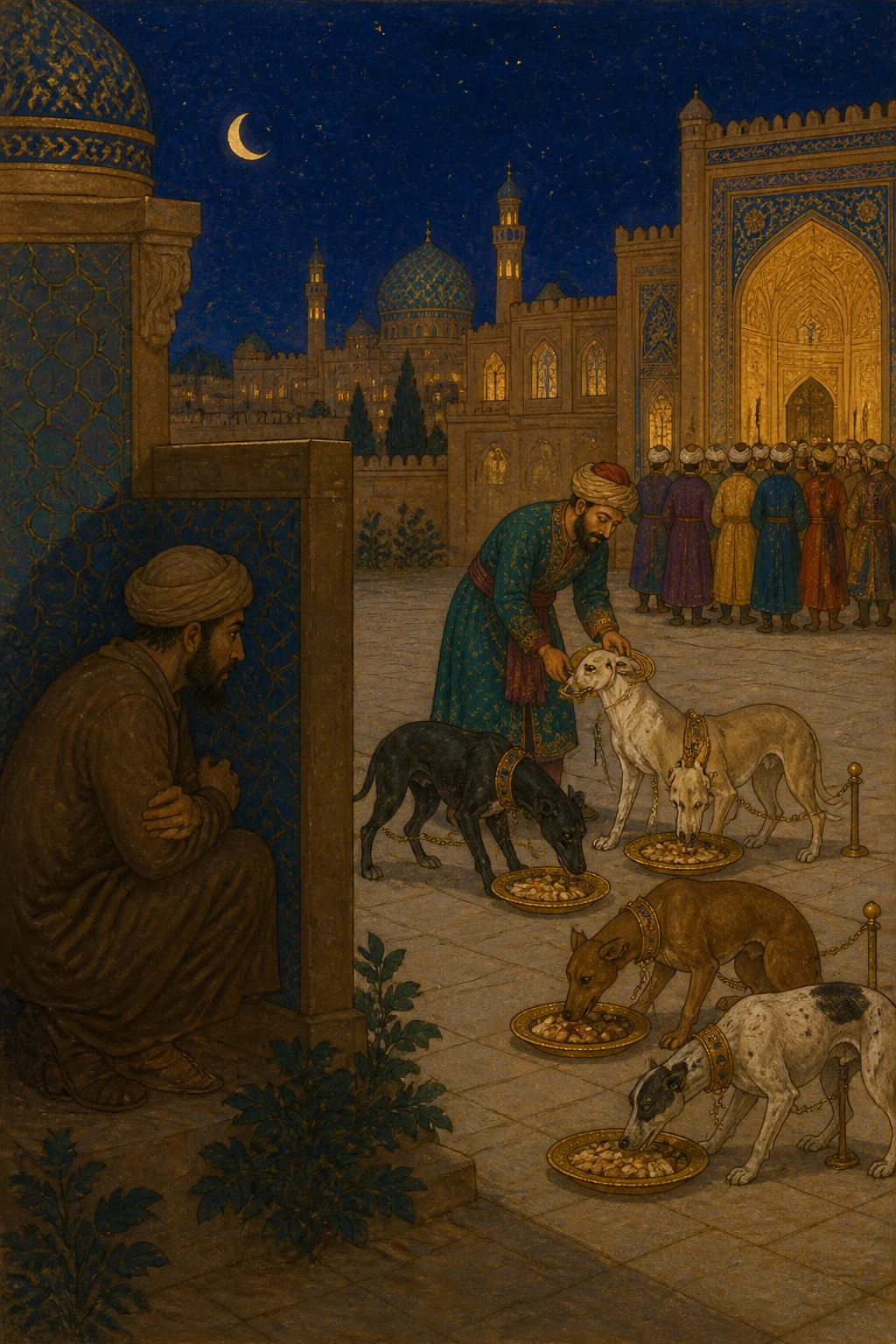
She said: It has reached me, O fortunate king, that the traveler was overcome with apprehension and bewildered by the splendid building and the multitude of servants and attendants. He drew back, confused and distressed, fearing for his safety, until he found a place to sit alone, far from the company and out of everyone’s sight. While he sat there, a man appeared with four hunting dogs draped in silks and brocades, with gold collars and silver chains about their necks. He tethered each one in a separate place, then went away and returned with a golden dish for each dog, heaped with sumptuous food. He set a dish before each of them, then departed and left them. The traveler, driven by hunger, stared at the food and longed to approach one of the dogs and eat with it, but fear held him back. Then one of the dogs looked at him, and Almighty God inspired it to understand his plight. It drew back from its dish and beckoned to him. He came forward and ate his fill. When he was about to leave, the dog motioned for him to take the dish and the food remaining in it, pushing it toward him with its paw. He took it and left the house, and no one followed him. He traveled to another city, where he sold the dish and bought merchandise with the proceeds, then returned to his own country. There he sold his goods and paid off his debts. His livelihood flourished, and he came to enjoy great prosperity and abundant blessings. He remained in his own country for some time, then said to himself, “I must journey to the city of the owner of that dish, take him a fine and fitting gift, and repay him the price of the dish that one of his dogs bestowed upon me.” So he prepared a gift worthy of the man, took the price of the dish with him, and set out. He traveled for days and nights until he reached the city. Entering it, he sought to meet his benefactor and walked through its streets until he came to the man’s dwelling. But there he found only crumbling ruins and a raven croaking its lament, deserted halls and fortunes overturned, a place changed beyond recognition. His heart and spirit trembled, and he recited these verses:
The chambers stand bereft of all their hidden treasures, as hearts stand empty of wisdom and piety. The valley has changed: its gazelles are not those gazelles, nor does that sandy rise meet the eye as once it did. And these verses by another poet:
At dawn, the phantom of Su‘da came by night to stir me, while my companions slept in the wilderness. But when we woke to greet the vision that had passed, I saw an empty waste, and her dwelling far away. When the traveler had gazed upon those crumbling ruins and seen plainly what the hands of time had done to them, finding only traces of what had once stood there, the sight itself told him all he needed to know. He turned and saw a destitute man in a condition that made the skin shudder and would have moved a heart of stone to pity. “Good man,” he said, “what have time and fortune done to the master of this house? Where are its unveiled moons and shining stars? What calamity has befallen his dwelling, leaving nothing but its walls?” The man replied, “He is this wretch you see before you, groaning under the afflictions that have overtaken him. But do you not know that the words of the Messenger contain a lesson for those who follow his example and an admonition for those who seek guidance? For he said, may God bless him and grant him peace, ‘Truly, God Most High never raises anything in this world without bringing it low.’ If you ask what brought matters to this pass, there is nothing strange in the reversals of fortune. I am the master of this place, its founder, owner, and builder, the master of its unveiled moons, its splendid state, its glittering treasures, and its lovely slave girls. But time turned against me, swept away my servants and wealth, and reduced me to the condition in which you see me. It overwhelmed me with calamities it had held in store. Yet there must be some reason for your inquiry. Tell me what it is, and put aside your wonder.” With sorrow and a choking heart, the traveler told him the whole story. “I have brought you a gift,” he said, “such as any soul might covet, together with the price of the dish I took. For it was the means of making me rich after poverty, restoring my desolate household to prosperity, and delivering me from anxiety and distress.” The man shook his head and wept, moaned and lamented, then said, “Good man, I think you must be mad, for no sensible person would do such a thing. How could one of our dogs generously bestow a golden dish upon you, only for me to take it back? It would indeed be strange for me to reclaim what my dog had given, even were I in the direst misery and distress. By God, I will accept nothing from you, not so much as a nail paring. Return whence you came, in health and peace.” The traveler kissed his feet and went away, praising him. As he took his leave, he recited this verse:
Men and dogs alike have passed away; peace be upon men and dogs. And God knows best.
Izvirnik
حكاية الرجل والصحن من ذهب - الليالي ٣٤٠ إلى ٣٤١
Naslednje strani prikazujejo izvirno besedilo za primerjavo.
فلما كانت الليلة ٣٤٠
ومما يُحكَى أن رجلًا كثرت عليه الديون وضاق عليه الحال، فترك أهله وعياله وخرج هائمًا على وجهه، ولم يزل سائرًا إلى أن أقبَلَ بعد مدة على مدينة عالية الأسوار، عظيمة البنيان، فدخلها وهو في حالة الذل والانكسار، وقد اشتدَّ به الجوع وأتعبه السفر، فمَرَّ في بعض شوارعها فرأى جماعة من الأكابر متوجِّهين، فذهب معهم إلى أن دخلوا في محلٍّ يشبه محلَّ الملوك، فدخل معهم، ولم يزالوا داخلين إلى أن انتهوا إلى رجل جالس في صدر المكان، وهو في هيئة عظيمة وجلالة جسيمة، وحوله الغلمان والخدم كأنه من أبناء الوزراء، فلما رآهم قام إليهم وأكرم مثواهم، فأخذ الرجل المذكور الوهم من ذلك الأمر واندهش مما رآه. وأدرك شهرزاد الصباح فسكتَتْ عن الكلام المباح.
فلما كانت الليلة ٣٤١
قالت: بلغني أيها الملك السعيد، أن الرجل المذكور أخذه الوهم من ذلك الأمر، واندهش مما رآه من حسن البنيان والخدم والحشم، فتأخَّرَ إلى ورائه وهو في حيرة وكرب؛ خائفًا على نفسه، حتى جلس في محل وحده بعيدًا عن الناس بحيث لا يراه أحد، فبينما هو جالس إذ أقبل رجل ومعه أربعة كلاب من كلاب الصيد، وعليها أنواع القز والديباج، وفي أعناقها أطواق من الذهب بسلاسل الفضة، فربط كلَّ واحد منها في محل منفرد له، ثم غاب وأتى لكل كلب بصحن من الذهب ملآن طعامًا من الأطعمة الفاخرة، ووضع لكل واحد صحنه على انفراد، ثم مضى وتركها، فصار هذا الرجل ينظر إلى الطعام من شدة جوعه ويريد أن يتقدَّم إلى كلبٍ منها ويأكل معه، فيمنعه الخوف منها، ثم إن كلبًا منها نظر إليه فألهمه الله تعالى معرفة حاله، فتأخَّرَ عن الصحن وأشار إليه، فأقبل وأكل حتى أكتفى، وأراد أن يذهب فأشار إليه الكلب أن يأخذ الصحن بما فيه من الطعام لنفسه وألقاه له بيده، فأخذه وخرج من الدار وسار ولم يتبعه أحد، ثم سافَرَ إلى مدينة أخرى، فباع الصحن وأخذ بثمنه بضائع وتوجه إلى بلده، فباع ما معه وقضى ما كان عليه من الديون، وكثر رزقه وصار في نعمة زائدة وبركة عميمة، ولم يزل مقيمًا في بلده مدةً من الزمان، وبعد ذلك قال في نفسه: لا بد أنني أسافر إلى مدينة صاحب الصحن، وآخذ له هدية مليحة لائقة، وأدفع له ثمنَ الصحن الذي أنعَمَ عليَّ به كلبٌ من كلابه. ثم إنه أخذ هدية تليق به، وأخذ معه ثمن الصحن وسافَرَ، ولم يزل مسافرًا أيامًا وليالي حتى وصل إلى تلك المدينة، فدخلها وأراد الاجتماع به، فمشى في شوارعها حتى أقبل على محله، فلم يَرَ إلا طللًا باليًا، وغرابًا ناعيًا، وديارًا قد قفرت، وأحوالًا قد تغيَّرَتْ، وحالًا قد تنكَّرَتْ، فارتجف منه القلب والبال، وأنشد قول مَن قال:
خَلَتِ الزَّوَايَا مِنْ خَبَايَاهَا كَمَا خَلَتِ الْقُلُوبُ مِنَ الْمَعَارِفِ وَالتُّقَى
وَتَنَكَّرَ الْوَادِي فَمَا غِزْلَانُهُ تِلْكَ الظِّبَاءُ وَلَا الْتَقَى ذَاكَ النَّقَا
وقول الآخر:
سَرَى طَيْفُ سَعْدَى طَارِقًا يَسْتَفِزُّنِي سُحَيْرًا وَصَحْبِي بِالْفَلَاةِ رُقُودُ
فَلَمَّا انْتَبَهْنَا لِلْخَيَالِ الَّذِي سَرَى أَرَى الْجَوَّ قَفْرًا وَالْمَزَارَ بَعِيدُ
ثم إن ذلك الرجل لما شاهَدَ تلك الأطلال البالية، ورأى ما صنعَتْ بها أيدي الدهر علانيةً، ولم يجد بعد العين إلا الأثر، أغناه الخبر عن الخبر، والتفت فرأى رجلًا مسكينًا في حالة تقشعر منها الجلود ويحن إليها الحجر الجلمود، فقال: يا هذا، ما صنع الدهر والزمان بصاحب هذا المكان؟ وأين بدوره السافرة ونجوسه الزاهرة؟ وما سبب الحادث الذي حدث على بنيانه حتى لم يبقَ فيه غير جدرانه؟ فقال له: هو هذا المسكين الذي تراه، وهو يتأوَّه مما عراه، ولكن أَمَا تعلم أن في كلام الرسول عبرةً لمَن به اقتدى، وموعظةً لمَن اهتدى؛ حيث قال ﷺ : إنَّ حقًّا على الله تعالى ألَّا يرفع شيئًا من هذه الدنيا إلا وضعه. فإن كان سؤالك عن مآل هذا الأمر من سبب، فليس مع انقلاب الدهر عجب، أنا صاحب هذا المكان ومُنشِئه ومالِكه وبانيه، وصاحب بدوره السافرة، وأحواله الفاخرة، وتُحَفه الزاهية، وجواريه الباهية، لكن الزمان قد مال، فأذهب الخدم والمال، وصيَّرني في هذه الحالة الراهنة، ودهمني بحوادث كانت عنده كامنة، لكن لا بد لسؤالك هذا من سبب، فأخبرني عنه واترك العجب. فأخبره الرجل بجميع القصة وهو في ألم وغصة، وقال له: قد جئتُكَ بهدية فيها النفوس ترغب، وثمن صحنك الذي أخذته فإنه كان سببًا لغناي بعد الفقر، ولعمار ربعي وهو قفر، ولزوال ما كان عندي من الهم والحصر، فهزَّ الرجل رأسه وبكى، وأنَّ واشتكى، وقال: يا هذا، أظنك مجنونًا؛ فإن هذا الأمر لا يكون من عاقل، كيف يتكرَّم عليك كلب من كلابنا بحصنٍ من الذهب وأرجع أنا فيه؟ فرجوعي فيما تكرَّمَ به كلبي من العجب، ولو كنتُ في أشد الهمِّ والوصب، والله لا يصل إليَّ منك شيء يساوي قلامة، فامضِ من حيث جئتَ بالصحة والسلامة. فقبل الرجل قدمَيْه وانصرف راجعًا يثني عليه، ثم إنه عند فراقه ووداعه أنشد هذا البيت:
ذَهَبَ النَّاسُ وَالْكِلَابُ جَمِيعًا فَعَلَى النَّاسِ وَالْكِلَابِ السَّلَامُ
والله أعلم.
Nadaljuj z branjem