Waltey
Siromak in bogataš
Grimmove pravljice · Jacob in Wilhelm GrimmO besedilu
Siromak in bogataš
- Vir
- Grimmove pravljice
- Avtor
- Jacob in Wilhelm Grimm
- Jezik branja
- English
- Jezik izvirnika
- Deutsch
- Čas branja
- 9 min branja
- Obseg
- 7 strani
- Naslov izvirnika
- Der Arme und der Reiche
O izvirniku
Grimmove pravljice
Gozdovi, čarobni predmeti in ljudska logika evropske pripovedne tradicije. Bralni jezik je English, izvirnik pa prihaja iz vira Grimmove pravljice v jeziku Deutsch.
Besedilo
Siromak in bogataš
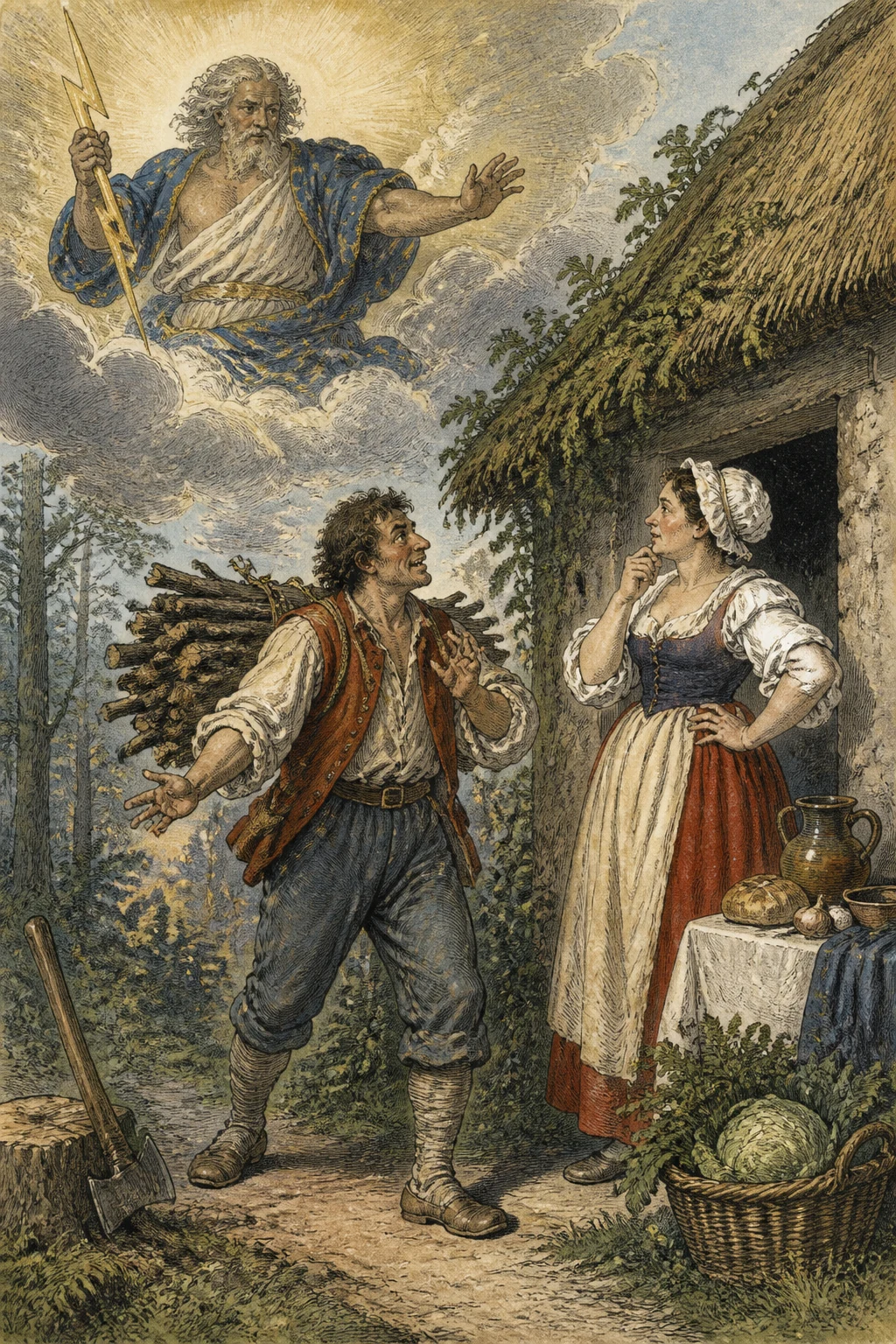
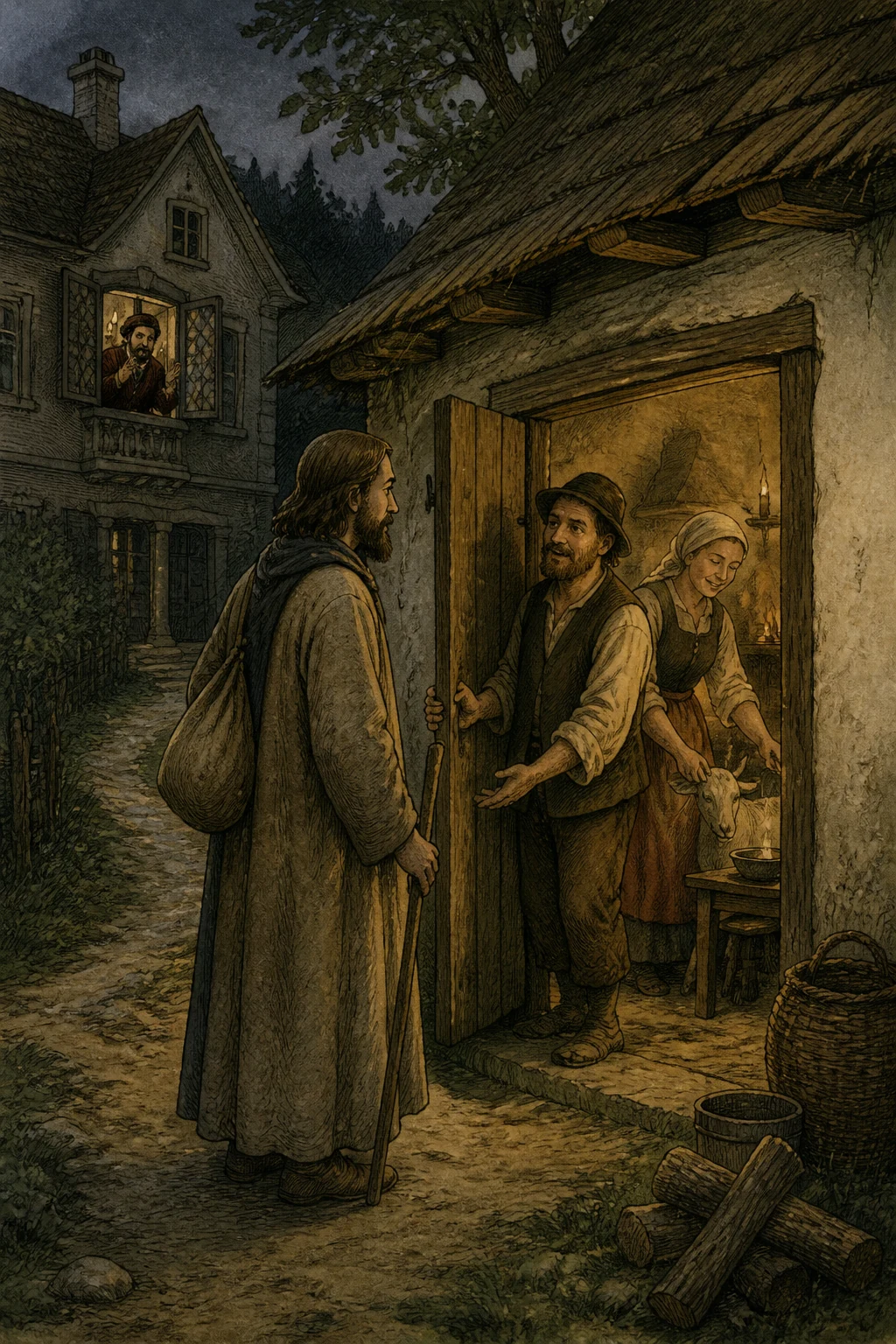
In olden times, when the dear Lord still walked among men on earth, it happened one evening that he grew weary, and night overtook him before he could reach an inn. Now two houses stood opposite each other on the road before him, one large and handsome, the other small and poor-looking. The large house belonged to a rich man, and the small one to a poor man. Then our Lord thought, “I shall be no burden to the rich man; I will spend the night with him.” When the rich man heard a knock at his door, he opened the window and asked the stranger what he wanted. The Lord answered, “I beg a night’s lodging.” The rich man looked the traveler up and down, and because the dear Lord wore plain clothes and did not look like someone with much money in his pocket, he shook his head and said, “I cannot take you in. My rooms are full of herbs and seeds, and if I were to shelter everyone who knocked at my door, I should soon have to take up a beggar’s staff myself. Find somewhere else to stay.” With that he slammed his window shut and left the dear Lord standing outside. So the dear Lord turned his back on him and went across to the little house. Scarcely had he knocked when the poor man lifted the latch of his little door and invited the traveler in. “Stay the night with me,” he said. “It is dark already, and you cannot go any farther today.” This pleased the dear Lord, and he went inside. The poor man’s wife took his hand, welcomed him, and told him to make himself comfortable and be content with what they could offer. They had little, but whatever it was, they gave it gladly and with all their hearts. Then she put some potatoes on the fire, and while they were cooking, she milked her goat so that they might have a little milk with them. When the table was laid, the dear Lord sat down and ate with them, and the humble fare tasted good to him, for there were cheerful faces around the table. After they had eaten, when it was time for bed, the wife called her husband aside and said, “Listen, dear husband, let us make ourselves a bed of straw tonight, so that the poor traveler can lie down in our bed and rest. He has been walking all day, and that is tiring work.” “With all my heart,” he answered. “I will offer it to him.” He went to the dear Lord and begged him, if he was willing, to lie down in their bed and give his limbs a proper rest. The dear Lord did not want to take the old couple’s bed from them, but they would not leave off urging him until at last he lay down in it, while they made themselves a bed of straw on the floor. The next morning they rose before daybreak and prepared as good a breakfast for their guest as their means allowed. When the sun shone through the little window and the dear Lord had risen, he ate with them again and then made ready to go on his way. As he stood in the doorway, he turned and said, “Because you are so compassionate and devout, you may make three wishes, and I will grant them.” Then the poor man said, “What else should I wish for but eternal salvation, and that the two of us may remain healthy as long as we live and have our daily bread? As for a third wish, I can think of nothing.” The dear Lord said, “Would you not like to wish for a new house in place of the old one?” “Oh yes,” said the man. “If I may have that as well, I should be very glad.” So the Lord granted their wishes, changed their old house into a new one, gave them his blessing once more, and went on his way.
It was broad daylight when the rich man got up. He leaned out of his window and saw a neat new house with red tiles opposite him, where an old hovel had stood before. His eyes widened, and he called his wife over and said, “Tell me, what has happened? Last night the wretched old hovel was still there, and today there stands a fine new house. Run over and find out how it came about.” His wife went across and questioned the poor man, who told her, “Last night a traveler came looking for a night’s lodging, and this morning, when he took his leave, he granted us three wishes: eternal salvation, health in this life and our daily bread, and lastly a fine new house in place of our old hovel.” The rich man’s wife hurried back and told her husband how it had all happened. The man said, “I could tear myself to pieces and beat myself black and blue! If only I had known! The stranger came here first and wanted to spend the night with us, but I turned him away.” “Make haste,” said his wife, “and mount your horse. You can still catch up with the man, and then you must have him grant you three wishes too.”
The rich man followed this good advice, galloped off on his horse, and caught up with the dear Lord. He spoke sweetly and politely and begged him not to take offense at not having been admitted at once: he had been looking for the key to the front door, and in the meantime the stranger had gone away. If he came back that way, he must be sure to stay with him. “Yes,” said the dear Lord, “if I come back this way, I will.” Then the rich man asked whether he too might make three wishes, like his neighbor. The dear Lord said that he might indeed, but that it would not be good for him, and he would do better to wish for nothing. The rich man said he would surely choose something that would bring him happiness, if only he knew it would be granted. Then the dear Lord said, “Ride home, and the three wishes you make shall come true.”
Now the rich man had what he wanted. He rode home and began to ponder what he should wish for. As he sat thinking, he let the reins hang loose, and the horse began to prance about, continually interrupting his thoughts so that he could not put them in order. He patted her neck and said, “Steady, Liese,” but the horse reared up again. At last he grew angry and cried impatiently, “I wish you would break your neck!” No sooner had he spoken than down he fell to the ground with a thump, and there lay the horse, dead and motionless. Thus his first wish was fulfilled. But since he was miserly by nature, he would not leave the saddle and harness behind. He cut them free, slung them over his back, and now had to go on foot. “You still have two wishes left,” he thought, and comforted himself with that. As he trudged slowly through the sand, with the midday sun beating down, he grew hot and ill-tempered. The saddle pressed upon his back, and he still had not thought what to wish for. “Even if I wish for all the kingdoms and treasures in the world,” he said to himself, “all sorts of other things will occur to me afterward, this and that—I know it already. But I mean to arrange matters so that there is nothing left for me to wish for.” Then he sighed and said, “Ah, if only I were that Bavarian peasant who had three wishes too! He knew what to do: first he wished for a great deal of beer, then for as much beer as he could drink, and third for another barrel of beer besides.” Sometimes he thought he had found the answer, but afterward it still seemed too little. Then it occurred to him how well off his wife was at that very moment, sitting at home in a cool room and enjoying a good meal. This thoroughly annoyed him, and before he knew it, he said, “I wish she were sitting at home on this saddle and could not get off, instead of my having to drag it along on my back.” As the last word left his mouth, the saddle vanished from his back, and he realized that his second wish had come true as well. Now he felt hotter than ever and began to run, intending to shut himself up alone in his room at home and think of something grand for his last wish. But when he arrived and opened the door to the sitting room, there was his wife in the middle of it, sitting on the saddle and unable to get off, wailing and screaming. “Be easy,” he said. “I shall wish for all the riches in the world for you. Only stay where you are.” But she called him a blockhead and said, “What good are all the riches in the world to me if I am stuck on this saddle? You wished me onto it, and now you must help me off again.” Whether he liked it or not, he had to use his third wish to free her from the saddle so that she could get down, and the wish was granted at once. So he gained nothing but vexation, trouble, a scolding, and the loss of a horse; but the poor couple lived happily, quietly, and devoutly until their blessed end.
Izvirnik
Der Arme und der Reiche
Naslednje strani prikazujejo izvirno besedilo za primerjavo.
Ein Märchen der Brüder Grimm
Vor alten Zeiten, als der liebe Gott noch selber auf Erden unter den Menschen wandelte, trug es sich zu, daß er eines Abends müde war und ihn die Nacht überfiel, bevor er zu einer Herberge kommen konnte. Nun standen auf dem Weg vor ihm zwei Häuser einander gegenüber, das eine groß und schön, das andere klein und ärmlich anzusehen, und gehörte das große einem reichen, das kleine einem armen Manne. Da dachte unser Herrgott 'dem Reichen werde ich nicht beschwerlich fallen: bei ihm will ich übernachten.' Der Reiche, als er an seine Türe klopfen hörte, machte das Fenster auf und fragte den Fremdling, was er suche. Der Herr antwortete 'ich bitte um ein Nachtlager.' Der Reiche guckte den Wandersmann von Haupt bis zu den Füßen an, und weil der liebe Gott schlichte Kleider trug und nicht aussah wie einer, der viel Geld in der Tasche hat, schüttelte er mit dem Kopf und sprach 'ich kann Euch nicht aufnehmen, meine Kammern liegen voll Kräuter und Samen, und sollte ich einen jeden beherbergen, der an meine Tür klopft, so könnte ich selber den Bettelstab in die Hand nehmen. Sucht Euch anderswo ein Auskommen.' Schlug damit sein Fenster zu und ließ den lieben Gott stehen. Also kehrte ihm der liebe Gott den Rücken und ging hinüber zu dem kleinen Haus. Kaum hatte er angeklopft, so klinkte der Arme schon sein Türchen auf und bat den Wandersmann einzutreten. 'Bleibt die Nacht über bei mir,' sagte er, 'es ist schon finster, und heute könnt Ihr doch nicht weiterkommen.' Das gefiel dem lieben Gott, und er trat zu ihm ein. Die Frau des Armen reichte ihm die Hand, hieß ihn willkommen und sagte, er möchte sichs bequem machen und vorlieb nehmen, sie hätten nicht viel, aber was es wäre, gäben sie von Herzen gerne. Dann setzte sie Kartoffeln ans Feuer, und derweil sie kochten, melkte sie ihre Ziege, damit sie ein wenig Milch dazu hätten. Und als der Tisch gedeckt war, setzte sich de r liebe Gott nieder und aß mit ihnen, und schmeckte ihm die schlechte Kost gut, denn es waren vergnügte Gesichter dabei. Nachdem sie gegessen hatten und Schlafenszeit war, rief die Frau heimlich ihren Mann und sprach 'hör, lieber Mann, wir wollen uns heute nacht eine Streu machen, damit der arme Wanderer sich in unser Bett legen und ausruhen kann: er ist den ganzen Tag über gegangen, da wird einer müde.' 'Von Herzen gern,' antwortete er, 'ich wills ihm anbieten,' ging zu dem lieben Gott und bat ihn, wenns ihm recht wäre, möchte er sich in ihr Bett legen und seine Glieder ordentlich ausruhen. Der liebe Gott wollte den beiden Alten ihr Lager nicht nehmen, aber sie ließen nicht ab, bis er es endlich tat und sich in ihr Bett legte: sich selbst aber machten sie eine Streu auf die Erde. Am andern Morgen standen sie vor Tag schon auf und kochten dem Gast ein Frühstück, so gut sie es hatten. Als nun die Sonne durchs Fensterlein schien und der liebe Gott aufgestanden war, aß er wieder mit ihnen und wollte dann seines Weges ziehen. Als er in der Türe stand, kehrte er sich um und sprach 'weil ihr so mitleidig und fromm seid, so wünscht euch dreierlei, das will ich euch erfüllen.' Da sagte der Arme 'was soll ich mir sonst wünschen als die ewige Seligkeit, und daß wir zwei, solang wir leben, gesund dabei bleiben und unser notdürftiges tägliches Brot haben; fürs dritte weiß ich mir nichts zu wünschen.' Der liebe Gott sprach 'willst du dir nicht ein neues Haus für das alte wünschen?, 'O ja,' sagte der Mann, 'wenn ich das auch noch erhalten kann, so wär mirs wohl lieb.' Da erfüllte der Herr ihre Wünsche, verwandelte ihr altes Haus in ein neues, gab ihnen nochmals seinen Segen und zog weiter.
Es war schon voller Tag, als der Reiche aufstand. Er legte sich ins Fenster und sah gegenüber ein neues reinliches Haus mit roten Ziegeln, wo sonst eine alte Hütte gestanden hatte. Da machte er große Augen, rief seine Frau herbei und sprach 'sag mir, was ist geschehen? Gestern abend stand noch die alte elende Hütte, und heute steht da ein schönes neues Haus. Lauf hinüber und höre, wie das gekommen ist.' Die Frau ging und fragte den Armen aus: er erzählte ihr 'gestern abend kam ein Wanderer, der suchte Nachtherberge, und heute morgen beim Abschied hat er uns drei Wünsche gewährt, die ewige Seligkeit, Gesundheit in diesem Leben und das notdürftige tägliche Brot dazu, und zuletzt noch statt unserer alten Hütte ein schönes neues Haus.' Die Frau des Reichen lief eilig zurück und erzählte ihrem Manne, wie alles gekommen war. Der Mann sprach 'ich möchte mich zerreißen und zerschlagen: hätte ich das nur gewußt! der Fremde ist zuvor hier gewesen und hat bei uns übernachten wollen, ich habe ihn aber abgewiesen.' 'Eil dich,' sprach die Frau, 'und setze dich auf dein Pferd, so kannst du den Mann noch einholen, und dann mußt du dir auch drei Wünsche gewähren lassen.'
Der Reiche befolgte den guten Rat, jagte mit seinem Pferd davon und holte den lieben Gott noch ein. Er redete fein und lieblich und bat' er möchts nicht übelnehmen, daß er nicht gleich wäre eingelassen worden, er hätte den Schlüssel zur Haustüre gesucht, derweil wäre er weggegangen: wenn er des Weges zurückkäme, müßte er bei ihm einkehren. 'Ja,' sprach der liebe Gott, 'wenn ich einmal zurückkomme, will ich es tun.' Da fragte der Reiche, ob er nicht auch drei Wünsche tun dürfte wie sein Nachbar. Ja, sagte der liebe Gott, das dürfte er wohl, es wäre aber nicht gut für ihn, und er sollte sich lieber nichts wünschen. Der Reiche meinte, er wollte sich schon etwas aussuchen, das zu seinem Glück gereiche, wenn er nur wüßte, daß es erfüllt würde. Sprach der liebe Gott 'reit heim, und drei Wünsche, die du tust, die sollen in Erfüllung gehen.'
Nun hatte der Reiche, was er verlangte, ritt heimwärts und fing an nachzusinnen, was er sich wünschen sollte. Wie er sich so bedachte und die Zügel fallen ließ, fing das Pferd an zu springen, so daß er immerfort in seinen Gedanken gestört wurde und sie gar nicht zusammenbringen konnte. Er klopfte ihm an den Hals und sagte 'sei ruhig, Liese,' aber das Pferd machte aufs neue Männerchen. Da ward er zuletzt ärgerlich und rief ganz ungeduldig 'so wollt ich, daß du den Hals zerbrächst!' Wie er das Wort ausgesprochen hatte, plump, fiel er auf die Erde, und lag das Pferd tot und regte sich nicht mehr; damit war der erste Wunsch erfüllt. Weil er aber von Natur geizig war, wollte er das Sattelzeug nicht im Stich lassen, schnitts ab, hings auf seinen Rücken, und mußte nun zu Fuß gehen. 'Du hast noch zwei Wünsche übrig,' dachte er und tröstete sich damit. Wie er nun langsam durch den Sand dahinging und zu Mittag die Sonne heiß brannte, wards ihm so warm und verdrießlich zumut, der Sattel drückte ihn auf den Rücken, auch war ihm noch immer nicht eingefallen, was er sich wünschen sollte. 'Wenn ich mir auch alle Reiche und Schätze der Welt wünsche,' sprach er zu sich selbst, 'so fällt mir hernach noch allerlei ein, dieses und jenes, das weiß ich im voraus, ich wills aber so einrichten, daß mir gar nichts mehr übrig zu wünschen bleibt.' Dann seufzte er und sprach 'ja, wenn ich der bayerische Bauer wäre, der auch drei Wünsche frei hatte, der wußte sich zu helfen, der wünschte sich zuerst recht viel Bier, und zweitens so viel Bier, als er trinken könnte, und drittens noch ein Faß Bier dazu.' Manchmal meinte er, jetzt hätte er es gefunden, aber hernach schiens ihm doch noch zu wenig. Da kam ihm so in die Gedanken, was es seine Frau jetzt gut hätte, die säße daheim in einer kühlen Stube und ließe sichs wohl schmecken. Das ärgerte ihn ordentlich, und ohne daß ers wußte, sprach er so hin 'ich wollte, die säße daheim auf dem Sattel und könnte nicht herunter, statt daß ich ihn da auf meinem Rücken schleppe.' Und wie das letzte Wort aus seinem Munde kam, so war der Sattel von seinem Rücken verschwunden, und er merkte, daß sein zweiter Wunsch auch in Erfüllung gegangen war. Da ward ihm erst recht heiß, er fing an zu laufen und wollte sich daheim ganz einsam in seine Kammer hinsetzen und auf etwas Großes für den letzten Wunsch sinnen. Wie er aber ankommt und die Stubentür aufmacht, sitzt da seine Frau mittendrin auf dem Sattel und kann nicht herunter, jammert und schreit. Da sprach er 'gib dich zufrieden, ich will dir alle Reichtümer der Welt herbeiwünschen, nur bleib da sitzen.' Sie schalt ihn aber einen Schafskopf und sprach 'was helfen mir alle Reichtümer der Welt, wenn ich auf dem Sattel sitze; du hast mich daraufgewünscht, du mußt mir auch wieder herunterhelfen.' Er mochte wollen oder nicht, er mußte den dritten Wunsch tun, daß sie vom Sattel ledig wäre und heruntersteigen könnte; und der Wunsch ward alsbald erfüllt. Also hatte er nichts davon als Ärger, Mühe, Scheltworte und ein verlornes Pferd: die Armen aber lebten vergnügt, still und fromm bis an ihr seliges Ende.
Nadaljuj z branjem