Prevod
The vizier said, “Know, O King, that there was once a snake charmer who kept snakes, for this was his trade. He had a large basket containing three snakes, of which his household knew nothing. Every day he would go about the city with them, earning a living for himself and his family. In the evening he would return home and secretly put the snakes in the basket; in the morning he would take them out and go about the city again. This was his constant practice, and his household never knew what the basket held. One day, when the snake charmer returned home as usual, his wife asked him, ‘What is in this basket?’ He replied, ‘What concern is it of yours? Have you not food enough and to spare? Be content with what God has allotted you, and ask about nothing else.’ The woman said no more to him, but thought to herself, ‘I must search this basket and find out what is in it.’ She resolved to do so and told her children, urging them to ask their father about the basket and to persist until he told them. The children thereupon took it into their heads that it held something to eat, and every day they begged their father to show them what was inside. He put them off, coaxed them, and forbade them to ask again. They continued in this way for some time, encouraged by their mother, until at last they agreed with her that they would neither taste their father’s food nor drink his drink until he granted their request and opened the basket for them.
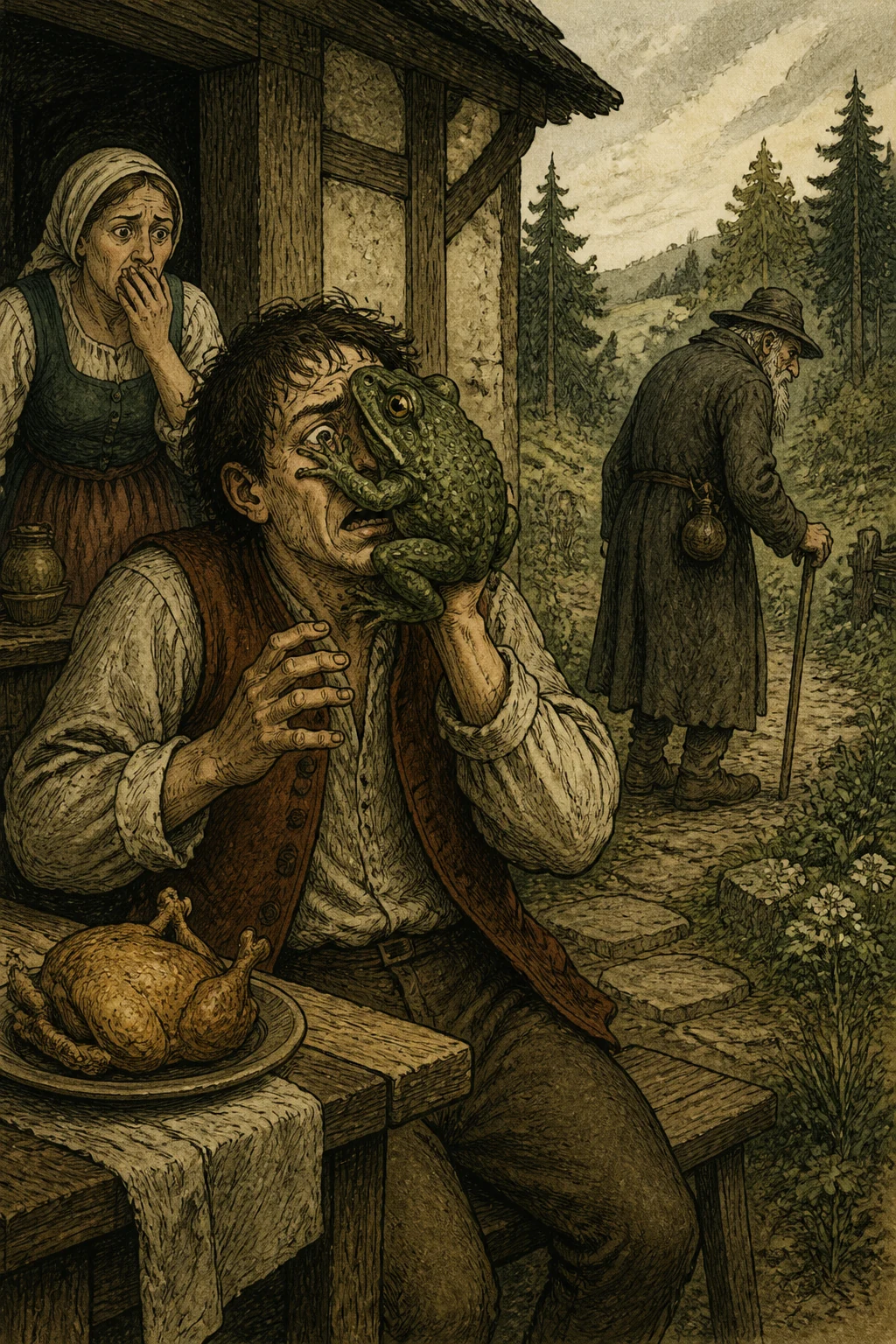
“One night, while matters stood thus, the snake charmer came home with a great deal of food and drink. He sat down and called them to eat with him, but they refused to come and made their anger plain. He tried to soothe them with kind words, saying, ‘Tell me what you would like, and I will bring it to you, whether food, drink, or clothing.’ They replied, ‘Father, we want nothing from you except that you open this basket so we may see what is inside. Otherwise, we shall kill ourselves.’ He said, ‘My children, there is no good in it for you. Opening it will only bring you harm.’ At this they grew still angrier. Seeing them in such a state, he began to threaten them, warning that he would beat them unless they gave up this behavior. But they only grew more angry and more insistent. At last he lost his temper and took up a stick to beat them, and they fled before him through the house. The basket was there in plain sight, for he had not hidden it away. Leaving her husband occupied with the children, the woman hastily opened it to see what it held. At once the snakes came out and bit the woman first, killing her; then they went about the house and killed everyone, young and old, save the snake charmer himself. So he abandoned the house and went away. When I considered this, O fortunate King, I understood that a man should not desire anything God Most High has not willed for him, but should be content with what God has decreed and chosen for him. And now, O King, for all your abundant knowledge and keen understanding, God has gladdened your eyes and comforted your heart with the birth of a son after you had lost hope. We pray to God Most High that He may make him one of the just caliphs, pleasing both to God Most High and to his subjects.”
Then the seventh vizier rose and said, “O King, I know and can attest to all that my brothers, these learned and wise viziers, have told you and spoken in your presence: their account of your justice and noble conduct, and of the qualities that distinguish you from other kings and place you above them. Such praise, O King, is but a part of what we owe you. As for me, I say: praise be to God, who has taken you into His gracious care, granted you righteous rule through His mercy, and helped you and us to thank Him ever more—all through your presence among us. So long as you remain with us, we fear no oppression and seek to wrong no one, nor can anyone lord it over us despite our weakness. It has been said, ‘The best of subjects are those whose king is just, and the worst are those whose king is a tyrant.’ It has also been said, ‘Better to dwell with ravening lions than with a tyrannical ruler.’ So everlasting praise be to God Most High, who has blessed us with your presence and granted you this blessed son after hope had faded and old age had come upon you. For the finest gift in this world is a virtuous son, and it has been said, ‘He who has no child leaves neither posterity nor remembrance.’ Through your steadfast justice and your faith in the goodness of God Most High, you have been granted this fortunate child. This blessed son has come as a favor from God Most High to you and to us, in reward for your noble conduct and gracious patience. What has befallen you is like what befell the spider and the wind.” The king asked, “What is the tale of the spider and the wind?” But morning overtook Shahrazad, and she fell silent, leaving her permitted tale untold.