Waltey
Jesusa
Cuentos de Navidad y Reyes
Cuentos de Navidad, de la patria y antiguos · Emilia Pardo BazánO besedilu
Jesusa
- Vir
- Cuentos de Navidad, de la patria y antiguos
- Avtor
- Emilia Pardo Bazán
- Jezik branja
- English
- Jezik izvirnika
- Español
- Čas branja
- 8 min branja
- Obseg
- 7 strani
- Naslov izvirnika
- 004 Jesusa
O izvirniku
Cuentos de Navidad, de la patria y antiguos
Sedemintrideset avtorskih zgodb v treh zgodovinskih knjižnih skupinah. Bralni jezik je English, izvirnik pa prihaja iz vira Cuentos de Navidad, de la patria y antiguos v jeziku Español.
Besedilo
Jesusa
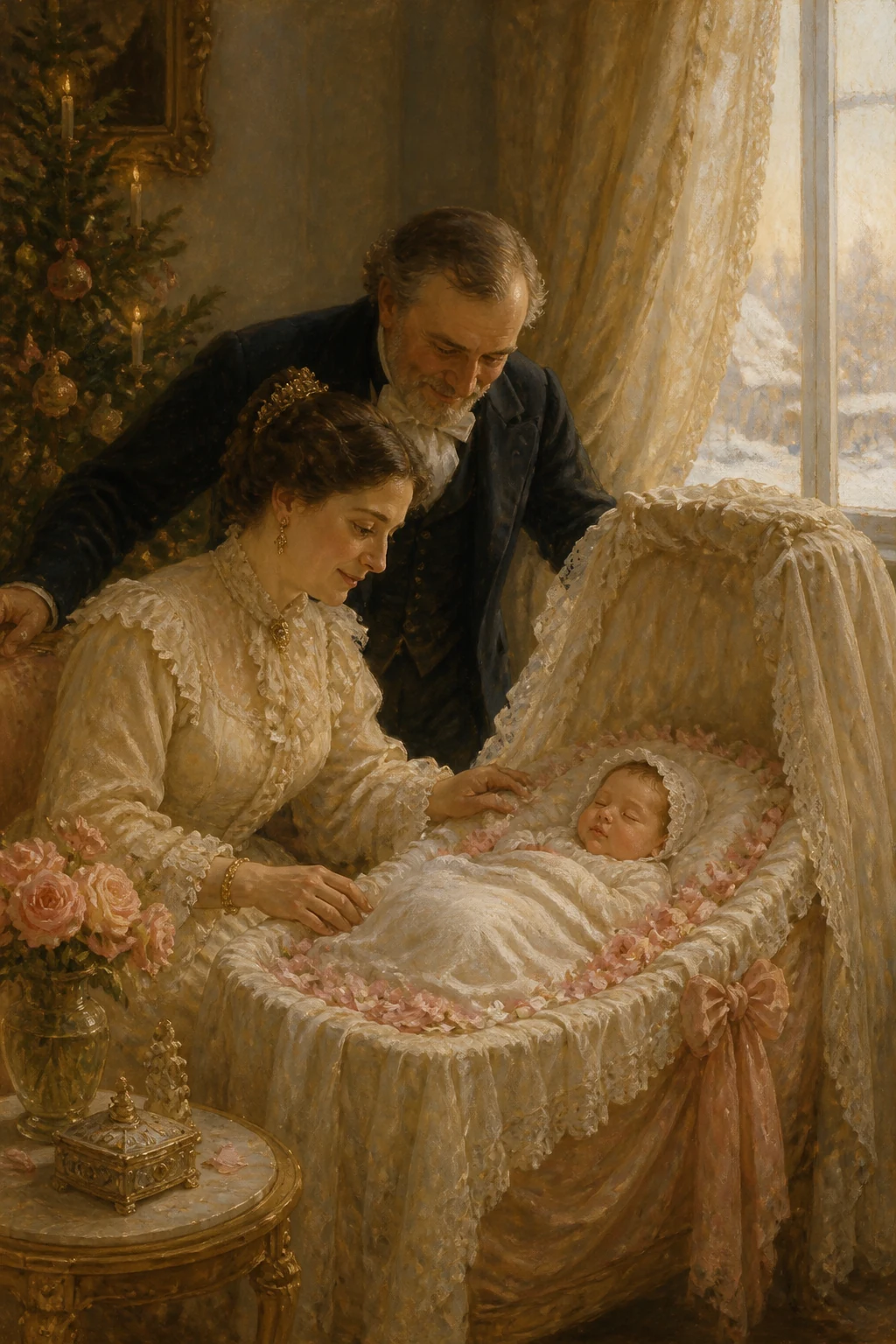
At last the couple’s wishes were fulfilled: their little girl came into the world on the twenty-fourth of December, a circumstance that seemed a sign of divine favor. At the font they gave her the sweet name of Jesusa, and lavished on her all the tenderness that two wealthy, middle-aged parents could offer their only child, having asked of fortune nothing more than someone to inherit their wealth and name. Her cradle was cushioned with rose petals, and even the air was made warm and fragrant to caress the newborn’s tender face...
We have all told, at one time or another, the sad story of the poor, forsaken little girl who, ragged and frozen, dizzy with hunger and anguished by abandonment, wanders the streets begging for charity until she sinks down exhausted and the snow enfolds her in a white shroud. The cry of poverty, the clamor of an empty belly, is piercing and human... Yet the rich suffer too, and their sorrows, beyond the easy consolation a handful of coins can provide, find relief only in the mercy of God... Whoever compares the little girl without bread or shelter to the little girl wrapped in cotton wool and surfeited with pleasures and toys; the child who has never received a kiss to the one an adoring mother cherishes at her breast, will rise in indignation against social injustice and appeal from it to infallible justice.
Cross the street, slip some alms into the beggar girl’s emaciated hand, and then enter the home of Jesusa’s family. At first the contrast will strike you as almost sacrilegious. Any trinket adorning the sitting room, any bauble of golden tortoiseshell and chased silver among the thousand scattered over the little dressing tables, is worth more than it would cost to provide a whole year’s bread, light, and warmth for the wretched child shivering outside, at the corner of the block, standing against a gate less hard than certain hearts.
Step across the threshold of the silk-hung bedroom; approach the little maiden’s bed, enameled in white and gold, and contemplate the head resting on the cambric pillow... Look at that face, translucent as alabaster, those violet eyes, so infinitely melancholy. If you could lift the sheet without offending the modesty of the girl—who is eleven now—you would see something without name or shape, one of those sights that make the heart recoil: a sort of wretched insect, with legs like twisted threads, hands seemingly contracted by fire, a double hump on chest and back, flesh wasted, withered, and consumed by suffering. And if only the illness had been content to disfigure her! But her torments are so unceasing, so varied, so horrible, that there are dark hours when her father whispers in her mother’s ear, his voice hollow:
“Wouldn’t it be better to send all these doctors away... stop all these remedies... not burden her... let her...!” And her mother answers in a voice trembling with tears that cannot be stanched:
“No, no... While there’s life...” Within that tortured body, the mind keeps watch, awakened very early. At six, Jesusa was already saying things that cut one to the soul. Those early intuitions, those signs of precocity that delight us in a healthy child, afflict us in a sick one with a grief as deep as the abyss of human suffering.
“Mama, am I bad?” the innocent child would moan. “No, you’re very good, very good.” “Then why is God punishing me?” “It isn’t punishment...” her mother would sob. “It’s that afterward, when you get better, you’ll have so much pleasure... And now, though it’s true you’re ill, you also have more pretty things than other little girls, more dolls, more toys, more flowers, such lovely boxes...” The sick child would fall silent for a moment, closing her faded violet eyes, then open them again to exclaim, “Then give all those things to the children who have none... and let them give me one day without being ill... Mama, just one day!”
As time passed and the symptoms of Jesusa’s strange nervous ailment multiplied, the idea of an exchange took root in her mind, and she believed it possible—or rather, certain. Why would her parents not indulge her? Could anything be simpler or more natural? Let them give her jewels and expensive dolls to the street children and beggars; let them send them sweets by the basketful; let them hand over her lace sheets and swansdown quilt... and let those children, in return, come to her aid with a few crumbs of health, that laughing health which gladdens the world, warms the blood, shines like the sun, and makes life beautiful. To rise from that bed, to walk, to go out into the street, to breathe the open air, free of pain, lively, nimble, happy!
By speaking so often of this exchange, Jesusa at last infected her father with the notion. The unfortunate always have their arms open to embrace a chimera. Hope is ingenious and superstitious. “You’ll see, my little girl... I’m going to do as you ask; I’m going to help the poor little children... Once I’ve done them a great deal of good, you’ll get well...” And he began his career as a philanthropist, discovering each day fresh veins to work in the inexhaustible mine of poverty, and dreaming at every discovery that here might lie the cure for his sick child. He climbed to many a garret, his purse full and a doctor at the ready; late at night he gathered into his arms and carried home some street child sleeping numb with cold and faint with hunger on a bench or across a doorway, and delighted in the magical effect of the child’s awakening before a hearty supper, with the prospect of a soft bed to follow. He rescued from degradation little girls who had as yet no understanding of sin, and took them to charitable institutions where they would be taught industry and honesty; he paid wet nurses for helpless orphans; he poured out a river of cod-liver oil for scrofulous little children, and in summer sent workers’ children, wasted by anemia, to the seashore... Yet Jesusa, hearing of these saintly deeds, kept shaking her wan head and painfully closing the languid violets of her eyes. It was not enough; God was still not satisfied.
Surely He demanded a greater sacrifice... The proof that these efforts were fruitless was that Jesusa grew worse, her sufferings redoubled, fever consumed her, and her skin clung to her bones, scorched by disease. During the attacks, which grew ever more frequent, she felt now a burning coal in her entrails, now an enormous block of ice in her heart, which seemed about to stop beating. Was that hellish torture to last forever? Would God not take pity? Would He not suddenly make her wholly well, allowing her to rise, strong and joyful in the vigor of youth, to enjoy life, to laugh, to run, to leap like the happy birds?
Christmas Eve came, Jesusa’s birthday. On that day her parents overwhelmed her with presents, inventing whims for the pleasure of gratifying them. The Nativity scene was set up, renewed each year, ever more sumptuous, with finer figures and a more elaborate landscape; but that year, supposing the sick child must be weary of so many little shepherds and sheep and camels, her mother thought of placing a beautiful, life-sized Christ Child, a masterpiece of sculpture, in a manger on a bundle of straw. The simple image drew the dispirited child’s attention. It looked like a living baby, lying there naked. And as she gazed at it and thought how cold it must be, Jesusa believed she had divined why God would not make her well... It was not enough to give other children alms and assistance: she must be like them, accept their condition, embrace humility and want, imitating Jesus as He lay among the straw on rough boards... Eagerly she called her mother and begged, trembling with hope and longing:
“Mama, for God’s sake... Do what I ask, and see if I don’t get well... Put me the way the poor little children are... Spread straw on the floor and lay me there... Don’t cover me with anything; let me shiver...”
Her mother resisted, trembling with fear at the thought of her daughter cold and lying on bare boards; yet despite herself, that wild dream was taking possession of her mind too. Who could tell? Who could tell?... The wings of the chimera beat mysteriously in the air around her... She sent the servants away, looked to see that no one was coming... and, lifting the sick child’s slight weight, laid her on the scattered straw in the very manger where the Christ Child smiled and bestowed His blessing. Jesusa opened her eyes, gazed anxiously at the image, then slowly closed them. Her little face, wasted and contorted, suddenly took on the deepest serenity; a kind of beatitude bathed her features and lit her brow; a faint sigh escaped her purplish lips... Her mother, terrified, bent over her, called her by name, felt her body... She did not answer; the dream was coming true; Jesusa’s pains had ceased; she would suffer no more.
Izvirnik
004 Jesusa
Naslednje strani prikazujejo izvirno besedilo za primerjavo.
El matrimonio vió al fin cumplidos sus deseos: la niña vino al mundo un 24 de Diciembre, circunstancia que pareció señal del favor divino; pusiéronle en la pila el dulce nombre de Jesusa, y la rodearon de cuanto mimo pueden ofrecer á su único retoño dos esposos ya maduros, muy ricos, y que sólo pedían á la suerte una criatura á quien transmitir fortuna y nombre. La cuna fue mullida con pétalos de rosa, y hasta el ambiente se hizo tibio y perfumado, para acariciar el tierno rostro de la recién nacida...
Todos hemos narrado alguna vez la triste historia de la niña pobre y desamparada, que harapienta y arrecida, con el vértigo del hambre y la angustia del abandono, vaga por las calles implorando caridad, hasta que cae rendida y la nieve la envuelve en blanco sudario. El grito de la miseria, el clamor del vientre vacío, es penetrante y humano... pero también sufre el rico, y sus dolores, inaccesibles al fácil consuelo que se reparte con un puñado de monedas, no hallan alivio sino en la misericordia de Dios... El que compare á la chiquilla sin pan ni hogar con la chiquilla envuelta en algodones y harta de goces y juguetes; á la que jamás recibió un beso con la que agasaja en su seno una madre idólatra,--se indignará contra la injusticia social y apelará de ella á la justicia infalible.
Cruzad la calle, deslizad un socorro en la mano escuálida de la mendiga, y penetrad después en la morada de la familia de Jesusa. El contraste, al pronto, os parecerá hasta sacrílego. Cualquier chirimbolo de los que decoran el gabinete, cualquier fruslería de rubia concha y cincelada plata, de las mil esparcidas sobre las mesillas del tocador, vale más de lo que costaría dar un año entero pan, luz y abrigo á la infeliz que tirita allá fuera, en el ángulo de la manzana, de pie contra una cancilla menos dura que algunos corazones.
Pasad el umbral de la alcoba tapizada de seda: acercáos á la camita virginal, esmaltada de blanco y oro, y contemplad la cabeza que descansa sobre la batista... Ved ese rostro transparente como alabastro, esos ojos de violeta, tan infinitamente melancólicos. Si pudiéseis alzar la sábana sin ofender el pudor de la niña--que ha cumplido sus once años ya,--se ofrecería á vuestra vista algo sin nombre ni forma, uno de esos cuadros que sobrecogen: una especie de insecto mísero: piernas como hilos retorcidos, manos que semejan contraídas por la acción del fuego, doble gibosidad en el pecho y la espalda, flacura de carnes secas y consumidas por el padecimiento. ¡Y si la enfermedad se contentase con haberla desfigurado! Pero son tan incesantes sus torturas, tan variadas, tan horribles, que hay horas negras en que el padre susurra al oído de la madre, en voz opaca:
--¡No sería mejor despedir á tanto médico... suprimir tanto remedio... no agobiarla... dejarla que!...
Y la madre responde con acento en que tiemblan irrestañables lágrimas:
--No, no... Mientras hay vida...
En el martirizado cuerpo, la inteligencia vela, despierta desde muy temprano. A los seis años, Jesusa decía de esas frases que cortan el alma. Las tempranas intuiciones, las precocidades, si en el niño sano regocijan, en el enfermo afligen con aflicción honda, como es hondo el abismo del humano dolor.
--Mamá, ¿soy yo mala?--gemía la inocente.--No, eres muy buena, muy buena.--Entonces, ¿por qué me castiga Dios?--No es castigo...--sollozaba la madre.--Es que después, cuando te mejores, has de disfrutar mucho... y es que ahora, si es verdad que estás malita, también tienes más cosas bonitas que las otras niñas, más muñecas, más juguetes, más flores, unas cajas preciosas...--Callaba la enferma un minuto, cerrando sus pupilas de marchita violeta, y las abría luego para exclamar:--Pues dales todo eso á los niños que no tienen... y ellos que me den no estar enferma un día... ¡Mamá, siquiera un día!
Al correr del tiempo, al multiplicarse los fenómenos del extraño padecimiento nervioso de Jesusa, arraigábase en su mente la idea de la sustitución, y la creía posible ó segura, mejor dicho. ¿Por qué no la complacían sus padres? ¿Había cosa más sencilla y natural? Que repartiesen á los golfos y á los mendigos sus joyas y sus muñecos caros; que les enviasen á cestos las golosinas; que les entregasen las sábanas de encaje y el edredón de plumón de cisne..., y que ellos, á su vez, la socorriesen con unas migajas de salud, de la riente salud que alegra el mundo, que calienta la sangre, que resplandece como el sol y hermosea el vivir. ¡Levantarse de aquella cama, andar, salir á la calle, respirar el aire libre, sin dolores, lista, ágil, contenta!
A fuerza de hablar de la sustitución, Jesusa acabó por contagiar á su padre. Los desgraciados tienen siempre los brazos abiertos para abrazar á la quimera. La esperanza es ingeniosa y supersticiosa.--Verás, nena mía... Voy á darte gusto, voy á socorrer á los niñitos pobres... Así que les haga mucho bien, tú sanarás...--Y empezó su carrera de filántropo, descubriendo cada día, en la inagotable mina de la miseria, nuevas vetas que explotar, y soñando, á cada hallazgo, que allí podría estar la curación de su enferma. Subió á muchas buhardillas, llevando la bolsa llena y el médico prevenido; recogió y trajo en brazos, á las altas horas de la noche, al golfo que dormía aterido y desfallecido de hambre sobre un banco ó al través de una puerta, y se gozó en el golpe mágico del despertar de la criatura ante una suculenta cena y con la perspectiva de un mullido lecho; redimió de la abyección á niñas que aún no tenían conciencia del pecado, y las llevó á establecimientos benéficos, donde las inculcasen el trabajo y la honestidad; pagó nodrizas á desvalidos huérfanos; desató un río de aceite de hígado de bacalao para los chiquitines escrofulosos, y en verano envió á las orillas del mar á hijos de obreros, devorados de anemia... Mas Jesusa, enterada de tan santas acciones, no cesaba de mover su cabeza macilenta, de cerrar dolorosamente las lánguidas violetas de sus ojos. No era bastante; no se contentaba Dios todavía con eso.
Mayor sacrificio pedía sin duda... Prueba de lo estéril del esfuerzo, era que Jesusa empeoraba, que redoblaban sus sufrimientos, que la fiebre la consumía, que su piel se pegaba á los huesos abrasada por el mal, y que en los accesos, á cada paso más frecuentes, sentía, ó como un ascua en sus entrañas, ó como un enorme témpano de hielo en su corazón, próximo á cesar de latir. ¿Iba á durar eternamente aquella infernal tortura? ¿No se apiadaría Dios? ¿No la sanaría de repente del todo, dejándola alzarse, fuerte y gozosa, en el ímpetu de la juventud, á disfrutar de la existencia, á reir, á correr, á saltar como los pájaros felices?
Llegó la Nochebuena, el cumpleaños de Jesusa. En tal día, sus padres la abrumaban á regalos, inventaban caprichos para darse el gusto de satisfacerlos. Se armaba el belén, renovado siempre, siempre más lujoso, de más finas figuras, de más complicada topografía; pero aquel año, suponiendo que la enferma estaba cansada ya de tanto pastorcito y tanta oveja y tanto camello, discurrió la madre colocar un precioso Niño Jesús, de tamaño natural, joya de escultura, en un pesebre, sobre un haz de paja. La sencilla imagen atrajo á la abatida enferma. Parecía una criatura humana, allí echada, desnudita. Y al mirarla, al pensar que tendría mucho frío, Jesusa creyó adivinar por qué no la sanaba á ella Dios... No bastaba dar á otros niños limosna y socorro: era preciso ser como ellos, aceptar su estado, abrazarse á la humildad, á la necesidad, imitando al Jesús que reposaba entre paja, sobre unas tablas toscas... Afanosamente, la niña llamó á su madre y suplicó, trémula de ilusión y de deseo:
--Mamá, por Dios... Haz lo que te pido y verás si sano... Ponme como están los niñitos pobres... Echa paja en el suelo, acuéstame ahí... No me tapes con nada, déjame tiritar...
Resistíase la madre, temblando de miedo á la idea de su hija con frío y sobre unas tablas; pero, á pesar suyo, el loco ensueño también se apoderaba de su espíritu. ¿Quién sabe? ¿quién sabe?... Las alas de la quimera batían misteriosamente el aire en derredor... Alejó á los criados, miró si nadie venía... y cargando el leve peso de la enferma, la tendió sobre la paja esparcida, en el mismo pesebre donde sonreía y bendecía el Niño; Jesusa abrió los ojos, miró ansiosamente á la imagen, y después los cerró con lentitud. Su carita demacrada, crispada, expresó de pronto la mayor serenidad; una especie de beatitud bañó las facciones, iluminó la frente; un ligero suspiro salió de la cárdena boca... La madre, aterrada, se inclinó, la llamó por su nombre, la palpó... No respondía; el sueño se realizaba; los dolores de Jesusa habían cesado; no volvería á sufrir.
Nadaljuj z branjem