Prevod
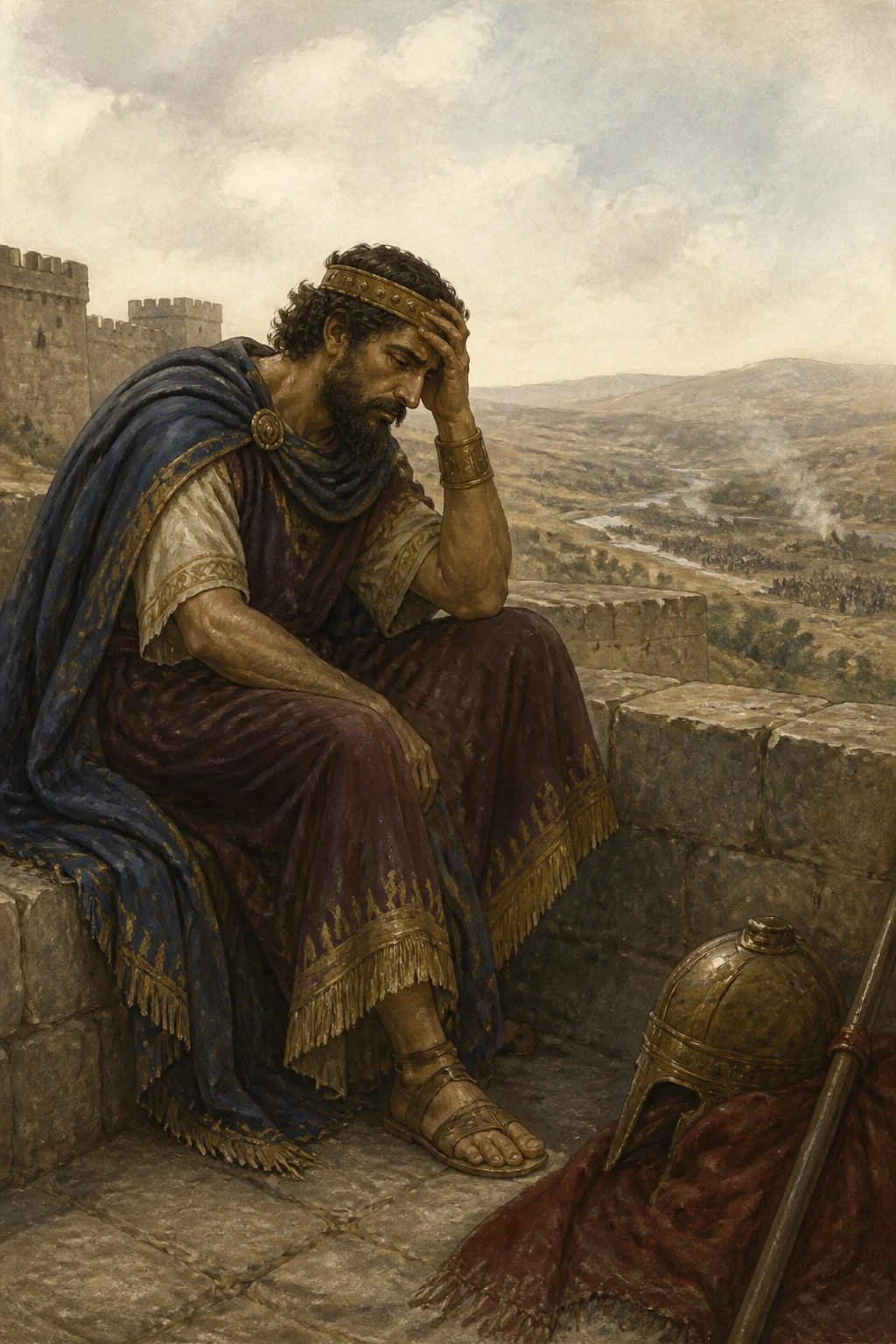
We have also heard that in ancient times, in ages long gone by, there was a king with many soldiers and retainers, a man of rank and wealth. Yet he had grown old without being blessed with a son. Troubled by this, the king prayed to Almighty God through the intercession of the Prophet, peace and blessings be upon him, and besought Him, by the honored standing of the prophets, saints, and martyrs among His favored servants, to grant him a son who would inherit the kingdom after him and be the delight of his eyes. Then, at that very hour, he rose and entered his private chamber, sent for his cousin, and lay with her; and by Almighty God’s leave she conceived. In due course, when her time came, she gave birth to a boy whose face was like the full moon on its fourteenth night. The boy was brought up until he reached the age of five. Now the king had in his service a sage named Sindbad, a man of great learning and skill, and he entrusted the boy to him. By the time the boy was ten, the sage had taught him wisdom and letters so well that no one in that age could rival him in learning, refinement, or understanding. When his father heard this, he summoned a company of Arab knights to teach him horsemanship and the arts of war. The boy mastered them, charging and wheeling about the training ground until he surpassed all his contemporaries and companions. One day the sage consulted the stars and examined the boy’s horoscope, and saw that during the next seven days, a single word from his lips would bring about his death. The sage went to the king, the boy’s father, and told him the news. “What course should we take, O sage?” asked the king. The sage replied, “O King, my counsel is that you place him somewhere pleasant, where he may listen to sweet music, and let him remain there until the seven days have passed.” So the king sent for one of his favorite slave girls, the loveliest of them all, and entrusted the boy to her, saying, “Take your master into the palace and keep him with you. He must not leave it until seven days have passed.” The girl took him by the hand and settled him in that palace.
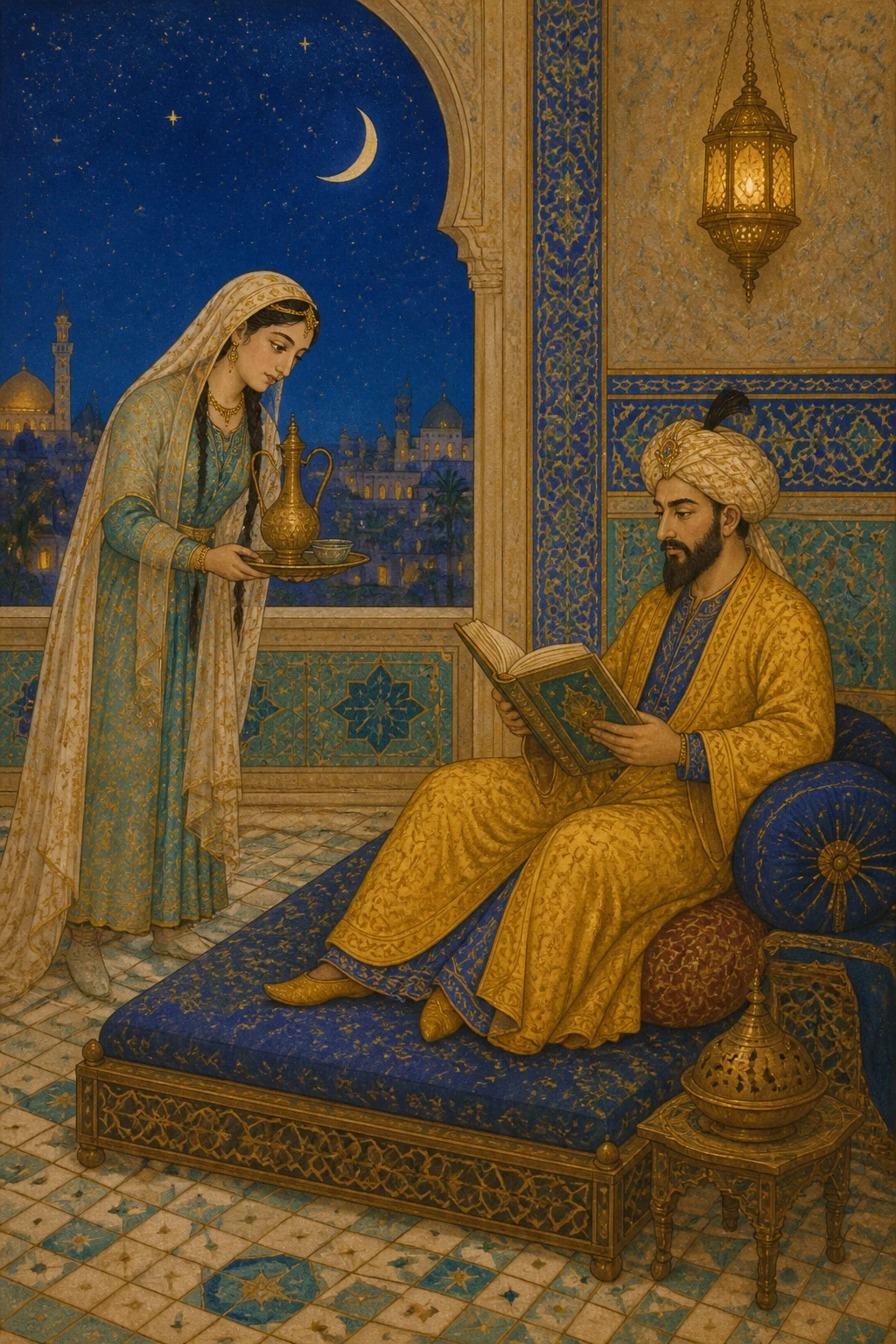
There were forty chambers in the palace, and in every chamber ten slave girls, each with a musical instrument. When any one of them played, the whole palace seemed to dance to her melody. Around it flowed a river whose banks were planted with every kind of fruit tree and fragrant flower. Now the boy’s beauty and loveliness were beyond description. He had spent but one night there when the girl, his father’s favorite concubine, beheld him and love struck her heart. Unable to restrain herself, she threw herself upon him. The boy said to her, “God willing, when I go out to my father, I shall tell him what you have done, and he will have you killed.” The girl went to the king and flung herself upon him, weeping and wailing. “What has happened to you, girl?” he asked. “How is your master? Is he not well?” She replied, “My lord, my master tried to force himself upon me and threatened to kill me if I refused. But I resisted him and fled, and I shall never return to him or to the palace again.” When his father heard these words, he flew into a terrible rage, summoned his viziers, and ordered them to put the boy to death. They said to one another, “The king is determined to kill his son, but if he does, he will surely regret it afterward, for the boy is dear to him and was born only after he had given up all hope of a son. Then he will turn on you and blame you, saying, ‘Why did you not devise some means of keeping me from killing him?’” So they agreed to contrive a way to prevent him from killing his son. The first vizier stepped forward and said, “I shall shield you from the king’s wrath today.” He rose and went to the king, stood before him, and asked leave to speak. The king granted it, and he said, “O King, even if you had a thousand sons, you should not allow yourself to kill a single one of them on the word of a slave girl, who may be telling the truth or may be lying. Perhaps this is a plot she has laid against your son.” The king asked, “Have you heard any tales of their wiles, O Vizier?” “Yes,” he replied.