Waltey
Zgodba o drugem dervišu
Tisoč in ena noč · arabska pripovedna tradicijaO besedilu
Zgodba o drugem dervišu
- Vir
- Tisoč in ena noč
- Avtor
- arabska pripovedna tradicija
- Jezik branja
- English
- Jezik izvirnika
- Arabic
- Čas branja
- 30 min branja
- Obseg
- 24 strani
- Naslov izvirnika
- حكاية الصعلوك الثاني - الليالي ١٢ إلى ١٤
O izvirniku
Tisoč in ena noč
Zgodbe v zgodbah, polne trgovcev, dvorov, preoblek in nočnih zapletov. Bralni jezik je English, izvirnik pa prihaja iz vira Tisoč in ena noč v jeziku Arabic.
Besedilo
Zgodba o drugem dervišu
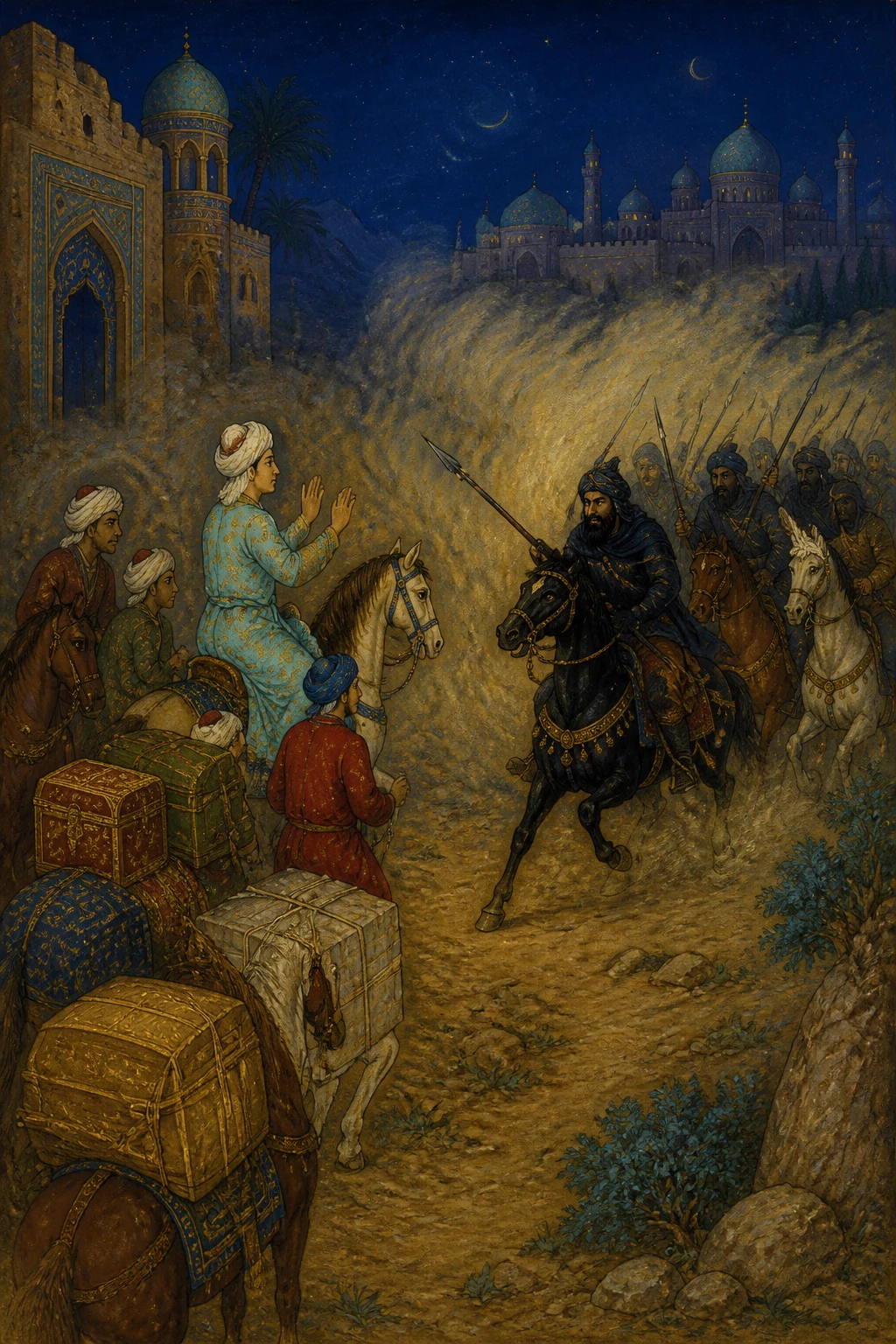
Then the second mendicant came forward, kissed the ground, and said, “My lady, I was not born blind in one eye. Mine is a strange tale: were it written with needles upon the inner corners of the eyes, it would be a lesson to all who would take heed. I am a king and the son of a king. I studied the Quran in seven traditions of recitation, and read learned books under the masters who taught them. I studied the stars and the works of poets, and applied myself to every branch of knowledge until I surpassed all the men of my age. I rose high in the esteem of scholars, and my fame spread through every province and country, until my name was known among kings. When the King of India heard of me, he sent to my father asking him to send me, and with his message he sent gifts and rarities fit for kings. My father equipped six ships for me, and we sailed for a full month before reaching land. We brought ashore the horses we had carried with us and loaded them with ten packs of gifts. We had gone only a little way when a cloud of dust rose and swirled until it blotted out the horizon. It hung there for an hour, then cleared to reveal sixty horsemen, fierce as scowling lions. Looking closely, we saw that they were Arab highwaymen. When they saw how few we were, with ten loads of gifts for the King of India, they charged at us with their lances levelled. We raised our fingers to signal them and cried, ‘We are envoys to the mighty King of India. Do us no harm!’ They replied, ‘We are not in his country, nor are we subject to his rule.’
“They killed some of the servants, while the rest fled. I too escaped, though I had been badly wounded. The Arabs were too busy with our money and gifts to pursue us. I went on, not knowing where to turn, brought low after living in honour. At last I reached the summit of a mountain and took shelter in a cave until daybreak. Then I set out again and came to a prosperous city, where winter and its cold had departed and spring had arrived with its roses. I was glad to reach it, worn out as I was with walking, sick with worry and pale of face. My circumstances were utterly changed, and I did not know where to go. I approached a tailor in his shop and greeted him. He returned my greeting, welcomed me kindly, and spoke to me with warmth. When he asked what had brought me so far from home, I told him my story from beginning to end. He was distressed on my account and said, ‘Young man, do not reveal who you are. I fear for you if the king of this city should hear of you, for he is your father’s greatest enemy and has a blood feud with him.’
“Then he brought me food and drink and ate with me. We talked into the night, and he cleared a place for me in a corner of his shop and supplied me with bedding and blankets. I stayed with him for three days, after which he asked, ‘Do you know any trade by which you might earn a living?’ I said, ‘I am versed in religious law and learning, and skilled in writing and accounts.’ ‘There is little demand for your trade in our country,’ he replied. ‘No one in this city cares for learning or writing, only money.’ I said, ‘By God, I know nothing beyond what I have told you.’ He said, ‘Then gird up your waist, take an axe and a rope, and gather firewood in the wilderness to keep yourself alive until God brings you relief. Tell no one who you are, or they will kill you.’ He bought me an axe and a rope and sent me out with some woodcutters, asking them to look after me. I went with them and gathered wood, then brought a load back on my head and sold it for half a dinar. I bought food with some of the money and saved the rest. I lived in this way for a year. Then one day, as usual, I went into the wilderness to cut wood and found a thicket with a great deal of timber in it. I entered it, went up to a tree, and dug around it, clearing the earth from its roots. My axe struck a brass ring. I brushed away the soil and found the ring fixed to a wooden trapdoor. When I lifted it, a stairway appeared beneath. I went down to the bottom, found a door, and passed through it into a palace of splendid workmanship. There I found a young woman like a radiant pearl, whose beauty could drive all care, sorrow, and affliction from the heart. At the sight of her I prostrated myself before her Creator, marvelling at the beauty He had bestowed on her. She looked at me and said, ‘Are you human or a jinni?’ ‘Human,’ I replied. ‘Who brought you to this place?’ she asked. ‘I have been here twenty-five years and have never seen a human being.’ Her voice was sweet to my ears, and I said, ‘My lady, God brought me to your dwelling. Perhaps He means to lift my sorrow and distress.’
“I told her everything that had happened to me from beginning to end. My plight grieved her, and she wept and said, ‘I too shall tell you my story. Know that I am the daughter of the king of the farthest reaches of India, lord of the Ebony Island. My father married me to my cousin, but on my wedding night an ifrit named Jarjaris, son of Rajmus, son of Iblis, snatched me away. He flew off with me and brought me down here. He supplied this place with everything I might need: jewels and fine clothes, fabrics and furnishings, food and drink. Once every ten days he comes and spends a night here. He has promised me that if I need anything, by day or night, I need only touch these two lines inscribed upon the dome: before I can lift my hand away, he will be beside me. Today is the fourth day since he was here, so he will not return for another six. Will you stay with me for five days, then leave the day before he comes?’ ‘Yes,’ I said. Delighted, she rose, took my hand, and led me through an arched doorway into a charming little bathhouse. When I saw it, I took off my clothes, and she took off hers. She went in and sat on a cushioned seat, seating me beside her. She brought a drink sweetened with musk-scented sugar and gave it to me, then set food before me. We ate and talked, and at last she said, ‘Sleep and rest, for you are weary.’ So I slept, my lady, thanking her and forgetting all my troubles. When I woke, I found her massaging my feet, and I prayed for her. We sat talking for a while, then she said, ‘By God, I have been so lonely down here beneath the earth. For twenty-five years I have had no one to talk to. Praise be to God who sent you to me!’ Then she recited:
“‘Had we known that you were coming, we would have spread our heart’s blood for your feet, or the dark pupils of our eyes. We would have laid our cheeks upon your path and come to meet you, that your steps might fall upon our eyelids.’ When I heard her verses, I thanked her. Love for her had taken firm hold of my heart, and all my sorrow and distress had vanished. We sat drinking together until nightfall, and I spent a night with her such as I had never known in all my life. We awoke happy, and I said, ‘Shall I bring you up from beneath the earth and free you from this jinni?’ She laughed and said, ‘Be content and say no more. Of every ten days, one belongs to the ifrit and nine to you.’ But passion had overcome me, and I said, ‘This very moment I shall smash the dome bearing that inscription. Let the ifrit come, and I shall kill him, for it is foretold that I shall slay ifrits.’ When she heard this, she recited:
“‘You who seek our parting, be patient; find some way to spare us. Longing alone is pain enough. Be patient, for treachery is the nature of time, and every companionship must end in parting.’ I heard her verses but paid no heed to her warning. Instead, I kicked the dome with all my strength.” And dawn overtook Shahrazad, and she fell silent, leaving her tale untold.
Then, when it was the thirteenth night,
She said, “I have heard, O fortunate king, that the second mendicant said to the young woman: ‘My lady, when I kicked the dome with all my strength, the woman cried, “The ifrit is here! Did I not warn you? By God, you have brought disaster upon me. But save yourself: go back the way you came!” In my terror I forgot my sandals and my axe. After climbing two steps, I turned to look for them and saw the earth split open and an ifrit of hideous appearance rise out of it. “What is this commotion that has startled me?” he demanded. “What has happened to you?” She said, “Nothing has happened, except that I felt low in spirits and wanted a drink to cheer myself. When I got up to attend to my affairs, I fell against the dome.” “You lie, you wicked woman!” said the ifrit. He looked about the palace to right and left, saw the sandals and the axe, and said, “These belong to a human. Who has been here?” She replied, “I have only just seen them myself. Perhaps they caught on you and you brought them in.” “Nonsense!” said the ifrit. “You cannot fool me with such talk, you whore!” He stripped her naked, stretched her between four stakes, and began torturing her, demanding that she confess what had happened. I could not bear to hear her weeping, and fled up the stairs, shaking with fear. At the top I replaced the trapdoor and covered it with earth. Bitterly I regretted what I had done. I thought of the girl and her beauty, and how that accursed creature was tormenting her. She had spent twenty-five years with him, yet only because of me had he punished her. I thought of my father and his kingdom, and how I had become a woodcutter, and recited this verse:
“‘“If time should bring you calamity one day, remember: one day brings ease, another hardship.” I walked on until I reached my friend the tailor, who was waiting for me in an agony of anxiety. “All last night my heart was with you,” he said. “I feared that some wild beast or other danger had befallen you. Praise be to God that you are safe!” I thanked him for his concern and went into my little room, where I sat thinking over what had happened and reproaching myself for kicking the dome. Then my friend the tailor came in and said, “There is a foreigner in the shop asking for you. He has your axe and sandals. He brought them to the tailors and said, ‘I went out when the muezzin called for the dawn prayer and stumbled upon these. I do not know whose they are. Can you direct me to their owner?’ The tailors directed him to you, and now he is sitting in my shop. Go out, thank him, and take your axe and sandals.”
“‘At these words my face turned yellow and I was overcome with dread. While I sat there, the floor of my room split open and the foreigner rose through it: it was the ifrit. He had tortured the girl mercilessly, but she had confessed nothing. Then he had taken the axe and sandals and said to her, “If I am indeed Jarjaris, of the offspring of Iblis, I shall bring back the owner of this axe and these sandals!” With this trick he had come among the tailors. Now he burst in upon me and, without giving me a moment’s respite, snatched me up and flew away. He soared aloft, then plunged down into the earth with me, while I scarcely knew what was happening. At last he brought me into the palace where I had been before. There I saw the girl naked, blood streaming from her sides, and tears fell from my eyes. The ifrit seized her and said, “You whore, here is your lover!” She looked at me and said to him, “I do not know him. I have never seen him before this moment.” “After all this punishment, you still will not confess?” he cried. She said, “I have never seen him in my life, and God forbids me to lie about him.” “If you do not know him,” said the ifrit, “take this sword and strike off his head.” She took the sword, came towards me, and stood over my head. I signalled to her with my eyebrows, while tears ran down my cheeks. She straightened and gave me a look that said, “You are the one who has brought all this upon us.” I signalled that this was the time for forgiveness, and my unspoken plea was:
“‘“My eyes speak for my tongue, that you may know and see what my heart has concealed. When we met, with tears pouring down, I fell silent, but my eyes spoke of love. With a glance she tells me what she would say; I answer with my fingertips, and she understands. Our brows carry our messages between us: we are silent, while love speaks.” When the girl understood my signs, my lady, she threw the sword from her hand. The ifrit handed it to me and said, “Strike off her head, and I shall release you and do you no harm.” “Yes,” I said. I took the sword, strode forward, and raised my hand. With a movement of her brows she said, “I did not fail you.” Tears streamed from my eyes. I threw down the sword and said, “Mighty ifrit, valiant champion, if a woman, deficient in reason and religion, would not consent to strike off my head, how could I lawfully strike off hers, when I have never seen her in my life? I shall never do it, even if I must drink the fatal cup of death.” The ifrit said, “There is love between you.” He took the sword and struck off one of the girl’s hands, then the other, then her right foot and her left, severing all four limbs with four blows before my very eyes. I was certain that death awaited me. Then she signalled to me with her eyes. The ifrit saw her and said, “You have committed adultery with your eyes!” He struck off her head, then turned to me and said, “Human, our law permits us to kill an adulterous wife. I carried this girl away on her wedding night, when she was twelve years old, and she has known no one but me. Once every ten days I came to her for a single night in the guise of a foreign man. When I was certain she had betrayed me, I killed her. As for you, I have no proof that you betrayed me with her, but I shall not let you escape unharmed. Choose what harm I shall do you.”
“‘At this, my lady, I was overjoyed, hoping for pardon. “What shall I ask of you?” I said. “Choose the shape into which I shall enchant you,” he replied. “A dog, a donkey, or an ape.” Still hoping he might forgive me, I said, “By God, if you pardon me, God will pardon you for showing mercy to a Muslim who has done you no harm.” I pleaded with him most earnestly and remained before him, saying, “I have been wronged.” He replied, “Spare me your speeches. You need not fear death, but do not hope for pardon. As for enchanting you, that I shall certainly do.” Then he split open the earth and flew up with me until the world beneath looked like a sheet of water. He set me down on a mountain, took a little earth, muttered spells over it, and sprinkled me with it, saying, “Leave this form and take the form of an ape!” At once I became an ape a hundred years old. Seeing myself in that hideous shape, I wept for myself, bore patiently the injustice of fate, and knew that fortune favours no one forever. I made my way down the mountain and travelled for a month until I reached the shore of the salt sea. I stood there for a while, then saw a ship out at sea, sailing towards the land before a fair wind. I hid behind a rock on the shore, then made my way aboard the ship. One of the men said, “Throw this ill-omened creature off the ship!” Another said, “Let us kill it.” A third said, “Kill it with this sword.” I caught hold of the blade’s tip and wept, tears streaming from my eyes. The captain took pity on me and said, “Merchants, this ape has sought my protection, and I have granted it. He is under my care. Let no one hurt or trouble him.”
“‘From then on the captain treated me kindly. I understood whatever he said, attended to all his needs, and served him aboard the ship. We sailed before a fair wind for fifty days, then anchored at a great city whose inhabitants were so numerous that only Almighty God could count them. As soon as we had moored, servants of the king of the city came aboard, congratulated the merchants on their safe arrival, and said, “Our king sends his greetings and congratulations. He has sent you this scroll of paper and asks each of you to write a line upon it.” I rose, still in the shape of an ape, and snatched the scroll from their hands. Afraid that I would tear it up or throw it into the water, they shouted at me and wanted to kill me. I signed to them that I wished to write. The captain said, “Let him write. If he makes a mess of it, we shall drive him away; but if he writes well, I shall adopt him as my son, for I have never seen an ape more intelligent than this one.” I took the pen, dipped it in ink, and wrote in the riqa script these verses:
“‘“Time has recorded the virtues of the generous, but your virtues still defy all reckoning. May God never leave mankind orphaned of you, for what a noble father you are to generosity!” Then I wrote in the rayhani script:
“‘“He has a pen whose blessings reach every province, whose gifts embrace all the world. Your fingers are five rivers, flowing through every land.” And in the thuluth script I wrote these two verses:
“‘“Every writer must one day perish, but time preserves what his hands have written. Write nothing with your pen save what you will rejoice to see upon the Day of Resurrection.” Beneath them, in the mashq script, I wrote:
“‘“When you open the inkwell of honour and blessings, let bounty and generosity be your ink. And when you write to ask forgiveness, write in ink: thus will you lend new honour to the noble name of the pen.” I handed them the scroll, and they took it up to the king. He examined the writing upon it, but none pleased him except mine. He said to his attendants, “Go to the man who wrote this. Dress him in this robe, mount him upon a mule, and bring him before me with a ceremonial escort.” When they heard this, they smiled. The king grew angry and said, “How is it that I give you an order and you laugh at me?” They replied, “O king, we are not laughing at your words. But the creature who wrote this is an ape, not a human being. He is with the captain of the ship.” The king marvelled at their words and was thrilled with delight. “I wish to buy this ape,” he said. Then he sent messengers to the ship with the mule and the robe, saying, “You must dress him in this robe, mount him on the mule, and bring him here.” They went to the ship, took me from the captain, and dressed me in the robe. The people were astonished and gathered to look at me. When they brought me before the king, I kissed the ground before him three times. He bade me sit, and I knelt. Everyone present marvelled at my good manners, the king most of all. Then he dismissed the company, and all departed except the king, a eunuch, a young servant, and myself. The king ordered food, and they set before him a feast of dishes to delight the appetite and please the eye. He beckoned me to eat. I rose, kissed the ground before him seven times, then sat and ate with him. When the meal had been cleared away, I washed my hands, took an inkwell, a pen, and paper, and wrote these two verses:
“‘“Lamb’s neck is a remedy for every ailment, and dishes of sweetmeats are my heart’s desire. How my heart yearns for the feast to be spread, when its kunafa swims in butter and honey!” I also wrote:
“‘“I long for you, O kunafa of Za’id; I cannot do without you, nor endure your absence. May you remain my food by day and night, and may syrup forever rain upon your sandy strands!” Then I rose and seated myself at a distance. The king looked at what I had written, read it, and marvelled. “Can an ape possess such eloquence and such a hand?” he said. “By God, this is the wonder of wonders!” A chessboard was brought to him, and he asked, “Can you play?” I nodded yes, came forward, and arranged the pieces. I played two games with him and won both. The king was bewildered. “If this were a man,” he said, “he would surpass all the people of his age.” Then he said to his servant, “Go to your mistress and tell her, ‘The king wishes to speak with you,’ so that she may come and see this marvellous ape.” The eunuch went and returned with his mistress, the king’s daughter. When she saw me, she covered her face and said, “Father, how could you send for me and allow strange men to see me?” He said, “Daughter, there is no one here but the young servant, the eunuch who brought you up, this ape, and myself, your father. From whom are you hiding your face?” She replied, “This ape is a king’s son. His father is named Imar, lord of the Inner Ebony Islands. He is under a spell cast by the ifrit Jarjaris, who is of the offspring of Iblis and has killed his own wife, the daughter of King Aqnamus. The creature you call an ape is a learned and intelligent man.” The king marvelled at his daughter’s words, then looked at me and asked, “Is what she says of you true?” I nodded yes and wept. The king asked his daughter, “How did you know he was enchanted?” She replied, “Father, when I was little I had an old woman in my service, a cunning sorceress, who taught me the art of magic. I learned it thoroughly and mastered a hundred and seventy branches of it. With the least of them I could carry the stones of your city beyond Mount Qaf, turn its site into a deep sea, and make its inhabitants fish within it.” Her father said, “In God’s name, I beg you to free this young man, so that I may make him my vizier. Have you possessed this gift without my knowing it? Free him, and I shall make him my vizier, for he is a gracious and discerning young man.” “Gladly, and with all my heart,” she replied. Then she took a knife and drew a circle.’” And dawn overtook Shahrazad, and she fell silent, leaving her tale untold.
Then, when it was the fourteenth night,
She said, “I have heard, O fortunate king, that the mendicant said to the young woman: ‘My lady, the king’s daughter took a knife inscribed with Hebrew names and drew a circle in the middle of the palace. Within it she wrote names and talismans, uttered incantations, and recited words we could not understand. After a while, darkness gathered about the palace until we thought the whole world had closed over us. Suddenly the ifrit descended upon us in a hideous shape, with hands like pitchforks, legs like masts, and eyes like two blazing torches. We were terrified, but the king’s daughter said, “Neither welcome nor ease shall you find here!” The ifrit, who had the form of a lion, said, “You traitress! How have you broken your oath? Did we not swear that neither of us would interfere with the other?” She replied, “Accursed creature, what oath can you claim?” “Then take what is coming to you!” he cried. He became a lion, opened his jaws, and sprang at her. Quickly she plucked a hair from her head, murmured over it, and it became a keen-edged sword. She struck the lion and cut him in two. His head turned into a scorpion, while the girl became a huge serpent and attacked the accursed creature in his scorpion shape. They fought fiercely. Then the scorpion became an eagle, and the serpent a vulture, which pursued the eagle for an hour. The eagle changed into a black cat, and the girl into a wolf. They struggled through the palace for another hour, fighting furiously. Finding himself overcome, the cat turned into a great red pomegranate and fell into a pool. The wolf rushed towards it, but it sprang into the air, fell upon the palace paving, and burst. Its seeds scattered everywhere, each separately, until the floor was covered with them. The wolf became a cock and began picking them up, determined not to leave a single seed. But as fate had ordained, one seed lay hidden beside the fountain basin. The cock crowed, flapped its wings, and pointed its beak towards us, but we could not understand what it meant. Then it gave a cry so loud that we thought the palace had fallen upon us. It searched the whole floor until it saw the seed hidden beside the basin and darted forward to peck it up. But the seed fell into the water, became a fish, and dived beneath the surface. The cock changed into a great fish and plunged in after it. It disappeared for a while, then we heard a mighty scream and trembled. The ifrit rose as a flame, spewing fire from his mouth and fire and smoke from his eyes and nostrils. The girl became a sea of fire. We were about to plunge into the water, fearing we would be burned to death, when suddenly the ifrit screamed from amid the flames, appeared beside us in the great hall, and blew fire into our faces. The girl pursued him and blew fire into his face in turn. Sparks from both of them struck us. Hers did us no harm, but one of his struck my eye and destroyed it while I was still in the shape of an ape. Another struck the king in the face and burned its lower half, his beard and jaws, so that his lower teeth fell out. A spark struck the eunuch in the chest, and he burned to death on the spot. We were certain that we too were doomed, and abandoned all hope of life.
“‘While we were in this state, we heard a voice proclaim, “God is most great! God is most great! My Lord has granted victory and triumph, and cast down the unbeliever in the faith of Muhammad, master of mankind!” It was the king’s daughter, who had burned the ifrit. We looked at him and saw that he had become a heap of ashes. Then the girl came to us and said, “Bring me a bowl of water, quickly!” They brought it, and she spoke words over it that we could not understand. Then she sprinkled me with the water and said, “By the Truth, and by the greatest name of God, be freed and return to your former shape!” I became a man as before, but my eye was lost. The girl cried, “The fire! The fire, Father! I shall not live, for death is appointed for me. Had he been human, I would have killed him at the outset. My trouble began when the pomegranate burst: I picked up its seeds but missed the one that held the jinni’s soul. Had I swallowed it, he would have died at once, but fate and destiny kept it from my sight. Before I knew it he was upon me, and we fought fiercely beneath the earth, in the air, and in the water. Whenever he opened one gate of magic against me, I opened a greater against him, until he opened the gate of fire. Few who have that gate opened against them escape alive. Fate helped me only so far as to let me burn him before he burned me. I had known him to profess the faith of Islam. Now I am dying, and may God watch over you when I am gone.”
“‘She went on crying for help against the fire, until black sparks rose to her breast and then to her face. When they reached her face, she wept and said, “I bear witness that there is no god but God, and I bear witness that Muhammad is the Messenger of God.” We looked at her and saw a heap of ashes beside the ifrit’s heap. We grieved for her, and I wished I had been in her place, rather than see that lovely face, whose owner had done me such kindness, turned to ashes. But God’s decree cannot be turned aside. When the king saw that his daughter had become a heap of ashes, he tore out what remained of his beard, beat his face, and rent his clothes. I did as he did, and we wept for her. Then the chamberlains and officers of state entered and found the sultan senseless, with two heaps of ashes beside him. Bewildered, they gathered about him for a while. When he recovered, he told them what had happened between his daughter and the ifrit. Their grief was immense. The women and serving girls wailed, and they held mourning rites for seven days.
“‘Then the king ordered a great domed tomb to be built over his daughter’s ashes, and they lit candles and lamps within it. As for the ifrit’s ashes, they scattered them to the winds, under the curse of God. The sultan then fell so gravely ill that he nearly died. His illness lasted a month, and when his health returned, he summoned me and said, “Young man, we lived in the greatest happiness, safe from the calamities of time, until you came. Then sorrow descended upon us. Would that we had never seen you or your ill-favoured face, which has brought us to this wretched state! First I lost my daughter, who was worth a hundred men. Then I suffered these burns and lost my teeth, and my servant died. Yet you had no power to prevent it: God’s decree has fallen upon us and upon you. Praise be to God that my daughter freed you, though she destroyed herself. Now leave my country, my son. Enough has happened because of you. All this was ordained for us and for you. Go in peace.”
“‘I left him, my lady, scarcely believing that I had escaped alive, and not knowing where to go. I thought over all that had happened to me, and how they had let me go my way unharmed. I walked for a month, remembering how I had entered the city a stranger, how I had met the tailor and the girl beneath the earth, and how I had escaped the ifrit after he had meant to kill me. I recalled everything from beginning to end, praised God, and said, “Better my eye than my life.” Before leaving the city I had gone to the bathhouse and shaved off my beard. Then I set out, my lady, weeping every day as I thought of the misfortunes that had ended in the loss of my eye. Whenever I remember what happened, I weep and recite these verses:
“‘“By the Merciful, I am bewildered by my fate; sorrow has fallen upon me from where I could not know. I shall endure until all men know that I have borne what is more bitter than bitter aloes. How fair is patient endurance joined with piety! What the Lord ordains must come to pass among His creatures. The secrets of my soul interpret my hidden heart, when your secret, the heart of all secrets, lies within mine. Were the mountains to bear what I bear, they would crumble; were fire to bear it, it would be quenched; were the wind to bear it, it would cease to blow. Whoever says that life holds sweetness must surely meet a day more bitter than bitterness itself.” Then I travelled through many countries and entered many cities, until I made for Baghdad, the Abode of Peace, hoping to reach the Commander of the Faithful and tell him what had happened to me. I arrived in Baghdad tonight and found this first brother of mine standing in bewilderment. I greeted him, saying, “Peace be upon you,” and spoke with him. Then our third brother approached and said, “Peace be upon you. I am a stranger here.” We replied, “We too are strangers, and have arrived this blessed night.” So the three of us walked on together, none knowing the others’ stories, until fate brought us to this door and we entered your house. That is how I came to shave my beard and lose my eye.’ She said to him, ‘Yours is a strange tale. Stroke your head and go your way.’ But he replied, ‘I shall not leave until I have heard my companion’s story.’”
Izvirnik
حكاية الصعلوك الثاني - الليالي ١٢ إلى ١٤
Naslednje strani prikazujejo izvirno besedilo za primerjavo.
فلما كانت الليلة ١٢
ثم تقدَّمَ الصعلوك الثاني وقبَّل الأرض وقال: يا سيدتي، أنا ما وُلِدت أعور، وإنما لي حكاية عجيبة لو كُتِبت بالإبر على آماق البصر لَكانت عبرةً لمَن اعتبر؛ فأنا ملك ابن ملك، وقرأت القرآن على سبع روايات، وقرأت الكتب على أربابها من مشايخ العلم، وقرأت علمَ النجوم، وكلامَ الشعراء، واجتهدت في سائر العلوم حتى فُقْتُ أهلَ زماني، فعَظُم حظي عند سائر الكَتَبة، وشاع ذكري في سائر الأقاليم والبلدان، وشاع خبري عند سائر الملوك، فسمع بي ملك الهند، فأرسل يطلبني من أبي، وأرسل إليه هدايا وتحفًا تصلح للملوك، فجهَّزَني أبي في ست مراكب، وسرنا في البحر مدة شهر كامل حتى وصلنا إلى البر، وأخرجنا خيلًا كانت معنا في المركب، وحمَّلنا عشرة أحمال هدايا، ومشينا قليلًا، وإذا بغبار قد علا وثار حتى سدَّ الأقطار، واستمر ساعةً من النهار، ثم انكشف فبان من تحته ستون فارسًا وهم ليوث عبوس، فتأملناهم وإذا هم عرب قطَّاع طريق، فلما رأونا ونحن نفرُّ قليل، ومعنا عشرة أحمال هدايا لملك الهند، رمحوا علينا وشرعوا الرماح بين أيديهم نحونا، فأشرنا إليهم بالأصابع، وقلنا لهم: نحن رسل إلى ملك الهند المعظَّم، فلا تؤذونا. فقالوا: نحن لسنا في أرضه، ولا تحت حكمه.
ثم إنهم قتلوا بعض الغلمان، وهرب الباقون، وهربت أنا بعد أن جُرِحت جرحًا بليغًا، واشتغلت عنَّا العرب بالمال والهدايا التي كانت معنا، فسرتُ لا أدري أين أذهب، وكنت عزيزًا فصرتُ ذليلًا، وسرت إلى أن أتيت رأس الجبل، فدخلت مغارة حتى طلع النهار، ثم سرت منها حتى وصلت إلى مدينة عامرة بالخير قد ولَّى عنها الشتاء ببرده، وأقبل عليها الربيع بورده، ففرحت بوصولي إليها، وقد تعبت من المشي، وعلاني الهم والاصفرار؛ فتغيَّرَتْ حالتي، ولا أدري أين أسلك، فملت إلى خياط في دكان، وسلَّمتُ عليه فردَّ عليَّ السلامَ، ورحَّبَ بي وباسطني، وسألني عن سبب غربتي، فأخبرته بما جرى لي من أوله إلى آخره؛ فاغتمَّ لأجلي، وقال: يا فتى، لا تُظهِر ما عندك، فإني أخاف عليك من ملك هذه المدينة؛ لأنه أكبر أعداء أبيك، وله عنده ثأر.
ثم أحضر لي مأكولًا ومشروبًا، فأكلت وأكل معي، وتحادثت معه في الليل، وأخلى لي محلًّا في جانب حانوته، وأتاني بما أحتاج إليه من فراش وغطاء، فأقمتُ عنده ثلاثة أيام، ثم قال لي: أَمَا تعرف صنعةً تكتسب بها؟ فقلت له: إني فقيه طالب علم، كاتب حاسب. فقال: إن صنعتك كاسدة في بلادنا، وليس في مدينتنا مَن يعرف علمًا ولا كتابةً غير المال. فقلت: واللهِ لا أدري شيئًا غير الذي ذكرته لك. فقال: شد وسطك، وخُذْ فأسًا وحبلًا، واحتطب في البَرِّيَّةِ حطبًا تتقوَّت به إلى أن يفرج الله عليك، ولا تعرِّف أحدًا بنفسك فيقتلوك. ثم اشترى لي فأسًا وحبلًا، وأرسلني مع بعض الحطابين، وأوصاهم بي، فخرجت معهم واحتطبت، فأتيت بحمل على رأسي فبعته بنصف دينار، فأكلت ببعضه وأبقيت بعضه، ودمت على هذا الحال مدة سنة، ثم بعد السنة ذهبت يومًا على عادتي إلى البَرِّيَّةِ لأحتطب منها، ودخلتها فوجدت فيها خميلة أشجار فيها حطب كثير، فدخلت الخميلة وأتيت شجرةً وحفرتُ حولها وأزلت التراب عن جدارها، فاصطكت الفأس في حلقة نحاس، فنظفت التراب، وإذا هي في طابق من خشب، فكشفته فبان تحته سُلَّمٌ، فنزلت إلى أسفل السلم، فرأيت بابًا فدخلته، فرأيت قصرًا محكم البنيان، فوجدتُ فيه صبية كالدرة السنية، تنفي عن القلب كلَّ هَمٍّ وغَمٍّ وبَلِيَّة، فلما نظرت إليها سجدتُ لخالقها لما أبدع فيها من الحسن والجمال، فنظرت إليَّ وقالت لي: أنت إنسي أم جني؟ فقلت لها: إنسي. فقالت: ومَن أوصلك إلى هذا المكان الذي لي فيه خمسة وعشرون سنة، ما رأيت فيه إنسيًّا أبدًا؟ فلما سمعت كلامها وجدتُ له عذوبةً، وقلت لها: يا سيدتي، أوصلني الله إلى منزلك، ولعله يزيل همي وغمي.
وحكيتُ لها ما جرى لي من الأول إلى الآخر، فصعب عليها حالي، وبكت وقالت: أنا الأخرى أُعلِمُكَ بقصتي، فاعلم أني بنت ملك أقصى الهند صاحب جزيرة الأبنوس، وكان قد زوَّجني بابن عمي، فاختطفني ليلةَ زفافي عفريت اسمه جرجريس بن رجموس بن إبليس، فطار بي ونزل في هذا المكان، ونقل إليه كل ما أحتاج إليه من الحلي والحلل، والقماش والمتاع، والطعام والشراب، وفي كل عشرة أيام يجيئني مرةً فيبيت هنا ليلةً، وعاهدني إذا عرضَتْ لي حاجة ليلًا أو نهارًا أن ألمس بيدي هذين السطرين المكتوبين على القُبَّة، فما أرفع يدي حتى أراه عندي، ومنذ كان عندي له اليومَ أربعةُ أيام، وبقي له ستة أيام حتى يأتي، فهل لك أن تقيم عندي خمسة أيام، ثم تنصرف قبل مجيئه بيوم؟ فقلت: نعم. ففرحَتْ، ثم نهضت على أقدامها، وأخذت بيدي وأدخلتني من باب مقنطر، وانتهت بي إلى حمام لطيف ظريف، فلما رأيتُه خلعتُ ثيابي وخلعَتْ ثيابها، ودخلت فجلست على مرتبة، وأجلستني معها، وأتَتْ بسكر مُمَسَّك وسقتني، ثم قدَّمت لي مأكولًا، فأكلنا وتحادثنا، ثم قالت لي: نَمْ واسترِحْ، فإنك تعبان. فنمت يا سيدتي، وقد نسيت ما جرى لي وشكرتها، فلما استيقظتُ وجدتها تكبس رجلي فدعوت لها، وجلسنا نتحادث ساعةً، ثم قالت: واللهِ إني كنتُ ضيقةَ الصدر وأنا تحت الأرض وحدي، ولم أجد مَن يحدِّثني خمسة وعشرين سنةً، فالحمد لله الذي أرسلك إليَّ، ثم أنشدت:
لَوْ عَلِمْنَا مَجِيئَكُمْ لَفَرَشْنَا مُهْجَةَ الْقَلْبِ أَوْ سَوَادَ الْعُيُونِ
وَفَرَشْنَا خُدُودَنَا وَالْتَقَيْنَا لِيَكُونَ الْمَسِيرُ فَوْقَ الْجُفُونِ
فلما سمعتُ شعرها شكرتها، وقد تمكَّنَتْ محبتها في قلبي، وذهب عني همي وغمي، ثم جلسنا في منادمة إلى الليل، فبِتُّ معها ليلة ما رأيت مثلها في عمري، وأصبحنا مسرورين، فقلت لها: هل أطلعك من تحت الأرض، وأريحك من هذا الجني؟ فضحكت وقالت: اقنع واسكت، ففي كل عشرة أيام يومٌ للعفريت وتسعةٌ لك. فقلتُ وقد غلب عليَّ الغرام: فأنا في هذه الساعة أكسر هذه القبة التي عليها النقش المكتوب لعلَّ العفريت يجيء حتى أقتله، فإني موعود بقتل العفاريت. فلما سمعَتْ كلامي أنشدَتْ تقول:
يَا طَالِبًا لِلْفِرَاقِ مَهْلًا بِحِيلَةٍ قَدْ كَفَى اشْتِيَاقُ
اصْبِرْ فَطَبْعُ الزَّمَانِ غَدْرٌ وَآخِرُ الصُّحْبَةِ الْفِرَاقُ
فلما سمعتُ شعرها لم ألتفت لكلامها، بل رفست القبة رفسًا قويًّا. وأدرك شهرزاد الصباح فسكتَتْ عن الكلام المباح.
فلما كانت الليلة ١٣
قالت: بلغني أيها الملك السعيد أن الصعلوك الثاني قال للصَّبِيَّةِ: يا سيدتي، لما رفست القبة رفسًا قويًّا، قالت لي المرأة: إن العفريت قد وصل إلينا، أَمَا حذَّرْتُك من هذا؟ والله لقد آذيتني، ولكن انجُ بنفسك، واطلع من المكان الذي جئتَ منه. فمن شدة خوفي نسيت نعلَي وفأسي، فلما طلعت درجتين التفتُّ لأنظرهما، فرأيت الأرض قد انشقَّت، وطلع منها عفريت ذو منظر بشع، وقال: ما هذه الزعجة التي أرعشتِني بها، فما مصيبتك؟ فقالت: ما أصابني شيء غير أن صدري ضاق، فأردتُ أن أشرب شرابًا يشرح صدري، فنهضتُ لأقضي أشغالي، فوقعْتُ على القبة. فقال لها العفريت: تكذبين يا فاجرة. ونظر في القصر يمينًا وشمالًا فرأى النعل والفاس، فقال لها: ما هذا إلا متاع الإنس، مَن جاء إليك؟ فقالت: ما نظرتهما إلا في هذه الساعة، ولعلَّهما تعلَّقَا معك. فقال العفريت: هذا كلام محال لا ينطلي عليَّ يا عاهرة. ثم إنه عرَّاها وصلبها بين أربعة أوتاد، وجعل يعاقبها، ويقررها بما كان؛ فلم يهن عليَّ أن أسمع بكاءها، فطلعت من السلم مذعورًا من الخوف، فلما وصلتُ إلى أعلى الموضع رددتُ الطابق كما كان، وسترته بالتراب، وندمت على ما فعلت غاية الندم، وتذكَّرْتُ الصبية وحُسْنها، وكيف يعاقبها هذا الملعون، وهي لها معه خمس وعشرون سنة وما عاقَبَها إلا بسببي، وتذكرت أبي ومملكته وكيف صرتُ حطَّابًا، فقلتُ هذا البيت:
إِذَا مَا أَتَاكَ الدَّهْرُ يَوْمًا بِنَكْبَةٍ فَيَوْمٌ تَرَى يُسْرًا وَيَوْمٌ تَرَى عُسْرَا
ثم مشيتُ إلى أن أتيتُ رفيقي الخياط، فلقيته من أجلي على مقالي النار وهو لي في الانتظار، فقال: إني بتُّ البارحةَ وقلبي عندك، وخفتُ عليك من وحش أو غيره، فالحمد لله على سلامتك. فشكرته على شفقته عليَّ، ودخلت خلوتي، وجعلت أتفكَّر فيما جرى لي، وألوم نفسي على رفسي هذه القبة، وإذا بصديقي الخياط دخل عليَّ، وقال لي: في الدكان شخص أعجمي يطلبك، ومعه فأسك ونعلك، قد جاء بهما إلى الخياطين، وقال لهم: إني خرجت وقتَ أذان المؤذن لأجل صلاة الفجر فعثرتُ بهما، ولم أعلم لمَنْ هما، فدلُّوني على صاحبهما. فدلَّه الخياطون عليك، وها هو قاعد في دكاني، فاخرج إليه واشكره، وخُذْ فأسك ونعلك.
فلما سمعت هذا الكلام اصفرَّ لوني، وتغيَّرَ حالي، فبينما أنا كذلك وإذا بأرض محلي قد انشقَّت، وطلع منها الأعجمي، وإذا هو العفريت، وقد كان عاقَبَ الصَّبِيَّةَ غاية العقاب، فلم تُقِرَّ له بشيء، فأخذ الفأس والنعل، وقال لها: إن كنت جرجريس من ذرية إبليس فأنا أجيء بصاحب هذه الفأس والنعل. ثم جاء بهذه الحيلة إلى الخياطين، ودخل عليَّ ولم يمهلني، بل اختطفني وطار وعلا بي، ونزل بي، وغاص في الأرض وأنا لا أعلم بنفسي، ثم طلع بي القصر الذي كنتُ فيه، فرأيت الصبية عريانة، والدم يسيل من جوانبها، فقطرت عيناي بالدموع، فأخذها العفريت وقال لها: يا عاهرة، هذا عشيقك. فنظرَتْ إليَّ وقالت له: لا أعرفه ولا رأيته إلا في هذه الساعة. فقال لها العفريت: أهذه العقوبة ولم تقري؟! فقالت: ما رأيته عمري، وما يحل من الله أن أكذب عليه. فقال لها العفريت: إن كنتِ لا تعرفينه، فخذي هذا السيف واضربي عنقه. فأخذَتِ السيف وجاءتني ووقفت على رأسي، فأشرت لها بحاجبي، ودمعي يجري على وجنتي، فنهضت وغمزتني، وقالت: أنت الذي فعلتَ بنا هذا كله. فأشرت لها أن هذا وقت العفو ولسان حالي يقول:
يُتَرْجِمُ طَرْفِي عَنْ لِسَانِي لِتَعْلَمُوا وَيَبْدُو لَكُمْ مَا كَانَ صَدْرِي يُكَتِّمُ
وَلَمَّا الْتَقَيْنَا وَالدُّمُوعُ سَوَاجِمُ خَرِسْتُ وَطَرْفِي بِالْهَوَى يَتَكَلَّمُ
تُشِيرُ لَنَا عَمَّا تَقُولُ بِطَرْفِهَا وَأُومِي إِلَيْهَا بِالْبَنَانِ فَتَفْهَمُ
حَوَاجِبُنَا تَقْضِي الْحَوَائِجَ بَيْنَنَا فَنَحْنُ سُكُوتٌ وَالْهَوَى يَتَكَلَّمُ
فلما فهمت الصبية إشارتي رمت السيف من يدها يا سيدتي، فناولني العفريت السيف وقال لي: اضرب عنقها وأنا أطلقك ولا أنكِّد عليك. فقلت: نعم. وأخذت السيف، وتقدَّمت بنشاط، ورفعت يدي فقالت لي بحاجبها: أنا ما قصرتُ في حقك. فهملت عيناي بالدموع، ورميت السيف من يدي، وقلت: أيها العفريت الشديد والبطل الصنديد، إذا كانت امرأةٌ ناقصةُ عقل ودين لم تستحِلَّ ضرب عنقي، فكيف يحل لي أن أضرب عنقها، ولم أَرَها عمري؟ فلا أفعل ذلك أبدًا، ولو سُقِيتُ من الموت كأس الردى. فقال العفريت: أنتما بينكما مودة. أخذ السيف وضرب يد الصبية فقطعها، ثم ضرب الثانية فقطعها، ثم قطع رجلها اليمين، ثم قطع رجلها اليسار، حتى قطع أربعها بأربع ضربات، وأنا أنظر بعيني، فأيقنت بالموت، ثم أشارَتْ إليَّ بعينَيْها فرآها العفريت، فقال لها: قد زنيت بعينك. ثم ضربها فقطع رأسها، والتفت إليَّ، وقال: يا إنسي، نحن في شرعنا إذا زنَتِ الزوجةُ يحلُّ لنا قتلها، وهذه الصبية اختطفتُها ليلةَ عرسها وهي بنت اثنتي عشرة سنة، ولم تعرف أحدًا غيري، وكنت أجيئها في كل عشرة أيام ليلةً واحدة في زيِّ رجل أعجمي، فلما تحقَّقْتُ أنها خانتني قتلتها، وأمَّا أنت فلم أتحقَّق أنك خنتني فيها، ولكن لا بد أني ما أخليك في عافية، فتمنَّ عليَّ أيَّ ضرر.
ففرحتُ يا سيدتي غاية الفرح، وطمعت في العفو، وقلت له: وما أتمناه عليك؟ قال: تمنَّ عليَّ أي صورة أسحرك فيها، إما صورة كلب، وإما صورة حمار، وإما صورة قرد. فقلت له وقد طمعت أنه يعفو عني: والله إنْ عفوتَ عني يعفُ الله عنك بعفوك عن رجل مسلم لم يُؤذِكَ. وتضرَّعْتُ إليه غاية التضرع، وبقيت بين يديه، وقلت له: أنا مظلوم. فقال لي: لا تُطِلْ عليَّ الكلام، أما القتل فلا تخف منه، وأما العفو عنك فلا تطمع فيه، وأما سحرك فلا بد منه. ثم شق الأرض، وطار بي إلى الجو حتى نظرت إلى الدنيا تحتي كأنها قطعة ماء، ثم حطَّني على جبل، وأخذ قليلًا من التراب، وهَمْهَمَ عليه وتكلَّم ورشَّني، وقال: اخرج من هذه الصورة إلى صورة قرد. فمن ذلك الوقت صرتُ قردًا ابن مائة سنة، فلما رأيت نفسي في هذه الصورة القبيحة بكيتُ على روحي، وصبرت على جور الزمان، وعلمت أن الزمان ليس لأحد، وقد انحدرتُ من أعلى الجبل إلى أسفل، وقد سافرتُ مدةَ شهرٍ ثم ذهبت إلى شاطئ البحر المالح، فوقفت ساعةً، وإذا أنا بمركب في وسط البحر قد طاب ريحها وهي قاصدة البر، فاختفيت خلف صخرة على جانب البحر، وسرت إلى أن أتيت وسط المركب، فقال واحد منهم: أَخرِجوا هذا المشئومَ من المركب. وقال واحد منهم: نقتله. وقال آخَر: اقتله بهذا السيف. فأمسكت طرف السيف وبكيت وسالت دموعي، فحنَّ عليَّ الريس، وقال لهم: يا تجار، إن هذا القرد استجار بي وقد أجرتُه، وهو في جواري، فلا أحد يتعرَّض له، ولا يشوِّش عليه.
ثم إن الريس صار يُحسِن إليَّ، ومهما تكلَّمَ به أفهمه وأقضي حوائجه كلها، وأخدمه في المركب، وقد طاب لها الريح مدة خمسين يومًا، فرسينا على مدينة عظيمة، وفيها عالم كثير لا يحصي عددهم إلا الله تعالى، فساعة وصولنا أوقفنا مركبنا، فجاءتنا مماليك من طرف ملك المدينة، فنزلوا المركب وهنَّئُوا التجار بالسلامة، وقالوا: إن ملكنا يهنِّئكم بالسلامة، وقد أرسل إليكم هذا الدرج الورق، وقال: كل واحد يكتب فيه سطرًا. فقمتُ وأنا في صورة القرد، وخطفت الدرج من أيديهم، فخافوا أني أقطعه وأرميه في الماء، فنهروني وأرادوا قتلي، فأشرتُ لهم أني أكتب، فقال لهم الريس: دعوه يكتب، فإن لخبَط الكتابة طردناه عنَّا، وإن أحسنها اتخذتُه ولدًا، فإني ما رأيت قردًا أفهم منه. ثم أخذتُ القلم، واستمدَدْتُ الحبرَ، وكتبتُ سطرًا بقلم الرقاع، ورقمتُ هذا الشعر:
لَقَدْ كَتَبَ الدَّهْرُ فَضْلَ الْكِرَامِ وَفَضْلُكَ لِلْآنَ لَا يُحْسَبُ
فَلَا أَيْتَمَ اللهُ مِنْكَ الْوَرَى لِأَنَّكَ لِلْفَضْلِ نِعْمَ الْأَبُ
وكتبت بالقلم الريحاني هذا الشعر:
لَهُ قَلَمٌ عَمَّ الْأَقَالِيمَ نَفْعُهُ وَعَمَّ جَمِيعَ الْعَالَمِينَ مَنَافِعُ
وَخَمْسَةُ أَنْهَارٍ أَنَامِلُكَ الَّتِي تَسِيلُ عَلَى الْأَقْطَارِ خَمْسٌ أَصَابِعُ
وكتبت بقلم الثلث هذين البيتين:
وَمَا مِنْ كَاتِبٍ إِلَّا سَيَفْنَى وَيُبْقِي الدَّهْرُ مَا كَتَبَتْ يَدَاهُ
فَلَا تَكْتُبْ بِخَطِّكَ غَيْرَ شَيْءٍ يَسُرُّكَ فِي الْقِيَامَةِ أَنْ تَرَاهُ
وكتبت تحته بقلم المشق هذين البيتين:
إِذَا فَتَحْتَ دَوَاةَ الْعِزِّ وَالنِّعَمِ فَاجْعَلْ مِدَادَكَ مِنْ جُودٍ وَمِنْ كَرَمِ
وَاكْتُبْ بِحِبْرٍ إِذَا مَا كُنْتَ مُعْتَذِرًا بِذَاكَ شَرَّفْتَ فَضْلًا نِسْبَةَ الْقَلَمِ
ثم ناولتهم ذلك الدرج الورق، فطلعوا به إلى الملك، فلما تأمَّلَ الملكُ ما في ذلك الدرج لم يعجبه خطُّ أحدٍ إلا خطي، فقال لأصحابه: توجَّهوا إلى صاحب هذا الخط، وألبسوه هذه الحلة، وركِّبوه بغلة، وهاتوه بالنوبة، وأحضروه بين يديَّ. فلما سمعوا كلامَ الملك تبسَّموا، فغضب منهم، ثم قال: كيف آمركم بأمرٍ فتضحكون عليَّ؟! فقالوا: أيها الملك، ما نضحك على كلامك، بل الذي كتب هذا الخط قردٌ، وليس هو آدميًّا، وهو مع ريس المركب. فتعجَّبَ الملك من كلامهم، واهتزَّ من الطرب، وقال: أريد أن أشتري هذا القرد. ثم بعث رسلًا إلى المركب، ومعهم البغلة والحُلَّة، وقال: لا بد أن تُلبِسوه هذه الحلة، وتُركبوه البغلةَ، وتأتوا به. فساروا إلى المركب، وأخذوني من الريس، وألبسوني الحلة؛ فاندهش الخلائق، وصاروا يتفرجون عليَّ، فلما طلعوا بي إلى الملك ورأيته، قبَّلْتُ الأرض بين يدَيْه ثلاثَ مرات، فأمرني بالجلوس فجلست على ركبتيَّ، فتعجَّبَ الحاضرون من أدبي، وكان الملك أكثرهم تعجُّبًا، ثم إن الملك أمَرَ الخلقَ بالانصراف فانصرفوا، ولم يَبْقَ إلا الملك والطواشي ومملوك صغير وأنا، ثم أمر الملك بطعام فقدَّموا سفرةَ طعامٍ فيها ما تشتهي الأنفس وتلذُّ الأعين، فأشار إليَّ الملك أن آكل، فقمتُ وقبَّلْتُ الأرضَ بين يدَيْه سبع مرات، وجلست آكل معه، وقد ارتفعت السفرة، وذهبتُ فغسلتُ يديَّ، وأخذت الدواة والقلم والقرطاس، وكتبت هذين البيتين:
مَنَاحِرُ الضَّانِ تِرْيَاقٌ مِنَ الْعِلَلِ وَأَصْحُنُ الْحَلْوَى فِيهَا مُنْتَهَى أَمَلِي
يَا لَهْفَ قَلْبِي عَلَى مَدِّ السِّمَاطِ إِذَا مَاجَتْ كُنَافَتُهُ بِالسَّمْنِ وَالْعَسَلِ
وكتبت أيضًا هذين البيتين:
إِلَيْكِ اشْتِيَاقٌ يَا كُنَافَةَ زَائِدٍ وَلَيْسَ غِنًى لِي عَنْكِ كَلَّا وَلَا صَبْرُ
فَلَا زِلْتِ أَكْلِي كُلَّ يَوْمٍ وَلَيْلَةٍ وَلَا زَالَ مُنْهَلًا بِجَرْعَائِكِ القَطْرُ
ثم قمتُ وجلست بعيدًا، فنظر الملك إلى ما كتبته وقرأه فتعجَّب، وقال: هل يكون عند قرد هذه الفصاحة وهذا الخط؟ واللهِ إن هذا من أعجب العجب! ثم قدم للملك شطرنج، فقال الملك: أتلعب؟ قلتُ برأسي: نعم. فتقدَّمت وصففت الشطرنج، ولعبت معه مرتين فغلبته، فحار عقل الملك، وقال: لو كان هذا آدميًّا لَفاق أهل زمانه. ثم قال لخادمه: اذهب إلى سيدتك، وقل لها: كلِّمي الملك، حتى تجيء فتتفرج على هذا القرد العجيب. فذهب الطواشي، وعاد ومعه سيدته بنت الملك، فلما نظرت لي غطَّتْ وجهها، وقالت: يا أبي، كيف طاب على خاطرك أن ترسل إليَّ فيراني الرجال الأجانب. فقال: يا بنتي، ما عندي سوى المملوك الصغير والطواشي الذي ربَّاك، وهذا القرد، وأنا أبوك، فممَّن تغطِّين وجههك؟ فقالت: إن هذا القرد ابن ملك، واسم أبيه إيمار صاحب جزائر الأبنوس الداخلة، وهو مسحور، سحره العفريت جرجريس الذي هو من ذرية إبليس، وقد قتل زوجته بنت ملك أقناموس، وهذا الذي تزعم أنه قرد إنما هو رجل عالم عاقل. فتعجَّبَ الملك من ابنته، ونظر إليَّ وقال: أحقٌّ ما تقول عنك؟ فقلت برأسي: نعم. وبكيتُ، فقال الملك لبنته: من أين عرفت أنه مسحور؟ فقالت: يا أبت، كان عندي وأنا صغيرة عجوزٌ ماكرة ساحرة، علَّمتني صناعة السحر، وقد حفظته وأتقنته، وعرفت مائة وسبعين بابًا من أبوابه، أقل باب منها أنقل به حجارة مدينتك خلف جبل قاف، وأجعلها لجة بحر، وأجعل أهلها سمكًا في وسطه. فقال أبوها: بحق اسم الله عليك أن تخلِّصي لنا هذا الشاب حتى أجعله وزيري، وهل فيك هذه الفضيلة ولم أعلم؟ فخلصيه حتى أجعله وزيري؛ لأنه شاب ظريف لبيب. فقالت له: حبًّا وكرامة. ثم أخذت بيدها سكينًا، وعملت دائرة. وأدرك شهرزاد الصباح فسكتَتْ عن الكلام المباح.
فلما كانت الليلة ١٤
قالت: بلغني أيها الملك السعيد أن الصعلوك قال للصبية: يا سيدتي، ثم إن بنت الملك أخذت بيدها سكينًا مكتوبًا عليها أسماء عبرانية، وخطَّتْ بها دائرة في وسط القصر، وكتبَتْ فيها أسماء وطلاسم، وعزمَتْ بكلام، وقرأَتْ كلامًا لا يُفهَم، فبعد ساعة أظلمت علينا جهات القصر حتى ظننا أن الدنيا قد انطبقت علينا، وإذا بالعفريت قد تدلَّى علينا في أقبح صفة بأيدٍ كالمداري، ورجلين كالصواري، وعينَيْن كالمشعلين يوقدان نارًا، ففزعنا منه فقالت بنت الملك: لا أهلًا بك ولا سهلًا. فقال العفريت وهو في صورة أسد: يا خائنة، كيف خنتِ اليمين؟ أَمَا تحالفنا على أنه لا يتعرَّض أحدٌ للآخر؟ فقالت له: يا لعين، ومن أين لك يمين؟ فقال العفريت: خذي ما جاءك. ثم انقلب أسدًا، وفتح فاه، وهجم على الصبية، فأسرعَتْ وأخذت شعرة من شعرها بيدها، وهمهمت بشفتيها فصارت الشعرة سيفًا ماضيًا، وضربت ذلك الأسد فصار نصفين، فصارت رأسه عقربًا، وانقلبت الصبية حية عظيمة، وهمَّتْ على هذا اللعين وهو في صفة عقرب فتقاتَلَا قتالًا شديدًا، ثم انقلب العقرب عقابًا، فانقلبت الحية نسرًا وصارت وراء العقاب، واستمرت ساعةً زمانية، ثم انقلب العقاب قطًّا أسود، فانقلبت الصبية ذئبًا، فتشاحنا في القصر ساعةً زمانيةً، وتقاتَلَا قتالًا شديدًا، فرأى القط نفسه مغلوبًا، فانقلب وصار رمانة حمراء كبيرة، ووقعت تلك الرمانة في بركة، فقصدها الذئب، فارتفعت في الهواء ووقعت على بلاط القصر فانكسرت، وانتثر الحبُّ كلُّ حبة وحدها، وامتلأت أرض القصر حبًّا، فانقلب ذلك الذئب ديكًا لأجل أن يلتقط ذلك الحب حتى لا يترك منه حبة، فبالأمر المقدر تدارت حبة في جانب الفسقية، فصار الديك يصيح ويرفرف بأجنحته، ويشير إلينا بمنقاره ونحن لا نفهم ما يقول، ثم صرخ علينا صرخةً تخيل لنا منها أن القصر قد انقلب علينا، ودار في أرض القصر كلها حتى رأى الحبة التي تدارت في جانب الفسقية فانقضَّ عليها ليلتقطها، وإذا بالحبة سقطت في وسط الماء الذي في البركة فصارت سمكة، وقد غاصت في الماء، فانقلب الديك حوتًا كبيرًا، ونزل خلفها، وغاب ساعة وإذا بنا قد سمعنا صراخًا عاليًا فارتجفنا، فبعد ذلك طلع العفريت وهو شعلة نار فألقى من فمه نارًا، ومن عينيه ومنخريه نارًا ودخانًا، وانقلبت الصبية لُجَّة نار، فأردنا أن نغطس في ذلك الماء خوفًا على أنفسنا من الحريق والهلاك، فما نشعر إلا والعفريت قد صرخ من تحت النيران، وصار عندنا في الليوان، ونفخ في وجوهنا بالنار، فلحقته الصبية ونفخت في وجهه بالنار أيضًا، فأصابنا الشررُ منها ومنه؛ فأما شررها فلم يؤذينا، وأما شرره فلحقني منه شرارة في عيني، فأتلفتها في صورة القرد، ولحق الملك شرارة منه في وجهه، فأحرقت نصفه التحتاني بذقنه وحنكه، ووقعت أسنانه التحتانية، ووقعت شرارة في صدر الطواشي فاحترق ومات من وقته وساعته، فأيقنَّا بالهلاك، وقطعنا رجاءنا من الحياة.
فبينما نحن كذلك وإذا بقائل يقول: الله أكبر، الله أكبر، قد فتح ربي ونصر، وخذل مَن كفر، بدين محمد سيد البشر. وإذا بالقائل بنت الملك قد أحرقت العفريت؛ فنظرنا إليه فرأيناه قد صار كوم رماد، ثم جاءت الصبية إلينا، وقالت: الحقوني بطاسة ماء. فجاءوا بها إليها فتكلَّمَتْ عليها بكلامٍ لا نفهمه، ثم رشَّتني بالماء وقالت: اخلص بحق الحق، وبحق اسم الله الأعظم إلى صورتك الأولى. فصرتُ بشرًا كما كنتُ أولًا، ولكنْ تلفَتْ عيني، فقالت الصبية: النار النار يا والدي، أنا ما بقيت أعيش لأني موعودة بالقتل، ولو كان من الإنس لقتلته من أول الأمر، وما تعبت إلا وقت فرط الرمانة حين لقطت حبها ونسيت الحبة التي فيها روح الجني، فلو لقطتُها لَمَات من ساعته، ولكن ما رأيتها بالقضاء والقدر، ولم أشعر إلا وهو قد أتى وجرى لي منه حرب شديدة تحت الأرض وفي الهواء والماء، وكلما فتح عليَّ بابًا فتحتُ عليه بابًا أعظم منه، إلى أن فتح عليَّ بابَ النار، وقلَّ من فُتِح عليه بابُ النار ونجا منه، إنما ساعدني عليه القدرُ حتى أحرقتُه قبلي، وكنتُ أعهد منه التديُّن بدين الإسلام، وها أنا ميتة والله خليفتي عليكم.
ثم إنها لم تزل تستغيث من النار، وإذا بشرر أسود قد طلع إلى صدرها وطلع إلى وجهها، فلما وصل إلى وجهها بكت وقالت: أشهد أن لا إله إلا الله، وأشهد أن محمدًا رسول الله. ثم نظرنا إليها ورأيناها كوم رماد بجانب كوم العفريت، فحَزِنَّا عليها، وتمنيتُ لو كنتُ مكانها، ولا أرى ذلك الوجه المليح الذي عمل فيَّ هذا المعروف يصير رمادًا، لكن حكم الله لا يُرَدُّ، فلما رأى الملك ابنته صارت كوم رماد نتف بقية لحيته، ولطم على وجهه، وشقَّ ثيابه، وفعلتُ كما فعل، وبكينا عليها، ثم جاء الحُجَّاب وأرباب الدولة، فوجدوا السلطان في حالة العدم، وعنده كومان رمادًا، فتعجَّبوا وداروا حول الملك ساعةً، فلما أفاق أخبرهم بما جرى لابنته مع العفريت، فعظمت مصيبتهم، وصرخ النساء والجواري، وعملوا العزاء سبعة أيام.
ثم إن الملك أمَرَ أن يُبنَى على رماد ابنته قبة عظيمة، وأوقدوا فيها الشموع والقناديل، وأما رماد العفريت فإنهم ذروه في الهواء إلى لعنة الله. ثم مرض السلطان مرضًا أشرف منه على الموت، واستمر مرضه شهرًا، وعادت إليه العافية، فطلبني وقال لي: يا فتى، قد قضينا زماننا في أهنأ عيش آمنين من نوائب الزمان حتى جئتنا، فأقبلَتْ علينا الأكدارُ، فليتنا ما رأيناك ولا رأينا طلعتك القبيحة التي بسببها صرنا في حالة العدم؛ فأولًا عدمت ابنتي التي كانت تساوي مائة رجل، وثانيًا جرى لي من الحريق ما جرى، وعُدِمتُ أضراسي، ومات خادمي، ولكن ما بيدك حيلة، بل جرى قضاء الله علينا وعليك، والحمد لله حيث خلَّصَتْك ابنتي، وأهلكت نفسها، فاخرج يا ولدي من بلدي، وكفى ما جرى بسببك، وكلُّ ذلك مقدَّر علينا وعليك، فاخرج بسلام.
فخرجت يا سيدتي من عنده، وما صدقت بالنجاة، ولا أدري أين أتوجَّه، وخطر على قلبي ما جرى لي، وكيف خلُّوني في الطريق سالمًا منهم، ومشيتُ شهرًا، وتذكَّرْتُ دخولي في المدينة غريبًا، واجتماعي بالخياط، واجتماعي بالصبية تحت الأرض، وخلاصي من العفريت بعد أن كان عازمًا على قتلي، وتذكَّرْتُ ما حصل لي من المبتدأ إلى المنتهى، فحمدتُ الله، وقلتُ بعيني ولا بروحي؛ ودخلت الحمام قبل أن أخرج من المدينة، وحلقتُ ذقني، وجئتُ يا سيدتي، وفي كل يوم أبكي، وأتفكَّر المصائبَ التي عاقِبَتُها تلَفُ عيني، وكلما أتذكَّر ما جرى لي أبكي وأنشد هذه الأبيات:
تَحَيَّرْتُ وَالرَّحَمَنُ لَا شَكَّ فِي أَمْرِي وَحَلَّتْ بِيَ الْأَحْزَانُ مِنْ حَيْثُ لَا أَدْرِي
سَأَصْبِرُ حَتَّى يَعْلَمَ النَّاسُ أَنَّنِي صَبَرْتُ عَلَى شَيْءٍ أَمَرَّ مِنَ الصَّبْرِ
وَمَا أَحْسَنَ الصَّبْرَ الْجَمِيلَ مَعَ التُّقَى وَمَا قَدَّرَ الْمَوْلَى عَلَى خَلْقِه يَجْرِي
سَرَائِرُ سِرِّي تُرْجُمَانُ سَرِيرَتِي إِذَا كَانَ سِرُّ السِّرِّ سِرُّكَ فِي سِرِّي
وَلَوْ أَنَّ مَا بِي بِالْجِبَالِ لَهُدِّمَتْ وَبِالنَّارِ أَطْفَاهَا وَبِالرِّيحِ لَمْ يَسْرِ
وَمَنْ قَالَ إِنَّ الدَّهْرَ فِيهِ حَلاوَةٌ فَلَا بُدَّ مِنْ يَوْمٍ أَمَرَّ مِنَ الْمُرِّ
ثم سافرتُ الأقطارَ، ووردت الأمصار، وقصدت دار السلام بغداد لعلي أتوصَّل إلى أمير المؤمنين، وأخبره بما جرى لي، فوصلتُ إلى بغداد هذه الليلة، فوجدتُ أخي هذا الأول واقفًا متحيِّرًا، فقلتُ: السلام عليك. وتحدَّثت معه، وإذا بأخينا الثالث قد أقبل علينا، وقال: السلام عليكم، أنا رجل غريب. فقلنا له: ونحن غريبان، وقد وصلنا هذه الليلة المباركة، فمشينا نحن الثلاثة وما فينا أحد يعرف حكايةَ أحدٍ، فساقتنا المقادير إلى هذا الباب، ودخلنا عليكم، وهذا سبب حلق ذقني، وتلَفِ عيني. فقالت له: إنَّ حكايتك غريبة، فمَلِّسْ على رأسك، واخرج إلى حال سبيلك. فقال: لا أخرج حتى أسمع حديث رفيقي.
Nadaljuj z branjem