Prevod
In all the songs of the East, the nightingale’s love for the rose rings out; in the still, starry nights, the winged singer serenades his fragrant flower.
Not far from Smyrna, beneath the tall plane trees, where the merchant drives his laden camels, proudly lifting their long necks and treading clumsily on holy ground, I saw a rose hedge in bloom. Wild doves flew among the branches of the tall trees, and their wings gleamed like mother-of-pearl as a sunbeam glided over them.
On the rose hedge was one flower lovelier than all the rest, and to her the nightingale sang of the anguish of his love; but the rose was silent. Not a dewdrop lay upon her petals like a tear of pity; she bent with her branch over some great stones.
“Here rests the greatest singer on earth!” said the rose. “Over his grave I shall shed my fragrance; upon it I shall scatter my petals when the storm tears them away! The singer of the Iliad became earth in this earth from which I spring! I, a rose from Homer’s grave, am too sacred to bloom for the poor nightingale!”
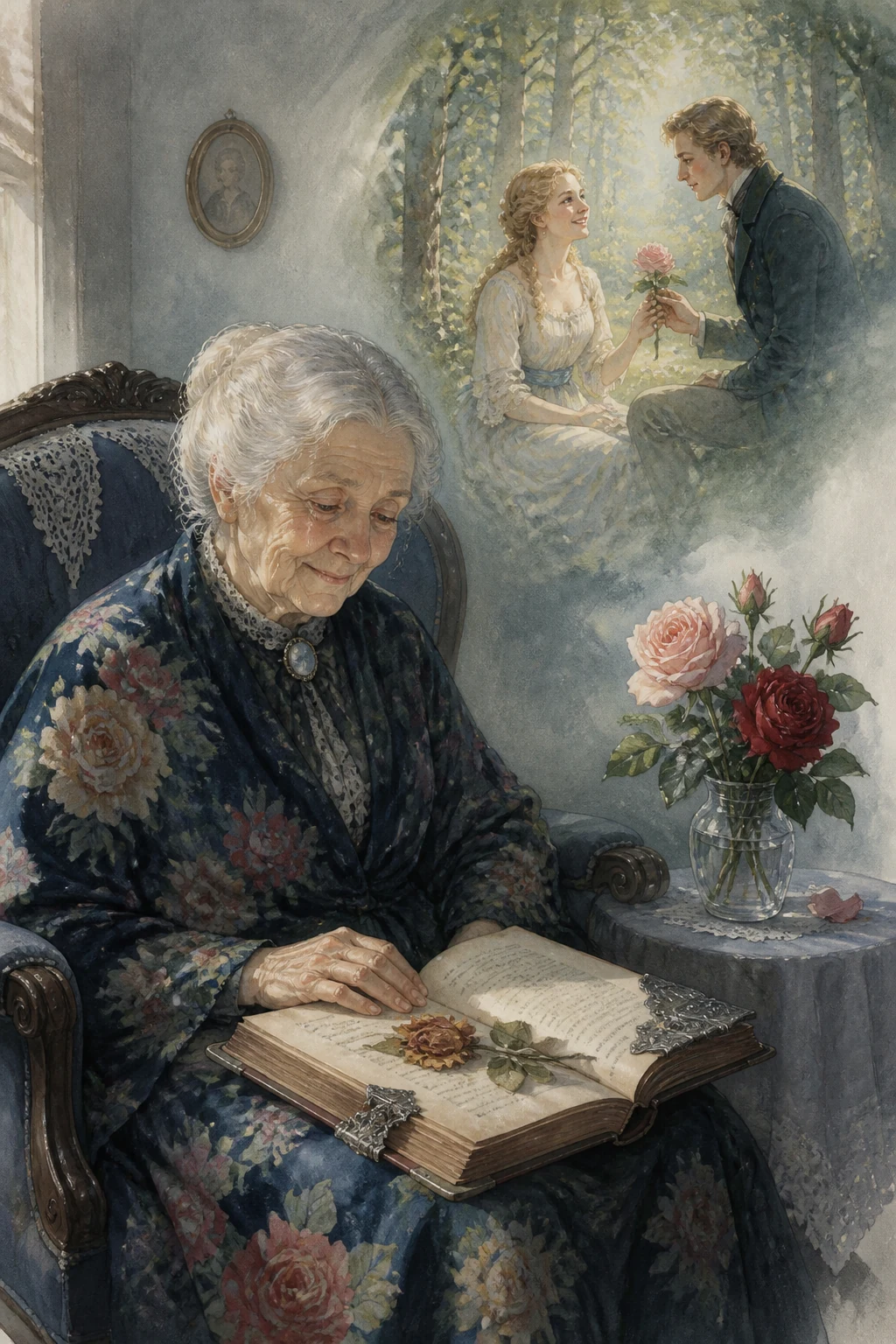
And the nightingale sang himself to death. The camel driver came with his laden camels and his black slaves; his little boy found the dead bird and buried the little singer in the grave of the great Homer; and the rose trembled in the wind. Evening came, and the rose folded her petals more closely and dreamed—that it was a glorious day of sunshine. A company of strangers, Frankish men, arrived; they had made a pilgrimage to Homer’s grave. Among the strangers was a singer from the North, from the home of mists and northern lights; he plucked the rose, pressed her firmly in a book, and carried her away to another part of the world, to his distant homeland. And the rose withered with sorrow and lay confined within the book, which he opened in his home, saying, “Here is a rose from Homer’s grave.”
This was the flower’s dream, and she awoke and shuddered in the wind; a dewdrop fell from her petals onto the singer’s grave, and the sun rose, the day grew hot, and the rose glowed more beautifully than before, there in her warm Asia. Then footsteps sounded; Frankish strangers came, just as the rose had seen them in her dream, and among the strangers was a poet from the North. He plucked the rose, pressed a kiss upon her fresh mouth, and carried her away to the home of mists and northern lights.
Like a mummy, the flower’s dead body now rests in his Iliad, and as though in a dream she hears him open the book and say, “Here is a rose from Homer’s grave!”