Prevod
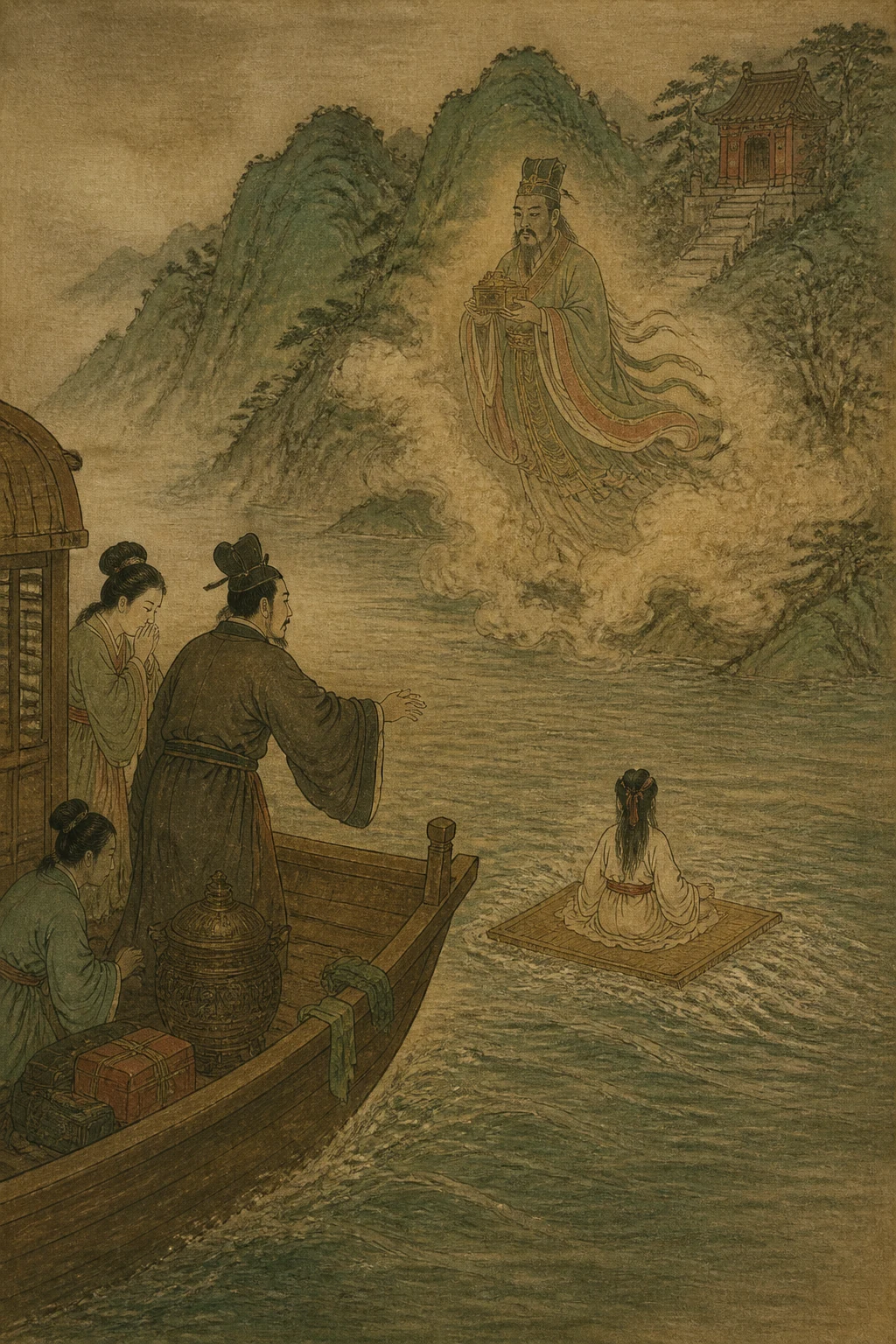
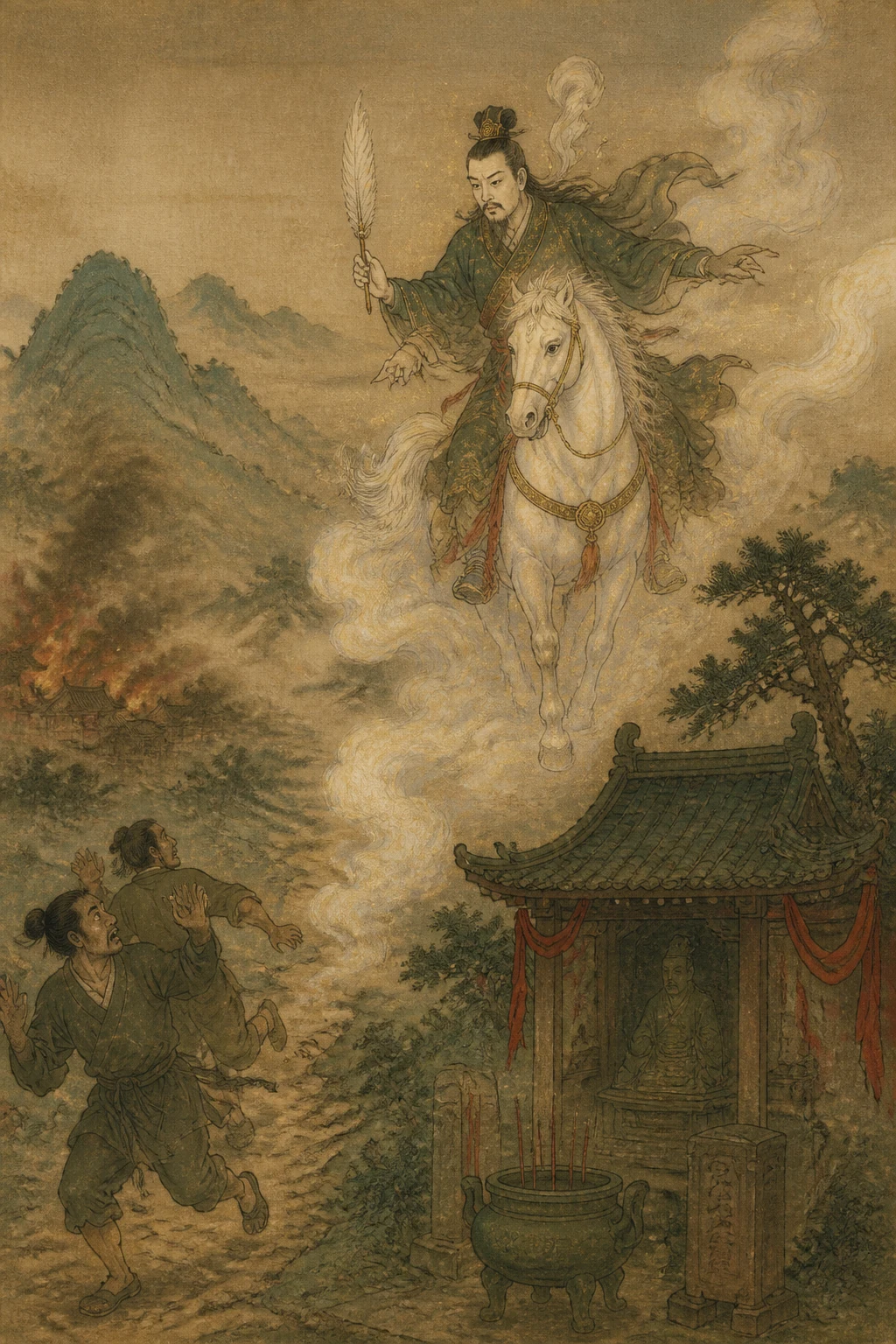
In the second month of the fourth year of Jian’an under the Han, a woman named Li E of Chong County in Wuling died of illness at the age of sixty. She had been buried outside the city for fourteen days. Her neighbor Cai Zhong, hearing that she had been wealthy, supposed there must be gold and precious things in her coffin. He broke into her tomb to steal them and began splitting the coffin open with an axe. After a few blows, E spoke from within: “Cai Zhong! Mind my head!” Zhong fled in terror, but a county officer happened to see him, and he was arrested and brought to trial. By law, he was liable to execution in the marketplace. When E’s son heard that his mother was alive, he came to take her out and brought her home. The governor of Wuling, hearing that E had returned from the dead, summoned her and asked what had happened. E replied, “I learned that the Master of Destinies had summoned me by mistake. When I arrived, I was released. As I passed beyond the western gate, I happened to meet my elder cousin Liu Bowen. Astonished to see me, he asked after me, and we wept together in sorrow. I said, ‘Bowen! I was summoned here by mistake the other day, and now I have been allowed to return. But I do not know the way and cannot travel alone. Can you find me a companion? Besides, I have been here more than ten days since I was summoned, and my family has already buried my body. When I return, how am I to get out?’ Bowen said, ‘I shall inquire for you.’ He at once sent a gate guard to ask the Office of Corpses: ‘The Master of Destinies mistakenly summoned Li E, a woman of Wuling, the other day, and she has now been allowed to return. But she has been here for days, and her body must already have been laid in a coffin and buried. How is she to get out? Moreover, she is a frail woman traveling alone. Should she not have a companion? She is my cousin; please see that suitable arrangements are made for her.’ The reply came: ‘There is a man named Li Hei from the western border of Wuling who has also been allowed to return. He can accompany her. We shall also instruct Hei to visit E’s neighbor Cai Zhong and have him dig her out.’ Thus I was able to get out. As I took leave of Bowen, he said, ‘Here is a letter for you to give my son Tuo.’ Then Hei and I returned together. That is how it happened.” On hearing this, the governor sighed deeply and said, “Truly, the affairs of this world are beyond our understanding.” He submitted a memorial to the throne, arguing: “Although Cai Zhong opened the tomb, he was acting at the command of spirits. Even had he wished not to open it, he could not have avoided doing so. He should therefore be granted clemency.” An imperial edict approved the request. Wishing to test the truth of E’s account, the governor sent a mounted officer to the western border to make inquiries about Li Hei. The man was found, and his account agreed with hers. Bowen’s letter was then delivered to Tuo. Tuo recognized the paper: it was one of the documents in a chest buried with his father at his death. The writing on the outside was still there, but the letter itself could not be deciphered. Fei Changfang was therefore asked to read it. It said: “To Tuo: I am to accompany the Lord Prefect on a tour of inspection of his jurisdiction. At noon on the eighth day of the eighth month, we shall halt beside the stream south of the city of Wuling. Be sure to come then.” On the appointed day, Tuo took the whole family, young and old, to wait south of the city. Before long, the party did indeed arrive, though all they could hear was the faint rumble of men and horses. When it reached the stream, a voice called out: “Tuo, come here! Did you receive the letter I entrusted to Li E?” Tuo answered, “I did, and that is why I have come.” Bowen called each member of the family in turn. For a long while he was overcome with grief. “The dead and the living follow different paths,” he said, “and I can seldom hear news of you. To think that since my death, my children and grandchildren have grown so big!” After a long time, he said to Tuo, “There will be a great epidemic next spring. Take this medicinal pill and smear it on your doors and gates. It will ward off next year’s pestilence.” With that, he suddenly departed. They never once saw his form. The following spring, a great epidemic did indeed strike Wuling, and ghosts were seen even in broad daylight. Only Bowen’s household remained safe: the ghosts dared not approach it. Fei Changfang examined the medicinal pill and said, “This is the brain of a fangxiang.”