Prevod
Dovolite, da vam predstavimo Nicholasa Van Wempla iz Flatbusha: debelega, flegmatičnega, bogatega moža pod ženino copato. Rad bi se opijal, ker je bil pod copato, a žena je držala mošnjo v rokah in mu odmerjala denar le tedaj, kadar je hotela, da nakupi živeža, ali kadar je potreboval obleko. Bil je silvestrski večer pred letom 1739, ko je vrouw Van Wempel svojemu gospodarju izročila deset angleških šilingov in mu velela, naj pohiti k dr. Becku po pitano gos, ki jo je bila naročila. »In glej, da se ne ustaviš v krčmi!« je z najpredirljivejšim glasom zavreščala za njim. A ubogi Nicholas! Ko je racal po cesti in se mu je ob vsakem koraku pod nogami lomila ledena skorja, mu je nagajivi veter — ali pa je bila morda katera izmed prikazni, ki so po splošnem prepričanju strašile ob obalah zaliva Gravesend — snel klobuk z glave in ga prikotalil naravnost pred vrata krčme, ki se je je moral pod grožnjo strašnih kazni ogibati.
Ko se je sklonil, da bi ga pobral, so se vrata priprla in v nosnice mu je udaril oster vonj po žganju in tobaku. Njegova odločnost, če je je sploh kaj premogel, je izpuhtela. Naročil je kozarček žganja; prišli so prijatelji in mu plačali še enega; moral jim je vrniti milo za drago; šiling za šilingom je denar za gos prehajal v krčmarjevo blagajno. Slišali so ga mrmrati, da je denar navsezadnje njegov in da bo, dokler bo živ, sam gospodar v svoji hiši; potem pa je mrmranje vse bolj zamiralo in se nazadnje prelilo v smrčanje. Prebudilo ga je tiho govorjenje v sosednji sobi; zaspano je obrnil glavo in tam zagledal dva tujca — po usnjenih jopičih, črnih bradah in obročkih v ušesih ju je imel za mornarja. Kaj sta rekla? Zlato? Na močvirju? Pri starem plimskem mlinu v Flatlandsu? Govorca sta odšla, še preden so njegovi počasni, zamegljeni možgani lahko vse dojeli, ko pa se mu je misel vendarle dodobra zajedla v zavest, je vstal s tolikšno živahnostjo, kakršne ni pokazal že leta, in zapustil krčmo. Po škripajočem ledu se je vrnil domov in, ker ni bilo nikjer nikogar na spregled, tiho stopil v lopo, vzel lopato in svetilko ter se od tam z vso naglico, kar je je zmogel, odpravil k razpadajočemu plimskemu mlinu na močvirju — za njegove debele noge je bila to v tako mrzli noči naporna pot, a upanje in žganje sta ga gnala naprej.
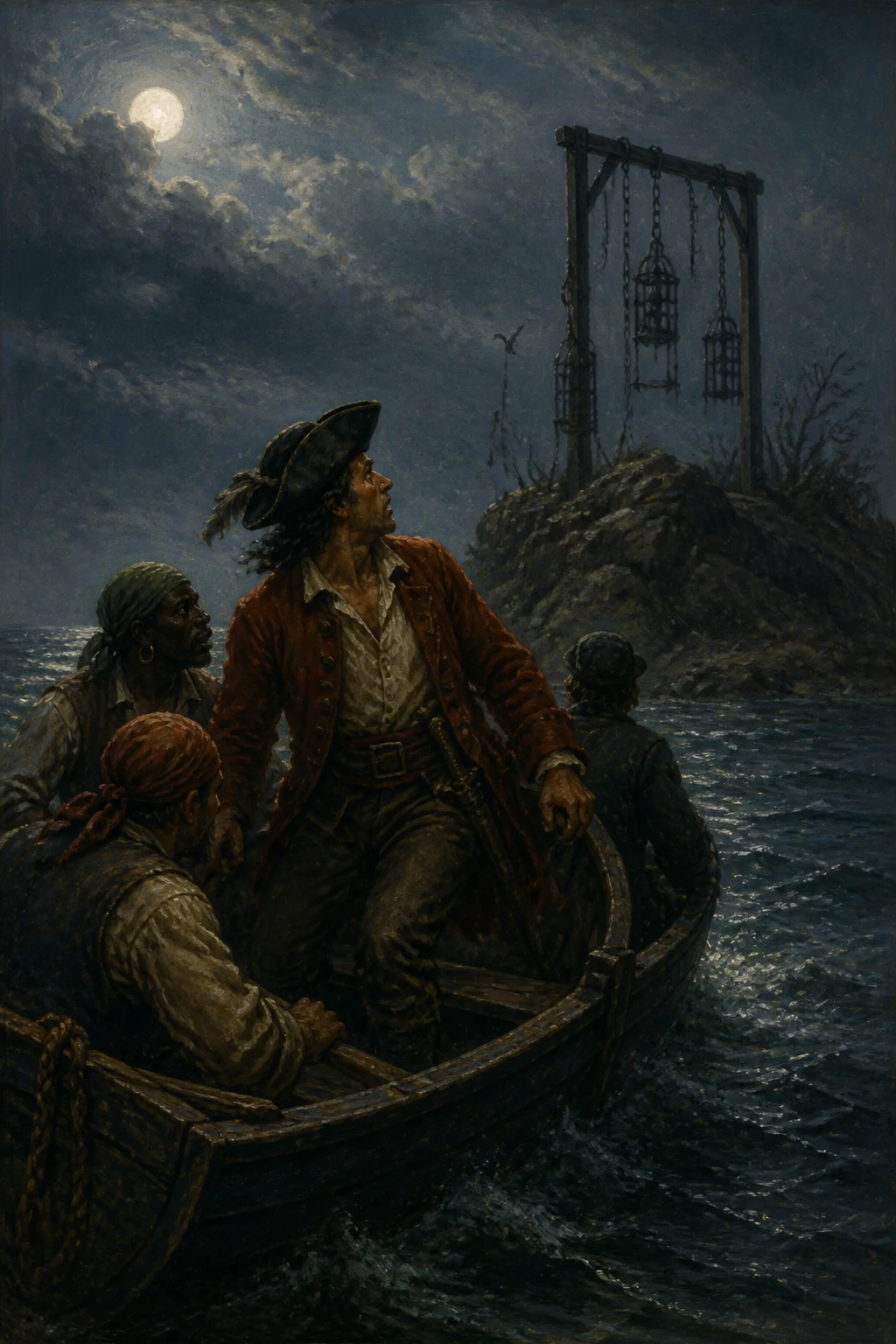
Prispel je do mlina, pohitel v klet in začel z lopato prebadati mehko, nezamrznjeno prst. Kmalu je zadel ob nekaj trdega in kopal je in kopal, dokler ni odkopal vrha platnene vreče — takšne, ki ji mornarji pravijo »okrogla krmna skrinja«. Napeti je moral vse moči, da jo je privlekel iz zemlje, pri tem pa je počil šiv in po tleh se je usul plaz zlatnikov. Razvezal si je hlače v pasu in si z zlatniki polnil hlačnice, ko so nad njim zadoneli koraki in so po stopnicah prišli štirje možje. V dveh je prepoznal tista iz krčme. Zagledali so vrečo, svetilko, nato še Nicholasa. Čeprav je bil tako otovorjen z zlatom, da se je komaj premikal, so ga ti gusarji, kajti prav to so bili, spravili po stopnicah navzgor, ga prisilili, da je z vročim holandskim žganjem nazdravil uspehom njihove zastave, nato pa ga skozi okno zalučali v potok. Tik preden je tako brez vseh ceremonij odletel ven, je v želji, da bi se rešil, nekaj zgrabil; izkazalo se je, da drži oskubljeno gos, ki so jo gusarji ukradli na sosednji kmetiji in jo nameravali povečerjati, ko bi pobrali svoje zlato. Začutil je, kako se nad njim zapirata voda in blato; obupano se je otepal; zavedel se je, da laže diha in da z urnimi, opotekavimi koraki odhaja proč; potem pa mu je, kakor je kazalo, vse popito žganje naenkrat udarilo v glavo in ničesar več se ni spominjal, dokler mu ni v ušesih zazvenelo ženino vreščanje. Tedaj se je vzravnal in ugotovil, da sedi v snežnem zametu blizu doma, v rokah pa trdno stiska oskubljeno gos.
Vrouw Van Wempel se je manj menila za moževo stanje, ko je videla, da je le prinesel gos, in kadar koli ji je pripovedoval svojo zgodbo o gusarjih, je zatisnila ušesa: če je res našel zlato, zakaj mu ni uspelo prinesti domov vsaj nekaj zlatnikov? On pa jo je v odgovor spraševal, od kod bi sicer dobila gos, ko vendar ni imel nič svojega denarja. Svojo zgodbo je pogosto pripovedoval sočutnim poslušalcem in jim kazal stari mlin v dokaz, da je resnična.