Waltey
Druščina z Otoka vislic
049 The Party from Gibbet Island
Myths and Legends of Our Own Land · Charles M. SkinnerO besedilu
Druščina z Otoka vislic
- Vir
- Myths and Legends of Our Own Land
- Avtor
- Charles M. Skinner
- Jezik branja
- Slovenščina
- Jezik izvirnika
- English
- Čas branja
- 4 min branja
- Obseg
- 3 strani
- Naslov izvirnika
- 049 The Party from Gibbet Island
O izvirniku
Myths and Legends of Our Own Land
Obsežna zgodovinska zbirka ameriških legend, ki jih je Skinner zbral in avtorsko rekonstruiral. Bralni jezik je Slovenščina, izvirnik pa prihaja iz vira Myths and Legends of Our Own Land v jeziku English.
Besedilo
Druščina z Otoka vislic
Otok Ellis v newyorškem pristanišču se je nekoč imenoval Otok vislic, saj so tam pirate in upornike obešali v verigah. V času, ko je služil temu zloveščemu namenu, je v Communipawu stala krčma Divja gos, kamor so zahajali nizozemski meščani, da bi kadili, pili holandski gin ter se v družbi drug drugega redili, modrovali in dremali. Nadloga te krčme je bil Yan Yost Vanderscamp, krčmarjev nečak, ki je goste pogosto spravljal v strah, tako da jim je v pipe natresal smodnik in njihovim konjem pod repe privezoval trnje. Ko je odrasel, je seveda postal pirat in s seboj na morje odpeljal svojega pivskega pajdaša, zlobnega in neuglednega črnca po imenu Pluto, ki je dotlej opravljal razna dela v krčmi. Ko je krčmar umrl, si je Vanderscamp prilastil njegovo posest, jo opremil z naropanim blagom in občasno pripeljal svojo tolpo na kopno — takšne druščine pojočih, preklinjajočih, popivajočih in kockajočih vragov Communipaw še ni videl; vendar vaščani niso premogli dovolj zagnanosti, da bi naredili konec razgrajanju, zaradi katerega je bila Divja gos v sramoto njihovi vasi. Britanske oblasti pa so ujele tri od teh razbojnikov in jih obesile na Otoku vislic; odtlej so se nečednosti v Communipawu dogajale potihem in na skrivaj.
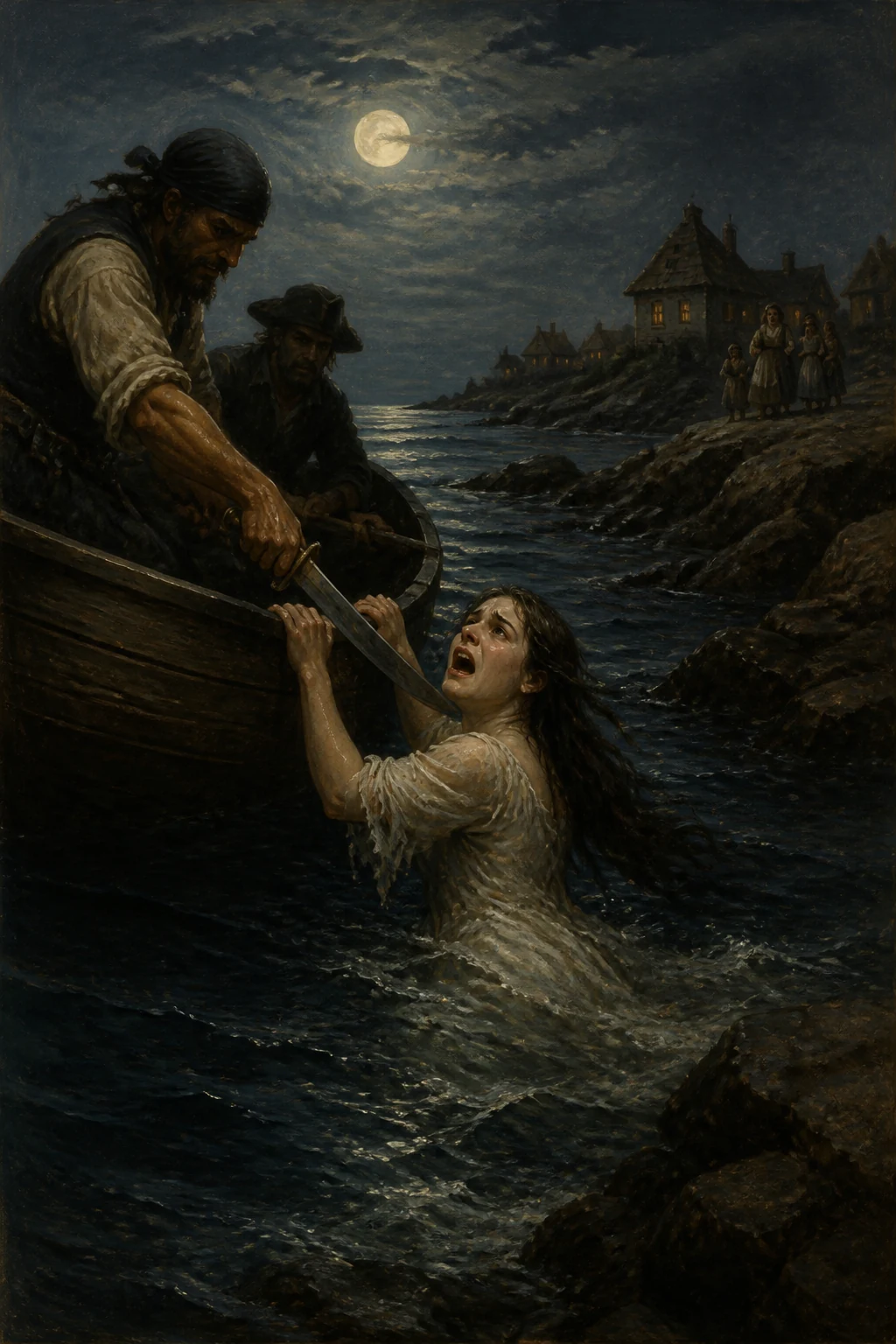
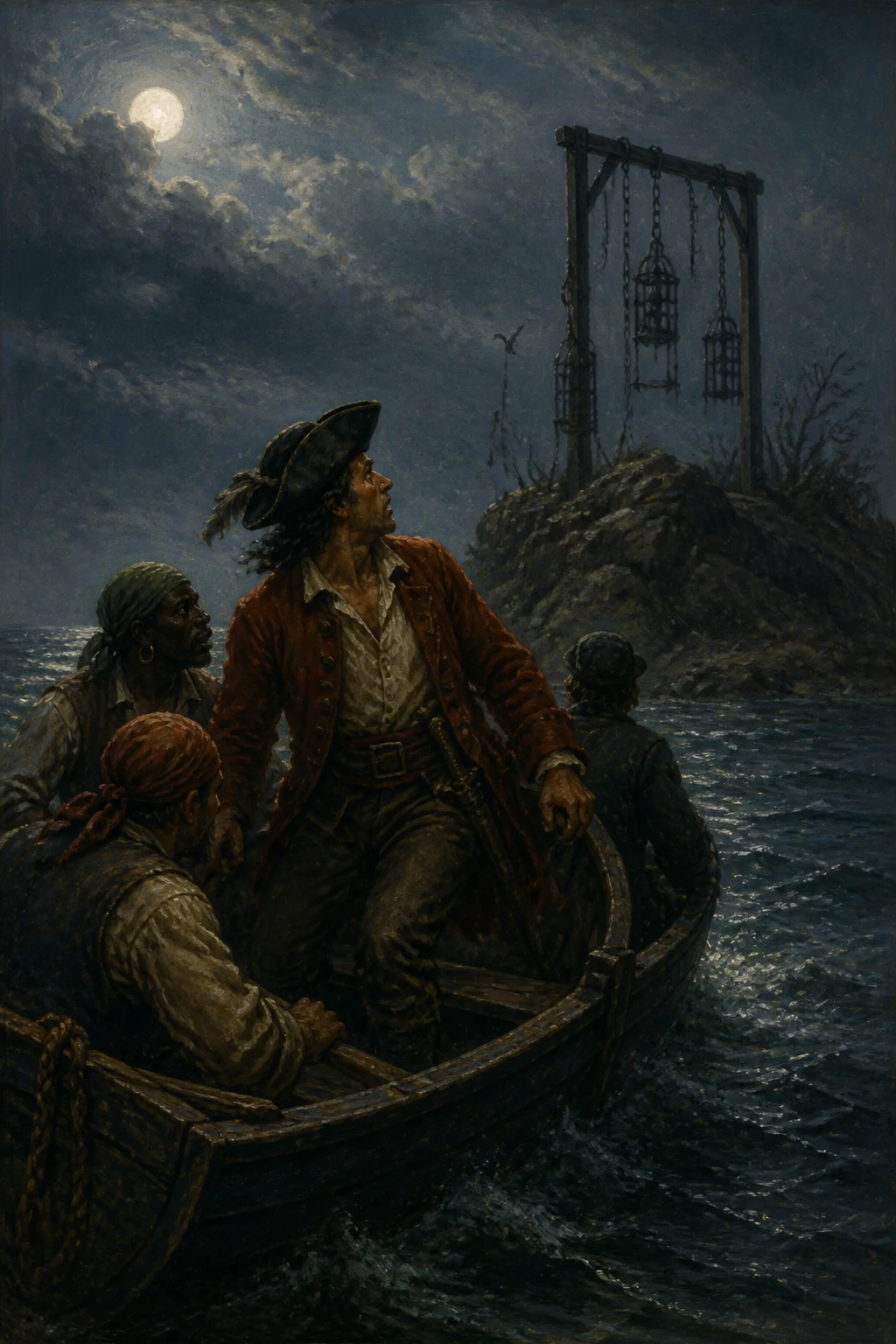
Neke noči so se pirat in njegovi pajdaši po obisku ladje razbojniškega videza, zasidrane na odprtem morju, vračali v krčmo, ko je udaril tako silovit sunek vetra, da je njihov čolnič zaneslo proti morišču. Ko so pluli okoli tiste samotne čeri, je Vanderscamp nad seboj zaslišal škripanje in pogledal navzgor; ni mogel zatreti srha, ko je zagledal trupla svojih treh tovarišev, katerih cunje so plapolale, verige pa škrtale v vetru.
»Mar nočeš videti svojih prijateljev?« se je posmehnil Pluto. »Ti, ki se nikoli ne bojiš živih ljudi — česa te je strah pri mrtvih?« »Ničesar,« je odgovoril pirat. Nato je privlekel na plan steklenico, napravil dolg požirek in jo pomolil proti mrtvim zločincem ter zavpil: »Na lepo vreme, fantje moji v vetru! In če boste nocoj hodili naokrog, pridite na večerjo.«
Ropot kosti in škripanje verig sta zazvenela kakor smeh. Bila je polnoč, ko je čoln pristal v Communipawu, in ker je neurje še kar divjalo, je Vanderscamp, premočen do kože, pohitel v Divjo gos. Ko je vstopil, mu je iz nadstropja v uho udaril hrup veseljačenja; prav tako začuden, kot je bil potreben krepčilne pijače, je planil po stopnicah in sunkovito odprl vrata. Tam je stala miza, obložena z vrči, pipami in bokali, in v soju sveč, ki so gorele tako modro kakor žveplo, je bilo videti tri obešence z Otoka vislic, z zankami okoli vratu, kako trkajo z bokali in na ves glas prepevajo pivsko pesem.
Ko so ga trupla pozdravila z dvignjenimi rokami in vanj uprla svoje ribje oči, je Vanderscamp prestrašeno odskočil, pri vratih mu je spodrsnilo in z glavo naprej je zgrmel na dno stopnic. Naslednje jutro so ga tam našli sosedje, nedvomno mrtvega, in naslednjo nedeljo so ga pokopali na nizozemskem cerkvenem pokopališču v Bergnu. Ker so prebivalci hišo izropali in zapustili, se je šušljalo, da je črnec svojega gospodarja izdal njegovim piratskim pajdašem in da Pluto ni bil nihče drug kot preoblečen hudič. A ni bilo tako, kajti kmalu zatem so v zalivu opazili njegov čolnič, ki je plaval s kobilico navzgor, njegovo utopljeno truplo pa je obtičalo med skalami ob vznožju piratskih vislic.
Še dolgo zatem je otok veljal za kraj, ki bi ga bilo treba očistiti z zvonom, knjigo in svečo, saj so ljudje poročali o sencah in medlih lučeh, ki so švigale v zrak. Še dandanes, ko na njem stoji velika priseljenska postaja in množice ljudi nenehno prihajajo in odhajajo, se čolnarji z Batteryja ponoči raje ne vozijo okoli njega, kajti utegnili bi zagledati prikazni vojaka in njegove ljubice, ki sta se neke vetrovne noči utopila ob otoku, ko je dekle svojemu dragemu pomagalo pobegniti iz zapora v stražarnici — da o Vanderscampu in njegovih zločincih niti ne govorimo.
Izvirnik
049 The Party from Gibbet Island
Naslednje strani prikazujejo izvirno besedilo za primerjavo.
Ellis Island, in New York harbor, once bore the name of Gibbet Island, because pirates and mutineers were hanged there in chains. During the times when it was devoted to this fell purpose there stood in Communipaw the Wild Goose tavern, where Dutch burghers resorted, to smoke, drink Hollands, and grow fat, wise, and sleepy in each others' company. The plague of this inn was Yan Yost Vanderscamp, a nephew of the landlord, who frequently alarmed the patrons of the house by putting powder into their pipes and attaching briers beneath their horses' tails, and who naturally turned pirate when he became older, taking with him to sea his boon companion, an ill-disposed, ill-favored blackamoor named Pluto, who had been employed about the tavern. When the landlord died, Vanderscamp possessed himself of this property, fitted it up with plunder, and at intervals he had his gang ashore,--such a crew of singing, swearing, drinking, gaming devils as Communipaw had never seen the like of; yet the residents could not summon activity enough to stop the goings-on that made the Wild Goose a disgrace to their village. The British authorities, however, caught three of the swashbucklers and strung them up on Gibbet Island, and things that went on badly in Communipaw after that went on with quiet and secrecy.
The pirate and his henchmen were returning to the tavern one night, after a visit to a rakish-looking vessel in the offing, when a squall broke in such force as to give their skiff a leeway to the place of executions. As they rounded that lonely reef a creaking noise overhead caused Vanderscamp to look up, and he could not repress a shudder as he saw the bodies of his three messmates, their rags fluttering and their chains grinding in the wind.
“Don't you want to see your friends?” sneered Pluto. “You, who are never afraid of living men, what do you fear from the dead?”
“Nothing,” answered the pirate. Then, lugging forth his bottle, he took a long pull at it, and holding it toward the dead felons, he shouted, “Here's fair weather to you, my lads in the wind, and if you should be walking the rounds to-night, come in to supper.”
A clatter of bones and a creak of chains sounded like a laugh. It was midnight when the boat pulled in at Communipaw, and as the storm continued Vanderscamp, drenched to the skin, made quick time to the Wild Goose. As he entered, a sound of revelry overhead smote his ear, and, being no less astonished than in need of cordials, he hastened up-stairs and flung open the door. A table stood there, furnished with jugs and pipes and cans, and by light of candles that burned as blue as brimstone could be seen the three gallows-birds from Gibbet Island, with halters on their necks, clinking their tankards together and trolling forth a drinking-song.
Starting back with affright as the corpses hailed him with lifted arms and turned their fishy eyes on him, Vanderscamp slipped at the door and fell headlong to the bottom of the stairs. Next morning he was found there by the neighbors, dead to a certainty, and was put away in the Dutch churchyard at Bergen on the Sunday following. As the house was rifled and deserted by its occupants, it was hinted that the negro had betrayed his master to his fellow-buccaneers, and that he, Pluto, was no other than the devil in disguise. But he was not, for his skiff was seen floating bottom up in the bay soon after, and his drowned body lodged among the rocks at the foot of the pirates' gallows.
For a long time afterwards the island was regarded as a place that required purging with bell, book, and candle, for shadows were reported there and faint lights that shot into the air, and to this day, with the great immigrant station on it and crowds going and coming all the time, the Battery boatmen prefer not to row around it at night, for they are likely to see the shades of the soldier and his mistress who were drowned off the place one windy night, when the girl was aiding the fellow to escape confinement in the guard-house, to say nothing of Vanderscamp and his felons.
Nadaljuj z branjem