O besedilu
Sedmerica proti Tebam
- Vir
- Apolodorjeva knjižnica
- Avtor
- Apolodor
- Jezik branja
- English
- Jezik izvirnika
- Ancient Greek
- Čas branja
- 7 min branja
- Obseg
- 6 strani
- Naslov izvirnika
- Book 3 chapter 6
O izvirniku
Apolodorjeva knjižnica
Strnjen zemljevid grških mitov, rodov, junakov in pošasti. Bralni jezik je English, izvirnik pa prihaja iz vira Apolodorjeva knjižnica v jeziku Ancient Greek.
Besedilo
Sedmerica proti Tebam
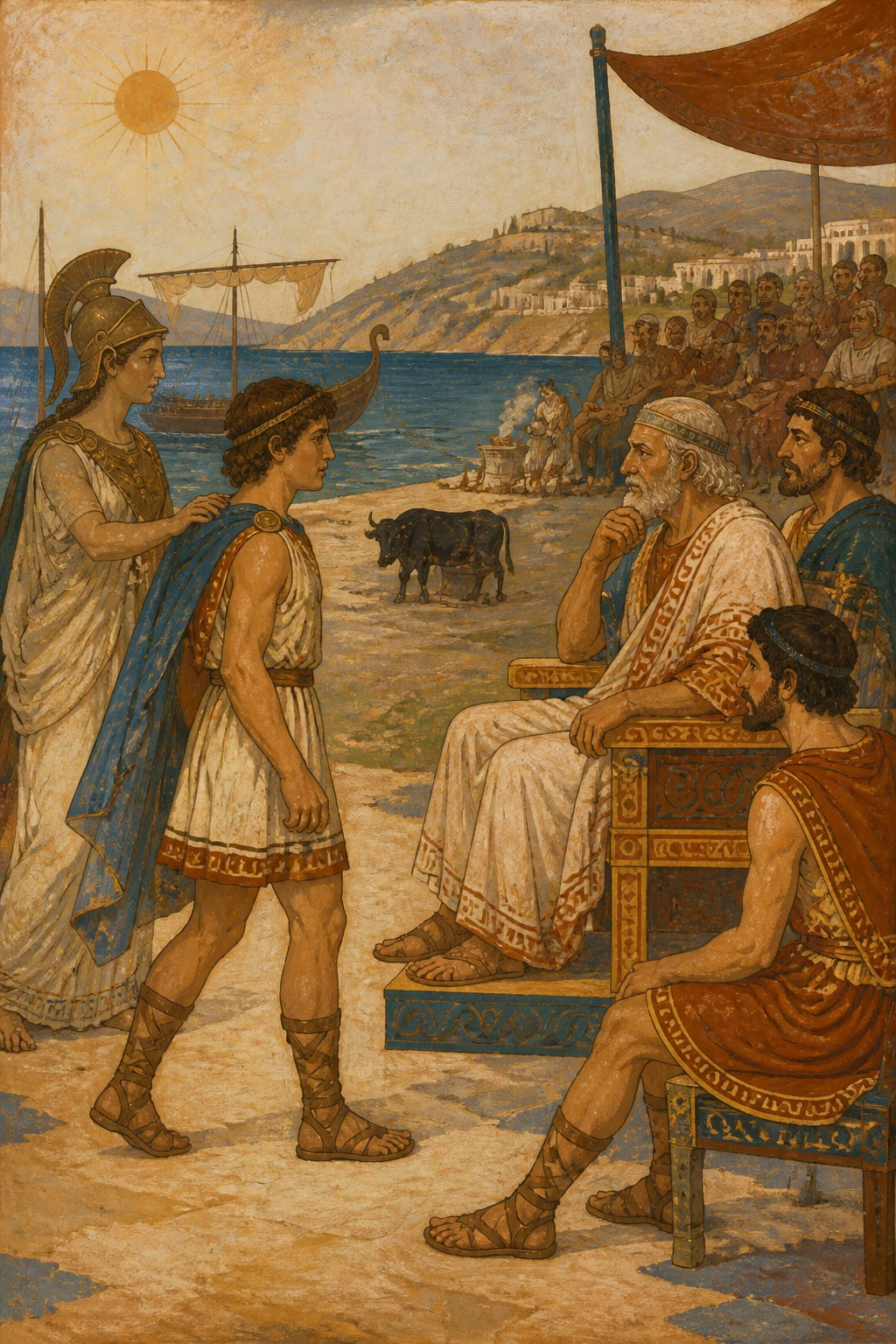
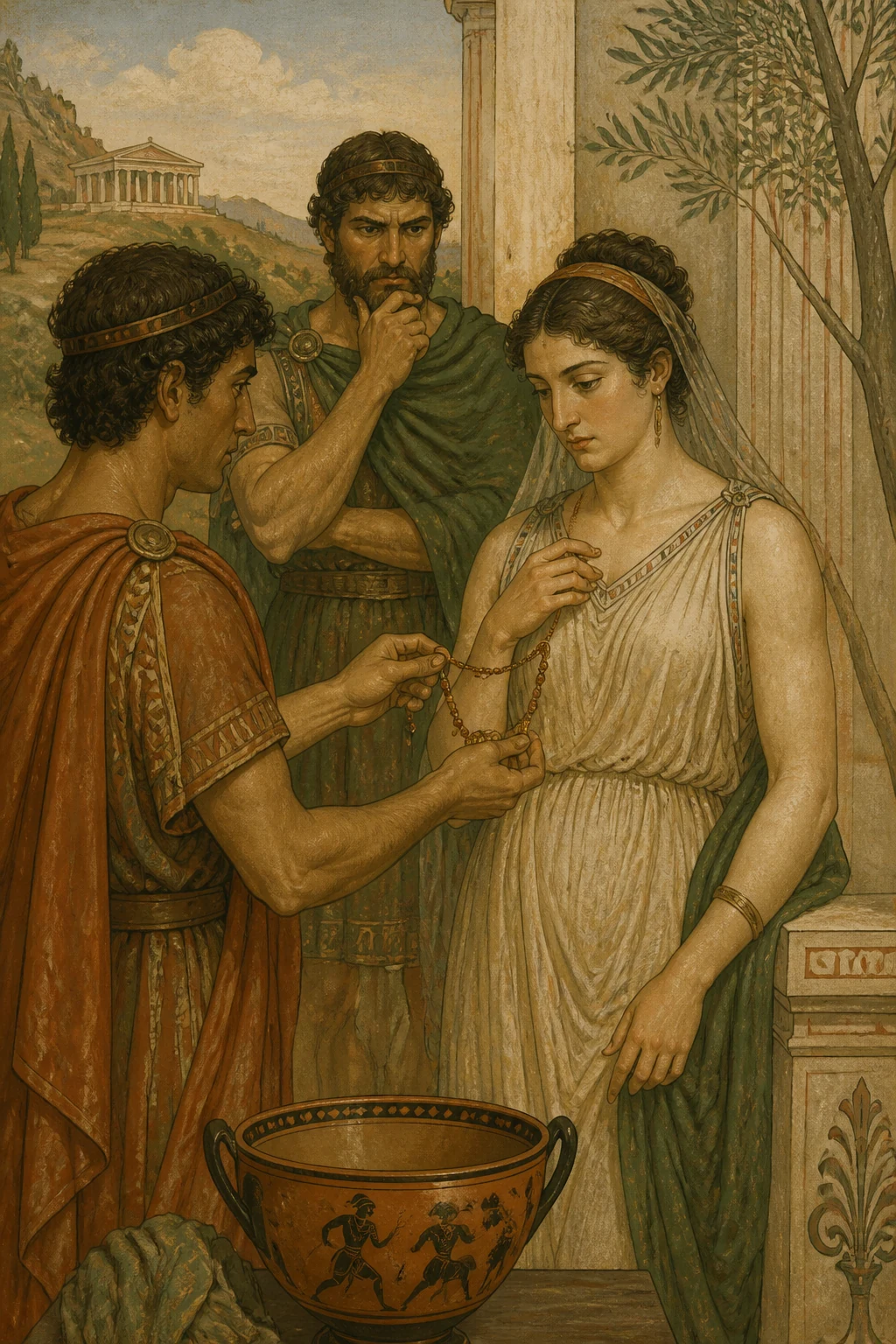
1. Eteocles and Polynices made an agreement about the kingship, deciding that each should rule for a year in turn. Some say that Polynices ruled first and handed over the kingdom to Eteocles after a year; others, that Eteocles ruled first and refused to surrender the throne. Driven into exile from Thebes, Polynices came to Argos, bringing the necklace and the robe with him. Adrastus, son of Talaus, was then king of Argos. Polynices approached his palace at night and fell into a fight with Tydeus, son of Oeneus, who was fleeing from Calydon. Hearing the sudden uproar, Adrastus came out and parted them. Recalling a seer’s prophecy that he should marry his daughters to a boar and a lion, he chose the two men as his sons-in-law, for one bore the forequarters of a boar on his shield, and the other those of a lion. Tydeus married Deipyle, and Polynices married Argia; Adrastus promised to restore both men to their homelands.
He was eager to march against Thebes first, and began gathering the leading warriors.
2. But Amphiaraus, son of Oicles, was a seer and knew beforehand that all who joined the expedition, except Adrastus, were destined to die. He therefore hesitated to take part himself and tried to dissuade the others. Polynices went to Iphis, son of Alector, and asked how Amphiaraus could be compelled to join the expedition. Iphis replied that this could be done if Eriphyle received the necklace. Amphiaraus accordingly forbade Eriphyle to accept gifts from Polynices, but Polynices gave her the necklace and asked her to persuade Amphiaraus to march. The decision lay with her: after a quarrel with Adrastus, Amphiaraus had made peace with him and sworn to let Eriphyle judge any future dispute between them. Thus, when the time came to march against Thebes, Adrastus urged the expedition while Amphiaraus opposed it; but Eriphyle, having received the necklace, persuaded him to march with Adrastus. Forced to take part, Amphiaraus instructed his sons to kill their mother when they came of age and to march against Thebes.
3. Adrastus assembled an army with seven commanders and hastened to make war on Thebes. The commanders were these: Adrastus, son of Talaus; Amphiaraus, son of Oicles; Capaneus, son of Hipponous; and Hippomedon, son of Aristomachus, or, according to some, of Talaus. These were from Argos. There were also Polynices, son of Oedipus, from Thebes; Tydeus, son of Oeneus, an Aetolian; and Parthenopaeus, son of Melanion, an Arcadian. Some, however, do not count Tydeus and Polynices among the seven, but include Eteoclus, son of Iphis, and Mecisteus instead.
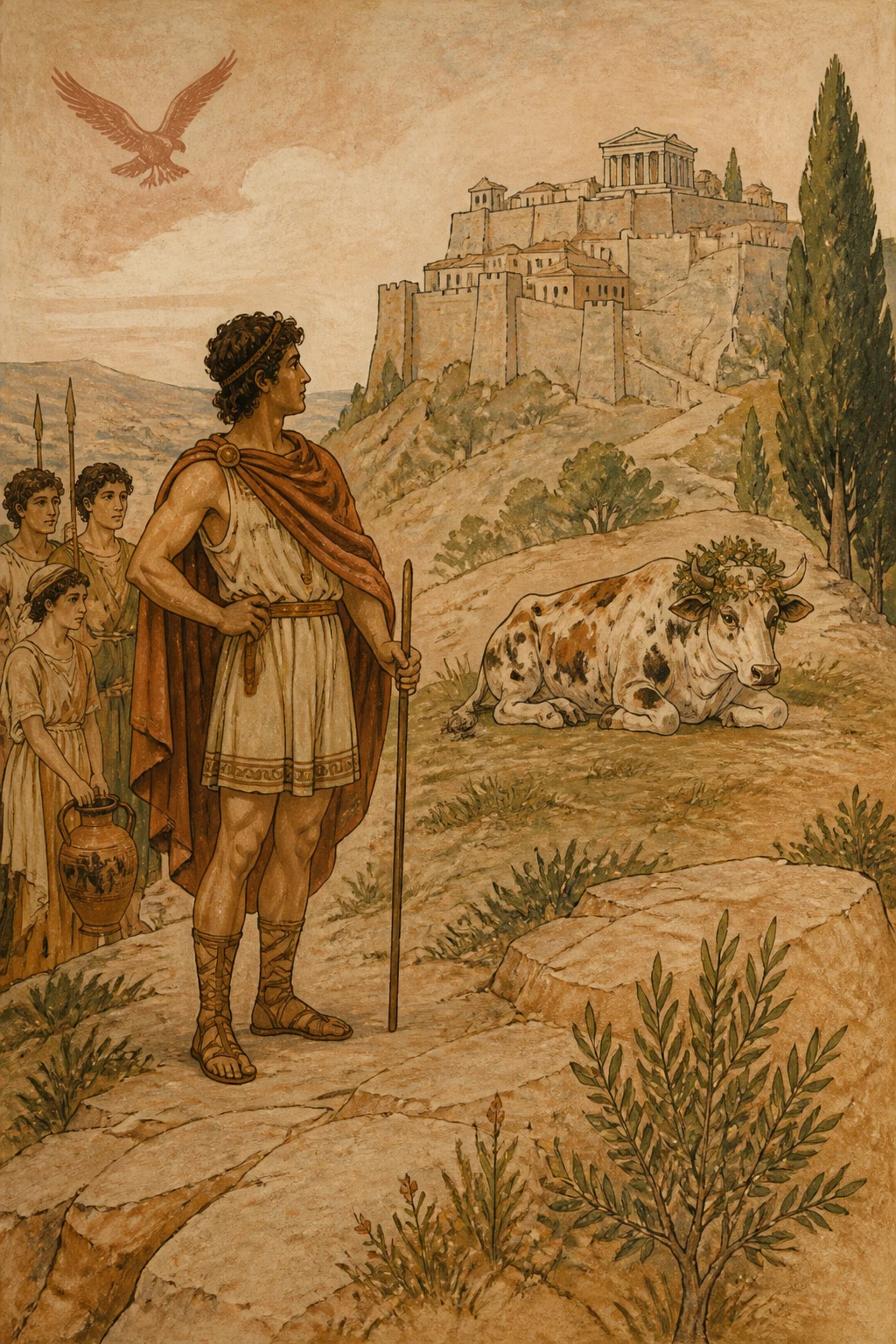
4. When they reached Nemea, where Lycurgus was king, they searched for water. Hypsipyle guided them to a spring, leaving behind the infant Opheltes, the son of Eurydice and Lycurgus, whom she was nursing. For when the women of Lemnos later discovered that Thoas had been spared, they killed him and sold Hypsipyle; thus she had been bought and was serving in the household of Lycurgus. While she was showing them the spring, the child she had left behind was killed by a serpent. Adrastus and his companions came upon the serpent and killed it, then buried the child.
Amphiaraus told them that this omen foretold what was to come, and they named the child Archemorus. They established the Nemean Games in his honor. Adrastus won the horse race, Eteoclus the foot race, Tydeus the boxing, Amphiaraus the jumping and discus, Laodocus the javelin, Polynices the wrestling, and Parthenopaeus the archery.
5. When they reached Cithaeron, they sent Tydeus ahead to tell Eteocles to surrender the kingship to Polynices, as they had agreed. Eteocles paid no heed, so Tydeus put the Thebans to the test, challenging them one by one and defeating them all. They then armed fifty men and laid an ambush for him as he departed. But he killed them all except Maeon, and afterward returned to the camp.
6. The Argives armed themselves and advanced upon the walls. There were seven gates: Adrastus took his station at the Homoloid Gates, Capaneus at the Ogygian Gates, Amphiaraus at the Proetid Gates, Hippomedon at the Oncaid Gates, Polynices at the Highest Gates, Parthenopaeus at the Electran Gates, and Tydeus at the Crenid Gates. Eteocles likewise armed the Thebans, appointed an equal number of commanders to face them, and sought an oracle on how they might overcome their enemies.
7. Among the Thebans was the seer Tiresias, son of Everes and the nymph Chariclo, descended from Udaeus, one of the Sown Men. He had lost his sight, and various stories are told about his blindness and his gift of prophecy.
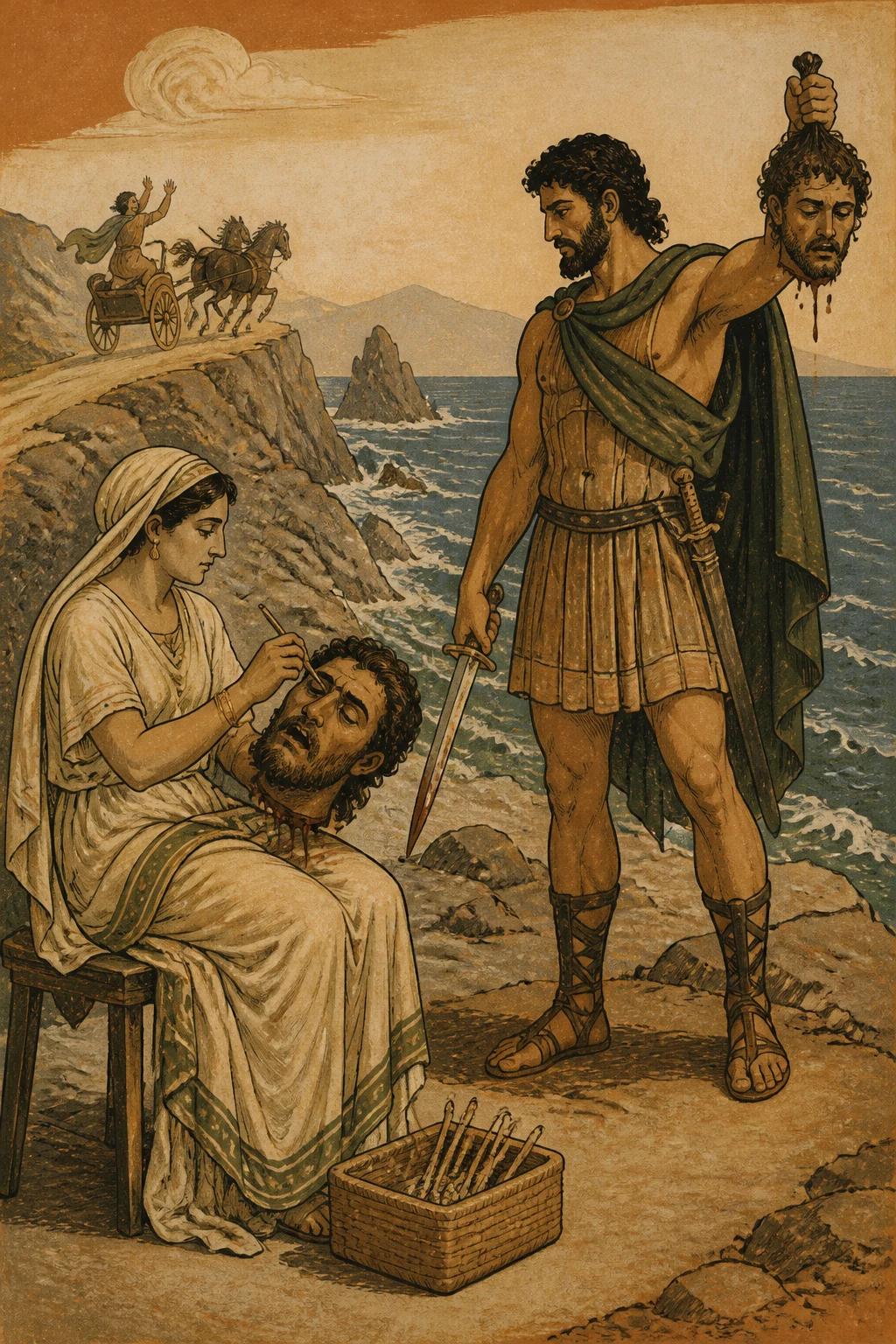
Some say that the gods blinded him because he revealed to mortals what they wished to keep secret. Pherecydes, however, says that Athena blinded him: Chariclo was dear to Athena, and Tiresias saw the goddess wholly naked; she covered his eyes with her hands and blinded him. When Chariclo begged her to restore his sight, Athena could not do so, but she sharpened his hearing so that he could understand every bird’s cry, and gave him a staff of cornel wood, with which he could walk as well as those who could see. Hesiod says that he saw snakes mating near Cyllene and wounded them, whereupon he was changed from a man into a woman; later, when he again saw the same snakes mating, he became a man once more. So when Hera and Zeus disputed whether women or men took greater pleasure in lovemaking, they questioned him. He said that, of the ten shares of pleasure in lovemaking, men enjoyed one and women nine. For this Hera blinded him, but Zeus gave him the gift of prophecy. These were the words Tiresias spoke to Zeus and Hera: “Of ten shares, a man delights in one alone; a woman fills her heart with the delight of all ten.” He also lived to a great age. When the Thebans consulted him, he said that they would win if Menoeceus, son of Creon, offered himself as a sacrifice to Ares. On hearing this, Menoeceus, son of Creon, slew himself before the gates. When battle was joined, the Cadmeans were driven back to their walls. Capaneus seized a ladder and was climbing it to scale the walls when Zeus struck him with a thunderbolt.
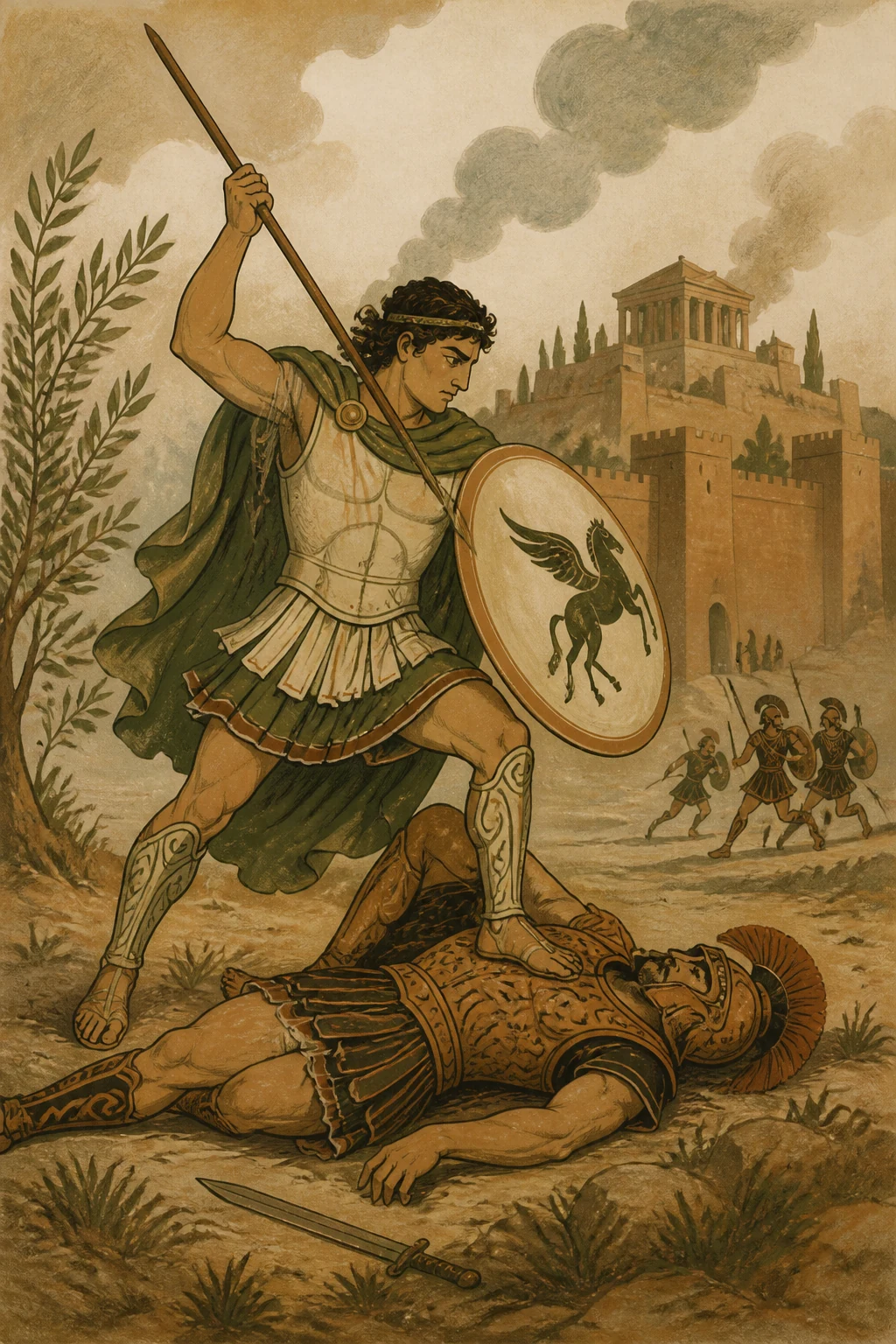
8. At this, the Argives turned and fled. As many men were being killed, both armies agreed that Eteocles and Polynices should fight in single combat for the kingship, and the brothers killed each other. Fierce fighting broke out again, and the sons of Astacus distinguished themselves: Ismarus killed Hippomedon, Leades killed Eteoclus, and Amphidicus killed Parthenopaeus. According to Euripides, however, Parthenopaeus was killed by Periclymenus, son of Poseidon. Melanippus, the remaining son of Astacus, wounded Tydeus in the belly. As Tydeus lay half dead, Athena obtained a remedy from Zeus and brought it to him, intending to make him immortal. But Amphiaraus learned of this. He hated Tydeus because, against his advice, Tydeus had persuaded the Argives to march against Thebes; so he cut off the head of Melanippus and gave it to him—for Tydeus, though wounded, had killed Melanippus. Tydeus split the head open and gulped down the brains. When Athena saw this, she recoiled in disgust and withheld the gift she had intended for him. As Amphiaraus fled beside the river Ismenus, before Periclymenus could wound him in the back, Zeus hurled a thunderbolt and split the earth apart. Amphiaraus vanished into it with his chariot and his charioteer Baton—or, as some say, Elaton—and Zeus made him immortal. Adrastus alone was saved by his horse Arion, whom Demeter had borne to Poseidon, having taken the form of a Fury when they coupled.
Izvirnik
Book 3 chapter 6
Naslednje strani prikazujejo izvirno besedilo za primerjavo.
Source ID: apollodorus_bib_3_6 Citation: Apollodorus, Bibliotheca 3.6 1. Ἐτεοκλῆς δὲ καὶ Πολυνείκης περὶ τῆς βασιλείας συντίθενται πρὸς ἀλλήλους, καὶ αὐτοῖς δοκεῖ τὸν ἕτερον παρʼ ἐνιαυτὸν ἄρχειν. τινὲς μὲν οὖν λέγουσι πρῶτον ἄρξαντα Πολυνείκη παραδοῦναι μετʼ ἐνιαυτὸν τὴν βασιλείαν Ἐτεοκλεῖ, τινὲς δὲ πρῶτον Ἐτεοκλέα ἄρξαντα μὴ βούλεσθαι παραδοῦναι τὴν βασιλείαν. φυγαδευθεὶς οὖν Πολυνείκης ἐκ Θηβῶν ἧκεν εἰς Ἄργος, τόν τε ὅρμον καὶ τὸν πέπλον ἔχων. ἐβασίλευε δὲ Ἄργους Ἄδραστος ὁ Ταλαοῦ· καὶ τοῖς τούτου βασιλείοις νύκτωρ προσπελάζει, καὶ συνάπτει μάχην Τυδεῖ τῷ Οἰνέως φεύγοντι Καλυδῶνα. γενομένης δὲ ἐξαίφνης βοῆς ἐπιφανεὶς Ἄδραστος διέλυσεν αὐτούς, καὶ μάντεώς τινος ὑπομνησθεὶς λέγοντος αὐτῷ κάπρῳ καὶ λέοντι συζεῦξαι τὰς θυγατέρας, ἀμφοτέρους εἵλετο νυμφίους· εἶχον γὰρ ἐπὶ τῶν ἀσπίδων ὁ μὲν
κάπρου προτομὴν ὁ δὲ λέοντος. γαμεῖ δὲ Δηιπύλην μὲν Τυδεὺς Ἀργείην δὲ Πολυνείκης, καὶ αὐτοὺς Ἄδραστος ἀμφοτέρους εἰς τὰς πατρίδας ὑπέσχετο κατάξειν. καὶ πρῶτον ἐπὶ Θήβας ἔσπευδε στρατεύεσθαι, καὶ τοὺς ἀριστέας συνήθροιζεν. 2. Ἀμφιάραος δὲ ὁ Ὀικλέους, μάντις ὢν καὶ προειδὼς ὅτι δεῖ πάντας τοὺς στρατευσαμένους χωρὶς Ἀδράστου τελευτῆσαι, αὐτός τε ὤκνει στρατεύεσθαι καὶ τοὺς λοιποὺς ἀπέτρεπε. Πολυνείκης δὲ ἀφικόμενος πρὸς Ἶφιν τὸν Ἀλέκτορος ἠξίου μαθεῖν πῶς ἂν Ἀμφιάραος ἀναγκασθείη στρατεύεσθαι· ὁ δὲ εἶπεν εἰ λάβοι τὸν ὅρμον Ἐριφύλη. Ἀμφιάραος μὲν οὖν ἀπεῖπεν Ἐριφύλῃ παρὰ Πολυνείκους δῶρα λαμβάνειν, Πολυνείκης δὲ δοὺς αὐτῇ τὸν ὅρμον ἠξίου τὸν Ἀμφιάραον πεῖσαι στρατεύειν. ἦν γὰρ ἐπὶ ταύτῃ· γενομένης γὰρ †αὐτῆς πρὸς Ἄδραστον, διαλυσάμενος ὤμοσε, περὶ
ὧν ἂν Ἀδράστῳ διαφέρηται, διακρίνειν Ἐριφύλῃ συγχωρῆσαι. ὅτε οὖν ἐπὶ Θήβας ἔδει στρατεύειν, Ἀδράστου μὲν παρακαλοῦντος Ἀμφιαράου δὲ ἀποτρέποντος, Ἐριφύλη τὸν ὅρμον λαβοῦσα ἔπεισεν αὐτὸν σὺν Ἀδράστῳ στρατεύειν. Ἀμφιάραος δὲ ἀνάγκην ἔχων στρατεύεσθαι τοῖς παισὶν ἐντολὰς ἔδωκε τελειωθεῖσι τήν τε μητέρα κτείνειν καὶ ἐπὶ Θήβας στρατεύειν. 3. Ἄδραστος δὲ συναθροίσας στρατὸν σὺν ἡγεμόσιν ἑπτὰ πολεμεῖν ἔσπευδε Θήβας. οἱ δὲ ἡγεμόνες ἦσαν οἵδε· Ἄδραστος Ταλαοῦ, Ἀμφιάραος Ὀικλέους, Καπανεὺς Ἱππονόου, Ἱππομέδων Ἀριστομάχου, οἱ δὲ λέγουσι Ταλαοῦ. οὗτοι μὲν ἐξ Ἄργους, Πολυνείκης δὲ Οἰδίποδος ἐκ Θηβῶν, Τυδεὺς Οἰνέως Αἰτωλός, Παρθενοπαῖος Μελανίωνος Ἀρκάς. τινὲς δὲ Τυδέα μὲν καὶ Πολυνείκην οὐ καταριθμοῦσι, συγκαταλέγουσι δὲ τοῖς ἑπτὰ Ἐτέοκλον Ἴφιος καὶ
Μηκιστέα. 4. παραγενόμενοι δὲ εἰς Νεμέαν, ἧς ἐβασίλευε Λυκοῦργος, ἐζήτουν ὕδωρ. καὶ αὐτοῖς ἡγήσατο τῆς ἐπὶ κρήνην ὁδοῦ Ὑψιπύλη, νήπιον παῖδα ὄντα Ὀφέλτην ἀπολιποῦσα, ὃν ἔτρεφεν Εὐρυδίκης ὄντα καὶ Λυκούργου. αἰσθόμεναι γὰρ αἱ Λήμνιαι ὕστερον Θόαντα σεσωσμένον ἐκεῖνον μὲν ἔκτειναν, τὴν δὲ Ὑψιπύλην ἀπημπόλησαν· διὸ πραθεῖσα ἐλάτρευε παρὰ Λυκούργῳ. δεικνυούσης δὲ τὴν κρήνην, ὁ παῖς ἀπολειφθεὶς ὑπὸ δράκοντος διαφθείρεται. τὸν μὲν οὖν δράκοντα ἐπιφανέντες οἱ μετὰ Ἀδράστου κτείνουσι, τὸν δὲ παῖδα θάπτουσιν.
Ἀμφιάραος δὲ εἷπεν ἐκείνοις τὸ σημεῖον τὰ μέλλοντα προμαντεύεσθαι· τὸν δὲ παῖδα Ἀρχέμορον ἐκάλεσαν. οἱ δὲ ἔθεσαν ἐπʼ αὐτῷ τὸν τῶν Νεμέων ἀγῶνα, καὶ ἵππῳ μὲν ἐνίκησεν Ἄδραστος, σταδίῳ δὲ Ἐτέοκλος, πυγμῇ Τυδεύς, ἅλματι καὶ δίσκῳ Ἀμφιάραος, ἀκοντίῳ Λαόδοκος, πάλῃ Πολυνείκης, τόξῳ Παρθενοπαῖος. 5. ὡς δὲ ἦλθον εἰς τὸν Κιθαιρῶνα, πέμπουσι Τυδέα προεροῦντα Ἐτεοκλεῖ τῆς βασιλείας παραχωρεῖν Πολυνείκει, καθὰ συνέθεντο. μὴ προσέχοντος δὲ Ἐτεοκλέους, διάπειραν τῶν Θηβαίων Τυδεὺς ποιούμενος, καθʼ ἕνα προκαλούμενος πάντων περιεγένετο. οἱ δὲ πεντήκοντα ἄνδρας ὁπλίσαντες ἀπιόντα ἐνήδρευσαν αὐτόν· πάντας δὲ αὐτοὺς χωρὶς Μαίονος ἀπέκτεινε, κἄπειτα ἐπὶ τὸ στρατόπεδον ἦλθεν.
6. Ἀργεῖοι δὲ καθοπλισθέντες προσῄεσαν τοῖς τείχεσι, καὶ πυλῶν ἑπτὰ οὐσῶν Ἄδραστος μὲν παρὰ τὰς Ὁμολωίδας πύλας ἔστη, Καπανεὺς δὲ παρὰ τὰς Ὠγυγίας, Ἀμφιάραος δὲ παρὰ τὰς Προιτίδας, Ἱππομέδων δὲ παρὰ τὰς Ὀγκαΐδας, Πολυνείκης δὲ παρὰ τὰς Ὑψίστας, Παρθενοπαῖος δὲ παρὰ τὰς Ἠλέκτρας, Τυδεὺς δὲ παρὰ τὰς Κρηνίδας. καθώπλισε δὲ καὶ Ἐτεοκλῆς Θηβαίους, καὶ καταστήσας ἡγεμόνας ἴσους ἴσοις ἔταξε, καὶ πῶς ἂν περιγένοιντο τῶν πολεμίων ἐμαντεύετο.
7. ἦν δὲ παρὰ Θηβαίοις μάντις Τειρεσίας Εὐήρους καὶ Χαρικλοῦς νύμφης, ἀπὸ γένους Οὐδαίου τοῦ Σπαρτοῦ, γενόμενος τυφλὸς τὰς ὁράσεις. οὗ περὶ τῆς πηρώσεως καὶ τῆς μαντικῆς λέγονται λόγοι διάφοροι. ἄλλοι μὲν γὰρ αὐτὸν ὑπὸ θεῶν φασι τυφλωθῆναι, ὅτι τοῖς ἀνθρώποις ἃ κρύπτειν ἤθελον ἐμήνυε, Φερεκύδης δὲ ὑπὸ Ἀθηνᾶς αὐτὸν τυφλωθῆναι· οὖσαν γὰρ τὴν Χαρικλὼ προσφιλῆ τῇ Ἀθηνᾶ γυμνὴν ἐπὶ πάντα ἰδεῖν, τὴν δὲ ταῖς χερσὶ τοὺς ὀφθαλμοὺς αὐτοῦ καταλαβομένην πηρὸν ποιῆσαι, Χαρικλοῦς δὲ δεομένης ἀποκαταστῆσαι πάλιν τὰς ὁράσεις, μὴ δυναμένην τοῦτο ποιῆσαι, τὰς ἀκοὰς διακαθάρασαν πᾶσαν ὀρνίθων φωνὴν ποιῆσαι συνεῖναι, καὶ σκῆπτρον αὐτῷ δωρήσασθαι κράνειον, ὃ φέρων ὁμοίως τοῖς βλέπουσιν ἐβάδιζεν. Ἡσίοδος δέ φησιν ὅτι θεασάμενος περὶ Κυλλήνην ὄφεις
συνουσιάζοντας καὶ τούτους τρώσας ἐγένετο ἐξ ἀνδρὸς γυνή, πάλιν δὲ τοὺς αὐτοὺς ὄφεις παρατηρήσας συνουσιάζοντας ἐγένετο ἀνήρ. διόπερ Ἥρα καὶ Ζεὺς ἀμφισβητοῦντες πότερον τὰς γυναῖκας ἢ τοὺς ἄνδρας ἥδεσθαι μᾶλλον ἐν ταῖς συνουσίαις συμβαίνοι, τοῦτον ἀνέκριναν. ὁ δὲ ἔφη δέκα μοιρῶν περὶ τὰς συνουσίας οὐσῶν τὴν μὲν μίαν ἄνδρας ἥδεσθαι, τὰς δὲ ἐννέα γυναῖκας. ὅθεν Ἥρα μὲν αὐτὸν ἐτύφλωσε, Ζεὺς δὲ τὴν μαντικὴν αὐτῷ ἔδωκεν. τὸ ὑπὸ Τειρεσίου λεχθὲν πρὸς Δία καὶ Ἥραν· οἴην μὲν μοῖραν δέκα μοιρῶν τέρπεται ἀνήρ, τὰς δὲ δέκʼ ἐμπίπλησι γυνὴ τέρπουσα νόημα. ἐγένετο δὲ καὶ πολυχρόνιος. οὗτος οὗν Θηβαίοις μαντευομένοις εἶπε νικήσειν, ἐὰν Μενοικεὺς ὁ Κρέοντος Ἄρει σφάγιον αὑτὸν ἐπιδῷ. τοῦτο ἀκούσας Μενοικεὺς ὁ Κρέοντος ἑαυτὸν πρὸ τῶν πυλῶν ἔσφαξε. μάχης δὲ γενομένης οἱ Καδμεῖοι
μέχρι τῶν τειχῶν συνεδιώχθησαν, καὶ Καπανεὺς ἁρπάσας κλίμακα ἐπὶ τὰ τείχη διʼ αὐτῆς ἀνῄει, καὶ Ζεὺς αὐτὸν κεραυνοῖ. 8. τούτου δὲ γενομένου τροπὴ τῶν Ἀργείων γίνεται. ὡς δὲ ἀπώλλυντο πολλοί, δόξαν ἑκατέροις τοῖς στρατεύμασιν Ἐτεοκλῆς καὶ Πολυνείκης περὶ τῆς βασιλείας μονομαχοῦσι, καὶ κτείνουσιν ἀλλήλους. καρτερᾶς δὲ πάλιν γενομένης μάχης οἱ Ἀστακοῦ παῖδες ἠρίστευσαν· Ἴσμαρος μὲν γὰρ Ἱππομέδοντα ἀπέκτεινε, Λεάδης δὲ Ἐτέοκλον, Ἀμφίδικος δὲ Παρθενοπαῖον. ὡς δὲ Εὐριπίδης φησί, Παρθενοπαῖον ὁ Ποσειδῶνος παῖς Περικλύμενος ἀπέκτεινε. Μελάνιππος δὲ ὁ λοιπὸς τῶν Ἀστακοῦ παίδων εἰς τὴν γαστέρα Τυδέα τιτρώσκει. ἡμιθνῆτος δὲ αὐτοῦ κειμένου παρὰ Διὸς αἰτησαμένη Ἀθηνᾶ φάρμακον
ἤνεγκε, διʼ οὗ ποιεῖν ἔμελλεν ἀθάνατον αὐτόν. Ἀμφιάραος δὲ αἰσθόμενος τοῦτο, μισῶν Τυδέα ὅτι παρὰ τὴν ἐκείνου γνώμην εἰς Θήβας ἔπεισε τοὺς Ἀργείους στρατεύεσθαι, τὴν Μελανίππου κεφαλὴν ἀποτεμὼν ἔδωκεν αὐτῷ τιτρωσκόμενος δὲ Τυδεὺς ἔκτεινεν αὐτόν . ὁ δὲ διελὼν τὸν ἐγκέφαλον ἐξερρόφησεν. ὡς δὲ εἶδεν Ἀθηνᾶ, μυσαχθεῖσα τὴν εὐεργεσίαν ἐπέσχε τε καὶ ἐφθόνησεν. Ἀμφιαράῳ δὲ φεύγοντι παρὰ ποταμὸν Ἰσμηνόν, πρὶν ὑπὸ Περικλυμένου τὰ νῶτα τρωθῇ, Ζεὺς κεραυνὸν βαλὼν τὴν γῆν διέστησεν. ὁ δὲ σὺν τῷ ἅρματι καὶ τῷ ἡνιόχῳ Βάτωνι, ὡς δὲ ἔνιοι Ἐλάτωνι, ἐκρύφθη, καὶ Ζεὺς ἀθάνατον αὐτὸν ἐποίησεν. Ἄδραστον δὲ μόνον ἵππος διέσωσεν Ἀρείων· τοῦτον ἐκ Ποσειδῶνος ἐγέννησε Δημήτηρ εἰκασθεῖσα ἐρινύι κατὰ τὴν συνουσίαν.
Nadaljuj z branjem