Prevod
Then, after building an altar to the twelve blessed gods on the shore across the strait and laying offerings upon it, they boarded the swift ship to take up their oars. Nor did they forget to bring the timid dove with them: Euphemus carried her clasped in his hand, crouching in terror. They loosened the ship’s double mooring ropes from the land.
Nor did their departure escape Athena’s notice. At once she stepped eagerly onto a light cloud, which could bear her swiftly despite her weight, and sped toward the sea, her thoughts intent on helping the rowers.
As when a man wandering far from his native land—as we suffering mortals so often roam—pictures his own home, and no country seems distant, but every road lies open to his sight, and the journey over sea and land appears before him all at once, while his eager thoughts dart this way and that and his eyes search out the way: so swiftly did the daughter of Zeus rush onward and set her feet upon the inhospitable Thynian shore.
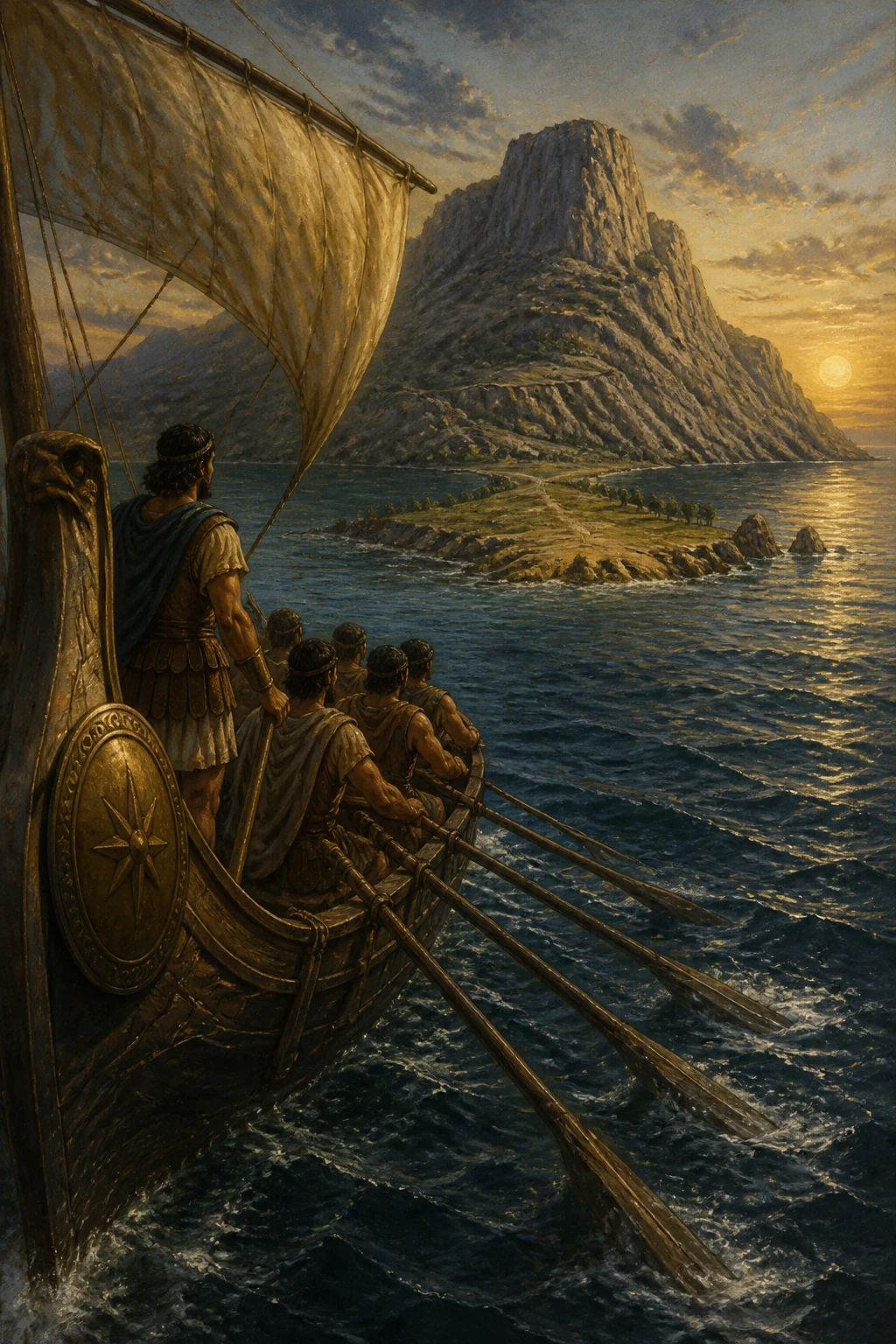
When they reached the narrow stretch of the winding passage, hemmed in on either side by rugged cliffs, the swirling current surged beneath the advancing ship, and they pressed onward in great fear. Already the ceaseless thunder of the clashing rocks struck their ears, and the salt-washed shores roared aloud. Then Euphemus rose to take his place upon the prow, holding the dove in his hand. At the command of Tiphys, son of Hagnias, the others slackened their rowing, so that afterward they could drive through the rocks, trusting in their strength. As they rounded a bend, they suddenly saw the rocks opening, the last sight to come into view.
Their hearts failed within them. Euphemus released the dove to dart away on her wings, and all together they raised their heads to watch. She flew between the rocks, but they rushed back toward one another and crashed together with a thunderous roar. A great mass of spray shot upward like a cloud; the sea gave a dreadful cry, and the vast sky resounded on every side.
Hollow caverns beneath the rugged cliffs boomed within as the sea surged into them, and high above the shore the white foam of the seething waves spurted upward. The current swirled around the ship. The rocks sheared off the tips of the dove’s tail feathers, but she darted clear unharmed. The rowers shouted aloud, and Tiphys himself cried out to them to pull with all their might, for the rocks were opening once again. They trembled as they rowed, until the returning surge itself swept the ship forward between the rocks. Then the most dreadful terror seized them all, for inescapable destruction hung above their heads.
Already the broad expanse of the Pontus could be seen through the gap, now here, now there, when without warning a huge, arching wave rose before them, like an overhanging crag. At the sight they bowed their heads aside, for it seemed about to leap over the whole ship and engulf her.
But Tiphys forestalled it, easing the ship’s headlong rush beneath the oars. Most of the wave rolled under her keel, but it dragged the ship sternward, far back from the rocks, and she rode high upon its crest.
Euphemus went among all his comrades, shouting to them to throw their full strength into the oars. With a great cry they struck the water. Yet for every stretch the ship gained beneath their rowing, she recoiled twice as far, and the oars bent like curved bows beneath the heroes’ straining hands.
Then a towering wave rushed upon them, and at once the ship sped over its raging crest like a roller, plunging headlong down into the hollow of the sea. But in the very midst of the Clashing Rocks a swirling current held her fast. On either side the rocks shook and thundered, and the ship’s timbers were trapped.
Then Athena braced her left hand against the massive rock and with her right thrust the ship onward through the passage. She shot through the air like a winged arrow. Even so, as the rocks crashed relentlessly together, they sheared away the tips of her stern ornament. But Athena sprang back to Olympus once the crew had escaped unharmed.
The rocks took root forever in a single place, close beside each other, as the blessed gods had ordained they should once a man had seen them and sailed through. Only now did the heroes draw breath after their chilling terror, gazing about at the sky and the open sea stretching far before them. They felt as though they had been delivered from Hades. Tiphys was the first to speak: “I believe we can trust the ship herself to keep us safe. And for that we have none to thank so much as Athena, who breathed divine strength into her when Argus fastened her timbers together. It is not ordained that she should perish.
“Son of Aeson, now that a god has granted us escape through the rocks, no longer be so afraid of your king’s command. For Phineus, Agenor’s son, said that the trials still to come would be easy to accomplish.”
As he spoke, he drove the ship onward through the open sea beside the Bithynian land. But Jason answered him gently, speaking beside him: “Tiphys, why do you offer these consolations to my grief?
“I have erred and plunged into a dreadful folly beyond all remedy. When Pelias gave his command, I should have refused this voyage outright, even if I were to die, pitilessly torn limb from limb. Now I am burdened with overwhelming fear and cares too heavy to bear. I dread sailing the sea’s chilling paths, and I dread our setting foot on land, for everywhere there are hostile men.
“Ever since you first gathered for my sake, I have kept watch through each groaning night that follows the day, pondering every detail. Yet you speak lightly, concerned only for your own life. For myself I feel not the slightest fear; but for this man and that alike, for you and all my other comrades, I am afraid that I may fail to bring you home unharmed to the land of Greece.”
So he spoke, testing the heroes, and they answered together with words of courage. His heart warmed within him at their voices, and once again he spoke out openly: “My friends, your courage makes my own grow strong.
“And so, even if I were journeying through the pits of Hades, I would kindle no more fear within me, since you stand steadfast amid dreadful dangers. But now that we have sailed clear of the Clashing Rocks, I believe no other such terror awaits us, if indeed we follow Phineus’s counsel on our way.”