O besedilu
Trije srečneži
- Vir
- Grimmove pravljice
- Avtor
- Jacob in Wilhelm Grimm
- Jezik branja
- English
- Jezik izvirnika
- Deutsch
- Čas branja
- 5 min branja
- Obseg
- 4 strani
- Naslov izvirnika
- Die drei Glückskinder
O izvirniku
Grimmove pravljice
Gozdovi, čarobni predmeti in ljudska logika evropske pripovedne tradicije. Bralni jezik je English, izvirnik pa prihaja iz vira Grimmove pravljice v jeziku Deutsch.
Besedilo
Trije srečneži
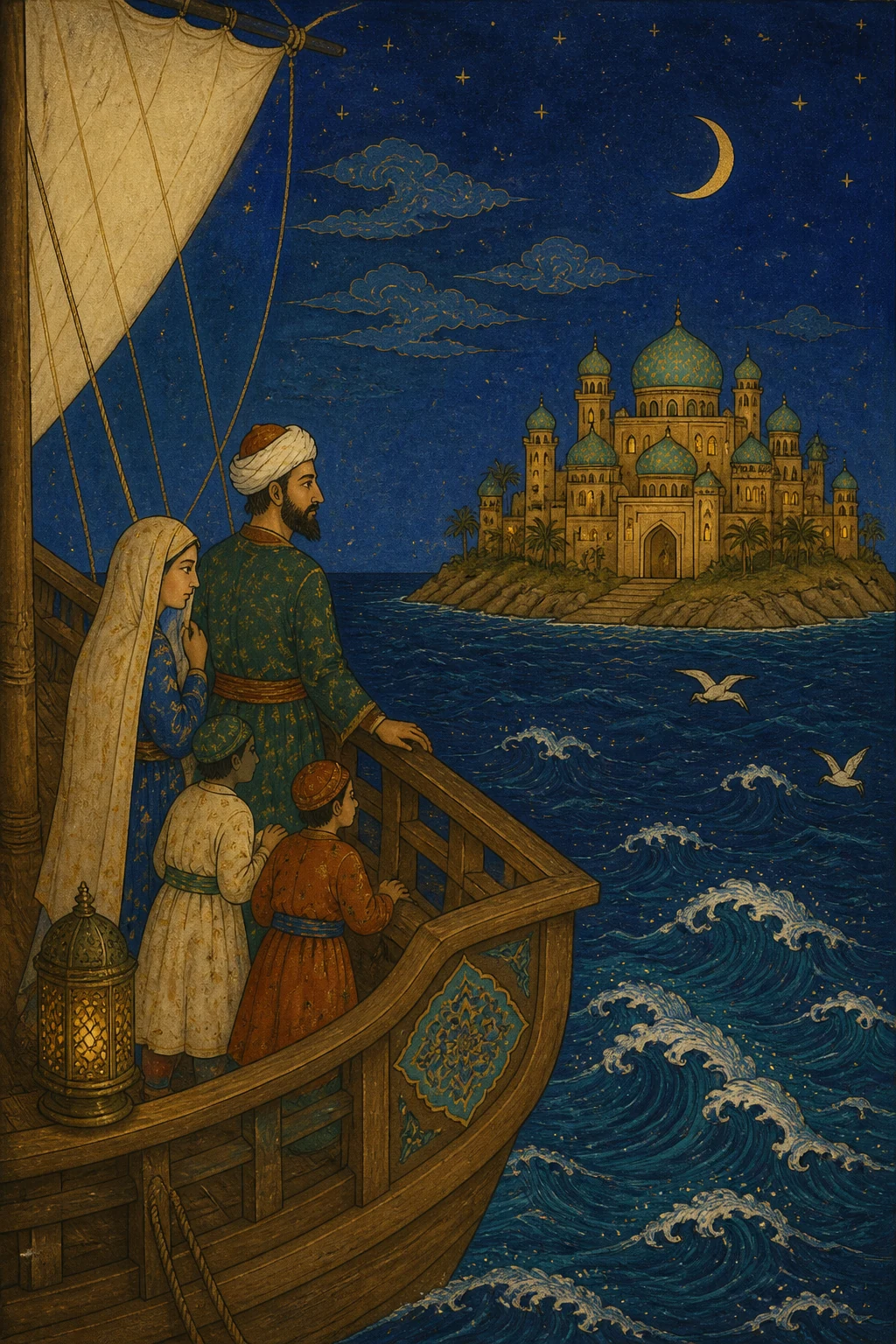
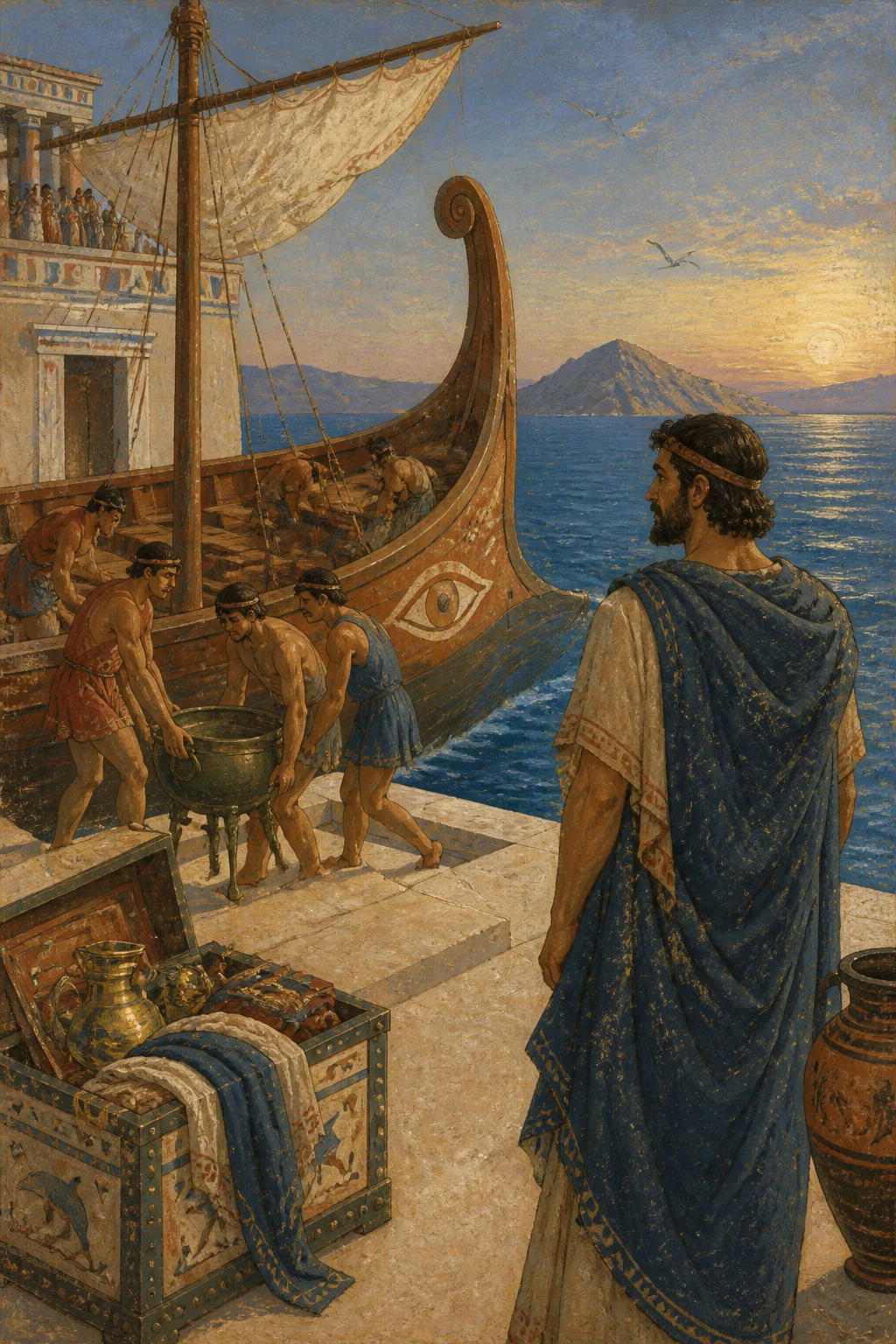
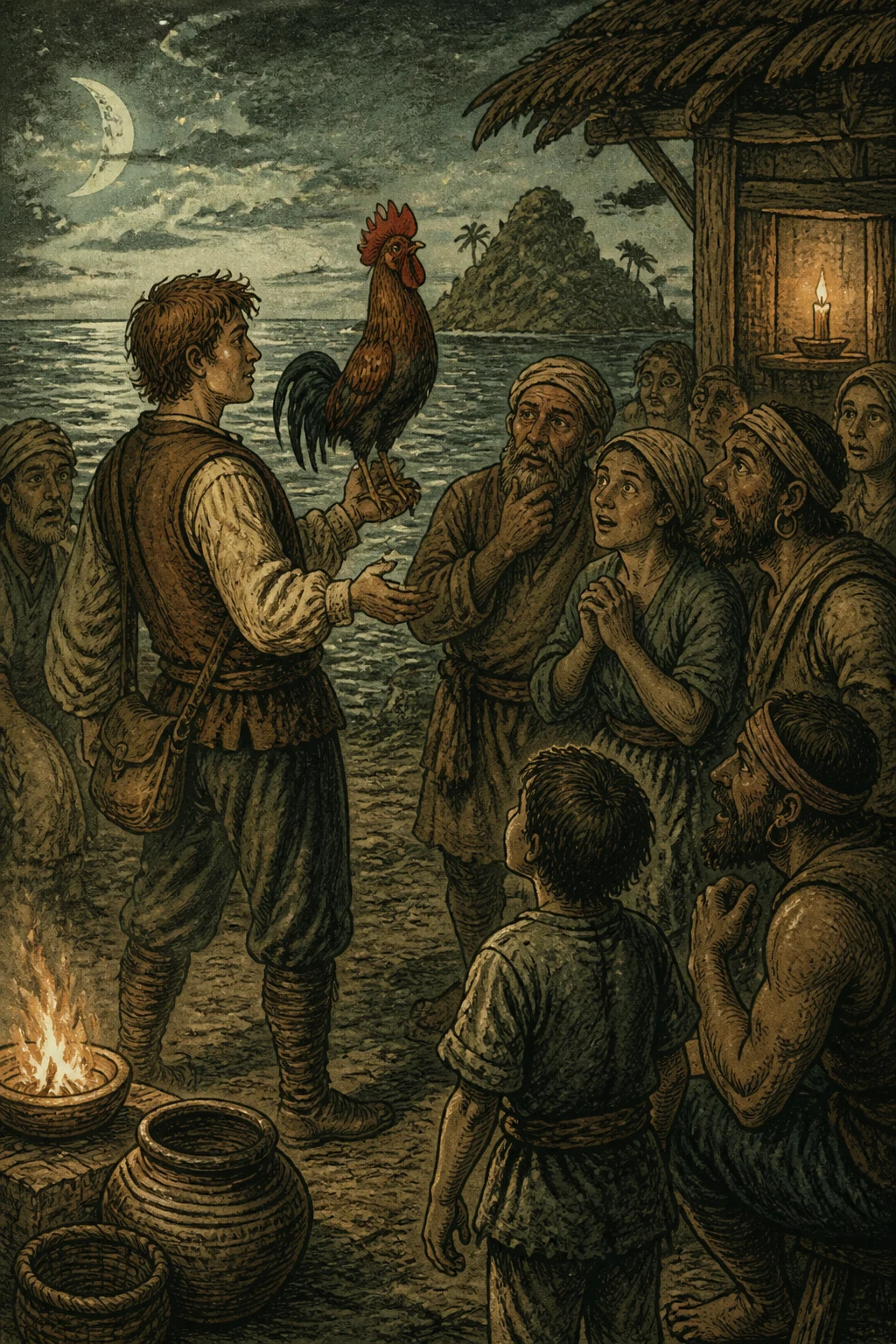
A father once called his three sons before him and gave the eldest a cock, the second a scythe, and the third a cat. “I am old now,” he said, “and my death is near, so I wanted to provide for you before my end. I have no money, and what I am giving you may seem of little worth, but it all depends on your using it wisely. Just find yourselves a country where such things are still unknown, and your fortunes will be made.” After his father’s death, the eldest set out with his cock, but wherever he went, cocks were already known. In the towns he could see them from afar, perched on the towers and turning with the wind; in the villages he heard more than one crowing, and nobody thought there was anything remarkable about the bird. It did not look as though he would make his fortune with it. At last, however, he happened upon an island where the people knew nothing of cocks and did not even know how to reckon the time. They knew well enough when it was morning or evening, but at night, unless they slept right through, no one could tell what hour it was. “Look,” he said, “what a proud creature this is! He has a ruby-red crown on his head and wears spurs like a knight. Three times in the night he calls out to you at fixed hours, and when he calls for the last time, the sun will soon rise. But if he calls in broad daylight, be prepared, for the weather is sure to change.” The people were well pleased with this. They stayed awake a whole night and listened with great delight as the cock proclaimed the hour loud and clear at two, four, and six o’clock. They asked whether the bird was for sale and how much he wanted for it. “About as much gold as a donkey can carry,” he answered. “A mere trifle for so precious a creature!” they all cried, and gladly gave him what he had asked.
When he came home with his riches, his brothers were astonished, and the second said, “Then I shall set out too and see whether I can sell my scythe to such good advantage.” But the prospects were not promising, for everywhere he went he met peasants with scythes on their shoulders just like his own. At last, though, he too had his stroke of luck on an island where the people knew nothing of scythes. When their corn was ripe, they brought cannons up to the fields and shot it down. This was an uncertain business: one man fired over the top, another struck the ears instead of the stalks and shot them away. A great deal was wasted, and besides, it made a dreadful din. So the young man stepped forward and mowed the corn down so quietly and swiftly that the people gaped in amazement. They were willing to give him whatever he asked, and he received a horse laden with as much gold as it could carry.
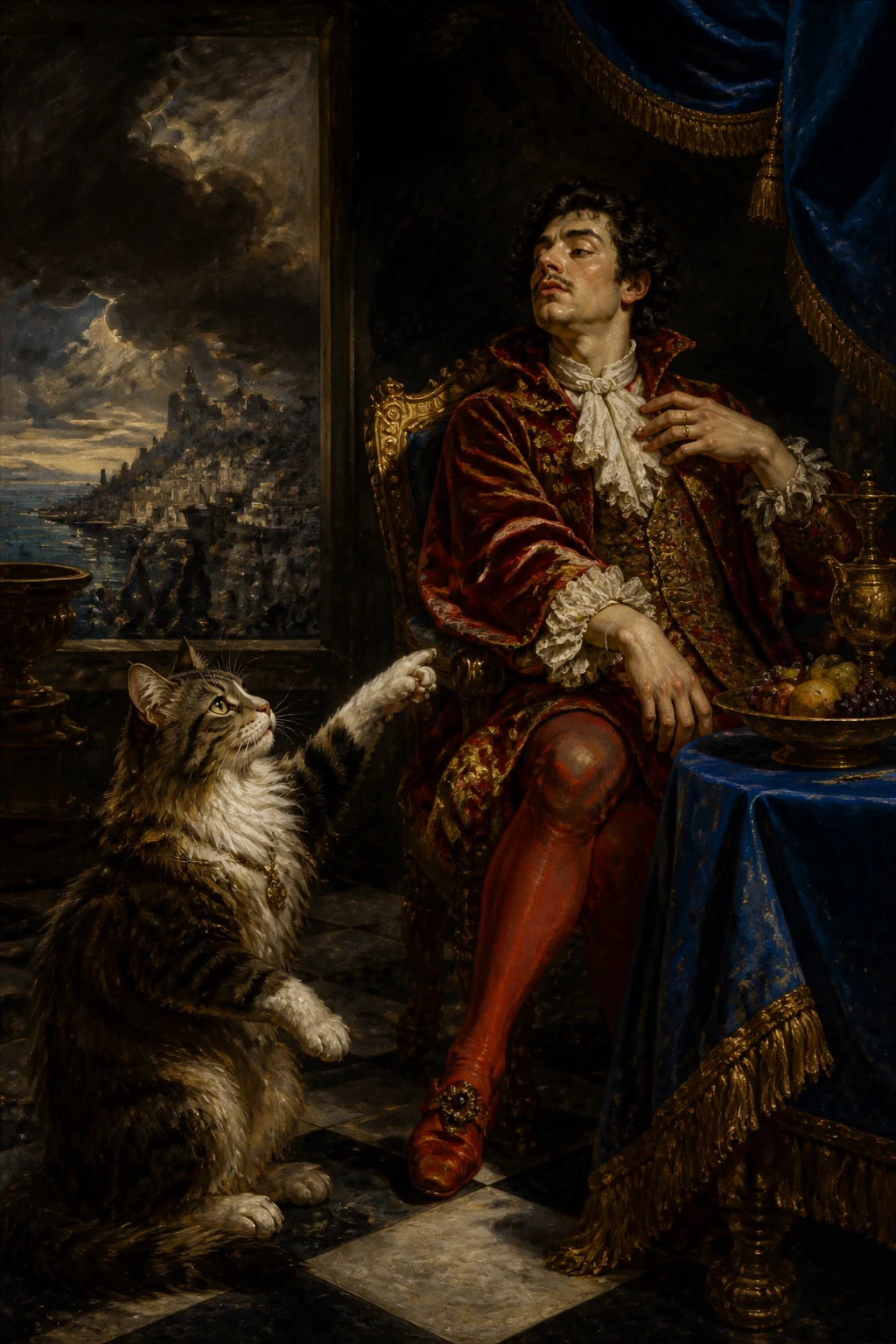
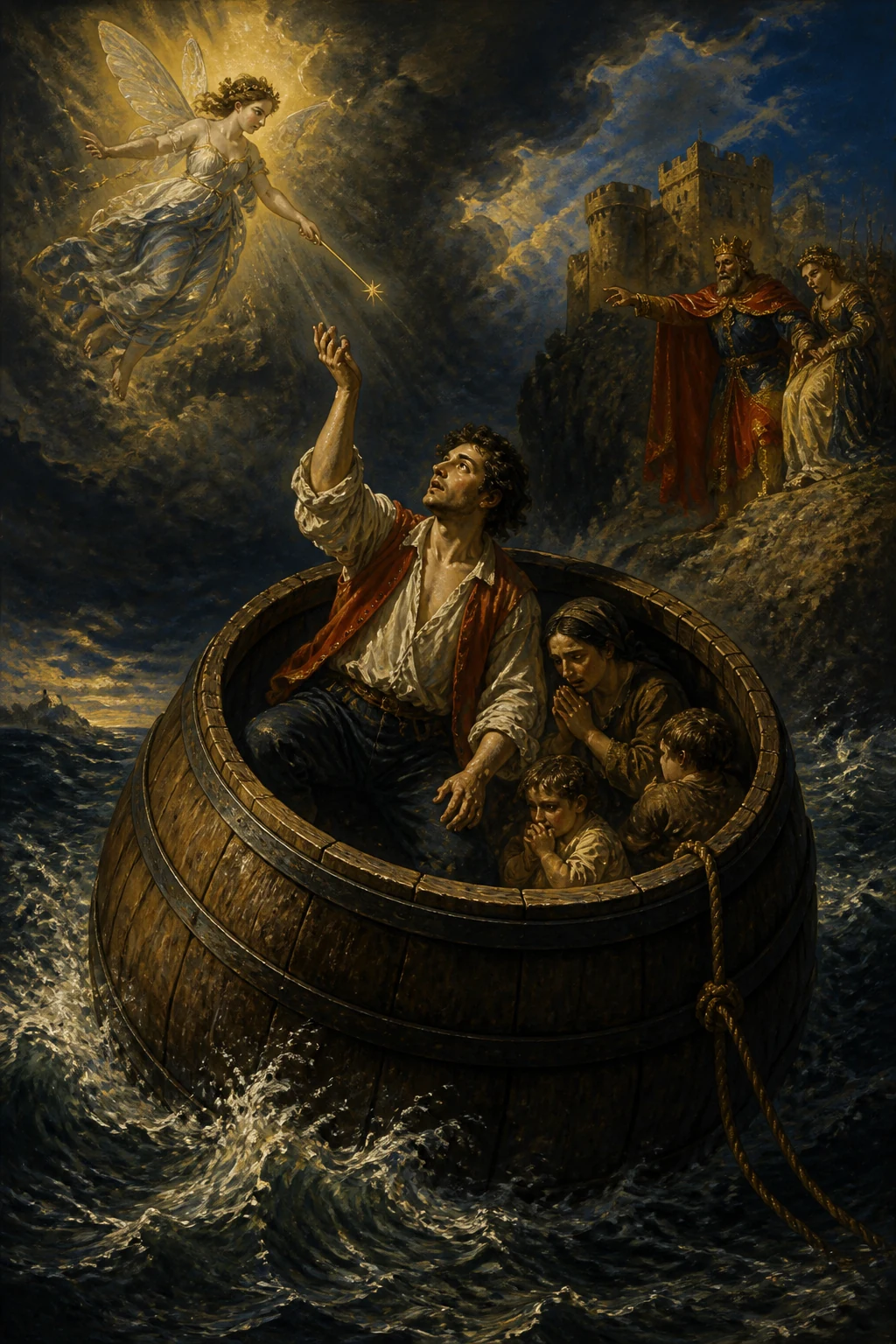
Now the third brother wanted to find the right buyer for his cat. He fared just like the others: as long as he stayed on the mainland, there was nothing to be done. There were cats everywhere, and so many of them that most newborn kittens were drowned. At last he had himself ferried over to an island, and luckily it turned out that no cat had ever been seen there, though the mice had multiplied to such an extent that they danced about on the tables and benches whether the master of the house was at home or not. The people lamented bitterly over the plague, and even the king in his palace could find no way to escape it. Mice squeaked in every corner and gnawed whatever they could get their teeth into. The cat now began her hunt and soon cleared a couple of halls, and the people begged the king to buy the wondrous creature for his kingdom. The king gladly paid the price that was asked—a mule laden with gold—and the third brother came home with the greatest treasure of all.
The cat had a splendid time with the mice in the royal palace and killed so many that they could no longer be counted. At last she grew hot from her labors and became thirsty. She stopped, raised her head, and cried, “Meow, meow.” When the king and all his people heard this strange cry, they took fright and fled from the palace in terror. Outside, the king held council on what was best to be done. At last it was decided to send a herald to the cat, ordering her to leave the palace or expect to be driven out by force. The councillors said, “We would rather be plagued by mice, an evil we are used to, than put our lives at the mercy of such a monster.” A page had to go up and ask the cat whether she would leave the palace of her own free will. But the cat, whose thirst had only grown worse, merely answered, “Meow, meow.” The page understood this to mean “Certainly, certainly not,” and carried the answer back to the king. “Then,” said the councillors, “she must yield to force.” Cannons were brought up, and the palace was bombarded until it caught fire. When the flames reached the hall where the cat was sitting, she leaped safely out of the window; but the besiegers did not stop until the whole palace had been battered to the ground.
Izvirnik
Die drei Glückskinder
Naslednje strani prikazujejo izvirno besedilo za primerjavo.
Ein Märchen der Brüder Grimm
Ein Vater ließ einmal seine drei Söhne vor sich kommen und schenkte dem ersten einen Hahn, dem zweiten eine Sense, dem dritten eine Katze. "Ich bin schon alt," sagte er, "und mein Tod ist nah, da wollte ich euch vor meinem Ende noch versorgen. Geld hab ich nicht, und was ich euch jetzt gebe, scheint wenig wert, es kommt aber bloß darauf an, daß ihr es verständig anwendet: sucht euch nur ein Land, wo dergleichen Dinge noch unbekannt sind, so ist euer Glück gemacht." Nach dem Tode des Vaters ging der äIteste mit seinem Hahn aus, wo er aber hinkam, war der Hahn schon bekannt: in den Städten sah er ihn schon von weitem auf den Türmen sitzen und sich mit dem Wind umdrehen, in den Dörfern hörte er mehr als einen krähen, und niemand wollte sich über das Tier wundern, so daß es nicht das Ansehen hatte, als würde er sein Glück damit machen. Endlich aber geriets ihm doch, daß er auf eine Insel kam, wo die Leute nichts von einem Hahn wußten, sogar ihre Zeit nicht einzuteilen verstanden. Sie wußten wohl, wenns Morgen oder Abend war, aber nachts, wenn sies nicht verschliefen, wußte sich keiner aus der Zeit herauszufinden. "Seht," sprach er, "was für ein stolzes Tier, es hat eine rubinrote Krone auf dem Kopf, und trägt Sporn wie ein Ritter: es ruft euch des Nachts dreimal zu bestimmter Zeit an, und wenns das letztemal ruft, so geht die Sonne bald auf. Wenns aber bei hellem Tag ruft, so richtet euch darauf ein, dann gibts gewiß anderes Wetter." Den Leuten gefiel das wohl, sie schliefen eine ganze Nacht nicht und hörten mit großer Freude, wie der Hahn um zwei, vier und sechs Uhr laut und vernehmlich die Zeit abrief. Sie fragten ihn, ob das Tier nicht feil wäre, und wieviel er dafür verlangte. "Etwa so viel, als ein Esel Gold trägt," antwortete er. "Ein Spottgeld für ein so kostbares Tier," riefen sie insgesamt und gaben ihm gerne, was er gefordert hatte.
Als er mit dem Reichtum heim kam, verwunderten sich seine Brüder, und der zweite sprach: "So will ich mich doch aufmachen und sehen, ob ich meine Sense auch so gut losschlagen kann." Es hatte aber nicht das Ansehen danach, denn überall begegneten ihm Bauern und hatten so gut eine Sense auf der Schulter als er. Doch zuletzt glückte es ihm auch auf einer Insel, wo die Leute nichts von einer Sense wußten. Wenn dort das Korn reif war, so fuhren sie Kanonen vor den Feldern auf, und schossens herunter. Das war nun ein ungewisses Ding, mancher schoß darüber hinaus, ein anderer traf statt des Halms die Ähren und schoß sie fort, dabei ging viel zugrund, und obendrein gabs einen lästerlichen Lärm. Da stellte sich der Mann hin und mähte es so still und so geschwind nieder, daß die Leute Maul und Nase vor Verwunderung aufsperrten. Sie waren willig, ihm dafür zu geben, was er verlangte, und er bekam ein Pferd, dem war Gold aufgeladen, soviel es tragen konnte.
Nun wollte der dritte Bruder seine Katze auch an den rechten Mann bringen. Es ging ihm wie den andern, solange er auf dem festen Lande blieb, war nichts auszurichten, es gab allerorten Katzen, und waren ihrer so viel, daß die neugebornen Jungen meist im Wasser ersäuft wurden. Endlich ließ er sich auf eine Insel überschiffen, und es traf sich glücklicherweise, daß dort noch niemals eine gesehen war und doch die Mäuse so überhand genommen hatten, daß sie auf den Tischen und Bänken tanzten, der Hausherr mochte daheim sein oder nicht. Die Leute jammerten gewaltig über die Plage, der König selbst wußte sich in seinem Schlosse nicht dagegen zu retten: in allen Ecken pfiffen Mäuse und zernagten, was sie mit ihren Zähnen nur packen konnten. Da fing nun die Katze ihre Jagd an und hatte bald ein paar Säle gereinigt, und die Leute baten den König, das Wundertier für sein Reich zu kaufen. Der König gab gerne, was gefordert wurde, das war ein mit Gold beladener Maulesel, und der dritte Bruder kam mit den allergrößten Schätzen heim.
Die Katze machte sich in dem königlichen Schlosse mit den Mäusen eine rechte Lust und biß so viele tot, daß sie nicht mehr zu zählen waren. Endlich ward ihr von der Arbeit heiß und sie bekam Durst: da blieb sie stehen, drehte den Kopf in die Höhe und schrie: "Miau, miau." Der König samt allen seinen Leuten, als sie das seltsame Geschrei vernahmen, erschraken und liefen in ihrer Angst sämtlich zum Schloß hinaus. Unten hielt der König Rat, was zu tun das beste wäre; zuletzt ward beschlossen, einen Herold an die Katze abzuschicken und sie aufzufordern, das Schloß zu verlassen, oder zu gewärtigen, daß Gewalt gegen sie gebraucht würde. Die Räte sagten: "Lieber wollen wir uns von den Mäusen plagen lassen, an das Übel sind wir gewöhnt, als unser Leben einem solchen Untier preisgeben." Ein Edelknabe mußte hinaufgehen und die Katze fragen, ob sie das Schloß gutwillig räumen wollte. Die Katze aber, deren Durst nur noch größer geworden war, antwortete bloß: "Miau, miau." Der Edelknabe verstand 'durchaus, durchaus nicht', und überbrachte dem König die Antwort. "Nun," sprachen die Räte, "soll sie der Gewalt weichen." Es wurden Kanonen aufgeführt und das Haus in Brand geschossen. Als das Feuer in den Saal kam, wo die Katze saß, sprang sie glücklich zum Fenster hinaus; die Belagerer hörten aber nicht eher auf, als bis das ganze Schloß in Grund und Boden geschossen war.
Nadaljuj z branjem