Prevod
Now begins the fifth book, entitled “Acting Without Due Examination.” Its opening verse is this:
What is ill observed, ill understood, ill heard, or ill examined—
let no man act upon it, as the barber did in this tale.
The story is told as follows. In the southern country there was a city called Pāṭaliputra. There lived a merchant named Maṇibhadra. As he devoted himself to the pursuits of virtue, wealth, pleasure, and liberation, fate brought about the loss of his fortune. With his riches gone, one humiliation followed another, plunging him into profound despair. One night, as he lay in bed, he thought, “Ah, a curse on poverty! For it is said:
Good character, purity, patience, generosity, sweetness of manner, and noble birth—
none of these shines in a man who has no wealth.
Self-respect, pride, learning, grace, and sound judgment—
all perish together when a man loses his wealth.
Like winter’s beauty struck by the winds of spring,
even a wise man’s understanding dwindles daily under the ceaseless burden of providing for his family.
Even a man of great intelligence loses his judgment when his means are slender,
worn down by endless thoughts of ghee, salt, oil, rice, clothing, and fuel.
Like a sky stripped of stars,
like a dried-up lake, like a dreadful cremation ground,
even a house once lovely to behold becomes desolate
when its owner has no wealth.
The poor, held of little account, go unnoticed even when they stand before us;
they appear and vanish continually, like bubbles upon water.
Forsaking the wellborn, the capable, and the good,
crowds flock forever to the wealthy as to a wish-fulfilling tree, though they lack birth, ability, and character.
Past merit bears no fruit here: even learned men of noble birth
become servants to whoever happens at the time to possess wealth.
No one calls the lord of waters contemptible, however loudly he may roar;
whatever those brimming with riches do brings them no shame in this world.
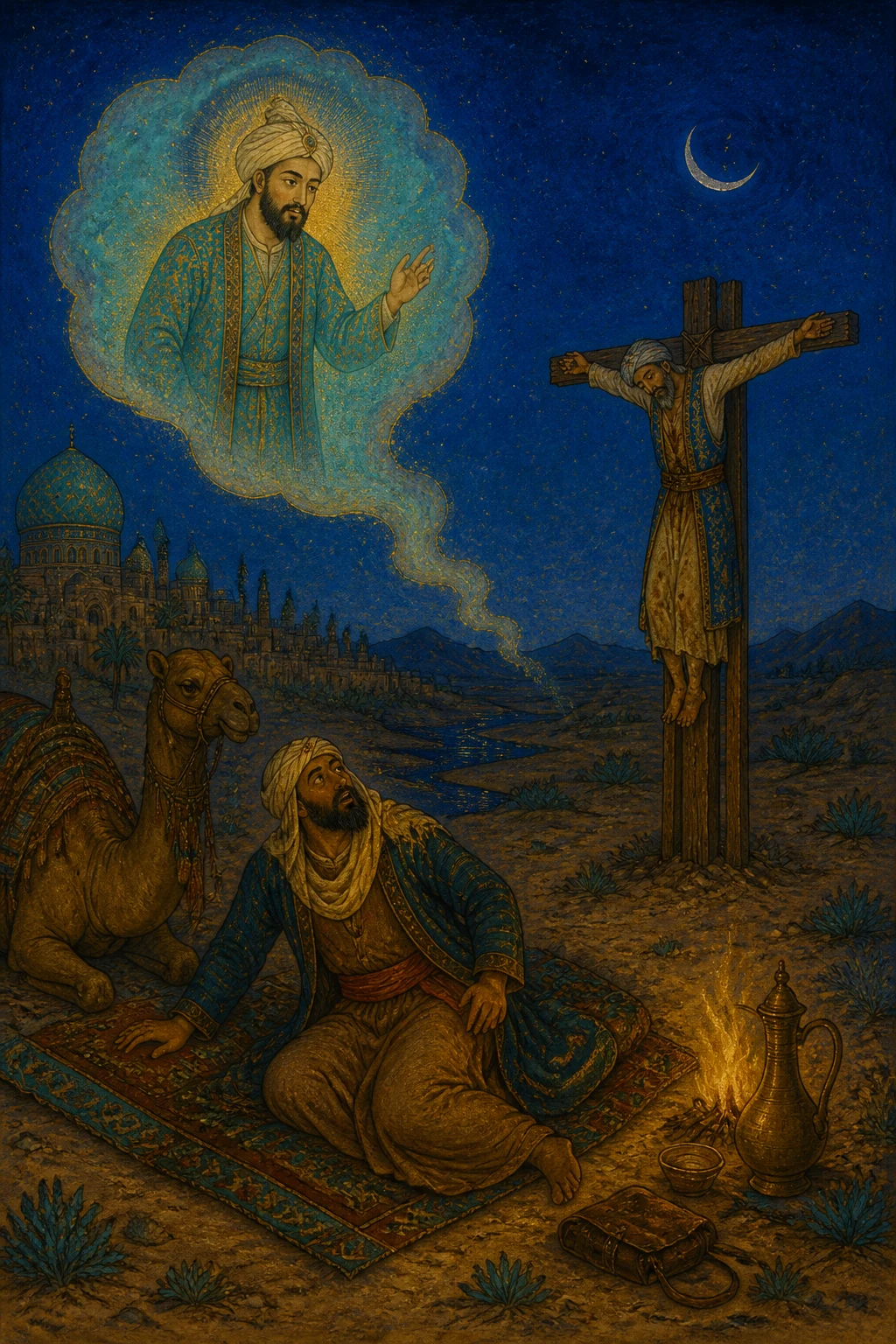
After reflecting in this way, he thought further: “Then I shall fast and give up my life. Why endure the misery of this futile existence?” With this resolve he fell asleep. Then Padmanidhi appeared to him in a dream in the form of a Jain monk and said, “Merchant, do not lose heart. I am Padmanidhi, the treasure amassed by your forefathers. Tomorrow morning I shall come to your house in this very form. You must strike me on the head with a club; then I shall turn into gold and become an inexhaustible treasure.” When he awoke in the morning, the merchant recalled his dream and was caught in a whirl of thoughts. “Ah, will this dream prove true or false? There is no knowing. Or rather, it must surely be false, for night and day I think of nothing but money. As it is said:
A dream seen by one who is sick, grieving, consumed by anxiety,
tormented by desire, or intoxicated has no meaning.
Meanwhile, his wife had summoned a barber to wash her feet. Just then the Jain monk suddenly appeared, exactly as foretold. Overjoyed at the sight, the merchant seized a wooden staff lying nearby and struck him on the head. At once the monk turned to gold and fell to the ground. The merchant quietly put him away inside the house, rewarded the barber, and said, “Take this money and these clothes I am giving you, my good fellow. But you must tell no one what has happened.” The barber went home and thought, “Surely all these naked monks turn to gold when struck on the head! Tomorrow morning I too shall invite a great many of them and beat them on the head with clubs. Then I shall have a vast quantity of gold.” As he brooded over this, the night passed with agonizing slowness. At dawn he rose, prepared a stout club, and went to the Jain monastery. There he walked three times around the image of the Lord Jina, knelt upon the ground, drew the end of his upper garment across his mouth, and recited this verse in a loud voice:
Victory to those Jinas, endowed with perfect knowledge,
whose minds, from birth, have been barren soil for the growth of desire.
And again:
That alone is a tongue which praises the Jina; that alone a mind which delights in him;
those hands alone deserve praise which are employed in his worship.
And also: “Whom do you ponder beneath this pretense of meditation? Open your eyes for a moment.
Look at us, wounded by the arrows of the bodiless god! Though a savior, you do not save us.
Your compassion is a sham. What man could be more pitiless than you?”
May the Buddha, the Conqueror, thus reproached in jealousy by Māra’s wives, protect you.
Having offered these praises, he approached the chief monk, knelt with knees and feet upon the earth, and said, “Homage! I bow to you.” He received a blessing for the increase of his virtue and, having been graciously instructed in religious observances, tied a knot in his upper garment and said respectfully, “Reverend sir, today you must make your round to my house, together with all the monks.” Then the barber said, “Reverend sir, I understand the rules of your faith. Many lay devotees invite you, but I have now prepared some costly cloth suitable for covering sacred books. I have also set aside money for copying books and paying scribes. Please arrange matters so that all this may be put to use at the proper time.” The barber then returned home. There he made ready a club of acacia wood, set the two door leaves in place, and, after about four and a half hours, returned to the monastery gate. The monks, passing over all their familiar and devoted lay followers, gladly followed him. Indeed, it is well said:
Alone, having renounced his home, with his hand for a bowl and the sky for clothing—
even such a man is harried by craving in this world. Behold the marvel!
A man’s hair grows old as he grows old; his teeth grow old with him;
his eyes and ears grow old, but craving alone grows young.
He led them into the house, quietly shut the door, and began striking them on the head with his club. Some died beneath the blows; others, their skulls split, began to scream. Hearing the outcry, the chief of the city watch said, “Ho there! What is this uproar in the middle of the city? Go and see!” His men hurried to the house with him. There they saw naked monks fleeing, their bodies drenched in blood, and asked, “What has happened?” The monks told them exactly what the barber had done. The watchmen bound him and took him, together with the surviving monks, before the court of justice. There he was asked, “What is this wicked deed you have committed?”
He replied, “What could I do? I saw just such a thing happen in the house of the merchant Maṇibhadra.” And he related everything he had witnessed at the merchant’s house.
The judges then summoned the merchant and asked, “Merchant, did you kill a Jain monk?” He too told them the whole story of the monk. Then they declared, “Let this wicked barber, who acted without due examination, be impaled!” When the sentence had been carried out, they said:
What is ill observed, ill understood, ill heard, or ill examined—
let no man act upon it, as the barber did in this tale.
Or, as it is well said:
Do not act without examination; act only after careful scrutiny.
Otherwise remorse follows, as it did for the Brahmin’s wife over the mongoose.
Maṇibhadra asked, “How was that?” The judges replied: Story 1. The Brahmin’s Wife and the Mongoose. In a certain town there lived a Brahmin named Devaśarmā. His wife gave birth to a son. On that very day a female mongoose also bore a young one and died. Full of motherly affection, the woman reared the little mongoose like her own child, feeding it at her breast, anointing it with oil, massaging it, and tending it in every way. Yet she did not trust it. Because love for one’s own child surpasses every other affection, she was always afraid that one day, following the vicious instincts of its kind, it might harm the baby. For it is said:
Even a bad son brings joy to his parents’ hearts,
though he be ill-mannered, ugly, foolish, dissolute, or wicked.
People say that sandalwood is cool,
but the touch of one’s child is more soothing still.
People do not long for the bonds of affection with a friend, a father, a benefactor,
or even a protector as they do for the bond with a son.
One day she laid her son upon his bed, took up a water jar, and said to her husband, “Brahmin, I am going to the pond for water. You must guard the child against the mongoose.”
But after she had gone, the Brahmin too left the house empty and went out somewhere to seek alms. When the mother returned and saw the mongoose with its mouth wet with blood, her heart filled with suspicion. “That wicked creature has surely eaten my child!” she concluded, and in her anger hurled the water jar upon it. Having killed the mongoose, she entered the house lamenting, only to find her son sleeping just as she had left him. Nearby she saw a black snake torn to pieces. Grieving over the death of the creature she had raised as a son, she began beating her head and breast. Just then the Brahmin returned with his offering of food and found his wife distraught with grief, crying, “You greedy man! Overcome by greed, you paid no heed to what I said. Now taste the bitter fruit of the tree of sorrow for a child’s death! Indeed, it is well said:
One should not be excessively greedy; desire should be kept within bounds.
Through the fault of excessive greed, the jackal met his death.”
The Brahmin asked, “How was that?” She replied: Story 2. The Greedy Man Who Bore the Wheel. In a certain town there lived four young Brahmins who were close friends. Afflicted by poverty, they took counsel together. “Ah, a curse on poverty! For it is said: Better a forest haunted by tigers, elephants, and other beasts,
empty of people and thick with thorns,
with grass for a bed and bark for clothing,
than a penniless life among one’s kin.
And again: Though faithfully served, a master turns hostile; good kinsmen abruptly cast one off;
virtues lose their luster, sons desert one, and calamities multiply.
Even a good wife of noble family withholds her love, and friends forsake
the man who has no wealth, though his courage has been displayed in a just cause.
A man may be brave, handsome, fortunate, and eloquent;
he may master weapons and learned treatises.
Yet without wealth he gains neither fame nor honor
here in the world of men.
His senses remain unimpaired, his name is the same,
his intellect is undiminished, his speech unchanged;
yet, deprived of the warmth of wealth, that very man
becomes an outsider in an instant. How strange it is!
“Then let us go somewhere in search of wealth.” Having agreed on this, they left their country, their town, and their homes with all their friends, and set out. Indeed, it is well said: A man abandons truth and leaves his kinsfolk,
forsakes even his mother and the land of his birth,
and departs for a foreign country, leaving those he loves:
so does anxiety bewilder the mind of man in this world.
Traveling by stages, they reached Avantī. There they bathed in the waters of the Siprā and paid homage to Mahākāla. As they were coming away, they met a yogi named Bhairavānanda. They greeted him in the manner proper to Brahmins and accompanied him to his monastery. He asked them, “Where have you come from? Where are you going? What is your purpose?”
They replied, “We are travelers in search of success. We have resolved to go wherever we may find either wealth or death. For it is said:
Many longed-for riches, difficult to obtain, are won
by daring men who stake their bodies when the occasion calls.
And again:
Sometimes water falls from the sky; when one digs, it rises even from the underworld.
Fate is powerful beyond imagining, but surely human effort is powerful too.
By his own effort a man attains all that he desires;
even what you call fate is a human power, known as the unseen fruit of former deeds.
The truly daring reckon even the immense terror of their elders as a straw,
and their own lives as nothing. Wondrous indeed are the deeds and ordeals of the noble!
Without surrendering the body to hardship, no pleasures can be gained here with ease.
Viṣṇu embraces Lakṣmī with those very arms that labored at churning the ocean.
How should the wife of Viṣṇu, even though he is the Man-Lion, not be fickle,
when he spends four whole months asleep upon the waters?
Supremacy is hard to attain until a man ventures boldly;
only when the radiant sun mounts Libra does he conquer the banks of cloud.
“So tell us some means of gaining wealth: entering hidden caverns, mastering a śākinī spirit, keeping vigil in a cremation ground, selling human flesh, or some other secret practice. We hear that you possess marvelous powers, and we too are exceedingly bold. For it is said:
Only the great can accomplish the purposes of the great.
Who but the ocean can bear the submarine fire?
To help them succeed, Bhairavānanda prepared four magical wicks by elaborate means and gave them to the young men. He said, “Go toward the Himalayas. Wherever a wick falls, you will certainly find treasure. Dig at that spot, take the treasure, and return.”
They did as he directed. As they traveled, a wick fell from one of their hands. He dug at the spot and found the earth full of copper. “Look!” he said. “Take as much copper as you please.”
The others replied, “Fool! What use is this? Even a great quantity of it will not put an end to poverty. Get up; let us go farther.”
He said, “You may go on. I shall go no farther.” With these words, the first took as much copper as he wanted and turned back.
The other three went on. They had traveled only a little farther when the wick of the man in front fell. He began to dig and found the earth full of silver. Delighted, he cried, “Look, look! Take as much silver as you please. We must go no farther.” The other two said, “Behind us the earth was copper; here it is silver. Surely farther on it will be gold. Besides, even a great quantity of this will not end our poverty. We two shall go on.” With these words they continued their journey, while he took as much silver as he could carry and turned back. As the remaining two traveled on, one of their wicks fell. He dug eagerly, and when he saw the earth full of gold, he said to his companion, “Take as much gold as you please! There can be nothing better than gold.” The other replied, “Fool! You know nothing. First copper, then silver, then gold: surely beyond this there will be precious stones, a single one of which would put an end to poverty. Get up; let us go farther. What use is this, when even a great quantity is only a burden?”
“Go on, then,” said his companion. “I shall stay here and wait for you.” So the other went on alone. His body scorched by the summer sun and tormented by thirst, he strayed from the path to success and wandered this way and that. As he roamed, he saw a man upon a stretch of open ground, his body drenched in blood and a wheel revolving upon his head. He hurried up and said, “Who are you, sir? Why are you standing here with a wheel upon your head? And tell me, is there water anywhere?”
Even as he spoke, the wheel instantly leaped from the other man’s head onto the Brahmin’s.
“My good fellow, what is this?” he cried. The other replied, “It mounted my head in just the same way.”
“Then tell me, when will it come off? I am in terrible pain.”
The other said, “When someone like you comes here carrying a magical wick and speaks to you as you spoke to me, it will mount his head instead.”
“How long have you been standing here like this?” he asked. The other replied, “Who now rules the earth?”
“The king of Vatsa, skilled in playing the vīṇā,” he answered.
The other said, “Then I cannot reckon how long it has been. But when Rāma was king, I was afflicted by poverty and came along this path carrying a magical wick. I saw another man with a wheel upon his head and questioned him. Then this happened.” The Brahmin asked, “My good fellow, how did you get food and water while remaining here all that time?”
The other replied, “My good fellow, the Lord of Wealth, fearing that his treasures might be stolen, devised this terror of the descending wheel to frighten treasure seekers away. That is why no one comes here. If anyone does come, he is freed from hunger, thirst, sleep, old age, and death, and suffers only this pain. Now give me leave to go home.” With these words he departed. Meanwhile, when his companion failed to return, the man who had found the gold followed his footprints in search of him. After going some way into the forest, he found him seated there, his body drenched in blood, groaning in pain as a sharp wheel revolved upon his head. Going up to him, he asked what had happened. “My friend, what is this?”
He replied, “The decree of fate.”