Waltey
Miš in skriti zaklad
Pančatantra · indijska zbirka pripovediO besedilu
Miš in skriti zaklad
- Vir
- Pančatantra
- Avtor
- indijska zbirka pripovedi
- Jezik branja
- English
- Jezik izvirnika
- Sanskrit
- Čas branja
- 16 min branja
- Obseg
- 13 strani
- Naslov izvirnika
- Tantra 02 mitra-samprapti chunk 3
O izvirniku
Pančatantra
Indijske zgodbe o zvijači, prijateljstvu in modrosti v svetu živali in vladarjev. Bralni jezik je English, izvirnik pa prihaja iz vira Pančatantra v jeziku Sanskrit.
Besedilo
Miš in skriti zaklad
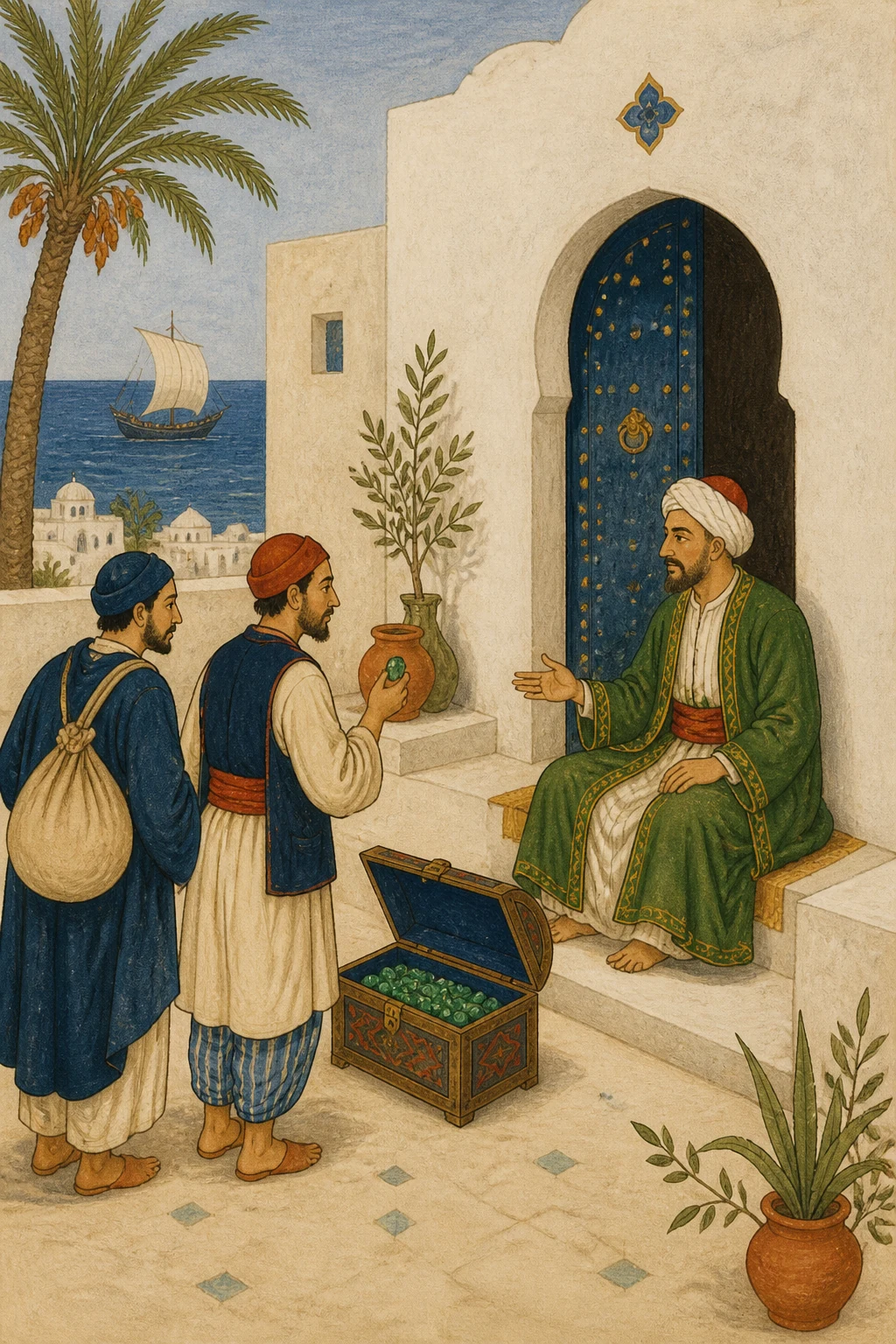
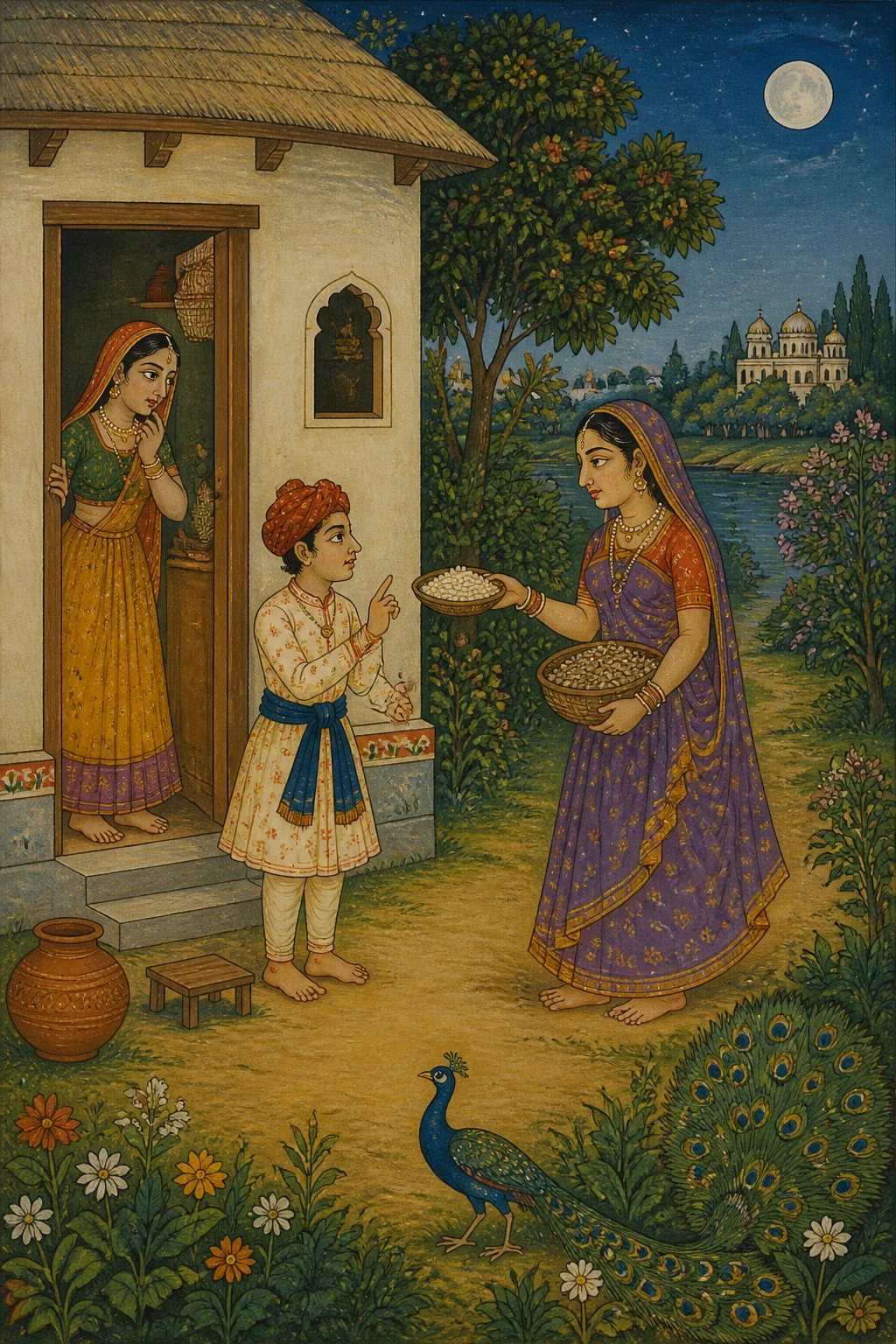
Now, the very house I had entered to beg for alms was the house she too entered, carrying her sesame seeds to trade. She called out, “Will anyone take hulled sesame seeds in exchange for unhulled ones?”
The mistress of the house came forward and was about to take the hulled seeds in exchange for unhulled ones when her son, who had studied Kāmandakī’s treatise on statecraft, said, “Mother! You must not take these seeds. Do not accept her hulled sesame in exchange for unhulled. There must be some reason why she is offering such a bargain.”
On hearing this, she refused the sesame seeds. That is why I say, “Not without a reason does Mother Śāṇḍilī…”
***********************************************************************
Having told this story, the visitor asked again, “Now, do you know the route he takes?”
Tāmracūḍa replied, “Reverend sir, I do. He never comes alone, but surrounded by a countless horde. Before my very eyes he roams this way and that, coming and going with all his followers.”
The visitor asked, “Have you anything to dig with?”
“Indeed I have,” he replied. “Here is a little hand-spade made entirely of iron.”
The visitor said, “Then you must be ready to join me at dawn. Together we shall follow his tracks over the ground, before people’s footsteps have disturbed it.” Hearing his words, I thought, “Alas, I am ruined! Everything he says betrays a purpose. Just as he has discovered the treasure, he will surely discover our stronghold too. His intentions make that plain.” For it is said:
Having seen a man but once, the wise can judge his worth;
the skilled can tell a weight in palas merely by hefting it in the hand.
A creature’s inclinations reveal beforehand
the good or ill that awaits it in another birth:
even before its tail feathers appear, a young peacock is known
by the way it advances to meet those who approach, or withdraws.
Then, my mind trembling with fear, I abandoned the usual route to my stronghold and set off with my followers by another path. As I led them onward, a huge cat came toward us. Seeing the troop of mice, he suddenly sprang into their midst. Those who survived the slaughter, leaving the earth drenched in blood, reviled me for leading them astray and fled back to that same stronghold. Indeed, it is well said: A deer may sever the noose, evade the hidden trap, and break through the net by force;
it may escape far from a forest ringed with tangled tongues of flame;
it may leap swiftly beyond the reach of the hunters’ arrows, yet fall into a well as it runs.
When fate is hostile, what can courage accomplish?
I alone went elsewhere. The rest foolishly returned to the stronghold. Meanwhile, that wicked wandering ascetic saw the blood-spattered ground and followed the very path to our fortress, arriving at its entrance.
That a man is always bold, that he overpowers others,
that he speaks with arrogance—all this is strength born of wealth.
Hearing this, I was seized with anger and made an especially mighty leap toward the begging bowl. But I failed to reach it and fell to the ground. Hearing me fall, my enemy laughed and said to Tāmracūḍa, “Look! Look at this marvel!” Then he said:
Wealth makes everyone powerful; the man with money is accounted wise.
Look at this penniless mouse, now reduced to the level of his fellows!
“So sleep without fear. The source of his leaping power is now in our hands. Indeed, it is well said:
Like a serpent without fangs, like an elephant bereft of must,
a man without wealth is a man in name alone.”
Hearing this, I thought, “I no longer have the strength to leap even a finger’s breadth. A curse on the life of a penniless man!” For it is said:
All the undertakings of a man bereft of wealth and poor in judgment
dry up like little streams in summer.
Like the grain called crow-barley, like sesame growing wild,
penniless men have a name, but serve no useful purpose.
A poor man’s other virtues, though they exist, do not shine.
Wealth illuminates virtues as the sun illuminates living things.
A man who has always been poor does not suffer so much in this world
as one who, having gained wealth, loses it and lives in misery.
Better to be born a tree on barren soil, dried up, eaten by worms,
and scorched all over by fire, than to be born a beggar.
Powerless poverty is viewed with suspicion everywhere;
even one who comes to help abandons the destitute and goes away.
The poor man’s hopes rise up again and again,
only to fall fruitless within his breast, like a widow’s breasts.
Even in broad daylight, a man shrouded in poverty’s darkness
is seen by no one, though he stands before them and strives to be noticed.
Thus I lamented, utterly disheartened. Seeing my treasure being used as a pillow beneath his cheek, I returned to my stronghold at dawn. As my servants went out that morning, they said to one another, “Alas, he cannot even fill our bellies. By following him, all we get is trouble from cats and the like. What use is there in serving him? For it is said:
A master from whom no benefits come, but only misfortunes,
should be abandoned from afar, especially by those who depend on him.”
Hearing their words, I entered my stronghold. When not one of them came forward to greet me, I thought, “A curse on poverty!” Indeed, it is well said:
A poor man is as good as dead; a childless union is dead;
dead is an ancestral offering without a learned Brahmin, and dead a sacrifice without gifts to the priests.
Men without wealth torment their minds with a hundred hopes,
but cannot act upon them, like widows of noble birth.
Poverty brings suffering and the deepest humiliation to living beings;
because of it, even their own kin consider them dead while they still live.
A man stained by poverty becomes a vessel of misery,
the very summit of disgrace, and a perpetual dwelling place of misfortune.
His relatives are ashamed of him and conceal their kinship;
his friends turn into enemies when he has not a cowrie to his name.
Pennilessness is contempt made flesh, a dwelling place of calamities;
for living beings, it is another name for death.
People shun a poor man in fear, as they shun dust raised by goats,
dust from a broom, or the shadow cast by a lamp or bed.
Even clay left over from cleansing may serve some purpose somewhere;
but a penniless man is thought to serve none at all.
Though a poor man comes to a rich man’s house wishing to give,
he is taken for a beggar. A curse indeed on human poverty!
If a man clings to life while watching his wealth being stolen,
even his ancestors refuse the water he offers them in his cupped hands.
And again:
He who gives his life in battle for cattle or Brahmins,
or when his wife or wealth is being carried off, wins the everlasting worlds.
Having made up my mind, I went there at night and gnawed a hole in the box while he lay fast asleep. But just then the wicked ascetic awoke. He struck me on the head with his split bamboo staff. Somehow, because a little life still remained to me, I escaped and did not die. For it is said: A man obtains what is destined for him;
not even a god can prevent it.
Therefore I neither grieve nor marvel:
what is mine can never belong to another.
The crow and the tortoise asked, “How was that?” Hiraṇyaka replied: Story 4: The Tale of Sāgaradatta. In a certain town lived a merchant named Sāgaradatta. His son bought a book that was being offered for a hundred silver coins. In it was written: A man obtains what is destined for him;
not even a god can prevent it.
Therefore I neither grieve nor marvel:
what is mine can never belong to another.
When Sāgaradatta saw it, he asked his son, “My son, how much did you pay for this book?”
“A hundred silver coins,” he replied.
Hearing this, Sāgaradatta said, “Shame on you, fool! You pay a hundred silver coins for a book with a single verse in it! With such intelligence, how will you ever earn a fortune? From this day forward, you are not to enter my house.” Having scolded him thus, he drove him out. In his despondency, the young man journeyed to a distant country, reached a certain town, and settled there. A few days later, one of its inhabitants asked him, “Where have you come from, sir? And what is your name?” He replied, “A man obtains what is destined for him.” When someone else questioned him, he gave the same answer. Thus he became known throughout the town as Prāptavyamartha—“What Is Destined.” Now, on the day of a great festival, a princess named Candravatī, in the first bloom of beauty and youth, was looking out over the town with a single companion. As it happened, a wonderfully handsome and charming prince came into her sight. The moment she saw him, she was struck by the flower-shafted god of love, and said to her friend, “My friend, you must find some way for me to meet this man today.” Hearing this, her companion went at once to the prince and said, “Candravatī has sent me to you. She sends this message: ‘Since seeing you, I have been brought by the god of love to the point of death. Unless you come to me very soon, death will be my only refuge.’” Hearing this, he said, “If I must come to her, tell me how I am to get inside.”
Her friend replied, “At night you must climb up by a stout rope hanging from the palace.”
He said, “If that is what you have decided, I shall do so.”
Having arranged this, the friend returned to Candravatī. But when night came, the prince thought to himself, “Ah, this would be a terrible wrong! For it is said:
A man who beds his teacher’s daughter, his friend’s wife, or the wife of his master or servant
is called in this world a slayer of a Brahmin.
And again:
One should never perform an act that brings disgrace,
leads to a fall, or defeats one’s own interests.”
Having considered the matter carefully, he did not go to her. Meanwhile, Prāptavyamartha, wandering about at night, saw the rope hanging beside the white palace. Overcome with curiosity, he grasped it and climbed up. The princess, confidently believing him to be the prince, welcomed him with a bath, food, drink, clothing, and other attentions, then lay down beside him on the bed. Her body thrilled with delight at his touch, and she said, “I fell in love with you at first sight and have given myself to you. I shall never, even in my thoughts, have any husband but you. Why, then, do you not speak to me?”
He replied, “A man obtains what is destined for him.”
At these words she realized that he was someone else, sent him down from the white palace, and dismissed him. He then made his way to a ruined temple and lay down to sleep. Presently a constable arrived there, having arranged to meet a woman who was conducting a secret affair. Seeing that someone was already asleep there, and wishing to preserve his secret, he asked, “Who are you?”
He replied, “A man obtains what is destined for him.”
Hearing this, the constable said, “This temple is deserted. Go to my house and sleep there instead.”
He agreed, but in his confusion went to the wrong bed and lay down. Now the constable had a daughter named Vinayavatī, endowed with youth and beauty. She had fallen in love with a certain man, arranged a meeting with him, and was lying in that bed. When she saw the newcomer, she thought, “Here is my beloved!” Misled by the thick darkness of the night, she rose, had food, clothing, and other comforts provided for him, and married him by the gāndharva rite of mutual consent. Then she lay beside him and, her face blooming like a lotus, asked, “Why do you still not speak freely with me?”
He replied, “A man obtains what is destined for him.”
Hearing this, she thought, “Such is the fruit of an act undertaken without proper consideration.” Reflecting thus, she sadly sent him away. As he walked along the street, a bridegroom named Varakīrti, who came from another region, approached with a great flourish of music. Prāptavyamartha began walking along with the wedding party. The auspicious hour was drawing near, and the merchant’s daughter stood in her wedding finery, adorned with the sacred wedding cord, upon the raised platform beneath a pavilion at the door of her father’s house beside the royal road. Just then an elephant in must, having killed its driver, came charging toward that very spot, throwing everyone into confusion amid the cries of the fleeing crowd. At the sight of it, all the bridegroom’s attendants scattered in every direction, and the bridegroom fled with them. Seeing the girl left alone, her eyes darting with fear, Prāptavyamartha boldly reassured her: “Do not be afraid. I will protect you.” Taking her right hand, he stood his ground with great courage and shouted fierce rebukes at the elephant. Somehow, by the favor of fate, the elephant went away. When Varakīrti returned with his friends and relatives, the auspicious hour had passed. Seeing the girl holding another man’s hand, he said, “Father-in-law, you have acted wrongly! After promising your daughter to me, you have given her to someone else!” The merchant replied, “Sir, I too fled in fear of the elephant and have only just returned with you. I do not know what has happened.” Then he began questioning his daughter: “Child, you have not acted well. Tell me what this means.”
She replied, “This man saved me when my life was in danger. As long as I live, no one but he shall take my hand.”
The night passed amid this dispute. In the morning a great crowd gathered there. Hearing the news, the princess came to the spot. The constable’s daughter also heard the story as it passed from mouth to mouth and came there too. Then the king, hearing of the great gathering, arrived in person. He said to Prāptavyamartha, “Speak freely, sir. What has happened here?”
He replied, “A man obtains what is destined for him.”
Remembering, the princess said, “Not even a god can prevent it.”
Then the constable’s daughter said, “Therefore I neither grieve nor marvel.”
Having heard the whole account of what had happened to everyone, the merchant’s daughter said, “What is mine can never belong to another.”
The king assured them all that they had nothing to fear, questioned each of them separately, and learned the truth. With great honor he gave his daughter to Prāptavyamartha, adorned with every ornament and accompanied by her attendants, together with a thousand villages. Proclaiming before the whole city, “You are my son,” he anointed him heir to the throne. The constable too gave his daughter to Prāptavyamartha, honoring her with gifts of clothing and whatever else his means allowed. Then Prāptavyamartha had his mother and father, together with their entire household, brought to that city with due honor. There he lived happily with his family, enjoying every kind of pleasure. That is why I say, “A man obtains what is destined for him.” After experiencing all these joys and sorrows, I fell into deep despondency, and this friend brought me here to you. Such is the reason for my disillusionment. Mantharaka said, “My good fellow, this is undoubtedly a true friend. Though weakened by hunger, he carried you here on his back—you, his natural enemy and proper prey—and did not devour you even on the way. For it is said:
Choose as your finest friend one whose heart never changes because of wealth,
and who remains your friend at all times.
The wise declare that friends must be tested by these sure signs,
just as learned priests test the sacrificial fire.
And again:
The friend who remains a friend when calamity comes is a friend indeed;
when prosperity arrives, even a wicked man will act as a friend.
“So today I too have come to trust him. For friendship between water creatures and flesh-eating crows runs counter to the rules of prudence. Yet it is well said:
No one is absolutely a friend to anyone, nor absolutely an enemy;
one proved an enemy may be seen to accomplish a task in which a friend has failed.
“You are welcome, then. Stay here on the shore of the lake as though in your own home. As for the loss of your wealth and your life in a foreign land, you must not grieve over them. For it is said:
A cloud’s shade, a wicked man’s affection, land beside the sea,
youth, and riches—all vanish in a little while.
“That is why discerning, self-controlled people do not crave wealth. For it is said: Though carefully amassed and guarded like life itself,
though never spent even on one’s own body,
these heartless riches will not accompany a man five steps
when he sets out for the realm of Death.
And again:
As flesh is devoured by fish in the water, by beasts upon the earth,
and by birds in the sky, so is the wealthy man preyed upon everywhere.
A king finds charges against a rich man, though he is innocent;
a poor man, even when guilty, goes untroubled everywhere.
Wealth must be earned, increased, and protected;
if consumed without replenishment, even Mount Sumeru would dwindle away.
Izvirnik
Tantra 02 mitra-samprapti chunk 3
Naslednje strani prikazujejo izvirno besedilo za primerjavo.
Source ID: panchatantra_gretil_tantra_02_chunk_03 Source URL: https://gretil.sub.uni-goettingen.de/gretil/1_sanskr/5_poetry/4_narr/vispancu.htm atha yasmin gṛhe'haṃ bhikṣārthaṃ praviṣṭas tatra gṛhe sāpi tilān ādāya praviṣṭā vikrayaṃ kartum | āha ca-gṛhṇātu kaścid aluñcitair luñcitāṃs tilān | atha tad-gṛha-gṛhiṇī-gṛhaṃ praviṣṭā yāvad aluñcitair luñcitān gṛhṇāti tāvad asyāḥ putreṇa kāmandakī-śāstraṃ dṛṣṭvā vyāhṛtam-mātaḥ ! agrāhyāḥ khalv ime tilāḥ | nāsyā aluñcitair luñcitā grāhyāḥ | kāraṇaṃ kiñcid bhaviṣyati | tenaiṣāluñcitair luñcitān prayacchati | tac chrutvā ayā parityaktās te tilāḥ | ato 'haṃ bravīmi-nākasmāc chāṇḍilī-mātaḥ iti | *********************************************************************** etad uktvā sa bhūyo 'pi prāha-atha jñāyate tasya kramaṇa-mārgaḥ |
tāmracūḍa āha-bhagavan, jñāyate | yata ekākī na samāgacchati, kintv asaṅkhya-yūtha-parivṛtaḥ paśyato me paribhramann itas tataḥ sarva-janena sahāgacchati yāti ca | abhyāgata āha-asti kiñcit khanitrakam | sa āha-bāḍham asti | eṣā sarva-loha-mayī sva-hastikā | abhyāgata āha-tarhi pratyūṣe tvayā mayā saha sthātavyam | yena dvāv api jana-caraṇa-malināyāṃ bhūmau tat-padānusāreṇa gacchāvaḥ | mayāpi tad-vacanam ākarṇya cintitam-aho vinaṣṭo 'smi, yato 'sya sābhiprāya-vacāṃsi śrūyante | nūnaṃ, yathā nidhānaṃ jñātaṃ tathā durgam apy asmākaṃ jñāsyati | etad abhiprāyād eva jñāyate | uktaṃ ca- sakṛd api dṛṣṭvā puruṣaṃ vibudhā jānanti sāratāṃ tasya | hasta-tulayāpi nipuṇāḥ pala-pramāṇā vijānanti vāñchaiva sūcayati pūrvataraṃ bhaviṣyaṃ
puṃsāṃ yad anya-tanujaṃ tv aśubhaṃ śubhaṃ vā | vijñāyate śiśur ajāta-kalāpa-cihnaḥ pratyudgatair apasaran saralaḥ kalāpī tato 'haṃ bhaya-trasta-manāḥ saparivāro durga-mārgaṃ parityajyānya-mārgeṇa gantuṃ pravṛttaḥ | saparijano yāvad agrato gacchāmi tāvat sammukho bṛhatkāyo mārjāraḥ samāyāti | sa ca mūṣaka-vṛndam avalokya tan-madhye sahasotpapāta | atha te mūṣakā māṃ kumārga-gāminam avalokya garhayanto hata-śeṣā rudhira-plāvita-vasundharās tam eva durgaṃ praviṣṭāḥ | athavā sādhv idam ucyate- chittvā pāśam apāsya kūṭa-racanāṃ bhaṅktvā balād vāgurāṃ paryantāgni-śikhā-kalāpa-jaṭilān nirgatya dūraṃ vanāt | vyādhānāṃ śara-gocarād api javenotpatya dhāvan mṛgaḥ kūpāntaḥ-patitaḥ karotu vidhure kiṃ vā vidhau pauruṣam athāham eko 'nyatra gataḥ | śeṣā mūḍhatayā tatraiva durge praviṣṭāḥ | atrāntare sa duṣṭa-parivrājako rudhira-bindu-carcitāṃ bhūmim avalokya tenaiva durga-mārgeṇāgatyopasthitaḥ |
yad utsāhī sadā martyaḥ parābhavati yaj janān | yad uddhataṃ vaded vākyaṃ tat sarvaṃ vittajaṃ balam athāhaṃ tac chrutvā kopāviṣṭo bhikṣā-pātram uddiśya viśeṣād utkūrdito 'prāpta eva bhūmau nipatitaḥ | tac chrūtvāsau me śatrur vihasya tāmracūḍam uvāca-bhoḥ ! paśya paśya kautūhalam | āha ca- arthena balavān sarvo 'py artha-yuktaḥ sa paṇḍitaḥ | paśyainaṃ mūṣakaṃ vyarthaṃ sajāteḥ samatāṃ matam tat svapihi tvaṃ gata-śaṅkaḥ | yad asyotpatana-kāraṇaṃ tad āvayor hasta-gataṃ jātam | athavā sādhv idam ucyate- daṃṣṭrā-virahitaḥ sarpo mada-hīno yathā gajaḥ | tathārthena vihīno 'tra puruṣo nāma-dhārakaḥ tac chrutvāhaṃ manasā vicintitavān-yato 'ṅguli-mātram api kūrdana-śaktir nāsti, tad dhig artha-hīnasya puruṣasya jīvitam | uktaṃ ca-
arthena ca vihīnasya puruṣasyālpa-medhasaḥ | vyucchidyante kriyāḥ sarvā grīṣme kusarito yathā yathā kāka-yavāḥ proktā yathāraṇya-bhavās tilāḥ | nāma-mātrā na siddhau hi dhana-hīnās tathā narāḥ santo 'pi na hi rājante daridrasyetare guṇāḥ | āditya iva bhūtānāṃ śrīr guṇānāṃ prakāśinī na tathā bādhyate loke prakṛtyā nirdhano janaḥ | yathā dravyāṇi samprāpya tair vihīno 'sukhe sthitaḥ śuṣkasya kīṭa-khātasya vahni-dagdhasya sarvataḥ | taror apy ūṣarasthasya varaṃ janma na cārthinaḥ śaṅkanīyā hi sarvatra niṣpratāpā daridratā | upakartum api hi prāptaṃ niḥsvaṃ santyajya gacchati
unnamyonnamya tatraiva daridrāṇāṃ manorathāḥ | patanti hṛdaye vyarthā vidhavāstrīstanā iva vyakte'pi vāsare nityaṃ daurgatya-tamasāvṛtaḥ | agrato 'pi sthito yatnān na kenāpīha dṛśyate evaṃ vilapyāhaṃ bhagnotsāhas tan-nidhānaṃ gaṇḍopadhānīkṛtaṃ dṛṣṭvā svaṃ durgaṃ prabhāte gataḥ | tataś ca mad-bhṛtyāḥ prabhāte gacchanto mitho jalpanti-aho, asamartho 'yam udara-pūraṇe'smākam | kevalam asya pṛṣṭha-lagnānāṃ viḍālādi-vipattayaḥ tat kim anenārādhitena ? uktaṃ ca- yat-sakāśān na lābhāḥ syāt kevalāḥ syur vipattayaḥ | sa svāmī dūratas tyājyo viśeṣād anujīvibhiḥ evaṃ teṣāṃ vacāṃsi śrutvā sva-durgaṃ praviṣṭo 'ham | yāvan na kaścin mama saṃmukhe'bhyeti tāvan mayā cintitam-dhig iyaṃ daridratā | athavā sādhv idam ucyate- mṛto daridraḥ puruṣo mṛtaṃ maithunam aprajam |
mṛtam aśrotriyaṃ śrāddhaṃ mṛto yajñas tv adakṣiṇam vyathayanti paraṃ ceto manoratha-śatair janāḥ | nānuṣṭhānair dhanair hīnāḥ kulajāḥ vidhavā iva daurgatyaṃ dehināṃ duḥkham apamāna-karaṃ param | yena svair api manyante jīvanto 'pi mṛtā iva dainyasya pātratām eti parābhṛteḥ paraṃ padam | vipadām āśrayaḥ śaśvad daurgatya-kaluṣī-kṛtaḥ lajjante bāndhavās tena sambandhaṃ gopayanti ca | mitrāṇy amitratāṃ yānti yasya na syuḥ kapardakāḥ mūrtaṃ lāghavam evaitad apāyānām idaṃ gṛham | paryāyo maraṇasyāyaṃ nirdhanatvaṃ śarīriṇām ajā-dhūlir iva trastair mārjanī-reṇuvaj janaiḥ |
dīpa-khaṭvottha-cchāyeva tyajyate nirdhano janaḥ śaucāvaśiṣṭayāpy asti kiñcit kāryaṃ kvacin mṛdā | nirdhanena janenaiva na tu kiñcit prayojanam adhano dātu-kāmo 'pi samprāpto dhanināṃ gṛham | manyate yācako 'yaṃ dhig dāridryaṃ khalu dehinām sva-vitta-haraṇaṃ dṛṣṭvā yo hi rakṣaty asūn naraḥ | pitaro 'pi na gṛhṇanti tad-dattaṃ saliāñjalim tathā ca- gavārthe brāhmaṇārthe ca strī-vitta-haraṇe tathā | prāṇāṃs tyajati yo yuddhe tasya lokāḥ sanātanāḥ evaṃ niścitya rātrau tatra gatvā nidrāvaśam upāgatasya peṭāyāṃ mayā chidraṃ kṛtaṃ yāvat, tāvat prabuddho duṣṭa-tāpasaḥ | tataś ca jarjara-vaṃśa-prahāreṇa śirasi tāḍitaḥ kathañcid āyuḥ-śeṣatayā nirgato 'ham, na mṛtaś ca | uktaṃ ca- prāptavyam arthaṃ labhate manuṣyo
devo 'pi taṃ laṅghayituṃ na śaktaḥ | tasmān na śocāmi na vismayo me yad asmadīyaṃ na hi tat pareṣām kāka-kūrmau pṛcchataḥ-katham etat ? hiraṇyaka āha- kathā 4 sāgaradatta-kathā asti kasmiṃścin nagare sāgaradatto nāma vaṇik | tat-sūnunā rūpaka-śatena vikrīyamāṇaṃ pustakaṃ gṛhītam | tasmiṃś ca likhitam asti- prāptavyam arthaṃ labhate manuṣyo devo 'pi taṃ laṅghayituṃ na śaktaḥ | tasmān na śocāmi na vismayo me yad asmadīyaṃ na hi tat pareṣām
tad dṛṣṭvā sāgaradattena tanujaḥ pṛṣṭaḥ-putra, kiyatā mūlyenaitat pustakaṃ gṛhītam ? so 'bravīt-rūpaka-śatena | tac chrutvā sāgaradatto 'bravīt-dhiṅ mūrkha ! tvaṃ likhitaika-ślokaṃ rūpaka-śatena yad gṛhṇāsi, etayā buddhyā kathaṃ dravyopārjanaṃ kariṣyasi | tad adya-prabhṛti tvayā me gṛhe na praveṣṭavyam | evaṃ nirbhartsya gṛhān niḥsāritaḥ | sa ca tena nirvedena viprakṛṣṭaṃ deśāntaraṃ gatvā kim api nagaram āsādyāvasthitaḥ | atha katipaya-divasais tan-nagara-nivāsinā kenacid asau pṛṣṭaḥ-kuto bhavān āgataḥ ? kiṃ nāma-dheyo vā ? iti | asāv abravīt-prāptavyam arthaṃ labhate manuṣya iti | athānyenāpi pṛṣṭenānena tathaivottaraṃ dattam | evaṃ ca tasya nagarasya madhye prāptavyamartha iti tasya prasiddha-nāma jātam | atha rāja-kanyā candravatī nāmābhinava-rūpa-yauvana-sampannā sakhī-dvitīyaikasmin mahotsava-divase nagaraṃ nirīkṣamāṇāsti | tatraiva ca kaścid rāja-putro 'tīva-rūpa-sampanno manoramaś ca katham api tasyā dṛṣṭi-gocare gataḥ | tad-darśana-sama-kālam eva kusuma-bāṇāhatayā tayā nija-sakhy-abhihitā-sakhi ! yathā kilānena saha samāgamo bhavati tathādya tvayā yatitavyam |
evaṃ ca śrutvā sā sakhī tat-sakāśaṃ gatvā śīghram abravīt-yad ahaṃ candravatyā tavāntikaṃ preṣitā | bhaṇitaṃ ca tvāṃ prati tayā yan mama tvad-darśanān manobhavena paścimāvasthā kṛtā | tad yadi śīghram eva mad-antike na sameṣmasi tadā me maraṇaṃ śaraṇam | iti śrutvā tenābhihitaṃ-yady avaśyaṃ mayā tatrāgantavyaṃ, tat kathaya kenopāyena praveṣṭavyam ? atha sakhyābhihitam-rātrau saudhāvalambitayā dṛḍha-varatrayā tvayā tatrāroḍhavyam | so 'bravīt-yady evaṃ niścayo bhavatyās tad aham evaṃ kariṣyāmi | iti niścitya sakhī candravatī-sakāśaṃ gatā | athāgatāyāṃ rajanyāṃ sa rāja-putraḥ sva-cetasā vyacintayat-aho mahad akṛtyam etat | uktaṃ ca- guroḥ sutāṃ mitra-bhāryāṃ svāmi-sevaka-gehinīm | yo gacchati pumāṃl loke tam āhur brahma-ghātinam
aparaṃ ca- ayaśaḥ prāpyate yena yena cādho-gatir bhavet | svārthāc ca bhraśyate yena tat karma na samācaret iti samyag vicārya tat-sakāśaṃ na jagāma | atha prāptavyamarthaḥ paryaṭan dhavala-gṛha-pārśve rātrāv avalambita-varatrāṃ dṛṣṭvā kautukāviṣṭa-hṛdayas tām ālambyādhirūḍhaḥ | tayā ca rāja-putryā sa evāyam ity āśvasta-cittayā snāna-khādana-pānācchādanādinā sammānya tena saha śayana-talam āśritayā tad-aṅga-saṃsparśa-sañjāta-harṣa-romāñcita-gātrayoktaṃ-yuṣmad-darśana-mātrānuraktayā mayātmā pradatto 'yam | tvad-varjam anyo bhartā manasy api me na bhaviṣyati iti | tat kasmān amyā saha na bravīṣi ?
so 'bravīt- prāptavyam arthaṃ labhate manuṣyaḥ | ity ukte tayānyo 'yam iti matvā dhavala-gṛhād uttārya muktaḥ | sa tu khaṇḍa-pāśakaḥ prāptaḥ | tāvad asau khaṇḍa-deva-kule gatvā suptaḥ | atha tatra kayācit svairiṇyā datta-saṅketako yāvad daṇḍa-pāśakaḥ prāptaḥ, tāvad asau pūrva-suptas tena dṛṣṭo rahasya-saṃrakṣaṇārtham abhihitaś ca-ko bhavān ? so 'bravīt-prāptavyam arthaṃ labhate manuṣyaḥ | iti śrutvā daṇḍa-pāśakenābhihitam-yac chūnyaṃ deva-gṛham idam | tad atra madīya-sthāne gatvā svapihi | tathā pratipadya sa matir viparyāsād anya-śayane suptaḥ | atha tasya rakṣakasya kanyā vinayavatī nāma rūpa-yauvana-sampannā kasyāpi puruṣasyānuraktā saṅketaṃ dattvā tatra śayane suptāsīt | atha sā tam āyātaṃ dṛṣṭvā sa evāyam asmad-vallabha iti rātrau ghanatarāndhakāra-vyāmohitotthāya bhojanācchādanādi-kriyāṃ kārayitvā gāndharva-vivāhenātmānaṃ vivāhayitvā tena samaṃ śayane sthitā vikasita-vadana-kamalā tam āha-kim adyāpi mayā saha viśrabdhaṃ bhavān na bravīti |
so 'bravīt-prāptavyam arthaṃ labhate manuṣyaḥ | iti śrutvā tayā cintitam-yat kāryam asamīkṣitaṃ kriyate tasyedṛk-phala-vipāko bhavati iti | evaṃ vimṛśya sa-viṣādayā tayā niḥsārito 'sau | sa ca yāvad-vīthī-mārgeṇa gacchati tāvad anya-viṣaya-vāsī vara-kīrtir nāma varo mahatā vādya-śabdenāgacchati | prāptavyamartho 'pi taiḥ samaṃ gantum ārabdhaḥ | atha yāvat pratyāsanne lagna-samaye rāja-mārgāsanna-śreṣṭhi-gṛha-dvāre racita-maṇḍapa-vedikāyāṃ kṛta-kautuka-maṅgala-veśā vaṇik-sutāsti, tāvan mada-matto hasty-ārohakaṃ hatvā praṇaśyaj-jana-kolāhalena lokam ākulayaṃs tam evoddeśaṃ prāptaḥ | taṃ ca dṛṣṭvā sarve varānuyāyino vareṇa saha praṇaśya diśo jagmuḥ | athāsminn avasare bhaya-tarala-locanām ekākinīṃ kanyām avalokya-mā bhaiṣīḥ | ahaṃ paritrāteti sudhīraṃ sthirīkṛtya dakṣiṇa-pāṇau saṅgṛhya mahā-sāhasikatayā prāptavyamarthaḥ puruṣa-vākyair hastinaṃ nirbhartsitavān | tataḥ katham api daiva-yogād apāye hastini sa-suhṛd-bāndhavenātikrānta-lagna-samaye vara-kīrtir nāgatya tāvat tāṃ kanyām anya-hasta-gatāṃ dṛṣṭvābhihitam-bhoḥ śvaśura, viruddham idaṃ tvayānuṣṭhitaṃ yan mahyaṃ pradāya kanyānyasmai pradattā iti |
so 'bravīt-bhoḥ ! aham api hasti-bhaya-palāyitobhavadbhiḥ sahāyāto na jāne kim idaṃ vṛtam ity abhidhāya duhitaraṃ praṣṭum ārabdhaḥ-vatse, na tvayā sundaraṃ kṛtam | tat kathyatāṃ ko 'yaṃ vṛttāntaḥ | so 'bravīt-yad aham anena prāṇa-saṃśayād rakṣitā, tad enaṃ muktvā mama jīvantyā nānyaḥ pāṇiṃ grahīṣyati iti | anena vārtā-vyatikareṇa rajanī vyuṣṭā | atha prātas tatra sañjāte mahā-jana-samavāye vārtā-vyatikaraṃ śrutvā rāja-duhitā tam uddeśam āgatā | karṇa-paramparayā śrutvā daṇḍapāśaka-sutāpi tatraivāgatā | atha taṃ mahājana-amavāyaṃ śrutvā rājāpi tatra evājagāma | prāptavyamarthaṃ prāha-bhoḥ viśrabdhaṃ kathaya | kīdṛśo 'sau vṛttāntaḥ ?
atha so 'bravīt-prāptavyamarthaṃ labhate manuṣyaḥ iti | rāja-kanyā smṛtvā prāha-devo 'pi taṃ laṅghayituṃ na śakta iti | tato daṇḍapāśaka-sutābravīt-tasmān na śocāmi na vismayo me iti | tam akhilaloka-vṛttāntam ākarṇya vaṇik-sutābravīt-yad asmadīyaṃ na hi tat pareṣām iti | tato 'bhaya-dānaṃ dattvā rājā pṛthak pṛthag vṛttāntān jñātvāvagata-tattvas tasmai prāptavyam arthāya sva-duhitaraṃ sa-bahu-mānaṃ grāma-sahasreṇa samaṃ sarvālaṅkāra-parivāra-yutāṃ dattvā tvaṃ me putro 'sīti nagara-viditaṃ taṃ yauvarājye'bhiṣiktavān | daṇḍa-pāsakenāpi sva-duhitā sva-śaktyā vastra-dānādinā sambhāvya prāptavyamarthāya pradattā | atha prāptavyamarthenāpi svīya-pitṛ-mātarau samasta-kuṭumbāvṛtau tasmin nagare sammāna-puraḥsaraṃ samānītau | atha so 'pi sva-gotreṇa saha vividha-bhogānupabhuñjānaḥ sukhenāvasthitaḥ | ato 'haṃ bravīmi-prāptavyam arthaṃ labhate manuṣyaḥ iti |
tad etat sakalaṃ sukha-duḥkham anubhūya paraṃ viṣādam upāgato 'nena mitreṇa tvat-sakāśam ānītaḥ | tad etan me vairāgya-kāraṇam | mantharaka āha-bhadra, bhavati suhṛd ayam asandigdhaṃ yaḥ kṣut-kṣāmo 'pi śatru-bhūtaṃ tvāṃ bhakṣya-sthāne sthitam evaṃ pṛṣṭham āropyānayati na mārge'pi bhakṣayati | uktaṃ ca yataḥ- vikāraṃ yāti no cittaṃ vitte yasya kadācana | mitraṃ syāt sarva-kāle ca kārayen mitram uttamam vidvadbhiḥ suhṛdām atra cihnair etair asaṃśayam | parīkṣā-karaṇaṃ proktaṃ homāgner iva paṇḍitaiḥ tathā ca- āpat-kāle tu samprāpte yan mitraṃ mitram eva tat | vṛddhi-kāle tu samprāpte durjano 'pi suhṛd bhavet tan mamāpy adyāsya viṣaye viśvāsaḥ samutpanno yato nīti-viruddheyaṃ maitrī māṃsāśibhir vāyasaiḥ saha jalacarāṇām | athavā sādhv idam ucyate-
mitraṃ ko 'pi na kasyāpi nitāntaṃ na ca vaira-kṛt | dṛśyate mitra-vidhvastāt kāryād vairī parīkṣitaḥ tat svāgataṃ bhavataḥ | sva-gṛha-vadāsyatām atra saras-tīre | yac ca vitt-nāśo videśa-vāsaś ca te sañjātas tatra viṣaye santāpo na kartavyaḥ | uktaṃ ca- abhrac-chāyā khala-prītiḥ samudrānte ca medinī | alpenaiva vinaśyanti yauvanāni dhanāni ca ata eva vivekino jitātmāno dhana-spṛhāṃ na kurvanti | uktaṃ ca- susañcitair jīvanavat surakṣitair nije'pi dehe na viyojitaiḥ kvacit | puṃso yamāntaṃ vrajato 'pi niṣṭhurair etair dhanaiḥ pañcapadī na dīyate anyac ca- yathāmiṣaṃ jale matsyair bhakṣyate śvāpadair bhuvi |
ākāśe pakṣibhiś caiva tathā sarvatra vittavān nirdoṣam api vittāḍhya doṣair yojayate nṛpaḥ | nidhanaḥ prāpta-doṣo 'pi sarvatra nirupadravaḥ arthānām arjanaṃ kāryaṃ vardhanaṃ rakṣaṇaṃ tathā | bhakṣyamāṇo nirādāyaḥ sumerurapi hīyate
Nadaljuj z branjem