O besedilu
Tkalec in kolar
- Vir
- Pančatantra
- Avtor
- indijska zbirka pripovedi
- Jezik branja
- English
- Jezik izvirnika
- Sanskrit
- Čas branja
- 16 min branja
- Obseg
- 13 strani
- Naslov izvirnika
- Tantra 01 mitra-bheda chunk 5
O izvirniku
Pančatantra
Indijske zgodbe o zvijači, prijateljstvu in modrosti v svetu živali in vladarjev. Bralni jezik je English, izvirnik pa prihaja iz vira Pančatantra v jeziku Sanskrit.
Besedilo
Tkalec in kolar
Now Devaśarmā saw the barber being led to the place of execution. He went to the magistrates and said, “Gentlemen, this poor barber is being put to death for another’s deed. He is a man of good conduct. Hear what I have to say: ‘The jackal through the battle of the rams.’” The judges asked, “Holy sir, how did that happen?”
Then Devaśarmā told them in detail the stories of all three. Amazed at what they heard, they released the barber and said to one another, “Ah!
“Brahmins, cows, women, children, and kinsmen must not be put to death,
Nor those whose food one has eaten, nor those who have sought one’s protection.
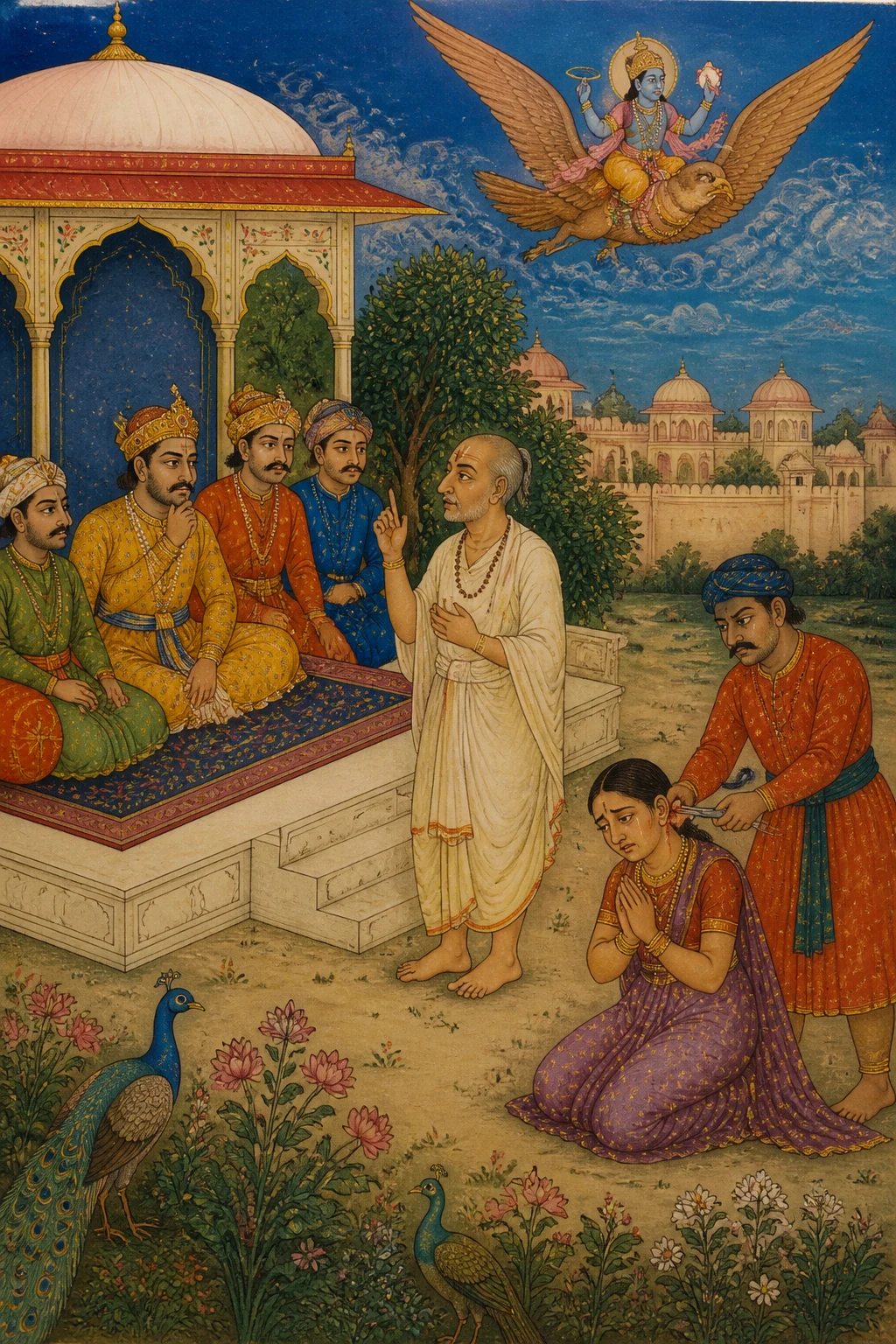
“This woman has lost her nose through her own actions. Let her ears now be cut off as the king’s punishment.” When this had been done, Devaśarmā, freed from his grief over the loss of his money, returned to his monastery. “That is why I say, ‘The jackal through the battle of the rams’ (1.174).” Karaṭaka asked, “In such a predicament, what are we to do?”
Damanaka replied, “Even in these circumstances my ingenuity will find a way to separate Sañjīvaka from our master. For it is said:
“An arrow loosed by an archer may kill one man, or none;
A scheme launched by a wise man may kill even those still in the womb.
“So, working in secret through an elaborate deception, I shall drive a wedge between them.”
Karaṭaka said, “My friend, if Piṅgalaka or Sañjīvaka somehow discovers your treachery, you will certainly be ruined.”
“My dear fellow,” he replied, “do not say that. Those who conceal their designs must use their intelligence in times of danger, even when fortune is hostile. They must not abandon their efforts. Sometimes, just as a worm’s gnawing happens to form a letter, a plan may chance to triumph. As it is said: One must not lose courage, even when fate is hostile;
Through courage a man may yet regain his footing.
Even when his ship has broken apart at sea,
The voyager still strives to save himself.
“And again: Fortune always comes to the man who works;
Only cowards keep saying, ‘Fate! It is all fate!’
Set fate aside and exert yourself with all your strength. If you strive and still fail, where is the blame?
“Knowing this, I shall use all the power of my hidden ingenuity to part those two without either of them discovering how. For it is said:
“Even Brahmā cannot fathom a well-executed deception:
A weaver, in Viṣṇu’s guise, enjoyed a princess.
Karaṭaka asked, “How did that happen?” Damanaka replied: Story 5: The Weaver and the Carpenter. In a certain town there lived two friends, a weaver and a carpenter. They had been companions since childhood, were deeply devoted to one another, and always spent their leisure together. One day a great festival was held at a temple in the town. As the two friends wandered through the crowds of actors, dancers, and bards, amid people gathered from many lands, they saw a princess who had come to worship the deity. She rode a female elephant, possessed every mark of beauty, and was surrounded by chamberlains and eunuchs. At the sight of her, the weaver was struck by the arrows of love. As though poisoned or possessed by an evil spirit, he suddenly fell to the ground. Seeing him in this state, the carpenter was distressed by his suffering and had trusted men lift him up and carry him home. There,
after a long time, he was at last brought back to consciousness by various cooling remedies prescribed by physicians and by the ministrations of those skilled in charms.
Then the carpenter asked him, “My friend, why did you suddenly lose consciousness like that? Tell me what is wrong.” He replied, “My dear friend, if you must know, hear my secret. I will tell you all my suffering. If you consider me your friend, do me the kindness of providing wood for my funeral pyre. And forgive whatever wrong I may have done you through excessive familiarity.” Hearing this, the carpenter’s eyes filled with tears, and he said in a faltering voice, “My friend, tell me the cause of your distress, so that we may remedy it, if a remedy is possible. For it is said:
“There is nothing within this universe that cannot be accomplished
By medicines, wealth, sound counsel, or the wisdom of great souls.
“If any of these four can achieve it, I shall bring it about.”
The weaver said, “My friend, my suffering is beyond the reach of these or a thousand other remedies. So do not delay my death.”
The carpenter said, “My friend, even if it is incurable, tell me what it is. Then, knowing there is no remedy, I too can enter the fire with you. I will not bear separation from you even for a moment. This is my resolve.”
The weaver said, “My friend, you remember the princess we saw riding an elephant at the festival? From the moment I saw her, the god of love, whose banner bears the sea-monster, reduced me to this state. I cannot endure the pain. As it is said: When shall I, weary from lovemaking,
Lay my chest upon her saffron-moistened breasts, rounded like the swelling temples of a rutting elephant,
And, enclosed within the cage of her arms,
Sleep for a moment, having won union with her?
“And again: Her lips are red as bimba fruit; her twin breasts are rounded jars, proud with youth;
Her navel is deep, her hair naturally curling, and her waist slender.
Let these, when I think of them, torment my heart as fiercely as they please;
But that her clear, unblemished cheeks should burn me again and again—this is not right!
Hearing this lovesick speech, the carpenter smiled and said, “My friend, if that is all, then good fortune has already granted our wish! You shall be united with her this very night.”
The weaver said, “My friend, no one but the wind can enter the princess’s apartments, and guards are stationed everywhere. How can I possibly meet her there? Why do you mock me with false promises?”
The carpenter replied, “My friend, watch what my ingenuity can do.”
With these words he at once fashioned from light vāyuja wood a Garuḍa that moved by means of a peg, together with an extra pair of arms, a conch, discus, mace, and lotus, a crown, and the Kaustubha jewel. He dressed the weaver in Viṣṇu’s emblems, seated him on the bird, and showed him how to operate the peg. Then he said, “My friend, go in this guise of Viṣṇu to the princess’s apartments at midnight. You will find her alone in her chamber at the top of the seven-storied palace. She is innocent by nature and will take you for Vāsudeva. Charm her with your cunning, deceitful words, and make love to her in the manner taught by Vātsyāyana.” The weaver did as he was told. Arriving there in this guise, he said, “Princess, are you asleep or awake? For love of you I have left Lakṣmī and come here from the ocean. Grant me union with you.” Seeing him mounted on Garuḍa, four-armed, bearing his weapons and adorned with the Kaustubha jewel, she rose from her bed in astonishment and said, “Lord, I am only a mortal woman, an impure little creature. You are worthy of worship and purify the three worlds. How can such a union be fitting?”
The weaver said, “Lovely one, what you say is true. But long ago I had a wife named Rādhā, born among the cowherds. You are she, descended to earth in this form. That is why I have come.”
At this she said, “Lord, if that is so, ask my father for me. He will give me to you without hesitation.”
The weaver said, “Lovely one, I do not show myself to mortals, much less speak with them. Give yourself to me in a gandharva marriage, by mutual consent. Otherwise I shall curse your father and reduce him and all his family to ashes.” Having said this, he dismounted from Garuḍa, took her left hand, and led her, trembling with fear and shame, to the bed. There he enjoyed her for the rest of the night in the manner taught by Vātsyāyana, and at dawn returned unseen to his own house. So time passed, with him visiting her every night. One day the chamberlains noticed that the tender red of her lower lip was bitten, and said to one another, “Look! The princess’s body bears marks as though she has been enjoyed by a man. How can such a thing happen in these closely guarded apartments? We must report it to the king.” Having agreed on this, they went together to the king and said, “Your Majesty, we cannot explain it, but someone is entering the princess’s apartments, closely guarded though they are. It is for Your Majesty to decide what must be done.” Hearing this, the king was deeply troubled and reflected: “The birth of a daughter brings great anxiety;
To whom to give her in marriage brings endless deliberation.
And once she is given, will she find happiness or not?
To be the father of a daughter is hard indeed.
“Rivers and women are alike in their power;
The banks of the one are like the families of the other.
Rivers bring down their banks with their waters,
And women their families with their faults.
“At birth she steals her mother’s heart;
She grows along with the anxieties of her loved ones.
Even when given to another, she may bring disgrace:
Daughters are calamities, a succession of troubles.
After brooding over these and many other thoughts, he spoke to the queen in private. “My queen, find out what these chamberlains are talking about. Death must be angry with the man who dares to do such a thing.”
Alarmed by what she heard, the queen hurried to the princess’s apartments. She saw that her daughter’s lips were bitten and her limbs marked with scratches. “You wicked girl!” she cried. “You disgrace to your family! What have you done to your chastity? What man, marked out by Death, comes here to you? Tell me the truth at once!” As her mother assailed her with these furious words, the princess bowed her face in fear and shame and replied, “Mother, it is Nārāyaṇa himself who comes every night, riding on Garuḍa. If you do not believe me, hide yourself well at midnight and see with your own eyes the blessed husband of Lakṣmī.” Hearing this, the queen’s face broke into a smile, and her whole body thrilled with joy. She hurried to the king and said, “Your Majesty, rejoice in your good fortune! Every midnight the blessed Nārāyaṇa comes to our daughter. He has married her by the gandharva rite. Tonight you and I must watch him from the window, for he does not speak with mortals.” The king was overjoyed, and somehow passed that day, though it seemed a hundred years long. At night he stood hidden with the queen at a window, his eyes fixed on the sky. Presently he saw Nārāyaṇa descending through the air on Garuḍa, bearing conch, discus, mace, and lotus, and adorned with all the emblems already described. Feeling as though he had been flooded with nectar, he said to her, “My beloved, no one in the world is more fortunate than you and I! Nārāyaṇa enjoys our daughter. All our wishes are fulfilled. Now, through the power of my son-in-law, I shall bring the whole earth under my sway.”
Having made this resolve, he began to violate his agreements with all the neighboring kings. Seeing his disregard for their established boundaries, they united and made war upon him.
Meanwhile, through the queen, the king sent this message to his daughter: “My child, with you for my daughter and the blessed Nārāyaṇa for my son-in-law, how can it be fitting that all these kings should wage war on me? Speak to your husband today, and ask him to destroy my enemies.” That night she respectfully said to the weaver, “Lord, it is not fitting that my father should be humiliated by his enemies when you are his son-in-law. Be gracious and destroy them all.”
The weaver replied, “Lovely one, what do these enemies of your father amount to? Rest assured: with my Sudarśana discus I shall cut them all into fragments no bigger than sesame seeds in an instant.”
As time passed, the enemies devastated the whole kingdom, leaving the king nothing but his fortress walls. Still unaware that the man in Vāsudeva’s guise was a weaver, the king continued to send him daily gifts, with ever greater generosity: exquisite perfumes of camphor, aloeswood, musk, and the like, clothes of many kinds, flowers, food, and drink. Through his daughter he sent this message: “Lord, the fortress will surely fall tomorrow morning. Our fodder and fuel are exhausted. The people are battered by wounds and unable to fight, and many have died. Knowing this, do whatever is fitting at this hour.” Hearing this, the weaver thought, “If the fortress falls, I shall be parted from her. So I shall mount Garuḍa and show myself in the sky with my weapons. Perhaps they will take me for Vāsudeva and lose heart, and the king’s soldiers will kill them. For it is said:
“Even a snake without venom should spread a mighty hood.
Venom or no venom, the display of the hood inspires fear.
“And if I die while striving to defend the kingdom, so much the better. For it is said:
“He who gives his life for cows, for Brahmins, for his master, for a cause he has embraced,
Or for the defense of his land, wins everlasting worlds.
“When the moon takes its place within the sun’s disk, Rāhu attacks the lord of day.
For the noble, even danger is glorious when shared with one who has sought their protection.
Having resolved on this, he cleaned his teeth at dawn and said to her, “Lovely one, only after all the enemies have been slain shall I taste food or drink. What is more, only then shall I make love to you again. Tell your father that at dawn he must march out of the city with a great army and give battle. I shall remain in the sky and rob them all of their strength. After that he can kill them easily. If I were to slay them myself, those wicked men would attain Vaikuṇṭha, my heavenly abode. We must therefore arrange for them to be killed as they flee, so that they do not reach heaven.” Hearing this, she went to her father and told him everything. Trusting her words, the king rose at dawn, equipped his army, and marched out to battle. The weaver too, resolved to die, mounted Garuḍa and flew out to battle, bow in hand. Meanwhile, the blessed Nārāyaṇa, who knows past, present, and future, thought of Garuḍa, and the bird appeared at once. With a smile the god said, “Garuḍa, do you know that a weaver has assumed my form and, riding a wooden Garuḍa, is making love to a princess?” Garuḍa replied, “Lord, I know all that he has done. What are we to do now?”
The blessed Lord said, “Today the weaver has made his vows and gone out to battle, resolved to die. The foremost warriors will surely join forces and strike him down. People will say, ‘Vāsudeva and Garuḍa have been slain,’ and thereafter this world will cease to worship us. So go at once and enter that wooden Garuḍa. I shall enter the weaver’s body, enabling him to destroy the enemies. Their destruction will enhance the glory of us both.” Garuḍa agreed, and the blessed Nārāyaṇa entered the weaver’s body. Then, through the Lord’s power, the weaver, hovering in the sky and bearing conch, discus, mace, and bow, effortlessly deprived all the foremost warriors of their strength in an instant. The king and his army defeated and killed every one of their enemies in battle. Word spread among the people: “Through the power of his son-in-law Viṣṇu, the king has destroyed all his enemies.” The weaver, delighted to see them slain, descended from the sky. When the king, his ministers, and the townspeople saw that he was a weaver who lived in their own town, they asked him what it all meant. He told them everything from the beginning. The king, whose glory had risen with the destruction of his enemies, was so pleased by the weaver’s daring that he gave him the princess in a formal marriage before all the people, and granted him a province as well. The weaver passed his days with her, enjoying the fivefold pleasures of the senses, the very essence of life in this world. “That is why it is said, ‘A well-executed deception’ (218).” *********************************************************************** Hearing this, Karaṭaka said, “My friend, that may be so. Yet I am still very much afraid. Sañjīvaka is intelligent, and the lion is fierce. Clever though you may be, you will never be able to separate him from Piṅgalaka.” Damanaka replied, “Brother, even one without strength can prove capable. For it is said:
“What can be achieved by a stratagem cannot always be achieved by force.
A female crow used a golden necklace to have a black snake killed.
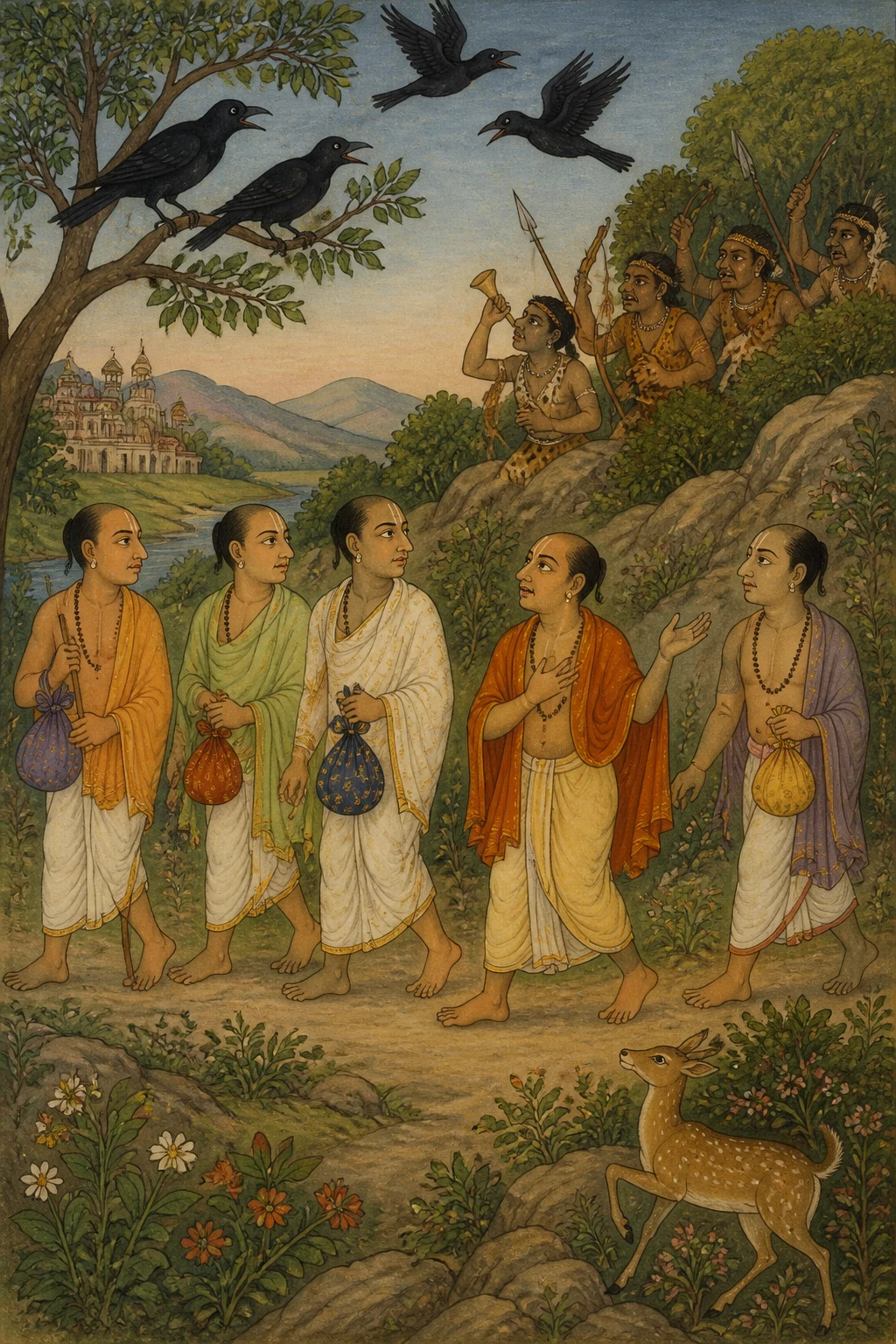
Karaṭaka asked, “How did that happen?” Damanaka replied: Story 6: The Pair of Crows. In a certain place stood a great banyan tree, where a pair of crows lived. Whenever they hatched a brood, a black snake would come out of a hollow in the tree and devour their young. In despair, they went to a dear friend, a jackal who lived at the foot of another tree, and said, “My friend, what are we to do in such a plight? This wicked black snake keeps coming out of the hollow in our tree and eating our little ones. Tell us some way to protect them.
“He whose field lies on a riverbank, whose wife consorts with another man,
Izvirnik
Tantra 01 mitra-bheda chunk 5
Naslednje strani prikazujejo izvirno besedilo za primerjavo.
Source ID: panchatantra_gretil_tantra_01_chunk_05
Source URL: https://gretil.sub.uni-goettingen.de/gretil/1_sanskr/5_poetry/4_narr/vispancu.htm
atha vadhya-sthāne nīyamānaṃ tam avalokya deva-śarmā tān dharmādhikṛtān gatvā provāca-bho bhoḥ, anyānyenaiṣa varāko vadhyate nāpitaḥ | sādhu-samācāra eṣaḥ | tac chrūyatāṃ me vākyam-jambūko huḍu-yuddhena iti |
atha te sabhyā ūcuḥ-bho bhagavan ! katham etat ?
tato devaśarmā teṣāṃ trayāṇām api vṛttāntaṃ vistareṇākathayat | tad ākarṇya suvismita-manasas te nāpitaṃ vimocya mithaḥ procuḥ-aho !
avadhyā brāhmaṇā gāvo striyo bālāś ca jñātayaḥ |
yeṣāṃ cānnāni bhuñjīta ye ca syuḥ śaraṇāgatāḥ
tad asyā nāsikā-cchedaḥ sva-karmaṇā hi saṃvṛttaḥ | tato rāja-nigrahas tu karṇa-cchedaḥ kāryaḥ | tathānuṣṭhite devaśarmāpi vitta-nāśa-samudbhūta-śoka-rahitaḥ punar api svakīyaṃ maṭhāyatanaṃ jagāma | ato 'haṃ bravīmi-jambūko huḍu-yuddhena (1.174) iti |
karaṭaka āha-evaṃ-vidhe vyatikare kiṃ kartavyam āvayoḥ ?
damanako 'bravīt-evaṃ-vidhe'pi samaye mama buddhi-sphuraṇaṃ bhaviṣyati, yena sañjīvakaṃ prabhor viśleṣayiṣyāmi | uktaṃ ca, yataḥ-
ekaṃ hanyān na vā hanyād iṣuḥ kṣipto dhanuṣmatā |
prājñena tu matiḥ kṣiptā hanyād garbha-gatān api
tad ahaṃ māyā-prapañcena guptam āśritya taṃ sphoṭayiṣyāmi |
karaṭaka āha-bhadra, yadi katham api tava māyā-praveśaṃ piṅgalako jñāsyati, sañjīvako vā tadā nūnaṃ vighāta eva |
so 'bravīt-tāta, maivaṃ vada | gūḍha-buddhibhir āpat-kāle vidhure'pi daive buddhiḥ prayoktavyā | nodyamas tyājyaḥ | kadācid ghuṇākṣara-nyāyena buddheḥ sāmrājyaṃ bhavati | uktaṃ ca-
tyājyaṃ na dhairyaṃ vidhure'pi daive
dhairyāt kadācit sthitm āpnuyāt saḥ |
yāte samudre'pi hi pota-bhaṅge
sāṃyātriko vāñchati karma eva
tathā ca-
udyoginaṃ satatam atra sameti lakṣmīr
daivaṃ hi daivam iti kāpuruṣā vadanti |
daivaṃ nihatya kuru pauruṣam ātma-śaktyā yatne kṛte yadi na sidhyati ko 'tra doṣaḥ
tad evaṃ jñātvā sugūḍha-buddhi-prabhāveṇa yathā tau dvāv api na jñāsyataḥ, tathā mitho viyojayiṣyāmi | uktaṃ ca-
suprayuktasya dambhasya brahmāpy antaṃ na gacchati |
kauliko viṣṇu-rūpeṇa rāja-kanyāṃ niṣevate
karaṭaka āha-katham etat ?
so 'bravīt-
kathā 5
kaulika-rathakāra-kathā
kasmiṃścid adhiṣṭhāne kaulika-rathakārau mitre prativasataḥ sma | tatra ca bālyāt-prabhṛti sahacāriṇau parasparam atīva sneha-parau sadaika-sthāna-vihāriṇau kālaṃ nayataḥ | atha kadācit tatrādhiṣṭhāne kasmiṃścid devāyatane yātrā-mahotsavaḥ saṃvṛttaḥ | tatra ca naṭa-nartaka-cāraṇa-saṅkule nānā-deśāgata-janāvṛte tau sahacarau bhramantau kāñcid rāja-kanyāṃ kareṇukārūḍhāṃ sarva-lakṣaṇa-sanāthāṃ kañcuki-varṣa-dhara-parivāritāṃ devatā-darśanārthaṃ samāyātāṃ dṛṣṭavantau | athāsau kaulikas tāṃ dṛṣṭvā viṣārdita iva duṣṭa-graha-gṛhīta iiva kāma-śarair hanyamānaḥ sahasā bhūtale nipapāta | atha taṃ tad-avastham avalokya rathakāras tad-duḥkha-duḥkhita āpta-puruṣais taṃ samutkṣipya sva-gṛham ānāyayat | tatra
ca vividhaiḥ śītopacāraiś cikitsakopadiṣṭair mantra-vādibhir upacaryamāṇaiś cirāt kathaṃcit sa-cetano babhūva |
tato rathakāreṇa pṛṣṭaḥ-bho mitra ! kim evaṃ tvam akasmād vicetanaḥ sañjātaḥ ? tat kathyatām ātma-svarūpam ?
sa āha-vayasya ! yady evaṃ tac chṛṇu me rahasyaṃ yena sarvām ātma-vedanāṃ te vadāmi | yadi tvaṃ māṃ suhṛdaṃ manyase tataḥ kāṣṭha-pradānena prasādaḥ kriyatām | kṣamyatāṃ yad vā kiñcit praṇay>atirekād ayuktaṃ tava mayānuṣṭhitam |
so 'pi tad ākarṇya bāṣpa-pihita-nayanaḥ sa-gadgadam uvāca-vayasya, yat kiñcid duḥkha-kāraṇaṃ tad vada yena pratīkāraḥ kriyate, yadi śakyate kartum | uktaṃ ca-
auṣadhārtha-sumantrāṇāṃ buddheś caiva mahātmanām |
asādhyaṃ nāsti loke'tra yad brahmāṇḍasya madhyagam
tad eṣāṃ caturṇāṃ yadi sādhyaṃ bhaviṣyati tadāhaṃ sādhayiṣyāmi |
kaulika āha-vayasya, eteṣām anyeṣām api sahasrāṇām upāyānām asādhyaṃ tan me duḥkham | tasmān mama maraṇe mā kāla-kṣepaṃ kuru |
rathakāra āha-bho mitra ! yadyapy asādhyaṃ tathāpi nivedaya yenāham api tad asādhyaṃ matvā tvayā samaṃ vahnau praviśāmi | na kṣaṇam api tvad-viyogaṃ sahiṣye | eṣa me niścayaḥ |
kaulika āha-vayasya, yāsau rāja-kanyā kareṇum ārūḍhā tatrotsave dṛṣṭā, tasyā darśanānantaraṃ makara-dhvajena mameyam avasthā vihitā | tan na śaknomi tad-vedanāṃ soḍhum | tathā coktam-
mattebha-kumbha-pariṇāhini kuṅkumārdre
tasyāḥ payodhara-yuge rati-kheda-khinnaḥ |
vakṣo nidhāya bhuja-pañjara-madhya-vartī
svapsye kadā kṣaṇam avāpya tadīya-saṅgam
tathā ca-
rāgī bimbādharo 'sau stana-kalaśa-yugaṃ yauvanārūḍha-garvaṃ
nīcā nābhiḥ prakṛtyā kuṭilakam alakaṃ svalpakaṃ cāpi madhyam |
kurvatv etāni nāma prasabham iha manaś cintitāny āśu khedaṃ
yan māṃ tasyāḥ kapolau dahata iti muhuḥ svacchakau tan na yuktam
rathakāro 'py evaṃ sa-kāmaṃ tad-vacanam ākarṇya sa-smitam idam āha-vayasya ! yady evaṃ tarhi diṣṭyā siddhaṃ naḥ prayojanam | tad adyaiva tayā saha samāgamaḥ kriyatām iti |
kaulika āha-vayasya, yatra kanyāntaḥpure vāyuṃ muktvā nānyasya praveśo 'sti tatra rakṣā-puruṣādhiṣṭhite kathaṃ mama tasyā saha samāgamaḥ ? tat kiṃ mām asatya-vacanena viḍambayasi ?
rathakāra āha-mitra, paśya me buddhi-balam |
evam abhidhāya tat-kṣaṇāt kīla-sañcāriṇaṃ vainateyaṃ bāhu-yugalaṃ vāyuja-vṛkṣa-dāruṇā śaṅkha-cakra-gadā-padmānvitaṃ sa-kirīṭa-kaustubham aghaṭayan | tatas tasmin kaulikaṃ samāropya viṣṇu-cihnitaṃ kṛtvā kīla-sañcaraṇa-vijñānaṃ ca darśayitvā provāca-vayasya, anena viṣṇu-rūpeṇa gatvā kanyāntaḥpure niśīthe tāṃ rājakanyām ekākinīṃ sapta-bhūmika-prāsāda-prānta-gatāṃ mugdha-svabhāvāṃ tvāṃ vāsudevaṃ manyamānāṃ svakīya-mithyā-vakroktibhī rañjayitvā vātsyāyanokta-vidhinā bhaja |
kauliko 'pi tad ākarṇya tathā-rūpas tatra gatvā tām āha-rāja-putri, suptā kiṃ vā jāgarṣi ? ahaṃ tava kṛte samudrāt sānurāgo lakṣmīṃ vihāyaivāgataḥ | tat kriyatāṃ mayā saha samāgamaḥ iti |
sāpi garuḍārūḍhaṃ caturbhujaṃ sāyudhaṃ kaustubhopetam avalokya sa-vismayā śayanād utthāya provāca-bhagavan ! ahaṃ mānuṣī kīṭikāśuciḥ | bhagavāṃs trailokya-pāvano vandanīyaś ca | tat katham etad yujyate |
kaulika āha-subhage, satyam abhihitaṃ bhavatyā | paraṃ kiṃ tu rādhā nāma me bhāryā gopa-kula-prasūtā prathama āsīt | sā tvam atrāvatīrṇā | tenāham atrāyātaḥ |
ity uktā sā prāha-bhagavan, yady evaṃ tan me tātaṃ prārthaya | so 'py avikalpaṃ māṃ tubhyaṃ prayacchati |
kaulika āha-subhage, nāhaṃ darśana-pathaṃ mānuṣāṇāṃ gacchāmi | kiṃ punar ālāpa-karaṇam | tvaṃ gāndharveṇa vivhāneātmānaṃ prayaccha | no cec chāpaṃ dattvā sānvayaṃ te pitaraṃ bhasmasāt kariṣyāmi iti | evam abhidhāya garuḍād avatīrya savye pāṇau gṛhītvā tāṃ sabhayāṃ salajjāṃ vepamānāṃ śayyāyām ānayat | tataś ca rātri-śeṣaṃ yāvad vātsyāyanokta-vidhinā niṣevya pratyūṣe sva-gṛham alakṣito jagāma |
evaṃ tasya tāṃ nityaṃ sevamānasya kālo yāti | atha kadācit kañcukinas tasyā adharoṣṭha-pravāla-khaṇḍanaṃ dṛṣṭvā mithaḥ procuḥ-aho ! paśyatāsyā rāja-kanyāyāḥ puruṣopabhuktāyā iva śarīrāvayavā vibhāvyante | tat katham ayaṃ surakṣite'py asmin gṛha evaṃvidho vyavahāraḥ | tad rājñe nivedayāmaḥ |
evaṃ niścitya sarve sametya rājānaṃ procuḥ-deva ! vayaṃ na vidmaḥ | paraṃ surakṣite'pi kanyāntaḥ-pure kaścit praviśati | tad devaḥ pramāṇam iti | tac chrutvā rājātīva vyākulita-citto vyacintayat-
putrīti jātā mahatīha cintā
kasmai pradeyeti mahān vitarkaḥ |
dattvā sukhaṃ prāpsyati vā na veti
kanyā-pitṛtvaṃ khalu nāma kaṣṭam
nadyaś ca nāryaś ca sadṛk-prabhāvās
tulyāni kūlāni kulāni tāsām |
toyaiś ca doṣaiś ca nipātayanti
nadyo hi kūlāni kulāni nāryaḥ
jananī-mano harati jātavatī
parivardhate saha śucā suhṛdām |
para-sātkṛtāpi kurute malinaṃ
durita-kramā duhitaro vipadaḥ
evaṃ bahu-vidhaṃ vicintya devīṃ rahaḥ-sthāṃ provāca-devi, jñāyatāṃ kim ete kañcukino vadanti ? tasya kṛtāntaḥ kupito yenaitad evaṃ kriyate |
devy api tad ākarṇya vyākulī-bhūtā satvaraṃ kanyāntaḥpure gatvā tāṃ khaṇḍitādharāṃ nakha-vilikhita-śarīrāvayavāṃ duhitaram apaśyat | āha ca-āḥ pāpe ! kula-kalaṅka-kāriṇi ! kim eva śīla-khaṇḍanaṃ kṛtam | ko 'yaṃ kṛtāntāvalokitas tvat-sakāśam abhyeti | tat kathyatāṃ mamāgre satyam |
iti kopāṭopa-visaṅkaṭaṃ vadatyāṃ mātari rāja-putrī bhaya-lajjānatānanaṃ provāca-amba, sākṣān nārāyaṇaḥ pratyahaṃ garuḍārūḍho niśi samāyāti | ced asatyaṃ mama vākyam, tat sva-cakṣuṣā vilokayatu niguḍhatarā niśīthe bhagavantaṃ ramā-kāntam |
tac chrutvā sāpi prahasita-vadanā pulakāṅkita-sarvāṅgī satvaraṃ rājānam ūce-deva, diṣṭyā vardhase | nityam eva niśīthe bhagavān nārāyaṇaḥ kanyakā-pārśve'bhyeti | tena gāndharva-vivāhena sā vivāhitā | tad adya tvayā mayā ca rātrau vātāyana-gatābhyāṃ niśīthe draṣṭavyaḥ | yato na sa mānuṣaiḥ sahālāpaṃ karoti |
tac chrutvā harṣitasya rājñas tad dinaṃ varṣa-śata-prāyam iva kathañcij jagāma | tatas tu rātrau nibhṛto bhūtvā rājñī-sahito rājā vātāyanas-stho gaganāsakta-dṛṣṭir yāvat tiṣṭhati, tāvat tasmin samaye garuḍārūḍhaṃ taṃ śaṅka-cakra-gadā-padma-hastaṃ yathokta-cihnāṅkitaṃ vyomno 'vatarantaṃ nārāyaṇam apaśyat | tataḥ sudhā-pūra-plāvitam ivātmānaṃ manyamānas tām uvāca-priye ! nāsty anyo dhanyataro loke mattas tvattaś ca | tat prasūtiṃ nārāyaṇo bhajate | tat-siddhāḥ sarve'smākaṃ manorathāḥ | adhunā jāmātṛ-prabhāveṇa sakalām api vasumatīṃ vaśyāṃ kariṣyāmi |
evaṃ niścitya sarvaiḥ sīmādhipaiḥ saha maryādā-vyatikramam akarot | te ca taṃ maryādā-vyatikrameṇa vartamānam ālokya sarve sametya tena saha vigrahaṃ cakruḥ |
atrāntare sa rājā devī-mukhena tāṃ duhitaram uvāca-putri, tvayi duhitari vartamānāyāṃ nārāyaṇe bhagavati jāmātari sthite tat kim evaṃ yujyate yat sarve pārthivā mayā saha vigrahaṃ kurvanti | tat sambodhyo 'dya tvayā nija-bhartā, yathā mama śatrūn vyāpādayati |
tatas tayā sa kauliko rātrau sa-vinayam abhihitaḥ-bhagavan, tvayi jāmātari sthite mama tāto yac chatrubhiḥ paribhūyate tan na yuktam | tat prasādaṃ kṛtvā sarvāṃs tān śatrūn vyāpādaya |
kaulika āha-subhage ! kiyan-mātrās tv ete tava pituḥ śatravaḥ | tad-viśvastā bhava | kṣaṇenāpi sudarśana-cakreṇa sarvāṃs tilaśaḥ khaṇḍayiṣyāmi |
atha gacchatā kālena sarva-deśaṃ śatrubhir udvāsya sa rājā prākāra-śeṣaḥ kṛtaḥ | tathāpi vāsudeva-rūpa-dharaṃ kaulikam ajānan rāja nityam eva viśeṣataḥ karpūrāguru-kastūrikādi-parimala-viśeṣān nānā-prakāra-vastra-puṣpa-bhakṣya-peyāṃś ca preṣayan duhitṛ-mukhena tam ūce-bhagavan, prabhāte nūnaṃ sthāna-bhaṅgo bhaviṣyati | yato yavasendhana-kṣayaḥ sañjātas tathā sarvo 'pi janaḥ prahārair jarjarita-dehaḥ saṃvṛtto yoddhum akṣamaḥ pracuro mṛtaś ca | tad evaṃ jñātvātra kāle yad ucitaṃ bhavati tad vidheyam iti |
tac chrutvā kauliko 'py acintayat-sthāna-bhaṅge jāte mamānayā saha viyogo bhaviṣyati æ tasmād garuḍam āruhya sāyudham ātmānam ākāśe darśayāmi | kadācin māṃ vāsudevaṃ manyamānās te sāśaṅkā rājño yoddhṛbhir hanyate | uktaṃ ca-
nirviṣeṇāpi sarpeṇa kartavyā mahatī phaṇā |
viṣaṃ bhavatu vā mābhūt phaṇāṭopo bhayaṅkaraḥ
atha yadi mama sthānārtham udyatasya mṛtyur bhaviṣyati tad api sundarataram | uktaṃ ca-
gavām arthe brāhmaṇārthe svāmy-arthe svīkṛte'thavā |
sthānārthe yas tyajet prāṇāṃs tasya lokāḥ sanātanāḥ
candre maṇḍala-saṃsthe vigṛhyate rāhuṇā dinādhīśaḥ |
śaraṇāgatena sārdhaṃ vipad api tejasvinā ślāghyā
evaṃ niścitya pratyūṣe danta-dhāvanaṃ kṛtvā tāṃ provāca-subhage ! samastaiḥ śatrubhir hatair annaṃ pānaṃ cāsvādayiṣyāmi | kiṃ bahunā, tvayāpi saha saṅgamaṃ tataḥ kariṣyāmi | paraṃ vācyas tvayātma-pitā yat prabhāte prabhūtena sainyena saha nagarān niṣkramya yoddhavyam | ahaṃ cākāśa-sthita eva sarvāṃs tān nistejasaḥ kariṣyāmi | paścāt sukhena bhavatā hantavyāḥ yadi punar ahaṃ tān svayam eva sūdayāmi tat teṣāṃ pāpātmanāṃ vaikuṇṭhīyā gatiḥ syāt | tasmāt te tathā kartavyā yathā palāyanto hanyamānāḥ svargaṃ na gacchanti |
sāpi tad ākarṇya pituḥ samīpaṃ gatvā sarvaṃ vṛttāntaṃ nyavedayat | rājāpi tasyā vākyaṃ śraddadhānaḥ pratyūṣe samutthāya samunnaddha-sainyo yuddhārthaṃ niścakrāma | kauliko 'pi maraṇe kṛta-niścayaś cāpa-pāṇir gagana-gatir garuḍārūḍho yuddhāya prasthitaḥ |
atrāntare bhagavatā nārāyaṇenātītānāgata-vartamāna-vedinā, smṛta-mātro vainateyaḥ samprāpto vihasya proktaḥ-bho garutman ! jānāsi tvaṃ yan mama rūpeṇa kauliko dāru-maya-garuḍe samārūḍho rāja-kanyāṃ kāmayate |
so 'bravīt-deva, sarvaṃ jñāyate tac ceṣṭitam | tat kiṃ kurmaḥ sāmpratam ?
śrī-bhagavān āha-adya kauliko maraṇe kṛta-niścayo vihita-niyamo yuddhārthe vinirgataḥ sa nūnaṃ pradhāna-kṣatriyair militvā vāsudevo garuḍaś ca nipātitaḥ | tataḥ paraṃ loko 'yam āvayoḥ pūjāṃ na kariṣyati | tatas tvaṃ drutataraṃ tatra dāru-maya-garuḍe saṅkramaṇaṃ kuru | aham api kaulika-śarīre praveśaṃ kariṣyāmi | yena sa śatrūn vyāpādayati | tataś ca śatru-vadhād āvayor māhātmya-vṛddhiḥ syāt |
atha garuḍe tatheti pratipanne śrī-bhagavan-nārāyaṇas tac-charīre saṅkramaṇam akarot | tato bhagavan-māhātmyena gagana-sthaḥ sa kaulikaḥ śaṅkha-cakra-gadā-cāpa-cihnitaḥ kṣaṇād eva līlayaiva samastān api pradhāna-kṣatriyān nistejasaś cakārar | tatas tena rājñā sva-sainya-parivṛtena saṅgrāme jitā nihatāś ca te sarve'pi śatravaḥ | jātaś ca loka-madhye pravādo, yathā-anena viṣṇu-jāmātṛ-prabhāveṇa sarve śatravo nihatā iti |
kauliko 'pi tān hatān dṛṣṭvā pramudita-manā gaganād avatīrṇaḥ san, yāvad rājāmātya-paura-lokās taṃ nagara-vāstavyaṃ kaulikaṃ paśyanti tataḥ pṛṣṭaḥ kim etad iti | tataḥ so 'pi mūlād ārabhya sarvaṃ prāg-vṛttāntaṃ nyavedayat | tataś ca kaulika-sāhasānurañjita-manasā śatru-vadhād avāpta-tejasā rājñā sā rāja-kanyā sakala-jana-pratyakṣaṃ vivāha-vidhinā tasmai samarpitā deśaś ca pradattaḥ | kauliko 'pi tayā sārdhaṃ pañca-prakāraṃ jīva-loka-sāraṃ viṣaya-sukham anubhavan kālaṃ nināya | atas tūcyate suprayuktasya dambhasya (218) iti |
***********************************************************************
tac chrutvā karaṭaka āha-bhadra, asty evam | paraṃ tathāpi mahan me bhayam | yato buddhimān sañjīvako raudraś ca siṃhaḥ | yadyapi te buddhi-prāgalbhyaṃ tathāpi tvaṃ piṅgalakāt taṃ viyojayitum asamartha eva |
damanaka āha-bhrātaḥ ! asamartho 'pi samartha eva | uktaṃ ca-
upāyena hi yac chakyaṃ na tac chakyaṃ parākramaiḥ |
kākī kanaka-sūtreṇa kṛṣṇa-sarpam aghātayat
karaṭaka āha-katham etat ?
so 'bravīt-
kathā 6
vāyasa-dampati-kathā
asti kasmiṃścit pradeśe mahān nyagrodha-pādapaḥ | tatra vāyasa-dampatī prativasataḥ sma | atha tayoḥ prasava-kāle vṛkṣa-vivarān niṣkramya kṛṣṇa-sarpaḥ sadaiva tad-apatyāni bhakṣayati | tatas tau nirvedād anya-vṛkṣa-mūla-nivāsinaṃ priya-suhṛdaṃ śṛgālaṃ gatvocatuḥ-bhadra ! kim evaṃvidhe sañjāta āvayoḥ kartavyaṃ bhavati | evaṃ tāvad duṣṭātmā kṛṣṇa-sarpo vṛkṣa-vivarān nirgatyāvayor bālakān bhakṣayati | tat kathyatāṃ tad-rakṣārthaṃ kaścid upāyaḥ |
yasya kṣetraṃ nadī-tīre bhāryā ca para-saṅgatā |
Nadaljuj z branjem