Waltey
Tat in štirje brahmani
Pančatantra · indijska zbirka pripovediO besedilu
Tat in štirje brahmani
- Vir
- Pančatantra
- Avtor
- indijska zbirka pripovedi
- Jezik branja
- English
- Jezik izvirnika
- Sanskrit
- Čas branja
- 5 min branja
- Obseg
- 4 strani
- Naslov izvirnika
- Tantra 01 mitra-bheda chunk 12
O izvirniku
Pančatantra
Indijske zgodbe o zvijači, prijateljstvu in modrosti v svetu živali in vladarjev. Bralni jezik je English, izvirnik pa prihaja iz vira Pančatantra v jeziku Sanskrit.
Besedilo
Tat in štirje brahmani
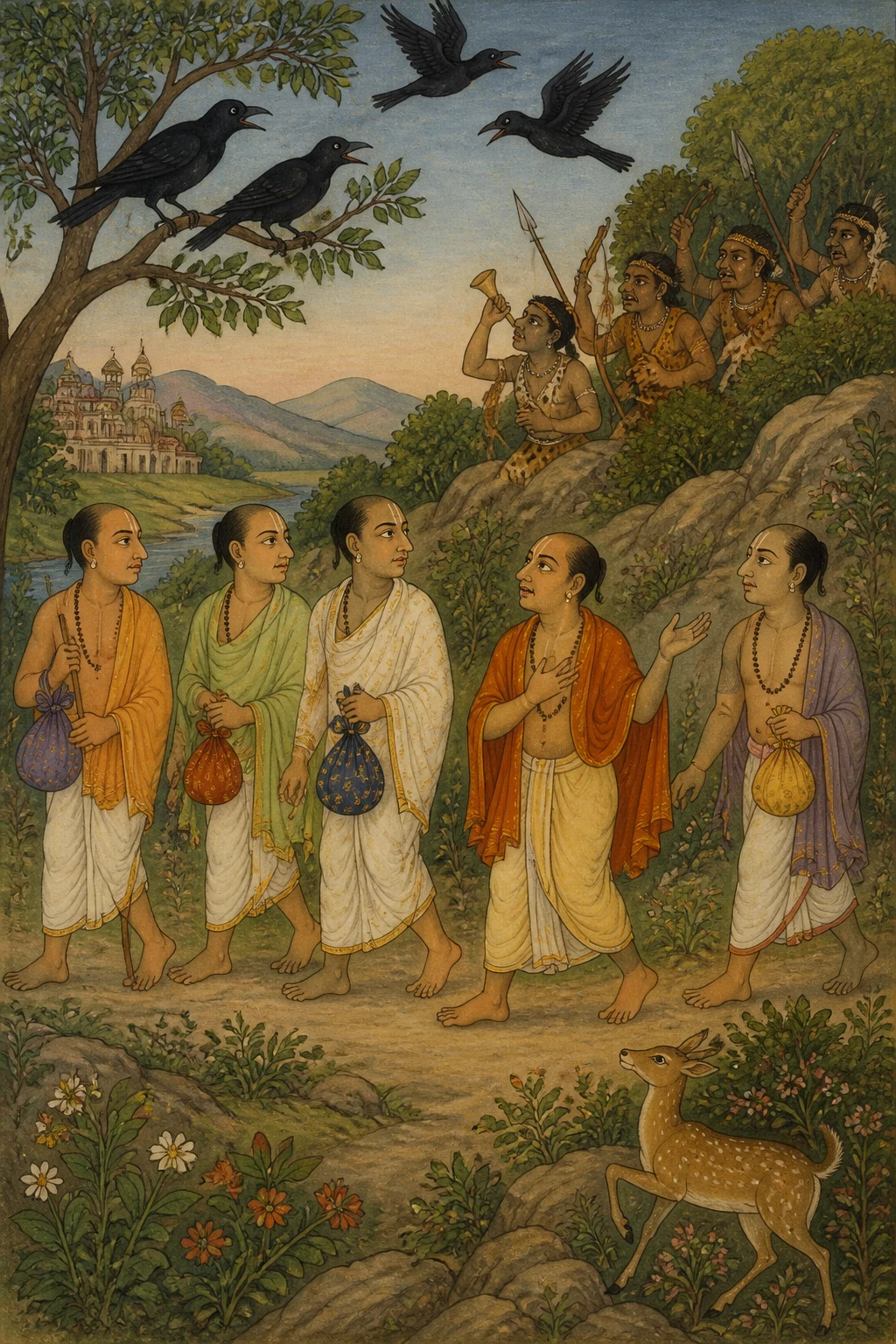
Now, in a certain city there lived a very learned Brahmin who, through the influence of a former birth, was nevertheless a thief. One day he saw four Brahmins who had come to that city from another country selling a great many goods, and he thought, “Ah, how can I get hold of their wealth?” Having considered the matter, he approached them and recited many fine sayings from the scriptures, speaking such delightful, honeyed words that he won their confidence. Then he began to serve them. Indeed, it is well said:
An unchaste woman puts on a modest air; brackish water may be cool.
A hypocrite appears discerning, and a rogue speaks pleasing words.
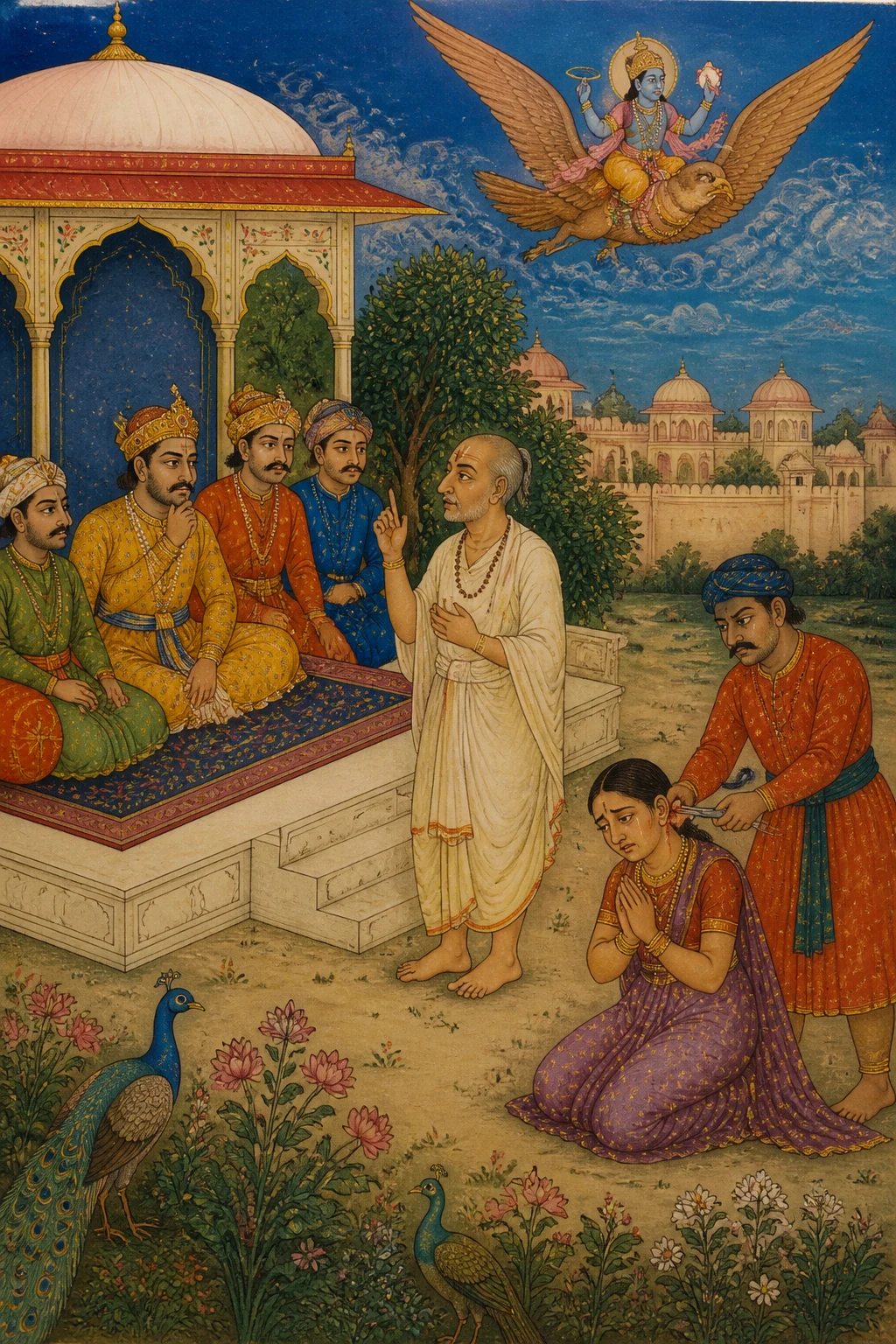
While he was serving them, the Brahmins sold all their goods and bought precious jewels. Then, in his presence, they concealed the jewels within their thighs and prepared to return to their own country. Seeing them ready to depart, the rogue of a Brahmin grew troubled and thought, “Alas, not a penny of this wealth has fallen into my hands! I shall go with them, then. Somewhere along the road I shall poison them, kill them, and take all the jewels.” With this in mind, he lamented pitifully before them and said, “My friends! Are you preparing to leave me all alone? My heart is bound to you by the cords of affection, and the very thought of parting from you has thrown it into such turmoil that I can find no peace anywhere. Be gracious to me and take me along as your companion.” Their hearts softened with compassion at his words, and they set out for their own country with him. As the five of them were passing through a settlement of forest tribespeople, crows began to call, “Ho there, Kirātas! Run, run! Men carrying a hundred and twenty-five thousand in wealth are passing by! Kill them and take their treasure!” Hearing the crows, the Kirātas hurried over, battered the Brahmins with clubs, stripped them, and searched them, but found no money at all. Then the Kirātas said, “Travelers! Never before have the crows’ words proved false. You must have wealth hidden somewhere about you. Hand it over, or we shall kill you all, slit open your skin, and search every limb until we find it.” Hearing this, the thief-Brahmin thought, “When they kill these Brahmins, search their bodies, and take the jewels, they will kill me too. So I shall offer myself first, with no jewels on me, and save these men. For it is said:
Why do you fear death, foolish one? It does not spare the frightened.
Whether today or at the end of a hundred years, death is certain for all living beings.
And again:
He who gives up his life for the sake of cows or Brahmins
Pierces the sun’s orb and attains the highest state.
Having made up his mind, he said, “Kirātas! If that is so, kill me first and search me.” They did as he asked, and, finding no wealth on him, released the other four.
***********************************************************************
“That is why I say, ‘Better an enemy who is wise.’”
While the two were talking in this way, Sañjīvaka fought with Piṅgalaka for a brief moment, then fell lifeless to the ground, struck down by his sharp claws. Seeing him dead, Piṅgalaka’s heart softened as he remembered his virtues, and he said, “Alas, what a wicked deed I have done in killing Sañjīvaka! There is no sin worse than betraying another’s trust. For it is said:
Those who betray a friend, who are ungrateful, or who break another’s trust—
Such men remain in hell as long as the moon and sun endure.
When a king loses territory,
Or loses a wise servant,
It is wrong to call the two losses equal:
Lost land is easily regained, but not a faithful servant.
“Besides, I have always praised him before the court. What shall I say to them now? For it is said:
One whom you have once proclaimed virtuous in the assembly
You must not later blame, if you fear contradicting your own word.”
As he lamented in this manner, Damanaka approached him joyfully and said, “Your Majesty, it is sheer faintheartedness to grieve like this after killing a treacherous grass-eater. Such conduct does not befit a king. For it is said:
Whether father, brother, son, wife, or friend—
Whoever threatens your life must be killed; there is no sin in it.
And again: A softhearted king, a Brahmin who eats anything,
A shameless woman, an evil-minded companion,
A defiant servant, an indulgent official—
All these should be cast off, as should anyone who forgets a kindness.
Moreover: Truthful and false, harsh and sweet-spoken,
Cruel and compassionate, acquisitive and generous,
Bringing great suffering and abundant wealth—
The policy of kings takes many forms, like a courtesan.
And further:
No one who causes no harm is honored, however mighty he may be.
People worship serpents, but not Garuḍa, the slayer of serpents.
And again:
You grieve for those who should not be grieved for, yet speak words of wisdom.
The wise mourn neither the dead nor the living.”
Thus counseled by Damanaka, Piṅgalaka put aside his grief for Sañjīvaka and ruled his kingdom with Damanaka as his minister.
Thus ends the first book, called “The Estrangement of Friends,” in the Pañcatantra composed by the illustrious Viṣṇuśarman.
*********************************************************************** Now begins “The Winning of Friends”
Izvirnik
Tantra 01 mitra-bheda chunk 12
Naslednje strani prikazujejo izvirno besedilo za primerjavo.
Source ID: panchatantra_gretil_tantra_01_chunk_12 Source URL: https://gretil.sub.uni-goettingen.de/gretil/1_sanskr/5_poetry/4_narr/vispancu.htm aparam ekasmin nagare ko 'pi vipro mahā-vidvān paraṃ pūrva-janma-yogena cauro vartate | tasmin pure'nya-deśād āgatāṃś caturo viprān bahūni vastūni vikrīṇato dṛṣṭvā cintitavān-aho kenopāyenaiṣāṃ dhanaṃ labhe | iti vicintya teṣāṃ puro 'nekāni śāstroktāni subhāṣitāni cātipriyāṇi madhurāṇi vacanāni jalpatā teṣāṃ manasi viśvāsam utpādya sevā kartum ārabdhā | athavā sādhv idam ucyate- asatī bhavati salajjā kṣāraṃ nīraṃ ca śītalaṃ bhavati | dambhī bhavati vivekī priyavaktā bhavati dhūrtajanaḥ atha tasmin sevāṃ kurvati tair vipraiḥ sarva-vastūni vikrīya bahu-mūlyāni ratnāni krītāni | tatas tāni jaṅghā-madhye tat-samakṣaṃ prakṣipya sva-deśaṃ prati gantum udyamo vihitaḥ | tataḥ sa dhūrta-vipras tān viprān gantum udyatān prekṣya cintā-vyākulita-manāḥ saṃjātaḥ-
aho dhanam etan na kiṃcin mama caṭitam | athaibhiḥ saha yāmi | pathi kvāpi viṣaṃ dattvaitān nihatya sarva-ratnāni gṛhṇāmi | iti vicintya teṣām agre sa-karuṇaṃ vilapyedam āha-bho mitrāṇi ! yūyaṃ mām ekākinaṃ muktvā gantum udyatāḥ | tan me mano bhavadbhiḥ saha sneha-pāśena baddhaṃ bhavad-viraha-nāmnaivākulaṃ sañjātaṃ yathā dhṛtiṃ kvāpi na dhatte | yūyam anugrahaṃ vidhāya sahāya-bhūtaṃ mām api sahaiva nayata | tad-vacaḥ śrutvā te karuṇārdra-cittās tena samam eva sva-deśaṃ prati prasthitāḥ | athādhvani teṣāṃ pañcānām api pallī-pura-madhye vrajatāṃ dhvāṅkṣāḥ kathayitum ārabdhāḥ-re re kirātāḥ ! dhāvata dhāvata | sa-pāda-lakṣa-dhanino yānti | etān nihatya dhanaṃ nayata | tataḥ kirātair dhvāṅkṣa-vacanam ākarṇya satvaraṃ gatvā te viprā laguḍa-prahārair jarjarī-kṛtya vastrāṇi mocayitvā vilokitāḥ, paraṃ dhanaṃ kiṃcin na labdham | tadā taiḥ kirātair abhihitam-bhoḥ pānthāḥ ! purā kadāpi dhvāṅkṣa-vacanam anṛtaṃ nāsīt | tato bhavatāṃ saṃnidhau kvāpi dhanaṃ vidyate tad arpayata | anyathā sarveṣām api vadhaṃ vidhāya carma vidārya pratyaṅgaṃ prekṣya dhanaṃ neṣyāmaḥ |
tadā teṣām īdṛśaṃ vacanam ākarṇya caura-vipreṇa manasi cintitam-yadaiṣāṃ viprāṇāṃ vadhaṃ vidhāyāṅgaṃ vilokya ratnāni neṣyanti, tadāpi māṃ vadhiṣyanti tato 'haṃ pūrvam evātmānam aratnaṃ samarpyaitān muñcāmi | uktaṃ ca- mṛtyor bibheṣi kiṃ bāla na sa bhītaṃ vimuñcati | adya vābda-śatānte vā mṛtyur vai prāṇināṃ dhruvaḥ tathā ca- gavārthe brāhmaṇārthe ca prāṇa-tyāgaṃ karoti yaḥ | sūryasya maṇḍalaṃ bhittvā sa yāti paramāṃ gatim iti niścityābhihitaṃ-bhoḥ kirātāḥ ! yady evaṃ tato māṃ pūrvaṃ nihatya vilokayata | tatas tais tathānuṣṭhite taṃ dhana-rahitam avalokyāpare catvāro 'pi muktāḥ | *********************************************************************** ato 'haṃ bravīmi-paṇḍito 'pi varaṃ śatruḥ iti | athaivaṃ saṃvadatoḥ sañjīvakaḥ kṣaṇam ekaṃ pīṅgalakena saha yuddhaṃ kṛtvā tasya khara-nakhara-prahārābhihito gatāsur vasundharā-pīṭhe nipapāta | atha taṃ gatāsum avalokya piṅgalakas tad-guṇa-smaraṇārdra-hṛdayaḥ provāca-bhoḥ, ayuktaṃ mayā pāpena kṛtaṃ sañjīvakaṃ vyāpādayatā | yato viśvāsa-ghātād anyan nāsti pāpataraṃ karma | uktaṃ ca-
mitra-drohī kṛtaghnaś ca yaś ca viśvāsa-ghātakaḥ | te narā narakaṃ yānti yāvac candra-divākarau bhūmi-kṣaye rāja-vināśa eva bhṛtyasya vā buddhimato vināśe | no yuktam uktaṃ hy anayoḥ samatvaṃ naṣṭāpi bhūmiḥ sulabhā na bhṛtyāḥ tathā mayā sabhā-madhye sa sadaiva praśaṃsitaḥ | tat kiṃ kathayiṣyāmi teṣām agrataḥ | uktaṃ ca- ukto bhavati yaḥ pūrvaṃ guṇavān iti saṃsadi | na tasya doṣo vaktavyaḥ pratijñā-bhaṅga-bhīruṇā evaṃ-vidhaṃ pralapantaṃ damanakaḥ sametya saharṣam idam āha-deva, kātaratamas tavaiṣa nyāyo yad droha-kāriṇaṃ śaṣpa-bhujaṃ hatvetthaṃ śocasi | tan naitad upapannaṃ bhūbhujām | uktaṃ ca- pitā vā yadi vā bhrātā putro bhāryāthavā suhṛt | prāṇa-drohaṃ yadā gacched dhantavyo nāsti pātakam
tathā ca- rājā ghṛṇī brāhmaṇaḥ sarva-bhakṣī strī cātrapā duṣṭamatiḥ sahāyaḥ | preṣyaḥ pratīpo 'dhikṛtaḥ prasādī tyājyā amī yaś ca kṛtaṃ na vetti api ca- satyānṛtā ca paruṣā priya-vādinī ca hiṃsrā dayālur api cārtha-parā vadānyā | bhūri-vyathā pracura-vitta-samāgamā ca veśyāṅganeva nṛpa-nītir aneka-rūpā api ca- akṛtopadravaḥ kaścin mahān api na pūjyate |
pūjayanti narā nāgān na tārkṣyaṃ nāga-ghātinam tathā ca- aśocyān anvaśocas tvaṃ prajñā-vādāṃś ca bhāṣase | gatāsūn agatāsūṃś ca nānuśocanti paṇḍitāḥ evaṃ tena sambodhitaḥ piṅgalakaḥ sañjīvaka-śokaṃ tyaktvā damanaka-sācivyena rājyam akarot | iti śrī-viṣṇu-śarma-viracite pañcatantre mitra-bhedo nāma prathamaṃ tantram *********************************************************************** atha mitra-samprāptiḥ
Nadaljuj z branjem