Prevod
While these things unfolded on earth under fate’s decree, and the cradle of twice-born Bacchus stood secure, Jupiter, they say, mellowed by nectar, happened to lay aside his weighty cares and, free of concern, joked playfully with Juno. “Surely your pleasure,” he said, “is greater than the pleasure men enjoy.” She denied it. They agreed to seek the judgment of wise Tiresias: he had known love as both sexes.
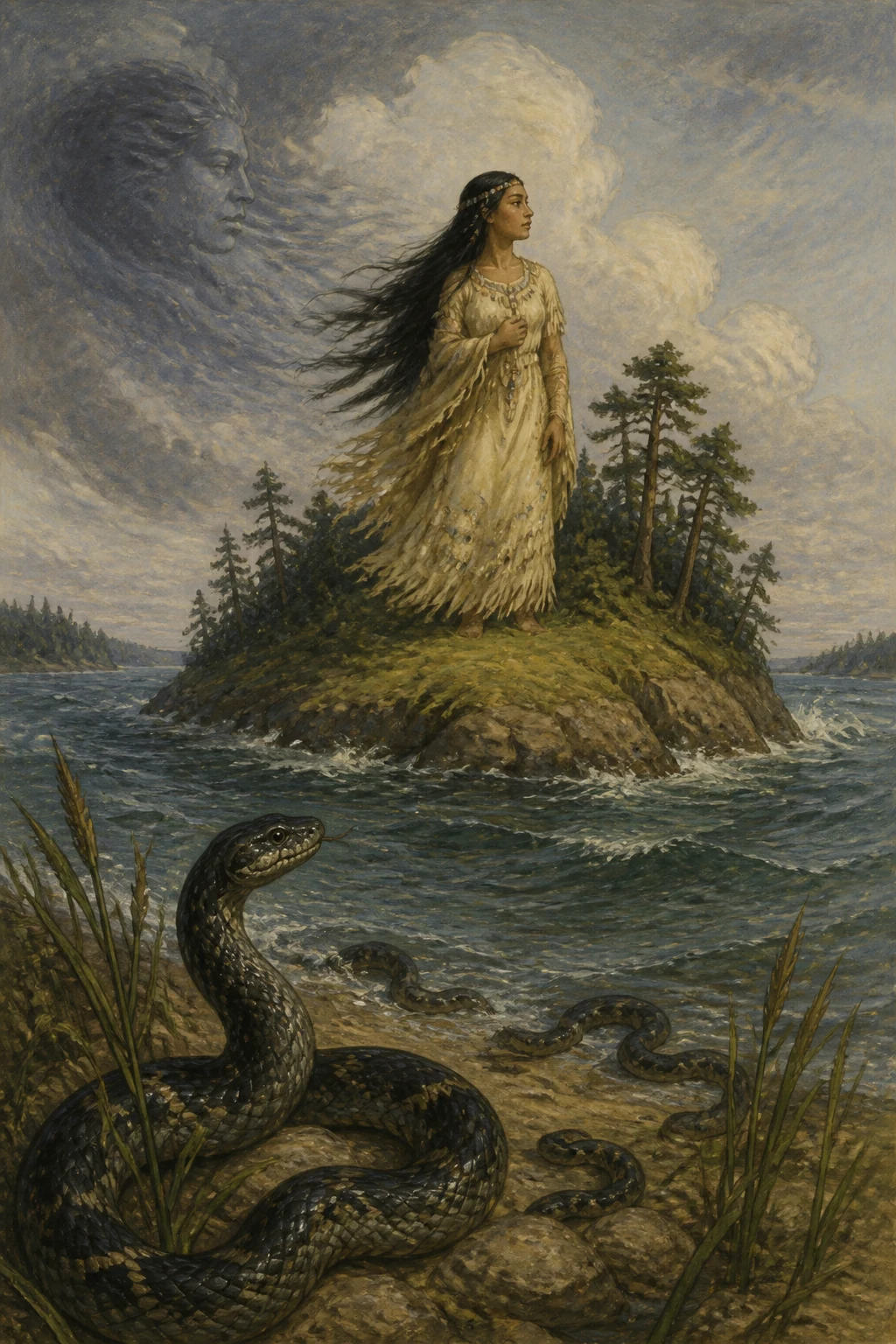
For once, in a green wood, he had struck with his staff the bodies of two great serpents as they mated; changed from a man into a woman—marvelous to tell— he had lived for seven autumns. In the eighth he saw them again. “If striking you has such power,” he said, “that it changes the striker’s lot to its opposite, I shall strike you again.” He struck those same snakes, and his former shape returned, his inborn form restored.
Chosen, then, to judge this playful quarrel, he upheld Jupiter’s claim. Saturn’s daughter, they say, took this harder than was just, or the matter warranted, and condemned her judge’s eyes to everlasting night. But the almighty father—for no god may undo another god’s deed—gave him, in return for his lost sight, the power to know the future, easing punishment with honor.
Izvirnik
Source ID: ovid_metamorphoses_story_021 Citation: Ovid, Metamorphoses 3.316-3.338 Original language: Latin Source: PerseusDL canonical-latinLit Source URL: https://github.com/PerseusDL/canonical-latinLit/blob/master/data/phi0959/phi006/phi0959.phi006.perseus-lat2.xml Segmentation certainty: medium 316: Dumque ea per terras fatali lege geruntur 317: tutaque bis geniti sunt incunabula Bacchi, 318: forte Iovem memorant, diffusum nectare, curas 319: seposuisse graves vacuumque agitasse remissos 320: cum Iunone iocos et “maior vestra profecto est, 321: quam quae contingit maribus” dixisse “voluptas.”
322: Illa negat. Placuit quae sit sententia docti 323: quaerere Tiresiae: venus huic erat utraque nota. 324: Nam duo magnorum viridi coeuntia silva 325: corpora serpentum baculi violaverat ictu; 326: deque viro factus (mirabile) femina septem 327: egerat autumnos. Octavo rursus eosdem 328: vidit, et “est vestrae si tanta potentia plagae” 329: dixit “ut auctoris sortem in contraria mutet, 330: nunc quoque vos feriam.” Percussis anguibus isdem 331: forma prior rediit genetivaque venit imago.
332: Arbiter hic igitur sumptus de lite iocosa 333: dicta Iovis firmat. Gravius Saturnia iusto 334: nec pro materia fertur doluisse, suique 335: iudicis aeterna damnavit lumina nocte. 336: At pater omnipotens (neque enim licet inrita cuiquam 337: facta dei fecisse deo) pro lumine adempto 338: scire futura dedit, poenamque levavit honore.