O besedilu
Okiroa in Eskulap
- Vir
- Ovidove preobrazbe
- Avtor
- Ovid
- Jezik branja
- English
- Jezik izvirnika
- Latin
- Čas branja
- 3 min branja
- Obseg
- 2 strani
- Naslov izvirnika
- Ocyrhoe and Aesculapius
O izvirniku
Ovidove preobrazbe
Pesniški tok antičnih preobrazb, kjer bogovi, ljudje in narava stalno menjavajo obliko. Bralni jezik je English, izvirnik pa prihaja iz vira Ovidove preobrazbe v jeziku Latin.
Besedilo
Okiroa in Eskulap
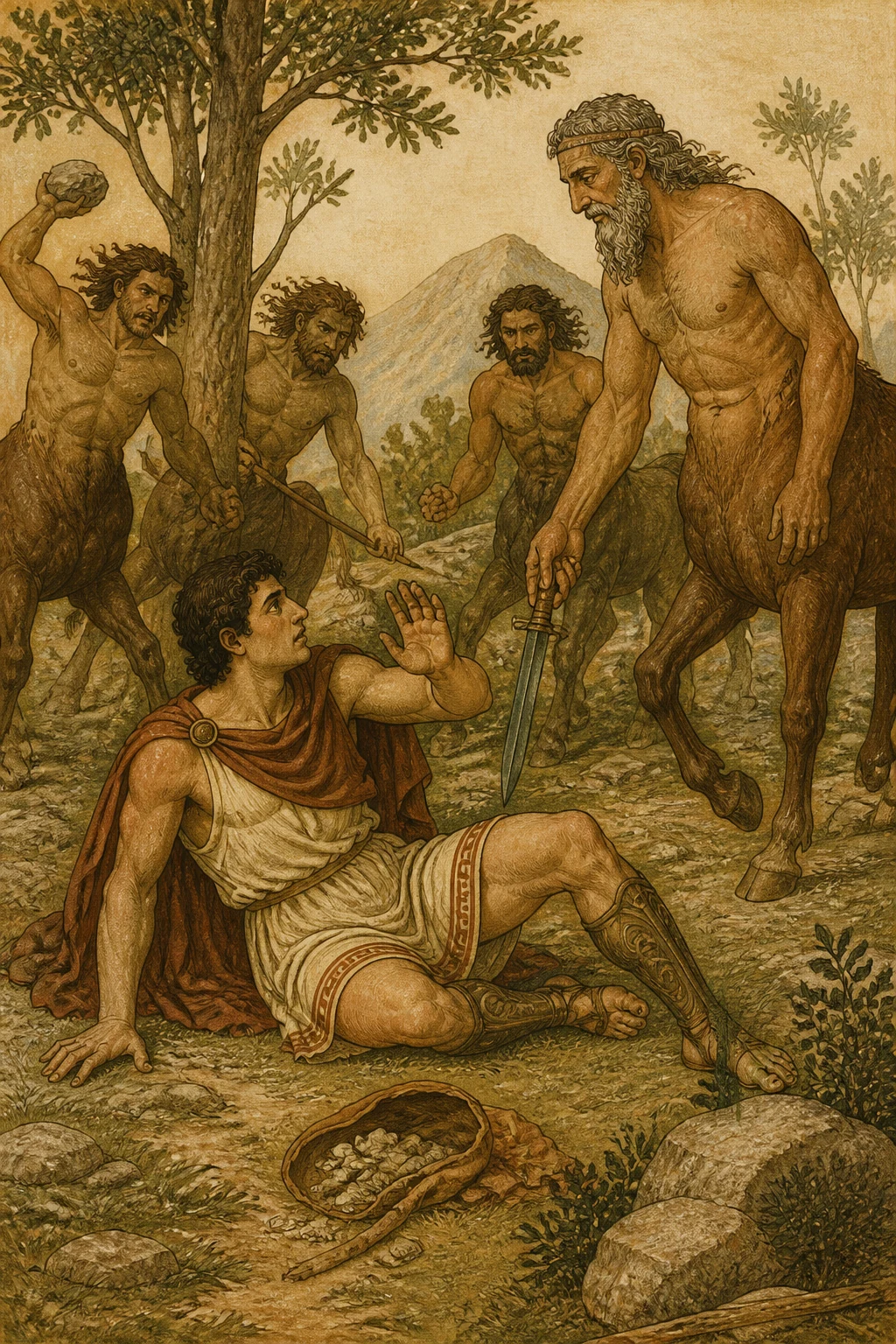
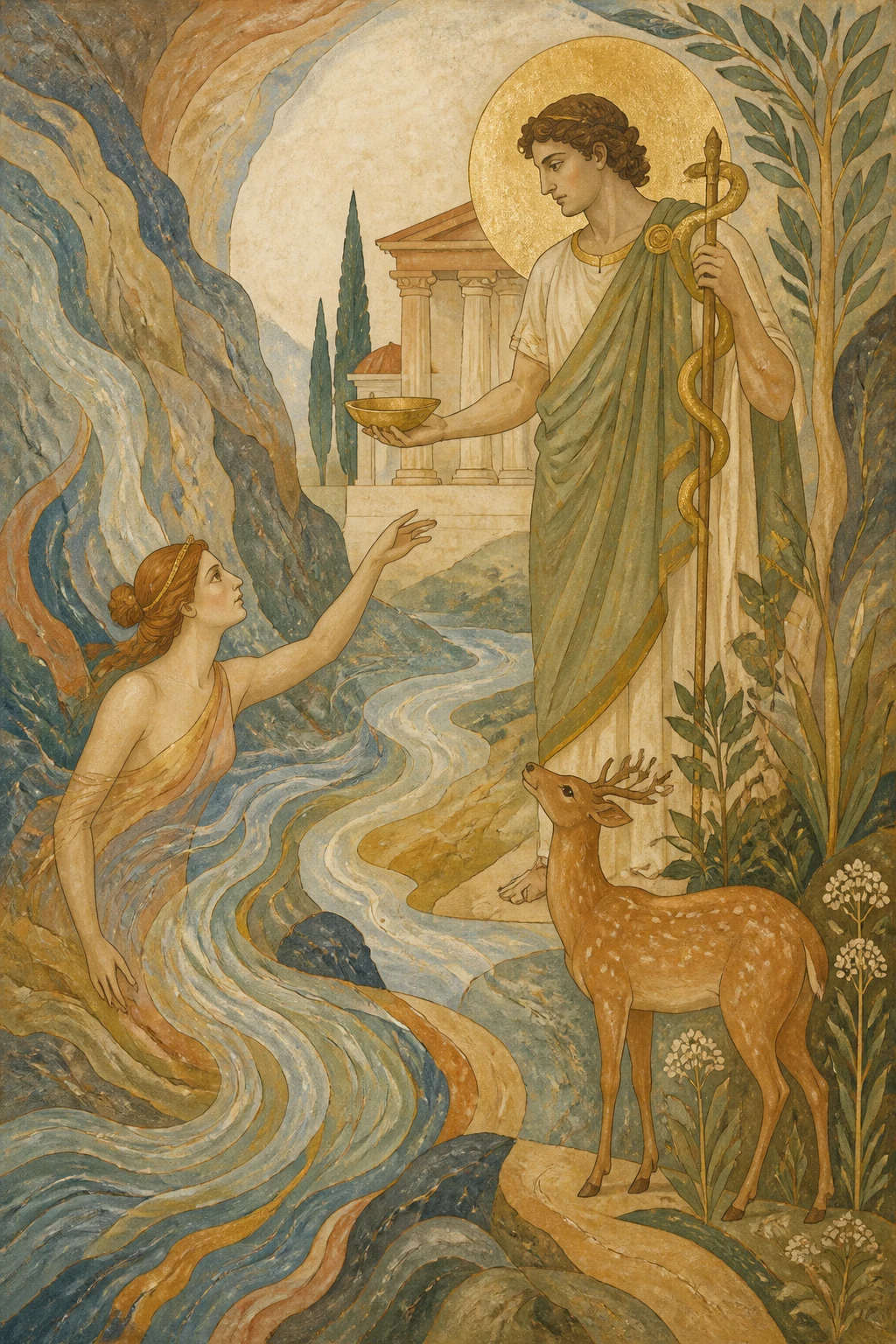
Meanwhile the half-beast rejoiced in his pupil of divine descent, glad of the honor mingled with his charge. Now came the Centaur’s daughter, her shoulders cloaked in flame-red hair, whom the nymph Chariclo had once borne on the banks of a rushing river and named Ocyroe. Not content to have learned her father’s arts, she also sang the hidden secrets of the Fates. And so, when prophetic frenzy seized her mind and she burned with the god she held within her breast, she looked upon the infant. “Grow, child,” she said, “to bring healing to the whole world! Often mortal bodies will owe their lives to you; you will have leave to restore
departed souls. But once you dare this, to the gods’ outrage, your grandfather’s thunderbolt will bar you from doing so again, and from a god you will become a lifeless body, then a god again, though lately a body: twice you will change your fate. You too, dear father, now immortal, born by the law of your birth to endure through all the ages, will long to be able to die when you are tormented by a dreadful serpent’s blood coursing through your wounded limbs.
The gods will make you, once eternal, subject to death, and the three sister goddesses will unravel your thread.” There was more of fate to tell. She sighed from the depths of her breast, and welling tears ran down her cheeks. “The Fates forestall me,” she said. “I am forbidden to speak further, and the use of my voice is sealed away. My arts were not worth the price: they have brought divine wrath upon me. I wish I had not known the future.
Already I seem to be losing my human form; already grass appeals to me as food, already I yearn to race across broad plains. I am turning into a mare, a kindred shape. But why entirely? My father, after all, has a double form.” As she spoke, the last part of her lament could scarcely be understood: her words grew muddled. Soon the sound seemed neither words nor a mare’s voice, but that of someone imitating a mare; in a little while she gave unmistakable neighs and lowered her arms to the grass.
Then her fingers fused, and a smooth hoof bound all five nails within an unbroken sheath of horn. Her muzzle and neck grew longer; most of her flowing robe became a tail, and the loose hair that lay along her neck became a mane falling to the right. Together her voice and form were changed; the marvel gave her a new name too.
Izvirnik
Ocyrhoe and Aesculapius
Naslednje strani prikazujejo izvirno besedilo za primerjavo.
Source ID: ovid_metamorphoses_story_014 Citation: Ovid, Metamorphoses 2.633-2.675 Original language: Latin Source: PerseusDL canonical-latinLit Source URL: https://github.com/PerseusDL/canonical-latinLit/blob/master/data/phi0959/phi006/phi0959.phi006.perseus-lat2.xml Segmentation certainty: medium 633: Semifer interea divinae stirpis alumno 634: laetus erat mixtoque oneri gaudebat honore.
635: Ecce venit rutilis umeros protecta capillis 636: filia Centauri, quam quondam nympha Chariclo 637: fluminis in rapidi ripis enixa vocavit 638: Ocyroen. Non haec artes contenta paternas 639: edidicisse fuit: fatorum arcana canebat. 640: Ergo ubi vaticinos concepit mente furores 641: incaluitque deo, quem clausum pectore habebat, 642: adspicit infantem “toto” que “salutifer orbi 643: cresce puer” dixit: “tibi se mortalia saepe 644: corpora debebunt; animas tibi reddere ademptas 645: fas erit; idque semel dis indignantibus ausus 646: posse dare hoc iterum flamma prohibebere avita
647: eque deo corpus fies exsangue, deusque, 648: qui modo corpus eras, et bis tua fata novabis. 649: Tu quoque, care pater, nunc inmortalis et aevis 650: omnibus ut maneas nascendi lege creatus, 651: posse mori cupies, tum cum cruciabere dirae 652: sanguine serpentis per saucia membra recepto; 653: teque ex aeterno patientem numina mortis 654: efficient, triplicesque deae tua fila resolvent.”
655: Restabat fatis aliquid. Suspirat ab imis 656: pectoribus, lacrimaeque genis labuntur obortae, 657: atque ita “praevertunt” inquit “me fata, vetorque 658: plura loqui, vocisque meae praecluditur usus. 659: Non fuerant artes tanti, quae numinis iram 660: contraxere mihi; mallem nescisse futura. 661: Iam mihi subduci facies humana videtur, 662: iam cibus herba placet, iam latis currere campis 663: impetus est: in equam cognataque corpora vertor.
664: Tota tamen quare? pater est mihi nempe biformis.” 665: Talia dicenti pars est extrema querellae 666: intellecta parum, confusaque verba fuerunt. 667: Mox nec verba quidem nec equae sonus ille videtur, 668: sed simulantis equam, parvoque in tempore certos 669: edidit hinnitus et bracchia movit in herbas. 670: Tum digiti coeunt et quinos adligat ungues 671: perpetuo cornu levis ungula, crescit et oris 672: et colli spatium, longae pars maxima pallae 673: cauda fit, utque vagi crines per colla iacebant, 674: in dextras abiere iubas: pariterque novata est 675: et vox et facies nomen quoque monstra dedere.
Nadaljuj z branjem