Waltey
Stekleni pes
002 The Glass Dog
American Fairy Tales · L. Frank BaumO besedilu
Stekleni pes
- Vir
- American Fairy Tales
- Avtor
- L. Frank Baum
- Jezik branja
- Slovenščina
- Jezik izvirnika
- English
- Čas branja
- 13 min branja
- Obseg
- 10 strani
- Naslov izvirnika
- 002 The Glass Dog
O izvirniku
American Fairy Tales
Dvanajst Baumovih avtorskih ameriških pravljic, igrivih, mestnih in zavestno modernih. Bralni jezik je Slovenščina, izvirnik pa prihaja iz vira American Fairy Tales v jeziku English.
Besedilo
Stekleni pes
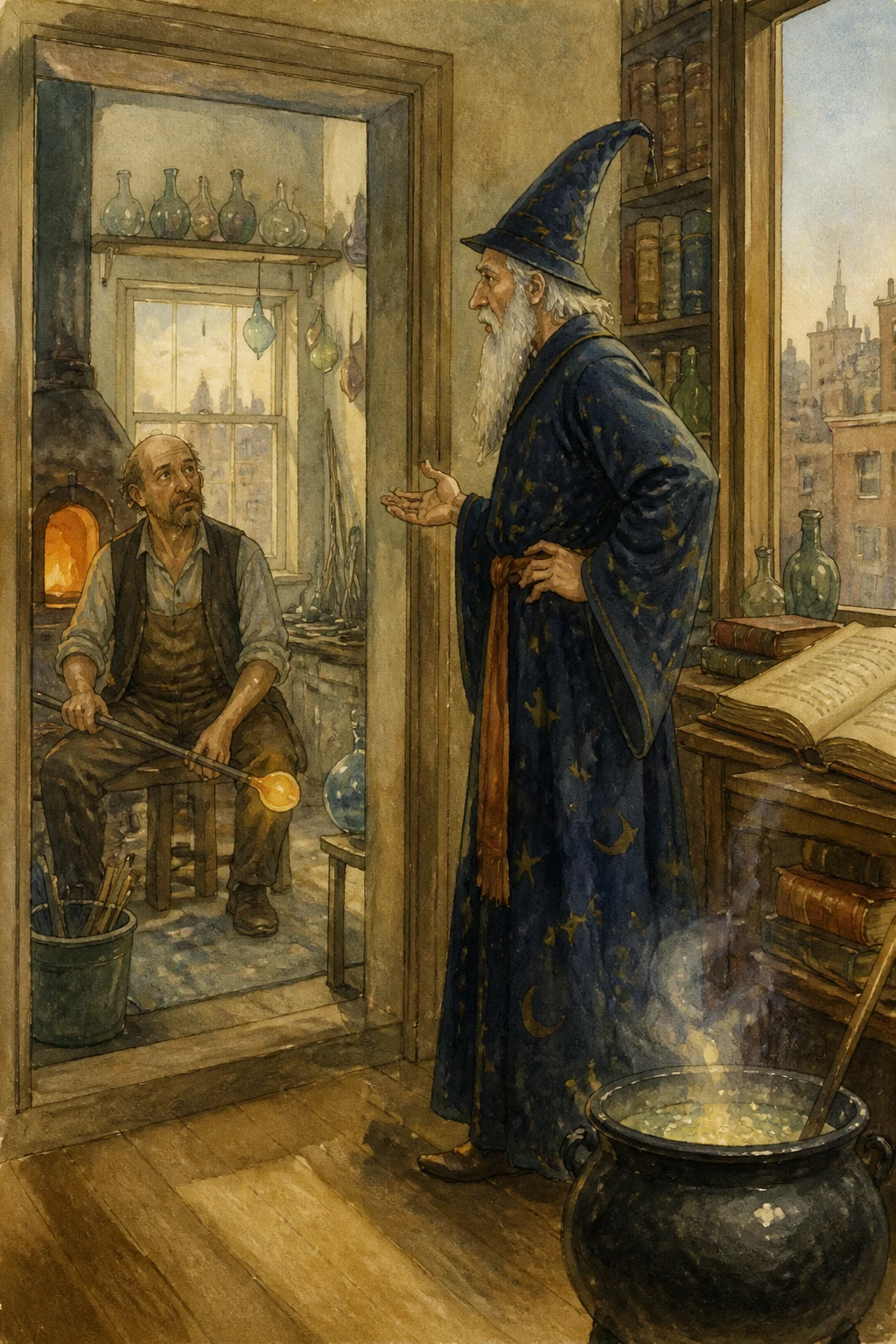
Nekoč je v najvišjem nadstropju najemniške hiše živel izurjen čarovnik, ki si je krajšal čas s premišljenim preučevanjem in učenim premišljevanjem. Česar o čarovništvu ni vedel, skoraj ni bilo vredno vedeti, saj je imel vse knjige in recepte vseh čarovnikov, ki so živeli pred njim; poleg tega pa je tudi sam iznašel nekaj čarovnij.
Ta občudovanja vredni mož bi bil povsem srečen, če ga pri učenju ne bi nenehno prekinjali ljudje, ki so se prihajali posvetovat z njim o svojih težavah (te ga niso zanimale), ter glasno trkanje raznašalca ledu, mlekarja, pekovskega vajenca, pralca in prodajalke arašidov. Z nikomer od njih ni imel opravka, vendar so mu vsak dan trkali na vrata, da bi z njim govorili o tem ali onem ali mu skušali prodati svoje blago. Ravno ko je bil najgloblje zatopljen v knjige ali je opazoval brbotanje v kotlu, je potrkalo na vrata. In ko je vsiljivca odslovil, je vselej ugotovil, da je izgubil nit misli ali pokvaril svoj pripravek.
Nazadnje so ga te prekinitve tako razjezile, da je sklenil, da potrebuje psa, ki bo ljudi odganjal od njegovih vrat. Ni vedel, kje bi našel psa, toda v sosednji sobi je živel reven steklopihalec, ki ga je bežno poznal; zato je stopil v njegovo stanovanje in vprašal:
»Kje bi lahko našel psa?« »Kakšnega psa?« je vprašal steklopihalec. »Dobrega psa. Takega, ki bo lajal na ljudi in jih odganjal. Takega, s katerim ne bo nobenega dela in ki ne bo pričakoval, da ga bom hranil. Takega, ki nima bolh in je snažen. Takega, ki me bo ubogal, ko mu kaj rečem. Skratka, dobrega psa,« je dejal čarovnik.
»Takega psa je težko najti,« je odvrnil steklopihalec, ki je prav tedaj izdeloval moder steklen cvetlični lonček z rožnatim steklenim grmičkom vrtnic, ki je imel zelene steklene liste in rumene steklene cvetove.
Čarovnik ga je zamišljeno opazoval. »Zakaj pa mi ne bi iz stekla napihal psa?« je čez čas vprašal. »Lahko,« je zatrdil steklopihalec, »ampak na ljudi pa ne bi lajal, veste.«
»Oh, za to bom že zlahka poskrbel,« je odvrnil drugi. »Če steklenega psa ne bi znal pripraviti do lajanja, bi bil pa res klavrn čarovnik.« »Prav; če vam steklen pes pride prav, vam ga bom z veseljem napihal. Le za delo mi morate plačati.«
»Seveda,« je pritrdil čarovnik. »Toda tiste grozne reči, ki ji pravite denar, nimam. V zameno boste morali vzeti kaj od mojih izdelkov.« Steklopihalec je za trenutek premislil.
»Bi mi lahko dali kaj, kar bi mi pozdravilo revmo?« je vprašal. »O, seveda; brez težav.« »Potem sva dogovorjena. Takoj se bom lotil psa. Kakšne barve steklo naj uporabim?«
»Rožnata je lepa barva,« je dejal čarovnik, »in za psa je nenavadna, kajne?« »Zelo,« je odgovoril steklopihalec, »ampak naj bo rožnat.«
Čarovnik se je torej vrnil k učenju, steklopihalec pa je začel izdelovati psa. Naslednje jutro je s steklenim psom pod pazduho stopil v čarovnikovo sobo in ga previdno postavil na mizo. Bil je čudovite rožnate barve, s prelepo dlako iz steklenih vlaken, okoli vratu pa je imel ovit moder steklen trak. Njegove oči so bile drobne pikice črnega stekla in so se bistroumno lesketale, kakor se lesketajo številne steklene oči, ki jih nosijo ljudje.
Čarovnik je pohvalil steklopihalčevo spretnost in mu takoj izročil stekleničko. »To vam bo pozdravilo revmo,« je dejal.
»Ampak steklenička je prazna!« je ugovarjal steklopihalec. »O, ne; v njej je ena kapljica tekočine,« je odgovoril čarovnik. »Bo ena kapljica pozdravila mojo revmo?« je začudeno vprašal steklopihalec.
»Prav gotovo. To je čudovito zdravilo. Ena sama kapljica v tej steklenički v hipu pozdravi katerokoli bolezen, kar jih je človeštvo kdaj poznalo. Zato je še posebej dobra za revmo. A skrbno jo varujte, kajti to je edina taka kapljica na svetu, recept pa sem pozabil.«
»Hvala,« je dejal steklopihalec in se vrnil v svojo sobo. Nato je čarovnik nad steklenim psom izrekel čarovniški urok in zamrmral nekaj zelo učenih besed v čarovniščini. Živalca je najprej pomahala z repom sem in tja, nato pomenljivo pomežiknila z levim očesom in nazadnje začela prav strašno lajati — če seveda pomislite, da je ta hrup prihajal iz rožnatega steklenega psa. Čarovniške umetnije so skoraj osupljive; razen če jih seveda znate izvajati sami, saj tedaj ni pričakovati, da bi vas presenečale.
Čarovnik je bil ob uspehu svojega uroka navdušen kakor šolski učitelj, čeprav presenečen ni bil. Psa je takoj postavil pred vrata, kjer naj bi lajal na vsakogar, ki bi si drznil potrkati in tako zmotiti gospodarja pri učenju.
Ko se je steklopihalec vrnil v svojo sobo, je sklenil, da edine kapljice čarovnikovega zdravila za vse bolezni še ne bo uporabil. »Danes me revma manj muči,« je pomislil, »zato bo pametno, če zdravilo prihranim za takrat, ko bom zelo bolan in mi bo bolj koristilo.«
Stekleničko je torej postavil v omaro in se lotil pihanja novih steklenih vrtnic. Čez čas mu je prišlo na misel, da se zdravilo morda ne bo obdržalo, zato je šel o tem povprašat čarovnika. A ko je prišel do vrat, je stekleni pes tako divje zalajal, da si ni upal potrkati, temveč se je v veliki naglici vrnil v svojo sobo. Ubogega moža je tako neprijazen sprejem psa, ki ga je sam tako skrbno in spretno izdelal, resnično prizadel.
Naslednje jutro je med branjem časopisa opazil članek, v katerem je pisalo, da je lepa gospodična Mydas, najbogatejša mlada dama v mestu, hudo bolna in da so zdravniki obupali nad njenim okrevanjem.
Steklopihalec je bil sicer strašno reven, garaški in neuglednega obraza, vendar mu zamisli ni manjkalo. Nenadoma se je spomnil svojega dragocenega zdravila in sklenil, da ga bo uporabil s pridom za kaj več kot le za lajšanje lastnih tegob. Oblekel je svoja najboljša oblačila, si skrtačil lase in počesal zalizce, si umil roke in zavezal kravato, namazal čevlje s črno pasto in z gobico očistil telovnik, nato pa v žep spravil stekleničko čarobnega zdravila za vse bolezni. Zatem je zaklenil vrata, se spustil po stopnicah in se po ulicah odpravil do razkošnega dvorca, v katerem je prebivala bogata gospodična Mydas.
Vrata je odprl strežaj in rekel: »Ne potrebujemo mila, ne barvnih tiskov, ne zelenjave, ne olja za lase, ne knjig, ne pecilnega praška. Moja mlada gospodarica umira in za pogreb imamo že vsega dovolj.«
Steklopihalca je zabolelo, da so ga imeli za krošnjarja. »Prijatelj moj,« je ponosno začel, toda strežaj ga je prekinil: »Tudi nagrobnikov ne; imamo družinsko pokopališče in spomenik je že postavljen.«
»Pokopališča ne boste potrebovali, če mi dovolite spregovoriti,« je dejal steklopihalec. »Tudi zdravnikov ne potrebujemo, gospod; obupali so nad mojo mlado gospodarico, ona pa nad njimi,« je mirno nadaljeval strežaj.
»Nisem zdravnik,« je odvrnil steklopihalec. »Saj tudi drugi niso. A po kaj ste prišli?« »Prišel sem ozdravit vašo mlado gospodarico s čarobnim pripravkom.«
»Izvolite vstopiti in sesti v veži. Govoril bom z gospodinjo,« je vljudneje dejal strežaj. Tako je govoril z gospodinjo, gospodinja je zadevo omenila oskrbniku, oskrbnik se je posvetoval z glavnim kuharjem, glavni kuhar pa je poljubil gospodičnino sobarico in jo poslal k neznancu. Tako so silno bogati obdani z obredi, celo kadar umirajo.
Ko je sobarica od steklopihalca izvedela, da ima zdravilo, ki bo ozdravilo njeno gospodarico, je rekla: »Vesela sem, da ste prišli.« »Toda,« je dejal, »če vaši gospodarici povrnem zdravje, se mora poročiti z menoj.«
»Povprašala bom, ali je pripravljena na to,« je odgovorila sobarica in se takoj odpravila h gospodični Mydas. Mlada dama ni omahovala niti za hip.
»Raje se poročim s čimerkoli, kot da umrem!« je vzkliknila. »Takoj ga pripeljite sem!« Steklopihalec je torej prišel, vlil čarobno kapljico v malo vode in jo dal bolnici; že naslednji trenutek je bila gospodična Mydas tako zdrava, kot še nikoli v življenju.
»Ljubi bog!« je vzkliknila. »Drevi sem povabljena na sprejem pri Frittersovih. Prinesi mi biserno svileno obleko, Marie, takoj se bom začela urejati. In ne pozabi preklicati naročila za pogrebno cvetje in svojo žalno obleko.«
»Toda, gospodična Mydas,« je ugovarjal steklopihalec, ki je stal ob njej, »obljubili ste, da se boste poročili z menoj, če vas ozdravim.« »Vem,« je dejala mlada dama, »vendar potrebujemo čas, da to primerno oznanimo v družabnih časopisih in damo gravirati poročna vabila. Pridite jutri, pa se bova pogovorila.«
Steklopihalec nanjo kot bodoči mož ni naredil ugodnega vtisa in vesela je bila, da je našla izgovor, s katerim se ga je za nekaj časa znebila. Poleg tega ni hotela zamuditi sprejema pri Frittersovih.
Mož pa se je kljub temu vrnil domov poln veselja; mislil je namreč, da je njegova zvijača uspela in da se bo kmalu poročil z bogato ženo, ki mu bo do konca življenja omogočala razkošje.
Ko je prišel v svojo sobo, je najprej razbil steklopihalsko orodje in ga vrgel skozi okno. Nato je sedel in začel tuhtati, kako bo zapravljal ženin denar.
Naslednjega dne je obiskal gospodično Mydas, ki je brala roman in jedla čokoladne pralineje s kremnim nadevom, tako zadovoljna, kakor da nikoli v življenju ne bi bila bolna.
»Kje ste dobili čarobni pripravek, ki me je ozdravil?« je vprašala. »Pri učenem čarovniku,« je dejal; nato pa ji je, misleč, da jo bo zanimalo, povedal, kako je čarovniku izdelal steklenega psa in kako ta laja ter odganja vsakogar, ki bi ga hotel nadlegovati.
»Kako očarljivo!« je rekla. »Že od nekdaj sem si želela steklenega psa, ki bi znal lajati.« »Toda na svetu je le eden,« je odgovoril, »in ta pripada čarovniku.«
»Morate mi ga kupiti,« je dejala dama. »Čarovniku ni prav nič do denarja,« je odvrnil steklopihalec. »Potem mi ga morate ukrasti,« mu je odvrnila. »Niti enega dne več ne bom srečna, če ne dobim steklenega psa, ki zna lajati.«
Steklopihalca je to močno vznemirilo, vendar je rekel, da bo videl, kaj lahko stori. Mož se mora namreč vedno truditi ustreči svoji ženi, gospodična Mydas pa mu je obljubila, da se bo v tednu dni poročila z njim.
Na poti domov je kupil trpežno vrečo. Ko je šel mimo čarovnikovih vrat in je rožnati stekleni pes pritekel ven, da bi zalajal nanj, je vrgel vrečo čez psa, jo zavezal z vrvico in ga odnesel v svojo sobo.
Naslednji dan je vrečo po kurirčku poslal gospodični Mydas s svojimi pokloni, pozneje popoldne pa jo je obiskal še sam, povsem prepričan, da ga bo sprejela s hvaležnostjo, ker je ukradel psa, ki si ga je tako močno želela.
Ko pa je prišel do vrat in mu jih je strežaj odprl, je na svoje veliko začudenje zagledal steklenega psa, ki je planil ven in začel besno lajati nanj.
»Odpokličite psa!« je prestrašeno zavpil. »Ne morem, gospod,« je odgovoril strežaj. »Moja mlada gospodarica je steklenemu psu ukazala, naj laja, kadar pridete sem. Raje pazite, gospod,« je dodal, »kajti če vas ugrizne, lahko staknete steklofobijo!«
To je ubogega steklopihalca tako prestrašilo, da je naglo odšel. Vendar se je ustavil v lekarni in svoj zadnji kovanec za deset centov vrgel v telefonski aparat, da bi lahko govoril z gospodično Mydas, ne da bi ga pes ugriznil.
»Pelf 6742, prosim!« je zaklical. »Halo! Kaj želite?« se je oglasil glas. »Rad bi govoril z gospodično Mydas,« je dejal steklopihalec. Kmalu je sladek glas rekel: »Pri telefonu gospodična Mydas. Kaj želite?«
»Zakaj ste tako kruti do mene in ste naščuvali steklenega psa name?« je vprašal ubogi mož. »No, po pravici povedano,« je dejala dama, »mi vaš videz ni všeč. Vaša lica so bleda in ohlapna, vaši lasje so grobi in dolgi, vaše oči majhne in rdeče, vaše roke velike in hrapave, noge pa imate na o.«
»Saj nisem kriv, da sem tak!« je rotil steklopihalec. »In zares ste obljubili, da se boste poročili z menoj.« »Če bi bili lepši, bi držala obljubo,« je odvrnila. »Toda v teh okoliščinah niste primeren mož zame, in če se ne boste držali proč od mojega dvorca, bom na vas naščuvala svojega steklenega psa!« Nato je odložila slušalko in ni hotela reči ničesar več.
Nesrečni steklopihalec se je vrnil domov s srcem, ki mu je pokalo od razočaranja, in začel privezovati vrv na posteljni steber, da bi se obesil.
Nekdo je potrkal na vrata, in ko jih je odprl, je zagledal čarovnika. »Izgubil sem psa,« je oznanil ta. »Res?« je odvrnil steklopihalec in zavezoval vozel na vrvi.
»Da; nekdo mi ga je ukradel.« »Škoda,« je ravnodušno dejal steklopihalec. »Drugega mi morate izdelati,« je rekel čarovnik. »Ne morem; orodje sem vrgel proč.«
»Kaj naj potem storim?« je vprašal čarovnik. »Ne vem, razen če za psa ponudite nagrado.« »Toda nimam denarja,« je dejal čarovnik. »Potem pa ponudite katerega od svojih pripravkov,« je predlagal steklopihalec, ki je na vrvi izdeloval zanko, skozi katero bi vtaknil glavo.
»Edina stvar, ki jo lahko pogrešam,« je zamišljeno odvrnil čarovnik, »je prašek za lepoto.« »Kaj!« je vzkliknil steklopihalec in izpustil vrv. »Res imate kaj takega?«
»Da, res. Kdor zaužije ta prašek, postane najlepši človek na svetu.« »Če ga boste ponudili za nagrado,« je vneto dejal steklopihalec, »vam bom skušal poiskati psa, kajti bolj kot karkoli drugega si želim biti lep.«
»A opozarjam vas, da bo lepota le na površju kože,« je dejal čarovnik. »Nič zato,« je odvrnil srečni steklopihalec, »ko bom ob kožo, mi tudi do lepote ne bo več.«
»Potem mi povejte, kje naj najdem psa, in dobili boste prašek,« je obljubil čarovnik. Steklopihalec je torej odšel in se pretvarjal, da išče psa, čez čas pa se je vrnil in rekel:
»Našel sem psa. Dobili ga boste v dvorcu gospodične Mydas.« Čarovnik je nemudoma odšel pogledat, ali je to res, in stekleni pes je res pritekel ven ter začel lajati nanj. Tedaj je čarovnik razprostrl roke in zapel čarobni urok, ob katerem je pes trdno zaspal, nato pa ga je pobral in odnesel v svojo sobo v najvišjem nadstropju najemniške hiše.
Zatem je steklopihalcu za nagrado prinesel prašek za lepoto in mož ga je nemudoma pogoltnil ter postal najlepši moški na svetu.
Ko je naslednjič obiskal gospodično Mydas, ni bilo nobenega psa, ki bi lajal nanj, in ko ga je mlada dama zagledala, se je pri priči zaljubila v njegovo lepoto.
»Ko bi le bili grof ali princ,« je vzdihnila, »bi se z veseljem poročila z vami.« »Saj sem princ,« je odgovoril, »princ Pasopihov.« »Ah!« je rekla. »Če ste torej pripravljeni sprejeti žepnino štirih dolarjev na teden, bom naročila gravirana poročna vabila.«
Mož je omahoval, ko pa se je spomnil vrvi, ki je visela s posteljnega stebra, je pristal na pogoje. Tako sta se poročila in nevesta je bila zelo ljubosumna na moževo lepoto ter mu je grenila življenje, da je bilo pasje. On pa se je zato spravil v dolgove in v zameno zagrenil življenje še njej.
Kar zadeva steklenega psa, ga je čarovnik s svojim čarovništvom spet pripravil do lajanja in ga postavil pred vrata. Mislim, da je še vedno tam, in mi je kar žal, saj bi se s čarovnikom rad posvetoval o nauku te zgodbe.
Izvirnik
002 The Glass Dog
Naslednje strani prikazujejo izvirno besedilo za primerjavo.
An accomplished wizard once lived on the top floor of a tenement house and passed his time in thoughtful study and studious thought. What he didn’t know about wizardry was hardly worth knowing, for he possessed all the books and recipes of all the wizards who had lived before him; and, moreover, he had invented several wizardments himself.
This admirable person would have been completely happy but for the numerous interruptions to his studies caused by folk who came to consult him about their troubles (in which he was not interested), and by the loud knocks of the iceman, the milkman, the baker’s boy, the laundryman and the peanut woman. He never dealt with any of these people; but they rapped at his door every day to see him about this or that or to try to sell him their wares. Just when he was most deeply interested in his books or engaged in watching the bubbling of a cauldron there would come a knock at his door. And after sending the intruder away he always found he had lost his train of thought or ruined his compound.
At length these interruptions aroused his anger, and he decided he must have a dog to keep people away from his door. He didn’t know where to find a dog, but in the next room lived a poor glass-blower with whom he had a slight acquaintance; so he went into the man’s apartment and asked:
“Where can I find a dog?”
“What sort of a dog?” inquired the glass-blower.
“A good dog. One that will bark at people and drive them away. One that will be no trouble to keep and won’t expect to be fed. One that has no fleas and is neat in his habits. One that will obey me when I speak to him. In short, a good dog,” said the wizard.
“Such a dog is hard to find,” returned the glass-blower, who was busy making a blue glass flower pot with a pink glass rosebush in it, having green glass leaves and yellow glass roses.
The wizard watched him thoughtfully.
“Why cannot you blow me a dog out of glass?” he asked, presently.
“I can,” declared the glass-blower; “but it would not bark at people, you know.”
“Oh, I’ll fix that easily enough,” replied the other. “If I could not make a glass dog bark I would be a mighty poor wizard.”
“Very well; if you can use a glass dog I’ll be pleased to blow one for you. Only, you must pay for my work.”
“Certainly,” agreed the wizard. “But I have none of that horrid stuff you call money. You must take some of my wares in exchange.”
The glass-blower considered the matter for a moment.
“Could you give me something to cure my rheumatism?” he asked.
“Oh, yes; easily.”
“Then it’s a bargain. I’ll start the dog at once. What color of glass shall I use?”
“Pink is a pretty color,” said the wizard, “and it’s unusual for a dog, isn’t it?”
“Very,” answered the glass-blower; “but it shall be pink.”
So the wizard went back to his studies and the glass-blower began to make the dog.
Next morning he entered the wizard’s room with the glass dog under his arm and set it carefully upon the table. It was a beautiful pink in color, with a fine coat of spun glass, and about its neck was twisted a blue glass ribbon. Its eyes were specks of black glass and sparkled intelligently, as do many of the glass eyes worn by men.
The wizard expressed himself pleased with the glass-blower’s skill and at once handed him a small vial.
“This will cure your rheumatism,” he said.
“But the vial is empty!” protested the glass-blower.
“Oh, no; there is one drop of liquid in it,” was the wizard’s reply.
“Will one drop cure my rheumatism?” inquired the glass-blower, in wonder.
“Most certainly. That is a marvelous remedy. The one drop contained in the vial will cure instantly any kind of disease ever known to humanity. Therefore it is especially good for rheumatism. But guard it well, for it is the only drop of its kind in the world, and I’ve forgotten the recipe.”
“Thank you,” said the glass-blower, and went back to his room.
Then the wizard cast a wizzy spell and mumbled several very learned words in the wizardese language over the glass dog. Whereupon the little animal first wagged its tail from side to side, then winked his left eye knowingly, and at last began barking in a most frightful manner—that is, when you stop to consider the noise came from a pink glass dog. There is something almost astonishing in the magic arts of wizards; unless, of course, you know how to do the things yourself, when you are not expected to be surprised at them.
The wizard was as delighted as a school teacher at the success of his spell, although he was not astonished. Immediately he placed the dog outside his door, where it would bark at anyone who dared knock and so disturb the studies of its master.
The glass-blower, on returning to his room, decided not to use the one drop of wizard cure-all just then.
“My rheumatism is better to-day,” he reflected, “and I will be wise to save the medicine for a time when I am very ill, when it will be of more service to me.”
So he placed the vial in his cupboard and went to work blowing more roses out of glass. Presently he happened to think the medicine might not keep, so he started to ask the wizard about it. But when he reached the door the glass dog barked so fiercely that he dared not knock, and returned in great haste to his own room. Indeed, the poor man was quite upset at so unfriendly a reception from the dog he had himself so carefully and skillfully made.
The next morning, as he read his newspaper, he noticed an article stating that the beautiful Miss Mydas, the richest young lady in town, was very ill, and the doctors had given up hope of her recovery.
The glass-blower, although miserably poor, hard-working and homely of feature, was a man of ideas. He suddenly recollected his precious medicine, and determined to use it to better advantage than relieving his own ills. He dressed himself in his best clothes, brushed his hair and combed his whiskers, washed his hands and tied his necktie, blackened his shoes and sponged his vest, and then put the vial of magic cure-all in his pocket. Next he locked his door, went downstairs and walked through the streets to the grand mansion where the wealthy Miss Mydas resided.
The butler opened the door and said:
“No soap, no chromos, no vegetables, no hair oil, no books, no baking powder. My young lady is dying and we’re well supplied for the funeral.”
The glass-blower was grieved at being taken for a peddler.
“My friend,” he began, proudly; but the butler interrupted him, saying:
“No tombstones, either; there’s a family graveyard and the monument’s built.”
“The graveyard won’t be needed if you will permit me to speak,” said the glass-blower.
“No doctors, sir; they’ve given up my young lady, and she’s given up the doctors,” continued the butler, calmly.
“I’m no doctor,” returned the glass-blower.
“Nor are the others. But what is your errand?”
“I called to cure your young lady by means of a magical compound.”
“Step in, please, and take a seat in the hall. I’ll speak to the housekeeper,” said the butler, more politely.
So he spoke to the housekeeper and the housekeeper mentioned the matter to the steward and the steward consulted the chef and the chef kissed the lady’s maid and sent her to see the stranger. Thus are the very wealthy hedged around with ceremony, even when dying.
When the lady’s maid heard from the glass-blower that he had a medicine which would cure her mistress, she said:
“I’m glad you came.”
“But,” said he, “if I restore your mistress to health she must marry me.”
“I’ll make inquiries and see if she’s willing,” answered the maid, and went at once to consult Miss Mydas.
The young lady did not hesitate an instant.
“I’d marry any old thing rather than die!” she cried. “Bring him here at once!”
So the glass-blower came, poured the magic drop into a little water, gave it to the patient, and the next minute Miss Mydas was as well as she had ever been in her life.
“Dear me!” she exclaimed; “I’ve an engagement at the Fritters’ reception to-night. Bring my pearl-colored silk, Marie, and I will begin my toilet at once. And don’t forget to cancel the order for the funeral flowers and your mourning gown.”
“But, Miss Mydas,” remonstrated the glass-blower, who stood by, “you promised to marry me if I cured you.”
“I know,” said the young lady, “but we must have time to make proper announcement in the society papers and have the wedding cards engraved. Call to-morrow and we’ll talk it over.”
The glass-blower had not impressed her favorably as a husband, and she was glad to find an excuse for getting rid of him for a time. And she did not want to miss the Fritters’ reception.
Yet the man went home filled with joy; for he thought his stratagem had succeeded and he was about to marry a rich wife who would keep him in luxury forever afterward.
The first thing he did on reaching his room was to smash his glass-blowing tools and throw them out of the window.
He then sat down to figure out ways of spending his wife’s money.
The following day he called upon Miss Mydas, who was reading a novel and eating chocolate creams as happily as if she had never been ill in her life.
“Where did you get the magic compound that cured me?” she asked.
“From a learned wizard,” said he; and then, thinking it would interest her, he told how he had made the glass dog for the wizard, and how it barked and kept everybody from bothering him.
“How delightful!” she said. “I’ve always wanted a glass dog that could bark.”
“But there is only one in the world,” he answered, “and it belongs to the wizard.”
“You must buy it for me,” said the lady.
“The wizard cares nothing for money,” replied the glass-blower.
“Then you must steal it for me,” she retorted. “I can never live happily another day unless I have a glass dog that can bark.”
The glass-blower was much distressed at this, but said he would see what he could do. For a man should always try to please his wife, and Miss Mydas has promised to marry him within a week.
On his way home he purchased a heavy sack, and when he passed the wizard’s door and the pink glass dog ran out to bark at him he threw the sack over the dog, tied the opening with a piece of twine, and carried him away to his own room.
The next day he sent the sack by a messenger boy to Miss Mydas, with his compliments, and later in the afternoon he called upon her in person, feeling quite sure he would be received with gratitude for stealing the dog she so greatly desired.
But when he came to the door and the butler opened it, what was his amazement to see the glass dog rush out and begin barking at him furiously.
“Call off your dog,” he shouted, in terror.
“I can’t, sir,” answered the butler. “My young lady has ordered the glass dog to bark whenever you call here. You’d better look out, sir,” he added, “for if it bites you, you may have glassophobia!”
This so frightened the poor glass-blower that he went away hurriedly. But he stopped at a drug store and put his last dime in the telephone box so he could talk to Miss Mydas without being bitten by the dog.
“Give me Pelf 6742!” he called.
“Hello! What is it?” said a voice.
“I want to speak with Miss Mydas,” said the glass-blower.
Presently a sweet voice said: “This is Miss Mydas. What is it?”
“Why have you treated me so cruelly and set the glass dog on me?” asked the poor fellow.
“Well, to tell the truth,” said the lady, “I don’t like your looks. Your cheeks are pale and baggy, your hair is coarse and long, your eyes are small and red, your hands are big and rough, and you are bow-legged.”
“But I can’t help my looks!” pleaded the glass-blower; “and you really promised to marry me.”
“If you were better looking I’d keep my promise,” she returned. “But under the circumstances you are no fit mate for me, and unless you keep away from my mansion I shall set my glass dog on you!” Then she dropped the ’phone and would have nothing more to say.
The miserable glass-blower went home with a heart bursting with disappointment and began tying a rope to the bedpost by which to hang himself.
Some one knocked at the door, and, upon opening it, he saw the wizard.
“I’ve lost my dog,” he announced.
“Have you, indeed?” replied the glass-blower tying a knot in the rope.
“Yes; some one has stolen him.”
“That’s too bad,” declared the glass-blower, indifferently.
“You must make me another,” said the wizard.
“But I cannot; I’ve thrown away my tools.”
“Then what shall I do?” asked the wizard.
“I do not know, unless you offer a reward for the dog.”
“But I have no money,” said the wizard.
“Offer some of your compounds, then,” suggested the glass-blower, who was making a noose in the rope for his head to go through.
“The only thing I can spare,” replied the wizard, thoughtfully, “is a Beauty Powder.”
“What!” cried the glass-blower, throwing down the rope, “have you really such a thing?”
“Yes, indeed. Whoever takes the powder will become the most beautiful person in the world.”
“If you will offer that as a reward,” said the glass-blower, eagerly, “I’ll try to find the dog for you, for above everything else I long to be beautiful.”
“But I warn you the beauty will only be skin deep,” said the wizard.
“That’s all right,” replied the happy glass-blower; “when I lose my skin I shan’t care to remain beautiful.”
“Then tell me where to find my dog and you shall have the powder,” promised the wizard.
So the glass-blower went out and pretended to search, and by-and-by he returned and said:
“I’ve discovered the dog. You will find him in the mansion of Miss Mydas.”
The wizard went at once to see if this were true, and, sure enough, the glass dog ran out and began barking at him. Then the wizard spread out his hands and chanted a magic spell which sent the dog fast asleep, when he picked him up and carried him to his own room on the top floor of the tenement house.
Afterward he carried the Beauty Powder to the glass-blower as a reward, and the fellow immediately swallowed it and became the most beautiful man in the world.
The next time he called upon Miss Mydas there was no dog to bark at him, and when the young lady saw him she fell in love with his beauty at once.
“If only you were a count or a prince,” she sighed, “I’d willingly marry you.”
“But I am a prince,” he answered; “the Prince of Dogblowers.”
“Ah!” said she; “then if you are willing to accept an allowance of four dollars a week I’ll order the wedding cards engraved.”
The man hesitated, but when he thought of the rope hanging from his bedpost he consented to the terms.
So they were married, and the bride was very jealous of her husband’s beauty and led him a dog’s life. So he managed to get into debt and made her miserable in turn.
As for the glass dog, the wizard set him barking again by means of his wizardness and put him outside his door. I suppose he is there yet, and am rather sorry, for I should like to consult the wizard about the moral to this story.
Nadaljuj z branjem