Waltey
Nočni jezdeci Francisa Woolcotta
041 Francis Woolcott's Night-Riders
Myths and Legends of Our Own Land · Charles M. SkinnerO besedilu
Nočni jezdeci Francisa Woolcotta
- Vir
- Myths and Legends of Our Own Land
- Avtor
- Charles M. Skinner
- Jezik branja
- Slovenščina
- Jezik izvirnika
- English
- Čas branja
- 3 min branja
- Obseg
- 2 strani
- Naslov izvirnika
- 041 Francis Woolcott's Night-Riders
O izvirniku
Myths and Legends of Our Own Land
Obsežna zgodovinska zbirka ameriških legend, ki jih je Skinner zbral in avtorsko rekonstruiral. Bralni jezik je Slovenščina, izvirnik pa prihaja iz vira Myths and Legends of Our Own Land v jeziku English.
Besedilo
Nočni jezdeci Francisa Woolcotta
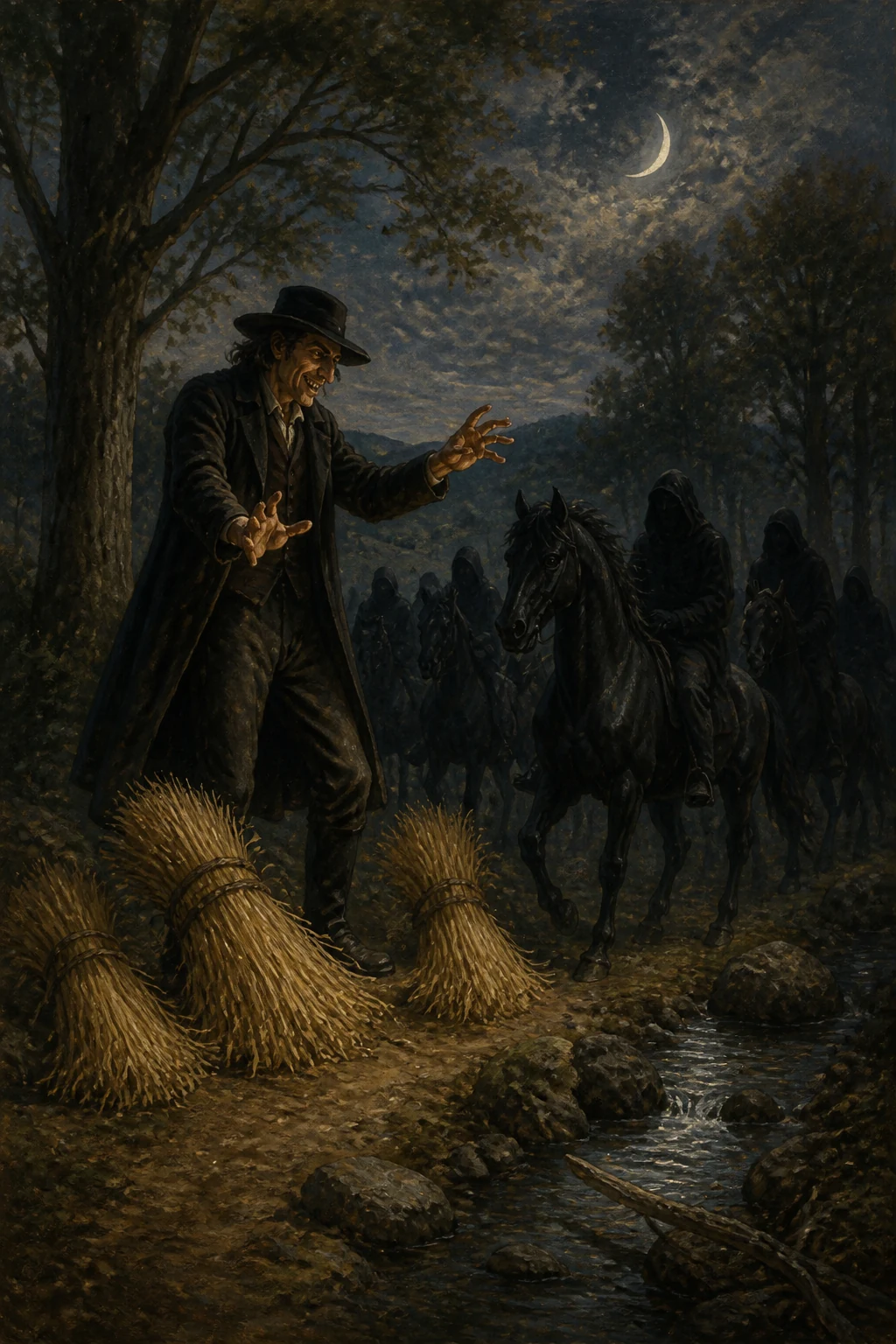
V Copaku v zvezni državi New York, med griči Berkshire, je pred manj kot stoletjem živel Francis Woolcott, temen, visok mož s štrlečimi zobmi, čigar zlovešči smeh je sosedom vzbujal srh po hrbtu. Ni imel nobene očitne obrti ali poklica, toda kmetje so se ga tako bali, da je brez težav pobiral dajatve: svinjino, moko, koruzni zdrob, jabolčnik — dobil je, kar si je zaželel, samo reči je moral. Mar ni ustavil konj med oranjem, tako da jih ne udarci ne ukazi celi dve uri niso mogli premakniti? Mar ni pripravil prašičev kmeta Raughta do tega, da so hodili po zadnjih nogah in skušali govoriti? Ko je otrokom kmeta Williamsa zaklical: »Hop! hop! hop!«, mar niso skočili na letev lesene obloge v salonu — skoraj meter nad tlemi in komaj dva centimetra in pol široko — ter hodili po njej, nato pa kakor ptice skakali z enega naslonjala stola na drugo, medtem ko je pohištvo stalo, kakor bi bilo pribito na tla? In mar ni bil vodja trinajstih nočnih jezdecev, katerih obrazov ni nihče videl niti jih ni želel videti in ki jih je vsako noč, ko je luna pojemala, pošiljal po deželi, da so zganjali hudobije? In ko smo že pri luni: mar ni na gori Riga našel skrivnostnega sporočila z našega satelita, vrezanega v meteorit?
Konjem so bili repi zavezani v vozle, prašiči so se penili okoli gobcev in hodili kakor ljudje, krave so namesto mleka dajale kri. Ti nočni jezdeci so se z Woolcottom srečevali v gaju jesenov in kostanjev, vsak z ukradenim svežnjem ovsene slame, Woolcott pa je te svežnje spremenil v črne konje, ko se je noč dovolj stemnila, da nihče ni mogel videti, kako se je zgodila preobrazba. Ti konji niso mogli prečkati vodotokov in ob udarcu polnoči so razpadli ter spet postali ovseni snopi, toda dokler so imeli svojo moč, so drveli skozi gozdove, varno nosili svoje jezdece in kakor viharji vihrali čez polja ter brez napora preskakovali grmovje, ograje, celo drevesa. Naslednji dan ni bilo nikoli mogoče najti nobene njihove sledi. Nazadnje je prišel hudič po tisto, kar mu je pripadalo. Woolcott, ki je imel devetdeset let, je bolan in nebogljen ležal v svoji koči. Duhovniki ga niso hoteli obiskati, dva ali trije sosedje pa so premagali strah in odšli v čarovnikovo hišo, da bi mu olajšali zadnje trenutke. Z nočjo je prišla nevihta in ko je izbruhnila, je starčev obraz dobil tako čuden in grozljiv izraz, da so se tisti, ki so bedeli ob njem, prestrašeni odmaknili. Pri oknu je švignil vijoličast plamen, strahovito je zagrmelo, zadišalo je po žveplu in Woolcott je bil mrtev. Ko so sosedje stopili ven, so bile ceste suhe in nihče v vasi ni slišal ne vetra ne dežja ne grmenja. To je bil prihod zlodeja.
Izvirnik
041 Francis Woolcott's Night-Riders
Naslednje strani prikazujejo izvirno besedilo za primerjavo.
In Copake, New York, among the Berkshire Hills, less than a century ago, lived Francis Woolcott, a dark, tall man, with protruding teeth, whose sinister laugh used to give his neighbors a creep along their spines. He had no obvious trade or calling, but the farmers feared him so that he had no trouble in making levies: pork, flour, meal, cider, he could have what he chose for the asking, for had he not halted horses at the plow so that neither blows nor commands could move them for two hours? Had he not set farmer Raught's pigs to walking on their hind legs and trying to talk? When he shouted “Hup! hup! hup!” to farmer Williams's children, had they not leaped to the moulding of the parlor wainscot,--a yard above the floor and only an inch wide,--and walked around it, afterward skipping like birds from chair-back to chair-back, while the furniture stood as if nailed to the floor? And was he not the chief of thirteen night-riders, whose faces no man had seen, nor wanted to see, and whom he sent about the country on errands of mischief every night when the moon was growing old? As to moons, had he not found a mystic message from our satellite on Mount Riga, graven on a meteor?
Horses' tails were tied, hogs foamed at the mouth and walked like men, cows gave blood for milk. These night-riders met Woolcott in a grove of ash and chestnut trees, each furnished with a stolen bundle of oat straw, and these bundles Woolcott changed to black horses when the night had grown dark enough not to let the way of the change be seen. These horses could not cross streams of water, and on the stroke of midnight they fell to pieces and were oaten sheaves once more, but during their time of action they rushed through woods, bearing their riders safely, and tore like hurricanes across the fields, leaping bushes, fences, even trees, without effort. Never could traces be found of them the next day. At last the devil came to claim his own. Woolcott, who was ninety years old, lay sick and helpless in his cabin. Clergymen refused to see him, but two or three of his neighbors stifled their fears and went to the wizard's house to soothe his dying moments. With the night came storm, and with its outbreak the old man's face took on such a strange and horrible look that the watchers fell back in alarm. There was a burst of purple flame at the window, a frightful peal, a smell of sulphur, and Woolcott was dead. When the watchers went out the roads were dry, and none in the village had heard wind, rain, or thunder. It was the coming of the fiend.
Nadaljuj z branjem