Prevod
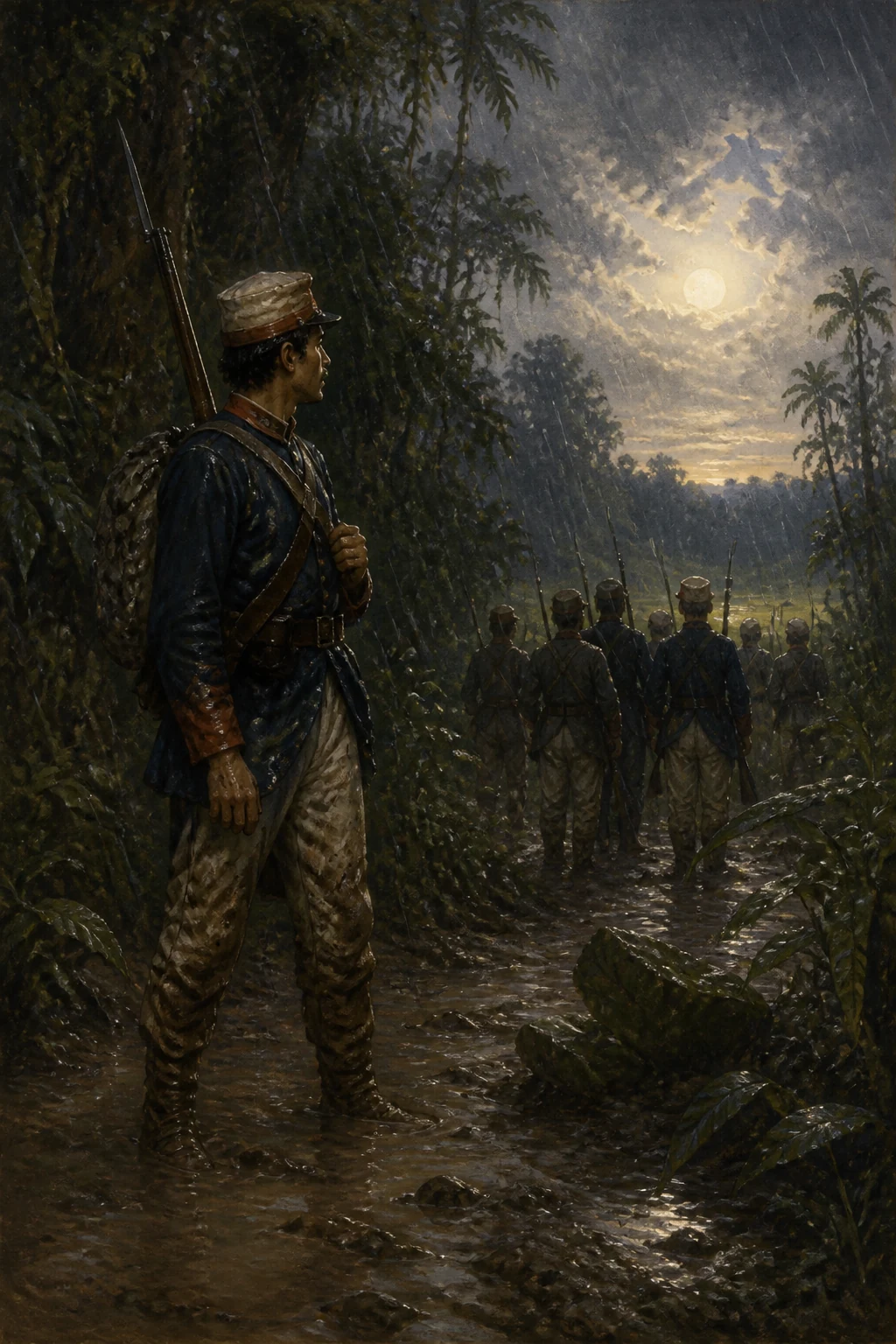
Once upon a time there were twenty-five tin soldiers, all brothers, for they had been born of an old tin spoon. Each held his musket in his arm and looked straight ahead; their uniforms were red and blue, and very splendid indeed. The very first thing they heard in this world, when the lid was taken off the box in which they lay, was the cry, “Tin soldiers!” A little boy shouted it, clapping his hands. They had been given to him because it was his birthday, and now he set them up on the table. Every soldier was the very image of the next, except for one, who was a little different. He had only one leg, for he had been cast last, and there had not been enough tin left. Yet he stood as firmly on his one leg as the others did on their two, and it is this very soldier whose story is so remarkable.
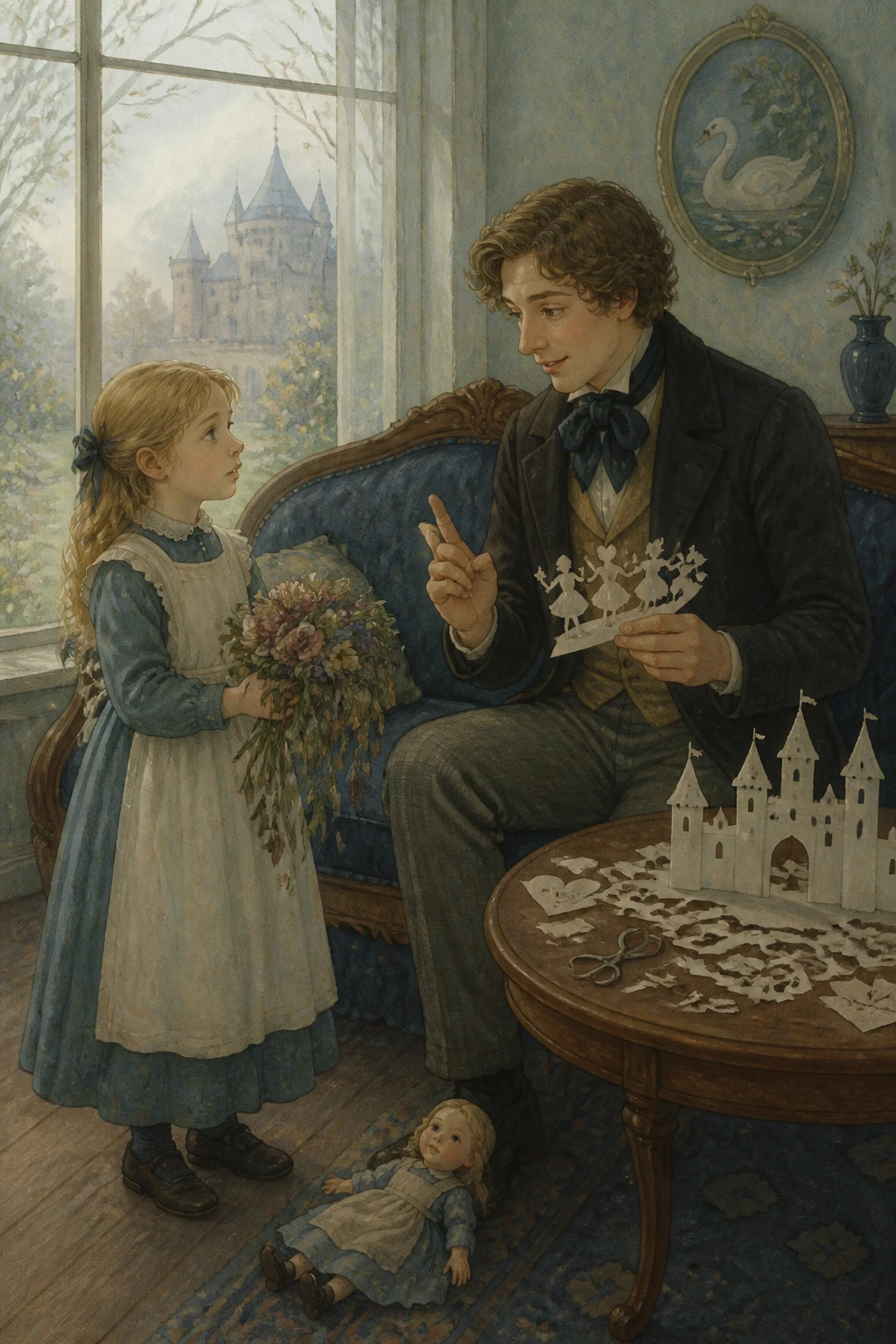
There were many other toys on the table where they had been set up, but the one that caught the eye most was a pretty paper castle. Through its little windows you could see right into the halls. Outside stood little trees around a small mirror meant to look like a lake; wax swans swam upon it and admired their reflections. It was all very pretty, but prettiest of all was a little lady standing in the open castle doorway. She too was cut out of paper, but she wore a skirt of the finest sheer lawn and a narrow blue ribbon over her shoulder like a sash. In the middle of it was a shining sequin as large as her whole face. The little lady stretched out both her arms, for she was a dancer, and she raised one leg so high in the air that the tin soldier could not see it at all and thought she had only one leg, like himself.
“Now there’s a wife for me!” he thought. “But she is rather grand. She lives in a castle, while I have only a box, and there are twenty-five of us sharing it. That is no place for her! Still, I must try to make her acquaintance.” And he lay down at full length behind a snuffbox on the table. From there he could get a good look at the elegant little lady, who went on standing on one leg without losing her balance.
When evening came, all the other tin soldiers were put into their box, and the people of the house went to bed. Now the toys began to play: they paid visits, waged war, and held a ball. The tin soldiers rattled in their box, for they wanted to join in, but they could not get the lid off. The nutcracker turned somersaults, and the slate pencil played pranks on the slate. They made such a din that the canary woke up and began to join in the conversation, in verse, no less. The only two who never stirred from their places were the tin soldier and the little dancer. She stood straight upon the tip of her toe, with both arms outstretched; he was just as steadfast on his one leg, and never took his eyes off her for a moment.
Then the clock struck twelve, and bang! The lid flew off the snuffbox. But there was no snuff inside—no, there was a little black goblin. It was a trick box.
“Tin soldier!” said the goblin. “Keep your eyes to yourself!” But the tin soldier pretended not to hear. “Just you wait till tomorrow!” said the goblin.
When morning came and the children got up, the tin soldier was put on the windowsill. Whether it was the goblin or a draught, all at once the window flew open, and the soldier fell headfirst from the third floor. It was a dreadful plunge. His leg pointed straight into the air, and he landed on his cap, with his bayonet wedged between the cobblestones.
The maid and the little boy came down at once to look for him, but although they very nearly trod on him, they could not see him. If the tin soldier had shouted, “Here I am!” they would surely have found him, but he did not think it proper to shout when he was in uniform.
Now it began to rain. The drops fell faster and faster, until it was a proper downpour. When it was over, two street boys came along. “Look!” said one. “There’s a tin soldier! Let’s send him sailing!”
So they made a boat out of a newspaper, set the tin soldier in the middle of it, and away he sailed down the gutter. Both boys ran alongside, clapping their hands. Good heavens, what waves there were in that gutter, and what a current! But then, it really had poured. The paper boat rocked up and down, and sometimes spun round so swiftly that the tin soldier trembled all over. Yet he remained steadfast, without changing his expression, looking straight ahead and holding his musket in his arm.
All at once the boat drifted beneath a long board that covered the gutter. It grew as dark as if he were back in his box. “Where can I be going now?” he thought. “Ah, well, it is all the goblin’s doing! If only the little lady were here in the boat with me, I would not mind if it were twice as dark!”
Just then a great water rat appeared, who lived beneath the board. “Have you a passport?” asked the rat. “Hand it over!” But the tin soldier kept silent and gripped his musket more tightly still. The boat sped on, with the rat in pursuit. Ugh! How he gnashed his teeth and shouted to the sticks and straws:
“Stop him! Stop him! He hasn’t paid the toll! He hasn’t shown his passport!” But the current grew stronger and stronger. Already the tin soldier could glimpse daylight ahead, where the board ended, but he also heard a roaring sound that might well have frightened a brave man. Just imagine: where the board ended, the gutter plunged straight into a great canal. For him, that would be as dangerous as sailing over a mighty waterfall would be for us.
He was already so close that he could not stop. The boat shot out, and the poor tin soldier held himself as stiffly as he could. No one should ever say that he had so much as blinked. The boat spun round three or four times and filled to the brim with water. It had to sink. The tin soldier stood up to his neck in water, and the boat sank deeper and deeper as the paper came apart more and more. Now the water closed over the soldier’s head, and he thought of the pretty little dancer whom he would never see again. In his ears rang the words:
“Onward, onward, warrior! Death awaits you!” Now the paper tore apart, and the tin soldier fell through, only to be swallowed that very instant by a large fish. Oh, how dark it was in there! It was worse even than beneath the gutter board, and so cramped besides. But the tin soldier was steadfast and lay at full length with his musket in his arm.
The fish darted about, twisting and turning in the most dreadful way. At last it grew quite still, and something like a flash of lightning passed through it. A bright light shone in, and someone cried out, “A tin soldier!” The fish had been caught, taken to market, sold, and brought into the kitchen, where the maid cut it open with a large knife. She took the soldier round the waist with two fingers and carried him into the sitting room, where everyone wanted to see this remarkable fellow who had travelled about in the belly of a fish. But the tin soldier was not at all proud. They set him up on the table, and—oh, what strange things happen in this world!—he was in the very same room as before. He saw the very same children, and there on the table stood the toys: the lovely castle with the pretty little dancer. She was still standing on one leg, with the other high in the air. She too was steadfast. The tin soldier was so moved that he almost wept tears of tin, but that would not have been proper. He looked at her, and she looked at him, but neither said a word.
Just then one of the little boys picked up the soldier and threw him straight into the stove, without giving any reason at all. It must have been the goblin in the box who was to blame.
The tin soldier stood in the full glow of the flames and felt a terrible heat, though whether it came from the actual fire or from love, he could not tell. His colours had quite faded away; whether that had happened on his travels or was the result of sorrow, no one could say. He looked at the little lady, and she looked at him, and he felt himself melting, but still he stood steadfast, with his musket in his arm. Then a door opened, and the wind caught the dancer. She flew like a sylph straight into the stove beside the tin soldier, flared up in a blaze, and was gone. Then the tin soldier melted into a lump, and when the maid cleared out the ashes the next day, she found him in the shape of a little tin heart. Of the dancer, only the sequin remained, and that was burnt coal-black.