Waltey
Srečni Jaka
032 Jack in Luck
Mother's Nursery Tales · Katharine PyleO besedilu
Srečni Jaka
- Vir
- Mother's Nursery Tales
- Avtor
- Katharine Pyle
- Jezik branja
- Slovenščina
- Jezik izvirnika
- English
- Čas branja
- 9 min branja
- Obseg
- 8 strani
- Naslov izvirnika
- 032 Jack in Luck
O izvirniku
Mother's Nursery Tales
Štiriintrideset zgodovinskih literarnih priredb starejših pravljic, ki jih je Pyle tudi ilustrirala. Bralni jezik je Slovenščina, izvirnik pa prihaja iz vira Mother's Nursery Tales v jeziku English.
Besedilo
Srečni Jaka
Jack je sedem dolgih let zvesto služil svojemu gospodarju, ne da bi za to dobil en sam novčič. Ko je ta čas minil, je stopil k njemu in rekel: »Gospodar, sedem let sem bil pri vas, zdaj pa je čas, da grem domov obiskat mater. Toda ali ne bi moral prej dobiti kaj plačila?«
»Seveda,« je rekel gospodar, »dobro si mi služil in v zameno boš tudi dobro plačan.« Nato je prinesel kepo zlata, veliko kakor Jackova glava, in jo dal fantu.
Jack se mu je zahvalil, zavil zlato v robec in zvezal vogale, da ga je lahko nosil. Potem se je poslovil od gospodarja in se odpravil na pot ter veselo požvižgaval. Toda pot je bila dolga in sonce je pripekalo. Dlje ko je hodil, bolj je bil utrujen, zlato pa je bilo težko kakor svinec. Prestavljal ga je iz ene roke v drugo, a iz trenutka v trenutek mu je postajalo težje breme.
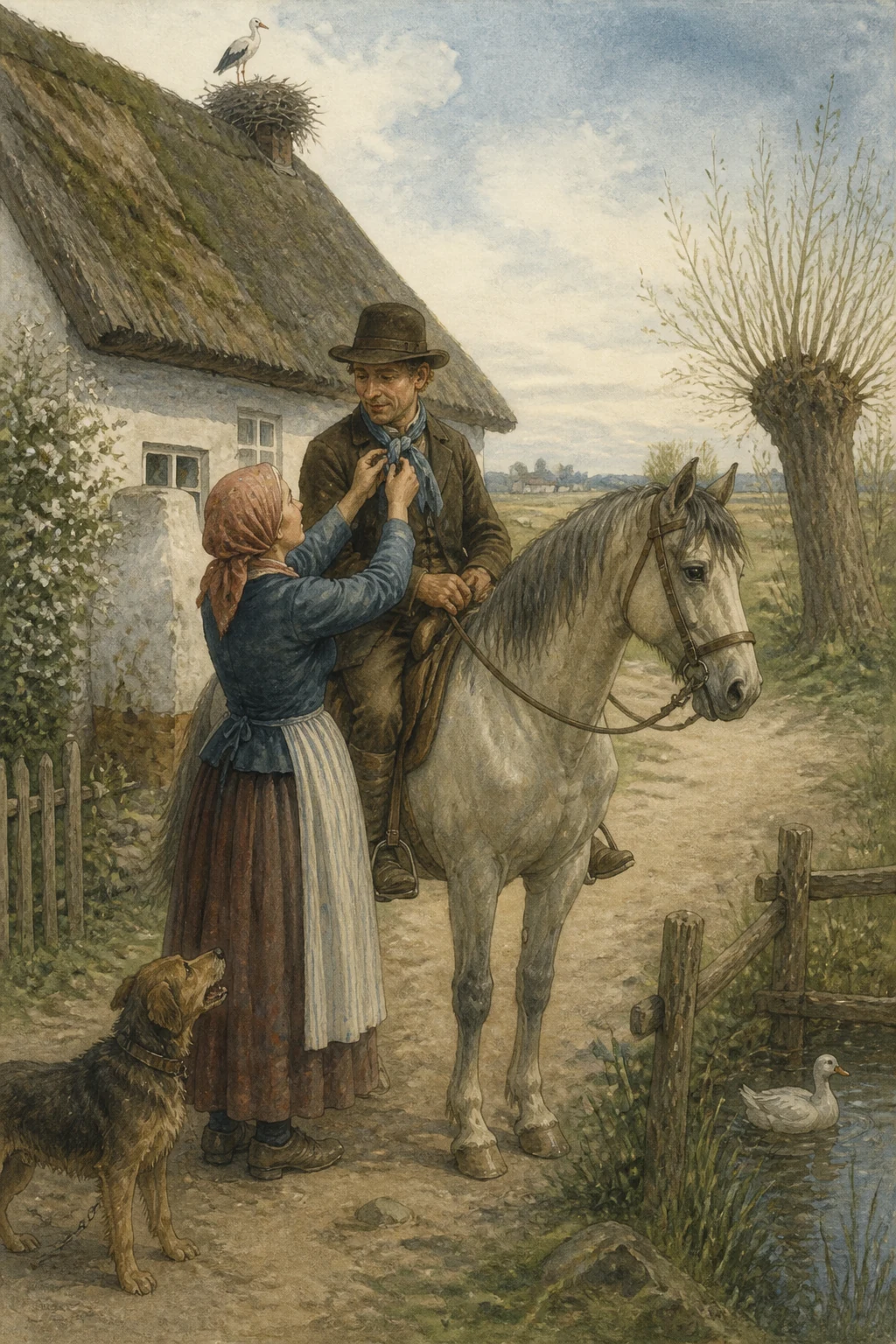
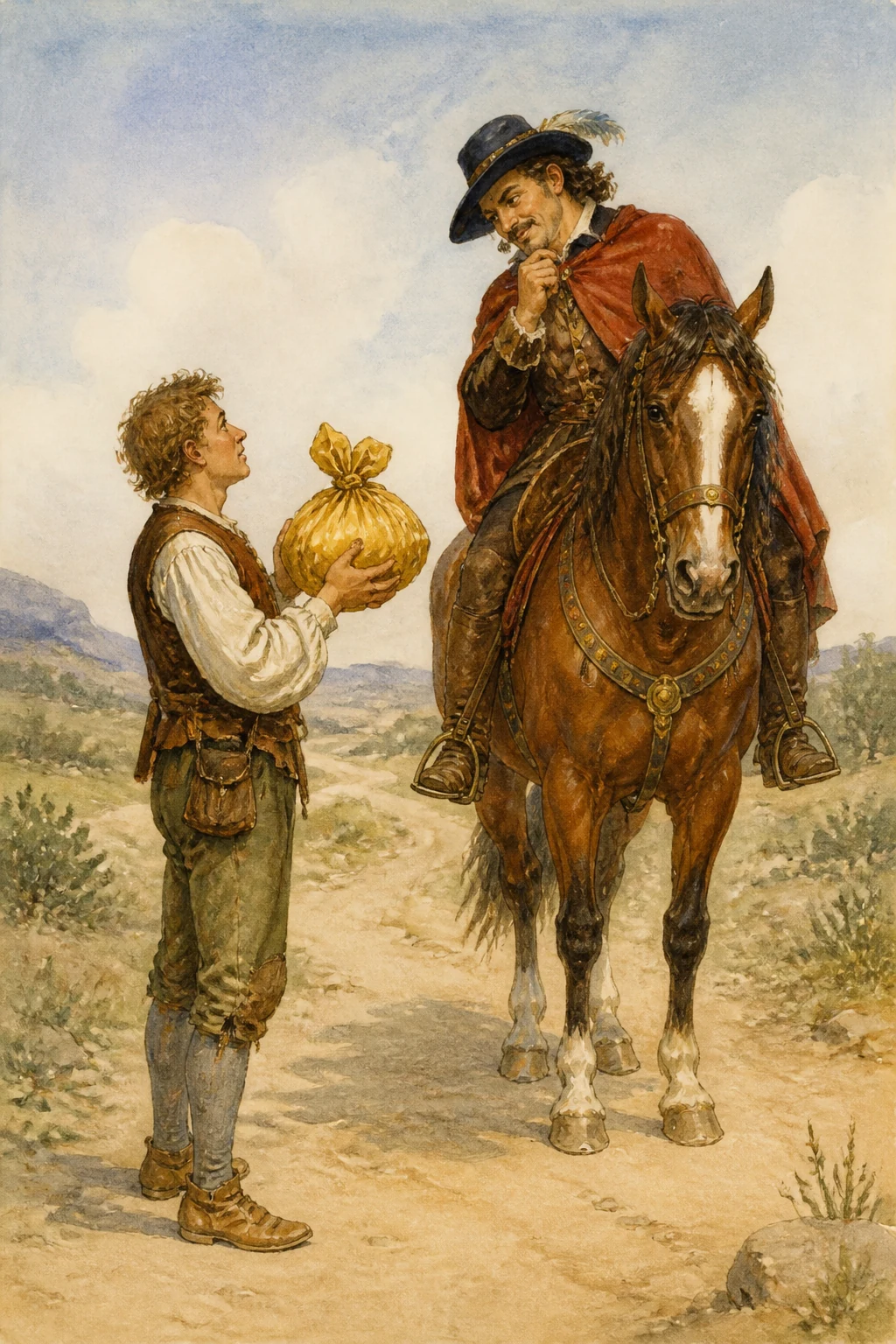
Čez nekaj časa je Jack srečal moža, ki je veselo jezdil na lepem konju. »Lepega konjiča jahate,« je rekel Jack. »Res je,« je odgovoril mož.
»No, vi ste pa srečen človek,« je rekel Jack. »Lahkotno jezdite kakor ptica, jaz pa moram pešačiti po prahu in nositi kepo zlata, ki je težka kakor svinec.«
»Ali imate v tem robcu res zlato?« je vprašal mož. »Res ga imam.« »Rad bi videl tako veliko kepo zlata.« Jack je razvezal robec in možu pokazal zlato. Ko ga je mož zagledal, so se mu oči zaiskrile in usta so mu zaigrala.
»Poslušajte,« je rekel Jacku, »jaz sem dobrodušen človek. Skoraj že doma sem, vas pa čaka še dolga pot. Dajte mi zlato in v zameno boste dobili mojega konja. Potem boste lahko jezdili ponosno kakor kralj, pešačil pa bom jaz.«
Jacku se je zdela to odlična kupčija. Zahvalil se je možu in mu dal zlato, nato pa zajahal konja. Mož mu je dal v roko šibo in rekel: »Če ne bo šel dovolj hitro, ga samo oplazite s tem, pa bo pospešil korak.« Potem je naglo zavezal zlato v robec in jo odkuril z njim.
Jack pa je jezdil z visoko dvignjeno glavo in se razgledoval naokoli. »Kako ponosna bo mati, ko me bo videla prijezditi pred vrata kakor plemiča,« si je mislil. »Koliko lepše je jezditi s privzdignjeno glavo kakor pešačiti po prahu.«
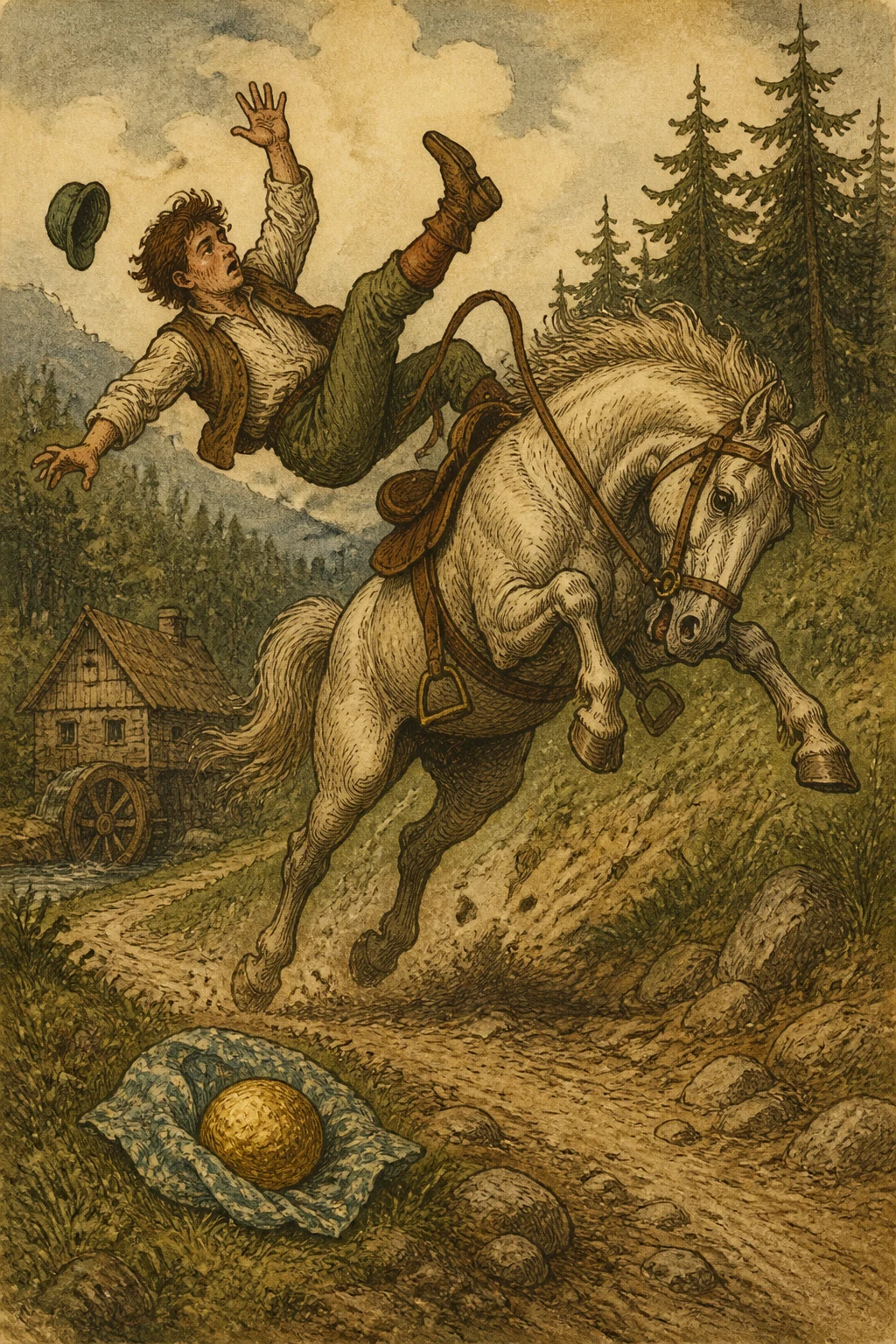
Čez nekaj časa si je Jack zaželel jezditi hitreje in je konja ošvrknil s šibo. Toda konjič je bil živahen. Ko je začutil šibo, je vrgel zadnje noge v zrak in se pognal v dir, da je Jacka premetavalo in stresalo. Držal se je, dokler je mogel, potem pa je padel v jarek, poln pekočih kopriv. Na srečo je neki mož, ki je šel mimo, ustavil konja in ga pripeljal nazaj. Mož je na vrvi vodil kravo.
»To pa je bil grd padec,« je rekel. »Res je,« je odgovoril Jack. »Zdaj vidim, da je konj nezanesljiva žival. Neki mož mi ga je dal za kepo zlata, ki sem jo nosil, in takrat se je zdel čisto miren.«
»Za kepo zlata?« je vprašal mož. »Da, za kepo zlata. Kako srečni ste, da imate tako lepo in mirno žival, kot je krava, ki vam daje dobro mleko, maslo in sir, namesto konja, ki zdirja in vas vrže s hrbta.«
»Res imam srečo,« je rekel mož. Nato se je nekoliko zamislil. »Poslušajte,« je rekel. »Toliko masla, sira in smetane sem že imel, da sem se vsega naveličal. Če želite, vam dam svojo kravo in vzamem vašega konja, pa boste vi potegnili boljši konec.«
»Pa naj bo!« je veselo vzkliknil Jack. »In prav lepa hvala, da ste mi to predlagali.« Nato je možu dal konja, mož pa njemu kravo. Potem je mož skočil na konja in naglo odjezdil, ne da bi se enkrat samkrat ozrl.
Jack je vodil kravo na vrvi in srce mu je bilo lahko, četudi noge niso bile. »Zdaj bom lahko živel kakor kralj,« je rekel. »Ko bom žejen, bom samo pomolzel kravo in se napil dobrega svežega mleka. Kadar bom imel kos kruha — kos kruha pa ni težko dobiti — bom lahko vedno namazal nanj malo masla ali si privoščil okusen košček sira.«
Sonce je bilo zdaj že visoko na nebu in tako je pripekalo, da so se Jacku usta posušila kakor strgalnik za muškatni orešček. »Zdaj je čas za kozarec mleka,« je rekel. Kravo je privezal h kolu, nato pa sedel in jo poskusil pomolsti. Toda nikoli se ni naučil molsti in niti kapljice ni dobil iz nje. Poleg tega je bil tako neroden, da ga je krava nazadnje brcnila in ga prekucnila čez cesto. Jack je vstal in si pomel glavo. »To je zelo nevarna žival,« je rekel, »ali pa me ne mara.«
Prav tedaj je prišel mimo mesar, ki je v samokolnici peljal lepega prašička, in se ustavil, da bi spregovoril z Jackom. »Kaj vam je,« je vprašal, »da ste videti tako žalostni in pobiti?«
»Oh,« je rekel Jack, »krava me je brcnila in mi noče dati niti kapljice mleka.« Nato je mesarju povedal vso zgodbo, kako je zlato zamenjal za konja in konja za kravo.
»Slabo kupčijo ste sklenili,« je rekel mesar. »Ta krava je stara in nikoli več ne bo dajala mleka. Z njo ni mogoče storiti drugega, kakor jo udariti po glavi in porabiti za govedino.«
»Kako naj bi to storil?« je vprašal Jack. »Poleg tega pa ne maram govedine. Ko bi bila vsaj lep prašiček! Ničesar nimam raje kakor mehak in sočen košček svinjine.«
»No, poglejte si to!« je rekel mesar. »Preveč dobrega srca sem za lastno korist, toda če želite, bom vzel kravo, vi pa boste v zameno dobili mojega prašička.«
Jack je bil navdušen. Zahvalil se je mesarju, vzel prašička v zameno za kravo in se odpravil naprej. Pred seboj je potiskal samokolnico s prašičkom in bil vesel kakor škrjanček.
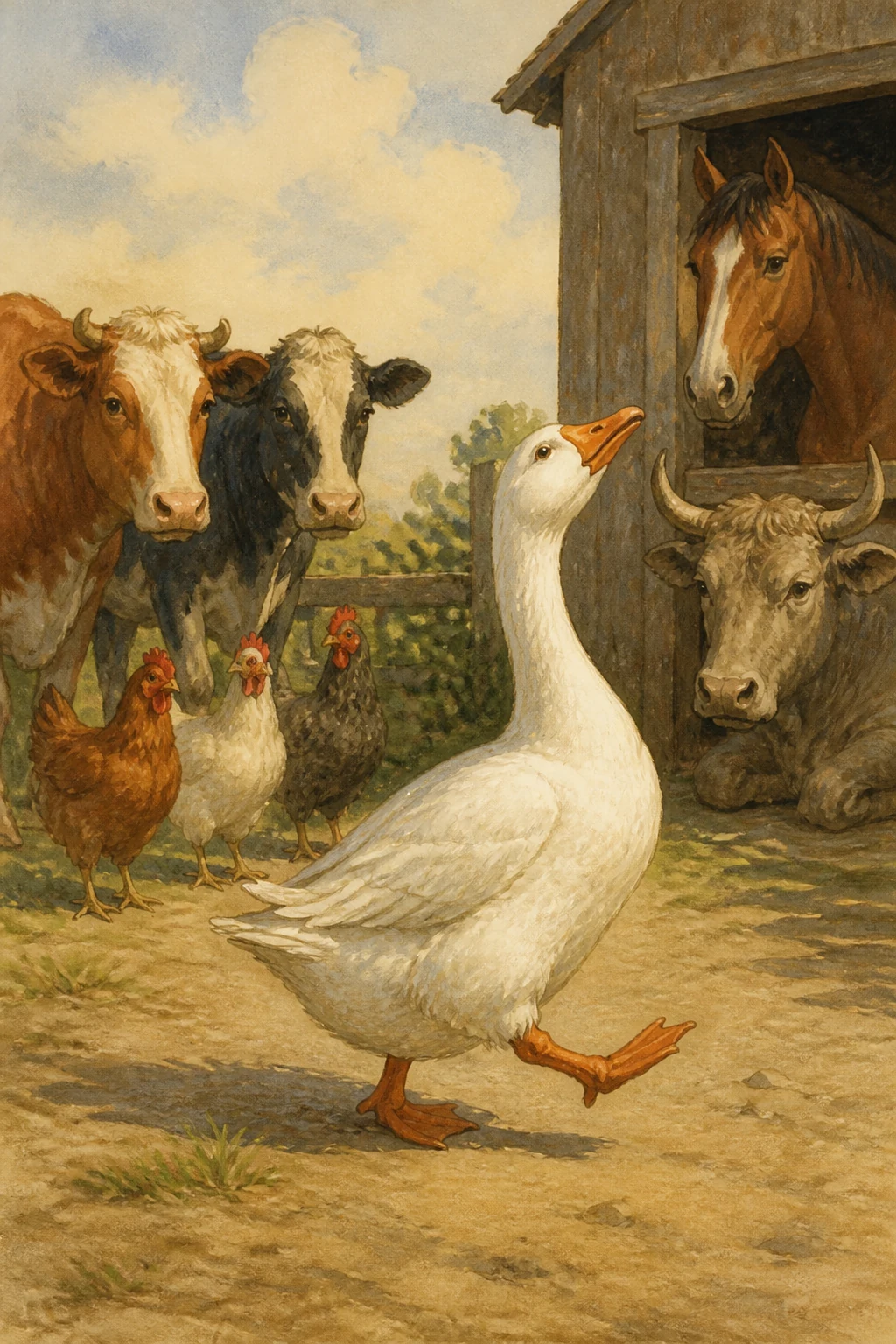
Čez nekaj časa je srečal mladeniča, ki je pod pazduho nosil lepo, debelo belo gos. Jack ga je poznal že od prej in ustavila sta se, da bi poklepetala. Jack mu je povedal vse o svojih dogodivščinah in o odličnih kupčijah, ki jih je sklenil.
»Da, to je lepo,« je rekel mladenič. Nato je Jacku pokazal gos in mu dal, da jo je prijel za peruti ter potehtal v rokah, potem pa še potipal, kako debela je in kako mehko perje ima.
»Lepa ptica je,« je rekel Jack. »Pa vendar ni tako imenitna žival kakor moj debeli prašiček in tudi tako okusna ne bo, ko jo bomo pojedli.«
Mladenič si je prašička ogledal z vseh strani in se popraskal po glavi. »Ne vem, kaj naj si mislim o tem prašičku,« je rekel. »Nekemu možu tamle za hribom so pred dvema dnevoma ukradli prašička. Bojim se, da je to prav tisti. Samo upam, da vas ne bodo prijeli in vrgli v ječo, ker ga imate pri sebi.«
»V ječo!« je prestrašeno vzkliknil Jack. »Toda jaz ne smem v ječo. Mati me pričakuje doma in srce bi se ji zlomilo, če me ne bi bilo.«
»Takole vam povem,« je rekel mladenič. »Tukajšnje poti poznam bolje kot vi. Če želite, bom vzel prašička in vam dal v zameno svojo gos. Morda bom zaradi tega nastradal, a če bo kdo šel v ječo, to vsaj ne boste vi.«
Jack se mu je zahvalil s solzami v očeh. Dal mu je prašička, vzel gos in veselo nadaljeval pot. »Pravzaprav,« si je mislil, »imam raje gos kot prašička. Ne le da je dobra za jesti, morda mi bo znesla tudi lepo veliko jajce, z njenim perjem pa bom lahko naredil mehko blazino, na katero bo mati položila glavo.«
S takimi mislimi je stopal naprej z gosjo pod pazduho. Čez nekaj časa je prišel v vas, kjer je neki brusilec vrtel svoje kolo ter ljudem brusil nože in škarje.
Delal je tako hitro in pri delu tako veselo prepeval, da se je Jack ustavil in ga opazoval. »Lep poklic imate, vi brusilci,« je rekel Jack.
»Res je,« je odgovoril mož. »Ljudje so veseli, ko pridem, in hranijo svoje nože in škarje, da jim jih nabrusim. Vedno lahko zaslužim nekaj denarja, in ko se naveličam enega kraja, vzamem svoje kolo in grem v naslednjega. Imate pa lepo gos. Kje ste jo kupili?«
»Nisem je kupil, dobil sem jo v zameno za prašička.« »In kje ste dobili prašička?« »Oh, zamenjal sem ga za kravo.« »Kje ste pa dobili kravo?«
»Dobil sem jo v zameno za konja.« »Kje ste dobili konja?« »Kupil sem ga za kepo zlata, veliko kakor moja glava.« »Kje ste dobili zlato?«
»Gospodar mi ga je dal kot plačilo za sedem let služenja. Toda zlato je bilo pretežko, konj je zdirjal, krava ni hotela dati mleka, prašiček pa je bil ukraden. Tale gos pa je zelo lepa, tako da sem imel na koncu vendarle srečo.«
»To pa res,« je rekel brusilec. »A navsezadnje bi imel raje ta svoj brusni kamen kakor najlepšo in najdebelejšo gos. Gos človek poje in je je konec, tale brusni kamen pa mi vedno prinese nekaj denarja, da mi žvenketa v žepu.«
»Da, to je res,« je rekel Jack. »Želim si, da bi imel brusni kamen.« Brusilec se je zamislil. »Morda bi se dalo kaj ukreniti,« je rekel. »Imam še en brusni kamen, ki je sicer nekoliko poškodovan, a še vedno dobro brusi. Če želite, ga lahko dobite v zameno za svojo gos. Ko pa enkrat imate brusni kamen, se ni težko lotiti obrti.«
»Res imam srečo,« je rekel Jack. »Samo zaželeti si moram nekaj, pa to že dobim. Na, vzemite gos in mi dajte brusni kamen.« Mož je Jacku dal star, razpokan brusni kamen. Nato je pobral težek kamen, ki je ležal ob cesti. »Vzemite s seboj še tega,« je rekel. »Prav vam bo prišel, če boste kdaj hoteli poravnati ukrivljen žebelj. Samo položili ga boste na brusni kamen in potolkli po njem s to skalo, pa bo v hipu raven.«
»Da, to bo imenitno,« je rekel Jack. Vzel je brusni kamen in skalo, se zahvalil možu in nadaljeval pot. Toda cesta je bila razdrapana in sonce je pripekalo. Kmalu je bil Jack od teže, ki jo je nosil, tako utrujen, da je komaj še prestavljal nogo pred nogo, znoj pa mu je v potokih tekel s čela.
Čez nekaj časa je prišel do studenca, v katerem je žuborela bistra, sveža in hladna voda. Jack je odložil kamna na rob in se sklonil, da bi pil. Ko pa se je spet vzravnal, je po nesreči dregnil vanju in čof! Oba sta padla v studenec ter potonila na dno.
»Hvala nebesom!« je vzkliknil Jack. »Če bi moral ta kamna nositi še dosti dlje, bi se mi gotovo zlomil hrbet. Oh, kako srečen človek sem! Vse, česar se dotaknem, mi prinese srečo.«
Nato se je lahkega srca in lahkih nog odpravil naprej in prav kmalu prispel do materine hiše.
Izvirnik
032 Jack in Luck
Naslednje strani prikazujejo izvirno besedilo za primerjavo.
Jack had served his master well for seven long years without having been paid a penny. At the end of that time Jack went to him and said, “Master, I have been with you seven years, and now it is time for me to go home to see my mother. But oughtn’t I to be paid something first?”
“Yes,” said his master, “you have served me well, and you shall be well paid in return.”
He then brought out a lump of gold as big as Jack’s head and gave it to the lad.
Jack thanked him and wrapped the gold up in a handkerchief and tied the corners together, so he could carry it. Then he said good-by to his master, and off he set, whistling merrily. But the way was long and the sun was hot. The further Jack went the wearier he grew, and the gold weighed as heavy as lead. He shifted it from hand to hand, but every moment it became a heavier burden.
After awhile Jack met a man riding merrily along on a fine horse.
“That is a fine nag you are riding,” said Jack.
“Yes, it is,” answered the man.
“Well, you are a lucky fellow,” said Jack. “There you ride along as light as a bird, and I have to trudge in the dust and carry a lump of gold that weighs like lead.”
“Is that gold you have tied up there?” asked the man.
“Yes, it is.”
“I would like to see a lump of gold as big as that.”
Jack untied the handkerchief and showed the gold to the man. When the man saw it his eyes glittered and his mouth worked.
“Listen,” said he to Jack, “I am a good-natured sort of a fellow. I am almost home and you have still a long way to go. Give me the gold and you shall have my horse in exchange, and then you can ride along as proud as a king, and I will do the trudging.”
That seemed to Jack a fine bargain. He thanked the man and gave him the gold, and then he mounted the horse. The man put a switch in his hand and said, “If he does not go along fast enough just touch him with this and he will go faster.” Then he tied up the gold in a great hurry, and made off with it.
As for Jack he rode along holding his head high and glancing about him. “How proud mother will be to see me come riding up to the door like a nobleman,” thought he. “How much better to ride with my head in the air than to trudge along in the dust.”
After awhile Jack thought he would like to go faster, and he gave the horse a cut with the switch. But the nag was a lively one. When it felt the switch it kicked up its heels, and away it went, jolting and bumping. Jack held on as long as he could, and then he fell off into a ditch full of stinging nettles. Luckily a man passing by stopped the horse and brought it back to him. The man was leading a cow by a rope.
“That was a nasty fall you had,” said he.
“Yes,” answered Jack. “Now I see that a horse is a tricky animal. A man gave him to me for a lump of gold I was carrying, and he seemed quiet enough then.”
“A lump of gold?” asked the man.
“Yes, a lump of gold. How lucky you are to have a nice quiet animal like the cow to give you good milk and butter and cheese, instead of a horse that runs away and throws you off.”
“Yes, I am lucky,” said the man. Then he thought a bit. “Listen,” said he. “I have had so much butter and cheese and cream that I am tired of them. If you like you shall have my cow and I will take your horse, and you will have the best of the bargain.”
“That I will,” cried Jack joyfully, “and I thank you kindly for speaking of it.” He then gave the horse to the man, and the man gave him the cow. Then the man sprang upon the horse and away he rode in haste without once turning to look behind him.
Jack led the cow along by the rope, and his heart was light if his heels were not. “Now I can live like a king,” said he. “When I am thirsty all I have to do is to milk the cow and have a drink of fine fresh milk; and when I have a piece of bread—it is easy enough to get a piece of bread—I can always have some butter with it, or a tasty bit of cheese.”
The sun was high in the sky by now, and it shone so hot that Jack’s mouth grew as dry as a nutmeg grater. “Now is the time for a glass of milk,” said he. He tied the cow to a post, and then he sat down and tried to milk her; but he had never learned how to milk, and not a drop could he get. Moreover he was so awkward about it that at last the cow gave him a kick that sent him head over heels across the road. Jack got up and rubbed his head. “That is a very dangerous animal,” said he, “or else she does not like me.”
Just then a butcher came by, wheeling a fine little pig in a barrow, and he stopped to speak with Jack. “What ails you,” said he, “that you look so sad and down in the mouth?”
“Oh,” said Jack, “my cow has kicked me and will not give me a drop of milk,” and he told the butcher the whole story, how he had exchanged the gold for a horse, and the horse for a cow.
“You made a bad bargain,” said the butcher. “That cow is old and will never give milk. There is nothing to do with her but to knock her on the head and use her for beef.”
“How could I do that?” asked Jack. “And besides I do not like beef. If she were only a fine little pig, now! There is nothing I love better than a tender juicy bit of pork.”
“Well, there now!” said the butcher. “I am too kind-hearted for my own good, but if you like I will take the cow and you shall have my pig in exchange.”
Jack was delighted. He thanked the butcher and took the pig in exchange for his cow, and off he set, wheeling the pig before him, and he was as happy as a lark.
After awhile he met a young man who carried a fine fat white goose under his arm. Jack had known the youth before, and they stopped to talk. Jack told him all about his adventures, and what fine bargains he had made.
“Yes, that is well,” said the youth. Then he showed Jack his goose, and made him weigh it by the wings and feel how fat it was, and how soft were its feathers.
“It is a fine fowl,” said Jack. “But after all it is not as fine a creature as my fat pig, and it will not taste as good when it is eaten, either.”
The youth looked the pig all over, and scratched his head. “I do not know about that pig,” said he. “A man just over there beyond the hill had his pig stolen two days ago. I misdoubt me but what this may be the very one. I only hope you may not get taken up and put in prison for having it.”
“In prison,” cried Jack in alarm. “But I cannot go to prison. My mother is looking for me home, and it would break her heart if I did not come.”
“I will tell you,” said the youth; “I know the ways about here better than you do. If you like I will take the pig and give you my goose in exchange. I may suffer for it, but if anyone is taken to prison at least it will not be you.”
Jack thanked him with tears in his eyes. He gave him the pig and took the goose and went on his way rejoicing. “After all,” thought he, “I would rather have a goose than a pig. Not only is it good to eat, but it may lay me a fine big egg, and its feathers will do to make a soft pillow for mother to lay her head on.”
So thinking he trudged along with the goose under his arm, and after awhile he came to a village, and there was a knife-grinder turning his wheel and sharpening knives and scissors for people.
He worked so quickly and sang so merrily as he worked that Jack stopped to watch him.
“That is a fine trade of yours—that of a knife-grinder,” said Jack.
“Yes, it is,” answered the man. “People are glad to see me come, and they save their knives and scissors for me to sharpen. I always can earn a bit of money, and when I am tired of one place I take my wheel and go on to the next. But that is a fine goose you have. Where did you buy it?”
“I did not buy it, I got it in exchange for a pig.”
“And where did you get the pig?”
“Oh, I took it in exchange for a cow.”
“Where did you get the cow?”
“I got it in exchange for a horse.”
“Where did you get the horse?”
“I bought it for a lump of gold as big as my head.”
“Where did you get the gold?”
“My master gave it to me in payment for seven years’ service, but the gold was too heavy, and the horse ran away, and the cow would give no milk, and the pig had been stolen, but this is a very fine goose, so you see I have been lucky in the end.”
“That you have,” said the knife-grinder. “But after all I would rather own this grindstone of mine than the very finest, fattest goose. The goose is eaten and that is the end of it, but this grindstone always earns me a bit of money to jingle in my pocket.”
“Yes, that is true,” said Jack. “I wish I had a grindstone.”
The knife-grinder looked thoughtful. “It might be managed,” said he. “I have another grindstone that is a bit damaged, but works all right. If you like you can have it in exchange for your goose, and once you have a grindstone the rest of the business is easy enough.”
“I am in luck indeed,” said Jack. “I have only to wish for a thing and I get it. Here, take the goose, and give me the grindstone.”
The man gave Jack an old cracked grindstone. Then he picked up a heavy stone that lay by the roadside. “Take this with you, too,” he said. “It will be useful to you if you ever have a crooked nail to straighten. Then you will only have to lay it on the grindstone and beat it with this rock, and you can straighten it out in no time.”
“Yes, that will be a fine thing,” said Jack, and he took the grindstone and the rock and thanked the man and went on his way.
But the road was rough and the sun was hot, and before long Jack was so weary with the weight he carried that he could hardly drag one foot after another, and the sweat poured down from his forehead.
After awhile he came to a place where a well of water bubbled up clear and fresh and cool. Jack put his stones down on the edge of it and stooped over to drink, but as he rose up again he happened to give the stones a push, and plunk! they both fell into the well and sank to the bottom.
“Now thanks be to heaven!” cried Jack. “If I had had to carry those stones much farther my back would surely have broken. Oh, what a lucky fellow I am! Everything I touch turns to luck.”
Then he started off with a light heart and light heels, and it did not take him long to reach his mother’s house.
Nadaljuj z branjem