Prevod
There stood an old manor house with muddy moats and a drawbridge; the bridge was more often up than down: not every guest who comes is welcome. Beneath the eaves were openings through which to shoot, and to pour boiling water, even molten lead, down upon the enemy if he came too close. Inside, the beamed ceiling was high, which was a good thing, for a great deal of smoke rose from the fire where the large, wet logs lay. On the walls hung portraits of men in armour and proud ladies in heavy gowns; the proudest of them all walked here in the flesh. She was called Mette Mogens, and she was mistress of the manor.
One evening robbers came. They killed three of her servants, and the watchdog too; then they chained Mistress Mette to the kennel with the dog’s chain and settled themselves in the hall, drinking the wine from her cellar and all the good ale.
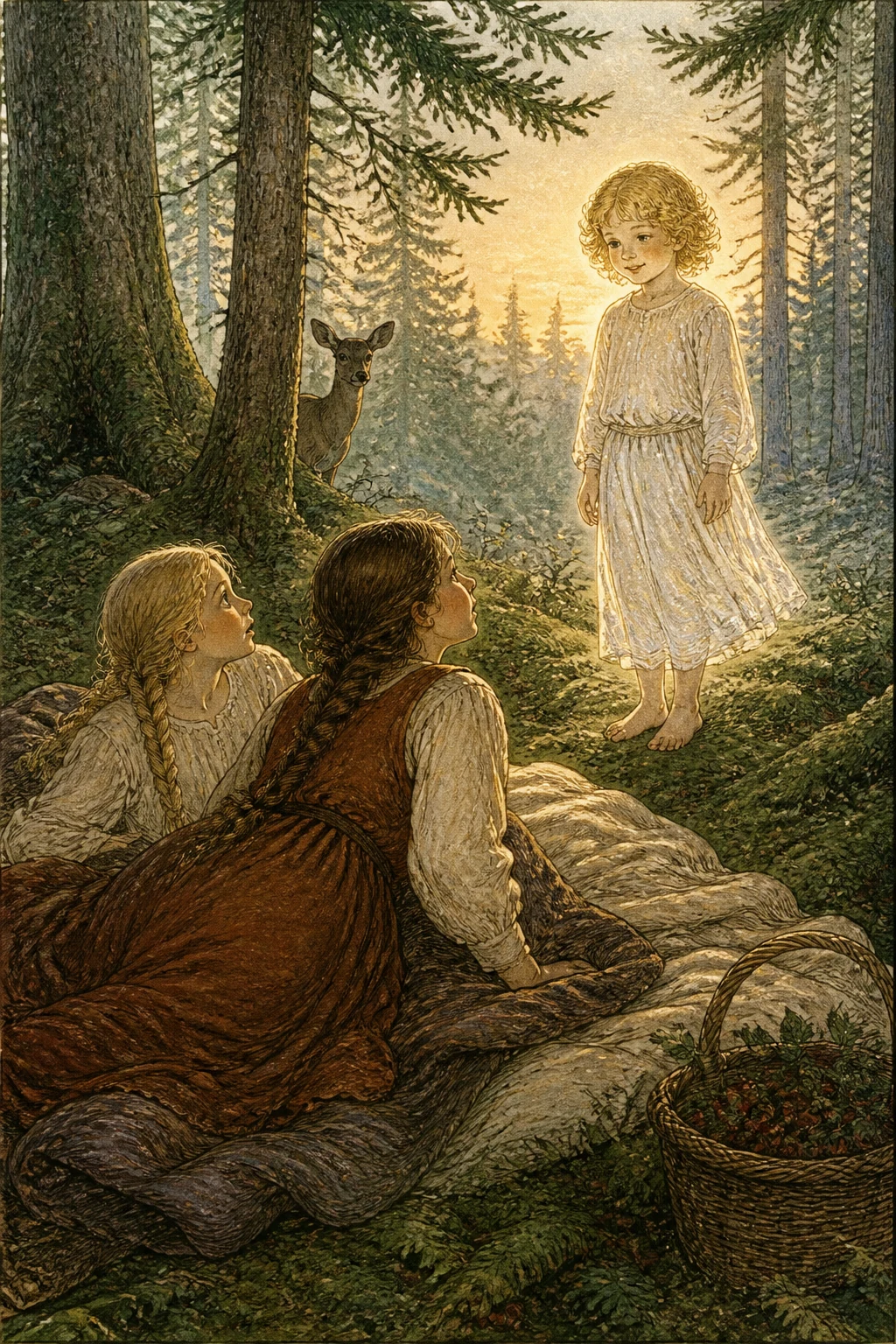
Mistress Mette stood chained like a dog; she could not even bark. Then the robbers’ boy came creeping up, so quietly that no one must notice him, or they would have killed him.
“Mistress Mette Mogens!” said the boy. “Do you remember when my father was made to ride the wooden horse in your husband’s day? You pleaded for him then, but it did no good; he was to sit there until he was crippled. But you stole down, just as I am stealing here now, and with your own hands you put a little stone beneath each of his feet so that he could find some relief. No one saw it, or they pretended not to see; you were the gracious young mistress. My father told me about it, and I have kept it in my heart, but not forgotten it! Now I shall set you free, Mistress Mette Mogens!”
Then they took horses from the stable and rode through wind and rain, and found friends to help them. “That was a rich reward for the little kindness I showed the old man!” said Mette Mogens.
“Kept, but not forgotten!” said the boy. The robbers were hanged. ♣ There stood an old manor house, and it stands there still; it was not Mistress Mette Mogens’s, but belongs to another family of high nobility.
This is in our own time. The sun shines on the tower’s gilded spire, little wooded islands lie like bouquets upon the water, and wild swans swim around them. Roses grow in the garden; the mistress of the manor is herself the loveliest rose petal, glowing with joy, the joy of good deeds—not out in the wide world, but within people’s hearts, where it is kept, but not forgotten.
Now she walks from the manor to the little cottage out in the fields. A poor crippled girl lives there; the window of her little room faces north, and the sun never enters. All she can see is a stretch of field bounded by a high ditch bank. But today there is sunshine, our Lord’s warm, lovely sunshine, inside the room; it comes from the south through a new window where before there was only a wall.
The crippled girl sits in the warm sunshine, looking out at woods and shore. The world has grown so vast and so lovely, all through a single word from the kind mistress of the manor.
“That word was so easily spoken, that deed so small!” she says. “The joy it brought me was boundlessly great and blessed!” And so she does many a good deed, remembering all those in poor homes, and in rich homes too, where there are also sorrowful hearts. It is hidden and kept, but it is not forgotten by our Lord!
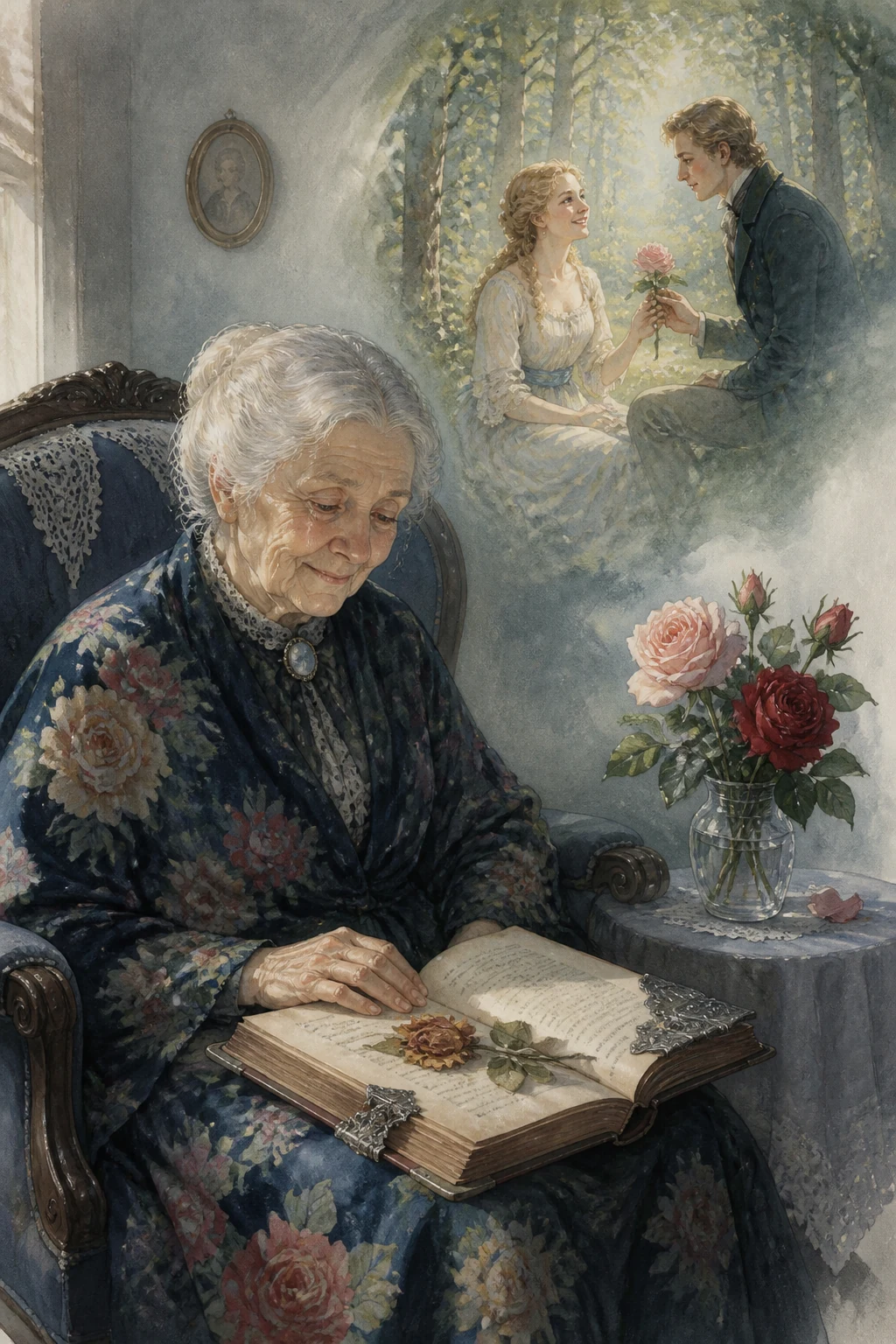
♣ There was an old house in the great, bustling city. It had rooms and halls, but we shall not go into them; we shall stay in the kitchen. It is warm and bright there, clean and neat; the copper gleams, the table looks polished, and the sink is like a freshly scoured chopping board. The maid-of-all-work has done it all, and still found time to dress as though she were going to church. She wears a bow on her cap, a black bow; it is a sign of mourning. Yet she has no one to mourn, neither father nor mother, neither kin nor sweetheart; she is a poor girl. Once she was engaged to a poor young man; they loved each other dearly. One day he came to her.
“Neither of us has anything!” he said. “The rich widow down in the basement has spoken warmly to me; she will make me well-off. But you are in my heart. What do you advise me to do?”
“Whatever you think will make you happy!” said the girl. “Be good and loving to her, but remember that from the moment we part, we must never see each other again!”
– A couple of years passed; then she met her former friend and sweetheart in the street. He looked ill and wretched, and she could not help herself; she had to ask, “How are you keeping?”
“Rich and comfortable in every way!” he said. “My wife is good and kind, but you are in my heart. I have fought my fight, and soon it will be over! We shall not meet again until we are with our Lord.”
A week has passed; this morning the newspaper announced his death, and that is why the girl is in mourning. Her sweetheart has died, leaving a wife and three stepchildren, as the notice says; the bell has a cracked ring, and yet its metal is pure.
The black bow speaks of mourning, and the girl’s face speaks of it still more; in her heart it is kept, never to be forgotten! ♣ Yes, you see, those are three stories, three leaves upon one stem. Would you like more clover leaves? There are many in the heart’s book, kept but not forgotten.