Prevod
Next, the soldiers of unjust Amulius ruled Ausonia’s realm, and aged Numitor regained his lost kingdom through his grandson’s gift. On the feast of Pales, the city’s walls were founded. Tatius and the Sabine elders waged war, and Tarpeia, who had opened the way to the citadel, lost her guilty life beneath a heap of weapons. Then the men of Cures, like silent wolves, stifled every sound, fell upon men overcome by sleep, and made for the gates that Ilia’s son had closed with a sturdy bar. But Saturn’s daughter herself opened one, turning its hinge without a sound.
Venus alone sensed that the gate’s bars had fallen and would have closed it, except that no god may ever undo another god’s work. Beside Janus dwelt Ausonian water nymphs, where a cold spring sprinkled the ground. She asked their aid, and the nymphs could not refuse the goddess’s just request. They drew forth the streams and hidden waters of their spring. Yet the open gateway of Janus was still passable: the water had not blocked the way.
They laid pale sulphur beneath the abundant spring and set its hollow channels ablaze with smoking pitch. By these and other powers, heat reached the spring’s deepest recesses; and you waters, who lately dared rival Alpine cold, now yield nothing to fire itself! The twin doorposts smoked beneath the fiery spray, and the gate, promised in vain to the stern Sabines, was barricaded by this new spring until the warriors of Mars could arm themselves. When Romulus marched out to meet the foe, and Roman earth lay strewn with Sabine bodies and their own, and the impious sword mingled a son-in-law’s blood with his father-in-law’s,
they nevertheless agreed to end the war in peace, rather than fight to the bitter end, and to let Tatius share the throne. Tatius had died, and you, Romulus, were giving equal laws to both peoples, when Mars laid aside his helmet and addressed the father of gods and men: “The time has come, Father, now that Rome’s power rests on firm foundations and depends on a single guardian, to grant the reward you promised me and your worthy grandson: take him from the earth and set him in heaven.
Once, in the presence of the assembled gods, you told me—for I remember, and cherished those gracious words— ‘There shall be one whom you will raise to the blue heavens.’ Let the full promise of your words be fulfilled!” The Almighty nodded, veiled the sky in dark clouds, and terrified the world with thunder and lightning. Mars knew these signs confirmed the promised carrying-off.
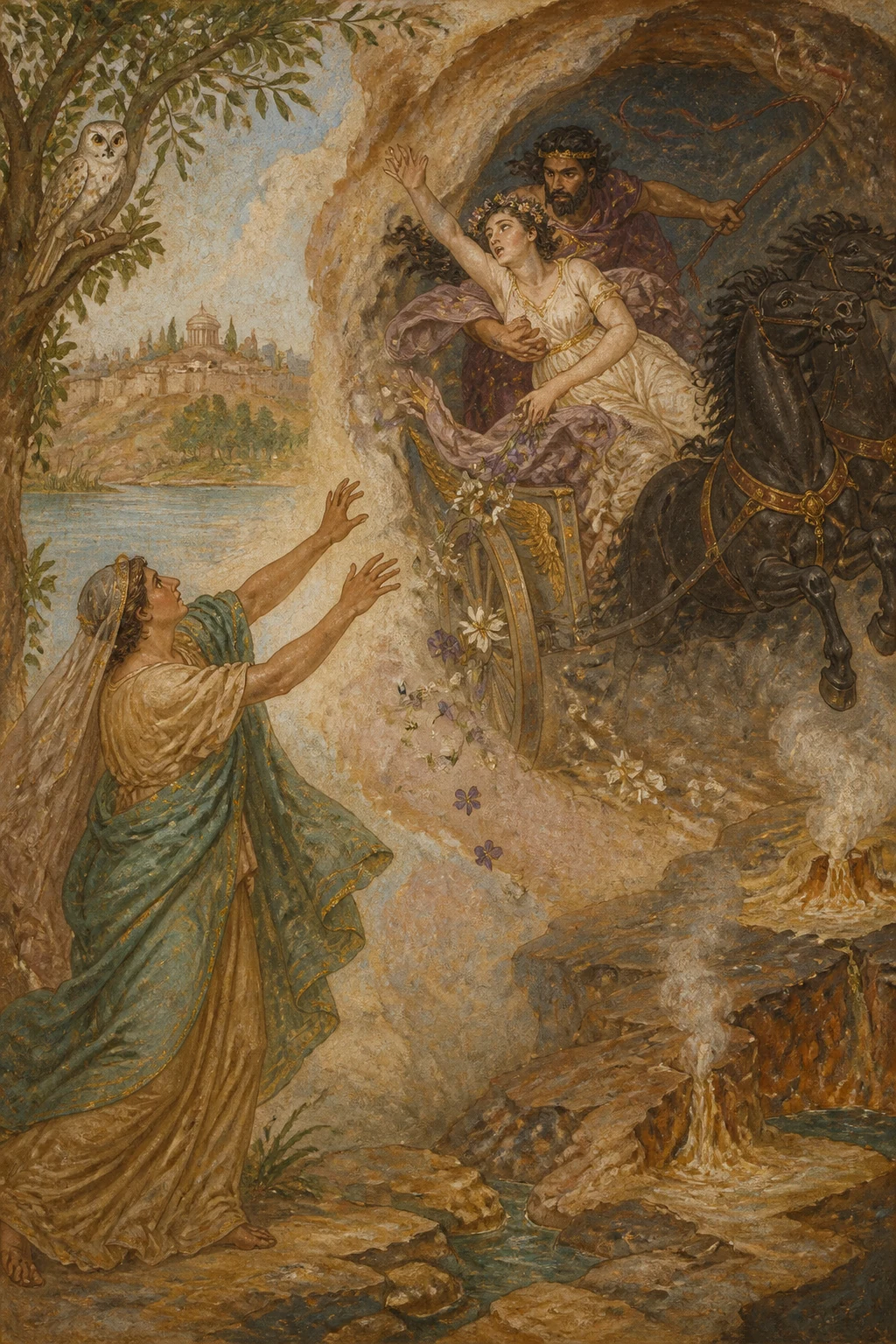
Leaning on his spear, the fearless god mounted his chariot, whose bloodstained pole weighed upon his horses, cracked his whip, and, swooping down through the air, alighted on the summit of the wooded Palatine. There he carried off Ilia’s son as he gave his citizens laws that were no tyrant’s decrees. His mortal body dissolved in the thin air, as a leaden bullet, hurled from a broad sling, melts away in mid-flight.
A beautiful form took its place, worthier of the gods’ lofty couches: the form of Quirinus in his striped robe. His wife was mourning him as lost when queenly Juno commanded Iris to descend along her curving path to Hersilia and deliver this message to the bereaved woman: “O lady, crowning glory of both Latium and the Sabine people, most worthy once to have been so great a man’s wife, and now to be the wife of Quirinus, cease your weeping. If you long to see your husband, follow me to the grove that flourishes on Quirinus’s hill and shades the Roman king’s temple.”
Iris obeyed, gliding down her many-coloured bow to earth, and addressed Hersilia in the appointed words. Scarcely lifting her eyes, her face modestly lowered, she said, “O goddess—for though I cannot say who you are, I know you are divine—lead me, oh, lead me, and let me see my husband’s face! If only the Fates allow me to see him once, I shall feel that heaven itself is mine.”
At once she climbed Romulus’s hill with the daughter of Thaumas. There a star fell from the heavens to earth, and Hersilia, her hair ablaze with its light, rose with the star into the air. The founder of Rome welcomed her into his familiar arms and changed her former name along with her body, calling her Hora, the goddess now united with Quirinus.