O besedilu
Evropa in njeni sinovi
- Vir
- Apolodorjeva knjižnica
- Avtor
- Apolodor
- Jezik branja
- English
- Jezik izvirnika
- Ancient Greek
- Čas branja
- 4 min branja
- Obseg
- 3 strani
- Naslov izvirnika
- Book 3 chapter 1
O izvirniku
Apolodorjeva knjižnica
Strnjen zemljevid grških mitov, rodov, junakov in pošasti. Bralni jezik je English, izvirnik pa prihaja iz vira Apolodorjeva knjižnica v jeziku Ancient Greek.
Besedilo
Evropa in njeni sinovi
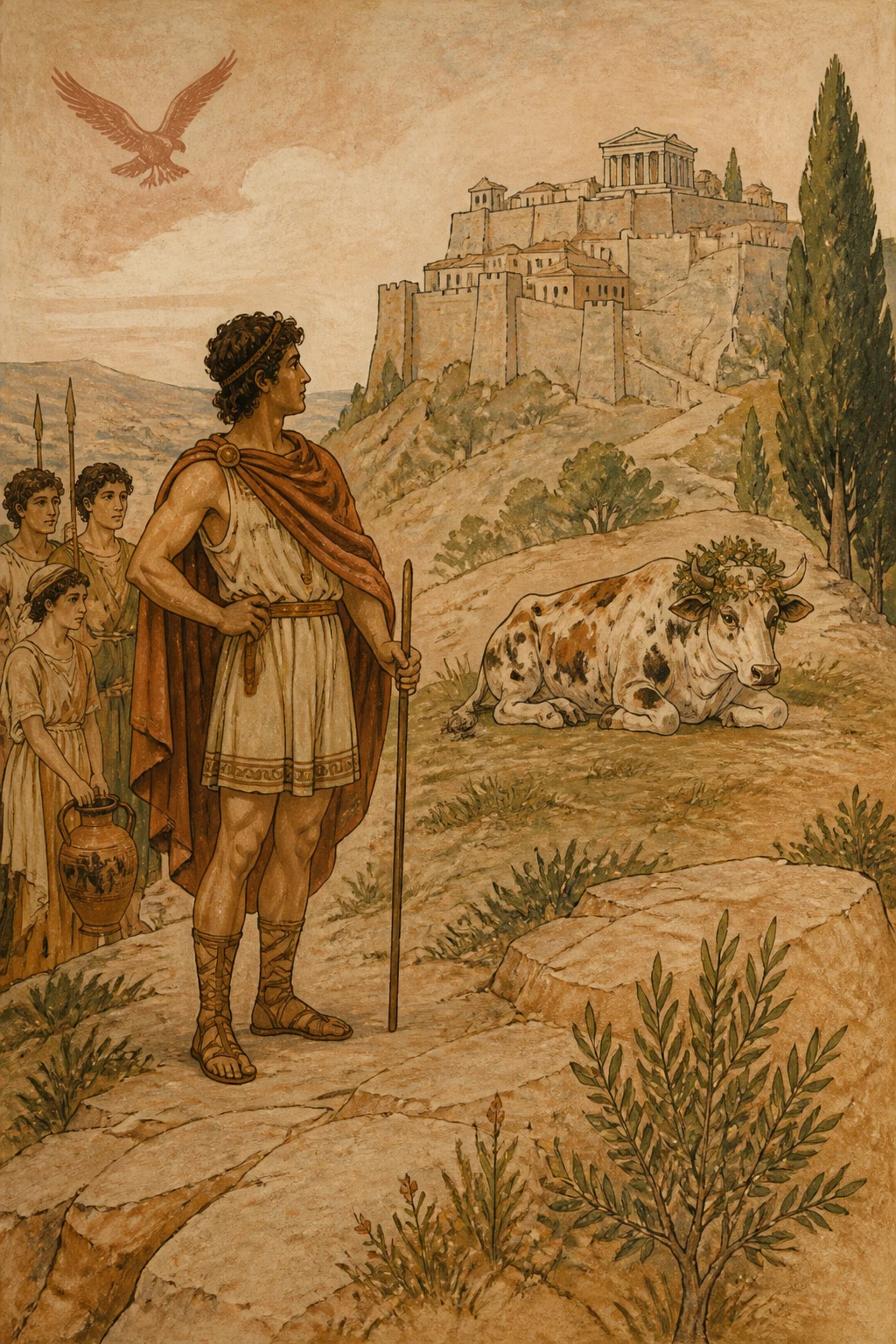
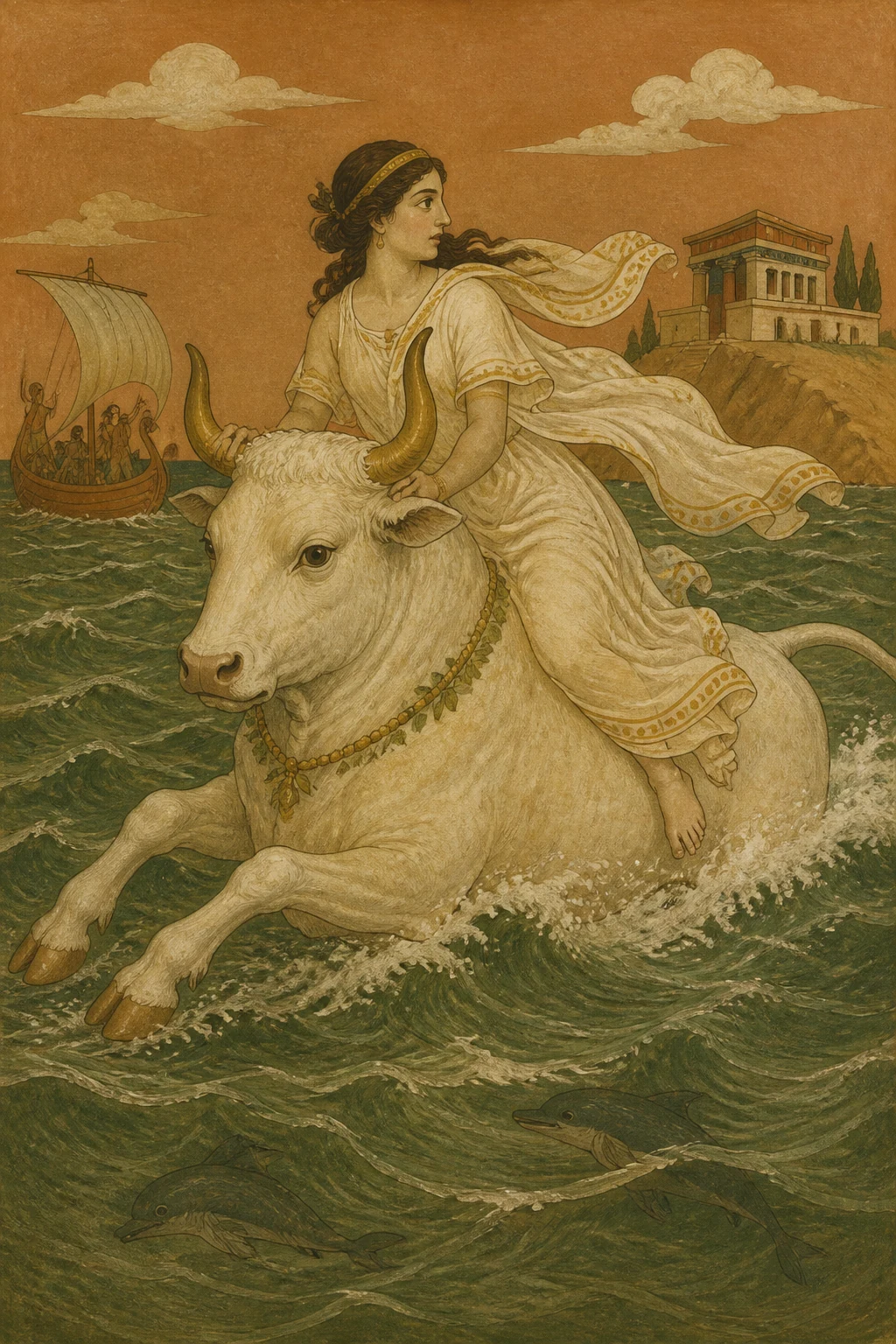
1. Having traced the line of Inachus and described the descendants of Belus down to the Heraclids, let us now turn to the story of Agenor. As we have said, Libya bore Poseidon two sons, Belus and Agenor. Belus ruled over the Egyptians and fathered the children already mentioned, while Agenor went to Phoenicia, married Telephassa, and had a daughter, Europa, and three sons, Cadmus, Phoenix, and Cilix. Some, however, say that Europa was the daughter not of Agenor but of Phoenix. Zeus fell in love with her and, sailing from Rhodes, took the form of a tame bull; when she climbed onto his back, he carried her across the sea to Crete. There Zeus lay with her, and she bore Minos, Sarpedon, and Rhadamanthys; according to Homer, however, Sarpedon was the son of Zeus and Laodamia, the daughter of Bellerophon. When Europa disappeared, her father Agenor sent his sons to search for her, telling them not to return until they had found her. Her mother Telephassa also went out in search of her, as did Thasos, the son of Poseidon—or of Cilix, according to Pherecydes. But although they searched everywhere, they could not find Europa. Giving up all hope of returning home, they settled in different places: Phoenix in Phoenicia, and Cilix near Phoenicia, where he named all the land under his rule near the river Pyramus Cilicia. Cadmus and Telephassa settled in Thrace. Thasos likewise settled in Thrace, founding the city of Thasos.
2. Asterius, the ruler of Crete, married Europa and brought up her children. When they reached adulthood, they quarreled with one another, for they had fallen in love with a boy named Miletus, the son of Apollo and Areia, daughter of Cleochus. Since the boy favored Sarpedon, Minos went to war and prevailed. The others fled: Miletus landed in Caria, where he founded a city named Miletus after himself, while Sarpedon became an ally of Cilix, who was at war with the Lycians, in return for a share of their territory, and became king of Lycia. Zeus granted him a life lasting three generations. Some say, however, that they fell in love with Atymnius, the son of Zeus and Cassiepeia, and quarreled over him. Rhadamanthys made laws for the islanders, but later fled to Boeotia and married Alcmene; after his death, he became a judge in Hades alongside Minos. Minos remained in Crete and drew up laws. He married Pasiphae, the daughter of Helios and Perseis—or, according to Asclepiades, Crete, the daughter of Asterius—and fathered four sons, Catreus, Deucalion, Glaucus, and Androgeos, and four daughters, Acalle, Xenodice, Ariadne, and Phaedra. By the nymph Pareia he had Eurymedon, Nephalion, Chryses, and Philolaus, and by Dexithea, Euxanthius.
3. When Asterius died childless, Minos wished to become king of Crete, but met with opposition. He claimed that the gods had granted him the kingdom, and, to win belief, declared that whatever he prayed for would come to pass. While sacrificing to Poseidon, he prayed for a bull to rise from the depths, promising to sacrifice whatever bull appeared.
Poseidon sent up a magnificent bull for him, and Minos gained the kingdom; but he sent the bull to join his herds and sacrificed another in its place. He was the first to establish mastery over the sea and ruled over almost all the islands.
4. Angry with Minos for failing to sacrifice the bull, Poseidon made the animal wild and caused Pasiphae to desire it. In love with the bull, she enlisted the help of Daedalus, an architect who had fled Athens after committing murder. He built a wooden cow on wheels, hollowed it out, and skinned a cow and sewed its hide around it. Then he placed it in the meadow where the bull was accustomed to graze and put Pasiphae inside. The bull came up and mated with it as though it were a real cow. Pasiphae gave birth to Asterius, who was called the Minotaur. He had the face of a bull, but the rest of his body was human. In accordance with certain oracles, Minos shut him in the labyrinth and kept him there. The labyrinth, which Daedalus had built, was a structure whose intricate windings made it impossible to find the way out. We shall tell the stories of the Minotaur, Androgeos, Phaedra, and Ariadne later, in our account of Theseus.
Izvirnik
Book 3 chapter 1
Naslednje strani prikazujejo izvirno besedilo za primerjavo.
Source ID: apollodorus_bib_3_1 Citation: Apollodorus, Bibliotheca 3.1 1. ἐπεὶ δὲ τὸ Ἰνάχειον διερχόμενοι γένος τοὺς ἀπὸ Βήλου μέχρι τῶν Ἡρακλειδῶν δεδηλώκαμεν, ἐχομένως λέγωμεν καὶ τὰ περὶ Ἀγήνορος. ὡς γὰρ ἡμῖν λέλεκται, δύο Λιβύη ἐγέννησε παῖδας ἐκ Ποσειδῶνος, Βῆλον καὶ Ἀγήνορα. Βῆλος μὲν οὖν βασιλεύων Αἰγυπτίων τοὺς προειρημένους ἐγέννησεν, Ἀγήνωρ δὲ παραγενόμενος εἰς τὴν Φοινίκην γαμεῖ Τηλέφασσαν καὶ τεκνοῖ θυγατέρα μὲν Εὐρώπην, παῖδας δὲ Κάδμον καὶ Φοίνικα καὶ Κίλικα. τινὲς δὲ Εὐρώπην οὐκ Ἀγήνορος ἀλλὰ Φοίνικος λέγουσι. ταύτης Ζεὺς ἐρασθείς, †ῥόδου ἀποπλέων, ταῦρος χειροήθης γενόμενος, ἐπιβιβασθεῖσαν διὰ τῆς θαλάσσης ἐκόμισεν εἰς Κρήτην. ἡ δέ, ἐκεῖ συνευνασθέντος
αὐτῇ Διός, ἐγέννησε Μίνωα Σαρπηδόνα Ῥαδάμανθυν· καθʼ Ὅμηρον δὲ Σαρπηδὼν ἐκ Διὸς καὶ Λαοδαμείας τῆς Βελλεροφόντου. ἀφανοῦς δὲ Εὐρώπης γενομένης ὁ πατὴρ αὐτῆς Ἀγήνωρ ἐπὶ ζήτησιν ἐξέπεμψε τοὺς παῖδας, εἰπὼν μὴ πρότερον ἀναστρέφειν πρὶν ἂν ἐξεύρωσιν Εὐρώπην. συνεξῆλθε δὲ ἐπὶ τὴν ζήτησιν αὐτῆς Τηλέφασσα ἡ μήτηρ καὶ Θάσος ὁ Ποσειδῶνος, ὡς δὲ Φερεκύδης φησὶ Κίλικος. ὡς δὲ πᾶσαν ποιούμενοι ζήτησιν εὑρεῖν ἦσαν Εὐρώπην ἀδύνατοι, τὴν εἰς οἶκον ἀνακομιδὴν ἀπογνόντες ἄλλος ἀλλαχοῦ κατῴκησαν, Φοῖνιξ μὲν ἐν Φοινίκῃ, Κίλιξ δὲ Φοινίκης πλησίον, καὶ πᾶσαν τὴν ὑφʼ ἑαυτοῦ κειμένην χώραν ποταμῷ σύνεγγυς Πυράμῳ Κιλικίαν ἐκάλεσε· Κάδμος δὲ καὶ Τηλέφασσα ἐν Θρᾴκῃ κατῴκησαν. ὁμοίως δὲ καὶ Θάσος ἐν Θρᾴκῃ κτίσας πόλιν Θάσον κατῴκησεν.
2. Εὐρώπην δὲ γήμας Ἀστέριος ὁ Κρητῶν δυνάστης τοὺς ἐκ ταύτης παῖδας ἔτρεφεν. οἱ δὲ ὡς ἐτελειώθησαν, πρὸς ἀλλήλους ἐστασίασαν· ἴσχουσι γὰρ ἔρωτα παιδὸς ὃς ἐκαλεῖτο Μίλητος, Ἀπόλλωνος δὲ ἦν καὶ Ἀρείας τῆς Κλεόχου. τοῦ δὲ παιδὸς πρὸς Σαρπηδόνα μᾶλλον οἰκείως ἔχοντος πολεμήσας Μίνως ἐπροτέρησεν. οἱ δὲ φεύγουσι, καὶ Μίλητος μὲν Καρίᾳ προσσχὼν ἐκεῖ πόλιν ἀφʼ ἑαυτοῦ ἔκτισε Μίλητον, Σαρπηδὼν δὲ συμμαχήσας Κίλικι πρὸς Λυκίους ἔχοντι πόλεμον, ἐπὶ μέρει τῆς χώρας, Λυκίας ἐβασίλευσε. καὶ αὐτῷ δίδωσι Ζεὺς ἐπὶ τρεῖς γενεὰς ζῆν. ἔνιοι δὲ αὐτοὺς ἐρασθῆναι λέγουσιν Ἀτυμνίου τοῦ Διὸς καὶ Κασσιεπείας, καὶ διὰ τοῦτον στασιάσαι. Ῥαδάμανθυς δὲ τοῖς νησιώταις νομοθετῶν, αὖθις φυγὼν εἰς Βοιωτίαν Ἀλκμήνην γαμεῖ, καὶ μεταλλάξας ἐν Ἅιδου μετὰ
Μίνωος δικάζει. Μίνως δὲ Κρήτην κατοικῶν ἔγραψε νόμους, καὶ γήμας Πασιφάην τὴν Ἡλίου καὶ Περσηίδος, ὡς δὲ Ἀσκληπιάδης φησί, Κρήτην τὴν Ἀστερίου θυγατέρα, παῖδας μὲν ἐτέκνωσε Κατρέα Δευκαλίωνα Γλαῦκον Ἀνδρόγεων, θυγατέρας δὲ Ἀκάλλην Ξενοδίκην Ἀριάδνην Φαίδραν, ἐκ Παρείας δὲ νύμφης Εὐρυμέδοντα Νηφαλίωνα Χούσην Φιλόλαον, ἐκ δὲ Δεξιθέας Εὐξάνθιον. 3. Ἀστερίου δὲ ἄπαιδος ἀποθανόντος Μίνως βασιλεύειν θέλων Κρήτης ἐκωλύετο. φήσας δὲ παρὰ θεῶν τὴν βασιλείαν εἰληφέναι, τοῦ πιστευθῆναι χάριν ἔφη, ὅ τι ἂν εὔξηται, γενέσθαι. καὶ Ποσειδῶνι θύων ηὔξατο ταῦρον ἀναφανῆναι ἐκ τῶν βυθῶν, καταθύσειν ὑποσχόμενος τὸν φανέντα.
τοῦ δὲ Ποσειδῶνος ταῦρον ἀνέντος αὐτῷ διαπρεπῆ τὴν βασιλείαν παρέλαβε, τὸν δὲ ταῦρον εἰς τὰ βουκόλια πέμψας ἔθυσεν ἕτερον. θαλασσοκρατήσας δὲ πρῶτος πασῶν τῶν νήσων σχεδὸν ἐπῆρξεν . 4. ὀργισθεὶς δὲ αὐτῷ Ποσειδῶν ὅτι μὴ κατέθυσε τὸν ταῦρον, τοῦτον μὲν ἐξηγρίωσε, Πασιφάην δὲ ἐλθεῖν εἰς ἐπιθυμίαν αὐτοῦ παρεσκεύασεν. ἡ δὲ ἐρασθεῖσα τοῦ ταύρου συνεργὸν λαμβάνει Δαίδαλον, ὃς ἦν ἀρχιτέκτων, πεφευγὼς ἐξ Ἀθηνῶν ἐπὶ φόνῳ. οὗτος ξυλίνην βοῦν ἐπὶ τροχῶν κατασκευάσας, καὶ ταύτην λαβὼν καὶ κοιλάνας ἔνδοθεν, ἐκδείρας τε βοῦν τὴν δορὰν περιέρραψε, καὶ θεὶς ἐν ᾧπερ εἴθιστο ὁ ταῦρος λειμῶνι βόσκεσθαι, τὴν Πασιφάην ἐνεβίβασεν. ἐλθὼν δὲ ὁ ταῦρος ὡς ἀληθινῇ βοῒ συνῆλθεν. ἡ δὲ Ἀστέριον ἐγέννησε τὸν κληθέντα Μινώταυρον. οὗτος εἶχε ταύρου πρόσωπον, τὰ δὲ λοιπὰ ἀνδρός· Μίνως
δὲ ἐν τῷ λαβυρίνθῳ κατά τινας χρησμοὺς κατακλείσας αὐτὸν ἐφύλαττεν. ἦν δὲ ὁ λαβύρινθος, ὃν Δαίδαλος κατεσκεύασεν, οἴκημα καμπαῖς πολυπλόκοις πλανῶν τὴν ἔξοδον. τὰ μὲν οὖν περὶ Μινωταύρου καὶ Ἀνδρόγεω καὶ Φαίδρας καὶ Ἀριάδνης ἐν τοῖς περὶ Θησέως ὕστερον ἐροῦμεν.
Nadaljuj z branjem