Prevod
There was once a little girl, so delicate and pretty, but in summer she always had to go barefoot, for she was poor, and in winter she wore great wooden shoes that rubbed her little insteps quite red, and it looked dreadful.
In the middle of the village lived old Mother Shoemaker. She sat sewing a little pair of shoes as best she could from old strips of red cloth. They were very clumsy, but kindly meant, and they were for the little girl. The little girl's name was Karen.
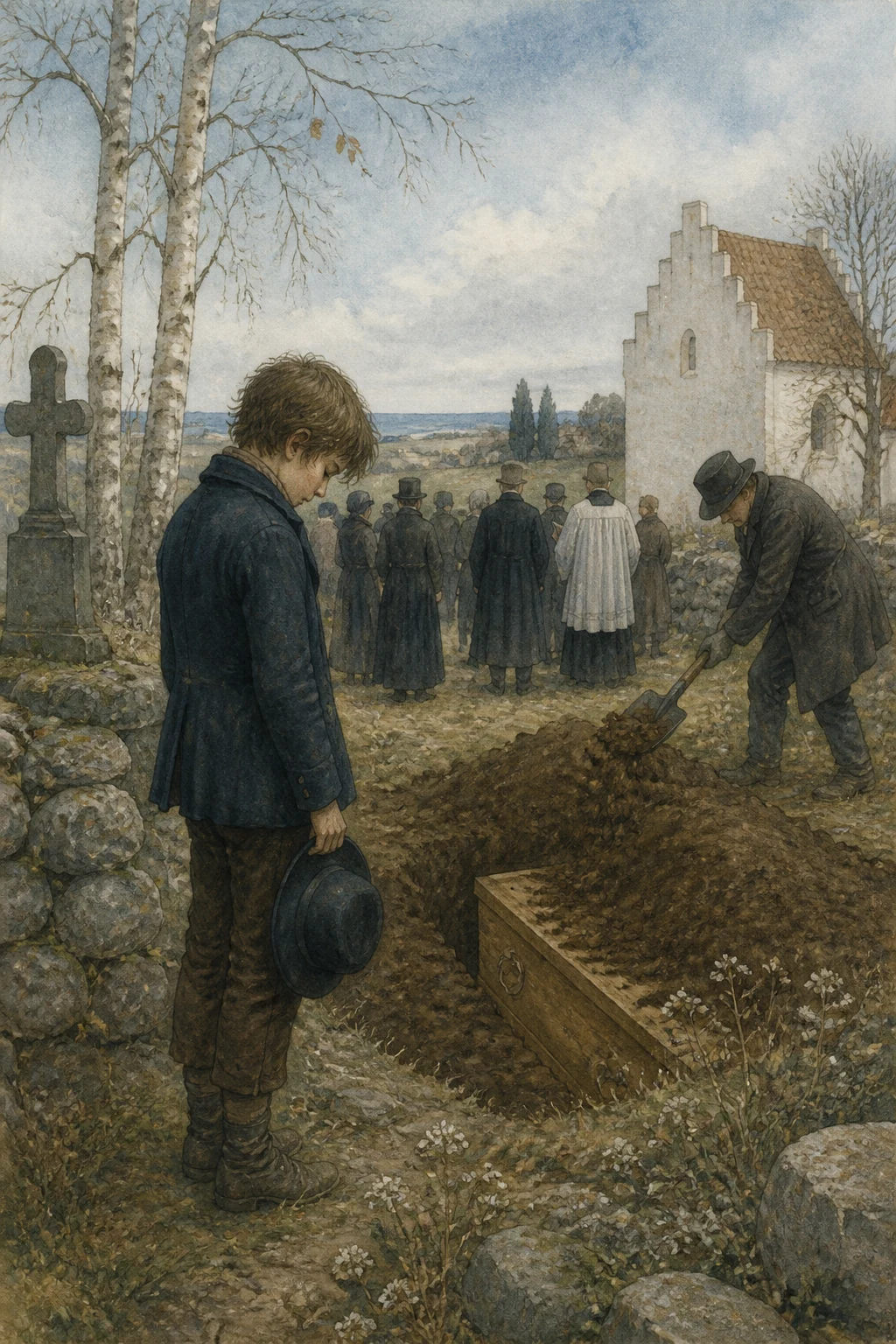
On the very day her mother was buried, she was given the red shoes and wore them for the first time. They were certainly no shoes for mourning, but she had no others, so she wore them on her bare feet as she walked behind the poor straw coffin.
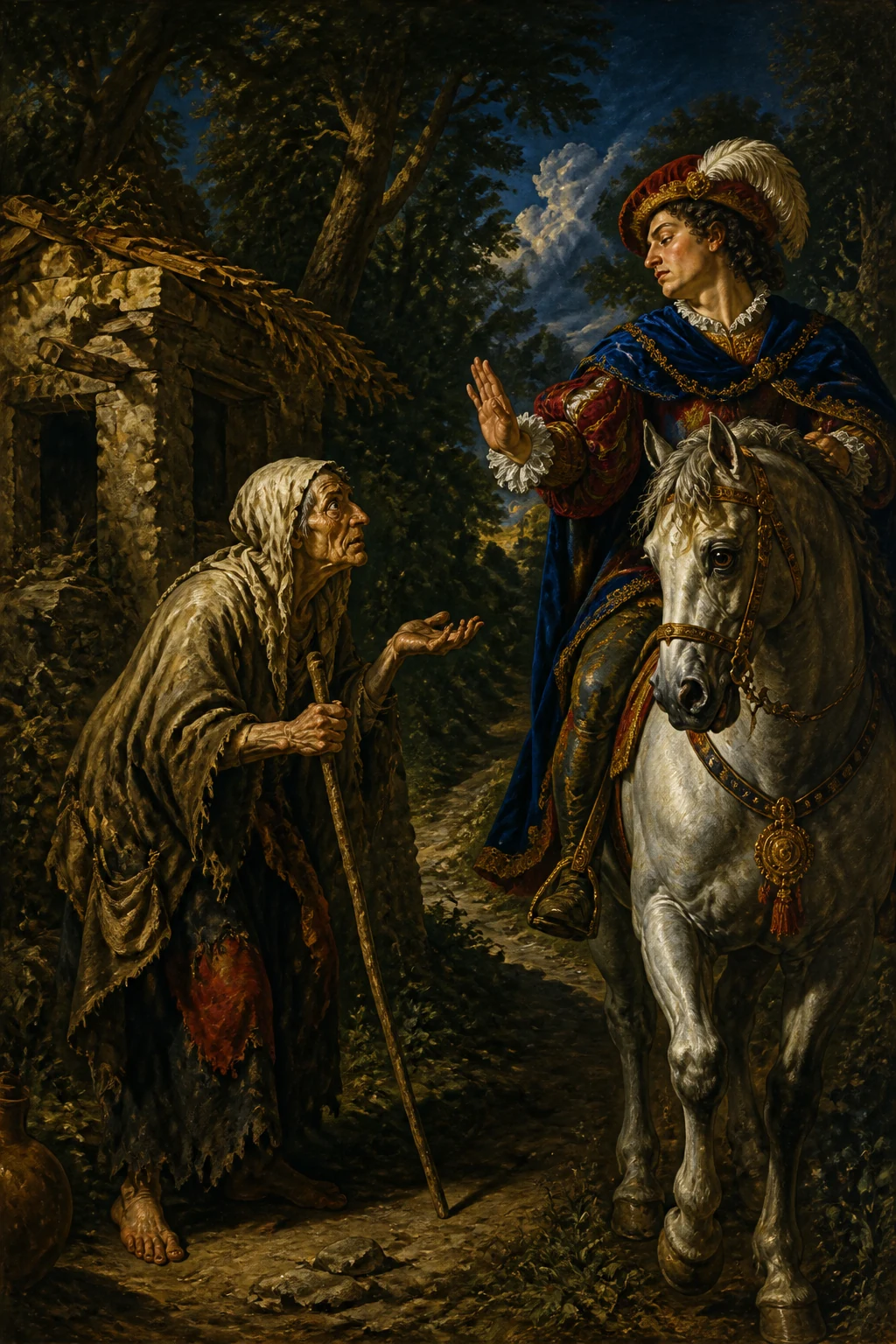
Just then a large old carriage came by, and in it sat a grand old lady. She looked at the little girl and felt sorry for her, and said to the pastor, "Listen, let me have the little girl, and I shall be kind to her!"
Karen thought it was all because of the red shoes, but the old lady said they were dreadful, and they were burned. Karen herself, however, was dressed neatly and cleanly; she was taught to read and sew, and people said she was pretty. But the mirror said, "You are far more than pretty. You are beautiful!"
One day the queen travelled through the country, bringing her little daughter, who was a princess, with her. People flocked outside the palace, and Karen was there too. The little princess stood at a window in fine white clothes for everyone to see. She wore neither a train nor a golden crown, but lovely red morocco shoes. They were certainly far finer than those Mother Shoemaker had sewn for little Karen. Nothing in the world could compare with red shoes!
Now Karen was old enough to be confirmed. She was given new clothes, and she was to have new shoes as well. The wealthy shoemaker in town measured her little foot in his own parlour, where great glass cabinets stood filled with dainty shoes and gleaming boots. It was a lovely sight, but the old lady could not see well, and so she took no pleasure in it. Among the shoes stood a red pair, just like those the princess had worn. How beautiful they were! The shoemaker said they had been made for a count's daughter, but had not fitted her.
"They must be patent leather!" said the old lady. "They shine!" "Yes, they shine!" said Karen. And they fitted, and they were bought. But the old lady did not know they were red, for she would never have allowed Karen to go to her confirmation in red shoes. Yet that was what Karen did.
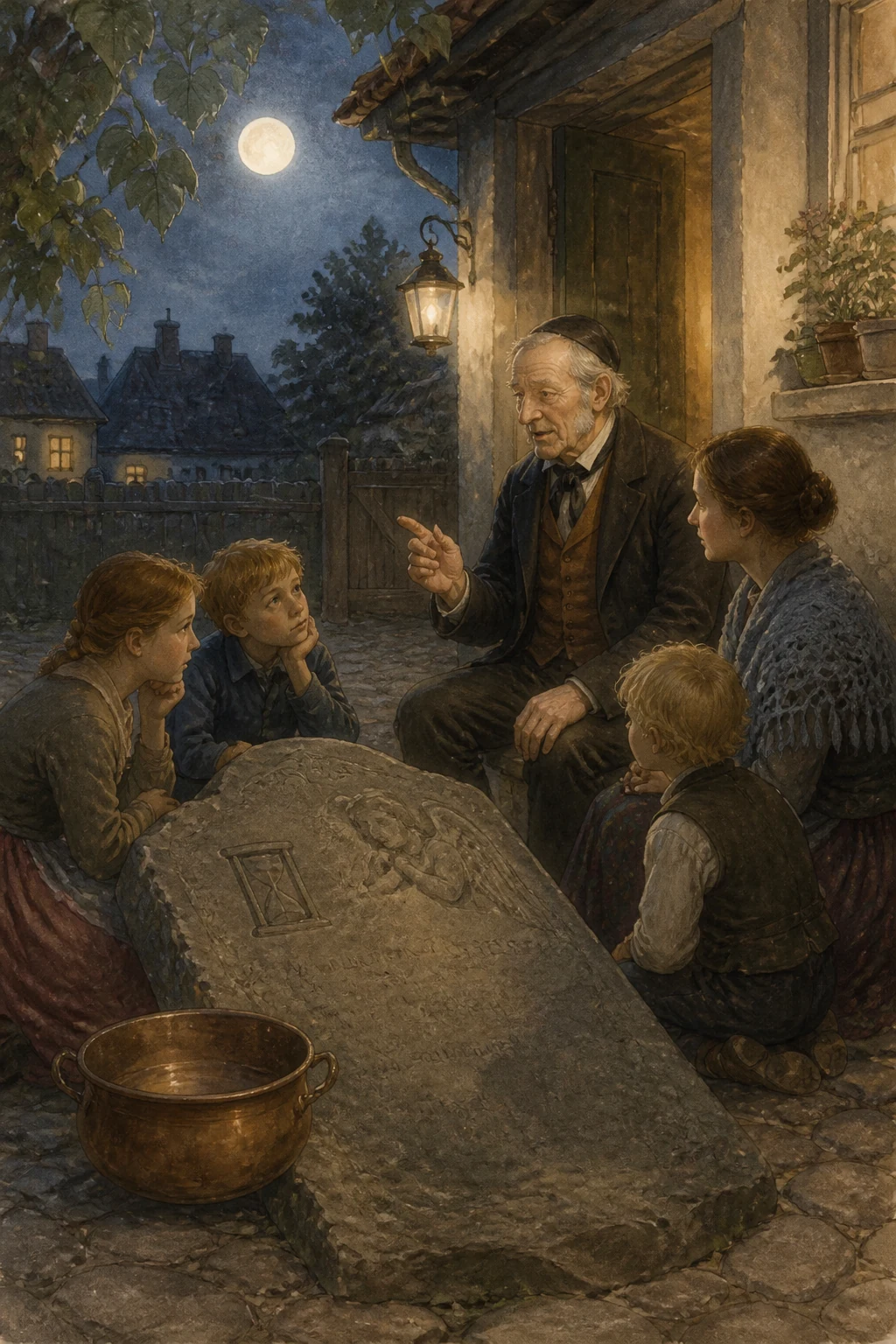
Everyone looked at her feet, and as she walked up the church aisle towards the chancel door, she thought that even the old paintings on the tombs, those portraits of pastors and their wives in stiff collars and long black robes, were fixing their eyes on her red shoes. They were all she thought of as the pastor laid his hand on her head and spoke of holy baptism, of the covenant with God, and of how she must now become a grown Christian. The organ played so solemnly, the sweet children's voices sang, and the old cantor sang, but Karen thought only of the red shoes.
By that afternoon, everyone had told the old lady that the shoes had been red. She said it was wicked and quite improper, and that from then on, whenever Karen went to church, she must always wear black shoes, even if they were old.
The following Sunday there was Holy Communion, and Karen looked at the black shoes, then at the red ones—and then she looked at the red ones again and put them on. It was a lovely sunny day. Karen and the old lady walked along the path through the cornfields, where it was a little dusty.
At the church door stood an old soldier with a crutch and a strangely long beard, more red than white, for it was red. He bent right down to the ground and asked the old lady if he might wipe her shoes. Karen held out her little foot as well. "Look, what lovely dancing shoes!" said the soldier. "Stay on tight when you dance!" And he tapped the soles with his hand.
The old lady gave the soldier a small coin, then went into the church with Karen. Everyone inside looked at Karen's red shoes, and all the portraits looked at them too. As Karen knelt before the altar and raised the golden chalice to her lips, she thought only of the red shoes, and it seemed to her that they were floating about in the chalice. She forgot to sing her hymn; she forgot to say her Lord's Prayer.
Now everyone came out of church, and the old lady stepped into her carriage. Karen raised her foot to follow, when the old soldier, who was standing close by, said, "Look, what lovely dancing shoes!" Karen could not help herself: she had to take a few dancing steps, and once she began, her legs went on dancing. It was as though the shoes had gained power over them. She danced round the corner of the church; she could not stop. The coachman had to run after her and catch hold of her, and he lifted her into the carriage. But her feet kept dancing, so that she kicked the good old lady dreadfully. At last they got the shoes off, and her legs were still.
At home the shoes were put away in a cupboard, but Karen could not help looking at them. Now the old lady fell ill, and people said she would not live. She needed care and nursing, and no one had more reason to tend her than Karen. But there was a grand ball in town, and Karen had been invited. She looked at the old lady, who could not live in any case; she looked at the red shoes, and saw no sin in that. She put the red shoes on—surely she might do that too. But then she went to the ball, and then she began to dance.
But when she wanted to go right, the shoes danced left, and when she wanted to dance up the room, the shoes danced down the room, down the stairs, through the street and out of the town gate. Dance she did, and dance she must, straight into the dark forest.
Then something shone up among the trees, and she thought it was the moon, for it was a face. But it was the old soldier with the red beard, sitting there, nodding and saying, "Look, what lovely dancing shoes!"
She was terrified and tried to throw off the red shoes, but they clung fast. She tore off her stockings, but the shoes had grown fast to her feet. Dance she did, and dance she must, over field and meadow, in rain and sunshine, by night and by day. But at night it was most dreadful of all.
She danced into the open churchyard, but the dead there did not dance; they have something far better to do than dance. She wanted to sit down on a pauper's grave where the bitter tansy grew, but for her there was neither peace nor rest. As she danced towards the open church door, she saw an angel standing there in long white robes, with wings that reached from his shoulders to the ground. His face was stern and grave, and in his hand he held a sword, broad and shining:
"Dance you shall!" he said. "Dance in your red shoes until you grow pale and cold! Until your skin shrivels like a skeleton's! You shall dance from door to door, and wherever proud, vain children live, you shall knock, so that they hear you and fear you! Dance you shall, dance—!"
"Mercy!" cried Karen. But she did not hear what the angel answered, for the shoes carried her through the gate and out into the fields, over roads and paths, and always she had to dance.
One morning she danced past a door she knew well. From inside came the sound of hymns, and a coffin decked with flowers was being carried out. Then she knew that the old lady was dead, and she felt that everyone had forsaken her and that she was cursed by God's angel.
Dance she did, and dance she must, dance through the dark night. The shoes carried her over thorns and stumps until she was scratched and bleeding. She danced across the heath to a small, lonely house. She knew the executioner lived there, and she tapped on the window with her finger and said:
"Come out! Come out! I cannot come in, for I am dancing!" And the executioner said, "Surely you do not know who I am? I cut off the heads of wicked people, and I can feel my axe trembling!"
"Do not cut off my head!" said Karen. "For then I cannot repent of my sin! But cut off my feet with the red shoes!" Then she confessed all her sin, and the executioner cut off her feet with the red shoes. But the shoes danced away with the little feet, across the fields and into the deep forest.
He carved her wooden legs and crutches, and taught her a hymn that sinners always sing. She kissed the hand that had wielded the axe, and went away across the heath.
"Now I have suffered enough for the red shoes!" she said. "Now I shall go to church, so they can see me!" And she made her way briskly towards the church door. But when she reached it, the red shoes danced before her, and she was terrified and turned back.
All through the week she was sorrowful and shed many bitter tears. But when Sunday came, she said, "There now! I have suffered and struggled enough! I should think I am as good as many of those who sit holding their heads so high in church!" And off she went quite boldly. But she got no farther than the gate before she saw the red shoes dancing before her. She was terrified and turned back, and truly repented of her sin in her heart.
She went to the parsonage and asked if she might enter their service. She would be diligent and do everything she could; she cared nothing for wages, if only she might have a roof over her head and live among good people. The pastor's wife felt sorry for her and took her into service. And she was diligent and thoughtful. In the evenings she sat quietly listening as the pastor read aloud from the Bible. All the little children were very fond of her, but when they spoke of finery and ornaments and being as beautiful as a queen, she shook her head.
The following Sunday they all went to church, and they asked if she would come with them. But she looked sorrowfully at her crutches, with tears in her eyes. The others went to hear the word of God, while she went alone into her little room. It was only large enough for a bed and a chair, and there she sat down with her hymnbook. As she read it with a devout heart, the wind carried the sound of the church organ to her, and she lifted her tearful face and said, "Oh, God, help me!"
Then the sun shone so brightly, and right before her stood God's angel in his white robes, the one she had seen that night in the church doorway. But he no longer held the sharp sword; instead he carried a lovely green branch covered with roses. He touched the ceiling with it, and the ceiling rose high above her, and where he had touched it a golden star shone. He touched the walls, and they widened, and she saw the organ playing, and the old portraits of pastors and their wives. The congregation sat in their fine pews, singing from their hymnbooks. For the church itself had come home to the poor girl in her little narrow room—or else she had been brought there. She sat in the pew with the rest of the pastor's household, and when they had finished the hymn and looked up, they nodded and said, "It was right of you to come, Karen!"
"It was grace!" she said. And the organ sounded, and the children's voices in the choir rang out so softly and sweetly! The bright sunshine streamed so warmly through the window into the pew where Karen sat. Her heart grew so full of sunshine, of peace and joy, that it broke. Her soul flew on the sunshine to God, and there no one asked about the red shoes.