Prevod
In the window stood a rosebush. Only lately it had been fresh and youthful; now it looked sickly, as though something were ailing it. It had troops quartered on it, eating it up—very respectable troops, for all that, in green uniforms.
I spoke to one of the lodgers. He was only three days old and already a great-grandfather. Do you know what he said? What he said was true; he spoke of himself and all the troops quartered there.
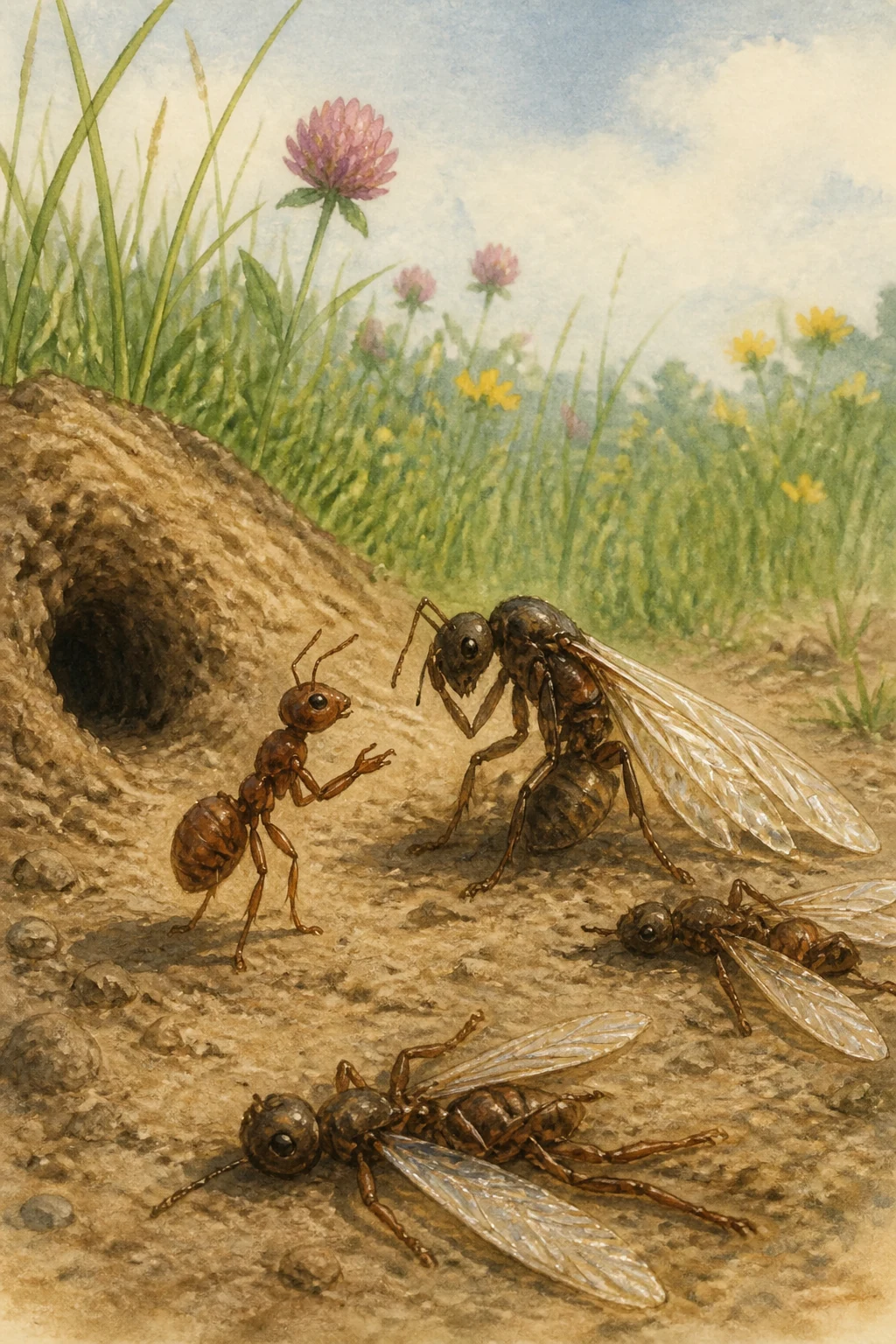
"We are the most remarkable regiment among all the creatures on earth. In the warm season we bear live young; the weather is fine, after all. We get engaged at once and celebrate our weddings. As the cold season approaches, we lay eggs; the little ones lie snug inside. That wisest of animals, the ant—we hold it in great esteem—studies us and appreciates our worth. It does not eat us straight away; it takes our eggs and puts them in the lowest storey of the anthill it shares with its family, arranging us with knowledge and by number, side by side, layer upon layer, so that a fresh one can hatch from its egg every day. Then they put us in stalls, squeeze us just above our hind legs, and milk us till we die; it is a great pleasure! Among them we have the loveliest name: 'sweet little milch cow!' All animals with an ant's intelligence call us that. Only human beings—and this is an insult to us, enough to make one lose one's sweetness—could you not write against it, could you not put these human beings right? They look at us so stupidly, with such filthy eyes, because we eat a rose leaf, while they themselves devour every living creature, everything that grows and is green. They give us the most contemptible name, the most disgusting name. I will not mention it. Ugh! It turns my stomach! I cannot say it, at least not in uniform, and I am always in uniform.
I was born on a leaf of the rosebush. The whole regiment and I live on the rosebush, but it lives on in us in return, and we belong to a higher order of creation. Human beings will not tolerate us; they come and kill us with soapy water. What a vile drink! I think I can smell it. It is dreadful to be washed when one was born never to be washed!
Human being! You who look at me with those stern, soapy-water eyes, consider our place in nature, our ingenious equipment for laying eggs and bringing forth live young! We were given the blessing: 'Be fruitful and multiply!' We are born among roses, we die among roses; our whole life is poetry. Do not fasten on us the name you find most disgusting and ugly, that name—I will not say it, will not mention it! Call us the ant's milch cows, the rosebush's regiment, the little green ones!"
And I, the human being, stood looking at the bush and at the little green ones, whose name I shall not mention, lest I offend a citizen of the roses, a large family with eggs and live young. The soapy water I had meant to wash them with—for I had come with soapy water and evil intentions—I would now beat into a froth and blow into soap bubbles, and gaze at their splendour. Perhaps there was a fairy tale in every one.
And the bubble grew so large, with radiant colours, and at the bottom of it lay what looked like a silver pearl. The bubble swayed, floated, flew towards the door and burst; but the door sprang open, and there stood Mother Fairy Tale herself.
"Now she can tell you better than I about—I will not say the name!—the little green ones." "Aphids!" said Mother Fairy Tale. "Everything must be called by its proper name, and if one dare not do so in everyday life, one must be able to do it in a fairy tale."