O besedilu
Psička
- Vir
- Tunisische Märchen und Gedichte
- Avtor
- Hans Stumme
- Jezik branja
- English
- Jezik izvirnika
- Tunisian Arabic in Latin transcription
- Čas branja
- 5 min branja
- Obseg
- 4 strani
- Naslov izvirnika
- 008 Elkélba
O izvirniku
Tunisische Märchen und Gedichte
Tunizijske pripovedi v zgodovinskem latiničnem zapisu govorjenega arabskega jezika. Bralni jezik je English, izvirnik pa prihaja iz vira Tunisische Märchen und Gedichte v jeziku Tunisian Arabic in Latin transcription.
Besedilo
Psička
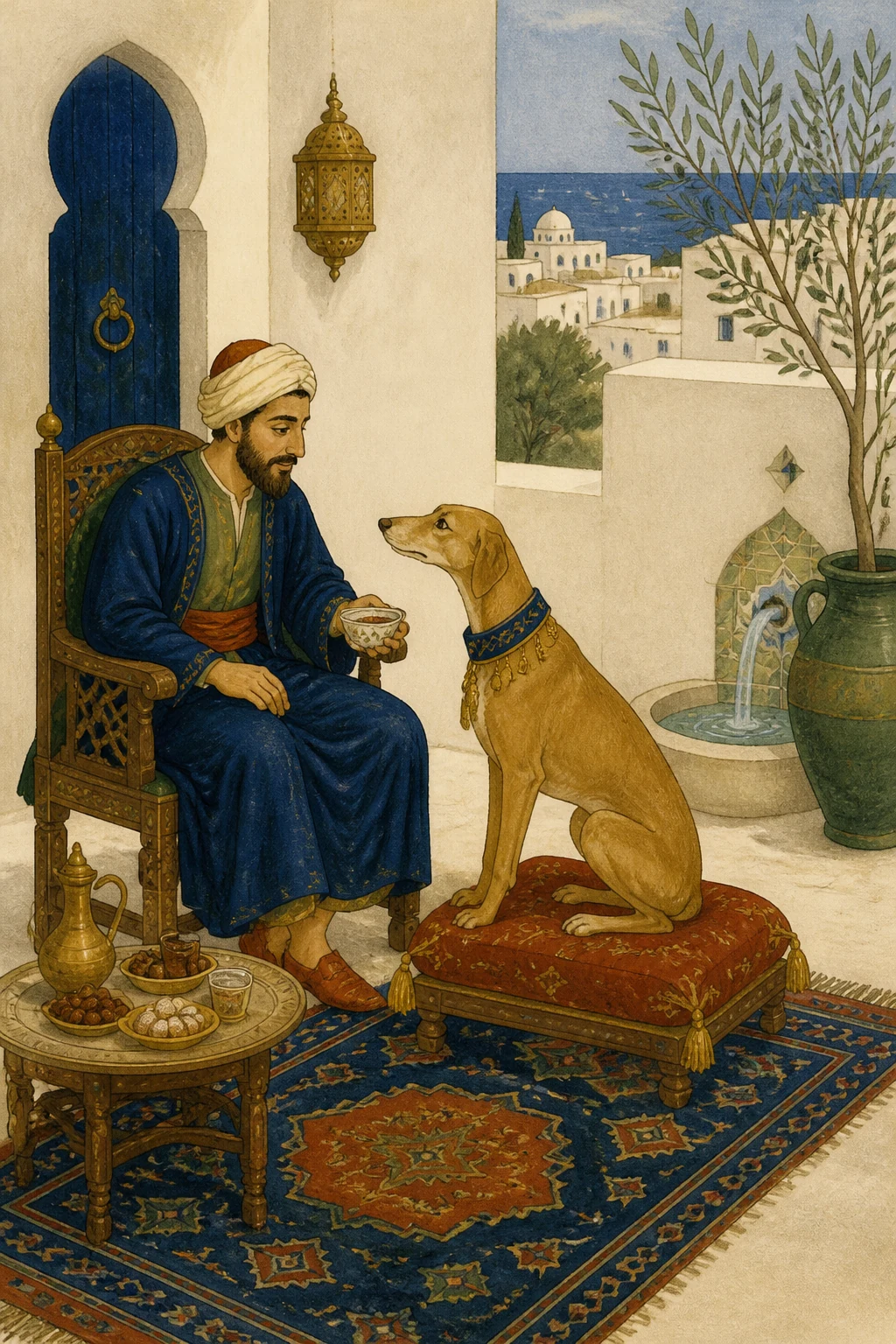
One day, as Abu Nuwas was strolling through Baghdad, he came upon a house with these words written above its door: “Eat and drink, make merry and enjoy yourself, but do not ask about anything you see!” Abu Nuwas climbed the stairs, saying to himself, “Let me go up and have a look.” The master of the house welcomed him warmly. He sat down on a chair and found a gathering arranged for pleasure, with musicians and singers, lutes and rebabs, flutes and a zither. Then Abu Nuwas noticed a beautiful little dog, dressed in gold, with a golden collar, sitting on a chair upholstered in silk. They offered him one cup, then another, and he drank. Presently, his head began to swim. The master of the house said, “Bring her out.” They brought out a young woman, bound up with only her head showing, and laid her in the passageway. Everyone who passed struck her with a stick.
Abu Nuwas turned and asked, “What has this woman done?” The master said, “Seize him!” They seized him and gave him two hundred lashes. Abu Nuwas got up with his sins well and truly beaten out of him and went home. For two or three days he tended his wounds. Once he had recovered, he thought it over and said to himself, “If I do not get Rashid and Jaafar into the same scrape, my name is not Abu Nuwas!” One day, when the court had dispersed and Jaafar was on his way home, Abu Nuwas joined him and said, “Come, let us go this way.” He led him through the alley to that house, where they saw the inscription above the door and read it. After reading it, Jaafar nudged him and said, “What is this inscription about?” Abu Nuwas replied, “Why ask me? You have read it yourself and seen what it says.” Jaafar and Abu Nuwas went upstairs, and the master of the house welcomed them warmly.
Coffee and wine were brought to them. They drank, grew tipsy, and made merry. Jaafar looked about and saw the little dog occupying the place of honor, while the young woman lay on the floor, beaten by everyone who came and went. He turned to the master of the house and said, “What has this poor creature done?” “Have I no one here to obey me?” the man called. They seized Jaafar and gave him two hundred lashes, just as they had Abu Nuwas. They beat his flesh so thoroughly with their sticks that he staggered out at death’s door. Once outside, he said, “Why, Abu Nuwas? You bring me here to get a beating—what have I ever done to you?” Abu Nuwas replied, “Curiosity can cost a man his head! Had you not asked, you would not have been beaten. Why should I be the only one? You might as well have your share! And tonight we shall bring Rashid and let him share our beating too.” They went back and sought out Rashid. “Come, my lord,” they said, “let us go out for a stroll.” Rashid disguised himself in other clothes. When they reached the door of the house, they raised their eyes and saw the inscription.
Rashid turned to Jaafar and said, “What is this inscription about?” “There it is, my lord,” he replied. “The inscription gives fair warning!” They went upstairs. As soon as the master of the house saw Rashid, he recognized him. He rose, paid him the honors due to a sovereign, and seated him in a place of distinction. They sat together; the cup went round and the strings began to sing. Rashid saw the little dog in the place of honor and the young woman being beaten. Unable to contain himself, he asked the master of the house, “What has this poor creature done, that she should be beaten with sticks?” The man replied, “Since you are the Commander of the Faithful, I cannot beat you as I did your companions. Yet praise be to God, who has brought you to me! I could not come to your court to lay my complaint before you, for that would expose my secret before everyone. Judge between her and me here! She is my cousin, and we grew up together in the same house from childhood. I married her and lavished everything upon her, spending all my wealth on her. One day I was sitting in my shop, then went home. I entered the house and found a black slave lying with her. I seized the slave, and he fought me. I threw him to the ground and was about to tie him up when she came over, turned the tables on me, and helped him bind me instead. Then they went on enjoying themselves before my eyes while I lay there bound. I watched until they grew drunk and fell asleep. This little dog, whom I cherish, came and gnawed at my bonds until they broke and I was free. I seized the slave and killed him. As for her, I have kept her here and punished her ever since, until God brought you to me. You have seen her: now judge between us!” Rashid looked at her and said, “This woman deserves to be stoned!”
Izvirnik
008 Elkélba
Naslednje strani prikazujejo izvirno besedilo za primerjavo.
Jûm milläijäm lirai bä nwâs idûles fymdîënt buxdâd, jilqa dâr mektûb xalabäbhä: kûl wësrob, ëzhâ wäträb, urna tishel xalâ ma zrâ! tláx sï bä nwâs lhaddâr, qâl ajátra nëtlax nsûf. tláx, fráh bîh mûl' elmháll; qxad fôq elkúrsi ujílqa dïwân mañsúb mtäx zéhü, jílqa xälät wazwâr, elxûd urrebäb irêzrâna uzzantîr. qxád bä nwâs isûf fïkélba mîzûna, miksîjâ biddëhéb ugläditha dhéb uhakelkélba filxëzz fôq elkrâsi qâxada. niâddûlu elkäs lûl uttânï, sráb. dárbet îo elxäla. mûl' elinháll qâl zîbu hâdîka. tàllëxû zariä mkéttëfa urâsha xarjän. hattûha fittnîjâ; élli itxádda, jódrob bisstâka, isâttëkûlha.
tläffet bä nwâs, qâl äs xámlet hallénta? qâl tmäkkenü bîh! tmäk- kënù bîh, xataûh mïëtîn zîlda. qâm si bä nwâs mâxfûr eddûnûb, râuwab. qxád idäuwy firûhû nhârîn wülä tläta. báxdkl brâ, bámmem is bîn' ubin néfsû, qâl ida ma hássalthúmsi errsîd uzáxfar, mâmsi bíi nwâs! nhâr minnhârât tfráq elhûkûm, zä záxfar mräuwah ldârû; zä bä nwâs mxâh, qâl âja nitxaddâu min hûnï. eddäh bilxâni elhäked- dâr, sâfû 'lktîbâ mymfôq elbäb. qrâuha. klf qranha, nízdü záxfar, qâl äsniä helktîbâ? qâllu énti xäläs téshel, hâuka qrît usift äs fémma. tláx záxfar hû' ubä nwâs, tàlxû lfôq. fráh bîhum mûl' elmháll. zâthum elqáhwa ussúrb, sárbü, sikërû, zhâu. júhzur záxfar, isûf fhelkélba fíaxázz elämäken wisûf fbäkezzäriä mläuuha filqâxa, élli zôi isättek wúlli mäsi isättek. tläffet limûl' elmháll, qâllû äs
xámlet halmahlûqa? qâl xandîsi hádd? tmakkënu bîh, xataûh mïëtîn 2.5 kîf bä nwâs, hátta degdëgûlu láhmü bilxasâ mlîh hráz, júmfud flxabrât elmût. kïf hráz elbárra, qâl läs, jä bä nwâs, dzîbni nâkul laxsâ, âs xämittlek ? qâllû elklûf uqátx erráqba mithaçjîn . qâllû lükän ma shélt, mâ kuut tâkul laxsâ. xäläs nâkul ana wáhedl, mâu tâkul énti mxâja? ullîla nzîbu 'rrsîd nwakkëlûh laxsâ mxâna. räu- wahû, insâu lirrsîd. qâlû âja sîdi, nàhabëtû ndûlsû. tnákkar errsîd, Ibis Ibas âhor. háltü lbäb eddâr, häzzu xalnîhum, säfu helktîbâ.
tläffet errsîd lizáxfar, qâl äsniä helktîbâ? qâllû hâi hîâ, jä sîdi, helktîbâ tnäbbah! tàlxû. mûl' elmháll klf säf errsîd, xárfü; qâm, xatâh kâr essáltna, hâttû fybûqxa mùhymma. qxad hû' urrsîd; dâr elkäs utkéllem lütár. isûf errësîd fhakelkélba fíaxázz elamäken uizäriä isätkülhä. mâ tâqu 'ssbâ'r, qâl limûl' elmháll äs xámlet halmahlûqa lï tfikul fisstâkât? qâllù énti zit âmîr elmûmënîn, ma nâzzémsi ndùrrëk blaxsâ kïf shâbek, läldnni elhámdu lillâ élli zäbek rábbi bûnl! ma nâzzémtsi niîk liddïwân niskîlek, nâ'fdah sirri qud- dam. ennâs. túfsul bînj-ubînha hûni! qâllù hâdï bintë xàmmï, utrabbîna âna wâljâha fárd dâr minhâlt essûxor. dzaûwùzt bîha, kúllse xâlîdhâ, rízqy elkúll msárrefa fîha. jûm milläijäm kunt qâxad fâhânûti, raïï-
wáht, dhált liddâr, nílqa râqëd mxâha usyf. tmekként xallusyf, qâm mxâjâ lusyf; ltáhtü filqâxa, zît mas' eñkéttfü, jáhhi zat hîa, qylbíttü xähjä uSéddü 'kettl'ûni uqáxadu jyxenmü fïkîflmm qnddämi, wäna mkéttef. äna núhzur hátta síkrú 'ráqdü. Bat halkélba hâdï, élli äna xâzizhâ , zât ëtqadqâd filktäf hátta lin tqáttax elktäf utsêrjibt. sed- dît lusyf udbáhtü uliîâ haddêtthâ 2 unxáddeb fîha; hátta zäbek rábbi; sifthä, úfsul ma bïnâtna! hzár errësîd, qâl hädl titërzâm!
Nadaljuj z branjem