Waltey
Prekletstvo tete Rachel
133 Aunt Rachel's Curse
Myths and Legends of Our Own Land · Charles M. SkinnerO besedilu
Prekletstvo tete Rachel
- Vir
- Myths and Legends of Our Own Land
- Avtor
- Charles M. Skinner
- Jezik branja
- Slovenščina
- Jezik izvirnika
- English
- Čas branja
- 3 min branja
- Obseg
- 2 strani
- Naslov izvirnika
- 133 Aunt Rachel's Curse
O izvirniku
Myths and Legends of Our Own Land
Obsežna zgodovinska zbirka ameriških legend, ki jih je Skinner zbral in avtorsko rekonstruiral. Bralni jezik je Slovenščina, izvirnik pa prihaja iz vira Myths and Legends of Our Own Land v jeziku English.
Besedilo
Prekletstvo tete Rachel
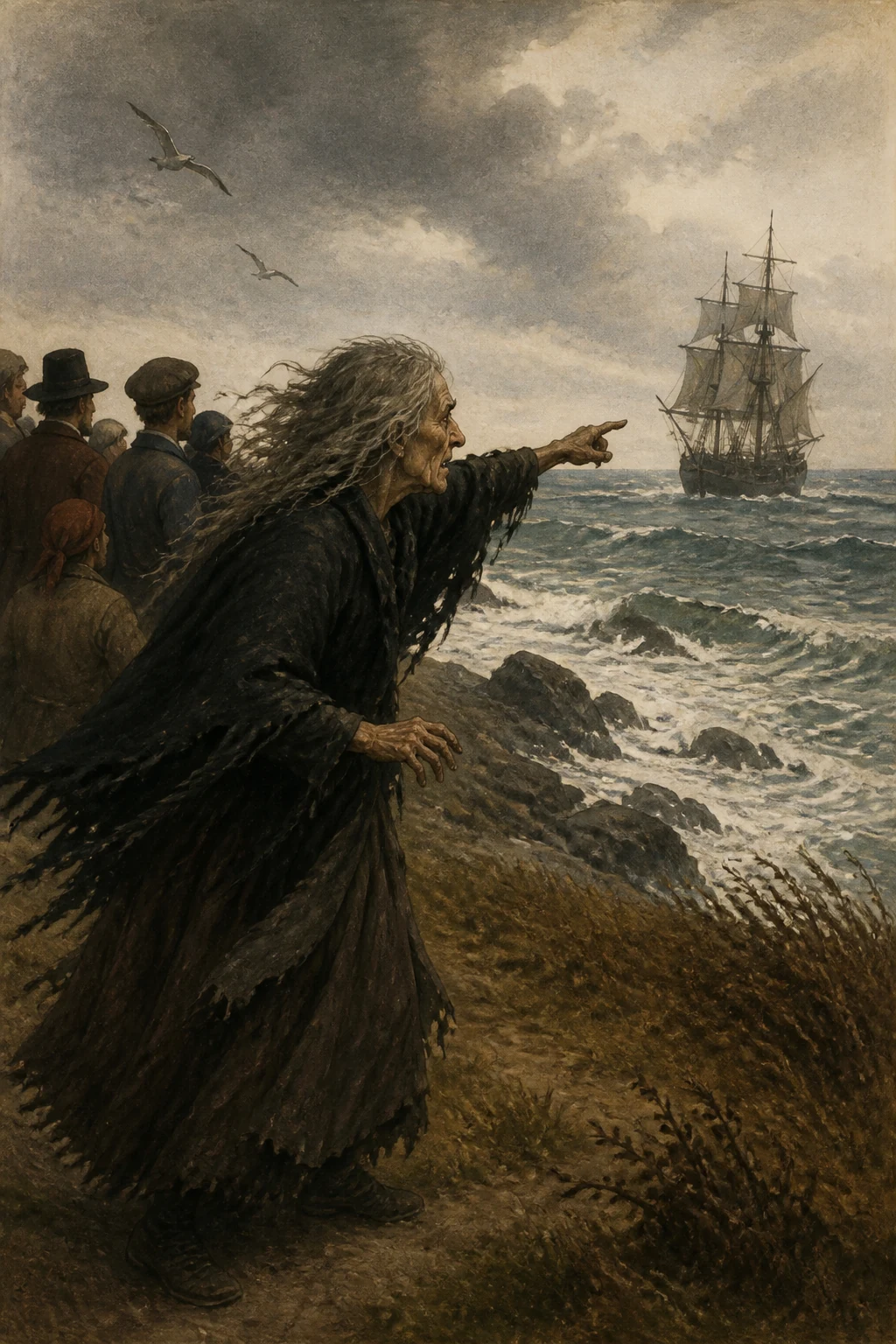
Na rtu blizu Plymoutha je živela »teta Rachel«, ki je slovela kot jasnovidka in se skromno preživljala z napovedovanjem prihodnosti pomorščakom, ki so ji v dlan položili novčič. Posadka nekega briga jo je obiskala dan pred izplutjem in enega od mladeničev je oštela, ker se je družil s slabo druščino. »Le počasi, babica,« jo je prekinil drugi, ki je menil, da graja leti nanj. »Nikar ne otresaj jezika, sicer ti zamašim gobec.« Starka se je sunkoma vzravnala. V moža je uperila koščeni prst in zavreščala: »Preklinjevalci lune! Postavljali ste lažne svetilnike in pogubljali ladje, da bi jih oplenili. Vaši očetje in matere so zvabili brig na te peščine in me pustili brez otrok in brez moža. Naj vam bo vodnik jezdec na bledem konju in naj boste med tistimi, ki mu sledijo!«
Tisto noč je hiša stare Rachel zgorela in komaj si je rešila življenje, toda ko je prišel čas, da brig izpluje, se je postavila med meščane, ki so ga prišli pospremit. Lastnik briga jo je skušal potolažiti zaradi izgube hiše. »Ne potrebujem je več,« je odgovorila, »kajti kmalu bo moja tesna hiša in te mi vi, podleži, ne morete zažgati. Kaj pa vi! Kdo bo vas potolažil ob izgubi vašega briga?«
»Moj brig je trden. Preplul je že najnevarnejšo plitvino v zalivu.« »Toda na sebi nosi prekletstvo. Ne bo dolgo ostal na površju.« Z vsako skalo in peščeno sipino, ki jo je ladja pustila za seboj, se je starka nagnila še bolj naprej; roka se ji je tresla, sivi lasje so ji vihrali, oči so ji stopale iz jamic, ustnice pa so mrmrale prekletstva, »kakor hudobni duh, ki kliče viharje za izvrševalce maščevanja«. Ladja je prešla še zadnjo plitvino in trgovec je olajšano vzdihnil, ko jo je videl varno pluti po svoji poti. Tedaj je starka predirljivo zakričala in dvignila roko, kakor da bi zapovedovala tišino, dokler se ne zgodi nekaj, kar je očitno pričakovala. Gledalcem ni bilo treba dolgo čakati: brig se je ustavil in zadrhtel — jadra so mu trepetala v vetru, videlo se je, kako skuša posadka sprostiti čoln — nato se je nagnil in potonil, dokler niso iz vode štrleli le še vrhovi jamborov. Večina navzočih je stekla po čolne in vrvi in le redki so videli, kako se je Rachel zgrudila naprej na tla — mrtva, z divjim nasmehom zmagoslavja na obrazu. Reševalci so se vrnili z vsemi člani posadke razen enega — moža, ki je grozil starki in ji iz maščevanja zažgal kočo. Rachel so pokopali tam, kjer je stala njena hiša, skala — dotlej neznana —, na kateri se je brig razbil, pa je še dolgo nosila ime Rachelino prekletstvo.
Izvirnik
133 Aunt Rachel's Curse
Naslednje strani prikazujejo izvirno besedilo za primerjavo.
On a headland near Plymouth lived “Aunt Rachel,” a reputed seer, who made a scant livelihood by forecasting the future for such seagoing people as had crossed her palm. The crew of a certain brig came to see her on the day before sailing, and she reproached one of the lads for keeping bad company. “Avast, there, granny,” interrupted another, who took the chiding to himself. “None of your slack, or I'll put a stopper on your gab.” The old woman sprang erect. Levelling her skinny finger at the man, she screamed, “Moon cursers! You have set false beacons and wrecked ships for plunder. It was your fathers and mothers who decoyed a brig to these sands and left me childless and a widow. He who rides the pale horse be your guide, and you be of the number who follow him!”
That night old Rachel's house was burned, and she barely escaped with her life, but when it was time for the brig to sail she took her place among the townfolk who were to see it off. The owner of the brig tried to console her for the loss of the house. “I need it no longer,” she answered, “for the narrow house will soon be mine, and you wretches cannot burn that. But you! Who will console you for the loss of your brig?”
“My brig is stanch. She has already passed the worst shoal in the bay.”
“But she carries a curse. She cannot swim long.”
As each successive rock and bar was passed the old woman leaned forward, her hand shaking, her gray locks flying, her eyes starting, her lips mumbling maledictions, “like an evil spirit, chiding forth the storms as ministers of vengeance.” The last shoal was passed, the merchant sighed with relief at seeing the vessel now safely on her course, when the woman uttered a harsh cry, and raised her hand as if to command silence until something happened that she evidently expected. For this the onlookers had not long to wait: the brig halted and trembled--her sails shook in the wind, her crew were seen trying to free the cutter--then she careened and sank until only her mast-heads stood out of the water. Most of the company ran for boats and lines, and few saw Rachel pitch forward on the earth-dead, with a fierce smile of exultation on her face. The rescuers came back with all the crew, save one--the man who had challenged the old woman and revengefully burned her cabin. Rachel's body was buried where her house had stood, and the rock--before unknown--where the brig had broken long bore the name of Rachel's Curse.
Nadaljuj z branjem