Waltey
Pojedina v modrem
Uji Shūi Monogatari · anonimna srednjeveška zbirkaO besedilu
Pojedina v modrem
- Vir
- Uji Shūi Monogatari
- Avtor
- anonimna srednjeveška zbirka
- Jezik branja
- English
- Jezik izvirnika
- 日本語
- Čas branja
- 4 min branja
- Obseg
- 3 strani
- Naslov izvirnika
- 124 青常事
O izvirniku
Uji Shūi Monogatari
Srednjeveške japonske pripovedi o menihih, duhovih, čudežih, prevarah in vsakdanjih presenečenjih. Bralni jezik je English, izvirnik pa prihaja iz vira Uji Shūi Monogatari v jeziku 日本語.
Besedilo
Pojedina v modrem
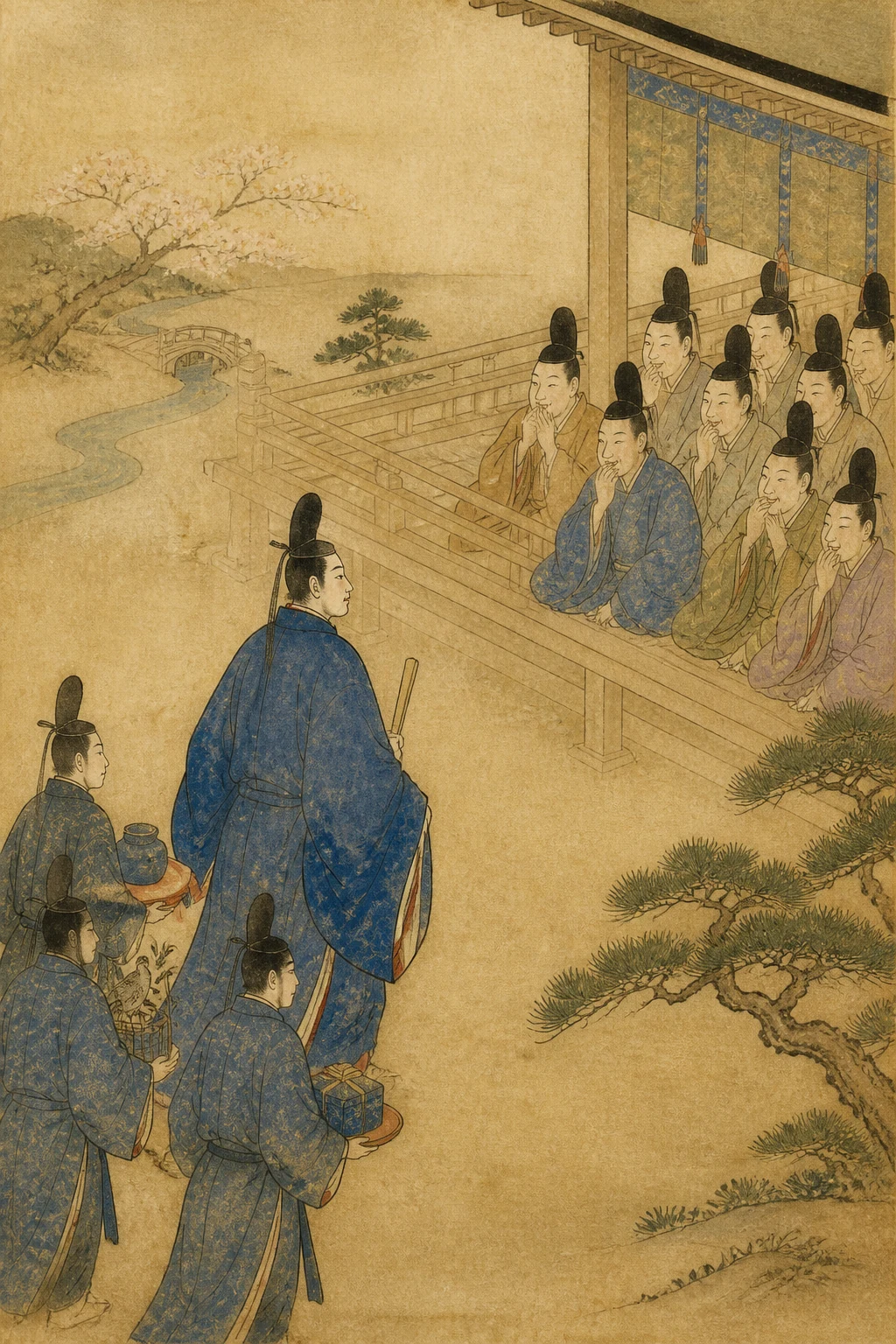
He was rather tall and slender, and though his figure was exceedingly elegant, his manners and bearing were foolish, and there was something uncouth about him. His head was shaped like a stirrup, so that the tail of his court cap did not rest against his back but swung clear of it. His complexion was a bluish white, as though painted with flower dye; his eye sockets were deep, his nose conspicuously high and red, and his lips thin and colorless. When he smiled, he showed a great deal of tooth; his gums were red, and his beard, too, was reddish and long. His voice was high and nasal, and whenever he spoke it rang out sharply. He walked with his body swaying and his buttocks swinging. His complexion was so very blue that the young noblemen attending at court nicknamed him Lord Aotsune and laughed at him. The young men gave him no peace, laughing and jeering whenever he stood up or sat down, until at last the Emperor could bear to hear no more. “It is unseemly of these fellows to laugh at him so. Will not his father, the prince, resent me if he hears of it and learns that I have done nothing to stop them?” he said, and rebuked them sternly. The courtiers clicked their tongues, and all agreed that they must laugh at him no more. Then they said to one another, “Since we have been scolded so severely, let us swear an oath never to do it again. If anyone calls him Lord Aotsune after we have sworn, we shall make him bring out wine and fruit as a forfeit.” They settled the matter and took their oath. Not long afterward, Lord Horikawa, who was then attending at court, happened to see the man get up and walk away. At the sight of his retreating figure, he forgot himself and said, “Where is that Aotsune fellow off to?” “It is most unseemly of you to break our oath like this,” the courtiers declared. “Send for wine and fruit at once, as we agreed, and pay your forfeit!” They gathered around him, clamoring and pressing their demand. He argued and tried to refuse, but they insisted so earnestly that at last he said, “Very well. The day after tomorrow, then, I shall pay my forfeit for Lord Aotsune. Let all the courtiers and chamberlains assemble that day.” With that, he left. When the day came, not a man failed to appear, for the Horikawa Middle Captain was to pay his forfeit for Lord Aotsune. The courtiers sat in rows waiting, and presently the Middle Captain arrived in informal court dress. He was a man of radiant beauty, scented with an indescribably lovely fragrance, and fairly overflowing with charm. Beneath the splendid, flowing skirts of his court robe he had let a lustrous blue-green underrobe show, and his gathered trousers were blue-green as well. He had dressed three attendants in blue-green hunting robes and trousers. One carried a tray painted blue-green, upon which a blue-green earthenware dish was heaped with hardy kiwifruit. Another carried a bamboo branch with four or five green pigeons fastened to it. The third bore wine in a blue-green earthenware jar, its mouth covered with thin blue-green paper. When they came forward one after another and set these things before the courtiers, the men burst into such a tremendous roar of laughter that the Emperor heard it. “What is happening in the courtiers’ hall to make such a commotion?” he asked. A lady-in-waiting replied, “Kanemichi called the man Aotsune, and the gentlemen demanded that he pay a forfeit. They are laughing at the way he is paying it.” “How is he paying it?” the Emperor asked. He came out to his daytime seat and peered through the lattice shutters. Seeing that Kanemichi and his attendants were dressed entirely in blue-green, and that even the food they had brought as the forfeit was green, he understood what had made them laugh. He could not bring himself to be angry, and laughed heartily too. After that, no one seriously rebuked them, and they laughed and mocked the man more than ever.
Izvirnik
124 青常事
Naslednje strani prikazujejo izvirno besedilo za primerjavo.
今は昔村上の御時ふるき宮の御子にて左京大夫なる人おはし
けり長すこしほそたかにていみしうあてやかなる姿はしたれともやうたいなともおこなりけりかたくなはしきさまそしたりける頭のあふみかしらなりけれはゑいはせなかにもつかすはなれてそふられける色は花をぬりたるやうに青しろにてまかふらくほく鼻あさやかにたかく赤しくちひるうすくて色もなくえめは歯かちなる物の歯肉あかくてひけもあかくて長かりけりこゑははな声にてたかくて物いへは一うちひひきてそきこえけるあゆめは身をふり尻をふりてそありきける色のせめて青かりけれはあをつねの君とそ殿上の公達はつけてわらひける若き人たちの立ゐにつけてやすからすわらひののしりけれは御門きこしめしあまりて此おのことものこれをかくわらふひんなき事也父の御子ききて制せすとて我を恨さらんやなと仰られてまめやかにさいなみ給へは殿上の人々したなきをしてみなわらふましきよし
いひあへりけりさていひあへるやうかくさいなめはいまよりなかく起請すもしかく起請してのちあをつねの君とよひたらんものをは酒くた物なととりいたさせてあかひせんといひかためて起請して後いくはくもなくて堀川殿の殿上人にておはしけるかあふなくたちて行うしろてをみて忘てあの青つね丸はいつち行そとの給てけり殿上人ともかく起請をやふりつるはいとひんなき事也とていひさためたるやうにすみやかに酒くた物とりにやりてこの事あかへとあつまりてせめののしりけれはあらかひてせしとすまひ給けれともまめやかにまめやかにせめけれはさらはあさてはかりあをつねの君のあかひせん殿上人蔵人その日あつまり給へといひて出たまひぬその日になりて堀川中将の青つねの君のあかひをすへしとてまいらぬ人なし殿上人ゐならひて待ほとに堀川中将直衣すかたにてかたちは光やうなる人の香は
えもいはすかうはしくてあいきやうこほれにこほれて参り給へり直衣のなかやかにめてたきすそより青き打たるいたし衵して指貫も青色のさしぬきをきたり随身三人に青き狩衣はかまきせてひとりにはあをく色とりたるおしきにあをしのさらにこくわをもりてささけたり今一人は竹の枝に山鳩を四五斗つけてもたせたりまたひとりにはあをしのかめに酒を入て青きうすやうにて口をつつみたり殿上人の前に持つつきて出たれは殿上人ともみてもろこゑにわらひとよむ事をひたたし御門きかせ給て何事そ殿上におひたたしくきこゆるはととはせ給へは女房兼通か青つねよひてさふらへはその事によりてをのこともにせめられてその罪あかひ候を笑候なりと申けれはいかやうにあかふそとてひのおましに出させ給てこしとみよりのそかせ給けれは我よりはしめてひたあをなる
装束にてあをきくひ物ともをもたせてあかひけれはこれをわらふなりと御覧してえ腹たたせ給はていみしうわらはせけりそののちはまめやかにさいなむ人もなかりけれはいよいよなん笑あさけりける
Nadaljuj z branjem