Waltey
Molk je zlato
Cuentos antiguos
Cuentos de Navidad, de la patria y antiguos · Emilia Pardo BazánO besedilu
Molk je zlato
- Vir
- Cuentos de Navidad, de la patria y antiguos
- Avtor
- Emilia Pardo Bazán
- Jezik branja
- English
- Jezik izvirnika
- Español
- Čas branja
- 8 min branja
- Obseg
- 7 strani
- Naslov izvirnika
- 036 Al buen callar
O izvirniku
Cuentos de Navidad, de la patria y antiguos
Sedemintrideset avtorskih zgodb v treh zgodovinskih knjižnih skupinah. Bralni jezik je English, izvirnik pa prihaja iz vira Cuentos de Navidad, de la patria y antiguos v jeziku Español.
Besedilo
Molk je zlato
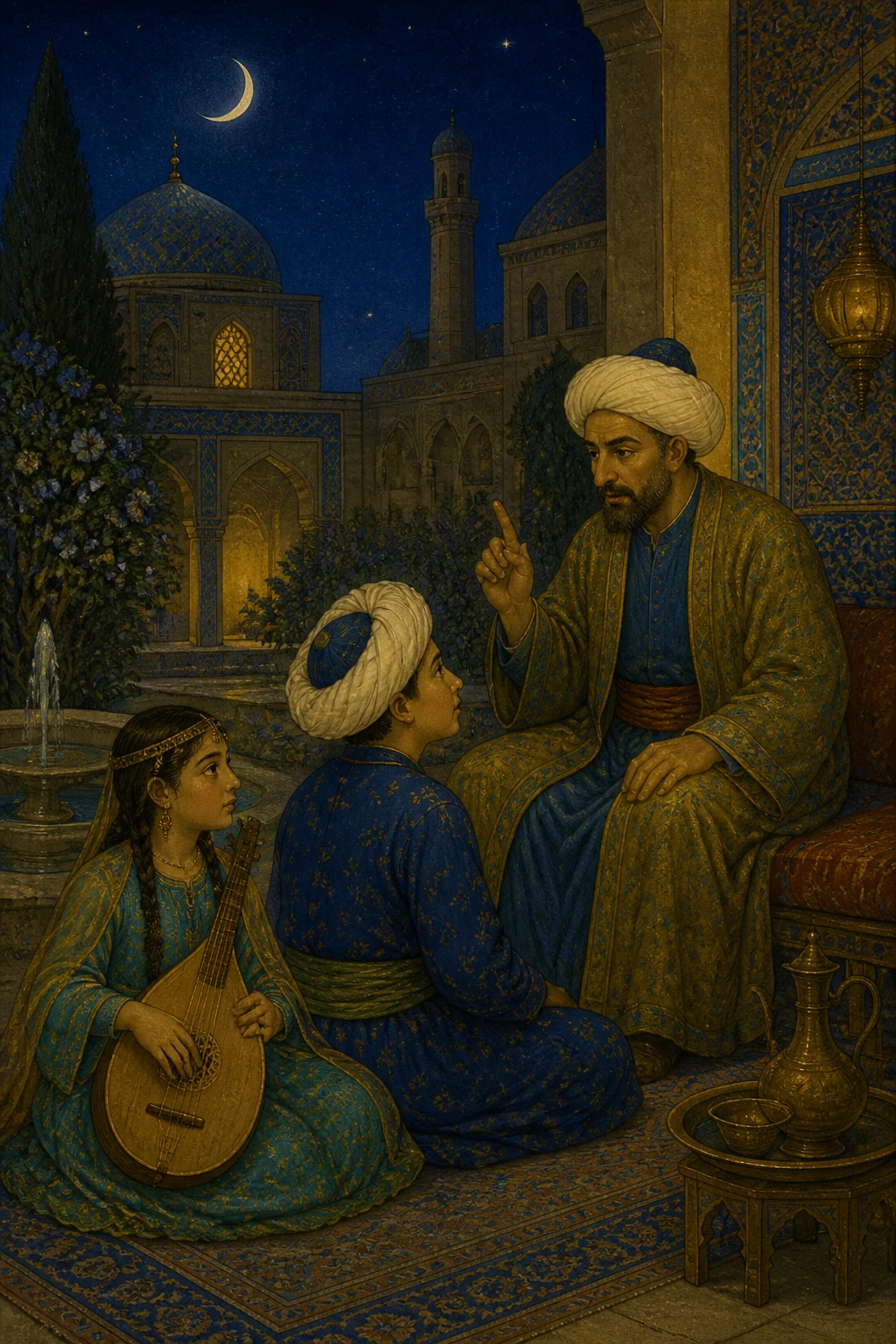
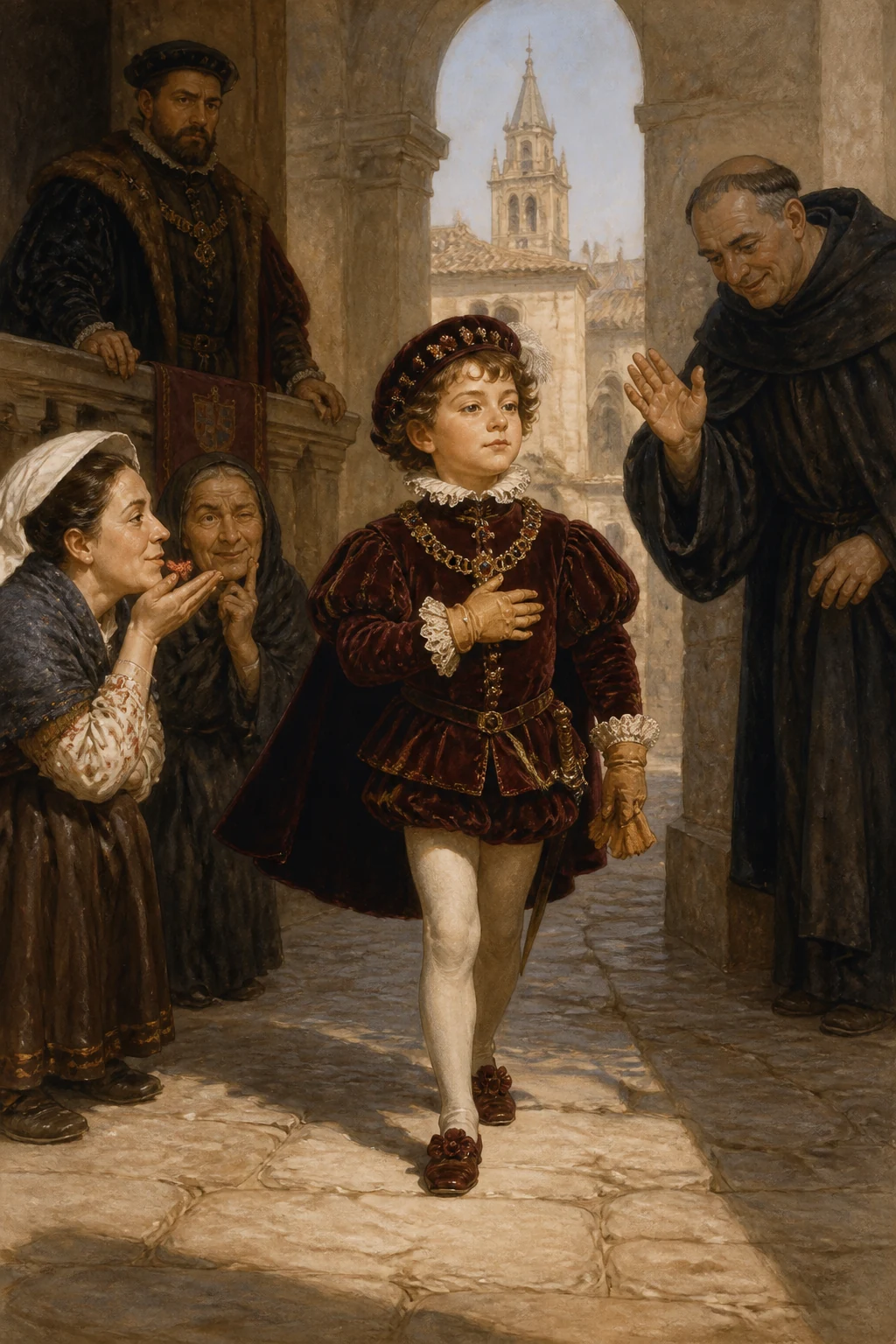
The Duke and Duchess of Toledo had no other child, but their boy was as lovely as a flower: healthy, handsome, fearless, and, in his tender years, so angelic and noble in disposition that the servants loved him scarcely less than his parents did. His mother dressed him in velvet trimmed with Dutch lace, with gloves of fragrant suede and jewelled ornaments glittering on the band of his cap; and when they saw him pass along the street, gallant and splendid as a knight in miniature, women blew him kisses from their fingertips, little old women laughed and winked as if to say, “What a sight you will be at twenty!” and grave clerics and austere friars, thrusting their heads from their cowls and their hands from their sleeves, bestowed a blessing on him as he went by.
Yet the Duke of Toledo, proud as he was of his offspring, observed with growing uneasiness one bad quality in him, which increased as young Don Sancho grew older. The fault consisted in a kind of inveterate mania for blurting out the truth indiscriminately, whether it was relevant or not, on any subject and in anyone’s presence. An old courtier, well versed in the knowledge that everything at court is disguise, the Duke of Toledo foresaw with terror that his son, however brave, generous, clever, and quick-witted he might prove, would never attain the high station that was his due in the world unless he corrected so disastrous a tendency. “Discretion and truth are at odds, for truth is often indiscretion itself,” the duke would warn his son. “Like foolish fish, we commonly meet our death through our mouths; and that is no death for a prudent man, but for a brute creature, cold and witless,” he would often add. The boy was ashamed and distressed by these reprimands and warnings, and, persuaded that he was wrong to be so sincere, resolved in his heart to mend his ways; but his nature would not allow it. Some strange force brought the truth to his lips and gave him not a moment’s peace until at last he let it out, to the great affliction of the duke, who wore himself out repeating, “Sancho, my son, take care what you do! Truth is one of the most potent poisons; but instead of being taken through the mouth, it comes out of it. Once released into the air, it kills. If fatal truth seems so attractive to you, keep it within yourself and for yourself; share it with no one, and you will poison no one.”
Now it happened that, when the son of the Duke and Duchess of Toledo was approaching thirteen and growing handsomer, more accomplished, and more graceful by the day, the queen went to the cathedral to hear her first Mass after her confinement and caught sight of him as she passed. Charmed by his bearing and the grace with which he made her a most profound bow, she wished to know who he was, and scarcely had she learned than she summoned the duke and pressed him most earnestly to let her have Don Sancho as a page to her royal person. More terrified than flattered, the duke told his son of the honour the queen was bestowing upon them. “Now my fears are upon us, Sancho; now comes the danger! This fatal affliction of truthfulness will be the ruin of you and of us all. If reserve and the art of keeping a prudent silence are always useful, in the royal chambers they are indispensable, I swear to you.” “I should think rather, Father,” replied the precocious Don Sancho, “that truth itself must dwell beside kings, since they are the likeness and image of God. There can be no falsehood in them, nor any deed that ought to be hidden or kept secret.” This answer left the duke bewildered and perplexed, for certain court rumours concerning royal indiscretions and love affairs were scratching at his memory; but, gathering his courage, he exclaimed at last, “No, my son, it is not as you suppose. When you are older and your reason has matured, you will understand these mysteries. For now I shall tell you only this: if you go to court resolved to speak the truth, you had better take my head this very moment and deliver it to the executioner.” Don Sancho stood downcast and melancholy for some time, until, like a man making a pledge, he held out his hand with a strange gravity beyond his years. “I know the remedy,” he declared. “It is impossible for me to lie, but not to keep silent. You, Father, must spread the word that some mishap has robbed me of speech, and I promise, for your sake, to remain mute until the last day of my life, if need be.”
The duke approved of this expedient and spread the report of his son’s muteness; the remarkable thing was that, when the queen learned that the handsome boy was mute, she showed the greatest delight and an even stronger determination to have him in her service and at her command. And indeed, from that day forward Don Sancho served as a page in the queen’s chamber, his lips sealed by the padlock of his will, seeing and hearing everything that happened, but with no means of making it known. Little by little the queen grew exceedingly fond of him. Sancho would spend long idle hours stretched on velvet cushions at the foot of his mistress’s chair, his head resting in her lap, while with her delicate, ring-laden hand she stroked his dark, silky curls as a mother might. The first few times Don Sancho was charged with opening the secret door to a certain nobleman, and saw him slip furtively into the queen’s private chamber at an unseasonable hour, and the queen throw her arms about his neck, the little page was grieved and indignant; had he been able to loose his tongue, God knows what tragedy would have erupted in the palace. Fortunately, Sancho was mute; he could hear, however, and the conversations of the two lovers acquainted him with matters of the utmost gravity, with secrets of state and family; among them, that the king, for his part, went out every night in the greatest secrecy to visit a certain very beautiful Jewish woman, for whose sake he neglected his duties as husband and monarch, and under whose influence he favoured the Jews beyond all measure, to the detriment of his kingdoms and the depletion of his treasures. This intrigue was shrouded in mystery, known only to the nobleman and the queen; and Don Sancho, transferring his indignation from the wife’s offence to the husband’s, rejoiced once more that he had no voice, since he was thus in no danger of revealing so infamous a truth. As time passed, the freedom with which people spoke before the mute little page acquainted him with several great wickednesses being plotted at court: he learned how the royal favourite secretly did as he pleased with the public treasury, and how the king’s uncle was conspiring to dethrone him, along with countless other knaveries and villainies which continually roused and inflamed Don Sancho’s anger and virtuous impatience, putting his steadfastness in the absolute silence to which he had pledged himself sorely to the test.
Meanwhile, everyone loved him dearly, for that handsome, silent page, so noble and so obedient, had never done anyone the slightest harm. There is no need to say how the ladies favoured him, seeing him so graceful and knowing his discretion to be assured; and from the king down to the lowliest servant, everyone wished him well. His standing and favour grew so great that, when he reached twenty and had to leave his office as page for the noble profession of arms, the king, the queen, the royal favourite, and the infante vied with one another in heaping favours upon him, increasing the honours and privileges of his house and granting him command of strongholds, as well as fortresses, towns, and castles. And when Don Sancho left the palace, his cheeks still wet from the tear-soaked kiss with which the queen, who loved him as another son, had bidden him farewell, his neck weighed down by the gold chain the king had just clasped about it, and mounted the fiery Andalusian the infante had given him, he reflected on how many evils his strange resolve had spared him and how much prosperity it had brought. He felt his tongue with his teeth and said pensively to himself—for, as far as anyone else was concerned, he was firmly resolved not to utter a single word—“At the first word you let fly into the air, tongue of mine, I shall cut you out with these teeth or with my dagger, and throw you to the dogs.”
There are scholars who maintain that this story is the origin of the common saying, for which no other plausible explanation exists: He who keeps a wise silence is called Sancho.
Izvirnik
036 Al buen callar
Naslednje strani prikazujejo izvirno besedilo za primerjavo.
No tenían más hijo que aquél los duques de Toledo, pero era un niño como unas flores; sano, apuesto, intrépido, y, en la edad tierna, de condición tan angelical y noble, que le amaban sus servidores punto menos que sus padres. Traíale su madre vestido de terciopelo que guarnecían encajes de Holanda, luciendo guantes de olorosa gamuza y brincos y joyeles de pedrería en el cintillo del birrete; y al mirarle pasar por la calle, bizarro y galán cual un caballero en miniatura, las mujeres le echaban besos con la punta de los dedos, las vejezuelas reían guiñando el ojo para significar «¡Quién te verá á los veinte!», y los graves beneficiados y los frailes austeros, sacando la cabeza de la capucha y las manos de las mangas, le enviaban al paso una bendición.
Sin embargo, el duque de Toledo, aunque muy orgulloso de su vástago, observaba con inquietud creciente una mala cualidad que tenía, y que según avanzaba en edad el niño don Sancho iba en aumento. Consistía el defecto en una especie de manía tenacísima de cantar la verdad á troche y moche, viniese á cuento ó no viniese, en cualquier asunto y delante de cualquier persona. Cortesano viejo ya el duque de Toledo, ducho en saber que en la corte todo es disfraz, adivinaba con terror que su hijo, por más alentado, generoso, listo y agudo que se mostrase, jamás obtendría el alto puesto que le era debido en el mundo, si no corregía tan funesta propensión. «Reñida está la discreción con la verdad: como que la verdad es á menudo la indiscreción misma», advertía á su hijo el duque. «Por la boca solemos morir como los simples peces, y no es muerte propia de hombre avisado, sino de animal bruto, frío y torpe», solía añadir. Corríase y afligíase el rapaz de tales reprensiones y advertencias, y persuadido de que erraba al ser tan sincero, proponía en su corazón enmendarse; pero su natural no lo consentía: una fuerza extraña le traía la verdad á los labios, no dándole punto de reposo hasta que la soltaba por fin, con gran aflicción del duque, que se mataba en repetir: «Hijo Sancho, mira que lo que haces... La verdad es un veneno de los más activos; pero en vez de tomarse por la boca, sale de ella. Esparcido en el aire, es cuando mata. Si tan atractiva te parece la fatal verdad, guárdala en ti y para ti; no la repartas con nadie, y á nadie envenenarás.»
Acaeció, pues, que frisando en los trece años y siendo cada vez más lindo, dispuesto y gentil el hijo de los duques de Toledo, un día que la reina salió á oir misa de parida á la catedral, hubo de verle al paso, y prendada de su apostura y de la buena gracia con que la hizo una reverencia profundísima, quiso informarse de quién era, y apenas lo supo, llamó al duque y con grandes instancias le pidió á D. Sancho para paje de su real persona. Más aterrado que lisonjeado, participó el duque á su hijo el honor que les dispensaba la reina. «Aquí de mis recelos, aquí del peligro, Sancho... Tu funesto achaque de veracidad ahora es cuando va á perderte y perdernos. Si la reserva y el arte de bien callar son siempre provechosos, en la cámara de los reyes son indispensables, te lo juro.» «Antes pienso, padre--replicó el precoz D. Sancho,--que al lado de los reyes, por ser ellos figura é imagen de Dios, alentará la verdad misma. No cabrá en ellos mentira ni acción que deba ser oculta ó reservada.» Confuso y perplejo dejó la respuesta al duque, pues le escarabajeaban en la memoria ciertas murmuraciones cortesanas referentes á liviandades y amoríos regios; pero tomando aliento, «No, hijo--exclamó por fin,--no es así como tú supones... Cuando seas mayor y tu razón madure, entenderás estos enigmas. Por ahora sólo te diré que si vas á la corte resuelto á decir verdades, mejor será que tomes ya mi cabeza y se la entregues al verdugo.» Cabizbajo y melancólico se quedó algún tiempo D. Sancho, hasta que, como el que promete, extendió la mano con extraña gravedad, impropia de su juventud. «Yo sé el remedio--afirmó.--Mentir me es imposible, pero no así guardar silencio. Haced, vos, padre, correr la voz de que un accidente me ha privado del habla, y yo os prometo, por dispensaros favor, ser mudo hasta el último día de mi vida si es preciso.»
Pareció bien el arbitrio al duque y divulgó lo de la mudez; siendo lo notable del caso que la reina, sabedora de que el bello rapaz era mudo, mostró alegría suma y mayor empeño en tenerle á su servicio y órdenes. En efecto, desde aquel día asistió D. Sancho como paje en la cámara de la reina, sellados los labios por el candado de la voluntad, viendo y oyendo todo cuanto ocurría, pero sin medios de propalarlo. Poco á poco la reina iba cobrándole extremado cariño. Sancho se pasaba las horas muertas echado en cojines de terciopelo al pie del sillón de su ama y recostando la cabeza en sus faldas, mientras ella con la fina mano cargada de sortijas le acariciaba maternalmente los obscuros y sedosos bucles.--Las primeras veces que don Sancho fue encargado de abrir la puerta secreta á cierto magnate, y le vió penetrar furtivamente y á deshora en el camarín, y á la reina echarle al cuello los brazos, el pajecillo se dolió, se indignó, y, á poder soltar la lengua, Dios sabe la tragedia que en el palacio se arma. Por fortuna, Sancho era mudo; oía, eso sí, y las pláticas de los dos enamorados le pusieron al corriente de cosas harto graves, de secretos de Estado y familia; entre otros, de que el rey, á su vez, salía todas las noches con maravilloso recato á visitar á cierta judía muy hermosa, por quien olvidaba sus obligaciones de esposo y de monarca, y merced á cuyo influjo protegía desmedidamente á los hebreos, con perjuicio de sus reinos y mengua de sus tesoros. Envuelta en el misterio esta intriga, no la sabían más que el magnate y la reina; y D. Sancho, trasladando su indignación del delito de la mujer al del marido, celebró nuevamente no haber tenido voz, porque así no se veía en riesgo de revelar verdad tan infame. Pasado algún tiempo, la confianza con que se hablaba delante del mudo pajecillo instruyó á éste de varias maldades gordas que se tramaban en la corte: supo cómo el privado, disimuladamente, hacía mangas y capirotes de la hacienda pública, y cómo el tío del rey conspiraba para destronarle, con otras infinitas tunantadas y bellaquerías que á cada momento soliviantaban y encrespaban la cólera y la virtuosa impaciencia de D. Sancho, poniendo á prueba su constancia, en el mutismo absoluto á que se había comprometido.
Sucedía entretanto que le amaban todos mucho, porque aquel lindo paje silencioso, tan hidalgo y tan obediente, jamás había causado daño alguno á nadie. No hay para qué decir si le favorecerían las damas, viéndole tan gentil y estando ciertas de su discreción; y desde el rey hasta el último criado, todos le deseaban bienes. Tanto aumentó su crédito y favor, que al cumplir los veinte años y tener que dejar su oficio de paje por el noble empleo de las armas, colmáronle de mercedes á porfía el rey, la reina, el privado y el infante, acrecentando los honores y preeminencias de su casa y haciéndole donación de alcaidías, fortalezas, villas y castillos. Y cuando, húmedas las mejillas del beso empapado de lágrimas con que le despidió la reina, que le quería como á otro hijo; oprimido el cuello con el peso de la cadena de oro que acababa de ceñirle el rey, salió D. Sancho del alcázar y cabalgó en el fogoso andaluz de que el infante le había hecho presente; al ver cuántos males había evitado y cuántas prosperidades había traído su extraña determinación, tentóse la lengua con los dientes, y, meditabundo, dijo para sí (pues para los demás estaba bien determinado á no decir oste ni moste): «A la primer palabra que sueltes al aire, lengua mía, con estos dientes ó con mi puñal te corto y te echo á los canes.»
Hay eruditos que sostienen la opinión de que de esta historia procede la frase vulgar, sin otra explicación plausible: Al buen callar llaman Sancho.
Nadaljuj z branjem