Prevod
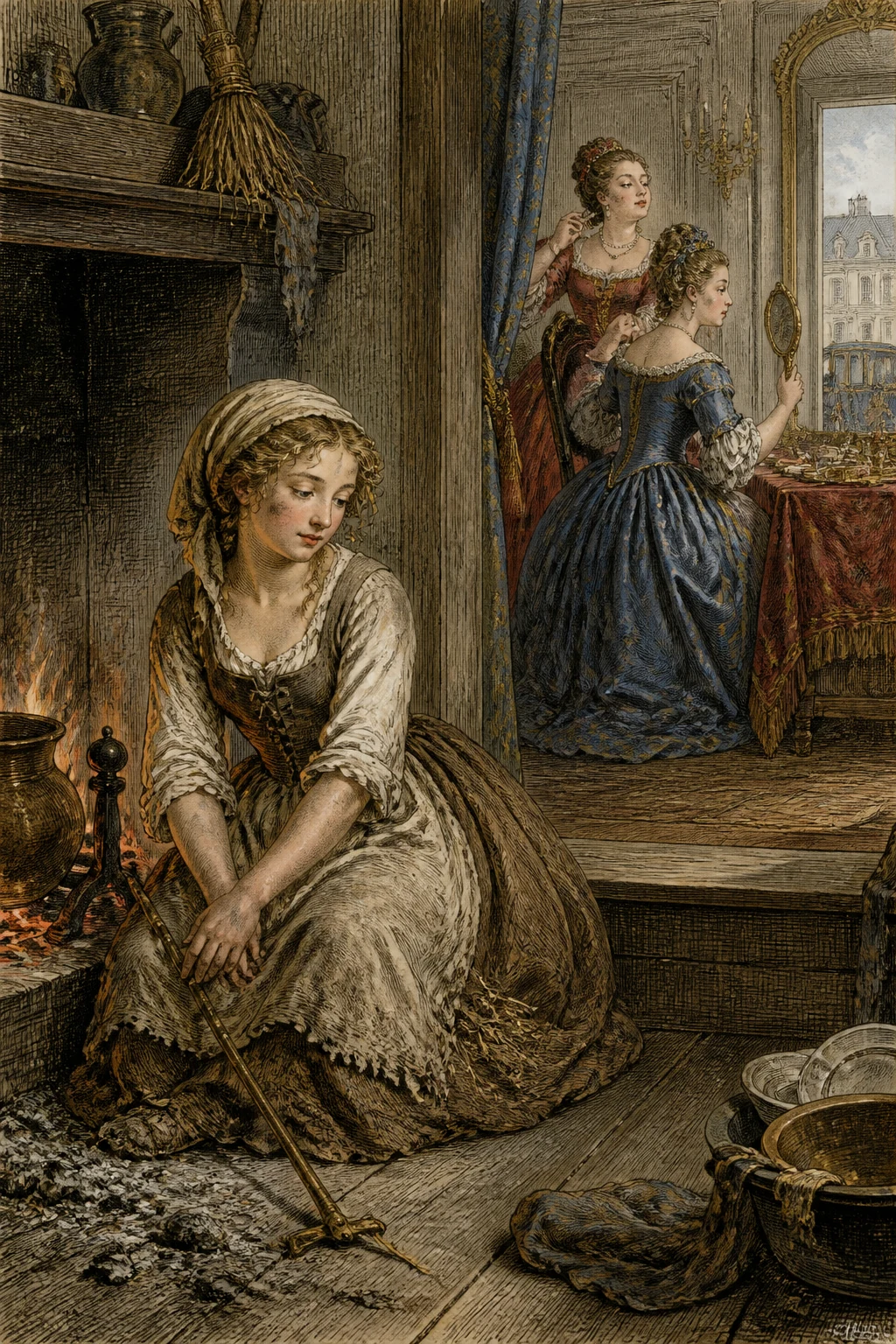
Some girls were spinning as they watched their cattle beside a deep pit, when an old man with a white beard reaching to his waist came up to them and said, “Girls! Beware of that pit, for if any one of you should drop her spindle into it, her mother would turn into a cow at once.” Having said this, the old man went away, and the girls, wondering at his words, drew still closer to the pit and began peering into it and looking about, until the spindle slipped from the hand of one of them, the prettiest of all, and fell into the pit. When she came home that evening, she found that her mother had turned into a cow and was standing outside the house. After that, she began taking this cow out to pasture with the rest of the cattle. Some time later, the girl’s father married a widow who brought a daughter of her own with her. The stepmother took an immediate dislike to her stepdaughter, especially because she was far prettier than her own daughter: she forbade her to wash, comb her hair, or change her clothes, and sought every possible excuse to scold and torment her. One morning she gave her a bag full of flax and said, “If you don’t spin all this today and wind it into a ball, don’t come home tonight, or I’ll kill you.” The poor girl spun as much as she could as she followed the cattle, but at noon, when the cattle lay down in their resting place, she saw that all her spinning had scarcely made a dent in the flax, and she began to cry. When the cow who had been her mother saw her crying, she asked what was wrong, and the girl told her the whole story. Then the cow comforted her and told her not to worry in the least. “I shall take the flax into my mouth and chew it,” she said, “and a thread will come out of my ear. You must take hold of it and wind it straight into a ball.” And so they did: the cow began taking the flax into her mouth and chewing it, while the girl drew the thread from her ear and wound it, and they were finished in no time. When the girl gave her stepmother the great ball of yarn that evening, her stepmother was astonished, and the next day she gave her still more flax. When the girl spun and wound this just as she had the first lot, and brought home the finished ball that evening, the stepmother thought to herself that the girl’s companions must be helping her. So on the third day she gave her even more flax, but secretly sent her own daughter after her to see who was helping her spin and wind it. The girl crept close and saw the cow taking the flax into her mouth and chewing it, while the stepdaughter wound the yarn from her ear. She went home and told her mother everything. After this, the stepmother pressed her husband to have that cow slaughtered. At first he tried to dissuade his wife, but at last, when she would not leave him in peace, he agreed, and told her on which day he would slaughter it. When the stepdaughter heard this, she wept without ceasing, and when the cow asked why she was crying and the girl told her all that had happened, the cow said, “Hush now, don’t cry. When they slaughter me, do not eat any of my meat, but gather up my bones and bury them in the earth behind the house, beneath such-and-such a stone. Then, whenever you are in trouble, come to my grave and you will find help.” When the cow was slaughtered and they began eating her meat, the girl would not taste it, saying that she was not hungry and could not eat. Instead, she gathered up all the bones and buried them where the cow had told her. This girl’s name was Mara, but because she now did most of the work and waited on everyone in the house—carrying water, cooking meals, washing dishes, sweeping the house, and doing all the other household chores—and because she spent so much of her time beside the fire, her stepmother and stepsister began calling her Cinderella. One Sunday, when the stepmother had made ready to go to church with her daughter, she scattered a whole troughful of millet about the house and said to her stepdaughter, “You, Cinderella! If you don’t pick up every grain of this millet and have dinner ready by the time we return from church, I’ll kill you.” After they had gone to church, the poor girl began to cry, saying to herself, “I’m not worried about dinner; I can cook that easily enough. But who can pick up all this millet?” Then she remembered what the cow had told her: if ever she was in trouble, she should go to her grave and she would find help. She ran there at once, and what should she see! On the grave stood a huge open chest, full of all manner of precious clothes, and on its lid sat two white doves, who said to her, “Mara! Take whichever clothes you like from the chest, dress yourself, and go to church. We will pick up the millet and put everything else in order.” Delighted, she took the first garments from the top, all of pure silk, put them on, and went to church. Everyone in the church, men and women alike, marvelled at her beauty and her clothes, all the more because no one knew who she was or where she came from. The tsar’s son, who happened to be there, was especially struck by her and could not take his eyes off her. Just before the end of the liturgy, she slipped out of church and ran home, took off her fine clothes, and put them back into the chest, which closed of its own accord and vanished. Then she hurried to the fire, and there she found the millet gathered up, dinner ready, and everything in order. A little while later, her stepmother and stepsister came home from church and were astonished to find everything done and even the millet picked up. The following Sunday, the stepmother again made ready to go to church with her daughter, and as she left she scattered still more millet about the house and told her stepdaughter, just as before, “If you don’t pick up every grain of this millet, have dinner ready, and put everything else in order by the time we return from church, I’ll kill you.” As soon as the two of them had gone to church, the stepdaughter went straight to her mother’s grave. There stood the chest, open as before, with the two white doves upon its lid, and they said to her, “Dress yourself, Mara, and go to church. We will pick up the millet and put everything else in order.” Then she took from the chest clothes all of pure silver, put them on, and went to church. Everyone in the church marvelled at her still more than before, and the tsar’s son never took his eyes off her. But just before the end of the liturgy, she somehow slipped away through the crowd and ran home, where she hurriedly took off her fine clothes, put them back in the chest, and returned to the fire. When her stepmother and stepsister came home from church, they were more astonished than ever to find the millet gathered up, dinner ready, and everything else in order, and there was no end to their wonder. On the third Sunday, they again made ready for church, and as they left, the stepmother scattered even more millet about the house and said to her stepdaughter, as before, “If you don’t pick up every grain of this millet, have dinner ready, and put everything else in order by the time we return from church, I’ll kill you.” As soon as they had left the house, the stepdaughter went straight to her mother’s grave and once again found the chest open, with the two white doves upon its lid. They told her to dress herself and go to church, and not to worry about anything at home. Then she took from the chest clothes all of pure gold, put them on, and went to church. Everyone in the church marvelled at her more than ever, but the tsar’s son had resolved not to let her go as before: he would keep watch over her and see where she went. Just before the end of the liturgy, when she made to leave, the tsar’s son followed close on her heels. As she hurried away, threading her way through the crowd, the slipper somehow slipped off her right foot. Having no time to look for it, she ran on with that foot bare, and the tsar’s son picked up her slipper. When she reached home, she took off her fine clothes, put them back into the chest, and went straight to the fire as before. Then the tsar’s son set out with her slipper to search for her throughout the empire, trying it on the foot of every girl. But for one it was too long, for another too short, for another too narrow, and for another too wide; it would fit none of them. And so, going from house to house, he came at last to her father’s home. When her stepmother saw that the tsar’s son would be coming to their house too in search of the girl, she hid her beneath a trough outside the house. When the tsar’s son arrived with the slipper and asked whether there were any girls in the house, she said there was one, and brought out her own daughter. But when he tried the slipper on her foot, it would not even go over her toes. Then the tsar’s son asked whether there was any other girl in the house, and the stepmother said there was no one else. Just then a cock jumped up onto the trough and crowed, “Cock-a-doodle-doo! Here she is beneath the trough!” The stepmother cried, “Shoo! May an eagle carry you off!” Hearing this, the tsar’s son hurried over to the trough and lifted it, and there beneath it was the very girl he had seen in church, wearing the same clothes she had worn the third time, but with no slipper on her right foot. When the tsar’s son saw her, he almost fainted with joy. He quickly put the slipper on her right foot, and, seeing that it not only fitted her perfectly but was exactly like the one on her left foot, he took her to his palace and married her.