Waltey
Jagnje z najdaljšim repom
002 THE LAMB WITH THE LONGEST TAIL
Živalske zgodbe Clare Dillingham Pierson · Clara Dillingham PiersonO besedilu
Jagnje z najdaljšim repom
- Vir
- Živalske zgodbe Clare Dillingham Pierson
- Avtor
- Clara Dillingham Pierson
- Jezik branja
- Slovenščina
- Jezik izvirnika
- English
- Čas branja
- 6 min branja
- Obseg
- 5 strani
- Naslov izvirnika
- 002 THE LAMB WITH THE LONGEST TAIL
O izvirniku
Živalske zgodbe Clare Dillingham Pierson
Devetindevetdeset avtorskih zgodb o živalih na kmetiji, travniku, v gozdu, ob ribniku in ponoči. Bralni jezik je Slovenščina, izvirnik pa prihaja iz vira Živalske zgodbe Clare Dillingham Pierson v jeziku English.
Besedilo
Jagnje z najdaljšim repom
Ovce so preprosta in dobrosrčna družina in med vsemi prebivalci kmetije ni nikogar, ki bi bil bolj priljubljen od njih. Vse poletje se potikajo po travnikih, smukajo svežo, sladko travo in opoldne počivajo v senci dreves, ko pa pride mraz, jih priženejo na dvorišče in se naselijo v dolgem, nizkem ovčjem hlevu.
Takrat je vedno veselo. Konji globoko dihajo in od veselja stresajo z glavami, Krave si pravijo: »Lepo, da so se Ovce vrnile,« in celo Voli premaknejo prežvek v gobcu ter se čez pleča dolgo ozirajo za volnatimi prišleki. Pa ne zato, ker bi Ovce lahko kako poskrbele, da bi bilo njihovim sosedom toplo ali da bi bili siti. Le zato, ker so krotkega rodu in prijazne v vsem, kar rečejo; saj veste, kadar je kdo vedno prijazen, so drugi veseli že samo tega, da ga vidijo in ga imajo ob sebi.
Ko potem zavejejo mrzli marčevski vetrovi, dobri kmet prinese v ovčji hlev še več rumene slame in poskrbi, da je v njem toplo in udobno. Če je kakšna deska polomljena in skoznjo piha, jo popravi, da mraz ne more več noter. V tem času se tudi Konji in Govedo med jedjo pogosto ustavijo in prisluhnejo. Celo Prašiči, ki se sicer ne menijo kaj dosti za svoje sosede, rijejo po kotih najbliže ovčjemu hlevu in napenjajo ušesa.
Nekega pustega jutra zaslišijo slabotno blejanje in vedo, da je na svet prišlo prvo Jagnje. Potem pa iz dneva v dan slišijo več nežnih glasov, saj se čredi pridružujejo nova Jagnjeta. Kako nenavadna bitjeca so Jagnjeta, ko se skotijo — tako šibka in nerodna! Komaj stojijo sama in se opotekajo ter majavo stopicajo po majhnih prostorih ali ogradah, kjer bivajo z materami. Kar predstavljajte si, kako težko se mora biti naučiti obvladovati štiri noge hkrati!
Nekaj pa se vendarle naučijo zelo hitro: jesti. Lačna bitjeca so, in nič čudnega, saj morajo še veliko zrasti, vsa hrana, iz katere bodo nastali čvrsti životki in lepa dolga volna, pa mora skozi njihova usta in po grlu v želodce. Prav čudovito je pomisliti, da Krava jé travo in se ta spremeni v dlako, ki jo greje, Gos jé travo in ji zraste perje, Ovca pa jé travo in ji zraste volna. Pa vendar je tako in nihče na svetu ne zna povedati, zakaj. To je preprosto ena tistih stvari, ki so, kakršne so, in če bi vprašali: »Zakaj?«, vam nihče ne bi znal povedati razloga. Veliko je takšnih reči, ki jih ne moremo razumeti, a še veliko več je takih, ki jih lahko, zato bi bilo zelo nespametno, če bi se vznemirjali, kadar na svoj »Zakaj?« ne dobimo odgovora.
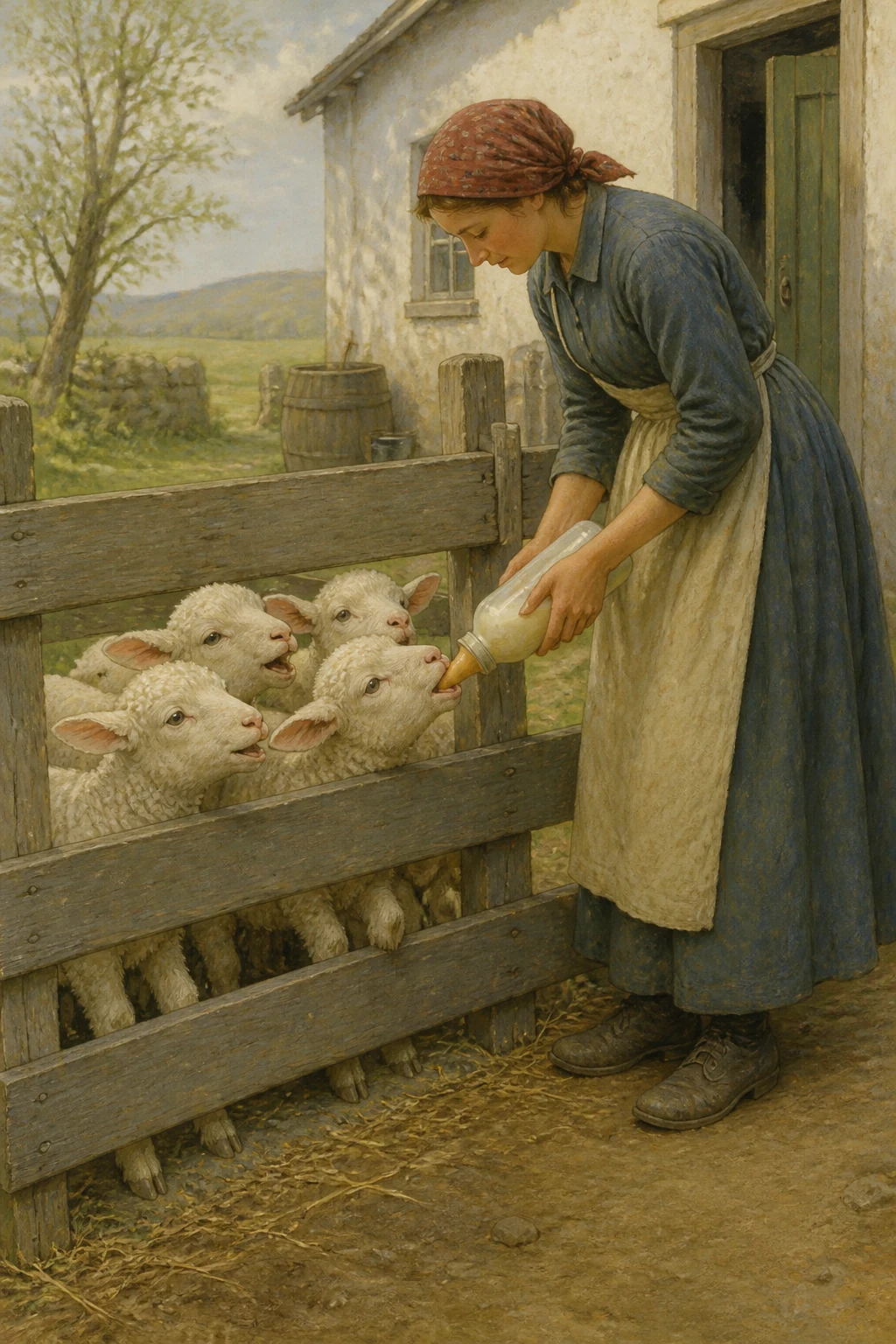
Da, Ovce jedo travo, in ker imajo tako drobne gobčke, lahko odgriznejo le majhne grižljaje. Jagnjeta pa imajo nekaj časa drugačno hrano — toplo mleko iz materinega telesa. Kadar mora mati hraniti Jagnje, veliko jé: seno, travo in nasekljano repo. Del hrane, ki pride v njen želodec, se nato spremeni v mleko in se nabere v dveh toplih mešičkih, od koder ga Jagnje sesa, kadar je lačno. In kako rada imajo Jagnjeta to mleko! Tako dobro jim tekne, da med pitjem komaj stojijo pri miru; smešno poskakujejo in mahajo z volnatimi repki po zraku.
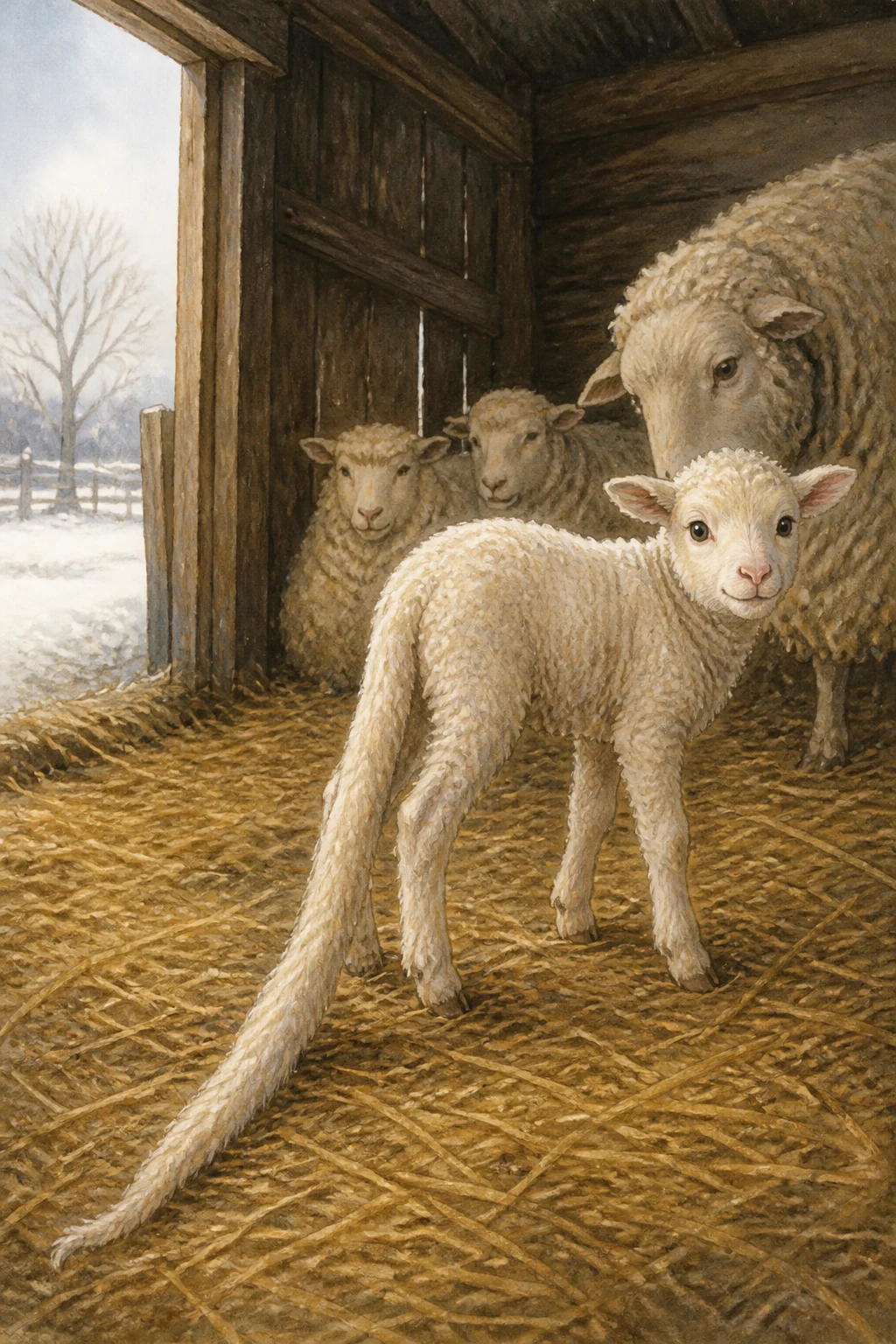
Neki Jagenjček je imel daljši rep od vseh drugih in, žal, zaradi tega je postal precej nečimrn. Ko je prišel na svet, je bil preveč zaposlen s pitjem mleka in učenjem hoje, da bi razmišljal o repih, ko pa je postajal starejši in močnejši, je začel opažati, da ima najdaljšega. Ker je bil še zelo mlad Jagenjček, je bil tako nespameten, da je dražil druge in jim klical: »Bee! Vaši repki so pa čisto kratki!«
Drugi pa so mu odgovarjali: »Bee! Pa kaj potem!« Čez čas mu je njegova mati, ki je bila razumna Ovca in je v življenju že marsikaj videla, rekla: »Ne smeš se bahati s svojim repom. To je zelo nevljudno od tebe, pa tudi zelo neumno, saj imaš natanko tak rep, kakršnega si dobil, druga Jagnjeta pa imajo natanko take repe, kakršne so dobila ona. Ko boš starejši, boš vedel, da ni bilo niti najmanj pomembno, kakšen rep si imel kot majhen.« Lahko bi mu povedala še nekaj, pa mu ni.
Po tistem se Jagenjček ni več upal bahati s svojim repom, kadar pa je šel mimo drugih, je pogledal proti materi in, če je mislil, da ga ne bo videla, pred njimi pomigal z njim. Seveda to ni bilo nič boljše, kakor če bi se bahal na glas, in druga Jagnjeta so prav dobro vedela, kaj hoče povedati; vseeno pa so se delala, da ne razumejo.
Nekega jutra, ko je bila mati obrnjena stran od njega, je presenečen opazil, da ima le kratek, štrcljast rep. Toliko je razmišljal o svojem, da njenega sploh ni opazil. »Mama,« je vzkliknil, »zakaj pa ti nisi imela dolgega repa?«
»Nekoč sem ga imela,« je odgovorila z zadregljivim nasmehom. »Se ti je odlomil?« je vprašal s tihim glaskom. Pomislil je, kako strašno bi bilo, če bi se odlomil njegov.
»Ne ravno,« je rekla mati. »Vse ti bom povedala. Vsa mala Jagnjeta imajo dolge repe —« »Ampak ne tako dolgih kot jaz,« ji je segel v besedo.
»Ne, ne tako dolgih kot ti,« je odvrnila, »vendar dovolj dolge, da bi jim povzročali veliko težav, če bi za vedno ostali takšni. Ko na njih raste volna, bi se vanjo zapletali repinci in ostre, bodeče reči, ki bi cukale volno in zbadale kožo. Kmet to ve, zato Jagnjetom, ko so približno toliko stara kot ti zdaj, skupaj s svojimi možmi skrajša repe.«
»Oh!« je vzkliknil Jagenjček in si rep spodvil med noge, kolikor je le mogel. »Hočeš reči, da bodo skrajšali moj rep, moj lepi dolgi rep?«
»Prav to hočem reči,« je rekla mati, »in tega bi moral biti zelo vesel. Ko bo to opravljeno, boš pripravljen, da greš z menoj na pašo. Koliko težav bi imeli, če ljudje ne bi skrbeli za takšne reči namesto nas! Ampak pravijo, da so ljudje prav zato na svetu — da skrbijo za nas Ovce.«
»Pa se mi ne bodo smejali, ko bo moj rep krajši?« je vprašal njen sin. »Smejali bi se ti, če bi imel dolgega. Nobeno Jagnje, ki da kaj nase, se ne bi pokazalo na pašniku z bingljajočim repom. Le divje Ovce imajo dolge, ubožice!«
Zdaj si je mali Jagenjček želel, da se ne bi bil toliko bahal. Zdaj se ni več nosil, kadar so šli drugi mimo njega. Zdaj se je spraševal, zakaj ne bi mogli imeti kratkih repov že od vsega začetka. Svojega strica, starega skopljenega Ovna, je vprašal, zakaj je tako, in stric se je zasmejal. »No, kaj pa bi potem počel vse te dni, če bi bilo tako? O čem bi razmišljal? O čem bi se lahko pogovarjal?« Mali Jagenjček je povesil glavo in ni več spraševal.
»Veste kaj?« je zaklical skupinici Jagnjet v bližini. »Enemu od mož bom dal skrajšati rep. Toliko sitnosti je z njim, če si ga ne daš skrajšati, moj pa je tako zelo dolg!«
Izvirnik
002 THE LAMB WITH THE LONGEST TAIL
Naslednje strani prikazujejo izvirno besedilo za primerjavo.
The Sheep are a simple and kind-hearted family, and of all the people on the farm there are none who are more loved than they. All summer they wander in the fields, nibbling the fresh, sweet grass, and resting at noon in the shadow of the trees, but when the cold weather comes they are brought up to the farmyard and make their home in the long low Sheep-shed.
That is always a happy time. The Horses breathe deeply and toss their heads for joy, the Cows say to each other, "Glad to have the Sheep come up," and even the Oxen shift their cuds and look long over their shoulders at the woolly newcomers. And this is not because the Sheep can do anything for their neighbors to make them warm or to feed them. It is only because they are a gentle folk and pleasant in all they say; and you know when people are always kind, it makes others happy just to see them and have them near.
Then, when the cold March winds are blowing, the good farmer brings more yellow straw into the Sheep-shed, and sees that it is warm and snug. If there are any boards broken and letting the wind in, he mends them and shuts out the cold. At this time, too, the Horses and Cattle stop often in their eating to listen. Even the Pigs, who do not think much about their neighbors, root in the corners nearest the Sheep-shed and prick up their ears.
Some bleak morning they hear a faint bleating and know that the first Lamb is there. And then from day to day they hear more of the soft voices as the new Lambs come to live with the flock. Such queer little creatures as the Lambs are when they first come--so weak and awkward! They can hardly stand alone, and stagger and wobble around the little rooms or pens where they are with their mothers. You can just imagine how hard it must be to learn to manage four legs all at once!
There is one thing which they do learn very quickly, and that is, to eat. They are hungry little people, and well they may be, for they have much growing to do, and all of the food that is to be made into good stout bodies and fine long wool has to go into their mouths and down their throats to their stomachs. It is very wonderful to think that a Cow eats grass and it is turned into hair to keep her warm, a Goose eats grass and grows feathers, and a Sheep eats grass and grows wool. Still, it is so, and nobody in the world can tell why. It is just one of the things that are, and if you should ask "Why?" nobody could tell you the reason. There are many such things which we cannot understand, but there are many more which we can, so it would be very foolish for us to mind when there is no answer to our "Why?"
Yes, Sheep eat grass, and because they have such tiny mouths they have to take small mouthfuls. The Lambs have different food for a while,--warm milk from their mothers' bodies. When a mother has a Lamb to feed, she eats a great deal, hay, grass, and chopped turnips, and then part of the food that goes into her stomach is turned into milk and stored in two warm bags for the Lamb to take when he is hungry. And how the Lambs do like this milk! It tastes so good that they can hardly stand still while they drink it down, and they give funny little jerks and wave their woolly tails in the air.
There was one Lamb who had a longer tail than any of the rest, and, sad to say, it made him rather vain. When he first came, he was too busy drinking milk and learning to walk, to think about tails, but as he grew older and stronger he began to know that he had the longest one. Because he was a very young Lamb he was so foolish as to tease the others and call out, "Baa! your tails are snippy ones!"
Then the others would call back, "Baa! Don't care if they are!"
After a while, his mother, who was a sensible Sheep and had seen much of life, said to him: "You must not brag about your tail. It is very rude of you, and very silly too, for you have exactly such a tail as was given to you, and the other Lambs have exactly such tails as were given to them, and when you are older you will know that it did not matter in the least what kind of tail you wore when you were little." She might have told him something else, but she didn't.
The Lamb didn't dare to boast of his tail after this, but when he passed the others, he would look at his mother, and if he thought she wouldn't see, he would wiggle it at them. Of course that was just as bad as talking about it, and the other Lambs knew perfectly well what he meant; still, they pretended not to understand.
One morning, when his mother's back was turned, he was surprised to see that she had only a short and stumpy tail. He had been thinking so much of his own that he had not noticed hers. "Mother," he cried, "why didn't you have a long tail too?"
"I did have once," she answered with a sheepish smile.
"Did it get broken?" he asked in a faint little voice. He was thinking how dreadful it would be if he should break his.
"Not exactly," said his mother. "I will tell you all about it. All little Lambs have long tails----"
"Not so long as mine, though," said he, interrupting.
"No, not so long as yours," she replied, "but so long that if they were left that way always they would make a great deal of trouble. As the wool grows on them, they would catch burrs and sharp, prickly things, which would pull the wool and sting the skin. The farmer knows this, so when the little Lambs are about as old as you are now, he and his men make their tails shorter."
"Oh!" cried the Lamb, curling his tail in as far between his legs as he could, "do you mean that they will shorten my tail, my beautiful long tail?"
"That is just what I mean," said his mother, "and you should be very glad of it. When that is done, you will be ready to go out into the field with me. A lot of trouble we should have if the men did not look after such things for us; but that is what men are for, they say,--to look after us Sheep."
"But won't they laugh at me when my tail is shorter?" asked her son.
"They would laugh at you if you wore it long. No Lamb who pretends to be anybody would be seen in the pasture with a dangling tail. Only wild Sheep wear them long, poor things!"
Now the little Lamb wished that he had not boasted so much. Now, when the others passed him, he did not put on airs. Now he wondered why they couldn't have short tails in the beginning. He asked his uncle, an old Wether Sheep, why this was and his uncle laughed. "Why, what would you have done all these days if things happened in that way? What would you have had to think about? What could you have talked about?" The little Lamb hung his head and asked no more questions.
"What do you think?" he called to a group of Lambs near by. "I'm going to have one of the men shorten my tail. It is such a bother unless one does have it done, and mine is so very long!"
Nadaljuj z branjem