Waltey
Očetova prisega
Srpske narodne pripovijetke · Vuk Stefanović KaradžićO besedilu
Očetova prisega
- Vir
- Srpske narodne pripovijetke
- Avtor
- Vuk Stefanović Karadžić
- Jezik branja
- English
- Jezik izvirnika
- Српски
- Čas branja
- 8 min branja
- Obseg
- 6 strani
- Naslov izvirnika
- 017 Очина заклетва
O izvirniku
Srpske narodne pripovijetke
Srbske ljudske pripovedi o junakih, čudežnih bitjih, preizkušnjah in ljudski modrosti. Bralni jezik je English, izvirnik pa prihaja iz vira Srpske narodne pripovijetke v jeziku Српски.
Besedilo
Očetova prisega
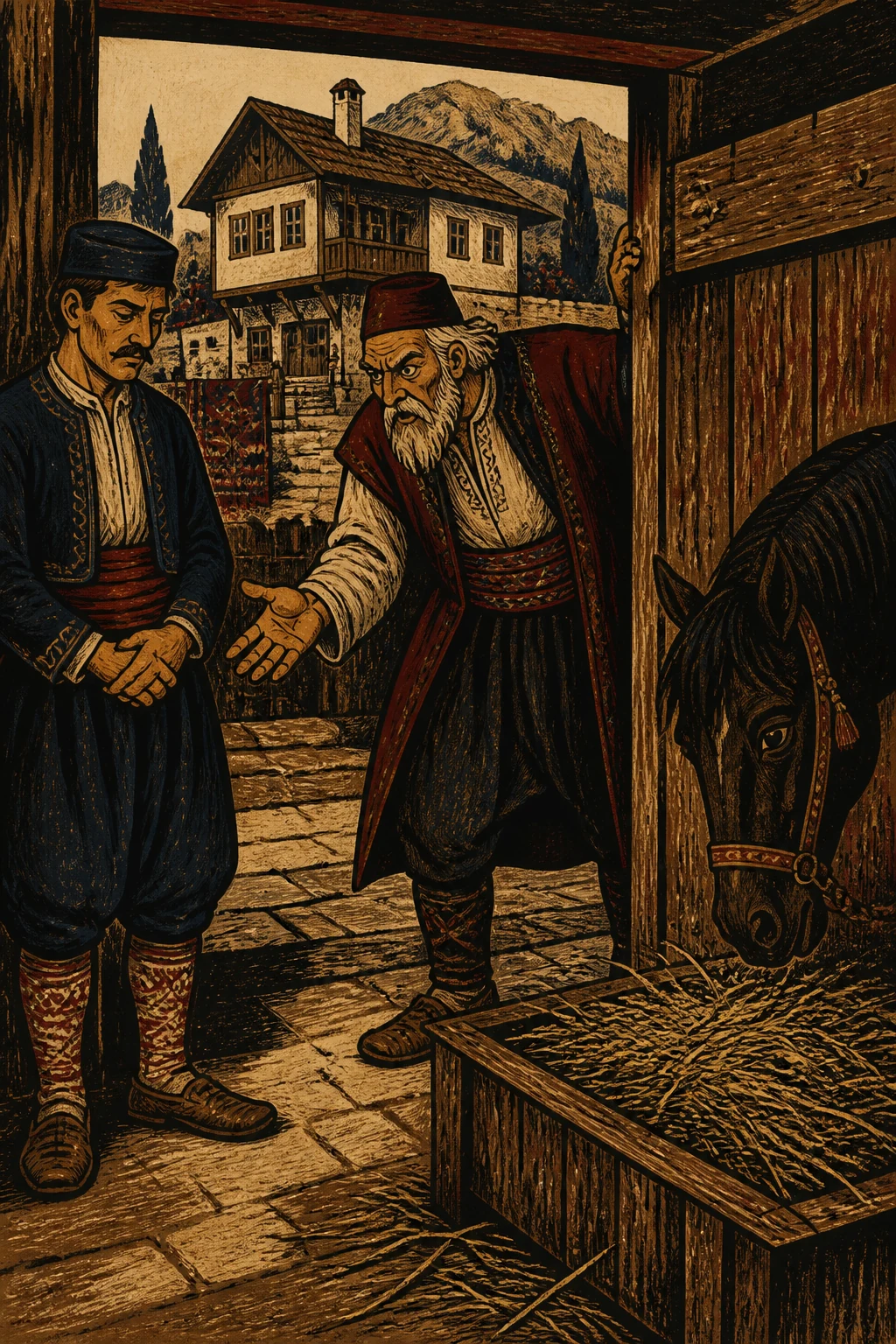
There was once an old man who had three sons and a daughter. When the time came for him to die, he called all three sons to his side and made them swear to give their sister in marriage to the first man who came to ask for her, whoever he might be. Some time after their father’s death, an old man arrived in a two-wheeled cart and asked for the girl’s hand. The two elder brothers were unwilling to give her to him at once, for he was old and poor, but the youngest insisted, reminding them of the oath they had sworn to their dying father. And so they gave her to the old man, and he took her home. After a while, the eldest brother went to visit his sister and found her living in a splendid great house, as fine as any could be. His sister was overjoyed to see him, and when he asked how she was faring, she answered, “Well—nothing could be better.” The old man was not at home when her brother arrived, but he soon returned and was delighted to see his brother-in-law. “We shall feast and make merry,” he said, “but first you must ride my horse and fetch him some grass. Cut it where the horse paws the ground, not wherever you please.” “Very well, brother-in-law, I shall,” the brother replied. Then he mounted the horse and rode away. In time he came to a silver bridge. When he saw that the whole bridge was made of silver, greed overcame him, and he dismounted and pried up a silver plank, saying, “This will help me along.” Then he cut grass wherever he pleased, without waiting for the horse to paw the ground, mounted again, and rode back. When he reached the house, he put the horse in the stable, laid the grass before him, and went indoors. The old man asked whether he had seen to the horse and whether the horse was eating, and he answered that he had, and that the horse was eating. “Good, let me see for myself,” said the old man. He went out to the stable and found that the horse had not touched the grass. The old man knew that it had not been cut where he had instructed, so he sent his brother-in-law straight back where he had come from, without entertaining him. When the brother arrived home, he did not tell the others how he had fared, but said to the middle brother, “Our brother-in-law sends his greetings and asks you to visit him too.” After a while, the middle brother went to see his sister, but he fared just as the eldest had. His brother-in-law sent him out for grass with the same instructions, but when he came to the silver bridge, he too was overcome by greed and pried up a silver plank. Nor did he cut the grass as he had been told, but wherever he pleased. When he returned to his brother-in-law’s house, he too was caught in a lie and sent home without being entertained, just like the first. Once home, he told no one how he had fared, but said to the youngest brother, “Our brother-in-law sends his greetings and asks you to visit him.” After a while, the youngest brother went as well. His sister was overjoyed to see him, but said, “Only, dear brother, do not do as our brothers did.” He did not know what they had done, and his sister would tell him no more than that. When her husband came home, he too was delighted to see his brother-in-law and said, “We shall feast and make merry, but first ride my horse and fetch him some grass. Cut it where the horse paws the ground, not wherever you please.” The young man mounted the horse and rode off to fetch the grass. When he came to the bridge, he marvelled at its beauty, but was truly sorry that the two planks were missing. When he reached the middle, he looked over on either side and saw beneath it a great cauldron of boiling water, with human heads seething inside it and eagles tearing at them from above. After crossing the bridge, he came to a village, and as he passed through it, he heard singing and merriment on every side. Amazed that the whole village should be singing and rejoicing, he asked one of the villagers, “How is it, my friend, that everyone here is so merry?” The man answered, “Why should we not be, when every year brings a good harvest and we have everything in abundance?” Beyond the village, he came upon two bitches fighting ceaselessly in the road. He tried to part them, but when he could not, he gave up and went on. In time he came to another village, and as he passed through it, he saw sorrow and weeping everywhere. He said to one of the villagers, “I passed through a village where everyone was merry. Why is everyone here so sorrowful?” The villager answered, “How could we be otherwise, when hail strikes us every year and leaves us with nothing?” Beyond that village, he came upon two rams butting each other without cease. He tried to part them, but in vain, and, finding he could not, he left them and went on. At last the horse brought him to a beautiful meadow. In the middle of it, the horse stopped and pawed the ground. The young man jumped down, cut the grass, and set off home again. When he arrived, he led the horse into the stable and laid the grass before him, and the horse began eating at once. His brother-in-law was delighted to see that he had tended the horse properly. “You are a true brother-in-law to me,” he said. “Now we shall make merry and feast.” They sat down at the table and began their supper. As they ate, the old man said, “Now tell me what you saw.” The young man answered, “Oh, brother-in-law, there is no telling all I saw. First I saw a very beautiful silver bridge, but it was marred by two missing planks. May the living God strike down whoever took them!” The old man replied, “Your brothers stole those. As they behaved, so they were treated. But tell me what else you saw.” The young man answered, “Beneath the middle of the bridge I saw a great boiling cauldron, with dead men’s heads inside it and eagles tearing at them from above.” His brother-in-law said, “Such is the eternal torment of the next world. What else did you see?” The young man went on, “I saw a village where everyone was merry.” His brother-in-law said, “Those people live as God would have them. They welcome everyone gladly and offer them hospitality, and never turn the poor away from their doors empty-handed. Tell me what else you saw.” The young man continued, “I saw two bitches fighting ceaselessly in the road.” His brother-in-law said, “Those are two women married to brothers. What else did you see?” The young man answered, “I saw another village, where everyone was unhappy.” The old man said, “There is neither justice nor harmony there, and they have no regard for God. What else did you see?” The young man answered, “I saw two rams butting each other without cease.” His brother-in-law said, “Those are brothers who do not live in peace. Tell me what else you saw.” The young man said, “I saw a beautiful meadow. I could have stayed there three days, gazing at its beauty.” His brother-in-law replied, “Such is paradise in the next world, but it is hard to reach.” After that they spent many more days feasting and making merry. At last the young man rose to go home, and his brother-in-law sent him off in fine style with a rich gift, telling him that he had known him at once for an honest man, because he had insisted that their father’s dying wish be fulfilled, and that he would be fortunate, while his brothers would be unfortunate.
Izvirnik
017 Очина заклетва
Naslednje strani prikazujejo izvirno besedilo za primerjavo.
Био један старац па имао три сина и једну кћер. Кад дође време да старац умре, он дозове своја сва три сина па их закуне да сестру даду првоме ко дође да је проси, макар ко био. Кад по смрти очиној прође неко време, дође један старац на двоколицама те запроси девојку. Два старија брата не хтедну му је одмах дати, где је стар и сиромах, али најмлађи навали да је даду опомињући их очине заклетве на самрти. И тако је даду за старца и старац је одведе својој кући. После некога времена отиде најстарији брат сестри у походе, кад тамо, а то кућа велика не може боља бити. Сестра се врло обрадује кад види брата, и кад је брат запита како живи, она му одговори: "Добро, не може боље бити." Кад је брат сестри дошао, старца није било код куће, али мало час дође и он, и врло му мило буде кад види шуру па му рече: "Частићемо се и веселити, само најпре да идеш на моме коњу да му донесеш траве, али онде да накосиш где коњ закопа ногом, а не где је теби воља." Шура му рече: "Добро, зете, хоћу." Па онда узјаше на коња и отиде. Идући тако дође на сребрну ћуприју; кад сагледа ћуприју и види да је сва од сребра, полако ми се, па сјаше с коња, те истргне једну сребрну талпу говорећи: "Могу се помоћи." По том накоси траве где је њему воља била не чекајући докле коњ ногом: закопа, па узјаше опет на коња и врати се натраг. Дошавши кући намести коња у коњушницу, и метне траву предањ, па отиде у кућу. Кад дође у кућу, старац га запита јели намирио коња и једе ли коњ траву, а он одговори да јесте и да једе. Онда старац рече: "Добро, да видим и ја." Па изиђе у коњушницу, кад тамо, а коњ није ни такао. Старац позна да трава није накошена онако као што је он казао; за то одмах испрати шуру неугошћена да иде од куда је и дошао. Онај дошавши кући не каже браћи својој како је код зета прошао, него рекне средњему брату: "Поздравио те зет да му и ти идеш у госте." После некога времена отиде средњи брат сестри у походе; али и он прође као и онај први: и њега пошље зет онако по траву, а он кад дође на сребрну ћуприју полакоми се као и онај, те истргне једну сребрну талпу, и не накоси траве као што му је зет рекао, него по својој вољи. Кад се врати к зетовој кући, зет и њега ухвати у лажи, и пошаље кући неугошћена као и првога. Кад и он дође кући, не каже никоме како је прошао код зета, него рекне најмлађему брату: "Поздравио те зет да му идеш у госте." После некога времена отиде и најмлађи брат, сестра кад га угледа, врло се обрадује, па му рече: "Само, брате, немој да учиниш као што су наша браћа учинила." Он није знао шта су они учинили, а ни сестра му није хтела више ништа казати до само то. Кад дође зет кући, и он се шури врло обрадује, па му рече: "Частићемо се и веселити, само иди најпре на моме коњу те му донеси траве, али где коњ ногом закопа онде да накосиш, а не где је теби воља." Он узјаше на коња и отиде по траву. Кад дође на ону ћуприју зачуди се њеној красоти, али му чисто жао буде што јој нема и оних двеју талпи, па кад дође на среду, погледа и с једне и с друге стране, и види испод ње где у једноме великом казану кључа вода, и у њој се кувају људске главе, а орлови их одозго чупају. За тим прешавши преко ћуприје дође у једно село, и пролазећи крозањ чује са свију страна певанку и весеље, па се зачуди где све село пева и весели се, те запита једнога: "Како је то, брате, у вас све весело?" А онај му одговори: "За што не би било, кад нам је свака година родна и свега имамо изобила." Кад изиђе иза села, нађе на путу две кучке где се кољу једнако; па их стане развађати, али не могавши их развадити, окани се и отиде даље. Идући тако дође у друго село и пролазећи крозањ види где је у њему све жалосно и плачно, па рече једноме: "Ја прођох кроз једно село, и видех све весело, а за што је у вас све тако жалосно?" Сељак му одговори: "Како не ће бити жалосно, кад нас туча туче сваке године, па немамо ништа." Кад изиђе иза онога села, нађе два бравца а они се једнако косе. Он их стане развађати, али залуду, и не могавши их развадити, остави их и пође даље. Најпосле га коњ донесе на једну прекрасну ливаду. Кад буду насред ливаде, коњ стане па закопа ногом, а он скочи с коња и накоси траве, па се врне натраг кући. Кад дође кући, уведе коња у коњушницу, па му положи траву и коњ одмах стане јести. Зет кад види да му је шура коња намирио, врло му буде мило, па му рече: "Ти си мој шура; сад ћемо се веселити и гостити." Па онда седну за трпезу и стану вечерати. За вечером рече му старац: "Сад да ми кажеш шта си видео?" А он му одговори: "О мој зете, исказати се не може шта сам видео. Прво сам видео сребрну ћуприју врло лепу, али је нагрђена где јој нема двеју талпи. Ко оно узе, убио га живи Бог!" Старац му на то рекне: "Оно су твоја браћа украла; како су чинили онако су и прошли. Него ми казуј шта си друго видео?" Шура одговори: "На среди под ћупријом видео сам велики казан где кључа, и у њему главе мртвачке а одозго их орлови чупају." На то зет рече: "Онака је вечна мука на ономе свету. Шта си још видео?" Шура настави даље: "Видео сам село све весело." Зет му на то рече: "Оно су људи Богу по вољи; свакога радо дочекају и угосте и сиромаха не терају празна испред својих кућа. Казуј шта си још видео." А шура му даље каже: "Видео сам на путу две кучке где се једнако кољу." Зет на то: "Оно су две јетрве. Шта си још видео?" Шура одговори: "Видео сам друго село и у њему све невесело." Старац му рече: "Онде нема никакве правде и никакве слоге нити знаду за Бога. Шта си још видео?" Шура одговори: "Видео сам два брава где се једнако косе." На то зет: "Оно су браћа која се добро не живе. Казуј шта си још видео." Шура му рече: "Видео сам прекрасну ливаду. Онде бих ти стајао три дана да се оне красоте нагледим." На то зет рече: "Онаки је рај онога света; али је тешко до њега доћи." – После тога још су се дуго дана гостили и веселили. Најпосле се шура дигне да иде кући, а зет га лепо оправи са великим даром и рече му да га је одмах познао да је поштен човек, што је навалио да се испуни очина заклетва, и да ће бити сретан а браћа његова несретна.
Nadaljuj z branjem