Waltey
Zasledovanje in Apsirtova smrt
Argonavtika · Apolonij RodoškiO besedilu
Zasledovanje in Apsirtova smrt
- Vir
- Argonavtika
- Avtor
- Apolonij Rodoški
- Jezik branja
- English
- Jezik izvirnika
- Ancient Greek
- Čas branja
- 16 min branja
- Obseg
- 13 strani
- Naslov izvirnika
- The Pursuit and Death of Apsyrtus
O izvirniku
Argonavtika
Morska odprava za zlatim runom, med junaštvom, čarovnijo in Medejino odločitvijo. Bralni jezik je English, izvirnik pa prihaja iz vira Argonavtika v jeziku Ancient Greek.
Besedilo
Zasledovanje in Apsirtova smrt
By now Medea’s love and all she had done were known to proud Aeetes and all the Colchians. They gathered in the assembly place under arms, as countless as the waves that rise before the wind on a stormy sea, or the leaves that fall to earth from a branching forest in the month of falling leaves—who could number them? corrected diacritic error (δέ) in the source text.
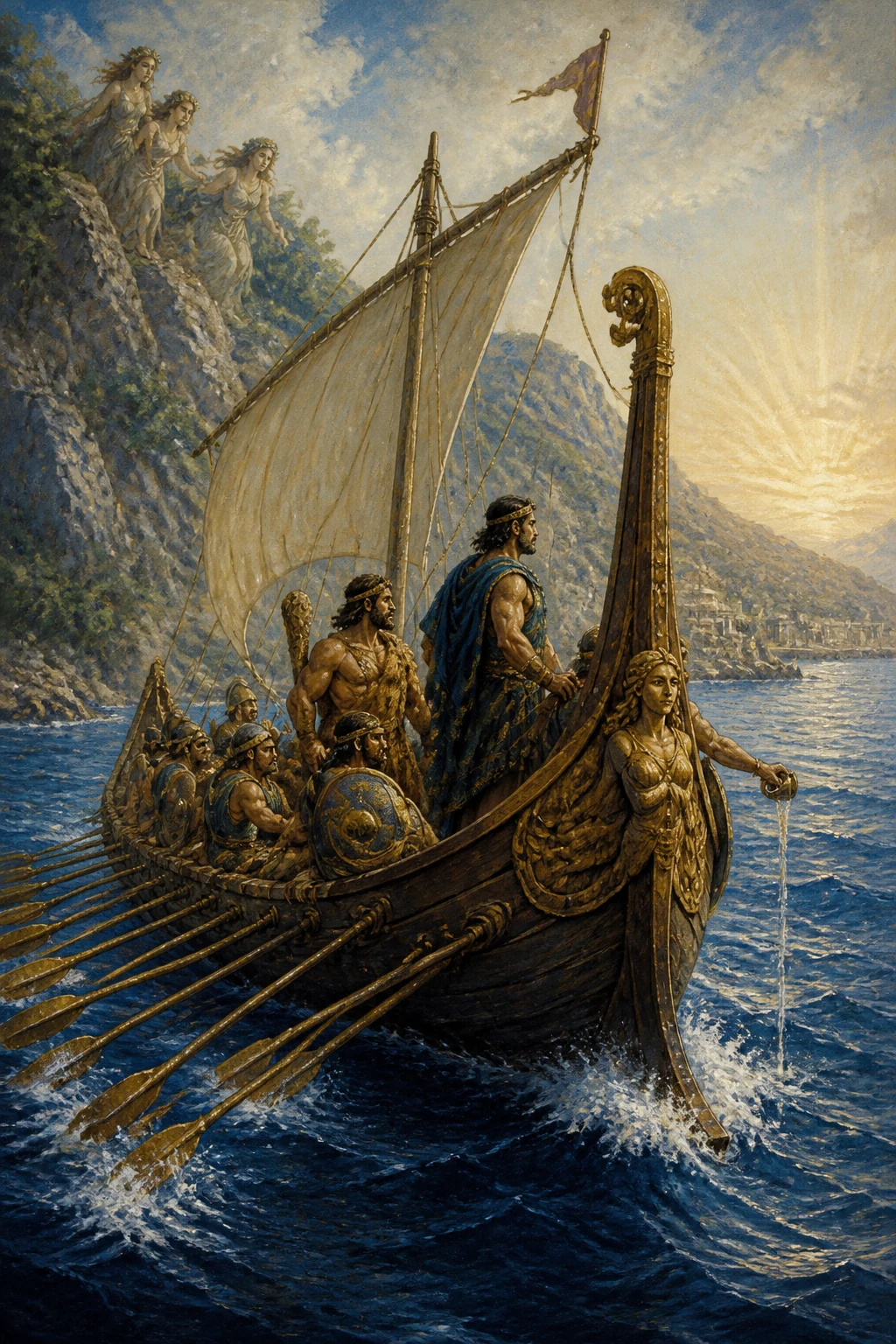
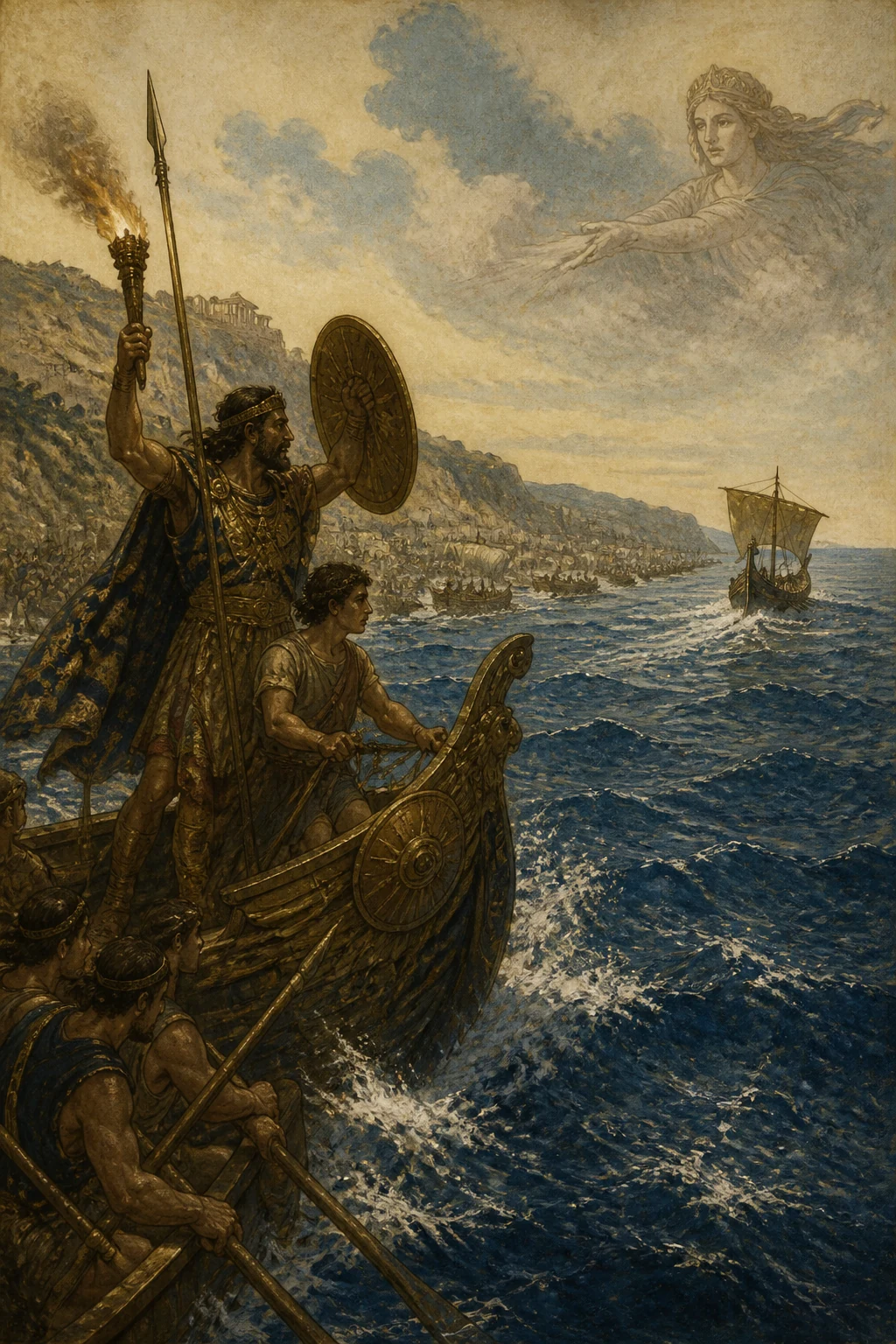
So their endless ranks streamed along the riverbanks, clamoring in their fury. Among them Aeetes stood out in his well-built chariot, drawn by the horses the Sun had given him, swift as the blowing wind. In his left hand he raised a rounded shield, and in the other a towering pine torch; beside him his enormous spear stretched straight before him. Apsyrtus held the horses’ reins in his hands. But far ahead the ship was already cleaving the sea, driven onward by her mighty oarsmen and the descending current of the great river.
The king lifted his hands in the anguish of his ruin and called upon the Sun and Zeus to witness these wicked deeds. Terribly he shouted to all his people that, unless they found his daughter, whether on land or aboard the ship still sailing the swelling sea, and brought her back into his hands, so that he might glut his heart with vengeance for all these wrongs, they would learn at the cost of their own heads what his wrath could do, and bear the full burden of his calamity.
So spoke Aeetes. That very day the Colchians hauled their ships down, put their tackle aboard, and sailed out to sea. You would have thought it not so much a fleet of ships as a boundless host of birds, flock upon flock, clamoring over the waters.
Meanwhile, a brisk wind blew for the heroes at the bidding of the goddess Hera, so that Medea of Aea might reach the Pelasgian land as swiftly as possible, to bring destruction upon the house of Pelias. On the third morning they made fast their ship’s stern cables on the Paphlagonian coast, before the river Halys.
For Medea had urged them to go ashore and appease Hecate with sacrifices. But what rites the maiden devised as she prepared the offering—let no one learn of them, nor let my heart urge me to sing them.
Awe forbids me to speak. Yet the shrine the heroes built for the goddess on the shore has remained ever since, for later generations to see even now. Then the son of Aeson, and the other heroes with him, remembered Phineus, who had said that their voyage from Aea would follow another course; but none of them knew that way. As they longed to learn it, Argus spoke: “We shall reach Orchomenus by the route that the unerring prophet you met before foretold you must follow.
“For there is another passage, made known by the priests of the immortals who come from Tritonian Thebes. Not all the stars that wheel in heaven yet existed, nor had anyone inquiring heard of the sacred race of the Danaans. Only the Apidanian Arcadians lived then—the Arcadians, who are said to have lived even before the moon, feeding on acorns in the mountains. Nor was the Pelasgian land yet ruled by the glorious sons of Deucalion, when Aeria was already renowned for its rich harvests—Egypt, mother of men born in the earliest ages—and the fair-flowing river Triton, which waters all Aeria. No rain from Zeus ever drenches it; yet its fields yield abundant grain through the river’s flooding.
“From there, they say, a certain man traveled throughout Europe and Asia, trusting in the strength and might and courage of his people. As he went he founded countless cities, some still inhabited, others perhaps no longer so; for a vast stretch of time has passed since then.
“But Aea still stands to this day, and the descendants of those men whom he settled there remain. They preserve their fathers’ written records, tablets on which are marked all the roads and the boundaries of land and water for those who journey around the world.
“There is a river, the farthest horn of Ocean, broad and deep enough for a merchant ship to sail upon. Men have traced it far inland and call it the Ister. For a long way it cuts alone, in a single stream, through a boundless country; its springs murmur far away in the Rhipaean mountains, beyond the blasts of the north wind.
“But when it reaches the borders of the Thracians and Scythians, it divides: one branch pours its waters here into the eastern sea, while the other flows in the opposite direction into a deep gulf opening from the Trinacrian Sea, which lies beside your own country—if indeed the Achelous rises in your land.”
So he spoke, and the goddess granted them a favorable sign. At the sight of it they all acclaimed that route and agreed to take it. For a trail of heavenly light stretched out before them in the very direction they were to travel.
Joyfully they left Lycus’s son there and sailed over the sea with their canvas spread, gazing at the mountains of Paphlagonia. They did not round Carambis, for the winds and the gleam of the heavenly fire held steady until they reached the great stream of the Ister.
Meanwhile, some of the Colchians, searching in vain, passed out of the Pontus through the Cyanean Rocks. Others followed the river under Apsyrtus’s command, turning aside to enter by the Fair Mouth.
Thus he outstripped the heroes and, crossing the neck of land, reached the innermost gulf of the Ionian Sea before them. For an island called Peuce lies enclosed by the Ister, triangular in shape, with its broad end facing the seashore and its narrow point upstream. Two mouths divide around it: one is called the Mouth of Narex, and the other, farther down, the Fair Mouth. Through this Apsyrtus and the Colchians hurried more swiftly, while the heroes sailed far away along the island’s uppermost end. The shepherds in the fields abandoned their countless flocks in the water meadows, terrified by the ships, which they took for beasts rising from the sea with all its mighty monsters.
For never before had they seen seagoing ships—not the Scythians mingled with the Thracians, nor the Sigynni, nor the Graucenii, nor the Sindi who by then inhabited the vast, deserted plain of Laurium.
But when the heroes had passed Mount Angurum, and the crag of Cauliacus far from Mount Angurum, around which the Ister divides its stream and sends it into the sea on either side, and had passed the Laurian plain, they found that the Colchians had already come out into the Cronian Sea and blocked every passage, so that they could not slip through unseen.
Following behind, they descended the river and sailed out toward two nearby islands sacred to Brygean Artemis. On one stood her holy temple; on the other they landed, wary of Apsyrtus’s host. For out of reverence for the daughter of Zeus the Colchians had left these islands, alone among the many, unoccupied. The others were crowded with Colchians guarding the sea passages.
Apsyrtus had also stationed great numbers on the mainland near the islands, as far as the river Salangon and the land of Nestis. There the Minyans, few against so many, would have succumbed in a disastrous battle. But first, to avoid a mighty conflict, they made an agreement: the heroes should keep the golden fleece as their rightful possession, since Aeetes himself had promised it to them if they accomplished the trials, whether they had taken it by guile or openly against his will. Medea, however—for she was the matter in dispute—should be placed apart from the company in the keeping of Leto’s daughter, until some king who administered justice should decide whether she must return to her father’s house or follow the heroes to the land of Greece.
When the maiden had weighed every part of this agreement in her mind, sharp anguish shook her heart without respite. At once she called Jason out alone from among his comrades and led him aside until they were far away. Then, face to face, she spoke in grief: “Son of Aeson, what is this plan you have made concerning me? Has your triumph made you utterly forgetful? Do you care nothing for all you said when you were trapped by need? Where are your oaths by Zeus, protector of suppliants? Where have your honeyed promises gone?
“Trusting in them, I shamelessly and against all decency abandoned my country, the glory of my home, and my own parents, who were dearest of all to me. Now, far away and alone, I am borne over the sea with the sorrowing kingfishers, all for the sake of your trials, so that you might survive and accomplish your tasks with the bulls and the earthborn men.
“Last of all, when the fleece’s hiding place was known, you took it through my folly, and I poured dreadful shame upon all womankind. That is why I say I follow you to the land of Greece as your daughter, your wife, your own sister.
“Now stand resolutely by me in every way. Do not leave me alone, far from you, while you go visiting kings. Defend me yourself. Let the justice and the law we both accepted stand firm—or else take your sword at once and cut straight through this throat, so that I may receive the fitting reward for my madness.
“Wretched that I am, if the king to whom you have both entrusted this cruel agreement should judge that I belong to my brother! How shall I face my father’s eyes? With glory, no doubt! What punishment, what grievous calamity shall I not suffer in misery for the dreadful things I have done? And are you to win a happy homecoming?
“May the all-sovereign wife of Zeus, in whom you glory, never bring that to pass. And may you one day remember me, corrected diacritic error (δέ) in the source text. when you are wrung with suffering. May your fleece vanish like a dream into darkness, all to no purpose. May my Furies drive you at once from your country, as I myself have suffered through your cruelty. These curses must not fall unfulfilled to the earth. For you have broken a mighty oath, pitiless man. Yet you shall not long sit at ease, mocking me because of these agreements.”
So she spoke, seething with bitter anger. She longed to burn the ship, shatter all its tackle, and fling herself into the raging flames. Alarmed, Jason answered her with gentle words: “Restrain yourself, unhappy girl. These arrangements please me no more than they please you.
“But we are seeking some respite from battle, so vast a cloud of hostile men has gathered around us on your account. All who dwell in this country are eager to help Apsyrtus, so that they may carry you home again to your father as though you had been taken captive.
“If we join battle, we shall all perish in a hateful death; and it will be still more bitter grief for you if we die and leave you as their prey. But this agreement will serve a trick by which we shall bring him to ruin. The people here will not so readily oppose us and favor the Colchians in their struggle over you once they lack their leader, who is both your champion and your brother. Nor shall I shrink from fighting the Colchians openly if they refuse to let me pass.”
So he spoke to soothe her, and she answered with deadly words: “Then consider this. Since I first went astray in my folly and, driven by a god, fulfilled my wicked purposes, I must devise this too, to crown my shameful deeds.
“You must ward off the Colchians’ spears in battle; I will beguile him into coming into your hands. Welcome him with splendid gifts. If only I can persuade the heralds, when they leave, to bring him alone to hear my words in private! Then, if this deed pleases you, I shall not begrudge it: kill him, and raise war against the Colchians.”
Thus the two agreed and prepared a mighty deception for Apsyrtus. They offered him many gifts of friendship, and among them the sacred crimson robe of Hypsipyle. The divine Graces themselves had woven it for Dionysus on sea-girt Dia. Later he gave it to his son Thoas, who in turn left it to Hypsipyle; and she gave it to the son of Aeson among many beautiful treasures, a finely wrought gift of hospitality to take away with him. Neither touching it nor gazing upon it could ever sate one’s sweet desire.
And an immortal fragrance had clung to it ever since the lord of Nysa himself lay upon it—ἐγκατελεκτο corrected diacritic error (ἐγκατελεκτο) in the source text.
—flushed with wine and nectar, clasping the lovely breast of Minos’s daughter, whom Theseus had once brought from Cnossus and abandoned on the island of Dia. Medea charged the heralds with a message to beguile her brother: as soon as he came to the goddess’s temple in accordance with their agreement, and the black darkness of night had fallen, he was to meet her so that she might help him devise a plan to take the great golden fleece and return with it to Aeetes’s house. For, she said, the sons of Phrixus had forcibly handed her over to the strangers to be carried away. With these deceitful words she scattered enchantments upon the air and the winds, spells that could have drawn even a wild beast from afar down from a sheer mountain.
Cruel Love, great affliction, great bane of mankind! From you spring deadly strife, sighs and lamentations, and countless other sorrows rage in their wake.
Rise up, god, and arm yourself against the children of my enemies as you once planted hateful madness in Medea’s heart. For how did she overcome Apsyrtus with a dreadful death when he came to meet her? That is the next task of my song.
When they had left her on Artemis’s island according to their agreement, the two parties separated and moored their ships apart. Jason went into hiding to await Apsyrtus, and afterward his own comrades.
But Apsyrtus, deceived by those terrible promises, quickly crossed the swelling sea in his ship and landed on the sacred island under the black night. Coming alone to meet his sister face to face, he sounded her out with words, like a young child testing a winter torrent that not even grown men can cross,
to see whether she would devise some trick against the strangers. As the two were agreeing upon every detail, the son of Aeson suddenly sprang from his close ambush, bare sword raised in his hand. At once the maiden turned her eyes away and covered herself with her veil, so that she should not see her brother struck down and murdered.
Watching for his chance, Jason struck him as a slaughterer fells a great, strong-horned bull, close beside the temple that the Brygians dwelling on the opposite mainland had once built for Artemis. In its porch he fell to his knees. As the hero breathed out his life, he cupped both hands beneath his wound to catch the dark blood, and reddened his sister’s silvery veil and robe as she shrank away.
With a sharp, sidelong glance the pitiless Fury, who subdues all things, saw the murderous deed they had done. The hero, Aeson’s son, cut off the dead man’s extremities as an offering; three times he licked the blood, and three times spat the pollution from his teeth, as murderers must do to appease the guilt of a treacherous killing.
He hid the still-moist corpse in the earth, where those bones lie to this day among the people of Apsyrtus. Meanwhile, as soon as the heroes saw ahead of them the light of the torch that the maiden raised as their signal to approach, they brought their own ship alongside the Colchian vessel. They slew the Colchian company as hawks fall upon flocks of doves, or wild lions leap into the folds and scatter a great flock of sheep.
Not one of them escaped death. Like a ravaging fire the heroes swept through the whole company. Jason came to meet them afterward, eager to lend help where little help was needed; already they were anxious about him.
There they sat and took careful counsel about their voyage. The maiden joined them as they deliberated, and Peleus was the first to speak: “I urge you now, while it is still night, to board the ship and row straight through the passage our enemies are guarding. For when morning comes and they discover all that has happened, I do not think they will listen to any single voice urging them to pursue us farther. Bereft of their leader, they will be scattered by bitter dissension.
“And once their forces have broken up, our return journey will be easy.” So he spoke, and the young men approved the words of Aeacus’s son. Swiftly they boarded the ship and labored unceasingly at their firwood oars until they reached the sacred island of Electris, the farthest of the islands, near the river Eridanus.
When the Colchians learned of their leader’s death, they were eager to search throughout the Cronian Sea for Argo and the Minyans. But Hera held them back with dreadful lightning from the sky.
In the end they shrank from returning to their homes in the Cytaean land, terrified of Aeetes’s savage wrath, and set out in different directions to settle permanently elsewhere. Some landed on the very islands where the heroes had stopped, and live there under the name of Apsyrtus. Others built a fortified town beside the dark, deep Illyrian river, where the tomb of Harmonia and Cadmus stands, and made their home among the Encheleans. Others dwell in the mountains called Ceraunian ever since the thunderbolts of Zeus, son of Cronus, prevented them from crossing to the island opposite.
Izvirnik
The Pursuit and Death of Apsyrtus
Naslednje strani prikazujejo izvirno besedilo za primerjavo.
ἤδη δʼ Αἰήτῃ ὑπερήνορι πᾶσί τε Κόλχοις Μηδείης περίπυστος ἔρως καὶ ἔργʼ ἐτέτυκτο. ἐς δʼ ἀγορὴν ἀγέροντʼ ἐνὶ τεύχεσιν· ὅσσα δὲ δέ corrected diacritic error (δέ) in the source text. πόντου κύματα χειμερίοιο κορύσσεται ἐξ ἀνέμοιο, ἢ ὅσα φύλλα χαμᾶζε περικλαδέος πέσεν ὕλης φυλλοχόῳ ἐνὶ μηνί—τίς ἂν τάδε τεκμήραιτο; ὧς οἱ ἀπειρέσιοι ποταμοῦ παρεμέτρεον ὄχθας, κλαγγῇ μαιμώοντες· ὁ δʼ εὐτύκτῳ ἐνὶ δίφρῳ Αἰήτης ἵπποισι μετέπρεπεν, οὕς οἱ ὄπασσεν ἠέλιος πνοιῇσιν ἐειδομένους ἀνέμοιο, σκαιῇ μέν ῥʼ ἐνὶ χειρὶ σάκος δινωτὸν ἀείρων, τῇ δʼ ἑτέρῃ πεύκην περιμήκεα· πὰρ δέ οἱ ἔγχος
ἀντικρὺ τετάνυστο πελώριον. ἡνία δʼ ἵππων γέντο χεροῖν Ἄψυρτος. υπεκπρὸ δὲ πόντον ἔταμνεν νηῦς ἤδη κρατεροῖσιν ἐπειγομένη ἐρέτῃσιν, καὶ μεγάλου ποταμοῖο καταβλώσκοντι ῥεέθρῳ. αὐτὰρ ἄναξ ἄτῃ πολυπήμονι χεῖρας ἀείρας ἠέλιον καὶ Ζῆνα κακῶν ἐπιμάρτυρας ἔργων κέκλετο· δεινὰ δὲ παντὶ παρασχεδὸν ἤπυε λαῷ εἰ μή οἱ κούρην αὐτάγρετον, ἢ ἀνὰ γαῖαν, ἢ πλωτῆς εὑρόντες ἔτʼ εἰν ἁλὸς οἴδματι νῆα, ἄξουσιν, καὶ θυμὸν ἐνιπλήσει μενεαίνων τίσασθαι τάδε πάντα, δαήσονται κεφαλῇσιν πάντα χόλον καὶ πᾶσαν ἑὴν ὑποδέγμενοι ἄτην.
ὧς ἔφατʼ Αἰήτης· αὐτῷ δʼ ἐνὶ ἤματι Κόλχοι νῆάς τʼ εἰρύσσαντο, καὶ ἄρμενα νηυσὶ βάλοντο, αὐτῷ δʼ ἤματι πόντον ἀνήιον· οὐδέ κε φαίης τόσσον νηίτην στόλον ἔμμεναι, ἀλλʼ οἰωνῶν ἰλαδὸν ἄσπετον ἔθνος ἐπιβρομέειν πελάγεσσιν. οἱ δʼ ἀνέμου λαιψηρὰ θεᾶς βουλῇσιν ἀέντος Ἥρης, ὄφρʼ ὤκιστα κακὸν Πελίαο δόμοισιν Αἰαίη Μήδεια Πελασγίδα γαῖαν ἵκηται, ἠοῖ ἐνὶ τριτάτῃ πρυμνήσια νηὸς ἔδησαν Παφλαγόνων ἀκτῇσι, πάροιθʼ Ἅλυος ποταμοῖο.
ἡ γάρ σφʼ ἐξαποβάντας ἀρέσσασθαι θυέεσσιν ἠνώγει Ἑκάτην. καὶ δὴ τὰ μέν, ὅσσα θυηλὴν κούρη πορσανέουσα τιτύσκετο, μήτε τις ἴστωρ εἴη, μήτʼ ἐμὲ θυμὸς ἐποτρύνειεν ἀείδειν. ἅζομαι αὐδῆσαι· τό γε μὴν ἕδος ἐξέτι κείνου, ὅ ῥα θεᾷ ἥρωες ἐπὶ ῥηγμῖσιν ἔδειμαν, ἀνδράσιν ὀψιγόνοισι μένει καὶ τῆμος ἰδέσθαι. αὐτίκα δʼ Αἰσονίδης ἐμνήσατο, σὺν δὲ καὶ ὧλλοι ἥρωες, Φινῆος, ὃ δὴ πλόον ἄλλον ἔειπεν ἐξ Αἴης ἔσσεσθαι· ἀνώιστος δʼ ἐτέτυκτο πᾶσιν ὁμῶς. Ἄργος δὲ λιλαιομένοις ἀγόρευσεν· Νισσόμεθʼ Ὀρχομενὸν τὴν ἔχραεν ὔμμι περῆσαι
νημερτὴς ὅδε μάντις, ὅτῳ ξυνέβητε πάροιθεν. ἔστιν γὰρ πλόος ἄλλος, ὃν ἀθανάτων ἱερῆες πέφραδον, οἳ Θήβης Τριτωνίδος ἐκγεγάασιν. οὔπω τείρεα πάντα, τά τʼ οὐρανῷ εἱλίσσονται, οὐδέ τί πω Δαναῶν ἱερὸν γένος ἦεν ἀκοῦσαι πευθομένοις· οἶοι δʼ ἔσαν Ἀρκάδες Ἀπιδανῆες, Ἀρκάδες, οἳ καὶ πρόσθε σεληναίης ὑδέονται ζώειν, φηγὸν ἔδοντες ἐν οὔρεσιν. οὐδὲ Πελασγὶς χθὼν τότε κυδαλίμοισιν ἀνάσσετο Δευκαλίδῃσιν, ἦμος ὅτʼ Ἠερίη πολυλήιος ἐκλήιστο, μήτηρ Αἴγυπτος προτερηγενέων αἰζηῶν, καὶ ποταμὸς Τρίτων ἠύρροος, ᾧ ὕπο πᾶσα
ἄρδεται Ἠερίη· Διόθεν δέ μιν οὔποτε δεύει ὄμβρος· ἅλις προχοῇσι δʼ ἀνασταχύουσιν ἄρουραι. ἔνθεν δή τινά φασι πέριξ διὰ πᾶσαν ὁδεῦσαι Εὐρώπην Ἀσίην τε βίῃ καὶ κάρτεϊ λαῶν σφωιτέρων θάρσει τε πεποιθότα· μυρία δʼ ἄστη νάσσατʼ ἐποιχόμενος, τὰ μὲν ἤ ποθι ναιετάουσιν, ἠὲ καὶ οὔ· πουλὺς γὰρ ἄδην ἐπενήνοθεν αἰών. αἶά γε μὴν ἔτι νῦν μένει ἔμπεδον υἱωνοί τε τῶνδʼ ἀνδρῶν, οὓς ὅσγε καθίσσατο ναιέμεν Αἶαν, οἳ δή τοι γραπτῦς πατέρων ἕθεν εἰρύονται, κύρβιας, οἷς ἔνι πᾶσαι ὁδοὶ καὶ πείρατʼ ἔασιν ὑγρῆς τε τραφερῆς τε πέριξ ἐπινισσομένοισιν.
ἔστι δέ τις ποταμός, ὕπατον κέρας Ὠκεανοῖο, εὐρύς τε προβαθής τε καὶ ὁλκάδι νηὶ περῆσαι· Ἴστρον μιν καλέοντες ἑκὰς διετεκμήραντο· ὅς δή τοι τείως μὲν ἀπείρονα τέμνετʼ ἄρουραν εἷς οἶος· πηγαὶ γὰρ ὑπὲρ πνοιῆς βορέαο Ῥιπαίοις ἐν ὄρεσσιν ἀπόπροθι μορμύρουσιν. ἀλλʼ ὁπόταν Θρῃκῶν Σκυθέων τʼ ἐπιβήσεται οὔρους, ἔνθα διχῆ τὸ μὲν ἔνθα μετʼ ἠῴην ἅλα βάλλει τῇδʼ ὕδωρ, τὸ δʼ ὄπισθε βαθὺν διὰ κόλπον ἵησιν σχιζόμενος πόντου Τρινακρίου εἰσανέχοντα, γαίῃ ὃς ὑμετέρῃ παρακέκλιται, εἰ ἐτεὸν δὴ ὑμετέρης γαίης Ἀχελώιος ἐξανίησιν.
ὧς ἄρʼ ἔφη· τοῖσιν δὲ θεὰ τέρας ἐγγυάλιξεν αἴσιον, ᾧ καὶ πάντες ἐπευφήμησαν ἰδόντες στέλλεσθαι τήνδʼ οἶμον. ἐπιπρὸ γὰρ ὁλκὸς ἐτύχθη οὐρανίης ἀκτῖνος, ὅπῃ καὶ ἀμεύσιμον ἦεν. γηθόσυνοι δὲ Λύκοιο κατʼ αὐτόθι παῖδα λιπόντες λαίφεσι πεπταμένοισιν ὑπεὶρ ἅλα ναυτίλλοντο, οὔρεα Παφλαγόνων θηεύμενοι. οὐδὲ Κάραμβιν γνάμψαν, ἐπεὶ πνοιαί τε καὶ οὐρανίου πυρὸς αἴγλη μεῖνεν, ἕως Ἴστροιο μέγαν ῥόον εἰσαφίκοντο.
Κόλχοι δʼ αὖτʼ ἄλλοι μέν, ἐτώσια μαστεύοντες, Κυανέας Πόντοιο διὲκ πέτρας ἐπέρησαν· ἄλλοι δʼ αὖ ποταμὸν μετεκίαθον, οἷσιν ἄνασσεν Ἄψυρτος, Καλὸν δὲ διὰ στόμα πεῖρε λιασθείς. τῶ καὶ ὑπέφθη τούσγε βαλὼν ὕπερ αὐχένα γαίης κόλπον ἔσω πόντοιο πανέσχατον Ἰονίοιο. Ἴστρῳ γάρ τις νῆσος ἐέργεται οὔνομα Πεύκη, τριγλώχιν, εὖρος μὲν ἐς αἰγιαλοὺς ἀνέχουσα, στεινὸν δʼ αὖτʼ ἀγκῶνα ποτὶ ῥόον· ἀμφὶ δὲ δοιαὶ σχίζονται προχοαί. τὴν μὲν καλέουσι Νάρηκος· τὴν δʼ ὑπὸ τῇ νεάτῃ, Καλὸν στόμα. τῇ δὲ διαπρὸ Ἄψυρτος Κόλχοι τε θοώτερον ὡρμήθησαν·
οἱ δʼ ὑψοῦ νήσοιο κατʼ ἀκροτάτης ἐνέοντο τηλόθεν. εἱαμενῇσι δʼ ἐν ἄσπετα πώεα λεῖπον ποιμένες ἄγραυλοι νηῶν φόβῳ, οἷά τε θῆρας ὀσσόμενοι πόντου μεγακήτεος ἐξανιόντας. οὐ γάρ πω ἁλίας γε πάρος ποθὶ νῆας ἴδοντο, οὔτʼ οὖν Θρήιξιν μιγάδες Σκύθαι, οὐδὲ Σίγυννοι, οὔτʼ οὖν Γραυκένιοι, οὔθʼ οἱ περὶ Λαύριον ἤδη Σίνδοι ἐρημαῖον πεδίον μέγα ναιετάοντες. αὐτὰρ ἐπεί τʼ Ἄγγουρον ὄρος, καὶ ἄπωθεν ἐόντα Ἀγγούρου ὄρεος σκόπελον πάρα Καυλιακοῖο, ᾧ πέρι δὴ σχίζων Ἴστρος ῥόον ἔνθα καὶ ἔνθα βάλλει ἁλός, πεδίον τε τὸ Λαύριον ἠμείψαντο,
δή ῥα τότε Κρονίην Κόλχοι ἅλαδʼ ἐκπρομολόντες πάντῃ, μή σφε λάθοιεν, ὑπετμήξαντο κελεύθους. οἱ δʼ ὄπιθεν ποταμοῖο κατήλυθον, ἐκ δʼ ἐπέρησαν δοιὰς Ἀρτέμιδος Βρυγηίδας ἀγχόθι νήσους. τῶν δʼ ἤτοι ἑτέρῃ μὲν ἐν ἱερὸν ἔσκεν ἔδεθλον· ἐν δʼ ἑτέρῃ, πληθὺν πεφυλαγμένοι Ἀψύρτοιο, βαῖνον· ἐπεὶ κείνας πολέων λίπον ἔνδοθι νήσους αὔτως, ἁζόμενοι κούρην Διός· αἱ δὲ δὴ ἄλλαι στεινόμεναι Κόλχοισι πόρους εἴρυντο θαλάσσης.
ὧς δὲ καὶ εἰς ἀκτὰς πληθὺν λίπεν ἀγχόθι νήσων μέσφα Σαλαγγῶνος ποταμοῦ καὶ Νέστιδος αἴης. ἔνθα κε λευγαλέῃ Μινύαι τότε δηιοτῆτι παυρότεροι πλεόνεσσιν ὑπείκαθον· ἀλλὰ πάροιθεν συνθεσίην, μέγα νεῖκος ἀλευάμενοι, ἐτάμοντο, κῶας μὲν χρύσειον, ἐπεί σφισιν αὐτὸς ὑπέστη Αἰήτης, εἰ κεῖνοι ἀναπλήσειαν ἀέθλους, ἔμπεδον εὐδικίῃ σφέας ἑξέμεν, εἴτε δόλοισιν, εἴτε καὶ ἀμφαδίην αὔτως ἀέκοντος ἀπηύρων· αὐτὰρ Μήδειάν γε—τὸ γὰρ πέλεν ἀμφήριστον— παρθέσθαι κούρῃ Λητωίδι νόσφιν ὁμίλου, εἰσόκε τις δικάσῃσι θεμιστούχων βασιλήων,
εἴτε μιν εἰς πατρὸς χρειὼ δόμον αὖτις ἱκάνειν, εἴτε μεθʼ Ἑλλάδα γαῖαν ἀριστήεσσιν ἕπεσθαι. ἔνθα δʼ ἐπεὶ τὰ ἕκαστα νόῳ πεμπάσσατο κούρη, δή ῥά μιν ὀξεῖαι κραδίην ἐλέλιξαν ἀνῖαι νωλεμές· αἶψα δὲ νόσφιν Ἰήσονα μοῦνον ἑταίρων ἐκπροκαλεσσαμένη ἄγεν ἄλλυδις, ὄφρʼ ἐλίασθεν πολλὸν ἑκάς, στονόεντα δʼ ἐνωπαδὶς ἔκφατο μῦθον· Αἰσονίδη, τίνα τήνδε συναρτύνασθε μενοινὴν ἀμφʼ ἐμοί; ἦέ σε πάγχυ λαθιφροσύναις ἐνέηκαν ἀγλαΐαι, τῶν δʼ οὔτι μετατρέπῃ, ὅσσʼ ἀγόρευες χρειοῖ ἐνισχόμενος; ποῦ τοι Διὸς Ἱκεσίοιο ὅρκια, ποῦ δὲ μελιχραὶ ὑποσχεσίαι βεβάασιν;
ᾗς ἐγὼ οὐ κατὰ κόσμον ἀναιδήτῳ ἰότητι πάτρην τε κλέα τε μεγάρων αὐτούς τε τοκῆας νοσφισάμην, τά μοι ἦεν ὑπέρτατα· τηλόθι δʼ οἴη λυγρῇσιν κατὰ πόντον ἅμʼ ἀλκυόνεσσι φορεῦμαι σῶν ἕνεκεν καμάτων, ἵνα μοι σόος ἀμφί τε βουσὶν ἀμφί τε γηγενέεσσιν ἀναπλήσειας ἀέθλους. ὕστατον αὖ καὶ κῶας, ἐπεί τʼ ἐπαϊστὸν ἐτύχθη, εἷλες ἐμῇ ματίῃ· κατὰ δʼ οὐλοὸν αἶσχος ἔχευα θηλυτέραις. τῶ φημὶ τεὴ κούρη τε δάμαρ τε αὐτοκασιγνήτη τε μεθʼ Ἑλλάδα γαῖαν ἕπεσθαι.
πάντῃ νυν πρόφρων ὑπερίστασο, μηδέ με μούνην σεῖο λίπῃς ἀπάνευθεν, ἐποιχόμενος βασιλῆας. ἀλλʼ αὔτως εἴρυσο· δίκη δέ τοι ἔμπεδος ἔστω καὶ θέμις, ἣν ἄμφω συναρέσσαμεν· ἢ σύγʼ ἔπειτα φασγάνῳ αὐτίκα τόνδε μέσον διὰ λαιμὸν ἀμῆσαι, ὄφρʼ ἐπίηρα φέρωμαι ἐοικότα μαργοσύνῃσιν. σχετλίη, εἴ κεν δή με κασιγνήτοιο δικάσσῃ ἔμμεναι οὗτος ἄναξ, τῷ ἐπίσχετε τάσδʼ ἀλεγεινὰς ἄμφω συνθεσίας. πῶς ἵξομαι ὄμματα πατρός; ἦ μάλʼ ἐυκλειής; τίνα δʼ οὐ τίσιν, ἠὲ βαρεῖαν ἄτην οὐ σμυγερῶς δεινῶν ὕπερ, οἷα ἔοργα, ὀτλήσω; σὺ δέ κεν θυμηδέα νόστον ἕλοιο;
μὴ τόγε παμβασίλεια Διὸς τελέσειεν ἄκοιτις, ᾗ ἐπικυδιάεις. μνήσαιο δὲ δέ corrected diacritic error (δέ) in the source text. καί ποτʼ ἐμεῖο, στρευγόμενος καμάτοισι· δέρος δέ τοι ἶσον ὀνείροις οἴχοιτʼ εἰς ἔρεβος μεταμώνιον. ἐκ δέ σε πάτρης αὐτίκʼ ἐμαί σʼ ἐλάσειαν Ἐρινύες· οἷα καὶ αὐτὴ σῇ πάθον ἀτροπίῃ. τὰ μὲν οὐ θέμις ἀκράαντα ἐν γαίῃ πεσέειν. μάλα γὰρ μέγαν ἤλιτες ὅρκον, νηλεές· ἀλλʼ οὔ θήν μοι ἐπιλλίζοντες ὀπίσσω δὴν ἔσσεσθʼ εὔκηλοι ἕκητί γε συνθεσιάων.
ὧς φάτʼ ἀναζείουσα βαρὺν χόλον· ἵετο δʼ ἥγε νῆα καταφλέξαι, διά τʼ ἔμπεδα πάντα κεάσσαι, ἐν δὲ πεσεῖν αὐτὴ μαλερῷ πυρί. τοῖα δʼ Ἰήσων μειλιχίοις ἐπέεσσιν ὑποδδείσας προσέειπεν· ἴσχεο, δαιμονίη· τὰ μὲν ἁνδάνει οὐδʼ ἐμοὶ αὐτῷ. ἀλλά τινʼ ἀμβολίην διζήμεθα δηιοτῆτος, ὅσσον δυσμενέων ἀνδρῶν νέφος ἀμφιδέδηεν εἵνεκα σεῦ. πάντες γάρ, ὅσοι χθόνα τήνδε νέμονται, Ἀψύρτῳ μεμάασιν ἀμυνέμεν, ὄφρα σε πατρί, οἷά τε ληισθεῖσαν, ὑπότροπον οἴκαδʼ ἄγοιντο.
αὐτοὶ δὲ στυγερῷ κεν ὀλοίμεθα πάντες ὀλέθρῳ, μίξαντες δαῒ χεῖρας· ὅ τοι καὶ ῥίγιον ἄλγος ἔσσεται, εἴ σε θανόντες ἕλωρ κείνοισι λίποιμεν. ἥδε δὲ συνθεσίη κρανέει δόλον, ᾧ μιν ἐς ἄτην βήσομεν. οὐδʼ ἂν ὁμῶς περιναιέται ἀντιόωσιν Κόλχοις ἦρα φέροντες ὑπὲρ σέο νόσφιν ἄνακτος, ὅς τοι ἀοσσητήρ τε κασίγνητός τε τέτυκται· οὐδʼ ἂν ἐγὼ Κόλχοισιν ὑπείξω μὴ πολεμίζειν ἀντιβίην, ὅτε μή με διὲξ εἰῶσι νέεσθαι.
Ἴσκεν ὑποσσαίνων· ἡ δʼ οὐλοὸν ἔκφατο μῦθον· φράζεο νῦν. χρειὼ γὰρ ἀεικελίοισιν ἐπʼ ἔργοις καὶ τόδε μητίσασθαι, ἐπεὶ τὸ πρῶτον ἀάσθην ἀμπλακίῃ, θεόθεν δὲ κακὰς ἤνυσσα μενοινάς. τύνη μὲν κατὰ μῶλον ἀλέξεο δούρατα Κόλχων· αὐτὰρ ἐγὼ κεῖνόν γε τεὰς ἐς χεῖρας ἱκέσθαι μειλίξω· σὺ δέ μιν φαιδροῖς ἀγαπάζεο δώροις. εἴ κέν πως κήρυκας ἀπερχομένους πεπίθοιμι οἰόθεν οἶον ἐμοῖσι συναρθμῆσαι ἐπέεσσιν, ἔνθʼ εἴ τοι τόδε ἔργον ἐφανδάνει, οὔτι μεγαίρω, κτεῖνέ τε, καὶ Κόλχοισιν ἀείρεο δηιοτῆτα.
ὧς τώγε ξυμβάντε μέγαν δόλον ἠρτύνοντο Ἀψύρτῳ, καὶ πολλὰ πόρον ξεινήια δῶρα, οἷς μέτα καὶ πέπλον δόσαν ἱερὸν Ὑψιπυλείης πορφύρεον. τὸν μέν ῥα Διωνύσῳ κάμον αὐταὶ Δίῃ ἐν ἀμφιάλῳ Χάριτες θεαί· αὐτὰρ ὁ παιδὶ δῶκε Θόαντι μεταῦτις· ὁ δʼ αὖ λίπεν Ὑψιπυλείῃ· ἡ δʼ ἔπορʼ Αἰσονίδῃ πολέσιν μετὰ καὶ τὸ φέρεσθαι γλήνεσιν εὐεργὲς ξεινήιον. οὔ μιν ἀφάσσων, οὔτε κεν εἰσορόων γλυκὺν ἵμερον ἐμπλήσειας.
τοῦ δὲ καὶ ἀμβροσίη ὀδμὴ πέλεν ἐξέτι κείνου, ἐξ οὗ ἄναξ αὐτὸς Νυσήιος ἐγκατέλεκτο ἐγκατελεκτο corrected diacritic error (ἐγκατελεκτο) in the source text. ἀκροχάλιξ οἴνῳ καὶ νέκταρι, καλὰ μεμαρπὼς στήθεα παρθενικῆς Μινωίδος, ἥν ποτε Θησεὺς Κνωσσόθεν ἑσπομένην Δίῃ ἔνι κάλλιπε νήσῳ. ἡ δʼ ὅτε κηρύκεσσιν ἐπεξυνώσατο μύθους, θελγέμεν, εὖτʼ ἂν πρῶτα θεᾶς περὶ νηὸν ἵκηται συνθεσίῃ, νυκτός τε μέλαν κνέφας ἀμφιβάλῃσιν, ἐλθέμεν, ὄφρα δόλον συμφράσσεται, ὥς κεν ἑλοῦσα χρύσειον μέγα κῶας ὑπότροπος αὖτις ὀπίσσω βαίη ἐς Αἰήταο δόμους· πέρι γάρ μιν ἀνάγκῃ υἱῆες Φρίξοιο δόσαν ξείνοισιν ἄγεσθαι·
τοῖα παραιφαμένη θελκτήρια φάρμακʼ ἔπασσεν αἰθέρι καὶ πνοιῇσι, τά κεν καὶ ἄπωθεν ἐόντα ἄγριον ἠλιβάτοιο κατʼ οὔρεος ἤγαγε θῆρα. σχέτλιʼ Ἔρως, μέγα πῆμα, μέγα στύγος ἀνθρώποισιν, ἐκ σέθεν οὐλόμεναί τʼ ἔριδες στοναχαί τε γόοι τε, ἄλγεά τʼ ἄλλʼ ἐπὶ τοῖσιν ἀπείρονα τετρήχασιν. δυσμενέων ἐπὶ παισὶ κορύσσεο, δαῖμον, ἀερθείς, οἷος Μηδείῃ στυγερὴν φρεσὶν ἔμβαλες ἄτην. πῶς γὰρ δὴ μετιόντα κακῷ ἐδάμασσεν ὀλέθρῳ Ἄψυρτον; τὸ γὰρ ἧμιν ἐπισχερὼ ἦεν ἀοιδῆς.
ἦμος ὅτʼ Ἀρτέμιδος νήσῳ ἔνι τήνγʼ ἐλίποντο συνθεσίῃ. τοὶ μέν ῥα διάνδιχα νηυσὶν ἔκελσαν σφωιτέραις κρινθέντες· ὁ δʼ ἐς λόχον ᾖεν Ἰήσων δέγμενος Ἄψυρτόν τε καὶ οὓς ἐξαῦτις ἑταίρους. αὐτὰρ ὅγʼ αἰνοτάτῃσιν ὑποσχεσίῃσι δολωθεὶς καρπαλίμως ᾗ νηὶ διὲξ ἁλὸς οἶδμα περήσας, νύχθʼ ὕπο λυγαίην ἱερῆς ἐπεβήσατο νήσου· οἰόθι δʼ ἀντικρὺ μετιὼν πειρήσατο μύθοις εἷο κασιγνήτης, ἀταλὸς πάις οἷα χαράδρης χειμερίης, ἣν οὐδὲ διʼ αἰζηοὶ περόωσιν.
εἴ κε δόλον ξείνοισιν ἐπʼ ἀνδράσι τεχνήσαιτο. καὶ τὼ μὲν τὰ ἕκαστα συνῄνεον ἀλλήλοισιν· αὐτίκα δʼ Αἰσονίδης πυκινοῦ ἐξᾶλτο λόχοιο, γυμνὸν ἀνασχόμενος παλάμῃ ξίφος· αἶψα δὲ κούρη ἔμπαλιν ὄμματʼ ἔνεικε, καλυψαμένη ὀθόνῃσιν, μὴ φόνον ἀθρήσειε κασιγνήτοιο τυπέντος. τὸν δʼ ὅγε, βουτύπος ὥστε μέγαν κερεαλκέα ταῦρον, πλῆξεν ὀπιπεύσας νηοῦ σχεδόν, ὅν ποτʼ ἔδειμαν Ἀρτέμιδι Βρυγοὶ περιναιέται ἀντιπέρηθεν.
τοῦ ὅγʼ ἐνὶ προδόμῳ γνὺξ ἤριπε· λοίσθια δʼ ἥρως θυμὸν ἀναπνείων χερσὶν μέλαν ἀμφοτέρῃσιν αἷμα κατʼ ὠτειλὴν ὑποΐσχετο· τῆς δὲ καλύπτρην ἀργυφέην καὶ πέπλον ἀλευομένης ἐρύθηνεν. ὀξὺ δὲ πανδαμάτωρ λοξῷ ἴδεν οἷον ἔρεξαν ὄμματι νηλειὴς ὀλοφώιον ἔργον Ἐρινύς. ἥρως δʼ Αἰσονίδης ἐξάργματα τάμνε θανόντος, τρὶς δʼ ἀπέλειξε φόνου, τρὶς δʼ ἐξ ἄγος ἔπτυσʼ ὀδόντων, ἣ θέμις αὐθέντῃσι δολοκτασίας ἱλάεσθαι.
ὑγρὸν δʼ ἐν γαίῃ κρύψεν νέκυν, ἔνθʼ ἔτι νῦν περ κείαται ὀστέα κεῖνα μετʼ ἀνδράσιν Ἀψυρτεῦσιν. οἱ δʼ ἄμυδις πυρσοῖο σέλας προπάροιθεν ἰδόντες, τό σφιν παρθενικὴ τέκμαρ μετιοῦσιν ἄειρεν, Κολχίδος ἀγχόθι νηὸς ἑὴν παρὰ νῆʼ ἐβάλοντο ἥρωες· Κόλχον δʼ ὄλεκον στόλον, ἠύτε κίρκοι φῦλα πελειάων, ἠὲ μέγα πῶυ λέοντες ἀγρότεροι κλονέουσιν ἐνὶ σταθμοῖσι θορόντες. οὐδʼ ἄρα τις κείνων θάνατον φύγε, πάντα δʼ ὅμιλον πῦρ ἅ τε δηιόωντες ἐπέδραμον· ὀψὲ δʼ Ἰήσων ἤντησεν, μεμαὼς ἐπαμυνέμεν οὐ μάλʼ ἀρωγῆς δευομένοις· ἤδη δὲ καὶ ἀμφʼ αὐτοῖο μέλοντο.
ἔνθα δὲ ναυτιλίης πυκινὴν περὶ μητιάασκον ἑζόμενοι βουλήν· ἐπὶ δέ σφισιν ἤλυθε κούρη φραζομένοις· Πηλεὺς δὲ παροίτατος ἔκφατο μῦθον· ἤδη νῦν κέλομαι νύκτωρ ἔτι νῆʼ ἐπιβάντας εἰρεσίῃ περάαν πλόον ἀντίον, ᾧ ἐπέχουσιν δήιοι· ἠῶθεν γὰρ ἐπαθρήσαντας ἕκαστα ἔλπομαι οὐχ ἕνα μῦθον, ὅτις προτέρωσε δίεσθαι ἡμέας ὀτρυνέει, τοὺς πεισέμεν· οἷα δʼ ἄνακτος εὔνιδες, ἀργαλέῃσι διχοστασίῃς κεδόωνται.
ῥηιδίη δέ κεν ἄμμι, κεδασθέντων δίχα λαῶν, ἤ τʼ εἴη μετέπειτα κατερχομένοισι κέλευθος. ὧς ἔφατʼ· ᾔνησαν δὲ νέοι ἔπος Αἰακίδαο. ῥίμφα δὲ νῆʼ ἐπιβάντες ἐπερρώοντʼ ἐλάτῃσιν νωλεμές, ὄφρʼ ἱερὴν Ἠλεκτρίδα νῆσον ἵκοντο, ἀλλάων ὑπάτην, ποταμοῦ σχεδὸν Ἠριδανοῖο. Κόλχοι δʼ ὁππότʼ ὄλεθρον ἐπεφράσθησαν ἄνακτος, ἤτοι μὲν δίζεσθαι ἐπέχραον ἔνδοθι πάσης Ἀργὼ καὶ Μινύας Κρονίης ἁλός. ἀλλʼ ἀπέρυκεν Ἥρη σμερδαλέῃσι κατʼ αἰθέρος ἀστεροπῇσιν.
ὕστατον αὐτοὶ δʼ αὖτε Κυταιίδος ἤθεα γαίης στύξαν, ἀτυζόμενοι χόλον ἄγριον Αἰήταο, ἔμπεδα δʼ ἄλλυδις ἄλλοι ἐφορμηθέντες ἔνασθεν. οἱ μὲν ἐπʼ αὐτάων νήσων ἔβαν, ᾗσιν ἐπέσχον ἥρωες, ναίουσι δʼ ἐπώνυμοι Ἀψύρτοιο· οἱ δʼ ἄρʼ ἐπʼ Ἰλλυρικοῖο μελαμβαθέος ποταμοῖο, τύμβος ἵνʼ Ἁρμονίης Κάδμοιό τε, πύργον ἔδειμαν, ἀνδράσιν Ἐγχελέεσσιν ἐφέστιοι· οἱ δʼ ἐν ὄρεσσιν ἐνναίουσιν, ἅπερ τε Κεραύνια κικλήσκονται, ἐκ τόθεν, ἐξότε τούσγε Διὸς Κρονίδαο κεραυνοὶ νῆσον ἐς ἀντιπέραιαν ἀπέτραπον ὁρμηθῆναι.
Nadaljuj z branjem