Waltey
Nenavadna zgodba o pticah in živalih
Tisoč in ena noč · arabska pripovedna tradicijaO besedilu
Nenavadna zgodba o pticah in živalih
- Vir
- Tisoč in ena noč
- Avtor
- arabska pripovedna tradicija
- Jezik branja
- English
- Jezik izvirnika
- Arabic
- Čas branja
- 21 min branja
- Obseg
- 17 strani
- Naslov izvirnika
- حكايةٌ طريفةٌ تتعلَّق بالطيور والحيوان - الليالي ١٤٦ إلى ١٤٧
O izvirniku
Tisoč in ena noč
Zgodbe v zgodbah, polne trgovcev, dvorov, preoblek in nočnih zapletov. Bralni jezik je English, izvirnik pa prihaja iz vira Tisoč in ena noč v jeziku Arabic.
Besedilo
Nenavadna zgodba o pticah in živalih
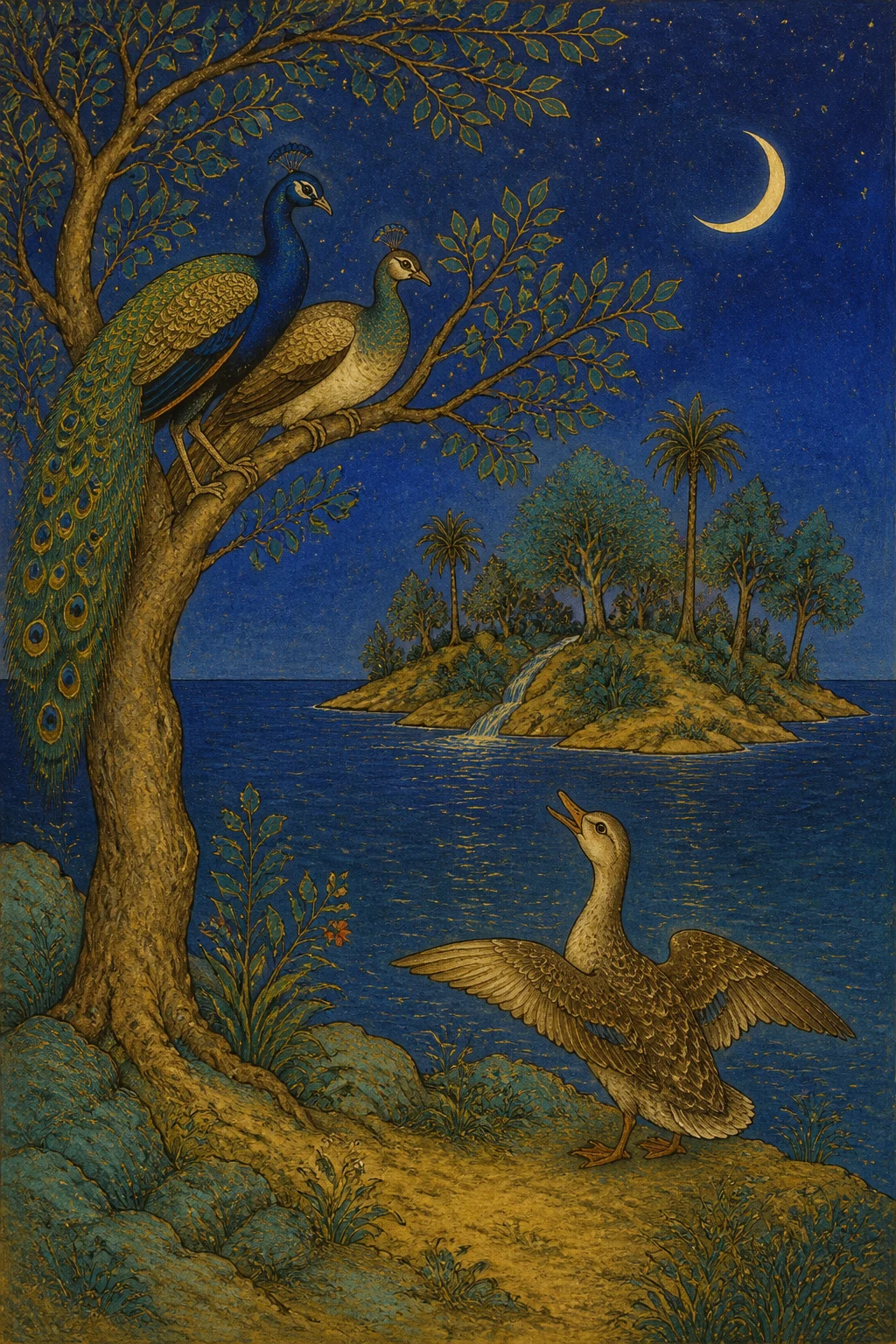
She said: It has reached me, O fortunate King, that in ancient times, in ages long gone by, there lived a peacock and his wife beside the sea. The place abounded in beasts of prey and all manner of wild animals, but it was also rich in trees and rivers. At night the peacock and his wife took shelter in one of the trees for fear of the wild beasts, and by day they went out in search of food. They continued thus until their fear grew so great that they set off to seek another place to live. While they were searching, they came upon an island rich in trees and rivers. They settled there, ate of its fruits, and drank from its streams. While they were living in this fashion, a duck came toward them in a state of great alarm. She hurried on until she reached the tree where the peacock and his wife were perched, and there she felt safe. The peacock had no doubt that the duck had some strange tale to tell, so he asked her about her circumstances and the cause of her fear. She replied, “I am sick with sorrow, and it is the son of Adam I fear. Beware, beware of the children of Adam!” The peacock said to her, “Have no fear, now that you have come to us.” The duck replied, “Praise be to God, who has relieved my sorrow and distress by bringing me near you both. I have come seeking your friendship.” When she had finished speaking, the peahen came down to her and said, “Welcome, a thousand welcomes! No harm shall come to you. How could the son of Adam reach us here, on this island in the midst of the sea? He cannot reach us by land, nor can he come upon us by sea. So take heart, and tell us what the son of Adam has done to you and what has befallen you at his hands.” The duck said, “Know, O peahen, that I have lived all my life on this island in safety, without suffering any harm. One night I fell asleep and saw in a dream the likeness of the son of Adam. He spoke to me, and I spoke to him, and I heard a voice saying, ‘O duck, beware of the son of Adam! Do not be deceived by his words or by anything he offers you, for he is full of tricks and deceit. Beware, above all, of his cunning, for he is treacherous and crafty, as the poet said of him:
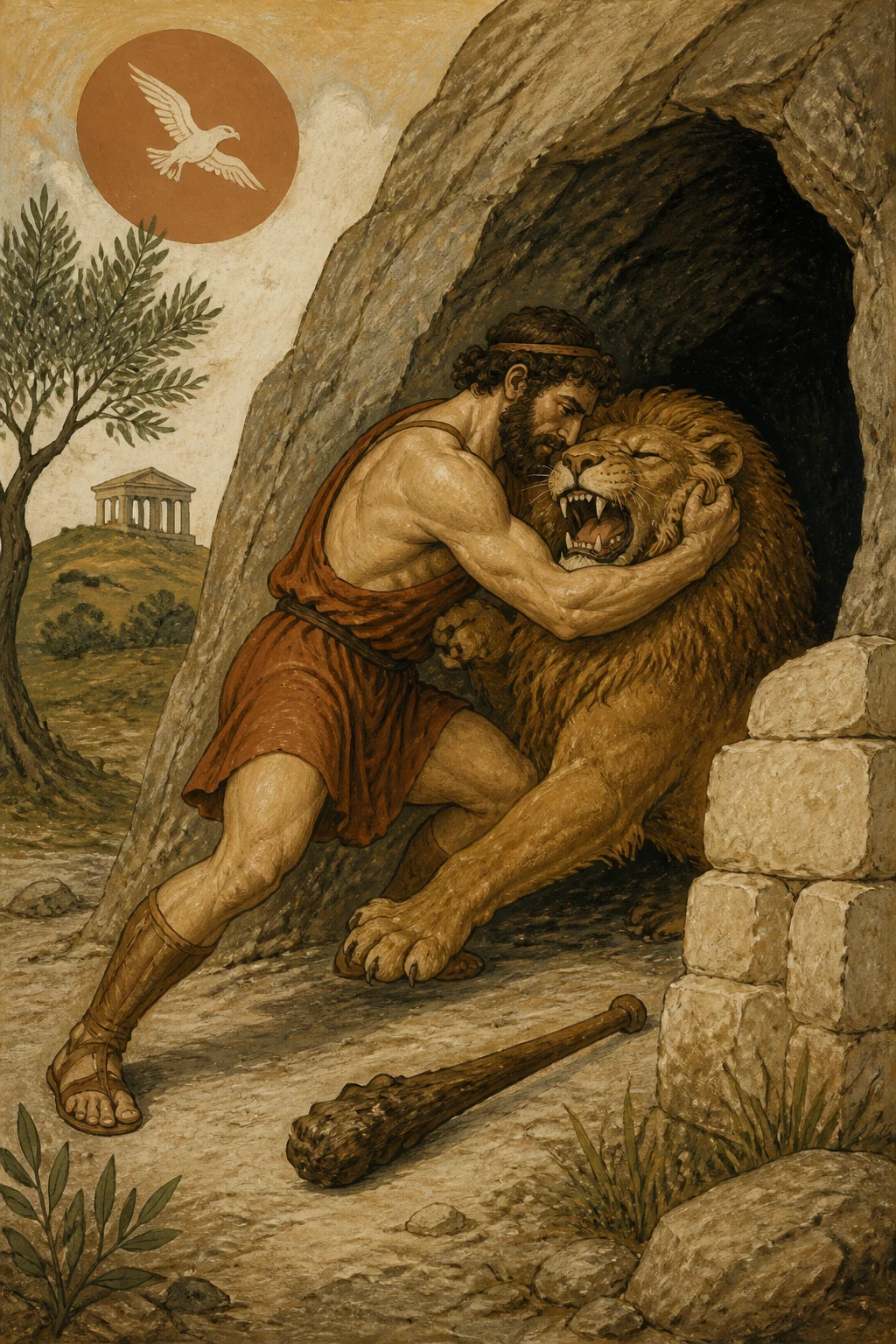
‘He offers sweetness on the tip of his tongue, yet slips away from you as a fox slips away.’ Know that the son of Adam devises tricks to draw the great fish out of the seas, shoots birds with pellets of clay, and brings down the elephant by his cunning. No creature is safe from his wickedness; neither bird nor beast escapes him. I have now told you what I have heard about the son of Adam.’ I awoke from my dream in terror, and even now my heart cannot find ease, so fearful am I that the son of Adam may take me unawares with his tricks and catch me in his snares. Before the day was out, my strength had failed and my spirits had sunk. Then, feeling the need for food and drink, I went out for a walk, troubled in mind and heavy at heart. When I reached that mountain, I found a tawny lion cub at the mouth of a cave. At the sight of me he was greatly delighted, admiring my coloring and dainty form, and he called out, ‘Come closer!’ When I approached, he asked me, ‘What is your name, and what kind of creature are you?’ I replied, ‘My name is Duck, and I belong to the birds.’ Then I asked him, ‘Why are you sitting here at this hour?’ The cub replied, ‘The reason is that for several days my father, the lion, has been warning me against the son of Adam, and last night I happened to see his likeness in a dream.’ Then the cub told me a story just like the one I have told you. When I had heard him, I said, ‘O lion, I have sought refuge with you so that you may kill the son of Adam. Set your mind firmly on killing him, for I am terribly afraid of him. And now my fear has only grown, since even you, the king of beasts, are afraid of the son of Adam.’
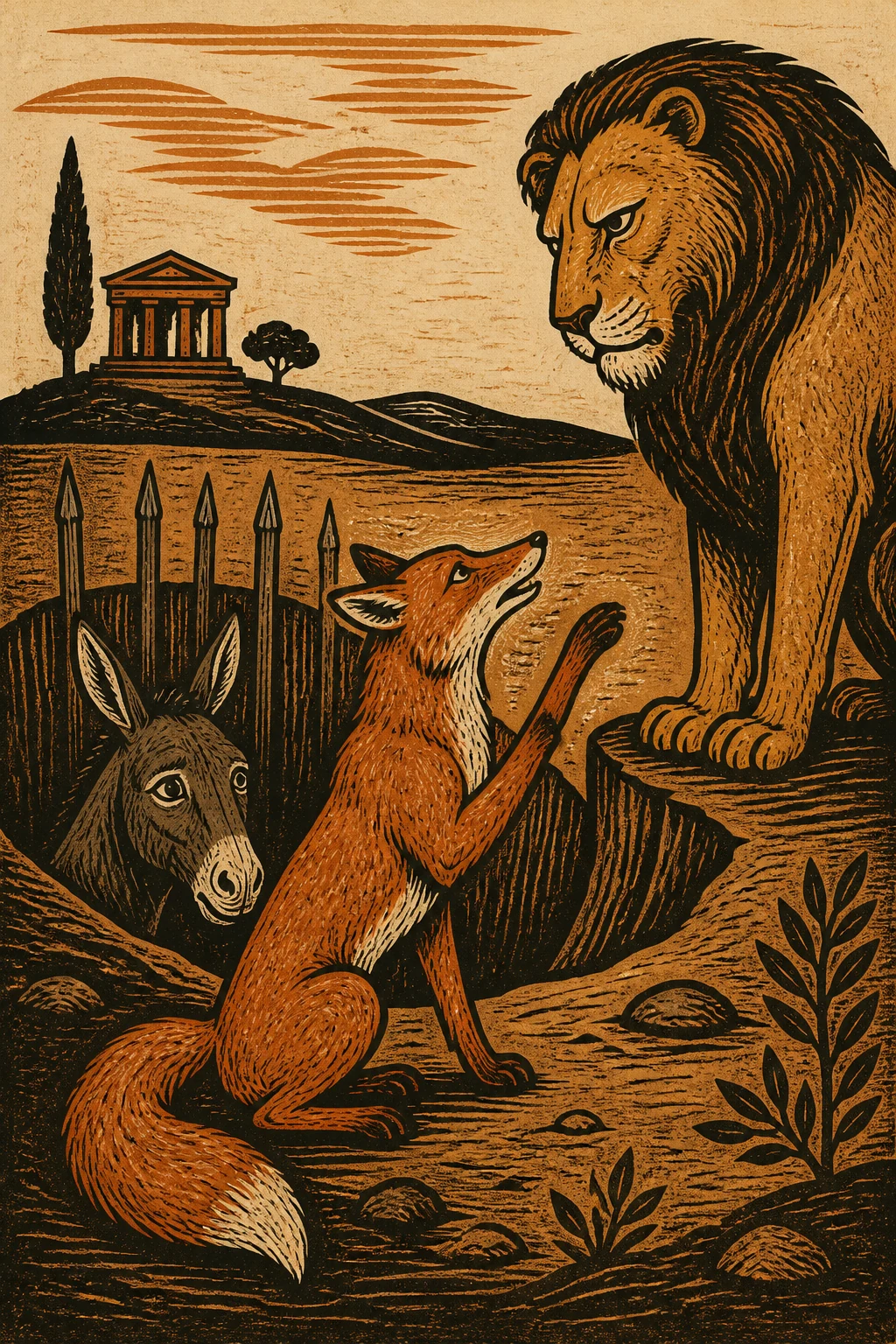
“I went on, sister, warning the cub against the son of Adam and urging him to kill him, until he rose that very instant from the place where he was sitting and set off, with me following behind. He lashed his tail against his back and walked on, while I followed, until he emerged onto the road. There we saw a cloud of dust rising. When it cleared, an escaped donkey appeared, bare of any harness, now bucking and running, now rolling on the ground. The lion saw him and roared, and the donkey came meekly up to him. ‘You witless creature,’ said the cub, ‘what kind of animal are you, and what has brought you here?’ He replied, ‘O prince, I am a donkey, and I have come here fleeing from the son of Adam.’ The cub asked, ‘Are you afraid that the son of Adam will kill you?’ The donkey answered, ‘No, prince. What I fear is that he will trick me and ride me. He has something he calls a pack saddle, which he puts on my back; something he calls a girth, which he tightens around my belly; something he calls a crupper, which he passes under my tail; and something he calls a bridle, which he puts in my mouth. He makes a goad to prick me with and forces me to run beyond my strength. If I stumble, he curses me, and if I bray, he abuses me. Then, when I grow old and can no longer run, he fits me with a wooden frame and hands me over to the water carriers. They load my back with water from the sea in skins and jars and suchlike. I remain in misery, humiliation, and toil until I die, and then they throw me onto the hills for the dogs. What sorrow could be greater than this? What calamity could be worse?’
“When I heard the donkey’s words, O peahen, my flesh crept with fear of the son of Adam, and I said to the cub, ‘My lord, the donkey has good reason to be afraid, and his words have only added to my terror.’ The cub asked the donkey, ‘Where are you going?’ He replied, ‘Before sunrise I caught sight of the son of Adam in the distance and fled from him. Now I mean to go on my way. I have been running ever since, so great is my fear of him, in the hope of finding somewhere to shelter from that treacherous son of Adam.’ While the donkey was speaking to the cub, just as he was about to bid us farewell and depart, a cloud of dust appeared. The donkey brayed and cried out, turned his eyes toward the dust, and let out a loud fart. Presently the dust cleared to reveal a black horse with a white star on his forehead the size of a dirham. He had a handsome blaze, fine white stockings, shapely legs, and a beautiful neigh. He ran on until he stood before the lion cub. The cub marveled at his size and said, ‘What kind of creature are you, O splendid beast? And why are you roaming this vast wilderness?’ He replied, ‘O lord of beasts, I am a horse, of the race of horses, and I am roaming because I have fled from the son of Adam.’ The cub was astonished by the horse’s words and said, ‘Do not say such a thing! It is shameful in one so tall and strong. How can you fear the son of Adam when you are so great in body and so swift of foot? Small though I am, I have resolved to meet the son of Adam, fall upon him, and eat his flesh, to soothe this poor duck’s terror and let her live in peace in her own home. Yet now you have come and disheartened me with your words, turning me from what I meant to do. Can it be that, for all your size, the son of Adam has overcome you, undaunted by your height and breadth? One kick of your hoof would kill him! He could do nothing against you; you would make him drink the cup of death.’
“The horse laughed when he heard the cub’s words and said, ‘Far, far beyond me is the power to overcome him, O king’s son! Do not let my height, my breadth, or my bulk deceive you where the son of Adam is concerned. Such are his tricks and his cunning that he makes something he calls hobbles, and binds my four legs in two pairs with ropes of palm fiber wrapped in felt. He ties my head to a tall stake, leaving me standing fastened there, unable to sit or sleep. When he wishes to ride me, he has iron things for his feet called stirrups, and he puts something he calls a saddle on my back, fastening it with two girths beneath my forelegs. In my mouth he puts a piece of iron called a bit, and to it he attaches leather straps called reins. When he mounts the saddle on my back, he takes the reins in his hand and steers me with them, digging his stirrups into my flanks until they bleed. Do not ask, O prince, what I suffer at the hands of the son of Adam! When I grow old, my back wastes away, and I can no longer run swiftly, he sells me to the miller to turn the mill. There I go round and round, night and day, until I am worn out with age. Then he sells me to the butcher, who slaughters me, strips off my hide, plucks out my tail, sells its hair to the makers of sieves and strainers, and renders my fat.’ When the cub heard the horse’s words, his anger and distress increased, and he asked him, ‘When did you leave the son of Adam?’ The horse replied, ‘I left him at midday, and he is following my trail.’
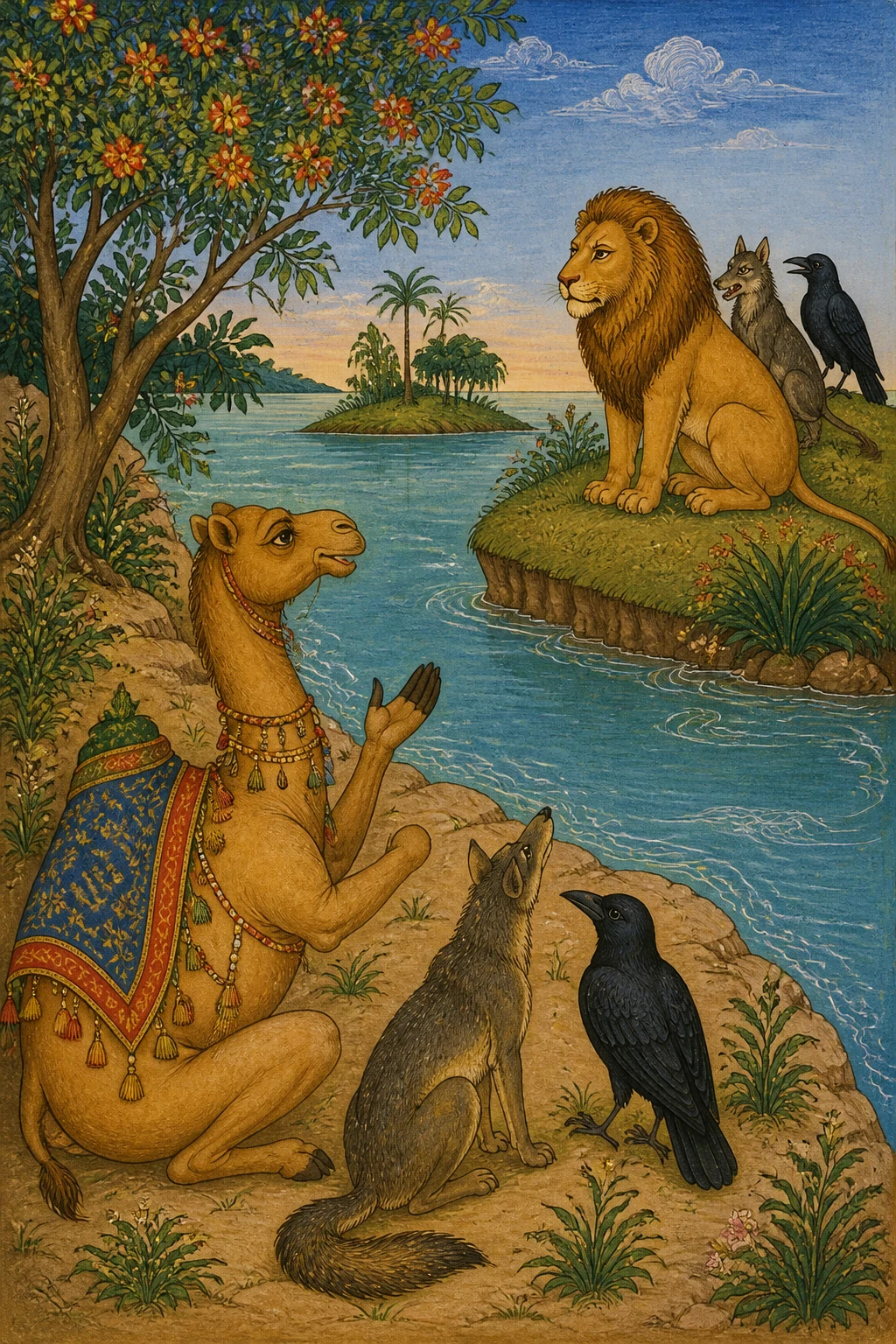
“While the cub was speaking with the horse, a cloud of dust rose, then cleared to reveal a raging camel, bellowing and stamping his feet on the ground. He continued in this fashion until he reached us. When the cub saw how huge and bulky he was, he thought this must be the son of Adam and made ready to spring upon him. But I said, ‘O prince, this is not the son of Adam, but a camel, and he too seems to be fleeing from him.’ While I was saying this to the cub, sister, the camel came forward and greeted him. The cub returned his greeting and asked, ‘What has brought you here?’ He replied, ‘I have come fleeing from the son of Adam.’ The cub said, ‘With your enormous body, your height and breadth, how can you fear the son of Adam? A single kick from your foot would kill him!’ The camel replied, ‘Know, O prince, that the son of Adam has devices against which nothing can prevail. Death alone can overcome him. He puts a cord through my nose and calls it a nose rein, fits a halter over my head, and hands me over to the youngest of his children. That little child leads me by the cord, for all my size and strength. They burden me with the heaviest loads, take me on the longest journeys, and set me to the hardest labor, night and day. When I grow old and feeble, or break a limb, he shows no regard for my years of service, but sells me to the butcher, who slaughters me and sells my hide to the tanners and my flesh to the cooks. Do not ask what I suffer at the hands of the son of Adam!’ The cub asked him, ‘At what hour did you leave the son of Adam?’ He replied, ‘I left him at sunset, and I think he will return after my departure, find me gone, and set out in search of me. So let me go, O prince, that I may flee into the wilds and deserts.’ The cub said, ‘Wait a little, camel, and you shall see how I tear him apart. I will feed you his flesh, crush his bones, and drink his blood.’ The camel replied, ‘O prince, I fear for you because of the son of Adam, for he is crafty and deceitful.’ Then he recited the poet’s words:
“‘When an unwelcome guest settles in a people’s land, its inhabitants have no choice but to depart.’ While the camel was speaking with the cub, a cloud of dust rose, and presently cleared to reveal a short old man with delicate skin. On his shoulder he carried a basket of carpenter’s tools, and on his head a forked piece of wood and eight planks; he was leading small children by the hand and hurrying along. He kept on until he drew near the cub. When I saw him, sister, I fell down from sheer terror, but the cub rose and went to meet him. As he approached, the carpenter smiled at him and said in eloquent speech, ‘O mighty king, far-reaching in power, may God bless your evening and your endeavors, and increase your courage and strength! Protect me from the one who has assailed me and afflicted me with his wickedness, for I have found no champion but you.’ Then the carpenter stood before the lion and wept, moaning and lamenting. When the cub heard his tears and complaints, he said, ‘I grant you protection from whatever you fear. Who has wronged you? And what manner of beast are you? Never in my life have I seen your like, nor any creature more handsome in form or eloquent in speech. What is your story?’ The carpenter replied, ‘O lord of beasts, I am a carpenter, and the one who has wronged me is the son of Adam. Tomorrow morning he will be here with you in this very place.’
“When the cub heard these words from the carpenter, the brightness of his face turned to darkness. He snorted and growled, sparks seemed to fly from his eyes, and he cried, ‘By God, I shall stay awake tonight until morning, and I shall not return to my father until I have achieved my purpose!’ Then he turned to the carpenter and said, ‘I see that your steps are short, and, being a creature of honor, I cannot bear to disappoint you. I suppose you cannot keep pace with the wild beasts, so tell me where you are going.’ The carpenter replied, ‘Know that I am on my way to the cheetah, your father’s vizier. When he heard that the son of Adam had set foot in this land, he became greatly afraid for his life and sent one of the beasts to summon me, so that I might build him a house to live in and shelter him, keeping his enemy away so that none of the children of Adam could reach him. When the messenger came, I took these planks and set out to join him.’ On hearing the carpenter’s words, the cub grew jealous of the cheetah and said, ‘By my life, you must make me a house from these planks before you build the cheetah’s house. When you have finished my work, go to the cheetah and make him whatever he wishes.’ The carpenter replied, ‘O lord of beasts, I cannot make anything for you until I have done what the cheetah requires. Then I shall come to serve you and build you a house to protect you from your enemy.’ But the cub said, ‘By God, I shall not let you leave this place until you have made me a house from these planks!’
“Then the cub sprang at the carpenter, meaning to play with him, and struck him with his paw, knocking the basket off his shoulder and sending him senseless to the ground. The cub laughed at him and said, ‘Woe to you, carpenter! You are weak and have no strength. No wonder you fear the son of Adam!’ The carpenter, thrown onto his back, was filled with anger, but concealed it for fear of the cub. Then he sat up, smiled in the cub’s face, and said, ‘I shall build you the house at once.’ He took the planks he had brought and nailed the house together, fitting it snugly to the cub’s measurements and leaving its entrance open. He made it in the shape of a chest, with a large opening fitted with a lid, and bored many holes in it, through which he drove pointed nails. Then he said to the cub, ‘Enter this house through the opening, so that I may close it over you.’ The cub was delighted, but when he approached the opening he found it narrow. The carpenter said, ‘Go in and crouch on your forelegs and hind legs.’ The cub did so and entered the chest, but his tail remained outside. He tried to back out, but the carpenter said, ‘Wait until I see whether there is room for your tail as well.’ The cub obeyed, and the carpenter curled up his tail, stuffed it into the chest, swiftly closed the plank over the opening, and nailed it shut. The cub cried, ‘Carpenter, what is this cramped house you have made for me? Let me out!’ The carpenter replied, ‘Too late, too late! Regret is useless now. You shall never leave this place.’ Then he laughed and said to the cub, ‘You have fallen into the cage, you wickedest of beasts!’ The cub said, ‘Brother, what is this way you have of speaking to me?’ The carpenter replied, ‘Know, you dog of the wilderness, that you have fallen into the very thing you feared. Fate has struck you down, and caution has availed you nothing.’
“When the cub heard his words, sister, he knew that this was the son of Adam, against whom his father had warned him while he was awake, and the voice had warned him in his dream. I too knew beyond all doubt that it was he. I became terribly afraid for my own life and moved a little farther away, waiting to see what he would do to the cub. Then I saw, sister, that the son of Adam dug a pit near the chest in which the cub was shut, threw it into the pit, piled firewood over it, and burned him alive. My terror grew greater still, sister, and for two days now I have been fleeing from the son of Adam in fear.” When the peahen heard this tale from the duck… And dawn overtook Shahrazad, and she fell silent, leaving her tale untold.
Then, when it was the hundred and forty-seventh night,
She said: It has reached me, O fortunate King, that when the peahen heard this tale from the duck, she was utterly astonished and said, “Sister, you are safe from the son of Adam, for we are on an island in the sea to which he has no access. Choose to remain with us until God eases your affairs and ours.” The duck replied, “I fear that some intruder may come upon me, and no fugitive can escape destiny.” The peahen said, “Stay with us, and share our lot.” She kept urging her until she agreed to remain, saying, “Sister, you know how little fortitude I have. Had I not found you here, I would not have stayed.” The peahen replied, “Whatever is written upon our brows, we must endure; and if our appointed hour is near, who can save us? No soul dies until it has received its full share of sustenance and lived out its allotted span.” While they were speaking, a cloud of dust rose before them. The duck cried out, plunged into the sea, and said, “Beware, beware, though there is no escaping fate!” The dust cloud was great, but when it cleared, a gazelle appeared, and the duck and the peahen were reassured. Then the duck said, “Sister, the creature you fear is a gazelle. See, he is coming toward us, but we have nothing to fear from him, for gazelles eat only the grasses that grow from the earth. Just as you belong to the birds, he belongs to the beasts. Be at ease and do not fret, for worry wastes the body.” The peahen had scarcely finished speaking when the gazelle reached them, seeking shade beneath the tree. On seeing the peahen and the duck, he greeted them and said, “I came to this island today, and I have never seen a more fertile place or a finer dwelling.” Then he invited them to become his companions and close friends. When the duck and the peahen saw how warmly he approached them, they welcomed him and gladly sought his company. They pledged their friendship to one another, sharing their resting place and their food. They continued to live in safety, eating and drinking, until a ship that had lost its way at sea passed by and anchored nearby. Its people came ashore and scattered over the island. Seeing the gazelle, the peahen, and the duck together, they made toward them. The gazelle fled into the wilderness, and the peahen flew into the air, but the duck remained, bewildered. They pursued her until they caught her, and she cried, “My caution has availed me nothing against fate and destiny!” They carried her away to their ship. When the peahen saw what had happened to the duck, she left the island, saying, “I see that calamity lies in wait for everyone. But for this ship, that duck and I would never have been parted, and she was one of the best of friends.” Then the peahen flew away and found the gazelle, who greeted her, congratulated her on her escape, and asked after the duck. She replied, “The enemy has taken her, and after her loss I could not bear to remain on that island.” Then she wept at parting from the duck and recited:
“The day of parting tears my heart apart; may God tear out the heart of parting day!” And she also recited: “I wished that reunion might return one day, so I could tell it what parting had done.” The gazelle was deeply grieved. Then he persuaded the peahen to abandon her plan of leaving, and stayed with her on that island. There they lived in safety, eating and drinking, though they never ceased to mourn their separation from the duck. The gazelle said to the peahen, “Sister, you know that the people who came ashore from the ship were the cause of our separation and the duck’s destruction. Beware of them, and guard yourself against them and against the cunning and deceit of the son of Adam.” She replied, “I know for certain that nothing killed her but her neglect of God’s praise. Indeed, I told her, ‘I fear for you because you have ceased to glorify God.’ For everything God has created glorifies Him, and if it neglects His praise, it is punished with destruction.” When the gazelle heard the peahen’s words, he said, “May God make your form beautiful!” And he devoted himself to glorifying God, never ceasing for a moment. It is said that the gazelle’s words of praise are: “Glory be to the Judge, the Lord of might and sovereignty.”
It is also related that a certain holy man worshipped in the mountains, and a pair of pigeons had their home on the same mountain. This holy man used to divide his food into two portions. And dawn overtook Shahrazad, and she fell silent, leaving her tale untold.
Izvirnik
حكايةٌ طريفةٌ تتعلَّق بالطيور والحيوان - الليالي ١٤٦ إلى ١٤٧
Naslednje strani prikazujejo izvirno besedilo za primerjavo.
فلما كانت الليلة ١٤٦
قالت: بلغني أيها الملك السعيد، أنه كان في قديم الزمان، وسالف العصر والأوان، طاوس يأوي إلى جانب البحر مع زوجته، وكان ذلك الموضع كثيرَ السباع، وفيه من سائر الوحوش، غير أنه كثير الأشجار والأنهار. وذلك الطاوس هو وزوجته يأويان إلى شجرة من تلك الأشجار ليلًا من خوفهما من الوحوش، ويغدوان في طلب الرزق نهارًا، ولم يزالا كذلك حتى كَثُر خوفهما، فسارا يبغيان موضعًا غير موضعهما يأويان إليه، فبينما هما يفتشان على موضع؛ إذ ظهرت لهم جزيرة كثيرة الأشجار والأنهار، فنزلا في تلك الجزيرة، وأكلا من أثمارها، وشربا من أنهارها. فبينما هما كذلك، وإذا ببطة أقبلت عليهما وهي في شدة الفزع، ولم تزل تسعى حتى أتت إلى الشجرة التي عليها الطاوس هو وزوجته فاطمأنت، فلم يشُكَّ الطاوس في أن تلك البطة لها حكاية عجيبة، فسألها عن حالها وعن سبب خوفها، فقالت: إنني مريضة من الحزن، وخوفي من ابن آدم، فالحذر ثم الحذر من بني آدم. فقال لها الطاوس: لا تخافي حيث وصلتِ إلينا. فقالت البطة: الحمد لله الذي فرَّج عني همي وغمي بقربكما، وقد أتيت راغبة في مودتكما. فلما فرغت من كلامها نزلت إليها زوجة الطاوس، وقالت لها: أهلًا وسهلًا ومرحبًا، لا بأس عليك، ومن أين يصل إلينا ابن آدم ونحن في تلك الجزيرة التي في وسط البحر؟ فمن البر لا يقدر أن يصل إلينا، ومن البحر لا يمكن أن يطلع علينا، فأَبْشِري وحدِّثينا بالذي نزل بكِ واعتراكِ من ابن آدم. فقالت البطة: اعلمي أيتها الطاوسة أنني في هذه الجزيرة طول عمري آمنة لا أرى مكروهًا، فنمت ليلة من الليالي فرأيت في منامي صورة ابن آدم وهو يخاطبني وأخاطبه، وسمعت قائلًا يقول لي: أيتها البطة، احذري من ابن آدم، ولا تغتري بكلامه ولا بما يُدخِله عليك؛ فإنه كثير الحِيَل والخداع، فالحذر كل الحذر من مُكْره؛ فإنه مخادع ماكر كما قال فيه الشاعر:
يُعْطِيكَ مِنْ طَرَفِ اللِّسَانِ حَلَاوَةً وَيَرُوغُ مِنْكَ كَمَا يَرُوغُ الثَّعْلَبُ
واعلمي أن ابن آدم يحتال على الحيتان فيُخرِجها من البحار، ويرمي الطير ببندقة من طين، ويُوقِع الفيلَ بمكره، وابن آدم لا يسلم أحدٌ من شرِّه، ولا ينجو منه طير ولا وحش، وقد بلغتك ما سمعته عن ابن آدم. فاستيقظتُ من منامي خائفة مرعوبة، وأنا إلى الآن لا ينشرح صدري خوفًا على نفسي من ابن آدم؛ لئلا يدهمني بحيلته، ويصيدني بحبائله، ولم يأتِ عليَّ آخِر النهار إلا وقد ضعفت قوتي، وبطلت همَّتي، ثم إني اشتقت إلى الأكل والشرب، فخرجت أتمشى وخاطري مكدر وقلبي مقبوض، فلما وصلت إلى ذلك الجبل، وجدتُ على بابِ مغارةٍ شبلًا أصفر اللون، فلما رآني ذلك الشبل فرح بي فرحًا شديدًا، وأعجبه لوني، وكوني لطيفة الذات، فصاح عليَّ وقال لي: اقربي مني. فلما قربت منه قال لي: ما اسمك؟ وما جنسك؟ فقلت له: اسمي بطة، وأنا من جنس الطيور. ثم قلت له: ما سبب قعودك إلى هذا الوقت في هذا المكان؟ فقال الشبل: سبب ذلك أن والدي الأسد له أيام وهو يحذِّرني من ابن آدم، فاتفق أنني رأيت في هذه الليلة في منامي صورةَ ابن آدم. ثم إن الشبل حكى لي نظير ما حكيتُه لك، فلما سمعتُ كلامَه قلتُ له: يا أسد، إني قد لجأتُ إليك في أن تقتل ابن آدم، وتحزم رأيك في قتله؛ فإني أخاف على نفسي منه خوفًا شديدًا، وازددت خوفًا على خوفي من خوفك من ابن آدم مع أنك سلطان الوحوش.
وما زلت يا أختي أحذِّر الشبل من ابن آدم وأُوصيه بقتله، حتى قام من وقته وساعته من المكان الذي كان فيه، وتمشى وتمشيت وراءه، ففرقع بذَنَبه على ظهره، ولم يزل يتمشى وأنا أمشي وراءه إلى أن مرق الطريق، فوجدنا غبرة طارت، وبعد ذلك انكشفت الغبرة فبان من تحتها حمار شارد عريان، وهو تارةً يقمص ويجري، وتارةً يتمرغ، فلما رآه الأسد صاح عليه، فأتى إليه خاضعًا، فقال له: أيها الحيوان الخريف العقل، ما جنسك؟ وما سبب قدومك إلى هذا المكان؟ فقال له: يا ابن السلطان، أنا جنسي حمار، وسبب قدومي إلى هذا المكان هروبي من ابن آدم. فقال له الشبل: وهل أنت خائف من ابن آدم أن يقتلك؟ فقال له الحمار: لا يا ابن السلطان، وإنما خوفي أن يعمل حيلة عليَّ ويركبني؛ لأن عنده شيئًا يسمِّيه البرذعة فيجعلها على ظهري، وشيئًا يسميه الحزام فيشده على بطني، وشيئًا يسميه الطفر فيجعله تحت ذَنَبي، وشيئًا يسميه اللجام فيجعله في فمي، ويعمل لي منخاسًا ينخسني به، ويكلِّفني ما لا أطيق من الجري، وإذا عثرت لعنني، وإن نهقت شتمني، وبعد ذلك إذا كبرت ولم أقدر على الجري يجعل لي رجلًا من الخشب، ويسلِّمني إلى السقَّايين فيجعلون الماء على ظهري من البحر في القرب ونحوها كالجرار، ولا أزال في ذل وهوان وتعب حتى أموت، فيرمونني فوق التلال للكلاب، فأي شيء أكبر من هذا الهم؟ وأي مصيبة أكبر من هذه المصائب؟
فلما سمعتُ أيتها الطاوسة كلام الحمار اقشعرَّ جسدي من ابن آدم، وقلت للشبل: يا سيدي، إن الحمار معذور، وقد زادني كلامه رعبًا على رعبي. فقال الشبل للحمار: إلى أين أنت سائر؟ فقال له الحمار: إني نظرت ابن آدم قبل إشراق الشمس من بعيد ففررتُ هربًا منه، وها أنا أريد أن أنطلق، ولم أزل أجري من شدة خوفي منه، فعسى أجد لي موضعًا يأويني من ابن آدم الغدار. فبينما ذلك الحمار يتحدَّث مع الشبل في ذلك الكلام، وهو يريد أن يودِّعنا ويروح؛ إذ ظهرت لنا غبرة، فنهق الحمار وصاح، ونظر بعينه إلى ناحية الغبرة، وضرط ضراطًا عاليًا، وبعد ساعة انكشفت الغبرة عن فرس أدهم بغُرَّة كالدرهم، وذلك الفرس ظريف الغرة، مليح التحجيل، حسن القوائم والصهيل، ولم يزل يجري حتى وقف بين يدي الشبل ابن الأسد، فلما رآه الشبل استعظمه، وقال له: ما جنسك أيها الوحش الجليل؟ وما سبب شرودك في هذا البر العريض الطويل؟ فقال له: يا سيد الوحوش، أنا فرس من جنس الخيل، وسبب شرودي هروبي من ابن آدم. فتعجَّبَ الشبل من كلام الفرس، وقال: لا تقل هذا الكلام، فإنه عيب عليك وأنت طويل غليظ، وكيف تخاف من ابن آدم مع عظم جثتك، وسرعة جريك؟ وأنا مع صغر جسمي قد عزمت على أن ألتقي مع ابن آدم فأبطش به، وآكل لحمه، وأسكِّن روع هذه البطة المسكينة، وأقرها في وطنها، وها أنت لما أتيتَ في هذه الساعة قطعت قلبي بكلامك، وأرجعتني عما أردت أن أفعله، فإذا كنت أنت مع عِظَمك قد قهرك ابن آدم، ولم يخف من طولك وعرضك، مع أنك لو رفصته برجلك لقتلته، ولم يقدر عليك، بل تسقيه كأس الردى.
فضحك الفرس لما سمع كلام الشبل، وقال: هيهات هيهات أن أغلبه يا ابن الملك، فلا يغرك طولي ولا عرضي ولا ضخامتي مع ابن آدم؛ لأنه من شدة حِيَله ومكره يصنع لي شيئًا يقال له الشكال، ويضع في أربعة قوائمي شكالين من حبال الليف الملفوفة باللباد، ويصلبني من رأسي في وتد عالٍ، وأبقى واقفًا وأنا مصلوب لا أقدر أن أقعد ولا أنام، وإذا أراد أن يركبني يعمل لي شيئًا في رجليه من الحديد اسمه الركاب، ويضع على ظهري شيئًا يسميه السرج، ويشده بحزامين من تحت إبطي، ويضع في فمي شيئًا من الحديد يسميه اللجام، ويضع فيه شيئًا من الجلد يسميه الصُّرع، فإذا ركب فوق ظهري على السرج يمسك الصُّرع بيده ويقودني به، ويهمزني بالركاب في خواصري حتى يدميها، ولا تسأل يا ابن السلطان عمَّا أقاسيه من ابن آدم؛ فإذا كبرت وانتحل ظهري ولم أقدر على سرعة الجري، يبيعني للطحان ليدورني في الطاحون، فلا أزال دائرًا فيها ليلًا ونهارًا إلى أن أهرم، فيبيعني للجزار فيذبحني، ويسلخ جلدي، وينتف ذَنَبي، ويبيعها للغرابلي والمناخلي، ويسلي شحمي. فلما سمع الشبل كلام الفرس ازداد غيظًا وغمًّا، وقال له: متى فارقت ابن آدم؟ قال: فارقته نصف النهار، وهو في إثري.
فبينما الشبل يتحدَّث مع الفرس في هذا الكلام، وإذا بغبرة ثارت، وبعد ذلك انكشفت الغبرة وبان من تحتها جمل هائج، وهو يبعبع ويخبط برجليه في الأرض، ولم يزل يفعل كذلك حتى وصل إلينا، فلما رآه الشبل كبيرًا غليظًا، ظنَّ أنه ابن آدم فأراد الوثوب عليه، فقلت له: يا ابن السلطان، إن هذا ما هو ابن آدم، وإنما هذا جمل، وكأنه هارب من ابن آدم. فبينما أنا يا أختي مع الشبل في هذا الكلام، وإذا بالجمل تقدَّمَ بين أيادي الشبل وسلَّمَ عليه، فردَّ عليه السلام، وقال له: ما سبب مجيئك إلى هذا المكان؟ قال: جئت هاربًا من ابن آدم. فقال له الشبل: وأنت مع عظم خلقتك وطولك وعرضك كيف تخاف من ابن آدم، ولو رفصته برجلك رفصة لقتلته؟ فقال له الجمل: يا ابن السلطان، اعلم أن ابن آدم له دواهٍ لا تُطاق، وما يغلبه إلا الموت؛ لأنه يضع في أنفي خيطًا ويسمِّيه خزامًا، ويجعل في رأسي مقودًا ويسلِّمني إلى أصغر أولاده، فيجرني الولد الصغير بالخيط مع كبري وعظمي، ويحمِّلونني أثقل الأحمال، ويسافرون بي الأسفار الطوال، ويستعملونني في الأشغال الشاقة أثناء الليل النهار، وإذا كبرت وشِخْت أو انكسرت لم يحفظ صحبتي، بل يبيعني للجزار فيذبحني، ويبيع جلدي للدبَّاغين، ولحمي للطباخين، ولا تسأل عمَّا أقاسي من ابن آدم. فقال له الشبل: أي وقت فارقت ابن آدم؟ فقال: فارقته وقت الغروب، وأظنه يأتي عند انصرافي فلن يجدني فيسعى في طلبي، فدعني يا ابن السلطان حتى أهجَّ في البراري والقفار. فقال الشبل: تمهَّلْ قليلًا يا جمل حتى تنظر كيف أفترسه، وأطعمك من لحمه، وأهشِّم عظمه، وأشرب من دمه. فقال له الجمل: يا ابن السلطان، أنا خائف عليك من ابن آدم فإنه مخادع ماكر. ثم أنشد قول الشاعر:
إِذَا حَلَّ الثَّقِيلُ بِأَرْضِ قَوْمٍ فَمَا لِلسَّاكِنِينَ سِوَى الرَّحِيلِ
فبينما الجمل يتحدَّث مع الشبل في هذا الكلام، وإذا بغبرة طلعت، وبعد ساعة انكشفت عن شيخ قصير رقيق البشرة، على كتفه مقطف فيه عدة نجار، وعلى رأسه شعبة وثمانية ألواح، وبيده أطفال صغار، وهو يهرول في مشيه، وما زال يمشي حتى قرب من الشبل؛ فلما رأيته يا أختي، وقعتُ من شدة الخوف، وأما الشبل فإنه قام وتمشى إليه ولاقاه، فلما وصل إليه ضحك النجار في وجهه، وقال له بلسان فصيح: أيها الملك الجليل، صاحب الباع الطويل، أسعد الله مساك ومسعاك، وزاد في شجاعتك وقواك، أجرني مما دهاني، وبشرِّه رماني؛ لأني ما وجدتُ لي نصيرًا غيرك. ثم إن النجار وقف بين يدي الأسد وبكى، وأنَّ واشتكى، فلما سمع الشبل بكاءه وشكواه، قال له: أجرتك مما تخشاه، فمَن الذي قد ظلمك؟ وما أنت تكون أيها الوحش الذي ما رأيت عمري مثلك، ولا أحسن صورةً ولا أفصح لسانًا منك؟ فما شأنك؟ فقال له النجار: يا سيد الوحوش، أما أنا فنَجَّار، وأما الذي ظلمني فإنه ابن آدم، وفي صباح هذه الليلة يكون عندك في هذا المكان.
فلما سمع الشبل من النجار هذا الكلام، تبدَّلَ الضياء في وجهه بالظلام، وشخر ونخر، وارتمت عيناه بالشرر، وصاح وقال: والله لأسهرن في هذه الليلة إلى الصباح، ولا أرجع إلى والدي حتى أبلغ مقصدي. ثم إن الشبل التفت إلى النجار وقال له: إني أرى خطواتك قصيرة، ولا أقدر أن أكسر بخاطرك؛ لأني ذو مروءة، وأظن أنك لا تقدر أن تماشي الوحوش، فأخبرني إلى أين تذهب؟ فقال له النجار: اعلم أنني رائح إلى وزير والدك الفهد؛ لأنه لما بلغه أن ابن آدم داس هذه الأرض، خاف على نفسه خوفًا عظيمًا، وأرسل إليَّ رسولًا من الوحوش؛ لأصنع له بيتًا يسكن فيه ويأوي إليه، ويمنع عنه عدوه حتى لا يصل إليه أحدٌ من بني آدم، فلما جاءني الرسول أخذت هذه الألواح وتوجَّهْتُ إليه. فلما سمع الشبل كلام النجار، أخذه الحسد للفهد فقال له: بحياتي لا بد أن تصنع لي هذه الألواح بيتًا قبل أن تصنع للفهد بيته، وإذا فرغت من شغلي، فامضِ إلى الفهد واصنع له ما يريد. فلما سمع النجار من الشبل هذا الكلام، قال له: يا سيد الوحوش، ما أقدر أن أصنع لك شيئًا إلا إذا صنعتُ للفهد ما يريد، ثم أجيء إلى خدمتك، وأصنع لك بيتًا يحصنك من عدوك. فقال له الشبل: والله ما أخليك تروح من هذا المكان حتى تصنع لي هذه الألواح بيتًا.
ثم إن الشبل همَّ على النجار ووثب عليه، وأراد أن يمزح معه، فلطشه بيده فرمى المقطف من على كتفه، ووقع النجار مغشيًّا عليه، فضحك الشبل عليه وقال: ويلك يا نجار، إنك ضعيف، وما لك قوة، فأنت معذور إذا خفتَ من ابن آدم. فلما وقع النجار على ظهره اغتاظ غيظًا شديدًا، ولكنه كتم ذلك عن الشبل من خوفه منه، ثم قعد النجار وضحك في وجه الشبل، وقال له: ها أنا أصنع لك البيت. ثم إن النجار تناول الألواح التي كانت معه وسمَّر البيت، وجعله مثل القالب على قياس الشبل، وخلَّى بابه مفتوحًا؛ لأنه جعله على صورة صندوق، وفتح له طاقة كبيرة، وجعل لها غطاءً، وثقب فيها ثقوبًا كثيرة، وأخرج منها مسامير مطرفة، وقال للشبل: ادخل في هذا البيت من هذه الطاقة لمَّا أقبيه عليك. ففرح الشبل بذلك، وأتى تلك الطاقة فرآها ضيقة، فقال له النجار: ادخل وابرك على يديك ورجليك. ففعل الشبل ذلك، ودخل الصندوق، وبقي ذَنَبُه خارجًا، ثم أراد الشبل أن يتأخر إلى ورائه ويخرج، فقال له النجار: امهل حتى أنظر هل يسع ذَنَبك معك. فامتثل الشبل أمره، ثم إن النجار لفَّ ذَنَب الشبل وحشاه في الصندوق، وردَّ اللوح على الطاقة سريعًا وسمَّره، فصاح الشبل قائلًا: يا نجار، ما هذا البيت الضيق الذي صنعته لي؟ دعني أخرج منه. فقال له النجار: هيهات هيهات، لا ينفع الندم على ما فات، إنك لا تخرج من هذا المكان. ثم ضحك النجار، وقال للشبل: إنك وقعت في القفص، وكنت أخبث الوحوش. فقال: يا أخي، ما هذا الخطاب الذي تخاطبني به؟ فقال له النجار: اعلم يا كلب البر أنك وقعت فيما كنتَ تخاف منه، وقد رماك القدر، ولم ينفعك الحذر.
فلما سمع الشبل كلامه يا أختي، علم أنه ابن آدم الذي حذَّره منه أبوه في اليقظة، والهاتف في المنام، وتحقَّقتُ أنه هو بلا شك ولا ريب، فخفتُ منه على نفسي خوفًا عظيمًا، وبعدت عنه قليلًا، وصرت أنتظر ماذا يفعل بالشبل؟ فرأيت يا أختي ابن آدم حفر حفرة في ذلك المكان بالقرب من الصندوق الذي فيه الشبل، ورماه في تلك الحفرة، وألقى عليه الحطب، وأحرقه بالنار؛ فكبر يا أختي خوفي، ولي يومان هاربة من ابن آدم، وخائفة منه. فلما سمعت الطاوسة من البطة هذا الكلام … وأدرك شهرزاد الصباح فسكتَتْ عن الكلام المباح.
فلما كانت الليلة ١٤٧
قالت: بلغني أيها الملك السعيد، أن الطاوسة لما سمعت من البطة هذا الكلام، تعجَّبت منه غاية العجب، وقالت: يا أختي، إنك أمنت من ابن آدم؛ لأننا في جزيرة من جزائر البحر، ليس لابن آدم فيها مسلك، فاختاري المقام عندنا إلى أن يسهِّل الله أمرك وأمرنا. قالت: أخاف أن يطرقني طارق، والقضاء لا ينفك عنه آبق. فقالت: اقعدي عندنا، وأنت مثلنا. وما زالت بها حتى قعدت، وقالت: يا أختي، أنت تعلمين قلة صبري، ولولا أني رأيتك هنا ما كنت قعدت. فقالت الطاوسة: إن كان على جبيننا شيء نستوفاه، وإن كان أجلنا دنا فمن يخلِّصنا، ولن تموت نفس حتى تستوفي رزقها وأجلها. فبينما هما في هذا الكلام؛ إذ طلعت عليهما غبرة، فعند ذلك صاحت البطة ونزلت البحر، وقالت: الحذر الحذر، وإن لم يكن مفر من القدر. وكانت الغبرة عظيمة، فلما انكشفت الغبرة ظهر من تحتها ظبي، فاطمأنت البطة والطاوسة، ثم قالت البطة: يا أختي، إن الذي تفزعين منه ظبي، وها هو قد أقبل نحونا فليس علينا منه بأس؛ لأن الظبي إنما يأكل الحشائش من نبات الأرض، وكما أنت من جنس الطير هو الآخر من جنس الوحوش، فاطمئني ولا تهتمي، فإن الهم ينحل البدن. فلم تتم الطاوسة كلامها حتى وصل الظبي إليهما يستظل تحت الشجرة، فلما رأى الطاوسة والبطة سلَّم عليهما، وقال لهما: إني دخلت هذه الجزيرة اليومَ فلم أرَ أكثر منها خصبًا، ولا أحسن منها مسكنًا. ثم دعاهما لمرافقته ومصافاته، فلما رأت البطة والطاوسة تودُّدَه إليهما أقبلتا عليه، ورغبتا في عشرته، وتحالفوا على ذلك، وصار مبيتُهم واحدًا، ومأكلهم سواء، ولم يزالوا آمنين آكلين شاربين حتى مرت بهم سفينة كانت تائهة في البحر، فأرست قريبًا منهم، فطلع الناس وتفرقوا في الجزيرة، فرأوا الظبي والطاوسة والبطة مجتمعين، فأقبلوا عليهم؛ فشرد الظبي في البرية، وطارت الطاوسة في الجو، فبقيت البطة مخبلة، ولم يزالوا بها حتى صادوها، وصاحت قائلة: لم ينفعني الحذر من القضاء والقدر. وانصرفوا بها إلى سفينتهم، فلما رأت الطاوسة ما جرى للبطة، ارتحلت عن الجزيرة وقالت: لا أرى الآفات إلا مراصدة لكل أحد، ولولا هذه السفينة ما حصل بيني وبين هذه البطة افتراق، ولقد كانت من خيار الأصدقاء. ثم طارت الطاوسة واجتمعت بالظبي، فسلَّمَ عليها وهنَّأها بالسلامة، وسألها عن البطة فقالت له: قد أخذها العدو، وكرهتُ المقام في تلك الجزيرة بعدها. ثم بكت على فراق البطة، وأنشدت تقول:
إِنَّ يَوْمَ الْفِرَاقِ قَطْعٌ لِقَلْبِي قَطَّعَ اللهُ قَلْبَ يَوْمِ الْفِرَاقِ
وأنشدت أيضًا:
تمنَّيْتُ الْوِصَالَ يَعُودُ يَوْمًا لِأُخْبِرَهُ بِمَا صَنَعَ الْفِرَاقُ
فاغتمَّ الظبي غمًّا شديدًا، ثم ردَّ عزم الطاوسة عن الرحيل، فأقام معها في تلك الجزيرة آمنَيْن آكلَيْن شاربَيْن، غير أنهما لم يزالا حزينين على فراق البطة، فقال الظبي للطاوسة: يا أختي، قد علمت أن الناس الذين طلعوا لنا من المركب كانوا سببًا لفراقنا ولهلاك البطة، فاحذريهم واحترسي منهم ومن مكر ابن آدم وخداعه. قالت: قد علمت يقينًا أن ما قتلها غير تركها التسبيح، ولقد قلت لها: إني أخاف عليك من تركك التسبيح؛ لأن كل ما خلقه الله يسبحه، فإن غفل عن التسبيح عُوقِب بهلاكه. فلما سمع الظبي كلام الطاوسة قال: أحسن الله صورتك. وأقبل على التسبيح لا يفتر عنه ساعة، وقد قيل إن الظبي يقول في تسبيحه: سبحان الديان ذي الجبروت والسلطان.
وورد أن بعض العُبَّاد كان يتعبد في الجبال، وكان يأوي إلى ذلك الجبل زوج من الحمام، وكان ذلك العابد قسَّمَ قُوتَه نصفين. وأدرك شهرزاد الصباح، فسكتَتْ عن الكلام المباح.
Nadaljuj z branjem