O besedilu
Lev in kamela
- Vir
- Pančatantra
- Avtor
- indijska zbirka pripovedi
- Jezik branja
- English
- Jezik izvirnika
- Sanskrit
- Čas branja
- 15 min branja
- Obseg
- 12 strani
- Naslov izvirnika
- Tantra 01 mitra-bheda chunk 8
O izvirniku
Pančatantra
Indijske zgodbe o zvijači, prijateljstvu in modrosti v svetu živali in vladarjev. Bralni jezik je English, izvirnik pa prihaja iz vira Pančatantra v jeziku Sanskrit.
Besedilo
Lev in kamela
Deer seek the company of deer,
cattle of cattle, and horses of horses;
fools consort with fools, and the wise
with the wise: friendship springs from shared character and pursuits.
“So even if I go to him and try to appease him, he will not be appeased. For it is said: He who grows angry for a reason
will surely calm down when that reason is removed.
But when a man harbors hatred without cause,
how can anyone satisfy him?
“Ah, how well this is said: Even loyal, helpful servants, devoted to the welfare of others,
versed in the true conduct of service and free from treachery,
are certain to meet disaster at the slightest slip, while success may come or not.
Thus serving a king, like venturing upon the ocean, is always fraught with fear.
“And again: Even kindness offered by those sincerely affectionate can breed hatred in this world,
while outright injury done by others may win favor.
Since the minds of kings are hard to fathom and never rest in a single mood,
the way of service is profoundly mysterious, beyond even the understanding of yogis.
“Now I understand: Piṅgalaka has been stirred to anger by those close to him who cannot bear the favor shown to me. That is why he speaks of me this way, though I am blameless. For it is said:
Servants cannot bear their lord’s favor toward another,
like jealous co-wives, enraged even by a rival wife’s good deeds.
“Indeed, when men of merit are close at hand, those without merit receive no favor. For it is said:
The virtues of worthy men are overshadowed by one of greater worth:
the flame of a lamp gives no light once the sun has risen.
Damanaka said, “My friend! If that is so, you have nothing to fear. Though wicked men have angered him, a well-phrased speech from you will restore his favor.”
He replied, “No, my friend, what you say is not sound. One cannot live among wicked men, however insignificant they may be. They are sure to contrive some other means of killing you. For it is said:
A band of clever scoundrels, all living by deceit,
can accomplish anything, right or wrong, as the crow and his companions did with the camel.”
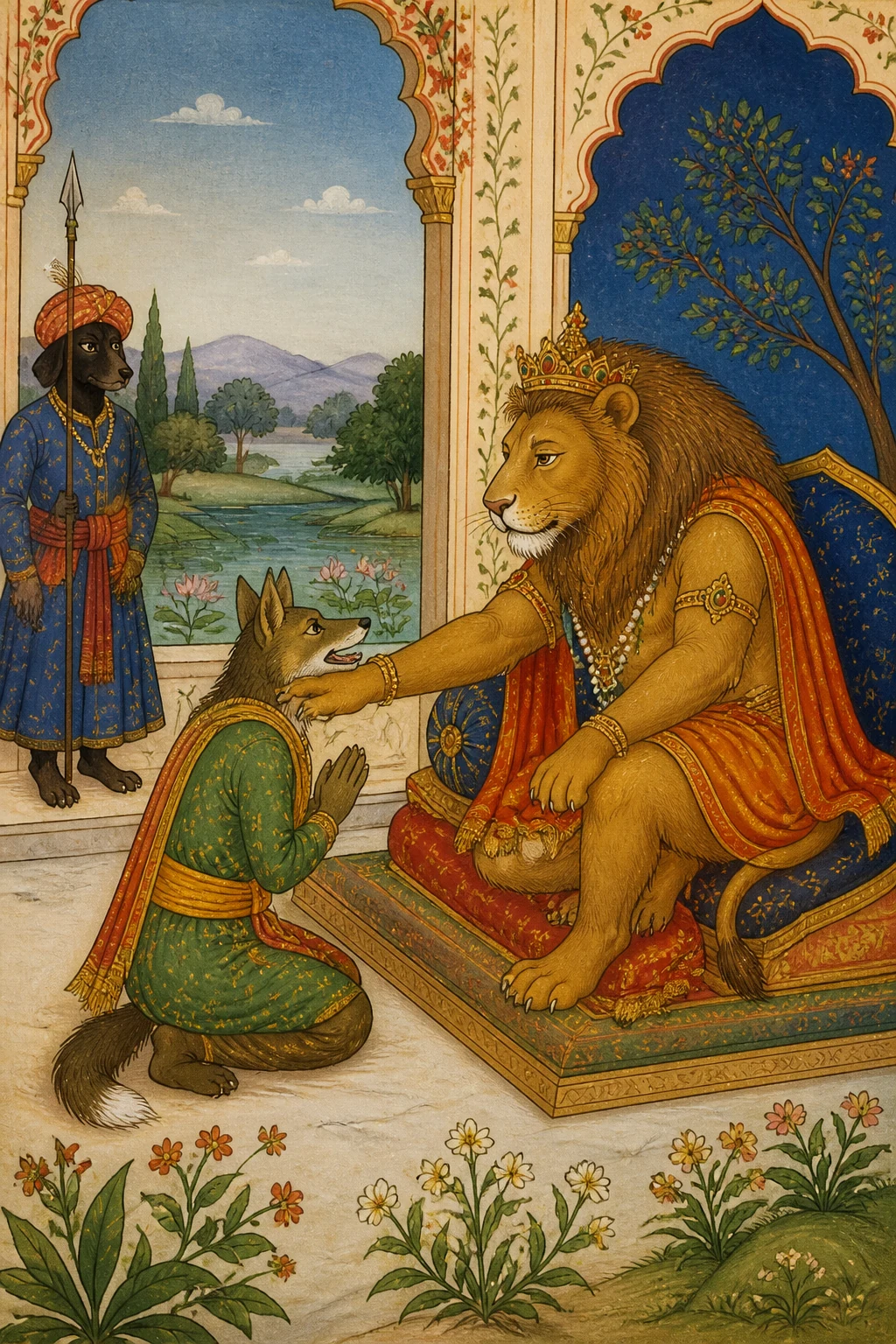
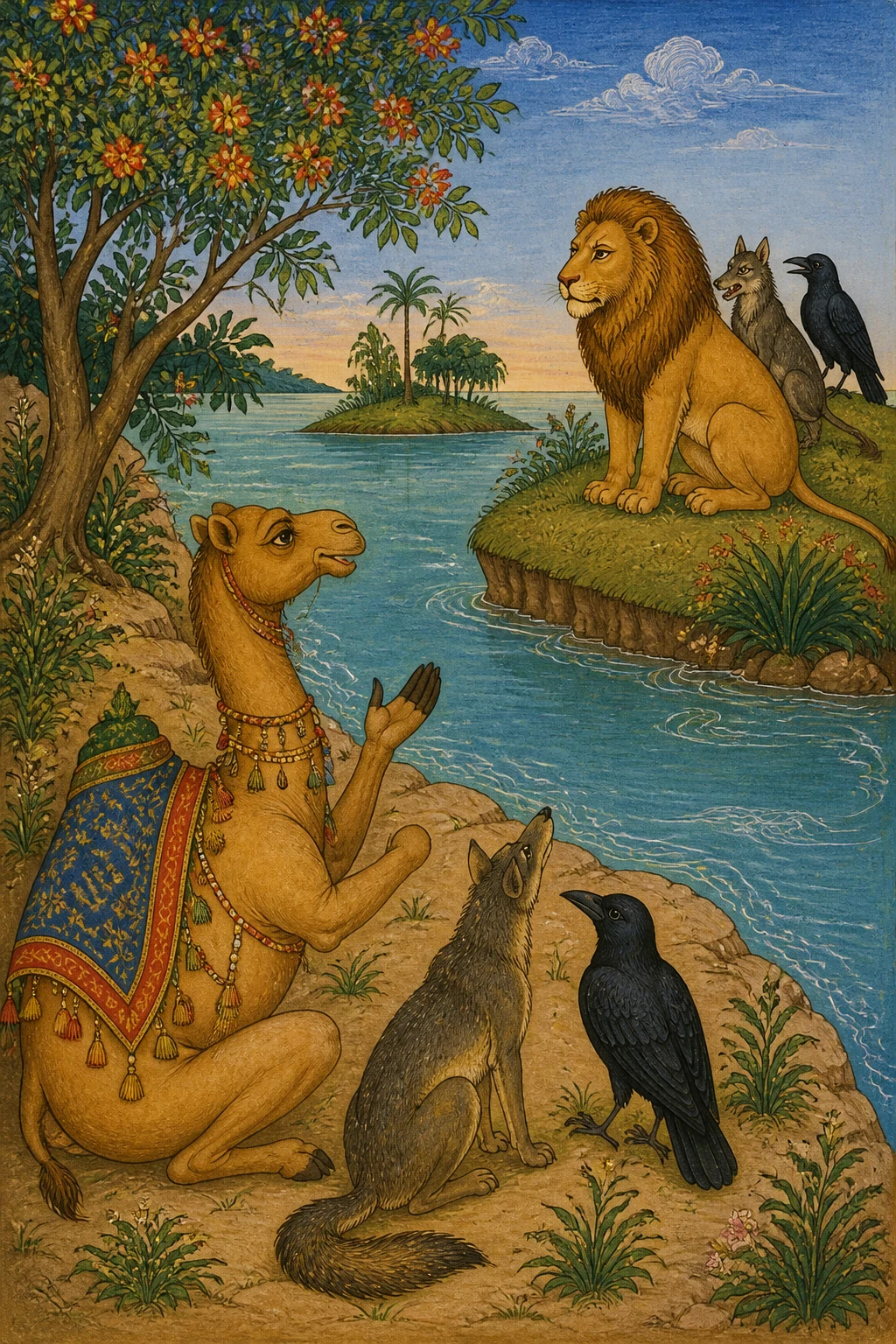
Damanaka asked, “How was that?” He replied: “Tale 11: The Lion Madotkaṭa. In a certain forest there lived a lion named Madotkaṭa. His attendants were a leopard, a crow, and a jackal. One day, while roaming here and there, they saw a camel named Krathanaka who had strayed from his caravan. The lion said, ‘What an unfamiliar creature! Find out whether it belongs to the wilderness or to a village.’
“Hearing this, the crow said, ‘My lord, this is a village animal called a camel, fit for you to eat. Let him be killed.’
“The lion said, ‘I do not kill anyone who has come into my home. For it is said:
Whoever kills even an enemy who has come to his house in trust, fearing no harm, incurs the sin of killing a hundred Brahmins.
“‘So promise him safety and bring him before me, so that I may ask why he has come.’
“They all reassured him, promised him safety, and brought him to Madotkaṭa. He bowed and sat down. When the lion questioned him, he told his story and explained how he had become separated from his caravan. The lion then said, ‘Krathanaka, do not return to the village and suffer the hardship of carrying loads again. Stay here in the forest with me forever, without fear, feeding on tender grass as green as emeralds.’ ‘So be it,’ he replied, and lived happily among them, wandering about with nothing to fear. Then one day Madotkaṭa fought a great wild elephant. The blows of its club-like tusks wounded him grievously, and he barely escaped with his life. So weakened was his body that he could not move a single step. The crow and the others, no longer able to depend on their lord, were tormented by hunger and suffered greatly.
“Then the lion said to them, ‘Find some creature somewhere, so that, even in this condition, I may kill it and provide you with food.’
“All four set out to search, but found no animal. At last the crow and the jackal began to confer. The jackal said, ‘Crow, what is the use of all this wandering? Here is Krathanaka, living in perfect trust in our lord. Let us kill him and keep ourselves alive.’
“The crow said, ‘Your suggestion is sound. But our lord has promised him safety, saying that he must not be killed.’
“The jackal said, ‘Crow, I shall speak to our lord and arrange matters so that he will kill him. Stay here, all of you, while I go home and return with our lord’s permission.’ With these words he hurried off to the lion. On reaching him, he said, ‘My lord, we have returned after searching the whole forest, but have found no creature at all. What are we to do? We are now so hungry that we cannot move another step. Your Majesty, too, needs nourishing food. If you give the order, we can prepare a restorative meal today from Krathanaka’s flesh.’ Hearing these cruel words, the lion cried angrily, ‘Shame on you, vilest of sinners! If you say such a thing again, I shall kill you on the spot. I have pledged him safety. How can I put him to death? For it is said: Neither the gift of cattle, nor the gift of land, nor even the gift of food is so great.
The wise declare that, of all gifts, the gift of safety is supreme.’
“Hearing this, the jackal said, ‘My lord, if you killed him after promising him safety, that would indeed be a sin. But if, out of devotion to Your Majesty, he offers his own life, there is no fault in it.
“‘If he freely offers himself to be killed, then he may be killed. Otherwise, let one of us be slain, for Your Majesty needs nourishing food and will die if you continue to starve.
“‘What use are these lives of ours if we do not give them for our master? Besides, if any misfortune befalls Your Majesty, we shall afterward be obliged to enter the fire ourselves. For it is said: The foremost man in a household must be protected by every possible effort.
When he is lost, his whole household is lost: the spokes cannot function when the hub is broken.’
“Hearing this, Madotkaṭa said, ‘If that is so, do as you think best.’
“The jackal hurried back and said to the others, ‘Our lord is in a desperate state. What use is further wandering? Without him, who will protect us here? Come, let us offer our bodies to him, for hunger is carrying him toward the next world. In this way we shall repay his kindness. For it is said:
A servant who looks on while his master falls into distress,
though he still has his own life to give, shall go to hell.’
“Then they all went to Madotkaṭa, bowed, and sat down with tears in their eyes. Seeing them, Madotkaṭa asked, ‘Well, have you found or seen any animal?’
“The crow spoke up: ‘My lord, we have searched everywhere, but have neither found nor seen a single creature. So let my lord eat me today and preserve his life. Your Majesty will recover, and I shall attain heaven. For it is said:
A devoted servant who gives his life for his master attains the highest state, beyond old age and death.’
“Hearing this, the jackal said, ‘My friend, your body is small. Eating you would not sustain our lord’s life. Besides, another fault would arise. For it is said:
Crow’s flesh is like discarded scraps, scanty and poor in nourishment.
What good is food that does not satisfy hunger?
“‘You have shown your devotion to our lord, repaid the food he has given you, and earned praise in both worlds. Now stand aside, and let me address him.’ When the crow had done so, the jackal bowed respectfully, sat down, and said, ‘My lord, eat me today and sustain your life; thus grant me blessedness in both worlds. For it is said:
The lives of servants, purchased by their wages, are always at their master’s disposal. Therefore he incurs no fault in taking them.’
“Hearing this, the leopard said, ‘My friend, you have spoken nobly. But you too are small, and, being armed with claws, you belong to our lord’s own kind and must not be eaten. For it is said:
A wise man must not eat forbidden food, even when life is at his throat—especially when it is scanty and brings ruin in both worlds.
“‘You have shown your noble breeding. Indeed, it is well said:
It is for this that kings gather men of noble birth around them: from beginning to middle to end, they never waver.
“‘Now stand aside, and let me address our lord.’ When the jackal had done so, the leopard bowed to Madotkaṭa and said, ‘My lord, sustain your life today with mine. Grant me an everlasting dwelling in heaven, and spread my fame far across the earth. There is nothing surprising in this. For it is said:
Loyal servants who die in their master’s cause win an everlasting dwelling in heaven and glory upon earth.’
“Hearing this, Krathanaka thought, ‘They have all made fine speeches, yet our lord has killed none of them. I too shall say what the occasion demands to the leopard, so that all three will support my words.’ Having resolved upon this, he said, ‘My friend, you have spoken truly, but you too are armed with claws. How, then, can our lord eat you? For it is said:
Whatever harm a man wishes upon his own kind, even in thought, will befall him himself, in this world and the next.
“‘Now stand aside, and let me address our lord.’ When the leopard had done so, Krathanaka stepped forward, bowed, and said, ‘My lord, none of these may be eaten by you. Sustain your life with mine, so that I may gain blessedness in both worlds. For it is said:
Neither sacrificers nor yogis attain the state reached by the finest servants who lay down their lives for their master.’
“No sooner had he spoken than the jackal and the leopard tore open both his flanks, and Krathanaka gave up his life. Then all those clever scoundrels devoured him.
“That is why I say, ‘A band of clever scoundrels…’
*********************************************************************** “So, my friend, I have now understood clearly that this king of yours is surrounded by villains. He is unfit for good men to serve. For it is said:
People find no joy in a king whose court is corrupt,
just as a royal swan cannot live at ease among vultures.
“And again:
A king who resembles a vulture may still be served if his courtiers are like swans;
but even a king who resembles a swan must be abandoned if his courtiers are like vultures.
“Surely some wicked man has turned him against me; that is why he speaks in this way. Indeed, such things happen. For it is said: Under the wearing touch of gentle water,
even the hard surfaces of a mountain yield.
How much more, then, the soft hearts of men
to the whispered spells of those skilled in intrigue!
What will foolish people not do, once corrupted by poison poured into their ears?
They even take the vows of a naked ascetic, or drink liquor from a human skull.
“Or, as it is well said: Though kicked or struck hard with a stout stick,
a snake kills only the one it touches with its fangs.
But the cruel slanderer has a strange way of his own:
he touches one man’s ear and destroys another, root and branch.
“And again:
How strange is the murderous method of the serpent called a scoundrel!
He fastens upon one man’s ear, and another loses his life.
“Now that matters have come to this, I ask you as a friend: what should I do?”
Damanaka said, “You should go to another country. You must not continue serving such a wicked master. For it is said:
Even a teacher must be abandoned if he is arrogant, unable to distinguish right from wrong,
and has strayed onto an evil path.”
Sañjīvaka said, “When our master is angry with us, we cannot simply leave; nor, even if we go elsewhere, shall we find peace. For it is said:
One who has offended the powerful should not reassure himself by thinking, ‘I am far away.’
The wise man’s arms are long; with them he strikes the one who has injured him.
“So there is no better course for me than battle. For it is said: Neither through pilgrimages and austerities,
nor through hundreds of gifts and virtuous deeds, do seekers of heaven reach those worlds
which brave and noble men attain in an instant
when they lay down their lives in battle.
The fallen gain heaven; the living gain the highest glory.
Both are rewards of valor, exceedingly hard to win.
When blood streaming from a warrior’s brow
flows into his mouth,
it is as though he had drunk the soma
duly prescribed in the sacrifice of battle.
“And again: The reward men gain through offerings made according to sacred rule, through gifts and the honoring of worthy Brahmins,
through properly performed sacrifices with lavish fees,
through dwelling at holy places and hermitages, fire offerings, religious observances, and fasts governed by the moon—
that same reward is gained in an instant by those slain in battle.”
Hearing this, Damanaka thought, “This wretch seems determined to fight. If he should strike our lord with his sharp horns, a great calamity may follow. I must use my wits to persuade him once more, and make him leave the country.” Aloud he said, “My friend, you have spoken well. But what sort of battle can there be between master and servant? For it is said:
When faced with a powerful enemy, a man should protect himself;
before the mighty, he should be gentle as the light of the autumn moon.
“And further:
He who begins a quarrel without knowing his enemy’s strength
meets defeat, as the ocean did at the hands of the lapwing.”
Sañjīvaka asked, “How was that?” Damanaka replied: “Tale 12: The Pair of Lapwings. On a certain stretch of seashore there lived a pair of lapwings. In due course the breeding season came, and the female conceived. When she was about to lay, she said to her mate, ‘My dear, the time has come for me to lay my eggs. Think of some safe place where I may do so.’
“The male replied, ‘My dear, this stretch of shore is delightful. You should lay your eggs right here.’
“She said, ‘On the day of the full moon, the tide comes sweeping over this place. It can drag away even mighty elephants in rut. Let us find somewhere else, far away.’
“Hearing this, the male laughed and said, ‘My dear, you are mistaken. What power has the ocean to harm my offspring? Have you not heard:
What fool would willingly enter a great, smokeless, ever-terrifying fire,
whose flames bar the paths of creatures flying through the sky?
Who would wake a lion, dreadful as Death himself, sleeping after the exertion of splitting open a maddened elephant’s brow,
unless he wished to visit the realm of Yama?
Who would go fearlessly to Yama’s dwelling and challenge Death himself:
“Take my life, if you have any power at all!”
When the icy morning wind blows, laden with particles of frost,
what man who knows good from harm would try to drive away the cold with water?
“‘So lay your eggs here without fear. For it is said:
If a man abandons his own home for fear of defeat,
and his mother is still called the mother of a son, then who is to be called barren?’
“Hearing this, the ocean thought, ‘What arrogance in this paltry little bird! Indeed, it is well said:
The lapwing lies with its feet raised, afraid that the sky may fall.
Who in this world is free from pride born of his own imagining?
“‘Out of sheer curiosity, I must test his strength. What will he do to me if I carry off his eggs?’ With this thought, the ocean waited. After the female had laid her eggs and gone in search of food, the ocean carried them away under cover of the tide. When she returned and found the nesting place empty, she lamented and said to her mate, ‘You fool! I told you the tide would destroy our eggs, and that we should move farther away. But in your folly and pride you would not listen to me. Indeed, it is well said:
He who will not heed the counsel of friends who wish him well meets his end like the foolish tortoise that fell from the stick.’
Izvirnik
Tantra 01 mitra-bheda chunk 8
Naslednje strani prikazujejo izvirno besedilo za primerjavo.
Source ID: panchatantra_gretil_tantra_01_chunk_08 Source URL: https://gretil.sub.uni-goettingen.de/gretil/1_sanskr/5_poetry/4_narr/vispancu.htm mṛgā mṛgaiḥ saṅgam anuvrajanti gāvaś ca gobhis turagās turagaiḥ | mūrkhāś ca mūrkhaiḥ sudhiyaḥ sudhībhiḥ samāna-śīla-vyasanena sakhyam tad yadi gatvā taṃ prasādayāmi, tathāpi na prasādaṃ yāsyati | uktaṃ ca- nimittam uddiśya hi yaḥ prakupyati dhruvaṃ sa tasyāpagame praśāmyati | akāraṇa-dveṣa-paro hi yo bhavet kathaṃ naras taṃ paritoṣayati aho sādhu cedam ucyate-
bhaktānām upakāriṇāṃ para-hita-vyāpāra-yuktātmanāṃ sevā-saṃvyavahāra-tattva-viduṣāṃ droha-cyutānām api | vyāpattiḥ skhalitāntareṣu niyatā siddhir bhaved vā na vā tasmād ambupater ivāvani-pateḥ sevā sadā śaṅkinī tathā ca- bhāva-snigdhair upakṛtam api dveṣyatāṃ yāti loke sākṣād anyair apakṛtam api prītaye copayāti | durgrāhyatvān nṛpati-manasāṃ naika-bhāvāśrayāṇāṃ sevā-dharmaḥ parama-gahano yoginām apy agamyaḥ tat parijñātaṃ mayā mat-prasādam asahamānaiḥ samīpavartibhir eṣa piṅgalakaḥ prakopitaḥ | tenāyaṃ mamādoṣasyāpy evaṃ vadati | uktaṃ ca- prabhoḥ prasādam anyasya na sahantīha sevakāḥ | sapatnya iva saṅkruddhāḥ sapatnyāḥ sukṛtair api
bhavati caivaṃ yad guṇavatsu samīpa-vartiṣu guṇa-hīnānāṃ na prasādo bhavati | uktaṃ ca- guṇavattara-pātreṇa chādyante guṇināṃ guṇāḥ | rātrau dīpa-śikhā-kāntir na bhānāv udite sati damanaka āha-bho mitra ! yady evaṃ tan nāsti te bhayam | prakopito 'pi sa durjanais tava vacana-racanayā prasādaṃ yāsyati | sa āha-bhoḥ ! na yuktam uktaṃ bhavatā | laghūnām api durjanānāṃ madhye vastuṃ na śakyate | upāyāntaraṃ vidhāya te nūnaṃ ghnanti | uktaṃ ca- bahavaḥ paṇḍitāḥ kṣudrāḥ sarve māyopajīvinaḥ | kuryuḥ kṛtyam akṛtyaṃ vā uṣṭre kākādayo yathā damaka āha--katham etat ?
so 'bravīt- kathā 11 madotkaṭa-siṃha-kathā asti kasmiṃścid vanoddeśe madotkaṭo nāma siṃhaḥ prativasa ti sma | tasya cānucarā anye dvīpi-vāyasa-gomāyavaḥ santi | atha kadācit tair itas tato bhramadbhiḥ sārthād bhraṣṭaḥ krathanako nāmoṣtro dṛṣṭaḥ | atha siṃha āha-aho apūrvam idaṃ sattvam | taj jñāyatāṃ kim etad āraṇyakaṃ grāmyaṃ veti | tac chrutvā vāyasa āha-bhoḥ svāmin ! grāmyo 'yam uṣṭra-nāmā jīva-viśeṣas tava bhojyaḥ | tad vyāpādyatām | siṃha āha-nāhaṃ gṛham āgataṃ hanmi | uktaṃ ca- gṛhaṃ śatrum api prāptaṃ viśvastam akutobhayam | yo hanyāt tasya pāpaṃ syāc chatabrāhmaṇaghātajam tad abhaya-pradānaṃ dattvā mat-sakāśam ānīyatāṃ yenāsyāgama-kāraṇaṃ pṛcchāmi | athāsau sarvair api viśvāsyābhaya-pradānaṃ dattvā madotkaṭa-sakāśam ānītaḥ praṇamyopaviṣṭaś ca | tatas tasya pṛcchatas tenātma-vṛttāntaḥ sārtha-bhraṃśa-samudbhavo niveditaḥ | tataḥ siṃhenoktam-bhoḥ krathanaka ! mā tvaṃ grāmaṃ gatvā bhūyo 'pi bhārodvahana-kaṣṭa-bhāgī bhūyāḥ | tad atraivāraṇye nirviśaṅko marakata-sadṛśāni śaṣpāgrāṇi bhakṣayan mayā saha sadaiva vasa | so 'pi tathety uktvā teṣāṃ madhye vicaran na kuto 'pi bhayam iti sukhenāste |
tathānyedyur madotkaṭasya mahā-gajenāraṇya-cāriṇā saha yuddham abhavat | tatas tasya danta-musala-prahārair vyathā sañjātā | vyathitaḥ katham api prāṇair na viyuktaḥ | atha śarīrāsāmarthyān na kutracit padam api calituṃ śaknoti | te sarve kākādayo 'py aprabhutvena kṣudhāviṣṭāḥ paraṃ duḥkhaṃ bhejuḥ | atha tān siṃhaḥ prāha-bhoḥ ! anviṣyatāṃ kutracit kiṃcit sattvaṃ yenāham etām api daśāṃ prāptas tad dhatvā yuṣmad-bhojanaṃ sampādayāmi | atha te catvāro 'pi bhramitum ārabdhā yāvan na kiṃcit sattvaṃ paśyanti tāvad vāyasa-śṛgālau parasparaṃ mantrayataḥ | śṛgāla āha-bho vāyasa ! kiṃ prabhūta-bhrāntena | ayam asmākaṃ prabhoḥ krathanako viśvastas tiṣṭhati | tad enaṃ hatvā prāṇa-yātrāṃ kurmaḥ | vāyasa āha-yuktam uktaṃ bhavatā | paraṃ svāminā tasyābhaya-pradānaṃ dattam āste na vadhyo 'yam iti |
śṛgāla āha-bho vāyasa ! ahaṃ svāminaṃ vijñāpya tathā kariṣye yathā svāmī vadhaṃ kariṣyati | tat tiṣṭhantu bhavanto 'traiva, yāvad ahaṃ gṛhaṃ gatvā prabhor ājñāṃ gṛhītvā cāgacchāmi | evam abhidhāya satvaraṃ siṃham uddiśya prasthitaḥ | atha siṃham āsādyedam āha-svāmin ! samastaṃ vanaṃ bhrāntvā vayam āgatāḥ | na kiṃcit sattvam āsāditam | tat kiṃ kurmo vayam | samprati vayaṃ bubhukṣayā padam ekam api pracalituṃ na śaknumaḥ | devo 'pi pathyāśī vartate | tad yadi devādeśo bhavati tat krathanaka-piśitenādya pathya-kriyā kriyate | atha siṃhas tasya tad dāruṇaṃ vacanam ākarṇya sa-kopam idam āha-dhik pāpādhama ! yady evaṃ bhūyo 'pi vadasi | tatas tvāṃ tat-kṣaṇam eva vadhiṣyāmi | tato mayā tasyābhayaṃ pradattam | tat kathaṃ vyāpādayāmi | uktaṃ ca-
na go-pradānaṃ na mahī-pradānaṃ na cānna-dānaṃ hi tathā pradhānam | yathā vadantīha budhāḥ pradhānaṃ sarva-pradāneṣv abhaya-pradānam tac chrutvā śṛgāla āha-svāmin yady abhayapradānaṃ dattvā vadhaḥ kriyate tad eṣa doṣo bhavati | punar yadi devapādānāṃ bhaktyā sātmano jīvitavyaṃ prayacchati tan na doṣaḥ | tato yadi sa svayam evātmānaṃ vadhāya niyojayati tad vadhyo 'nyathāsmākaṃ madhyād ekatamo vadhya iti yato devapādāḥ pathyāśinaḥ kṣunnirodhād antyāṃ daśāṃ yāsyanti | tat kim etaiḥ prāṇair asmākaṃ ye svāmyarthe na yāsyanti | aparaṃ paścād apy asmābhir vahni-praveśaḥ kāryo yadi svāmi-pādānāṃ kiṃcid aniṣṭaṃ bhaviṣyati | uktaṃ ca- yasmin kule yaḥ puruṣaḥ pradhānaḥ sa sarva-yatnaiḥ parirakṣaṇīyaḥ | tasmin vinaṣṭe sva-kulaṃ vinaṣṭaṃ
na nābhi-bhaṅge hy arakā vahanti tad ākarṇya madotkaṭa āha-yady evaṃ tat kuruṣva yad rocate | tac chrutvā sa satvaraṃ gatvā tān āha-bhoḥ ! svāmino mahaty avasthā vartate | tat kiṃ paryaṭitena ? tena vinā ko 'trāsmān rakṣayiṣyati ? tad gatvā tasya kṣud-rogāt para-lokaṃ prasthitasyātma-śarīra-dānaṃ kurmo yena svāmi-prasādasya anṛṇatāṃ gacchāmaḥ | uktaṃ ca- āpadaṃ prāpnuyāt svāmī yasya bhṛtyasya paśyataḥ | prāṇeṣu vidyamāneṣu sa bhṛtyo narakaṃ vrajet tad-anantaraṃ te sarve bāṣpa-pūrita-dṛśo madotkaṭaṃ praṇamyopaviṣṭāḥ | tān dṛṣṭvā madotkaṭa āha-bhoḥ ! prāptaṃ dṛṣṭaṃ vā kiṃcit sattvam | atha teṣāṃ madhyāt kākaḥ provāca-svāmin ! vayaṃ tāvat sarvatra paryaṭitāḥ paraṃ na kiṃcit sattvam āsāditaṃ dṛṣṭaṃ vā | tad adya māṃ bhakṣayitvā prāṇān dhārayatu svāmī, yena devasyāśvāsanaṃ bhavati mama punaḥ svarga-prāptir iti | uktaṃ ca-
svāmy-arthe yas tyajet prāṇān bhṛtyo bhakti-samanvitaḥ | sa paraṃ padam āpnoti jarā-maraṇa-varjitam tac chrutvā śṛgāla āha-bhoḥ ! svalpa-kāyo bhavān | tava bhakṣaṇāt svāminas tāvat prāṇa-yātrā na bhavati | aparo doṣaś ca tāvat samutpadyate | uktaṃ ca- kāka-māṃsaṃ tathocchiṣṭaṃ stokaṃ tad api durbalam | bhakṣitenāpi kiṃ tena yena tṛptir na jāyate tad darṣitā svāmi-bhaktir bhavatā gataṃ ca ānṛṇyaṃ bhartṛ-piṇḍasya prāptaś cobhaya-loke sādhu-vādaḥ | tad apasarāgrataḥ | ahaṃ svāminaṃ vijñāpayāmi | tathānuṣṭhite śṛgālaḥ sādaraṃ praṇamyopaviṣṭaḥ prāha-svāmin ! māṃ bhakṣayitvādya prāṇa-yātrāṃ vidhāya mamobhaya-loka-prāptiṃ kuru | uktaṃ ca- svāmy-āyattāḥ sadā prāṇā bhṛtyānām arjitā dhanaiḥ | yatas tato na doṣo 'sti teṣāṃ grahaṇa-sambhavaḥ
atha tac chrutvā dvīpy āha-bhoḥ sādhūktaṃ bhavatā punar bhavān api svalpa-kāyaḥ sva-jātiś ca nakhāyudhatvād abhakṣya eva | uktaṃ ca- nābhakṣyaṃ bhakṣayet prājñaḥ prāṇaiḥ kaṇṭha-gatair api | viśeṣāt tad api stokaṃ loka-dvaya-vināśakam tad darśitaṃ tvayātmanaḥ kaulīnyam | atha vā sādhu cedam ucyate- etad-arthaṃ kulīnānāṃ nṛpāḥ kurvanti saṅgraham | ādi-madhyāvasāneṣu na te gacchanti vikriyām tad apasarāgrataḥ, yenāhaṃ svāminaṃ vijñāpayāmi | tathānuṣṭhite dvīpī praṇamya madotkaṭam āha-svāmin ! kriyatām adya mama prāṇaiḥ prāṇa-yātrā | dīyatām akṣayo vāsaḥ svarge | mama vistāryatāṃ kṣiti-tale prabhūtaṃ yaśaḥ | tan nātra vismayaḥ kāryaḥ | uktaṃ ca- mṛtānāṃ svāminaḥ kārye bhṛtyānām anuvartinām | bhavet svarge akṣayo vāsaḥ kīrtiś ca dharaṇī-tale
tac chrutvā krathanakaś cintayāmāsa-etais tāvat sarvair api śobhā-vākyāny uktāni na caiko 'pi svāminā vināśitaḥ | tad aham api prāpta-kālaṃ vakṣyāmi citrakaṃ yena mad-vacanam ete trayo 'pi samarthayanti | iti niścitya provāca-bhoḥ satyam uktaṃ bhavatā paraṃ bhavān api nakhāyudhaḥ | tat kathaṃ bhavantaṃ svāmī bhakṣayati | uktaṃ ca- manasāpi svajātyānāṃ yo 'niṣṭāni pracintayet | bhavanti tasya tāny eva iha loke paratra ca tad apasarāgrataḥ, yenāhaṃ svāminaṃ vijñāpayāmi | tathānuṣṭhite krathanako 'gre sthitvā praṇamyovāca-svāmin ! ete'bhakṣyās tava tan mama prāṇaiḥ prāṇa-yātrā vidhīyatāṃ yena mamobhaya-loka-prāptir bhavati | uktaṃ ca- na yajvāno 'pi gacchanti tāṃ gatiṃ naiva yoginaḥ | yāṃ yānti projjhita-prāṇāḥ svāmy-arthe sevakottamāḥ
evam abhihite tābhyāṃ śṛgāla-citrakābhyāṃ vidāritobhaya-kukṣiḥ krathanakaḥ prāṇān atyākṣīt | tataś ca taiḥ kṣudra-paṇḍitaiḥ sarvair bhakṣitaḥ | ato 'haṃ bravīmi-bahavaḥ paṇḍitāḥ kṣudrāḥ iti | *********************************************************************** tad bhadra, kṣudra-parivāro 'yaṃ te rājā mayā samyag jātaḥ | satām asevyaṃ ca | uktaṃ ca- aśuddha-prakṛtau rājñi janatā nānurajyate | yathā gṛdhra-samāsannaḥ kalahaṃsaḥ samācaret tathā ca- gṛdhrākāro 'pi sevyaḥ syād dhaṃsākāraiḥ sabhāsadaiḥ | haṃsākāro 'pi santyājyo gṛdhrākāraiḥ sa tair nṛpaḥ tan nūnaṃ mamopari kenacid durjanenāyaṃ prakopitaḥ, tenaivaṃ vadati | athavā bhavaty etat | uktaṃ ca- mṛdunā salilena khanyamā nānyavad dhṛṣyanti girer api sthalāni |
upajāpavidāṃ ca karṇa-jāpaiḥ kim u cetāṃsi mṛdūni mānavānām karṇa-viṣeṇa ca bhagnaḥ kiṃ kiṃ na karoti bāliśo lokaḥ | kṣapaṇakatām api dhatte pibati surāṃ naraka-pālena athavā sādhv idam ucyate- pādāhato 'pi dṛḍha-daṇḍa-samāhato 'pi yaṃ daṃṣṭrayā spṛśati taṃ kila hanti sarpaḥ | ko 'py eṣa eva piśunogra-manuṣya-dharmaḥ karṇe paraṃ spṛśati hanti paraṃ samūlam tathā ca- aho khala-bhujaṅgasya viparīto vadha-kramaḥ | karṇe lagati cānyasya prāṇair anyo viyujyate
tad evaṃ gate'pi kiṃ kartavyam ity ahaṃ tvāṃ suhṛd-bhāvāt pṛcchāmi | damanaka āha-tad-deśāntara-gamanaṃ yujyate | naivaṃ-vidhasya kusvāminaḥ sevāṃ vidhātum | uktaṃ ca- guror apy avaliptasya kāryākāryam ajānataḥ | utpatha-pratipannasya parityāgo vidhīyate sañjīvaka āha-asmākam upari svāmini kupite gantuṃ na śakyate, na cānyatra gatānām api nirvṛtir bhavati | uktaṃ ca- mahatāṃ yo 'parādhyena dūrastho 'smīti nāśvaset | dīrghau buddhimato bāhū tābhyāṃ hiṃsati hiṃsakam tad yuddhaṃ muktvā me nānyad asit śreyaskaram | uktaṃ ca- na tān hi tīrthais tapasā ca lokān svargaiṣiṇo dāna-śataiḥ suvṛttaiḥ | kṣaṇena yān yānti raṇeṣu dhīrāḥ prāṇān samujjhanti hi ye suśīlāḥ
mṛtaiḥ samprāpyate svargo jīvadbhiḥ kīrtir uttamā | tad ubhāv api śūrāṇāṃ guṇāv etau sudurlabhau lalāṭa-deśe rudhiraṃ sravat tu śūrasya yasya praviśec ca vaktre | tat somapānena samaṃ bhavec ca saṅgrāma-yajñe vidhivat pradiṣṭam tathā ca- homārthair vidhivat pradāna-vidhinā sad-vipra-vṛndārcanair yajñair bhūri-sudakṣiṇaiḥ suvihitaiḥ samprāpyate yat phalam | sat-tīrthāśrama-vāsa-homa-niyamaiś cāndrāyaṇādyaiḥ kṛtaiḥ pumbhis tat-phalam āhave vinihitaiḥ samprāpyate tat-kṣaṇāt tad ākarṇya damanakaś cintayāmāsa-yuddhāya kṛta-niścayo 'yaṃ dṛśyate durātmā | tad yadi kadācit tīkṣṇa-śṛgālābhyāṃ svāminaṃ prahariṣyati tan mahān anarthaḥ sampatsyate | tad enaṃ bhūyo 'pi sva-buddhyā prabodhya tathā karomi, yathā deśāntara-gamanaṃ karoti | āha ca-bho mitra ! samyag abhihitaṃ bhavatā | paraṃ kaḥ svāmi-bhṛtyayoḥ saṅgrāmaḥ | uktaṃ ca-
balavantaṃ ripuṃ dṛṣṭvā kilātmānaṃ pragopayet | balavadbhiś ca kartavyā śarac-candra-prakāśatā anyac ca- śatror vikramam ajñātvā vairam ārabhate hi yaḥ | sa parābhavam āpnoti samudraṣ ṭiṭṭibhād yathā sañjīvaka āha--katham etat ? so 'bravīt- kathā 12 ṭiṭṭibha-dampatī-kathā kasmiṃścit samudraika-deśe ṭiṭṭibha-dampatī vasataḥ | tato gacchati kāla ṛtu-samayam āsādya ṭiṭṭibhī garbham ādhatta | āsanna-prasavā satī sā ṭiṭṭibham ūce-bhoḥ kānta ! mama prasava-samayo vartate | tad vicintyatāṃ kim api nirupadravaṃ sthānaṃ yena tatrāham aṇḍaka-mokṣaṇaṃ karomi | ṭiṭṭibhaḥ prāha-bhadre ramyo 'yaṃ samudra-pradeśaḥ | tad atraiva prasavaḥ kāryaḥ | sā prāha-atra pūrṇimā-dine samudra-velā carati | sā matta-gajendrān api samākarṣati | tad dūram anyatra kiṃcit sthānam anviṣyatām |
tac chrutvā vihasya ṭiṭṭibha āha-bhadre na yuktam uktaṃ bhavatyā | kā mātrā samudrasya yā mama dūṣayiṣyati prasūtim | kiṃ na śrutaṃ bhavatyā- baddhvāmbara-cara-mārgaṃ vyapagata-dhūmaṃ sadā mahad bhayadam | manda-matiḥ kaḥ praviśati hutāśanaṃ svecchayā manujaḥ mattebha-kumbha-vidalana-kṛta-śramaṃ suptam antaka-pratimam | yama-loka-darśanecchuḥ siṃhaḥ bodhayati ko nāma ko gatvā yama-sadanaṃ svayam antakam ādiśaty ajāta-bhayaḥ | prāṇān apahara matto yadi śaktiḥ kācid asti tava prāleya-leśa-miśre maruti prābhātike ca vāti jaḍe | guṇa-doṣa-jñaḥ puruṣo jalena kaḥ śītam apanayati tasmād viśrabdhātraiva garbhaṃ muñca | uktaṃ ca- yaḥ parābhava-santrastaḥ sva-sthānaṃ santyajen naraḥ | tena cet putriṇī mātā tad vandhyā kena kathyate
tac chrutvā samudraś cintayām āsa-aho garvaḥ pakṣi-kīṭasyāsya | atha vā sādhv idam ucyate- utkṣipya ṭiṭṭibhaḥ pādāv āste bha gabhayād divaḥ | sva-citta-kalpito garvaḥ kasya nātrāpi vidyate tan mayāsya pramāṇaṃ kutūhalād api draṣṭavyam | kiṃ mamaiṣo 'ṇḍāpahāre kṛte kariṣyati | iti cintayitvā sthitaḥ | atha prasavānantaraṃ prāṇayātrārthaṃ gatāyāṣ ṭiṭṭibhyāḥ samudro velāvyājenāṇḍāny apajahāra | athāyātā sā ṭiṭṭibhī prasavasthānaṃ śūnyam avalokya pralapantī ṭiṭṭibham ūce-bho mūrkha ! kathitam āsīn mayā te yat samudravelayā aṇḍānāṃ vināśo bhaviṣyati tad dūrataraṃ vrajāvaḥ paraṃ mūḍhatayāhaṃkāram āśritya mama vacanaṃ na karoṣi | athavā sādhv idam ucyate | suhṛdāṃ hitakāmānāṃ na karotīha yo vacaḥ | sa kūrma iva durbuddhiḥ kāṣṭhād bhraṣṭo vinaśyati
Nadaljuj z branjem