Waltey
Motosukejev padec s konja
Uji Shūi Monogatari · anonimna srednjeveška zbirkaO besedilu
Motosukejev padec s konja
- Vir
- Uji Shūi Monogatari
- Avtor
- anonimna srednjeveška zbirka
- Jezik branja
- English
- Jezik izvirnika
- 日本語
- Čas branja
- 4 min branja
- Obseg
- 3 strani
- Naslov izvirnika
- 162 元輔落馬事
O izvirniku
Uji Shūi Monogatari
Srednjeveške japonske pripovedi o menihih, duhovih, čudežih, prevarah in vsakdanjih presenečenjih. Bralni jezik je English, izvirnik pa prihaja iz vira Uji Shūi Monogatari v jeziku 日本語.
Besedilo
Motosukejev padec s konja
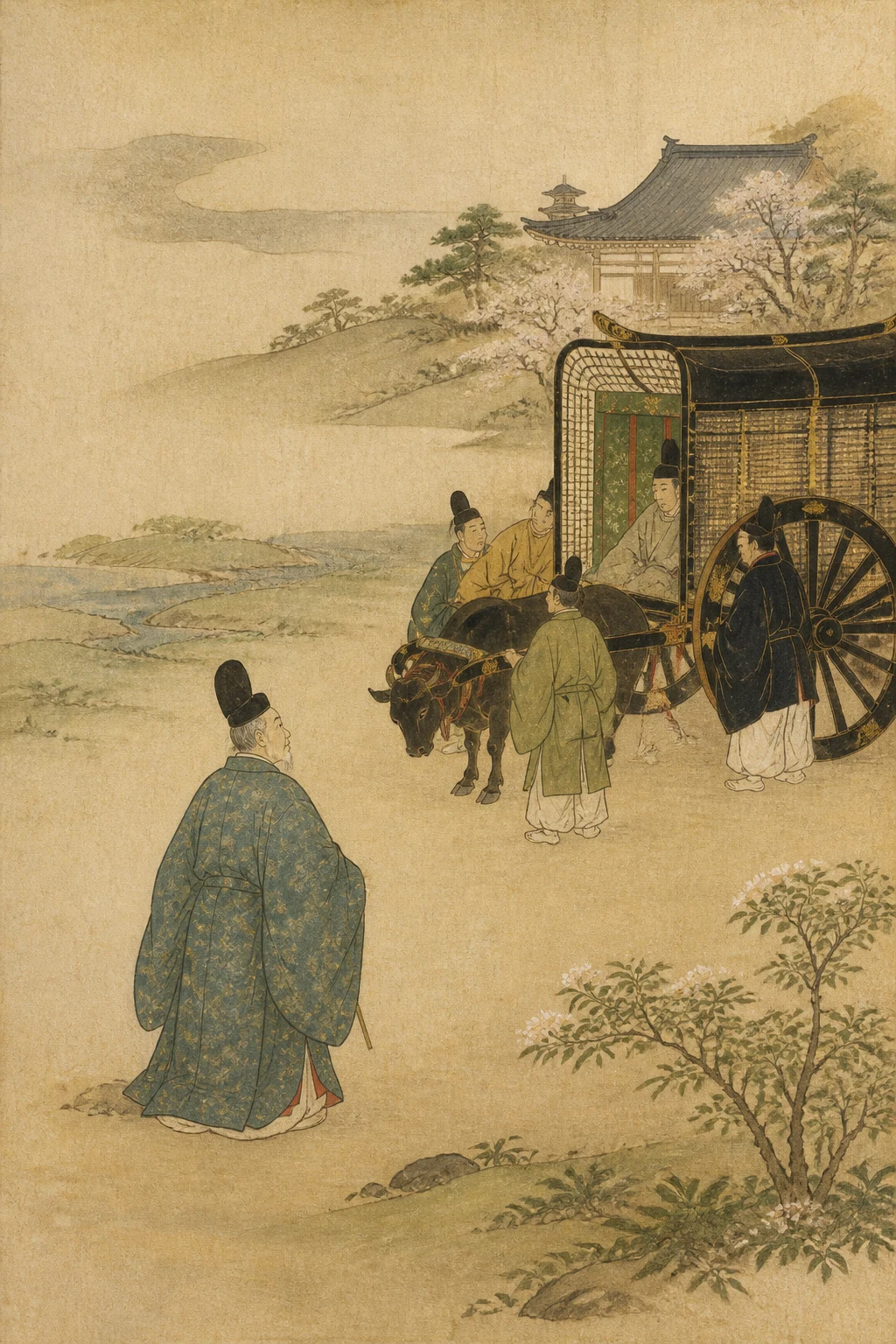
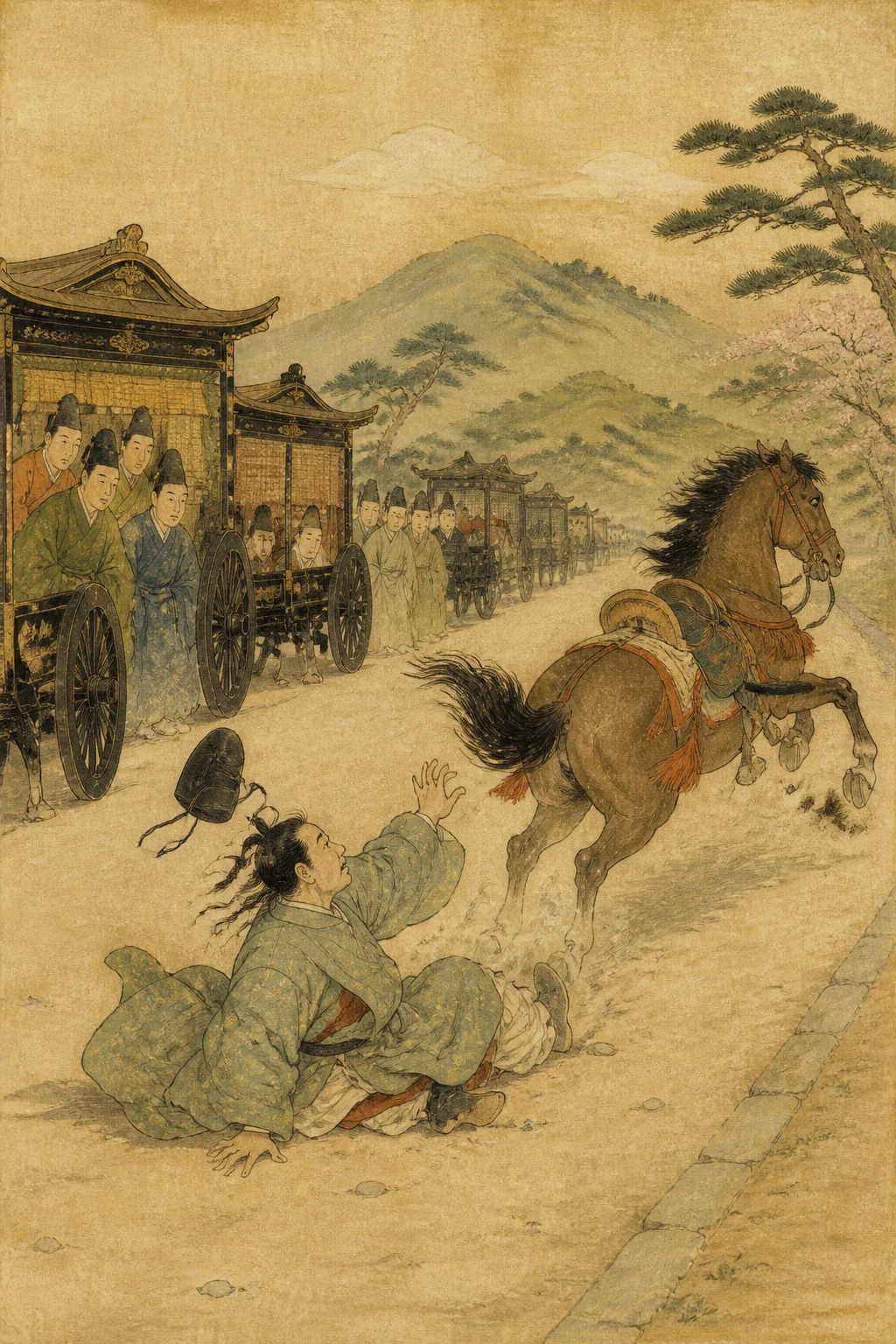
Long ago, the poet Motosuke, having been appointed assistant director of the Imperial Storehouses, served as imperial envoy to the Kamo Festival. As he rode along First Avenue, he came upon a long row of carriages belonging to courtiers who had gathered to watch the procession. Rather than pass sedately before them, he thought he should put on a show, and urged his horse on so vigorously that it shied and threw him. The old man fell headfirst. The young gentlemen were watching in dismay when he sprang to his feet, only to lose his court cap. He had not the least trace of a topknot: his head looked as though he had an earthenware bowl turned upside down upon it. His groom, all in a fluster, picked up the cap and tried to put it back on him, but Motosuke waved him away behind his back. “Oh, stop fussing! Wait a moment. I have something to say to these gentlemen.” He walked toward the courtiers’ carriages, his head gleaming in the sunlight—a most unseemly sight. The people in the avenue crowded about as though at a market, laughing and shouting without restraint, while those in the carriages and viewing stands joined in the uproar. Motosuke approached one of the carriages and said, “Gentlemen, did you think it foolish of me to fall from my horse and lose my cap? You ought not to think so. Even people endowed with good sense are forever stumbling over things and falling down. How much more likely is it with a horse, which has no such understanding! This avenue is terribly stony. With a bit stretched across its mouth, a horse cannot walk as it wishes, even if it wants to. When it is pulled this way and that and made to turn about, it is bound to fall. You must not think the horse at fault. As for a Chinese saddle, it goes without saying that one can scarcely brace oneself in the stirrups. Then the horse stumbled badly, and I fell. There was nothing wrong in that. As for my cap coming off, it is not something one ties on with a cord. It is held in place by the hair tucked securely inside it. But my hair has thinned away, and now there is none at all. Naturally the cap would fall off. There is no reason to blame it. Nor is this without precedent. Such-and-such a minister lost his cap at the purification ceremony before the Great Thanksgiving Festival; such-and-such a middle counsellor lost his during the imperial procession on that occasion. There are more examples of this sort than one could ever reckon up. So young gentlemen of these days, who know nothing of such matters, have no business laughing. If you do laugh, it is you who will look foolish.” Thus he went from carriage to carriage, counting off his arguments on his fingers and explaining them to everyone. When he had finished saying all this, he called, “Give me my cap,” took it, and put it on. At that, a great roar went up, and the laughter knew no bounds. His groom came over to help settle the cap on his head and said, “Why did you say all that useless stuff instead of letting me put your cap back on as soon as you fell?” “Do not talk nonsense,” Motosuke replied. “It is precisely because I have explained the reasoning to them that these gentlemen will not go on laughing afterward. Otherwise, sharp-tongued young fellows that they are, they would have laughed at me forever.” He was a man who made it his business to make people laugh.
Izvirnik
162 元輔落馬事
Naslednje strani prikazujejo izvirno besedilo za primerjavo.
いまはむかし哥よみの元輔くらのすけになりて賀茂祭の使しけるに一条大路わたりける程に殿上人の車おほくならへたてて物見けるまへわたる程においらかにてはわたらて人見給にと思て馬をいたくあをりけれは馬くるひて落ぬ年老たるものの頭をさかさまに落ぬ君達あないみしと見る程にいととくおきぬれは冠ぬけにけり本鳥つゆなしたたほときをかつきたるやうになん有ける馬副手まとひをして冠をとりてきせさすれとうしろさまにかきてあなさはかししはしまて君達にきこゆへき事ありとて殿上人ともの車の前に歩よる日のさしたるに頭きらきらとしていみしうみくるし大路のもの市をなしてわらひののしる事限なし車桟敷の物ともわらひののしるに一の車のかたさまに歩よりていふやう君達この馬よりおちて冠おとしたるをはおこなりとや思給しかおもひ給まし其故は心はせある人たにも
物につまつきたをるる事は常の事也まして馬は心ある物にもあらす此大路はいみしう石たかし馬は口をはりたれはあゆまんと思たにあゆまれすとひきかう引くるめかせはたをれなんとす馬をあしと思へきにあらすから鞍はさらなる鐙のかくうへくもあらすそれに馬はいたくつまつけは落ぬそれわろからす又冠のおつるは物してゆふ物にあらす髪をよくかき入たるにとらへらるる物なりそれにひんはうせにたれはひたふるになしされはおちん冠うらむへきやうなし又例なきにあらすなにのおととは大嘗会の御禊におつなにの中納言はその時の行幸におつかくのことくの例もかんかへやるへからすしかれは案内もしり給はぬ此比のわかき公達わらひ給へきにあらす笑たまははかへりておこなるへしとて車ことに手をおりつつかそへていひきかすかくのことくいひはてて冠もてこといひてなん取てさし入けるその時にとよみてわらひののしる事限なし冠せさすとてよりて馬そひの
いはくおち給則冠をたてまつらてなとかくよしなし事は仰らるるそといひけれはしれ事ないひそかく道理をいひきかせたらはこそこの君達はのちのちにもわらはさらめさらすは口さかなき君達はなかく笑なん物をやとそいひける人わらはする事役にするもの也けり
Nadaljuj z branjem