Prevod
Meanwhile, men wondered who could bear the weight of so great a burden and succeed so mighty a king. Fame, the herald of truth, marked out illustrious Numa for the throne. He was not content to know the rites of the Sabine people: his far-reaching mind conceived of greater things and sought the nature of the world. His passion for this pursuit led him to leave his homeland and Cures, and journey to the city of Hercules’ host.
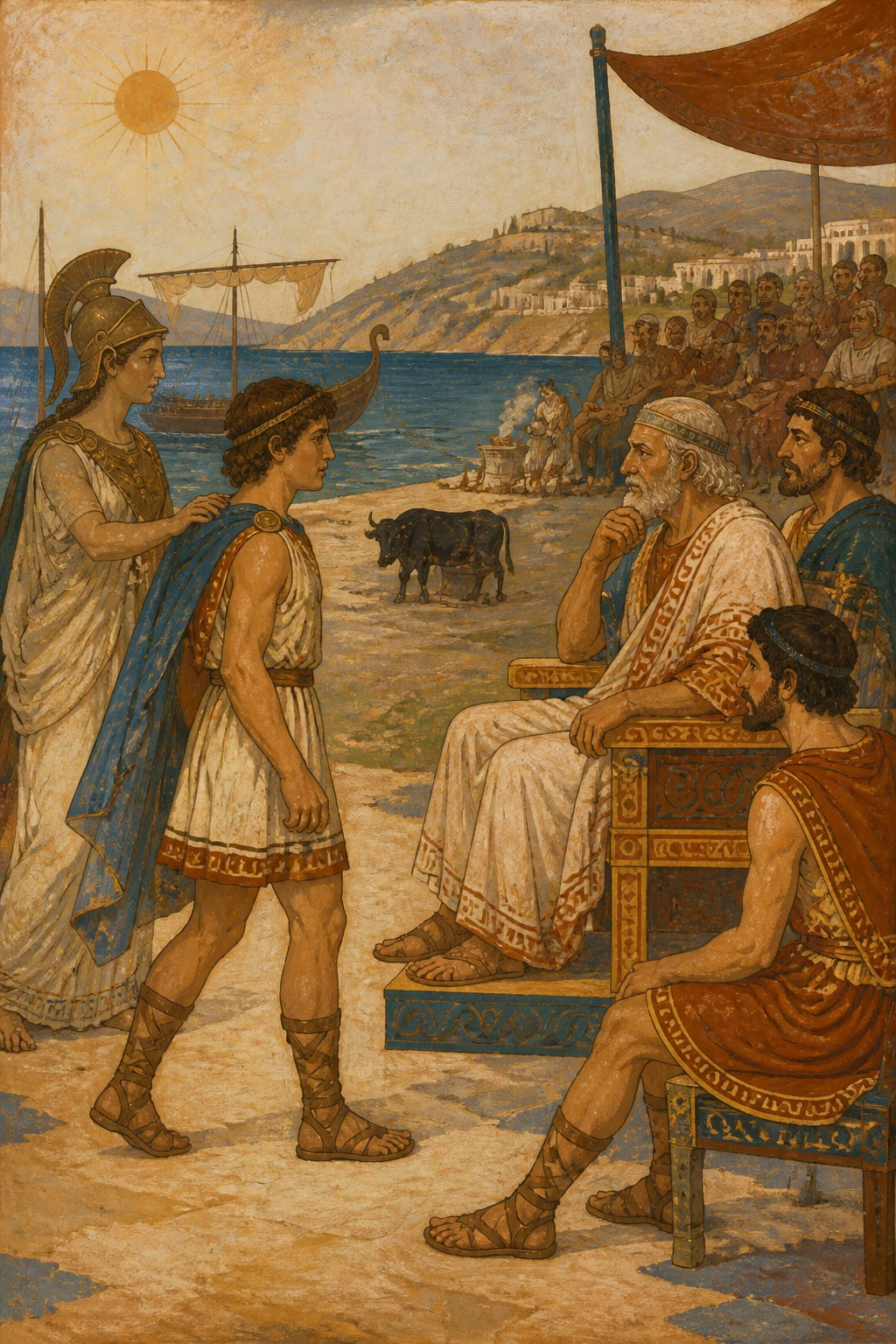
When he asked what Greek founder had built those walls on Italian shores, one of the native elders, well versed in ancient times, told him this: “They say that Jupiter’s son, rich in Spanish cattle, sailed safely from the Ocean to the Lacinian shores, and, while his herd wandered over the tender grass, he entered the home of great Croton, whose doors welcomed strangers, and eased his long labours with rest.
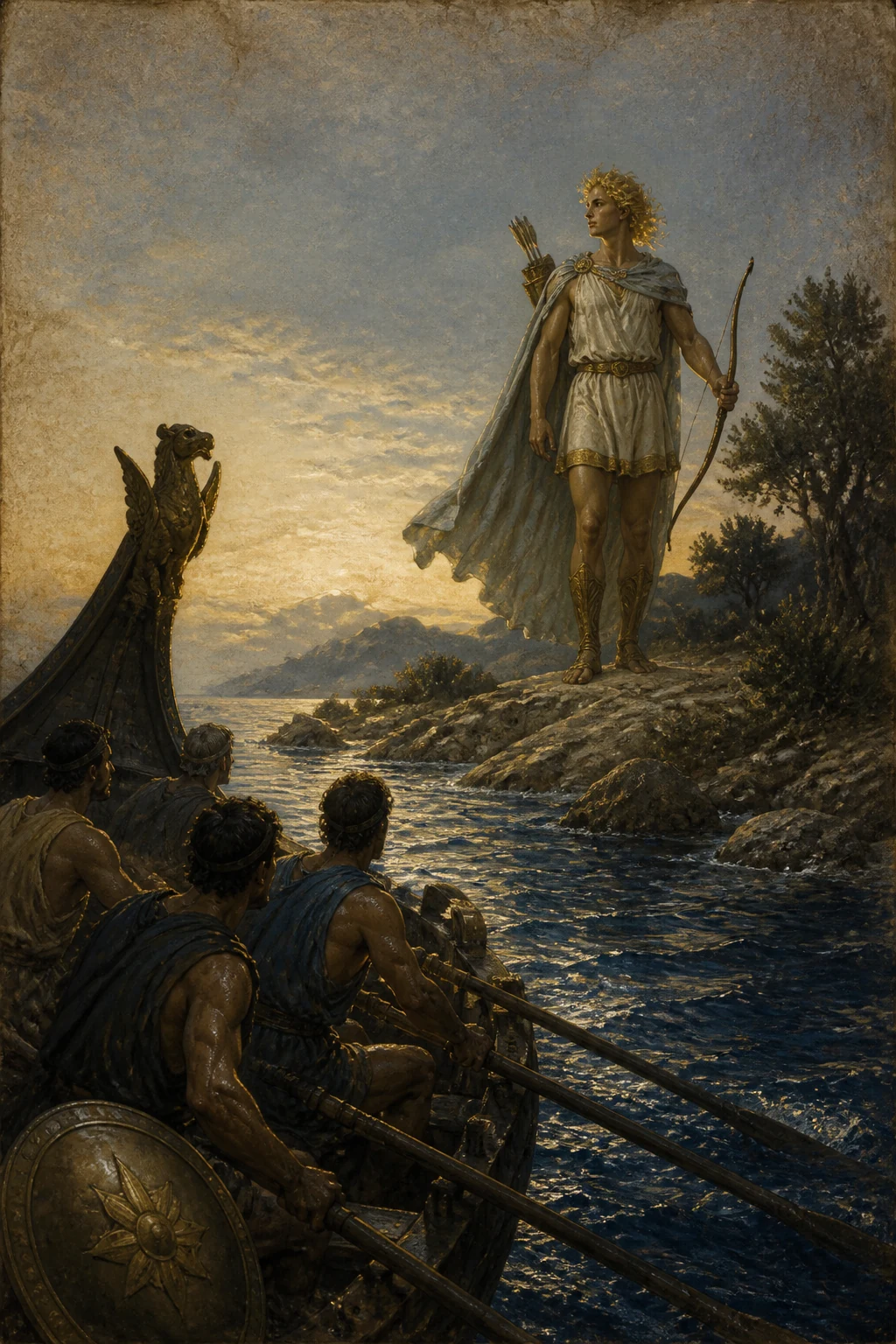
As he departed, he said, ‘In your descendants’ time this place will be a city’; and his promise came true. For there was a man named Myscelus, born of Alemon of Argos, dearer to the gods than any of his day. As he lay sunk in heavy sleep, the club-bearing god stood over him and spoke: ‘Go, seek the stony waters of distant Aesar! Come, leave your native home!’ And he threatened many dreadful things if he disobeyed.
Then sleep and the god departed together. The son of Alemon rose and silently recalled his recent vision, his mind long divided against itself: the god commanded him to go; the laws forbade his leaving, and death was the penalty for anyone wishing to change his homeland. The radiant Sun had hidden his shining head in Ocean, and deepest Night had raised her starry head, when the same god seemed to appear with the same command, threatening still more and graver punishments if he disobeyed.
Terrified, he at once prepared to carry his household gods to a new home. Rumour spread through the city, and he was tried for defying its laws. When the prosecution had finished, and his open offence stood proved without a witness, the accused, in mourning garb, raised his face and hands to heaven. ‘O you whose twelve labours won the right to dwell in heaven, help me, I pray!’ he said. ‘For you prompted my crime.’ It was the ancient custom to use snow-white and black pebbles, the black to condemn the accused, the white to acquit.
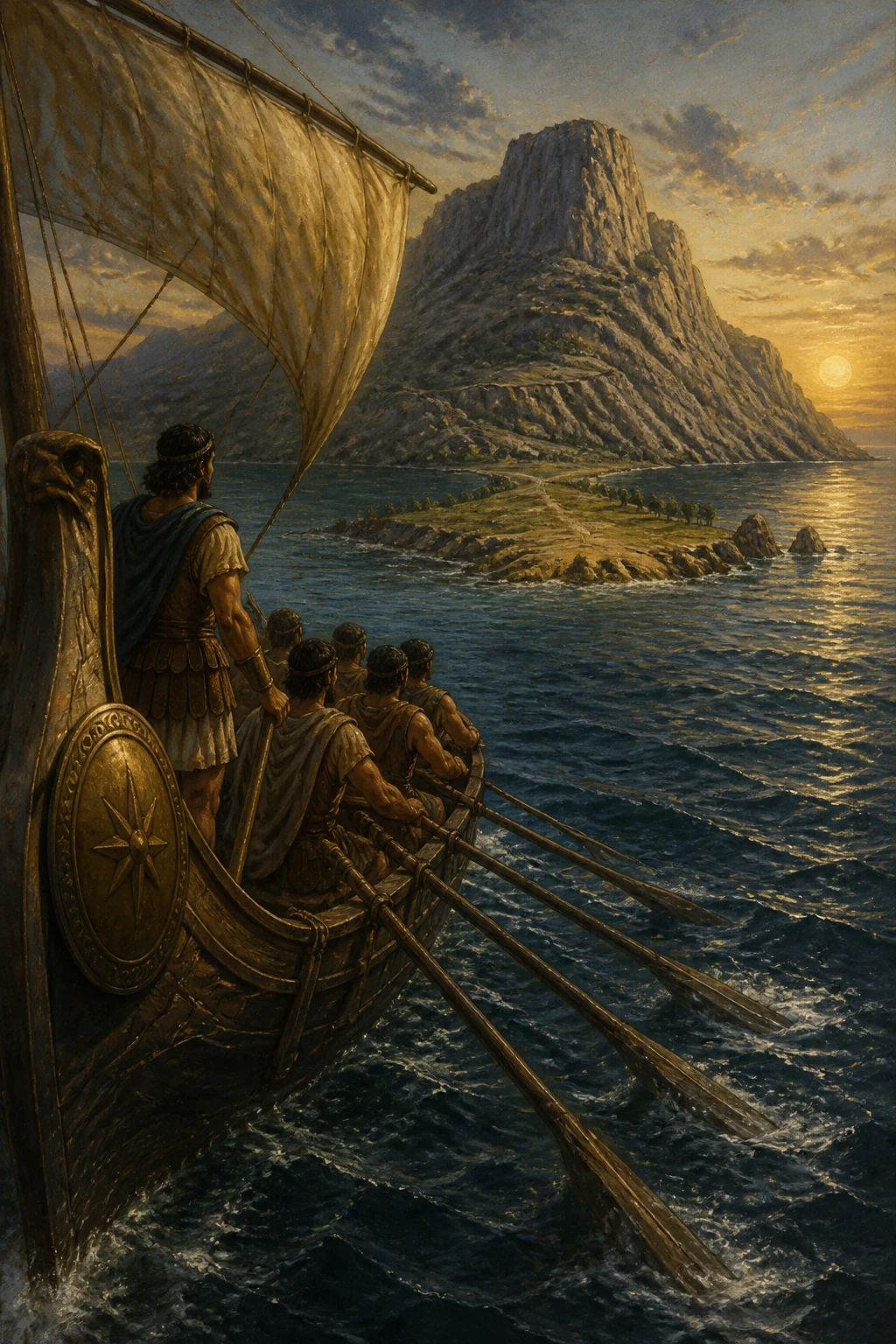
So now, too, the grim verdict was delivered, and every pebble dropped into the merciless urn was black. But when the urn was overturned and poured them out for counting, every one had changed its colour from black to white. By Hercules’ divine power the verdict had turned white, and Alemon’s son was freed. He gave thanks to his father, the son of Amphitryon, and with favourable winds sailed the Ionian Sea, passing Neretum in Sallentine country, Sybaris, Crimisa, and the lands of Iapyx; he passed Sybaris and Spartan Tarentum, the bays of Thurii, Crimisa, and the lands of Iapyx.
At last, after skirting the lands that face the sea, he found the destined mouth of the river Aesar, and not far away a burial mound, beneath which sacred earth covered Croton’s bones. There, on the land appointed him, he built his walls and named the city after the buried man.” Such, according to well-established tradition, were the beginnings of that place and the city founded on Italian soil.