Prevod
_Cianne and Lise are brothers, one rich and the other poor. Lise, being poor and receiving no help from his rich brother, leaves home and meets with such good fortune that he becomes immensely wealthy. The other, out of envy, seeks the same luck, but finds it so contrary that he cannot escape a great misfortune without his brother’s help._ _The laughter that broke out among the company at the Prince’s mishap was so unrestrained that they were all in danger of rupturing themselves, and they would have gone on exchanging peals of laughter until dawn had Cecca not signalled that she was ready to let her own tale loose. At this, every mouth was put under restraint, and she began to speak._ It is a saying fit to be written in letters as large as those on a funeral bier: keeping quiet never harmed anyone. But as for the tongues of certain little backbiters, who never know how to speak well of anything, who are forever cutting and stitching, snipping and pricking—never fear, they get their full share of trouble from it. For when the sacks are shaken out, it has always been seen, and still is, that while speaking well wins love and profit, speaking ill earns hatred and ruin. Listen to how it happened, and you will grant me a hundredweight of good sense.
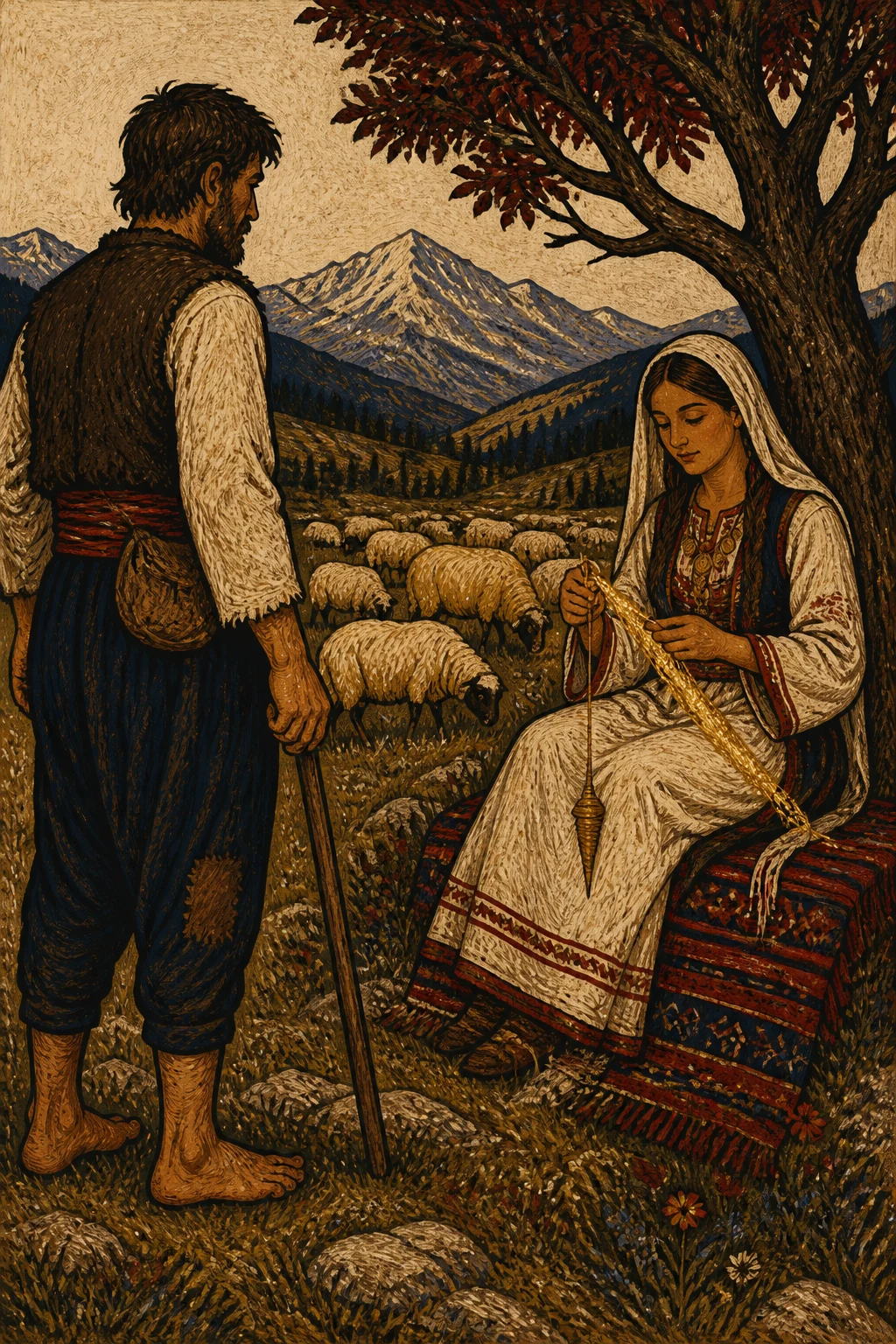
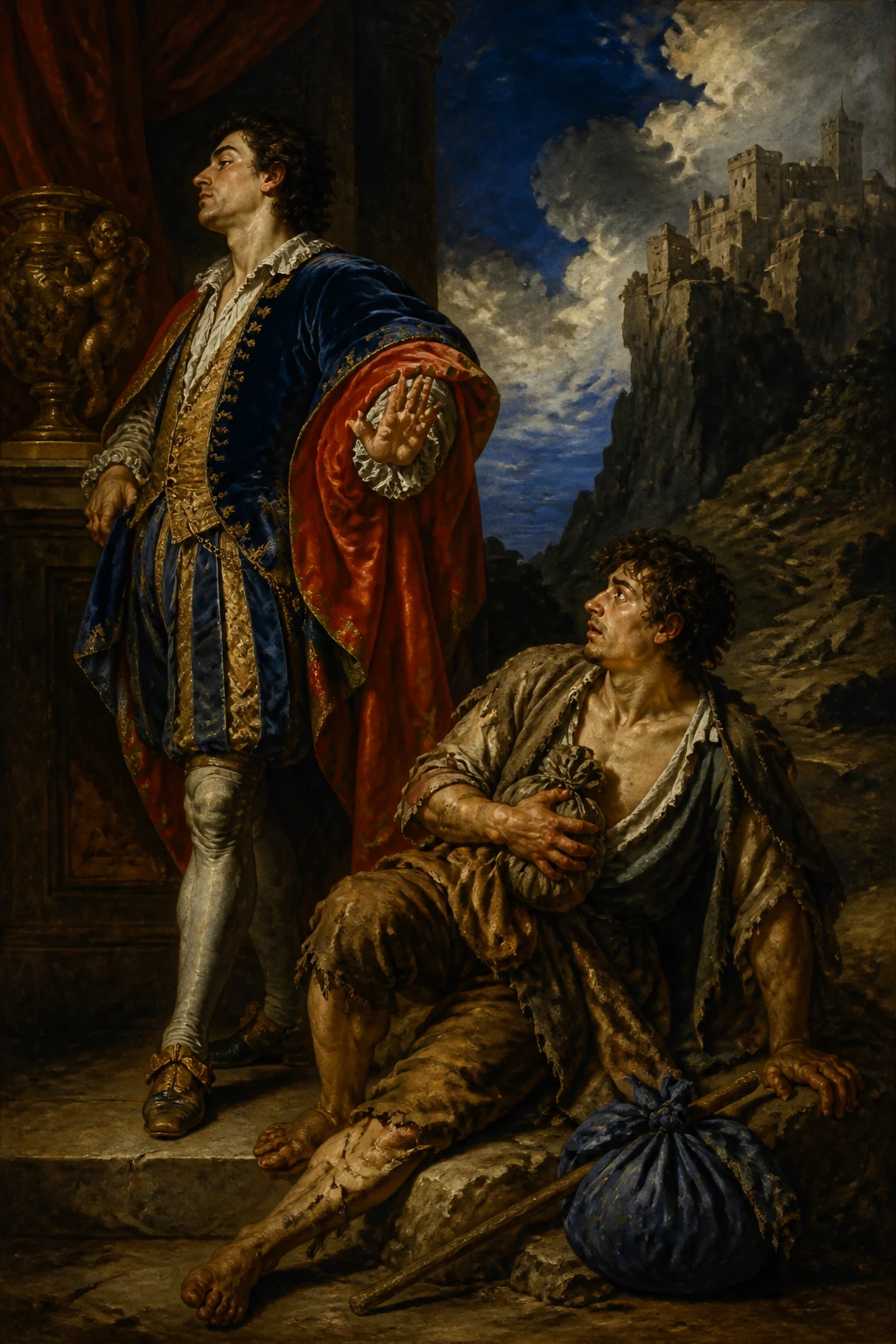
They say there were once two brothers, Cianne, who lived as comfortably as a count, and Lise, who scarcely had enough to keep body and soul together. But the poorer the one was in worldly goods, the meaner the other was in spirit: he would not have risen from taking a shit even to refresh his soul. At last poor Lise, in despair, left his native country and set out to roam the world. He walked and walked, until one evening, after a wretched day’s journey, he reached an inn, where he found twelve young men sitting round the fire. Seeing poor Lise all stiff and shrivelled, nearly wasting away with cold, both because the season was bitter and because his clothes were threadbare, they invited him to sit beside the hearth. He accepted gladly, for he was sorely in need of it, and began to warm himself. As he did so, one of the young men, all bristling and with a face sour enough to make you shudder, asked him, “What do you think of this weather, countryman?” “What should I think?” said Lise. “It seems to me that all the months of the year do their duty. But we, who do not know what we are asking for, want to lay down the law to Heaven. We wish everything to suit ourselves, without looking too closely into whether whatever takes our fancy is good or bad, useful or harmful. So in winter, when it rains, we want the blazing sun of the Dog Days, and in August we want the clouds to pour down on us, never considering that if this were so, the seasons would be turned arse over head, the seed would perish, the harvests would come to nothing, our bodies would sicken, and nature would go headlong to ruin. So let us leave Heaven to take its course. That is why it made trees: to remedy winter’s harshness with their wood and summer’s heat with their leaves.” “You speak like a Solomon,” said the young man, “but surely you cannot deny that this month of March, which we are now in, is altogether too troublesome, with all its frosts and downpours, snow and hail, winds, gusts, fogs, storms, and other nuisances that make us weary of life.” “You speak of the harm this poor month does,” replied Lise, “but say nothing of the benefits it brings us. For by ushering in spring it sets all things breeding and growing; and even if it did nothing else, it allows the sun to enjoy the happiness of the present season by bringing it into the house of the Ram.” The young man took great pleasure in Lise’s words, for he was none other than the month of March himself, who had happened upon that inn with his eleven brothers. To reward Lise’s goodness, since he had found nothing ill to say of a month so harsh that even shepherds will not mention its name, he gave him a pretty little casket, saying, “Take this. Think of anything you need, and ask for it freely: when you open this little box, you will find it before you.”
Liso thanked the young man with many humble words, and, putting the casket under his head for a pillow, lay down to sleep. No sooner had the sun come with the brushes of its rays to touch up the shadows of night with light than he took leave of the young men and set off. He had not gone fifty paces from the inn, however, before he opened the little casket and said, “Oh, my dear treasure, could I not have a litter lined with frieze, with a little fire inside, so that I might travel snug and warm through this snow?” Scarcely had he finished speaking when a litter appeared with its bearers, who lifted him up and settled him inside. He told them to make for his home, and when the time came to set his jaws to work, he opened the little box and said, “Let there be food!” And there you would have seen Heaven’s bounty come pouring forth: it was such a feast that ten crowned kings might have dined on it. One evening they reached a wood that would not admit the sun, as though it had come from some plague-stricken place. Opening the little casket, he said, “Here in this lovely spot, where the river plays its counterpoint over the stones to accompany the plainsong of the cool breezes, I should like to rest tonight.” At once there appeared a bed of fine scarlet beneath a tent of waxed cloth, with feather mattresses, a Spanish blanket, and sheets so fine that a breath would have sent them flying. When he asked for supper, a display of silver fit for a prince was instantly set out, and beneath another tent a table was spread with dishes whose fragrance travelled a hundred miles. When he had eaten, he went to sleep. Then, when the cock, the sun’s spy, informed his master that the shadows were slack and weary, and that now was the time, like a seasoned soldier, to fall upon their rear and slaughter them, Lise opened the casket and said, “I should like a fine suit of clothes, for my brother is to see me today, and I want to make his mouth water.” And there, in an instant, he saw a gentleman’s suit of rich black velvet, with red camlet garments and a broad cloak lined with yellow wool, so that it looked like a field of flowers. Lise dressed, climbed into the litter, and arrived home. When Cianne saw him coming in such splendour and comfort, he wanted to know what good fortune had befallen him. Lise told him about the young men he had found at the inn and the present they had given him, but kept to himself the conversation he had had with them. Cianne could hardly wait to take leave of his brother, telling him to go and rest, since he was tired. He immediately set off by post and reached the inn, where he found the same young men and began chatting with them. When the young man put the same question to him—what he thought of this month of March—he opened his great gullet and began: “Oh, may God confound this accursed month, the enemy of those with the French pox, the shepherds’ scourge, the disturber of our humours, the wrecker of our bodies! A month that gives us a saying whenever we wish to foretell a man’s ruin: ‘Off with you—March has shaved you bare!’ A month whose name we use when we wish to call someone the most presumptuous fellow alive: ‘What does March care?’ In short, it is a month that would make the world fortunate, the earth happy, and mankind rich if its place were wiped out of the company of its brothers.” When the month of March heard Cianne giving him this drubbing, he kept up appearances until morning, determined to make him pay for his fine speech. As Cianne was about to leave, he gave him a handsome whip, saying, “Whenever you wish for anything, just say, ‘Whip, give me a hundred,’ and you will see pearls strung upon a rush.”
Cianne thanked the young man and began to ply his spurs, unwilling to try out the whip until he reached his own house. Scarcely had he set foot inside when he went into a private room, where he meant to store the money he expected from the whip, and said to it, “Whip, give me a hundred.” And if the whip failed to give him his full measure, you may tell him to go back for the rest! It played a music-master’s counterpoint upon his legs and face, until his shrieks brought Lise running. Seeing that the whip could not be restrained, but was behaving like a horse running loose, Lise opened his little casket and made it stop. Then he asked Cianne what had happened. Having heard the story, he told him to blame no one but himself, since, like a foolish thrush, he had brought his own trouble upon his head. He had behaved like the camel that wished for horns and lost its ears instead. Let him learn another time to bridle his tongue, which had been the key that opened the storehouse of this misfortune. Had he spoken well of those young men, he might perhaps have met with the same good luck; all the more so since kind words are merchandise that costs nothing and often yields an undreamed-of profit. Finally he consoled him, telling him not to seek more comforts than Heaven had granted him: his own casket was enough to fill thirty misers’ houses to bursting, and Cianne should be master of all he possessed, for Heaven is the generous man’s treasurer. Though another brother might have borne him a grudge for the cruelty he had shown him in his poverty, Lise reflected that Cianne’s meanness had been the favourable wind that brought him into this harbour. He therefore owed him thanks, and meant to repay the kindness. Hearing this, Cianne begged forgiveness for his past lack of brotherly love, and the two joined forces and enjoyed their good fortune together. From that day forward Cianne spoke well of everything, however bad it might be, _For the dog once scalded by hot water_ _Is afraid even of cold._