Prevod
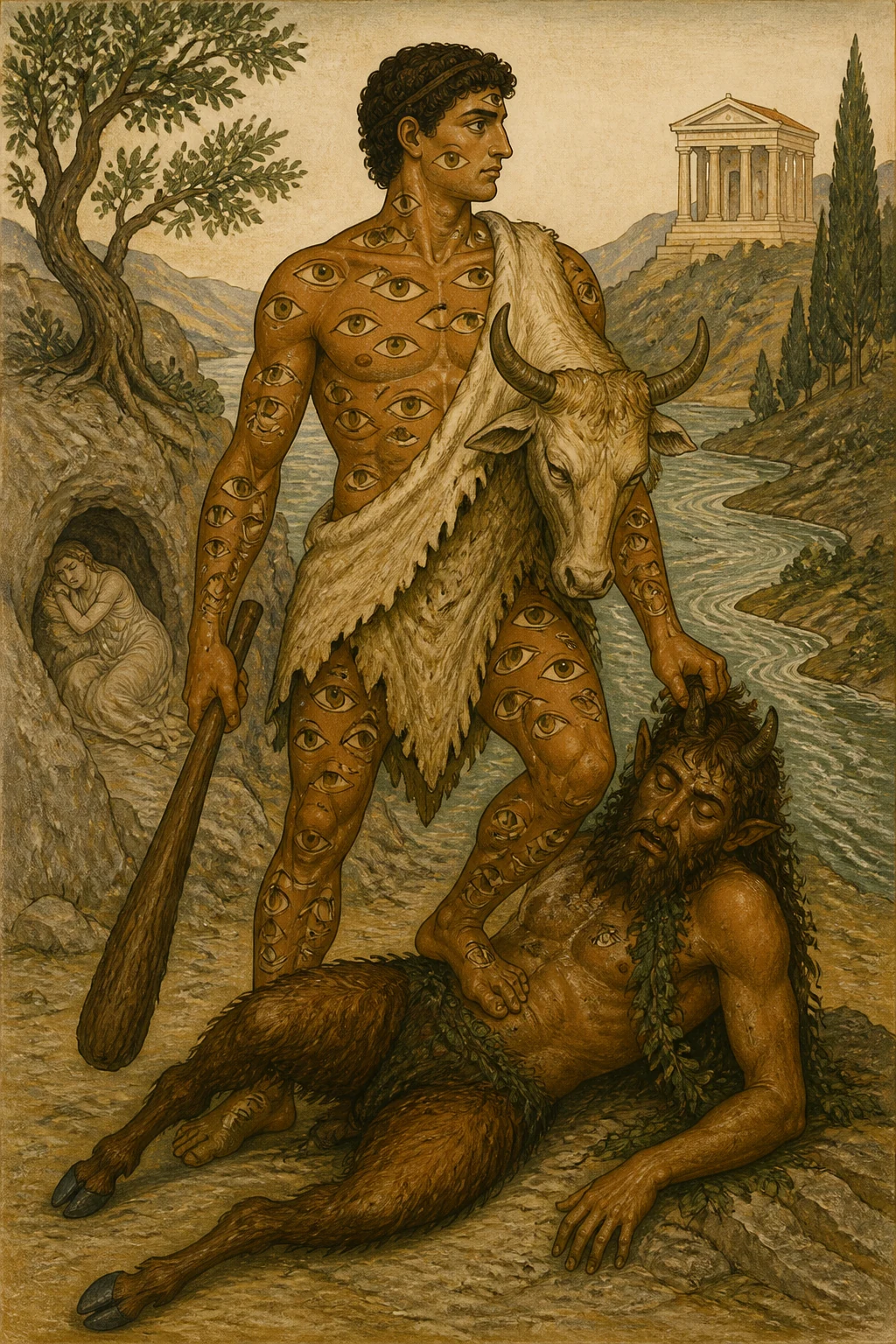
Philyra’s heroic son wept and begged in vain for your aid, O god of Delphi. For you could neither revoke mighty Jove’s decrees, nor, even had you been able, were you there: you were dwelling in Elis and the fields of Messenia. That was the time when a shepherd’s hide clothed you, and a woodland staff weighed on your left hand, while the other held a pipe of seven unequal reeds.
And while love occupied your thoughts and your pipe soothed you, your cattle, left unguarded, are said to have strayed into the fields of Pylos. The son of Maia, Atlas’s daughter, saw them, drove them off, and cunningly hid them in the woods. No one had noticed the theft except an old man well known in that countryside; all the neighbours called him Battus. He watched over wealthy Neleus’s woodland pastures, his grassy meadows, and his herds of fine mares.
Fearing this man, the thief drew him aside with a coaxing hand and said, “Whoever you are, my friend, if anyone should happen to ask after these cattle, say you have not seen them; and lest your service go unrewarded, take this sleek cow as payment”— and gave it to him. Having accepted it, the old man replied: “Go without fear: that stone will tell of your theft before I do,” and pointed to a stone. Jove’s son pretended to leave, then soon returned, changing his voice as well as his appearance.
“Countryman,” he said, “if you have seen any cattle passing this way, help me: break the silence that conceals a theft. You shall have a cow together with her bull.” But once the reward was doubled, the old man said, “They will be under those hills”—and under those hills they were. Atlas’s grandson laughed. “Traitor, would you betray me to myself? Betray me to myself?” he said, and turned that perjured heart to hard flint, which even now is called the informer, and the ancient disgrace still clings to the stone, which did nothing to deserve it.