O besedilu
Stari Sultan
- Vir
- Grimmove pravljice
- Avtor
- Jacob in Wilhelm Grimm
- Jezik branja
- English
- Jezik izvirnika
- Deutsch
- Čas branja
- 5 min branja
- Obseg
- 4 strani
- Naslov izvirnika
- Der alte Sultan
O izvirniku
Grimmove pravljice
Gozdovi, čarobni predmeti in ljudska logika evropske pripovedne tradicije. Bralni jezik je English, izvirnik pa prihaja iz vira Grimmove pravljice v jeziku Deutsch.
Besedilo
Stari Sultan
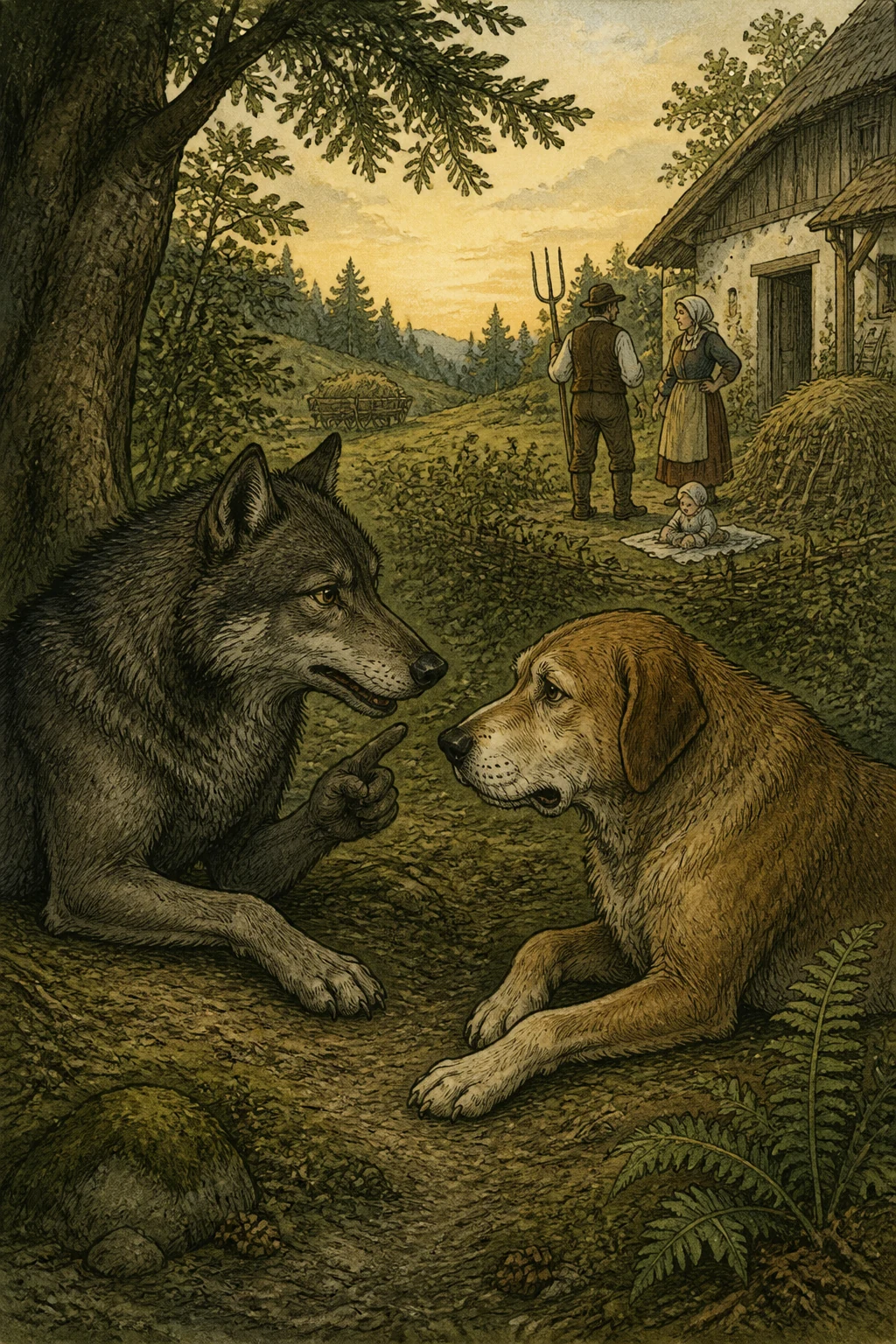
A farmer once had a faithful dog called Sultan, who had grown old and lost all his teeth, so that he could no longer get a firm grip on anything. One day the farmer was standing with his wife outside their door and said, "Tomorrow I'll shoot old Sultan. He's no use to us anymore." His wife, who felt sorry for the faithful creature, replied, "Since he has served us for so many years and always stood faithfully by us, surely we could feed him for the rest of his days." "Nonsense," said her husband. "You're out of your wits. He hasn't a tooth left in his mouth, and no thief is afraid of him. It's time he was gone. If he's served us, he's had good food in return."
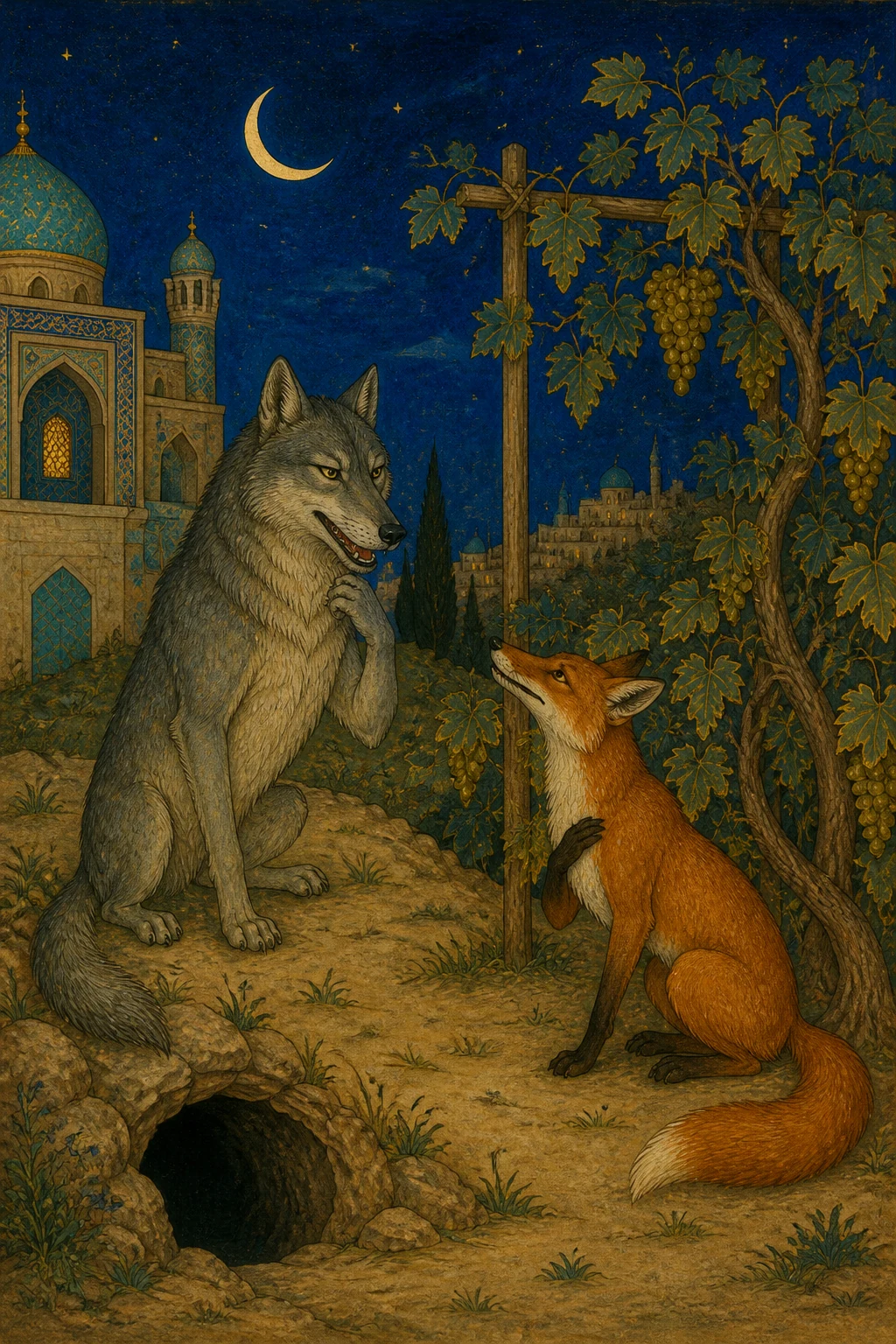
The poor dog, who lay stretched out in the sunshine not far away, had heard every word and was sad to think that tomorrow would be his last day. He had a good friend, the wolf, and that evening he crept out into the forest to tell him of the fate that awaited him. "Listen, my friend," said the wolf, "take heart. I'll help you out of your trouble. I've thought of a plan. Early tomorrow morning your master and his wife are going out to make hay, and they'll take their little child along, because no one will be left at home. While they work, they usually lay the child in the shade behind the hedge. Lie down beside it, as though you mean to guard it. Then I'll come out of the forest and carry the child off. You must chase after me as fast as you can, as though you mean to snatch it back. I'll let it fall, and you'll carry it back to its parents. They'll think you've saved it and will be far too grateful to do you any harm. On the contrary, you'll be restored to full favor, and they'll never let you want for anything again."
The dog liked the plan, and it was carried out just as it had been devised. The father cried out when he saw the wolf running across the field with his child, but when old Sultan brought it back, he was overjoyed, stroked him, and said, "Not a hair of your head shall be harmed. You shall be fed and cared for as long as you live." Then he said to his wife, "Go straight home and make old Sultan some bread porridge that he won't have to chew, and bring the pillow from my bed. I'll give it to him to sleep on." From then on, old Sultan lived as well as he could possibly wish. Soon afterward the wolf came to visit him and was pleased that everything had turned out so well. "But, my friend," he said, "you'll surely turn a blind eye if I happen to carry off a fat sheep belonging to your master. It's hard to get by these days." "Don't count on that," replied the dog. "I'll stay faithful to my master. I can't allow it!" The wolf thought he could not be serious, and that night he crept up to steal the sheep. But the farmer, to whom faithful Sultan had revealed the wolf's plan, was lying in wait and gave his coat a thorough combing with a threshing flail. The wolf had to flee, but he shouted to the dog, "Just you wait, you scoundrel! You'll pay for this!"
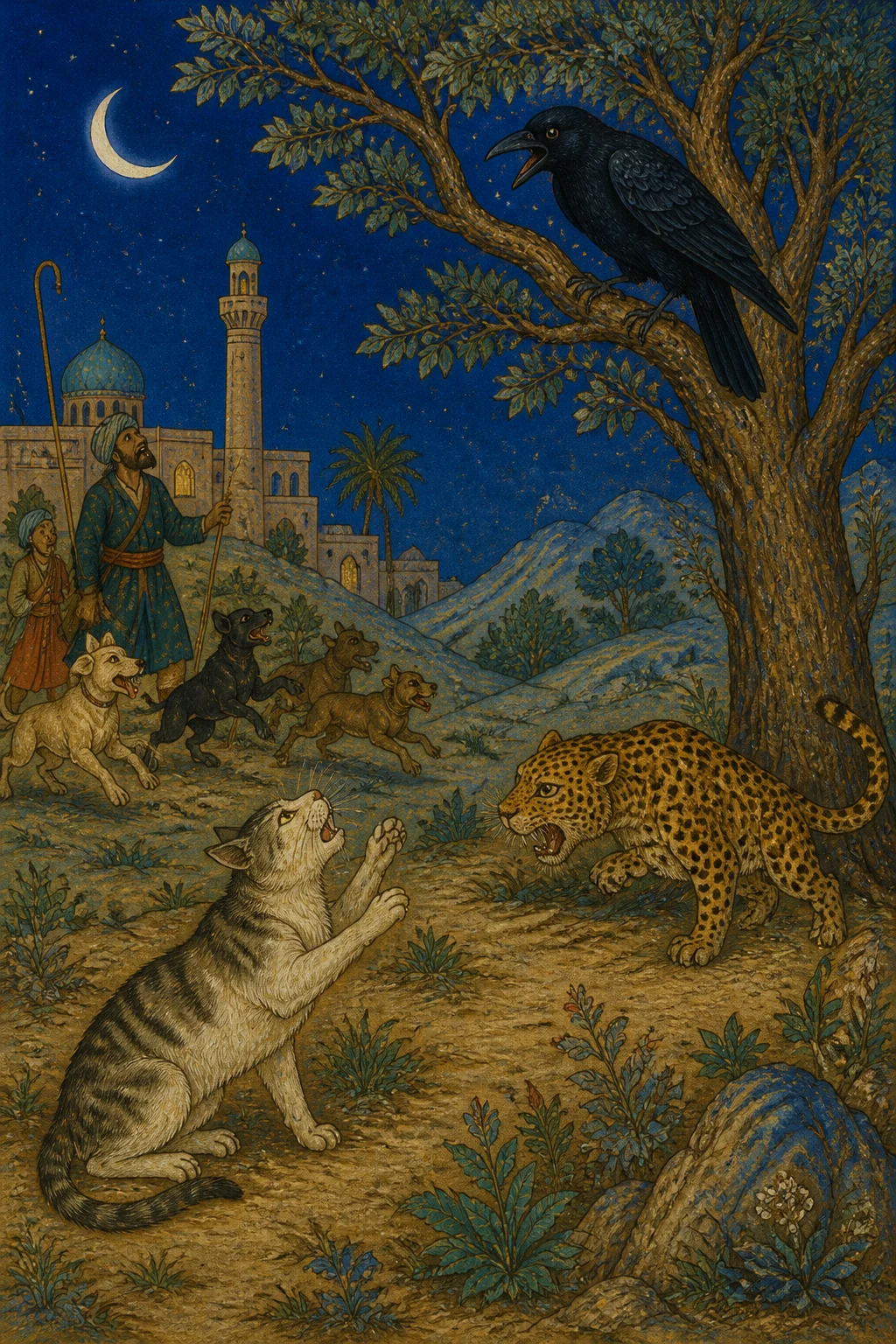
The next morning the wolf sent the wild boar to challenge the dog to come out into the forest, where they would settle their quarrel. Old Sultan could find no one to stand by him but a cat with only three legs, and as they set off together, the poor cat limped along, holding her tail high in the air with pain. The wolf and his companion were already at the appointed place, but when they saw their opponent approaching, they thought he was bringing a saber, for that was what they took the cat's raised tail to be. And whenever the poor creature hopped along on her three legs, they imagined she was picking up a stone to throw at them. Both of them took fright: the wild boar hid in the leaves, and the wolf jumped up into a tree. When the dog and the cat arrived, they were surprised to find no one in sight. But the wild boar had not managed to hide himself entirely beneath the leaves, and his ears were still sticking out. As the cat looked carefully about her, the boar twitched his ears. Thinking a mouse was stirring there, the cat pounced and bit down hard. The boar leaped up with a mighty squeal, ran away, and cried, "Up there in the tree! That's where the guilty one is!" The dog and the cat looked up and saw the wolf, who was ashamed of having shown himself so cowardly and agreed to make peace with the dog.
Izvirnik
Der alte Sultan
Naslednje strani prikazujejo izvirno besedilo za primerjavo.
Ein Märchen der Brüder Grimm
Es hatte ein Bauer einen treuen Hund, der Sultan hieß, der war alt geworden und hatte alle Zähne verloren, so daß er nichts mehr fest packen konnte. Zu einer Zeit stand der Bauer mit seiner Frau vor der Haustüre und sprach: "Den alten Sultan schieß ich morgen tot, der ist zu nichts mehr nütze." Die Frau, die Mitleid mit dem treuen Tiere hatte, antwortete: "Da er uns so lange Jahre gedient hat und ehrlich bei uns gehalten, so könnten wir ihm wohl das Gnadenbrot geben." - "Ei was," sagte der Mann, "du bist nicht recht gescheit; er hat keinen Zahn mehr im Maul, und kein Dieb fürchtet sich vor ihm, er kann jetzt abgehen. Hat er uns gedient, so hat er sein gutes Fressen dafür gekriegt."
Der arme Hund, der nicht weit davon in der Sonne ausgestreckt lag, hatte alles mit angehört und war traurig, daß morgen sein letzter Tag sein sollte. Er hatte einen guten Freund, das war der Wolf, zu dem schlich er abends hinaus in den Wald und klagte über das Schicksal, das ihm bevorstände. "Höre, Gevatter," sagte der Wolf, "sei guten Mutes, ich will dir aus deiner Not helfen. Ich habe etwas ausgedacht. Morgen in aller Frühe geht dein Herr mit seiner Frau ins Heu, und sie nehmen ihr kleines Kind mit, weil niemand im Hause zurückbleibt. Sie pflegen das Kind während der Arbeit hinter die Hecke in den Schatten zu legen. Lege dich daneben, gleich als wolltest du es bewachen. Ich will dann aus dem Walde herauskommen und das Kind rauben, du mußt mir eifrig nachspringen, als wolltest du mir es wieder abjagen. Ich lasse es fallen, und du bringst es den Eltern wieder zurück, die glauben dann, du hättest es gerettet, und sind viel zu dankbar, als daß sie dir ein Leid antun sollten; im Gegenteil, du kommst in völlige Gnade, und sie werden es dir an nichts mehr fehlen lassen."
Der Anschlag gefiel dem Hund, und wie er ausgedacht war, so ward er auch ausgeführt. Der Vater schrie, als er den Wolf mit seinem Kinde durchs Feld laufen sah; als es aber der alte Sultan zurückbrachte, da war er froh, streichelte ihn und sagte: "Dir soll kein Härchen gekrümmt werden, du sollst das Gnadenbrot essen, solange du lebst." Zu seiner Frau aber sprach er: "Geh gleich heim und koche dem alten Sultan einen Weckbrei, den braucht er nicht zu beißen, und bring das Kopfkissen aus meinem Bette, das schenk ich ihm zu seinem Lager." Von nun an hatte es der alte Sultan so gut, als er sich's nur wünschen konnte. Bald hernach besuchte ihn der Wolf und freute sich, daß alles so wohl gelungen war. "Aber, Gevatter," sagte er, "du wirst doch ein Auge zudrücken, wenn ich bei Gelegenheit deinem Herrn ein fettes Schaf weghole. Es wird einem heutzutage schwer, sich durchzuschlagen." - "Darauf rechne nicht," antwortete der Hund, "meinem Herrn bleibe ich treu, das darf ich nicht zugeben!" Der Wolf meinte, das wäre nicht im Ernste gesprochen, kam in der Nacht herangeschlichen und wollte sich das Schaf holen. Aber der Bauer, dem der treue Sultan das Vorhaben des Wolfes verraten hatte, paßte ihm auf und kämmte ihm mit dem Dreschflegel garstig die Haare. Der Wolf mußte ausreißen, schrie aber dem Hund zu: "Wart, du schlechter Geselle, dafür sollst du büßen!"
Am andern Morgen schickte der Wolf das Schwein und ließ den Hund hinaus in den Wald fordern, da wollten sie ihre Sache ausmachen. Der alte Sultan konnte keinen Beistand finden als eine Katze, die nur drei Beine hatte, und als sie zusammen hinausgingen, humpelte die arme Katze daher und streckte zugleich vor Schmerz den Schwanz in die Höhe. Der Wolf und sein Beistand waren schon an Ort und Stelle, als sie aber ihren Gegner daherkommen sahen, meinten sie, er führte einen Säbel mit sich, weil sie den aufgerichteten Schwanz der Katze dafür ansahen. Und wenn das arme Tier so auf drei Beinen hüpfte, dachten sie nichts anders, als es höbe jedesmal einen Stein auf, wollte damit auf sie werfen. Da ward ihnen beiden angst: Das wilde Schwein verkroch sich ins Laub, und der Wolf sprang auf einen Baum. Der Hund und die Katze, als sie herankamen, wunderten sich, daß sich niemand sehen ließ. Das wilde Schwein aber hatte sich im Laub nicht ganz verstecken können, sondern die Ohren ragten noch heraus. Während die Katze sich bedächtig umschaute, zwinste das Schwein mit den Ohren; die Katze, welche meinte, es regte sich da eine Maus, sprang darauf zu und biß herzhaft hinein. Da erhob sich das Schwein mit großem Geschrei, lief fort und rief: "Dort auf dem Baum, da sitzt der Schuldige." Der Hund und die Katze schauten hinauf und erblickten den Wolf, der schämte sich, daß er sich so furchtsam gezeigt hatte, und nahm von dem Hund den Frieden an.
Nadaljuj z branjem