Prevod
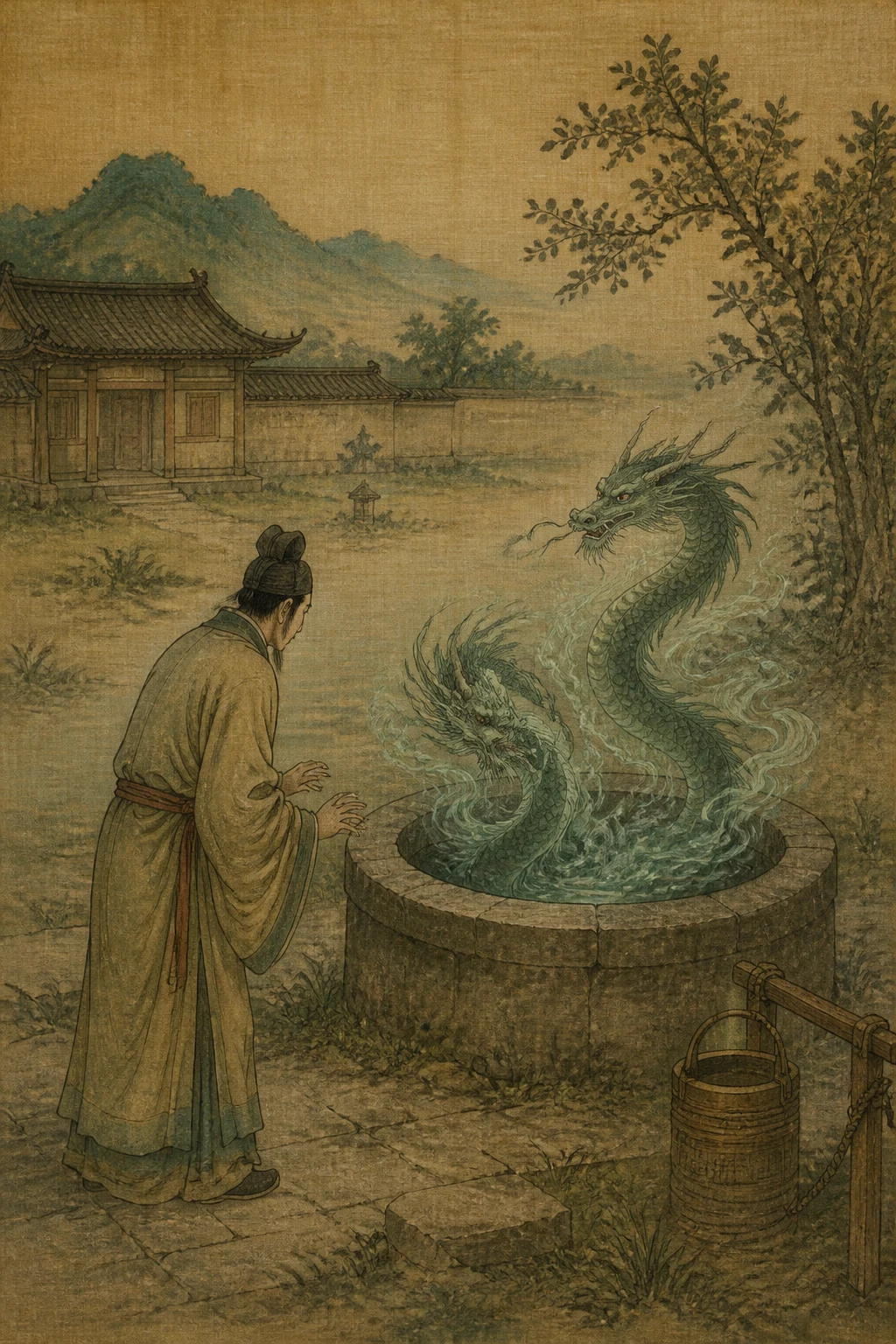
This too happened long ago. In Nara there lived a monk named Eiin, who held the titles of Kurōdo and Tokugō. His nose was so large and red that people called him “the big-nosed Kurōdo Tokugō.” Behind his back, however, they saw no need for such a mouthful and called him Hanakurōdo—“Nose Kurōdo”—and in time this dwindled to nothing but “Hanakura, Hanakura.” When this Hanakura was young, he put up a notice beside Sarusawa Pond announcing, “On such-and-such a day of such-and-such a month, a dragon will rise from this pond.” People passing by, young and old and of every station, whispered to one another, “What a marvel that will be!” Hanakura was secretly amused. “How funny! Here they all are making a fuss over something I’ve done. What fools!” But, meaning to keep up the deception, he went about his business as though he knew nothing of it. In due course the appointed month arrived. Word had spread even to people throughout Yamato, Kawachi, Izumi, and Settsu, and they came flocking to the pond. “Why are so many gathering?” Eiin wondered. “Perhaps there really is something to it. How strange!” Still he gave nothing away, and when at last the day arrived, people thronged the roads so thickly that there was scarcely room to pass. By now Eiin was thinking, “Surely this is no ordinary affair. I put up the notice myself, but there must be something behind it.” Concluding that it might indeed happen, he decided to go and see, and set out with his head wrapped up to conceal his face. There was no hope of getting anywhere near the pond, so he climbed onto the platform of the Great South Gate of Kōfukuji and stood waiting. “Will the dragon rise now? Will it rise now?” But what could possibly rise? The sun went down, and it grew quite dark. Since there was no sense in staying any longer, he started home. On the way he met a blind man crossing a bridge. “Look out, you blind fellow!” Eiin called. At once the blind man replied, “No, no—you must be Hanakura!” He had no idea that Eiin was called Hanakura, but had merely answered the word mekura, “blind man,” with “No, no—you must be hanakura.” That his retort should have hit upon Hanakura’s very nickname is counted among the amusing things in this world.